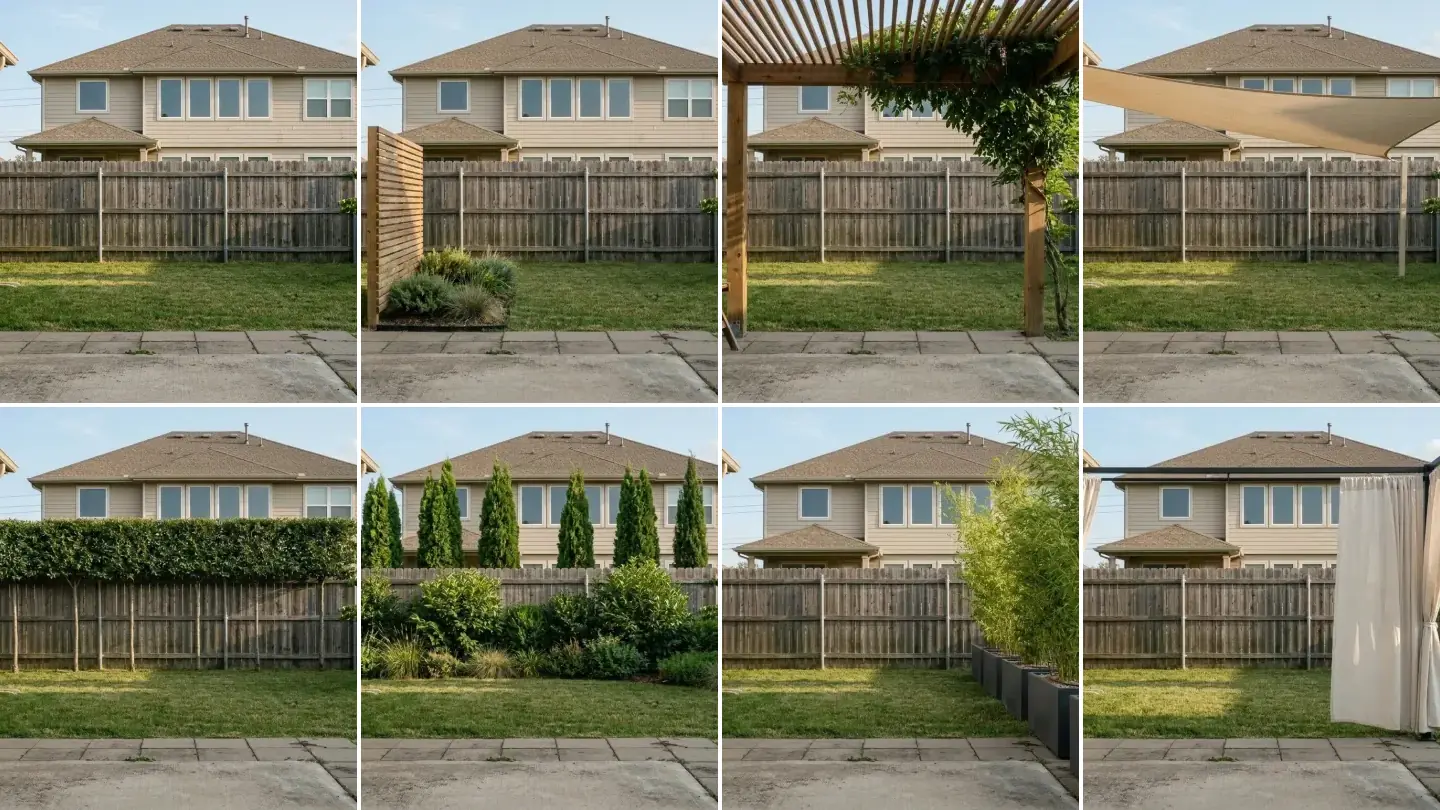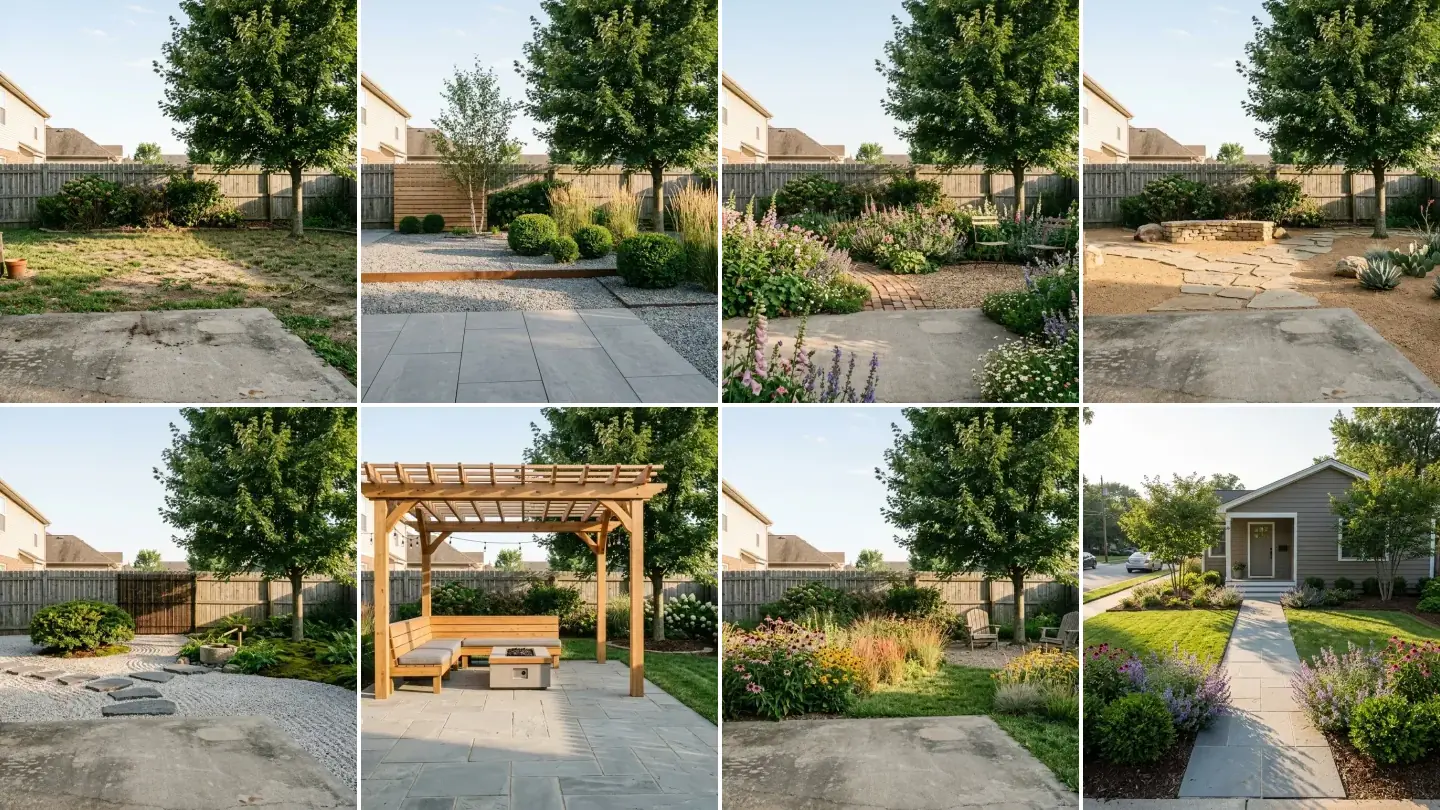
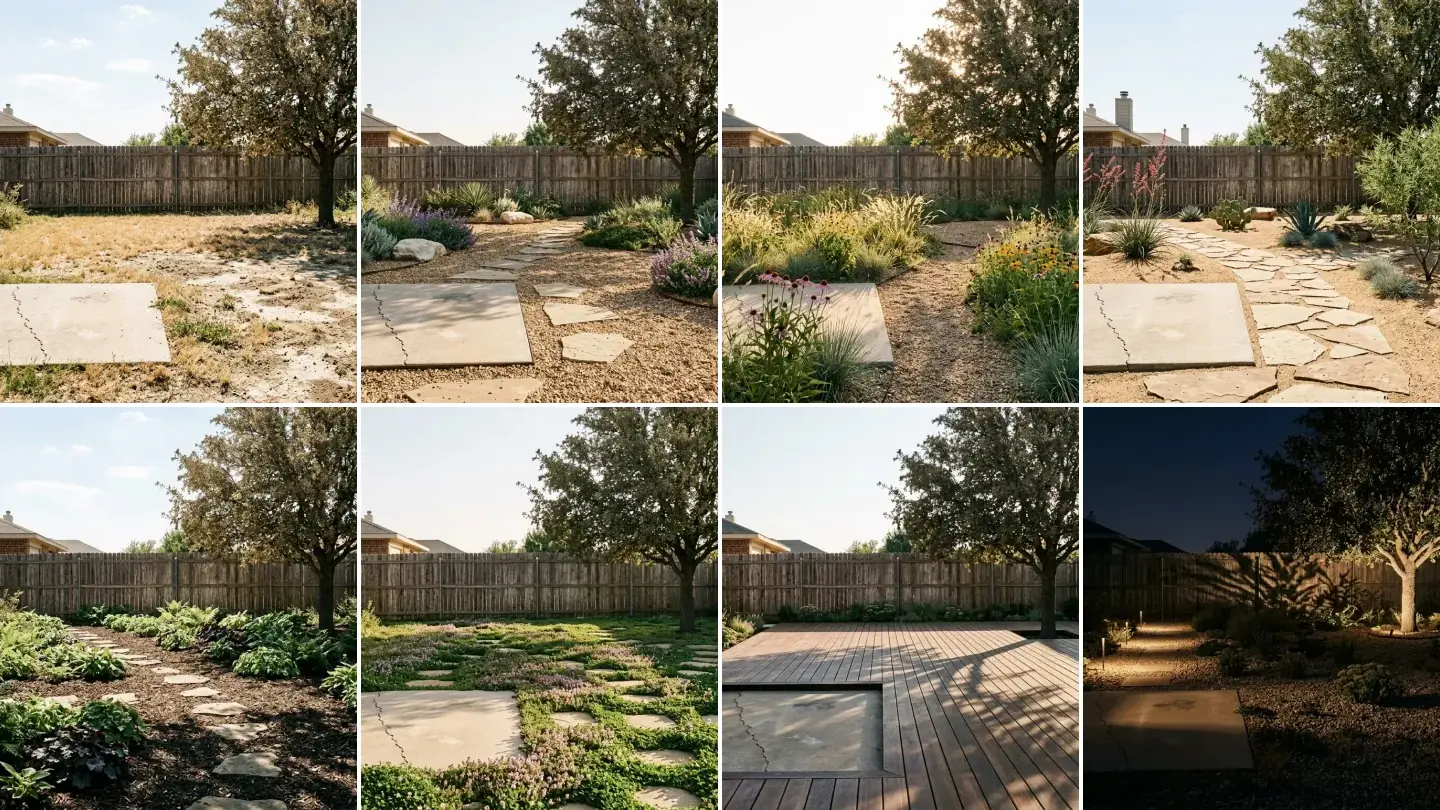
This is a real condition, not a staged one. Compacted bare soil where people walk, straw-coloured dormant grass, weeds taking the edges, a cracked concrete slab by the back door, and a mature tree shading out whatever was left. Nobody searches no grass backyard ideas because they read a trend piece. They search it because the lawn lost.
Our articles are still written by humans!
Get human written articles in your Google feed.
Quick answer: the strongest all-round replacement is gravel with drought-tolerant planting, because it copes with bad soil, drains, and looks intentional from day one. Native meadow is the cheapest and the best for wildlife but you cannot walk on it. Ground cover such as creeping thyme is the closest thing to a lawn you can still cross. And artificial turf, the option most guides push hardest, hit 175F in Penn State's measurements, which is worth knowing before you carpet a sunny yard in it.
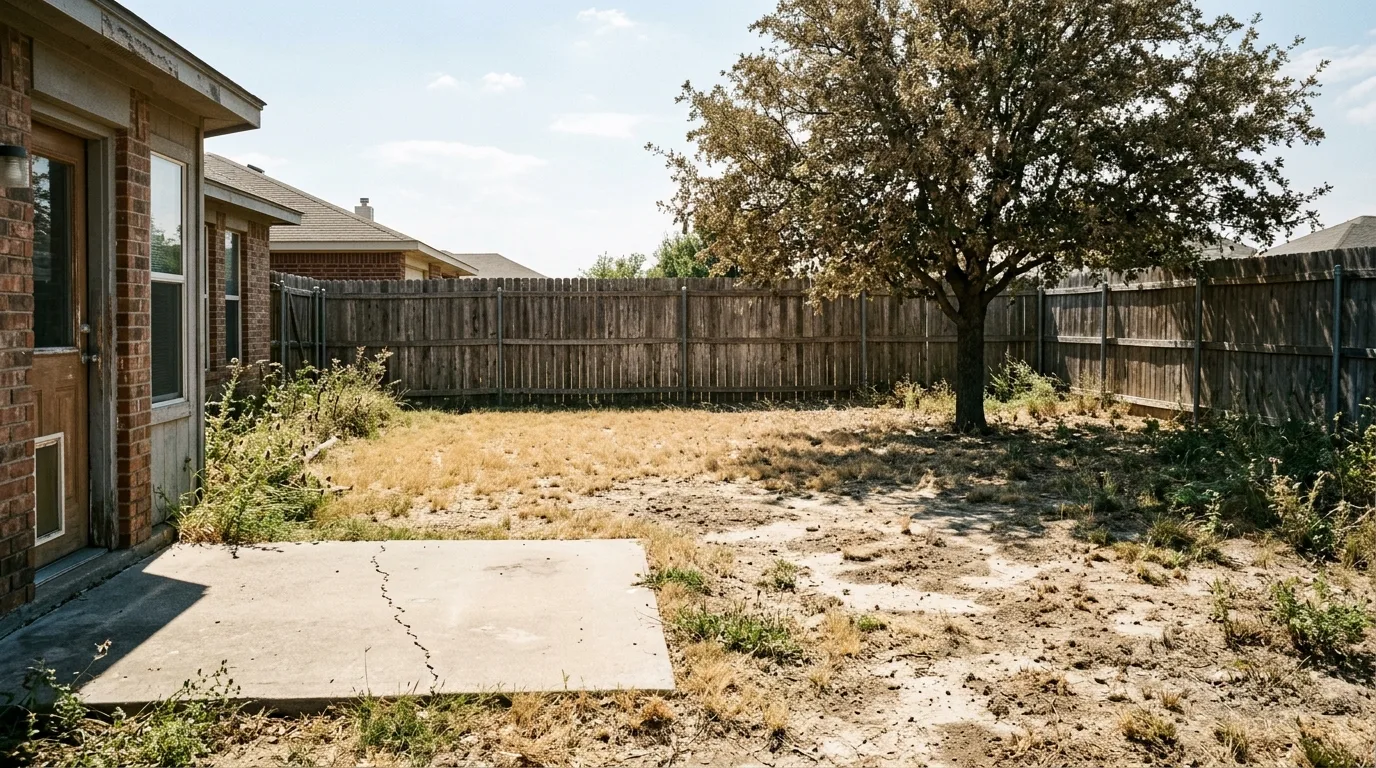
The starting point. Every alternative below was rendered from this exact photograph, same fence, same tree, same cracked slab, so you are comparing surfaces rather than comparing yards.
The short version
- Low maintenance never means no maintenance. Gravel needs weeding, mulch needs replacing yearly, native planting needs three years of attention before it settles.
- Artificial turf reached 175F (79C) in Penn State measurements and 200F in the highest published study. Natural grass rarely passes 100F.
- The heat comes mainly from the fibers, not the black infill, so cool infill upgrades do very little.
- Work out why the lawn died before choosing what replaces it. Shade, compaction and drought each rule out different options.
First, the phrase "low maintenance"
A no grass backyard, or lawn alternative, is any ground treatment that replaces mown turf, from planting to gravel to hard surfacing. Every one of them is less work than a lawn. None of them is no work, and the gap between those two statements is where most of the disappointment in this category lives.
It is worth noticing who writes the advice. Search this topic and several of the top results are published by companies that sell one of the answers: a synthetic turf supplier writing about low maintenance landscaping, for instance. That does not make them wrong, but none of them has an incentive to tell you what their answer costs you in year three.
So here is the honest version of the work each option actually needs, before the pictures.
The artificial turf problem the brochures leave out
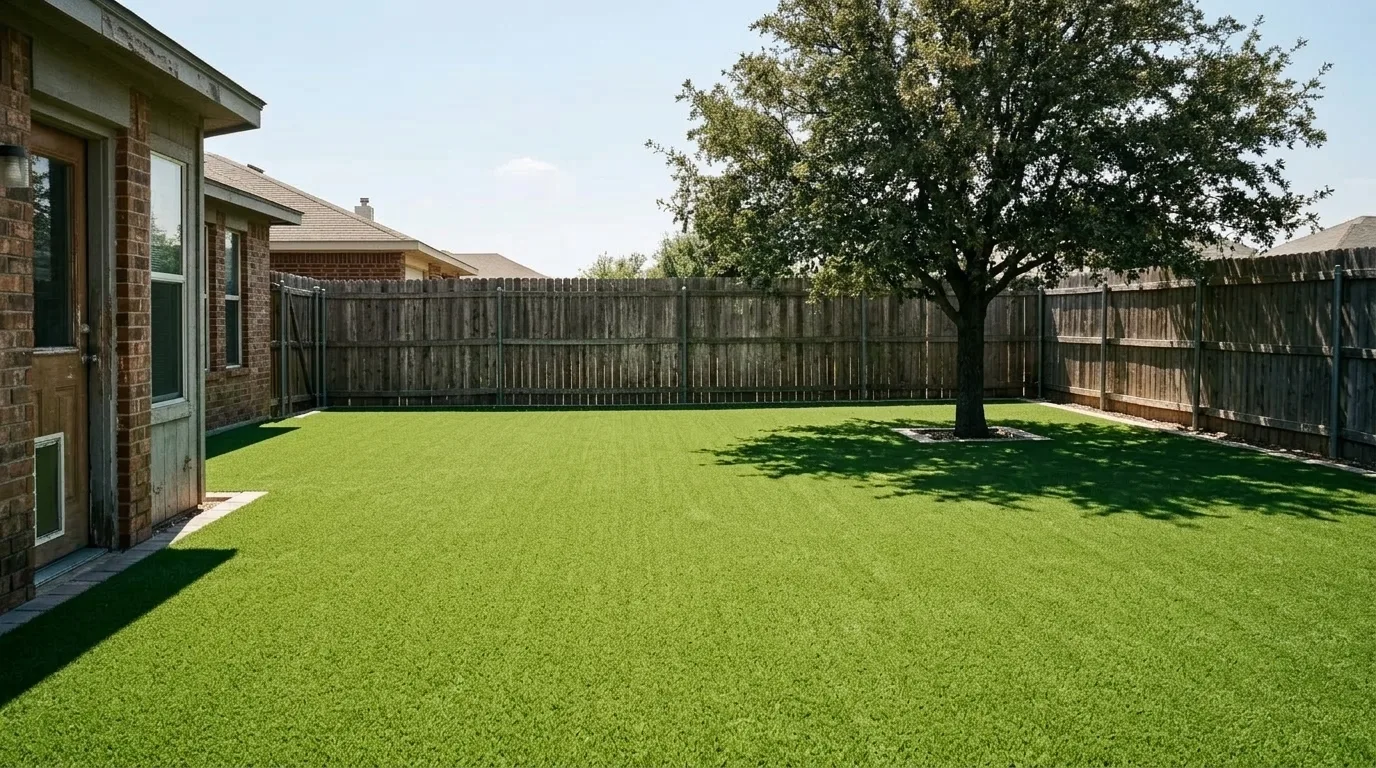
Artificial turf under the light it will actually spend its summers in. It photographs perfectly, which is exactly why it is recommended so often, and it is the one surface here that gets measurably dangerous in that light.
Penn State's Center for Sports Surface Research puts the numbers plainly. The highest surface temperature published in a research paper is 200F (93C), recorded on a 98F (37C) day in Provo, Utah. Their own central Pennsylvania measurements reached 175F (79C). For comparison, natural grass on a hot day is commonly 75 to 95F and stays below air temperature, and anything over 100F on grass is described as very rare. Synthetic turf generally runs 35 to 55F (20 to 30C) hotter than natural grass. (Penn State Center for Sports Surface Research)
Surfaces peak under exactly the conditions a back yard is used in: sunny, clear, low humidity, between noon and three in the afternoon.
The counter-intuitive part is the cause. It is natural to blame the black crumb rubber infill, and that is what the cool infill upsell is built on. Penn State attributes high surface temperatures mainly to the fibers, and cites research where black crumb rubber painted white produced only a very minor temperature reduction. Watering the surface works, and it works for about as long as watering a lawn would have.
None of that makes artificial turf a bad product. It makes it a bad product for a sunny yard used barefoot by children or dogs, which is a very large share of the people searching for it. In deep shade, on a small utility yard, or somewhere you genuinely cannot grow anything, it is a reasonable choice.
Where these numbers and pictures come from
Worth being exact about, because this category is full of confident claims with nothing behind them.
The temperature figures are quoted from Penn State's Center for Sports Surface Research and are linked above so you can check them. The maintenance table is the ordinary horticultural consensus on what each surface needs, not measured data, and the cost bands are relative rather than dollar figures because installed prices swing enormously by region and by whether you do the work yourself. Get those quoted locally.
The images are AI renders generated from the single photograph at the top of this page, not photographs of finished projects. They are here to let you compare surfaces in the same yard under controlled light, which is something no catalogue will show you. They are not evidence that a particular scheme will look like that in your garden, and no render is.
Nine alternatives, one yard
Nine no grass backyard ideas, all from the same photograph, same fence, same tree, same cracked slab. Only the ground changes. I have kept the existing slab in most of them on purpose, because ripping out sound concrete is the fastest way to double a budget.
1. Gravel garden with drought-tolerant planting
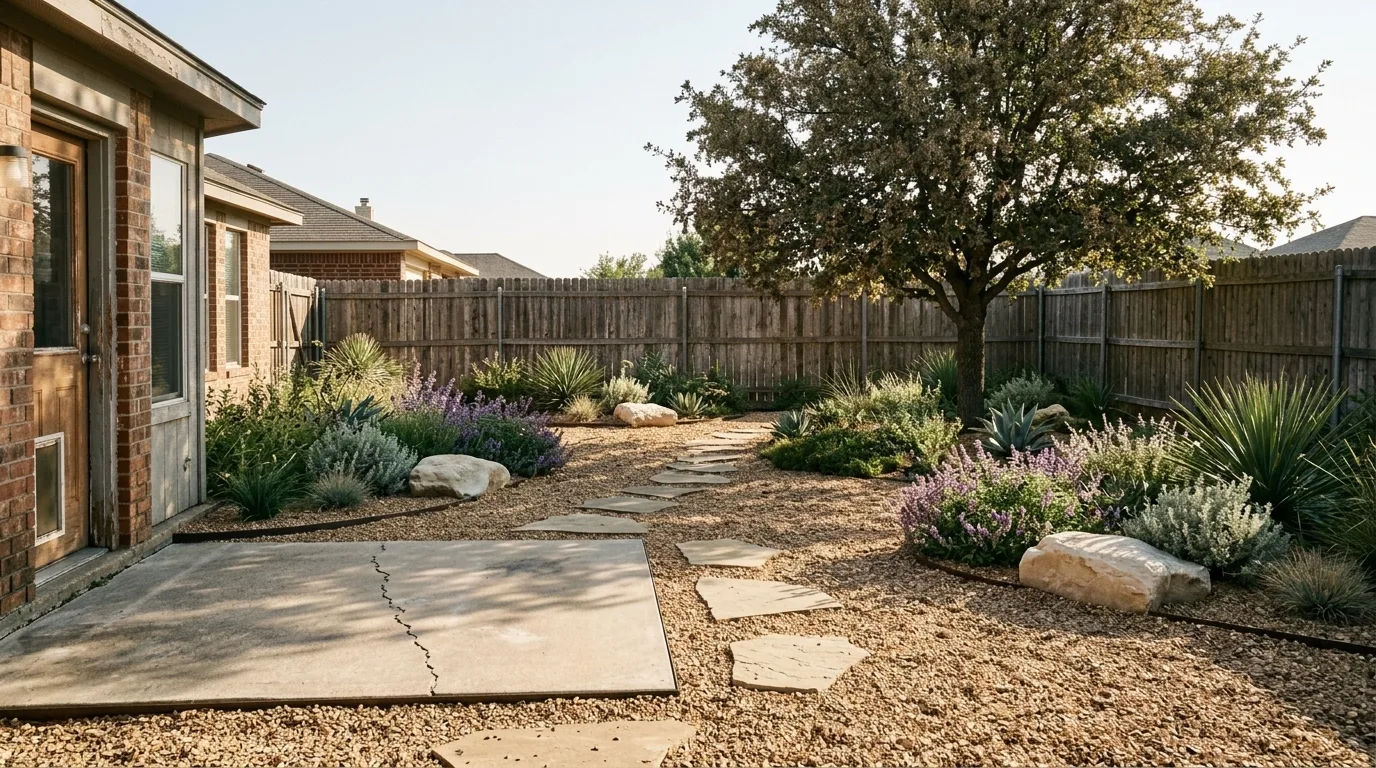
Low sun raking across the gravel so every stone casts its own shadow. Angular gravel locks together underfoot; rounded pea gravel rolls and migrates.
Best for: Poor soil and full sun · Walk on it: Yes · Usable from: Immediately · Real maintenance: Weeding, topping up
The most flexible answer here and the one I would default to. It drains, it copes with the compacted soil that killed the lawn, and it looks deliberate from the day it is laid rather than in year three.
The catch: gravel does not stop weeds. Seed blows in and germinates in the dust that collects between the stones regardless of what is underneath. Membrane buys a few years and then makes weeding worse, because roots knit into the fabric. Also worth thinking about before you commit: it is unpleasant on bare feet and awkward under a wheelbarrow. If the boundary is the thing bothering you rather than the ground, backyard privacy ideas covers screening instead.
2. Native meadow planting
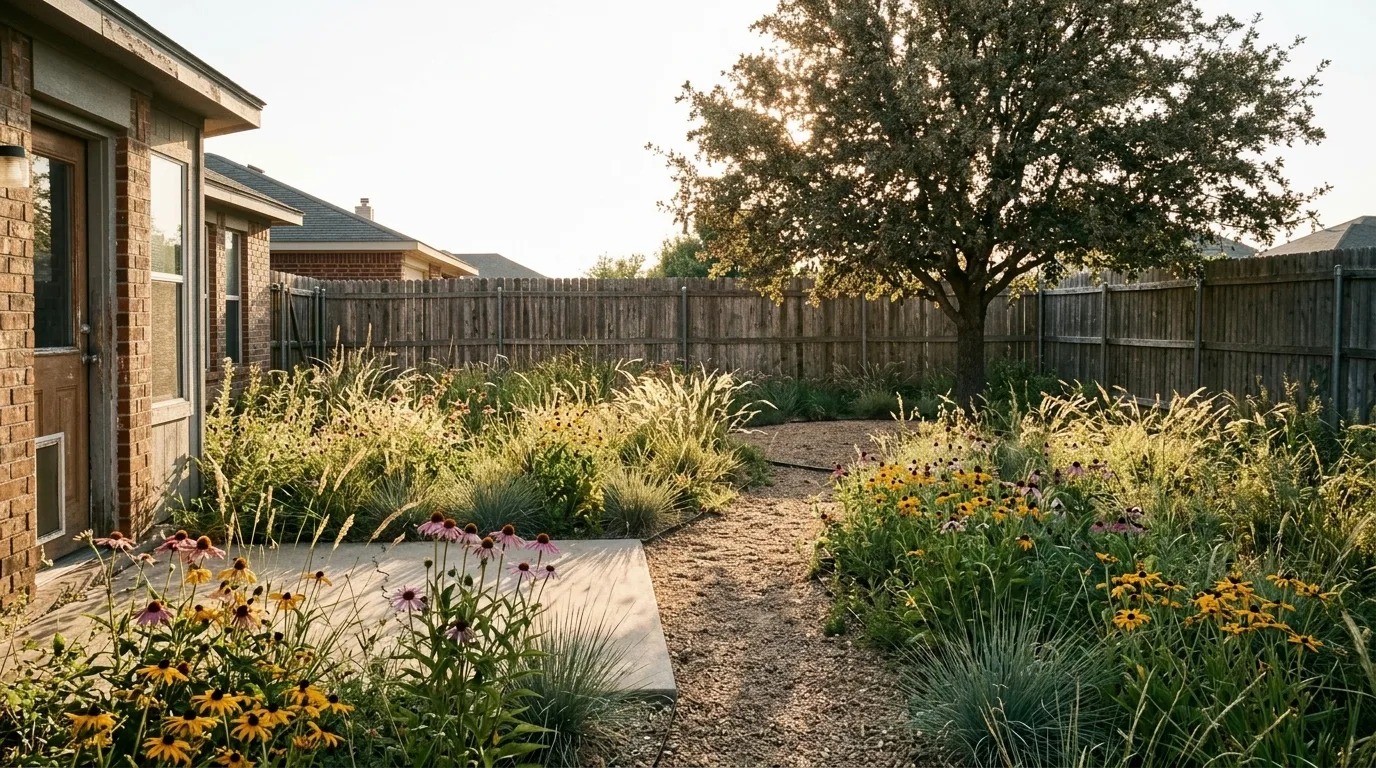
Backlit at low sun, which is when meadow planting justifies itself. The same scheme at midday looks like an unmown verge, and that is worth knowing before you commit to it.
Best for: Cheapest install, wildlife · Walk on it: No · Usable from: 2 to 3 seasons · Real maintenance: Heavy weeding for 3 years, then one cut a year
Cheapest per square foot by a distance, because you are buying seed rather than material, and the only option here that leaves the yard better for insects than the lawn did.
The catch: you cannot walk on it, it looks like neglect for the first two summers, and neighbours or an HOA may read it that way permanently. A mown edge around it is the standard trick for signalling intent, and it genuinely works.
3. Xeriscape
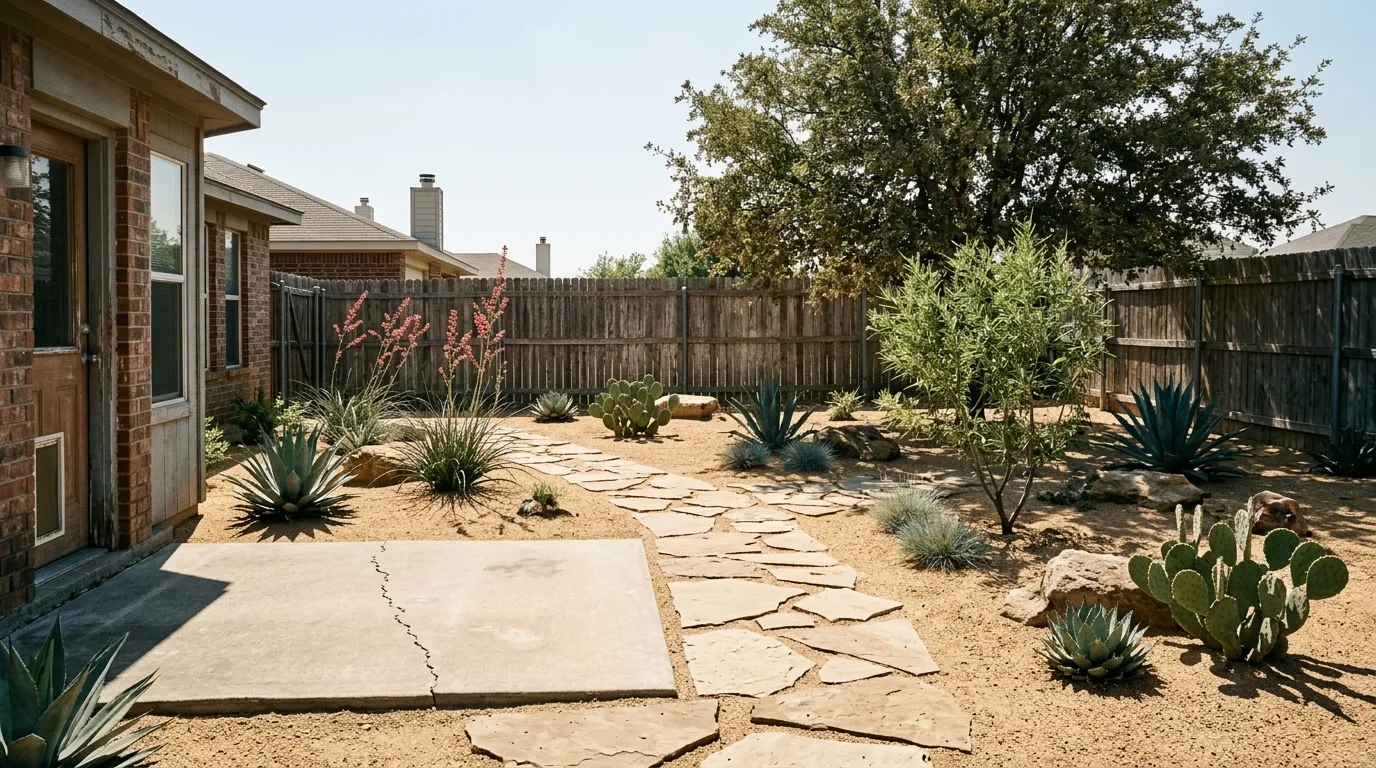
Hard high sun, crisp black-edged shadows from every spine. Xeriscape is the one scheme that looks better in brutal light than in soft light.
Best for: Hot dry climates and water restrictions · Walk on it: On the path · Usable from: Immediately · Real maintenance: Light, never zero
The right answer in the southwest and increasingly defensible elsewhere. Decomposed granite is more comfortable underfoot than loose gravel and reads as a surface rather than as a mulch.
The catch: it is climate specific in a way the renders will never tell you. Agave and prickly pear are wrong in a wet cold winter, and this is precisely where AI design tools mislead people, because an image model will happily place either one anywhere. Check every plant against your USDA zone before buying, which is the test we ran the whole field on in the AI landscape design tools comparison.
4. Ground cover
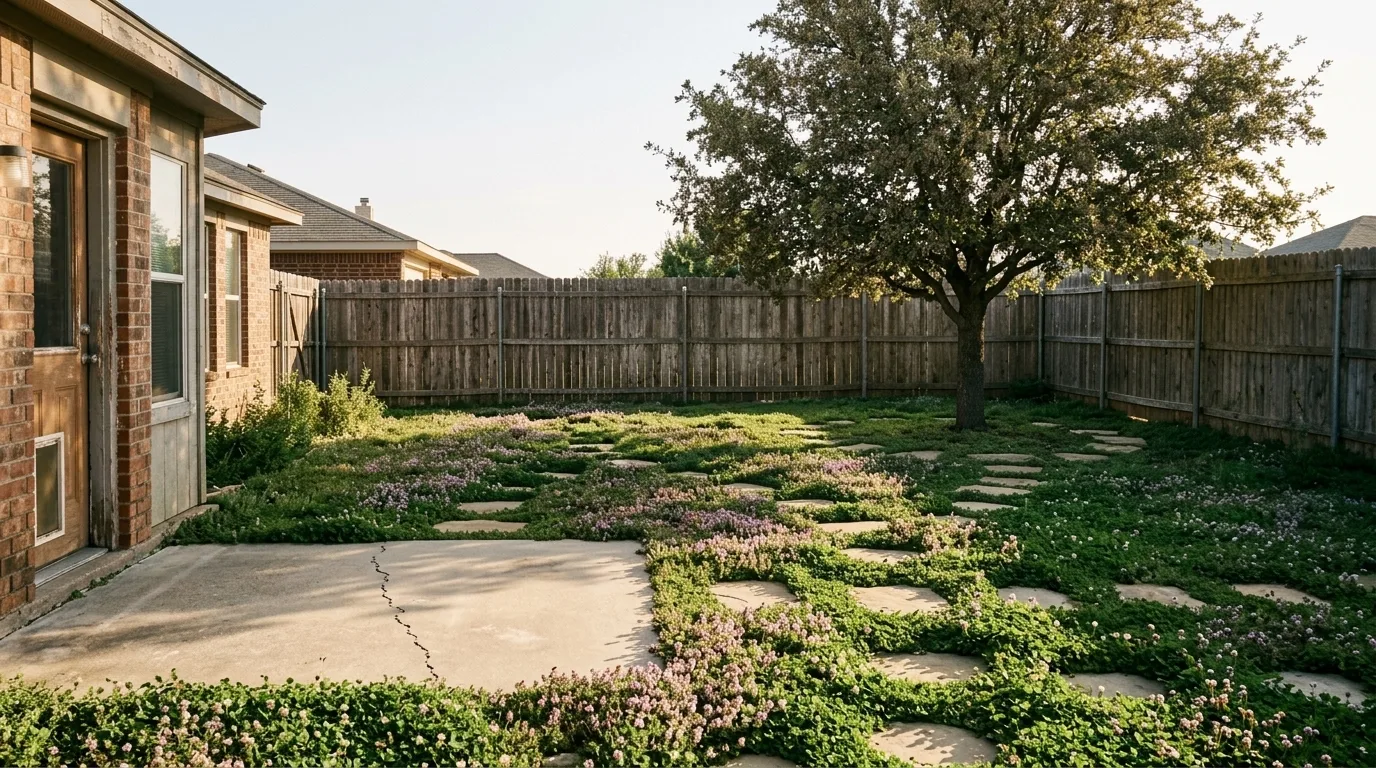
Side light grazing across the low planting so the texture reads. Flat pavers set flush give you a route across it without wearing a track.
Best for: Wanting something lawn-like you can still cross · Walk on it: Light traffic · Usable from: 1 to 2 seasons · Real maintenance: Weeding gaps, patching
The closest thing to keeping a lawn without keeping a lawn. Creeping thyme and clover take light foot traffic, flower, need no mowing and stay green longer into drought than turf grass does.
The catch: light traffic is the operative phrase. A dog run or a children's goalmouth will wear straight through it, and the bare patch will not recover the way grass does. Weeding while it knits together in year one is real work.
5. Mulch and shade planting under the tree
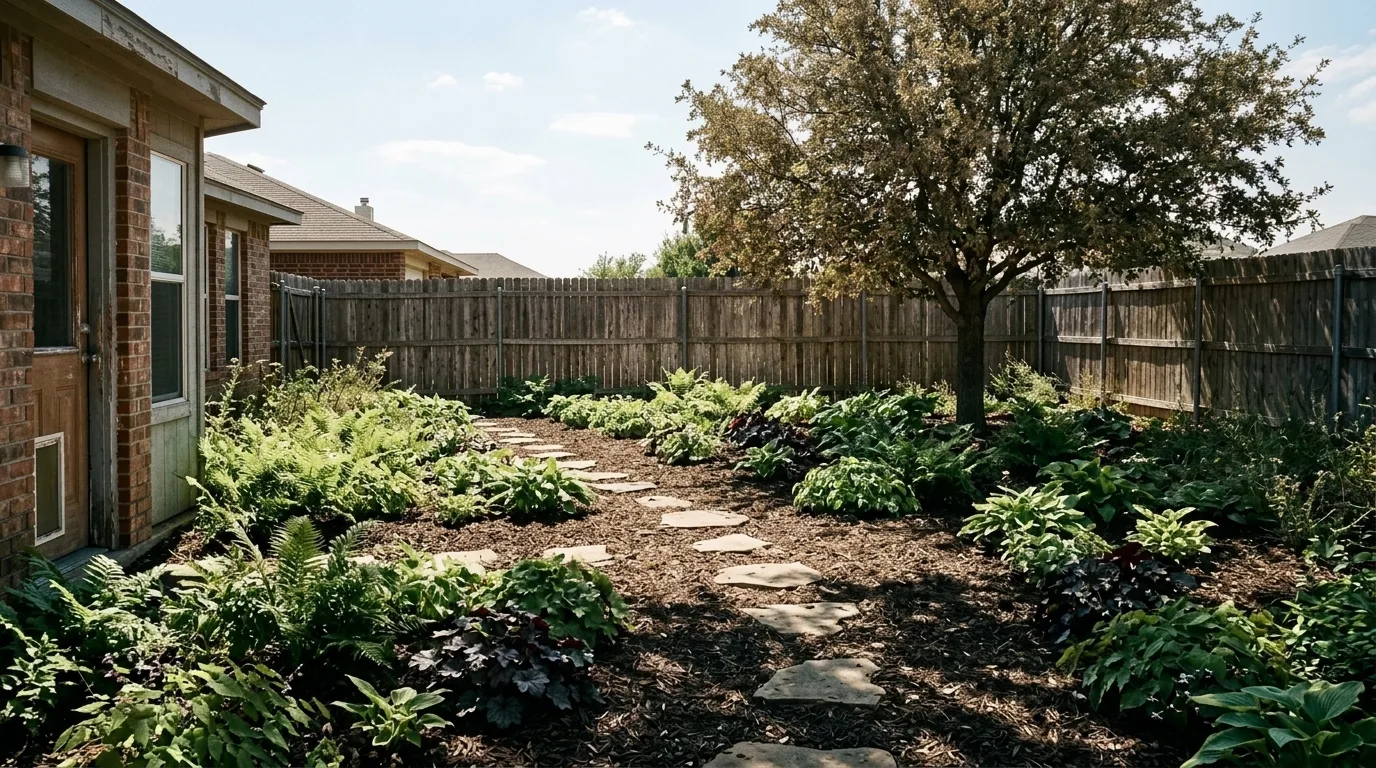
Dappled light through the canopy, deep shade between the pools. Dry shade under a mature tree is where lawns die first and where this is the only honest answer.
Best for: Dry shade under a mature tree · Walk on it: On stepping stones · Usable from: Immediately · Real maintenance: Topping up mulch annually
If your lawn failed under a tree, it failed because of dry shade and it will keep failing. Ferns, hosta, heuchera and epimedium want exactly those conditions, and the result reads as deliberate rather than defeated.
The catch: mulch is an annual cost, not a one-off. And two things kill the tree you are landscaping around: piling mulch against the trunk, and adding depth of soil over the root plate. Keep the mulch off the bark and keep the existing grade.
6. Large format paving
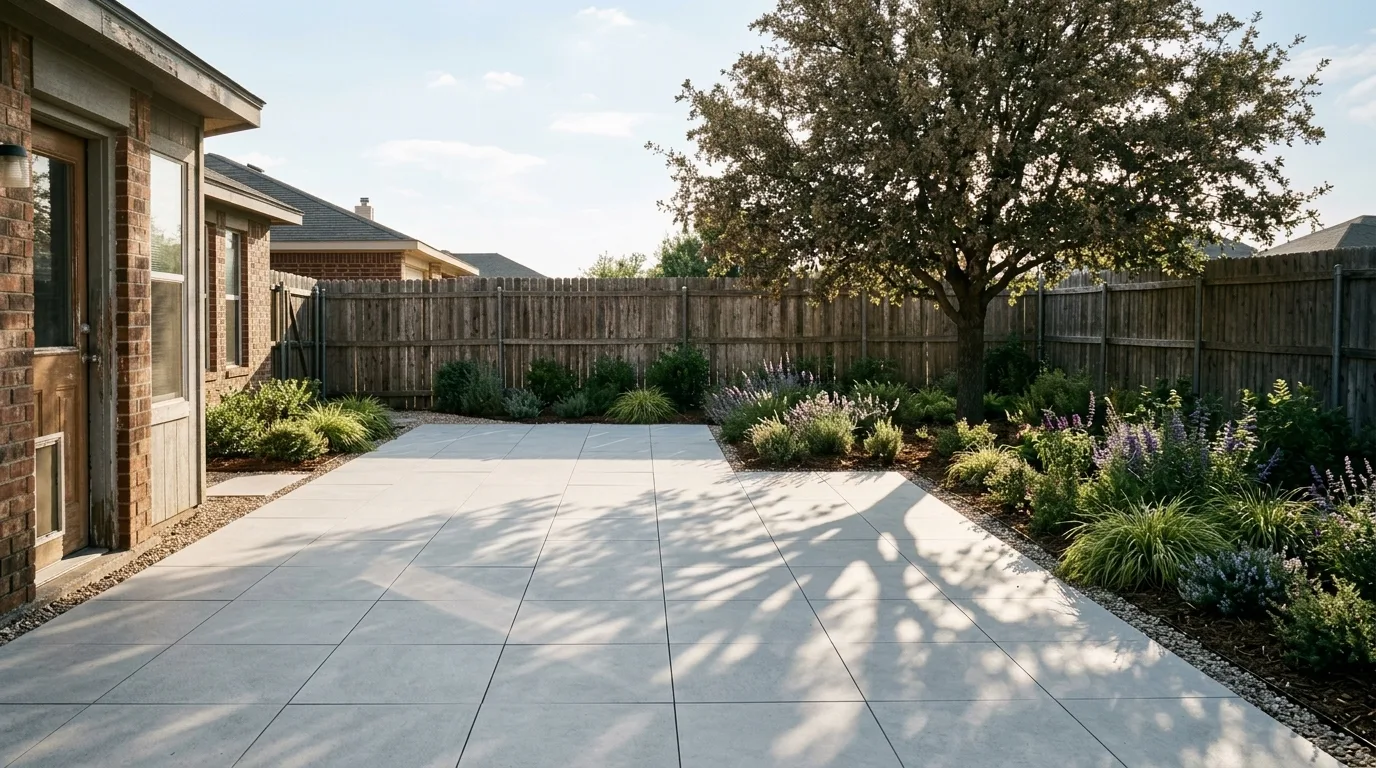
Low sun throwing the tree's shadow straight across the pavers. Pale large-format paving is the surface most improved by raking light and most exposed by it, since every unevenness shows.
Best for: Genuine outdoor living space · Walk on it: Yes · Usable from: Immediately · Real maintenance: Joint weeding, cleaning, resealing
The most usable surface here and the most expensive per square foot. If what you actually want is a bigger patio rather than a garden, stop pretending otherwise and pave properly, then spend the difference on furniture that suits the space.
The catch: drainage, which gets its own section below. Also glare. Pale paving in full afternoon sun is genuinely uncomfortable to sit on, which is the argument for asking any design tool to show you noon rather than golden hour.
7. Timber deck
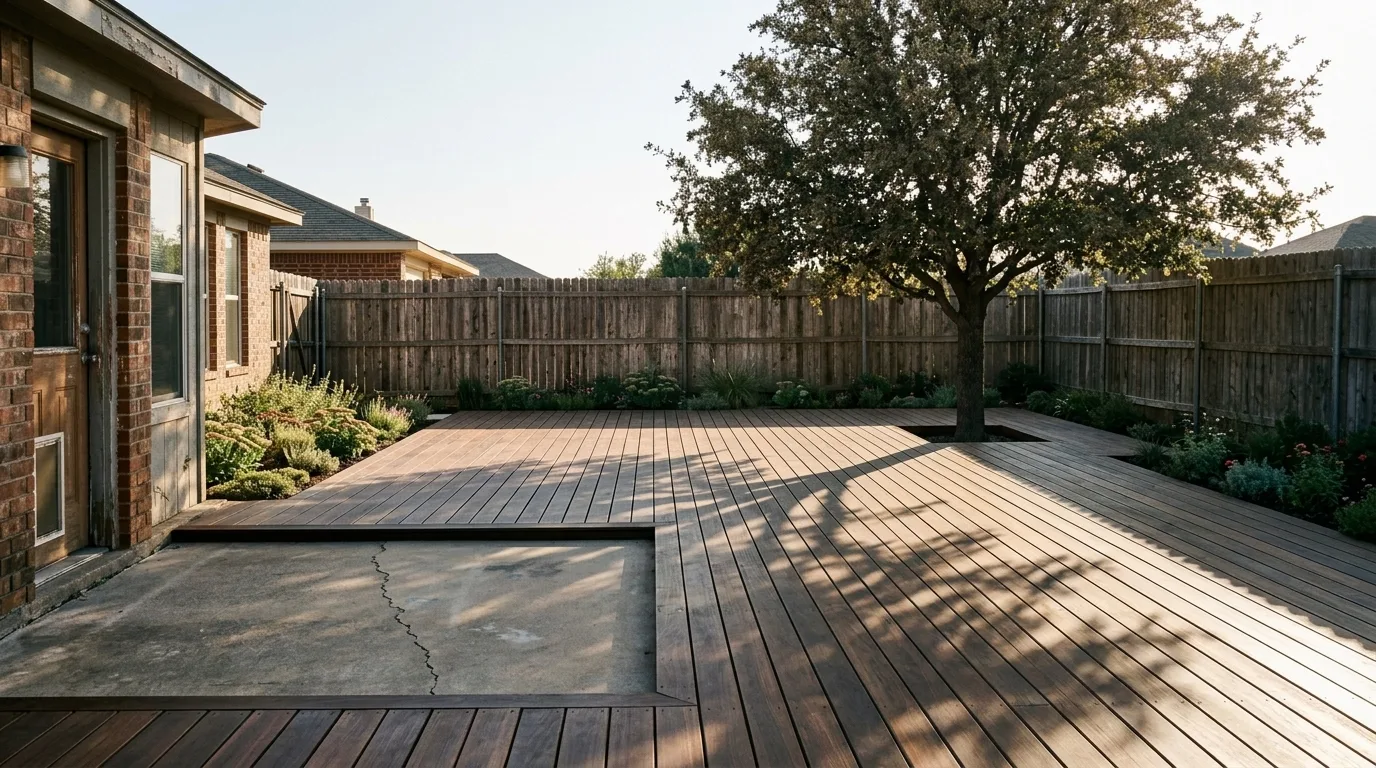
Raking light along the boards so each edge casts a fine shadow line. The cut-out around the trunk is not decorative, it is what stops you burying the root plate.
Best for: Levelling out a slope or a bad grade · Walk on it: Yes · Usable from: Immediately · Real maintenance: Cleaning, resealing, eventual board replacement
The best answer when the ground itself is the problem, because a deck floats over a slope or over compacted clay you would otherwise have to excavate.
The catch: the highest ongoing maintenance of anything on this page. Timber outdoors is a consumable. It also goes slippery in shade, and a deck in permanent shade under a tree will grow algae every winter.
8. Artificial turf
Best for: Shaded utility yards where nothing grows · Walk on it: Yes, unless it is in the sun · Usable from: Immediately · Real maintenance: Brushing, rinsing, infill, replacement in 10 to 15 years
Covered in full above, so briefly: instant, uniform, genuinely low effort, and 35 to 55F hotter than grass in the sun. Choose it for a shaded yard or a small utility space. Do not carpet a south-facing yard in it and expect children to play there in July.
The catch: beyond the heat, it has an end of life. In 10 to 15 years it is a large piece of plastic that has to be lifted and taken somewhere, which is a cost and a disposal problem no other option here has.
9. The one that is not a surface at all
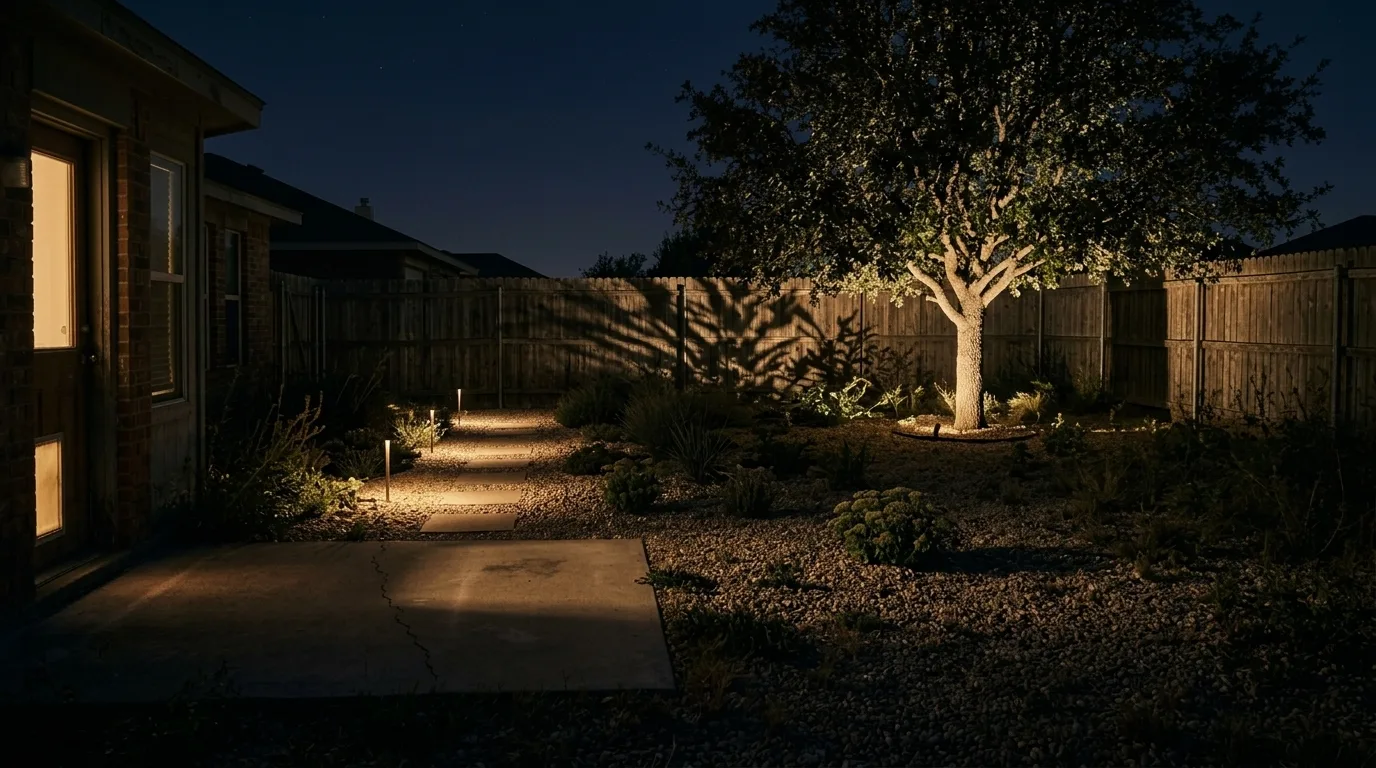
The same gravel scheme after dark. Uplighting the tree throws its canopy across the fence and turns the boundary into the backdrop instead of the limit.
Best for: Getting more hours out of whatever you chose · Cost: Low relative to any surface · Usable from: Immediately
Worth including because it is the cheapest thing on this page and the only one that changes the yard for half of every day. A gravel garden with three uplights is a better result than a more expensive surface with none. The same principle applies indoors, which is why lighting is the lever we keep coming back to.
The catch: it is easy to overdo. Lighting everything flattens the yard. Light two or three things and leave the rest genuinely dark, which is what the render above is doing.
The thing nobody mentions: where the water goes
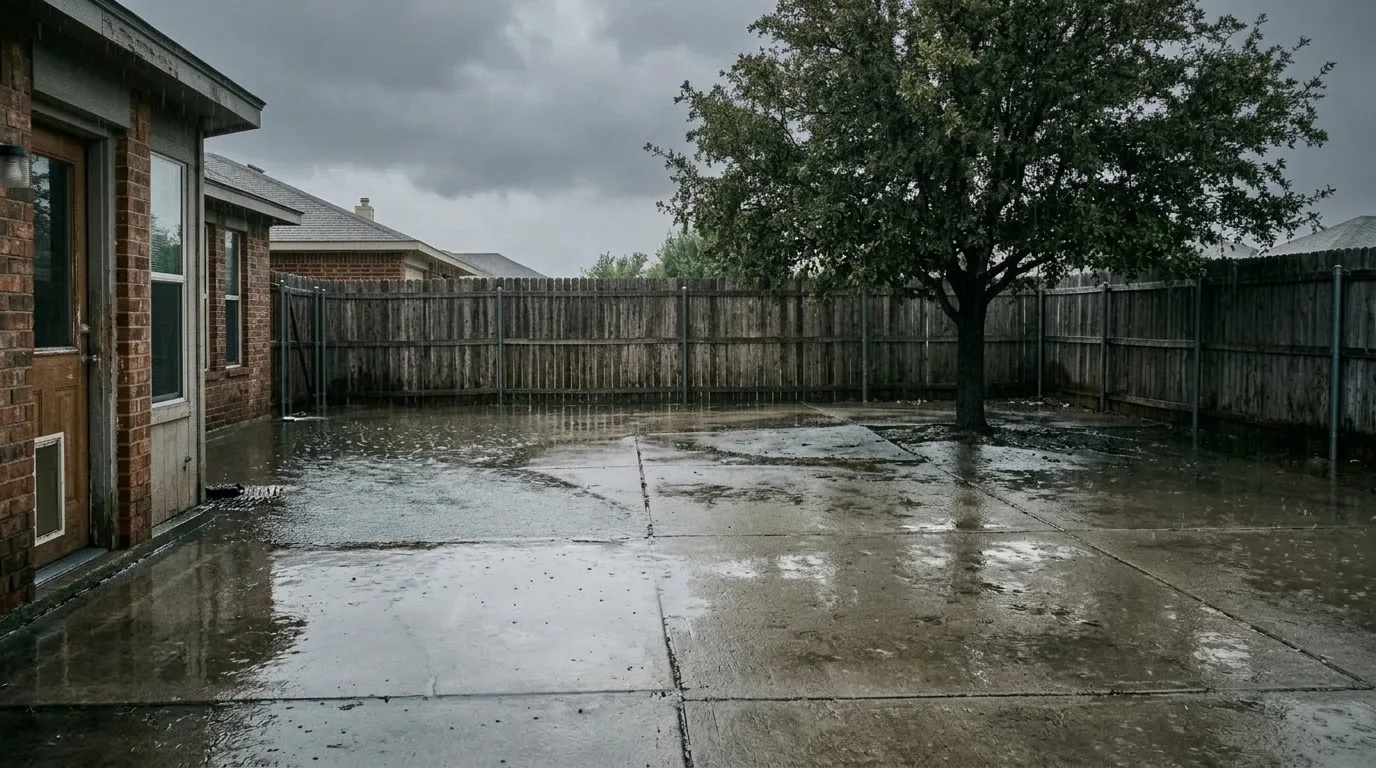
The same yard sealed in concrete, in rain. The water has nowhere to go, so it goes to the wall. This is the failure mode of every hard surface option above, and no render in a sunny catalogue will ever show it to you.
A lawn is a soakaway you mow. Take it out and replace it with something impermeable and that water has to go somewhere else, which in a flat suburban yard usually means toward the house.
Three rules that cover most cases. Keep a permeable margin rather than sealing boundary to boundary. Get the falls right, which means running water away from the building and not toward it. And give the water a destination, whether that is a planted bed, a soakaway or a rain garden in the low corner. Gravel, mulch, meadow and ground cover are all permeable and largely dodge this problem, and planning the layout first is what tells you how much permeable area you have left. Paving, decking on a solid base, and artificial turf on a compacted sub-base do not.
How to choose, in half an hour
- Work out why the lawn died. Shade, compaction, drought and dog traffic each rule out different replacements. A lawn that died in shade will kill sun-loving gravel planting in the same spot.
- Watch where water goes in heavy rain. Stand at the back door during a downpour. Whatever you choose has to deal with that.
- Decide what the space is for. Walking on, looking at, or children and dogs playing on. That single answer eliminates half this list.
- Budget the maintenance, not the install. Ask what it needs in year three, not what it costs on day one.
- Check the temperature question. Full afternoon sun plus bare feet rules out artificial turf.
- Render it on your own photo, in the right light. Not the catalogue light. The light your yard gets when you actually use it.
What I would do with this yard
Gravel with drought-tolerant planting across the open sun, mulch and shade planting under the tree where nothing else will grow, the existing concrete slab kept and framed rather than removed, and three uplights.
That combination handles the two different microclimates in one small yard, which is the thing a single-surface answer always gets wrong. It drains. It is usable the day it is finished. And its worst maintenance year is easier than any week of owning the lawn that died.
Before committing, test it on your own photograph. Our free AI landscape design tool has a ground control with no lawn, gravel, artificial turf and meadow options, and it works from a photo of your actual yard rather than from a text description. Shoot the frame in the light the yard gets when you use it, and check any planting it suggests against your USDA hardiness zone before you buy a single plant. If you would rather draw the plan to scale, the landscape design apps roundup covers the layout tools.
Frequently asked questions
What is the best alternative to grass in a backyard?
There is no single best, because the right answer depends on why your lawn failed and what you use the space for. Gravel with drought-tolerant planting is the most flexible and the most forgiving of poor soil. Native meadow is the cheapest to install and the best for wildlife, but you cannot walk on it. Ground cover such as creeping thyme is the closest thing to a lawn you can still walk across. Under a mature tree, where nothing else will grow, mulch with shade planting is usually the only honest answer.
Is artificial grass really low maintenance?
Lower than a lawn, but not maintenance free, and it has one problem the marketing never mentions. Penn State's Center for Sports Surface Research recorded synthetic turf at 175F (79C) in central Pennsylvania, and the highest figure published in a research paper is 200F (93C) on a 98F day in Provo, Utah. Natural grass on a hot day is commonly 75 to 95F and rarely exceeds 100F. That makes a turf yard in full afternoon sun genuinely unusable for bare feet and dogs at exactly the time of year you want to be outside.
Does cool infill fix hot artificial turf?
Not really, and this is the useful detail. It is intuitive to blame the black crumb rubber infill for the heat, but Penn State points to the fibers as the major contributor to high surface temperatures. Research that painted black crumb rubber white produced only a very minor surface temperature reduction. Watering the surface cools it, but only briefly. If you need a cool surface in full sun, the answer is planting or shade, not a different infill.
What is the cheapest way to replace a lawn?
Sowing a native meadow or a wildflower mix is by far the cheapest per square foot, because you are buying seed rather than material. The trade off is that it takes two to three seasons to look like anything and you cannot walk on it. If you need the space usable straight away and cheaply, mulch with a stepping stone path is the next cheapest, though you will be topping the mulch up every year.
Will gravel stop weeds growing?
No. This is the single most common disappointment with gravel gardens. Weed seed blows in and germinates in the dust and organic matter that accumulates between the stones, entirely independently of whatever is underneath. Membrane slows it for a few years then makes the eventual weeding harder because roots knit into the fabric. Expect to weed a gravel garden, just far less than you mowed.
Can I replace my whole lawn with paving?
You can, and in many places you should not, because it changes where rainwater goes. An impermeable surface with no fall away from the house sends water toward your wall instead of into the ground, and some municipalities now limit the proportion of a lot that can be sealed. If you pave, keep a permeable margin, get the falls right, and give the water somewhere to go before you get the invoice.
What grows where grass will not, under a tree?
Grass fails under a mature tree because of dry shade, and the honest answer is to stop fighting it. Mulch with shade-tolerant planting such as ferns, hosta, heuchera and epimedium is the standard solution, and it looks deliberate rather than defeated. Do not pile mulch against the trunk, and do not add depth of soil over the root plate, which is the most common way people kill the tree they were landscaping around.
How do I see what my yard would look like without grass?
Photograph the yard in the light it actually gets at the time you use it, then test surfaces against that photo rather than against a catalogue. This is the one job AI design tools do well, because swapping a ground surface in an existing photo is far easier than inventing a garden. Our AI landscape design tool has a ground control with no lawn, gravel, artificial turf and meadow options for exactly this comparison.
Keep reading
- AI landscape design tool, to test any of these surfaces on a photo of your own yard.
- Backyard privacy ideas, with the sightline maths for an overlooked yard.
- Best AI landscape design tools, twelve compared, including which ones check plants against your climate.
- Best free AI garden design tools, the same field in British garden vocabulary.
- How to design a garden layout, the planning step before any surface decision.
- Outdoor furniture ideas for a patio, once the ground is settled.
- Pool renovation cost, if a tired pool is the reason the yard around it needs rethinking.
- Best AI exterior design tools, for the house the yard sits against.
- Why AI renders look fake, worth reading before trusting any render of your own yard.