AI Fence Design
see a new FencePrivacy FencePicket FenceMetal FenceGateFence on your home




AI Fence Design


1200+ reviews
See a New Fence on Your Home
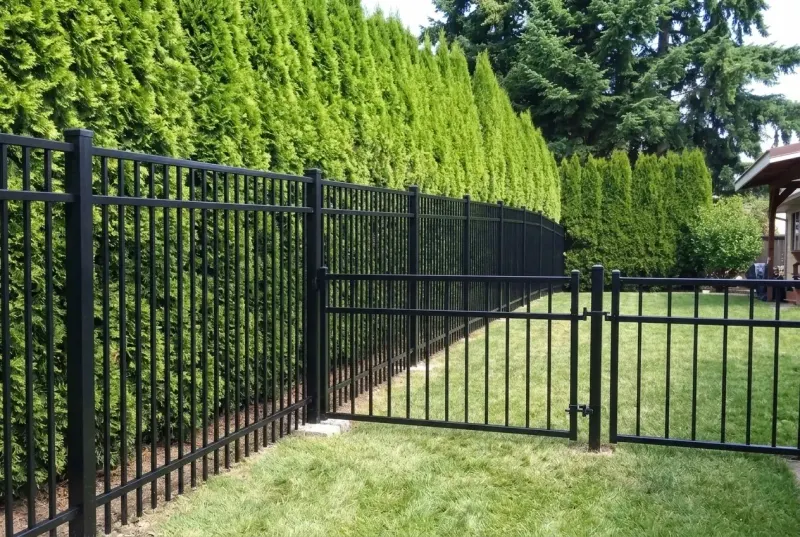
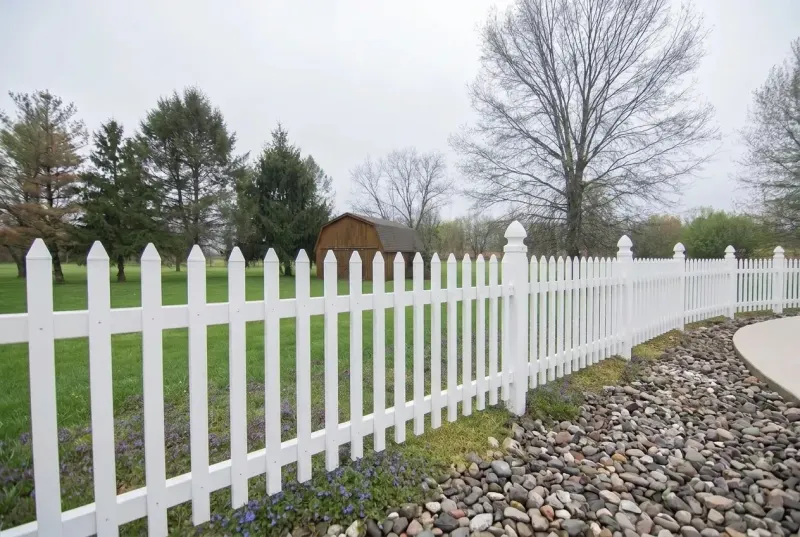
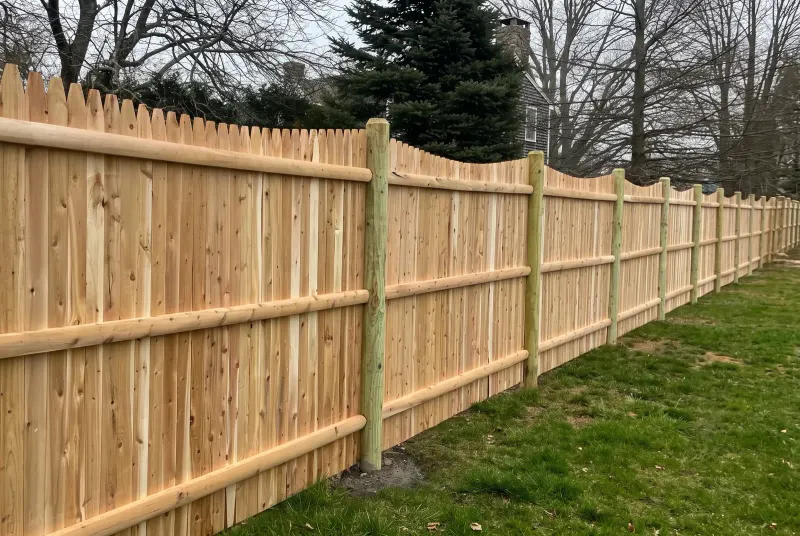
What This Tool Actually Produces
Real yards with a new fence drawn by MeltFlex AI: cedar privacy, horizontal slat, white vinyl, black aluminum, wrought iron, white picket, split rail, hog wire and chain link.
Browse the garden renders in the MeltFlex gallery to see the rest. These 22 are a small slice of it.
Real homes.
Real opinions.*
Real members on MeltFlex AI, the app behind this fence visualizer.
Compensated for sharing their honest experience.
 Jessie
 Richar

 Gigi

 Emma


For interior designers
Become our interior designer and get clients
Publish your design so clients can find you.

A Fence Costs Thousands, and You Only See It Once It Is Built
Professionally installed fences cost $15 to $25 per linear foot on average (NerdWallet, citing Angi (updated July 10, 2025)). Around a 150-foot backyard that is $2,250 to $3,750, picked from photos of somebody else's yard.
Homeowners
A 6-foot privacy fence and a 4-foot aluminum one change how a yard feels completely, and the catalog photo never shows your house behind it.
Neighbors & HOAs
A shared property line or an HOA review goes faster when everyone looks at the same picture of the actual fence on the actual lot.
Fence Contractors
Customers struggle to choose from a brochure. Showing two or three styles on their own house settles the style and the gate before the quote.
Upload a photo of your yard and MeltFlex AI draws the new fence on it in seconds, along your real property line, with your house and yard left as they are.
Tested on 3 Real US Yards, 18 Renders
Fence Visualizer: Pick the Fence Before You Pay for It
A fence is a long, expensive line through the middle of your view. A fence visualizer shows that line on your own house first: upload a photo, try a few styles, and walk into the quote knowing what you want.
Privacy, metal, picket or rail
Wood privacy and white vinyl privacy block the view at 6 feet. Horizontal slat is the modern take on the same job. Black aluminum and wrought iron mark the line without hiding the yard and are the usual pool fences. Picket, split rail and hog wire keep a front yard or a field open, and black chain link is the budget option that disappears against planting. Try the two you are torn between on the same photo.
Check height rules before you order
Height limits are local. Salt Lake City allows 4 feet between the front lot line and the front of the house and 7 feet at or behind it (Salt Lake City Code 21A.40.120.E). A pool barrier must be at least 48 inches tall under the 2024 International Swimming Pool and Spa Code, section 305.2.1. Render the height your city allows, not the one in the catalog.
Shoot the whole line
Stand back far enough to get the full fence line in frame, in daylight, from where you will see the fence most: the patio for a backyard, the street for a front yard. The fence is half of the picture, so pair it with the AI garden design tool for planting and paving and the exterior design tool for the house behind it.
Live now
Weekly Creator Contest $10,000
Make your design in MeltFlex and submit by Sunday. Any room, any style.




Affiliate program


Share MeltFlex, earn $2,000+ a month
30% of every subscriber you bring, every month35 subscribers ≈ $2,100
Frequently Asked Questions
How does the AI fence visualizer work?
Upload a photo of your backyard, side yard or the front of your house, pick one of nine fence styles and, if you like, a color, a height, a gate and planting along the fence. MeltFlex AI then draws the new fence on your photo, usually in 10 to 25 seconds. It replaces the existing fence along the same line, or builds one along the edge of the lawn if there is no fence yet, and keeps the house, the lawn, the trees, the driveway and the camera angle as they are. Try it on your yard.
Which fence styles can I try?
Nine styles common on US homes: horizontal slat, wood privacy (dog-ear cedar boards), white vinyl privacy, black aluminum, wrought iron, white picket, split rail, hog wire and black chain link. Six colors and stains work on any of them: natural cedar, honey, dark walnut, weathered gray, solid black and solid white. You can also set the height (3, 4, 6 or 8 feet), add a single gate, a double driveway gate or an arbor gate, and add vines, a planting bed or lights along the fence.
How accurate is the AI fence design? Did you test it?
Yes. On November 26, 2026 we ran the exact brief this page sends 18 times on 3 real US yards (a backyard with a split rail fence, a Louisiana patio with an old wood privacy fence and an Indiana front yard with no fence), two runs per brief. All 18 of 18 kept the house, lawn, trees, driveway and camera angle unchanged, and all 18 built the fence style that was asked for. The weak spot is a front yard with no fence at all: only 2 of 6 renders ran the fence the full width of the lawn, the others left part of it open. The median render took about 15 seconds. A few raw requests came back without a picture; the live tool retries those automatically and refunds the credit if the retry fails too.
Can I see a fence on a yard that has no fence yet?
Yes. With no existing fence, MeltFlex builds the new one along the outer edge of the lawn, with an opening where the driveway or a path crosses it. This is the hardest case for the AI: in our test the fence sometimes covered only one side of the driveway. A photo taken from the street, with the whole property line in frame, gives the best result, and you can generate again if a run leaves a gap.
How tall can my fence be?
It depends on your city or county, so check the local zoning code before you order. Many US cities allow a lower fence in the front yard than behind the house. Salt Lake City, for example, caps a fence between the front lot line and the front of the house at 4 feet and a fence at or behind the front of the house at 7 feet (Salt Lake City Code 21A.40.120.E). An HOA can be stricter than the city. The height row in MeltFlex shows 3, 4, 6 and 8 foot fences so you can see the difference on your own house.
How tall does a pool fence need to be?
Under the 2024 International Swimming Pool and Spa Code, section 305.2.1, the top of a pool barrier must be at least 48 inches above grade, measured on the side away from the pool, and the gap under it must not exceed 2 inches over grass or gravel. Your state or city decides which edition applies and may add rules, so confirm with the local building department. Black aluminum and vinyl privacy at 4 feet or more are the usual pool fence choices to visualize.
How much does a new fence cost?
Professionally installed fences cost $15 to $25 per linear foot on average, according to NerdWallet citing Angi (updated July 10, 2025). Around a 150-foot backyard that is roughly $2,250 to $3,750 before gates, and material changes the price a lot. MeltFlex does not quote prices: use it to settle the style, color and height first, then get quotes for that one fence.
Is the fence visualizer free?
Yes. Your first AI design is free and needs no credit card. Upload a photo, pick a fence and generate.
Can I copy a fence I saw on another house?
Yes. Pick the Upload a Fence card and add a photo of the fence you like. MeltFlex copies its boards, spacing, height proportions, color and finish onto your yard, either for the whole fence or for the gate only.
Can I change the rest of the yard too?
Yes. After the first render your photo opens in the MeltFlex workspace with the garden tools, so you can keep the new fence and add planting, a patio, paths, lighting or a new lawn, or switch to another fence in the Fence & Boundary row. See AI Garden Design.
Can fence companies use it with clients?
Yes. Fence contractors and landscapers upload the customer's photo and show two or three fence styles on the real property before quoting, which settles the style and the gate positions in one visit. Commercial use in client work is included on the Pro and Enterprise plans.
Where do the photos on this page come from?
The hero video is a MeltFlex clip of a backyard chain-link fence turning into a horizontal slat fence. The fence style cards and the gallery are fence photos from Behance projects, many of them re-fenced by MeltFlex AI in other styles with the same brief this page sends. The sample and test yards are real US homes from Wikimedia Commons, used under their licences: “My old backyard” by Marcus Quigmire, CC BY 2.0 (sample photo); “Harvey LA back yard 2” by Lisa Heindel, CC BY 2.0 (sample photo and test yard); “Typical suburban backyard” by Veracious Rey, CC BY-SA 3.0 (test yard); “774 Redbud Lane Greenwood Indiana” by Bart Everson, CC BY 2.0 (test yard with no fence).

