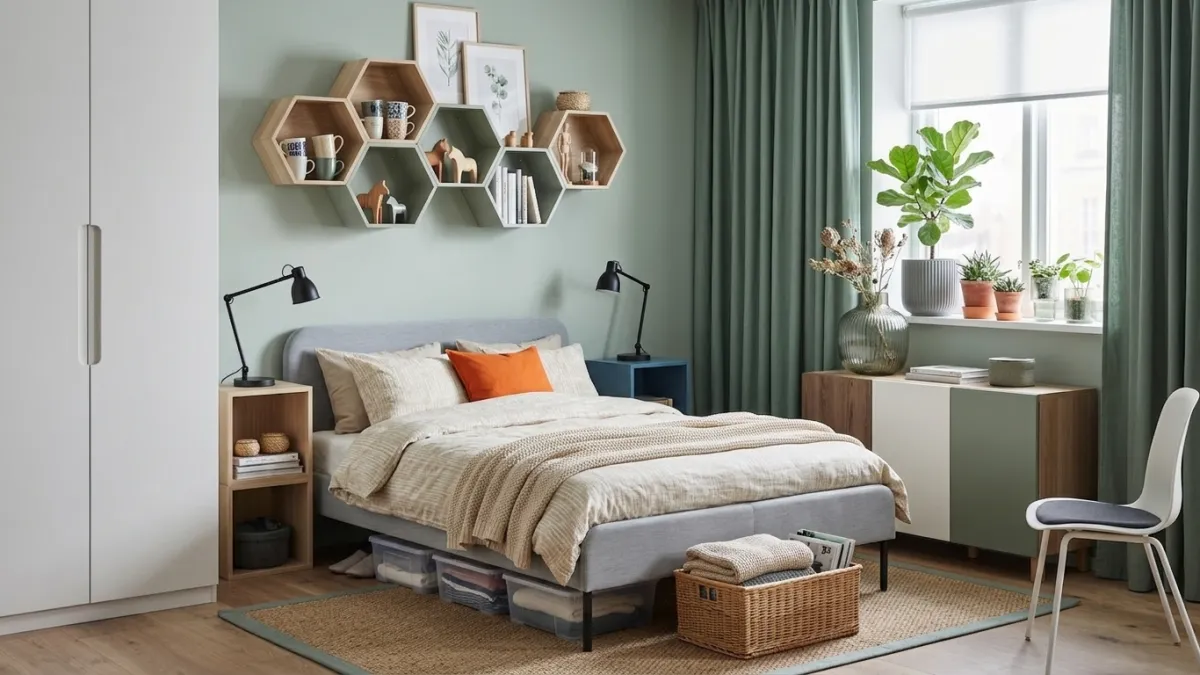
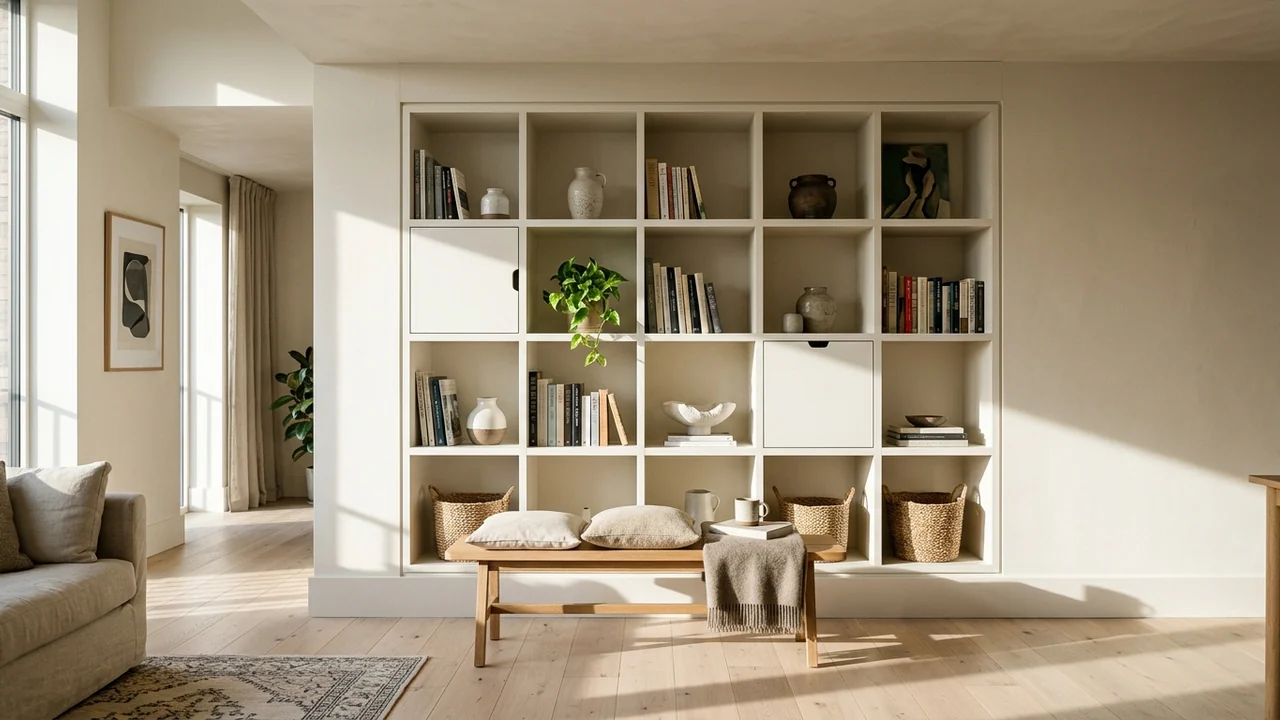
An IKEA hack is any modification of a stock IKEA product beyond what the instructions describe: cutting it, painting it, adding trim, swapping fronts and legs, or joining several units into something IKEA does not sell. The hacks that end up looking like custom joinery all do the same three things. They close the gaps to the wall, ceiling and floor. They make the unit and the wall the same colour. And they respect what the carcass can actually carry, which on most IKEA storage is a lot less than people assume.
Our articles are still written by humans!
Get human written articles in your Google feed.
Most IKEA hack roundups are photo galleries with no numbers in them. This one has the numbers. Every price below was pulled from ikea.com/us on 29 July 2026, every dimension is the current published one, and the load ratings come from IKEA’s own product pages. We also found one popular hack that is no longer buildable in the US at all, because IKEA quietly stopped selling the base product.
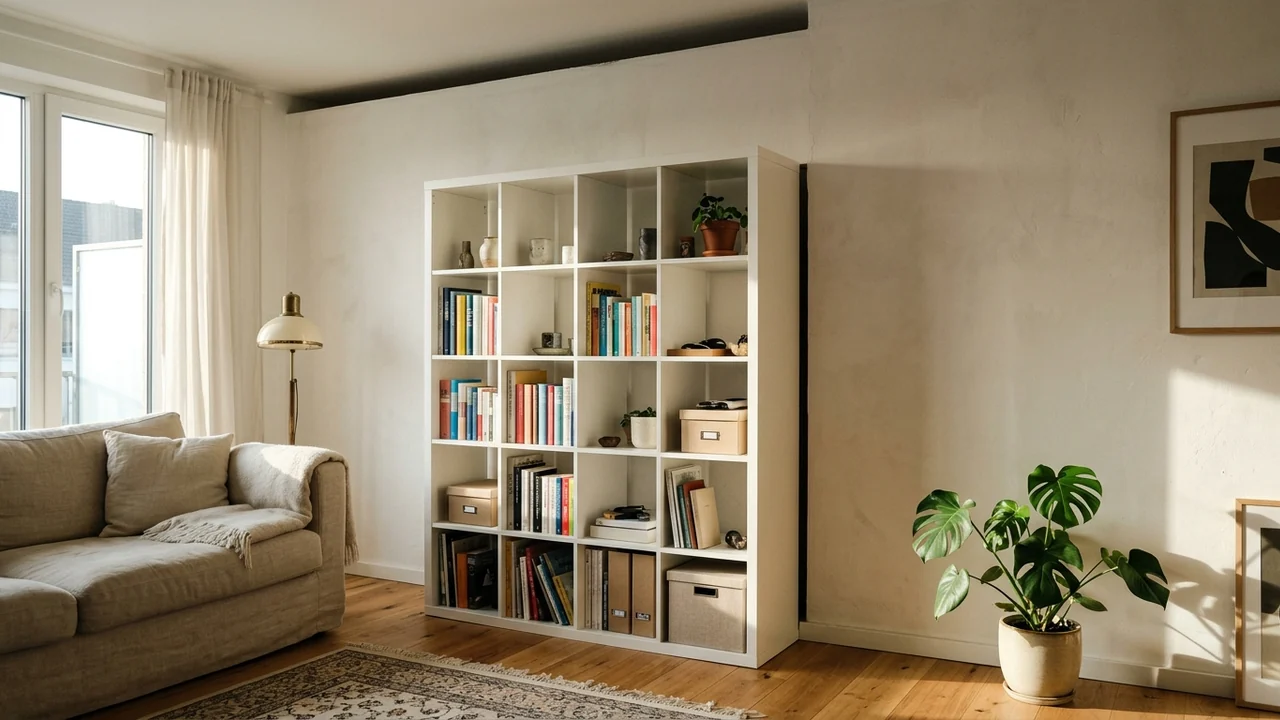
The four rules that separate a built in look from a cheap one
The practice has a clear starting point. Jules Yap founded IKEA Hackers in 2006 after trying to find ideas for a pair of PAX sliding doors and discovering that the good modifications were scattered across the whole internet with nowhere to collect them. Twenty years later the genre is enormous and, ironically, back to being scattered across roundups that mostly repost each other’s photos.
So before any specific hack, it is worth knowing why some of them read as architecture and some read as a flatpack box with paint on it. After rendering a few hundred of these, the pattern is boringly consistent.
1. Close every gap. Flatpack looks like flatpack because of the reveal: the inch of shadow between the cabinet and the side wall, the dusty gap above it, the toe void underneath. Scribed filler strips at the sides, a painted header board to the ceiling and a run of baseboard at the floor do more for the finished look than anything else on this list, and they cost about 80 to 150 dollars in primed MDF.
2. Paint the unit and the wall the same colour. Contrast makes an object read as furniture. Sameness makes it read as part of the room. This single decision is the difference between the two most common outcomes of a PAX build. If you are matching to an existing scheme rather than repainting, our guide to what colour furniture goes with grey walls covers the undertone traps that make two whites fight each other.
3. Change what your hand touches. Legs, handles and the top surface. Those three elements carry most of the perceived quality and cost the least to change. A pair of solid oak legs and brass edge pulls will do more than a full respray.
4. Respect the core. This is the one people skip, and it is the one that ruins builds. Not all IKEA board is the same material, and half of it is hollow.
What each IKEA range is actually made of
This table is the most useful thing on this page and it exists nowhere else in the search results. It comes straight from the materials and technical sections of the current IKEA US product pages. Whether a range has a honeycomb paper core decides whether you can cut it, screw into it, or sit on it.
Honeycomb filling is a recycled paper lattice sandwiched between two thin boards. It makes a large panel light and rigid for very little material, which is genuinely clever engineering and part of why a 57 inch KALLAX costs 179.99 dollars. It also means that if you cut into the middle of that panel, there is nothing inside but air and paper. Screws pull straight out. This is the single most common reason a hack fails structurally.
1. Turn a bank of KALLAX into a built in cube wall
The KALLAX grid is the most hacked object IKEA makes, and the built in treatment is the one worth doing. Two 4x4 units (57 7/8 x 57 5/8 inches, 179.99 dollars each) stood side by side give you a run just under 10 feet wide. Box them in: a scribed filler against each side wall, a painted header closing the gap to the ceiling, tall baseboard at the floor, then paint the whole assembly and the wall behind it in one colour.
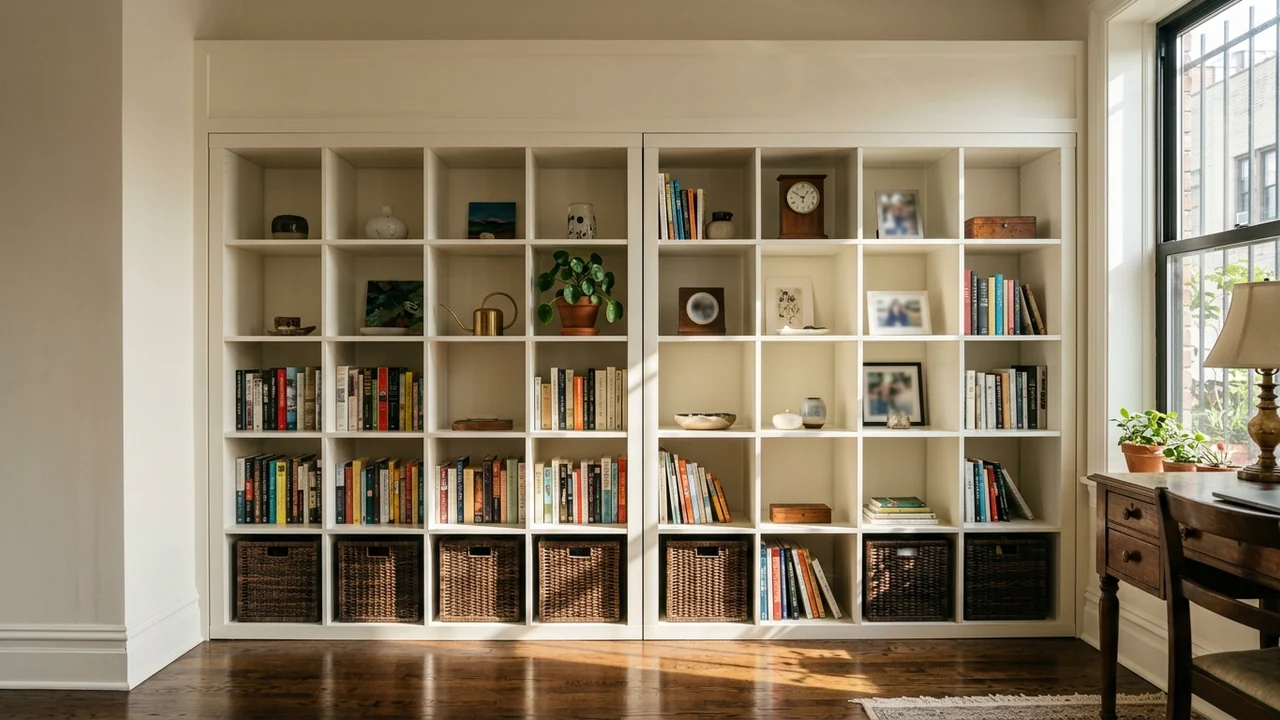
The detail that sells it is mixing open and closed compartments rather than leaving all 32 cubes open. A wall of open cubes turns into a wall of visible clutter within a month. Insert with door is 15 dollars, insert with two drawers is 25 dollars, insert with four shelves is 30 dollars, and a DRÖNA fabric box is 4.99 dollars. Closing roughly a third of the openings is the sweet spot.
KALLAX is a tipping hazard and IKEA states it must be anchored. That is not optional advice on a unit this tall, and it is also what lets you treat it as joinery instead of furniture.
Because every KALLAX hack starts with picking the right grid, here is the full current US range. Cube openings are a constant 13 x 13 inches across every size, which is why inserts and boxes are interchangeable between them.
2. The KALLAX double workstation
Two 2x4 KALLAX units (30 1/8 x 57 5/8 inches, 64.99 dollars each) stood on their ends as legs, with one long solid wood countertop across the top. A KARLBY countertop at 74 inches is 199 dollars, which brings the build to 328.98 dollars for a two person desk with sixteen cubes of storage underneath. Swap to a SÄLJAN countertop at 129 dollars and the same build lands at 258.98 dollars, with a laminate top instead of solid wood.
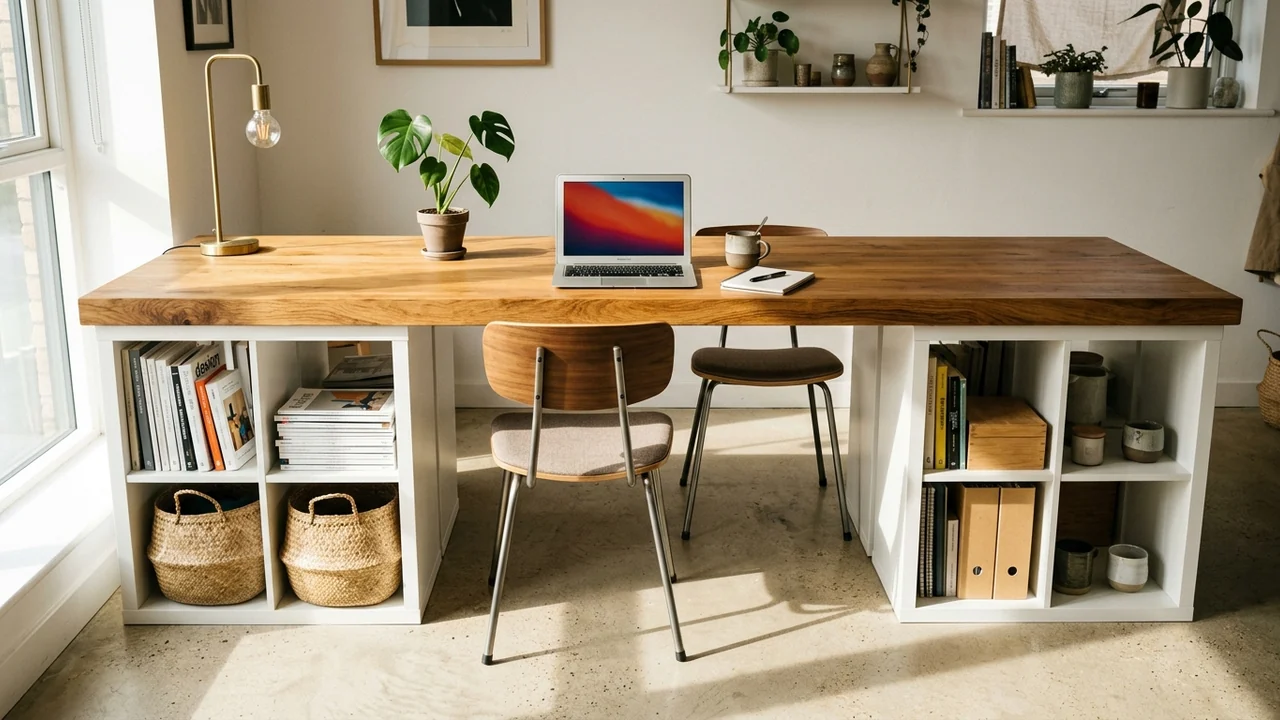
Worth comparing honestly against IKEA’s own answer. The LAGKAPTEN / ALEX desk is 239.99 dollars and arrives as a desk. The KALLAX version costs more and needs assembly thinking, but you get four times the storage volume and a solid wood surface. If you want drawers rather than cubes, buy the LAGKAPTEN and stop reading this section.
3. The five minute KALLAX upgrade nobody bothers with
Not every hack needs a saw. The single highest ratio of perceived change to effort on the whole KALLAX system is swapping the open cubes for glass door inserts (30 dollars) on the top row only, then adding a warm LED strip behind them. The eye reads glass and light as cabinetry. Everything below can stay open and cheap.
If you are staging a room rather than living in it, this is the move. The same logic applies when you are working out what size furniture fits your room before committing: change the smallest thing that changes perception.
4. PAX into a wall to wall fitted wardrobe
This is the hack with the largest gap between the parts cost and what the same thing costs from a fitted wardrobe company. PAX wall mounted storage frames come in three widths at 92 7/8 inches tall: 19 5/8 inches at 170 dollars, 29 1/2 inches at 180 dollars, and 39 3/8 inches at 200 dollars. Three of the widest frames give you 118 1/8 inches of run, which covers a standard 10 foot wall almost exactly, with the remainder absorbed by filler panels.
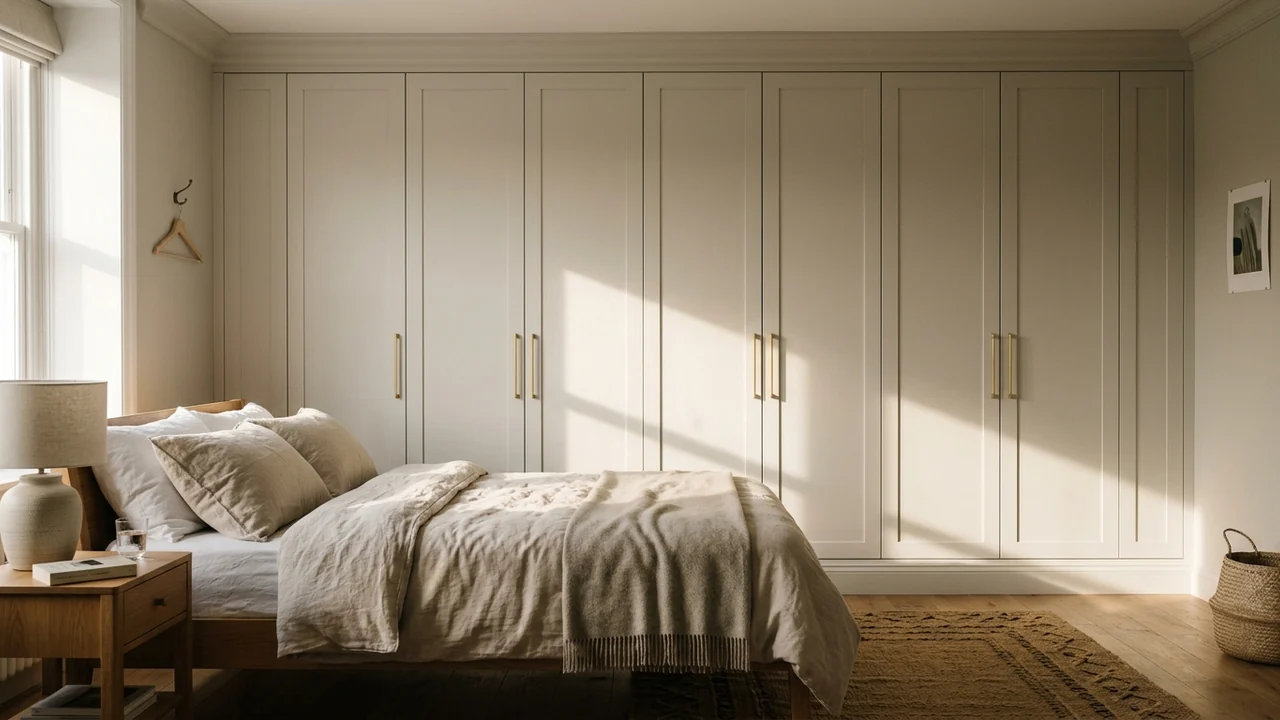
Interiors are where the budget actually goes. KOMPLEMENT shelves are 25 dollars, clothes rails 25 dollars, drawers 50 dollars, drawers with a glass front 60 dollars, and pull out trays 40 dollars. A realistic three frame build with three rails, six shelves and four drawers comes to about 1,025 dollars in IKEA parts, plus roughly 250 dollars of MDF, moulding and paint. Call it 1,275 dollars for a wall of fitted wardrobe.
One warning that gets left out of every tutorial: the wall mounted frames are called wall mounted for a reason. They hang off a rail fixed into structure. If your wall is dot and dab plasterboard over masonry, or metal stud, you need the right fixings before you need the right paint.
5. PAX with no doors at all
Skipping the doors is not laziness, it is a different piece of furniture. An open PAX run reads as a dressing area rather than storage, costs several hundred dollars less, and makes a small bedroom feel larger because the eye travels into the depth instead of stopping at a slab door.
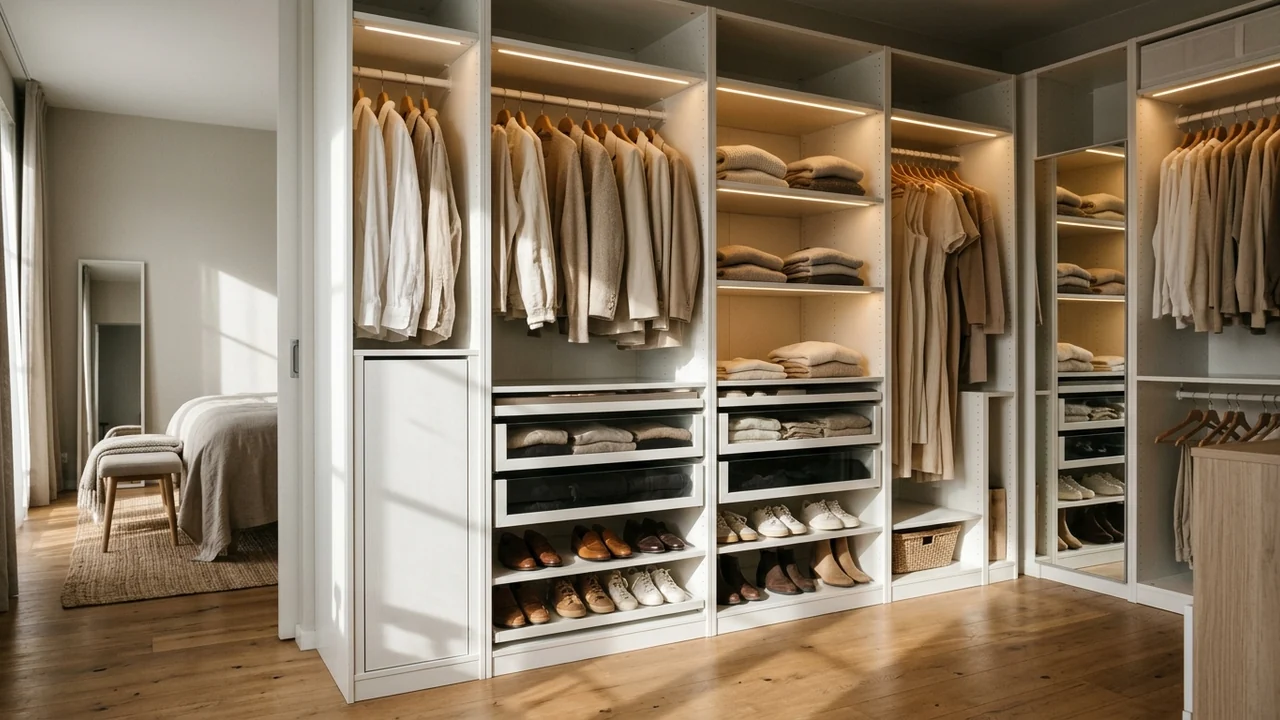
It only works under one condition, and it is a real one. Open storage means your clothes are now the decor. If your wardrobe is a mix of colours and plastic hangers, this hack will make the room look worse, not better. Wooden hangers and integrated LED strips are not styling flourishes here, they are the difference between a dressing room and a laundry pile.
6. Wallpaper the back panel
The cheapest hack in this article by a wide margin. One roll of wallpaper on the back panel of an open PAX or KALLAX turns a white void into a deliberate backdrop, for 50 to 80 dollars and an afternoon. It also works inside BILLY, where it reads as the back of an antique bookcase.
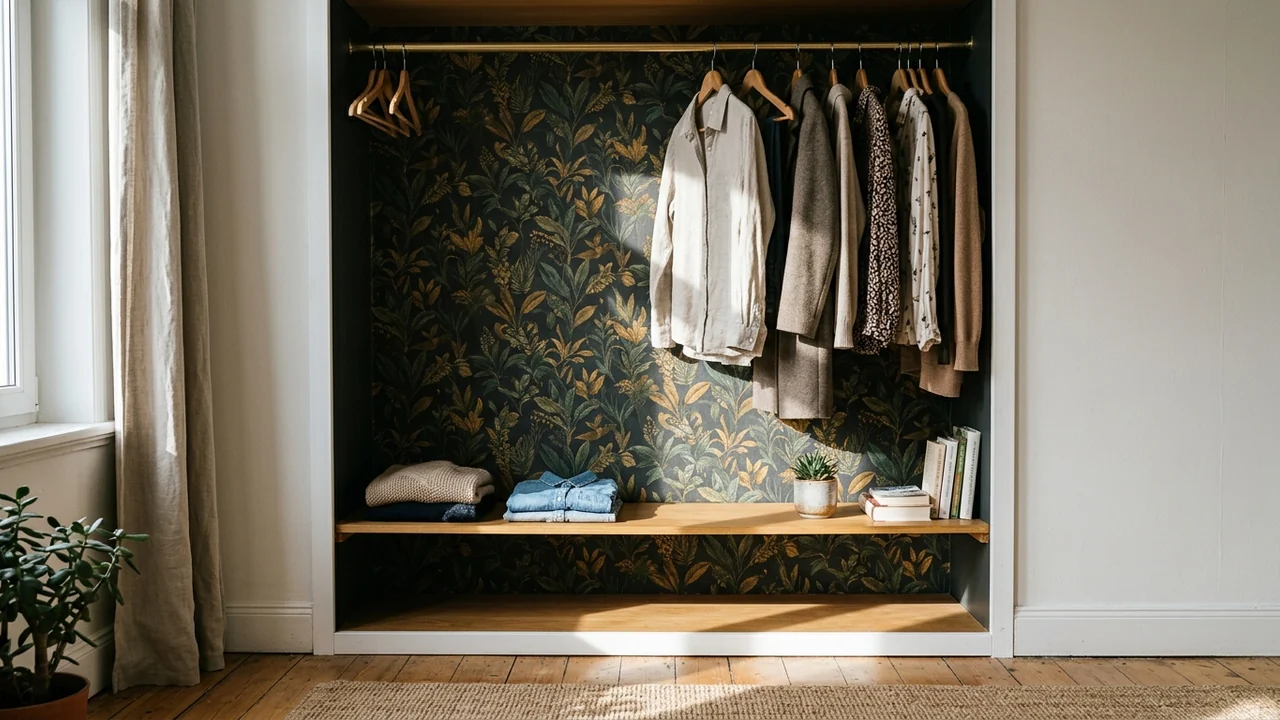
Use a dark pattern, not a light one. Light wallpaper behind clothes disappears; dark paper makes everything in front of it read as curated. The same principle drives accent wall ideas generally.
7. BILLY into a full library wall
BILLY has been in the range since the late 1970s, designed by Gillis Lundgren, and IKEA says one sells somewhere in the world every five seconds. There is a reason it is the default library hack: unlike KALLAX and BESTÅ, BILLY is solid particleboard with no honeycomb core, so it takes a cut and takes a screw.
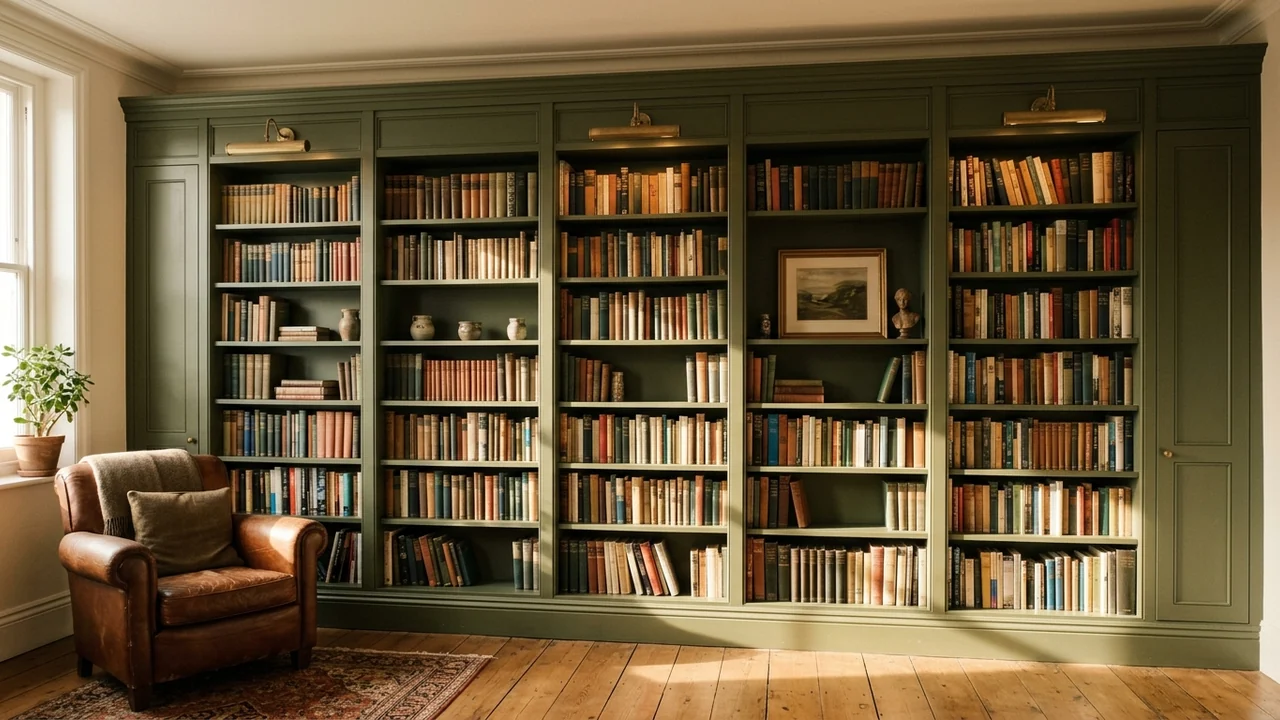
The standard BILLY at 31 1/2 x 11 x 79 1/2 inches is 79 dollars, and the height extension unit is 30 dollars, taking you to 93 1/4 inches. Five bays plus five extensions is 545 dollars. Add fillers, a header, moulding and paint at roughly 180 dollars and you are at about 725 dollars for a wall that quotes at several thousand from a joiner.
Two details do the heavy lifting. Paint the shelf interiors the same colour as the frame, which most people skip and which is what makes it look sprayed rather than assembled. And run the shelves at irregular heights, because evenly spaced shelves are the giveaway that it came in a box.
8. BILLY plus glass doors as display cabinets
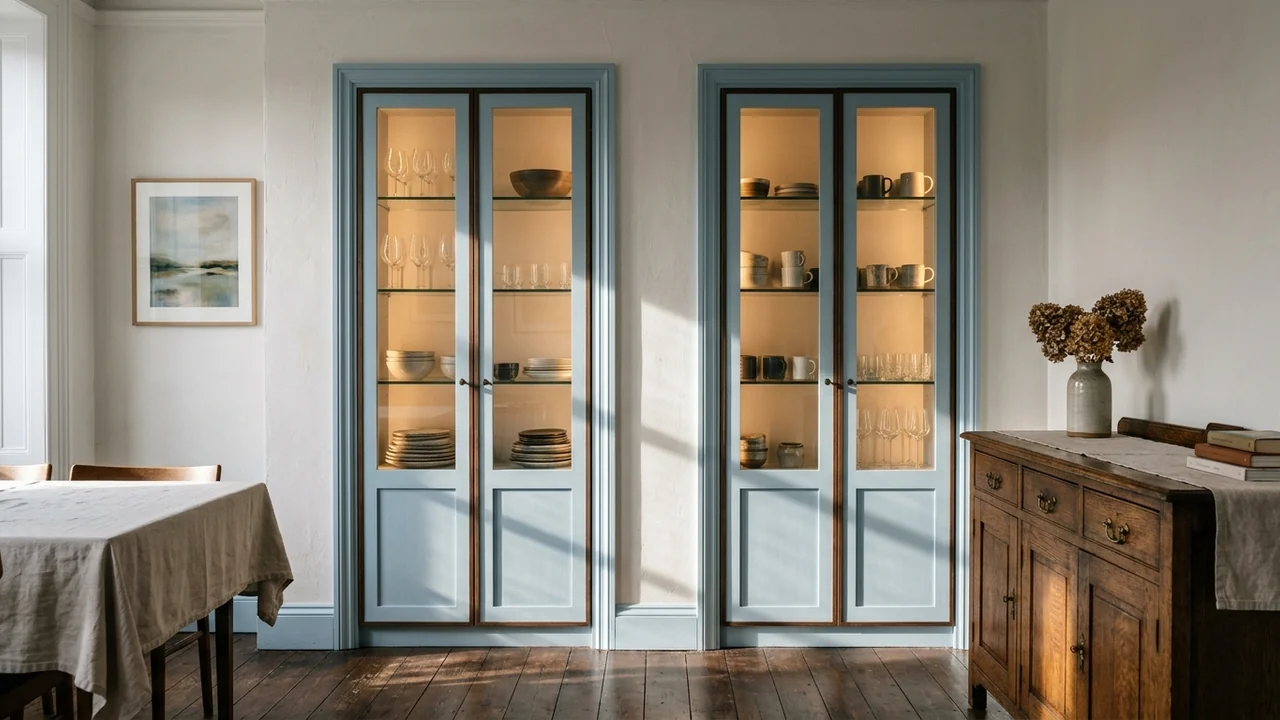
Adding OXBERG doors turns a bookcase into a display cabinet, and here is a piece of arithmetic worth knowing before you add to cart. A bare BILLY is 79 dollars and two full height OXBERG panel doors are 45 dollars each, which is 169 dollars. The pre bundled BILLY / OXBERG bookcase with doors is 139 dollars. Buying the combination is 30 dollars cheaper than building the identical thing from parts. Glass doors are 50 dollars each if you want to see what is inside.
9. BESTÅ as a floating media wall
BESTÅ frames are 45 dollars for the 23 5/8 inch and 65 dollars for the 47 1/4 inch. Wall mounted with no legs, run edge to edge, with a shadow gap underneath, they stop looking like a TV stand and start looking like a fitted media wall. Three of the wide frames is 195 dollars before fronts.
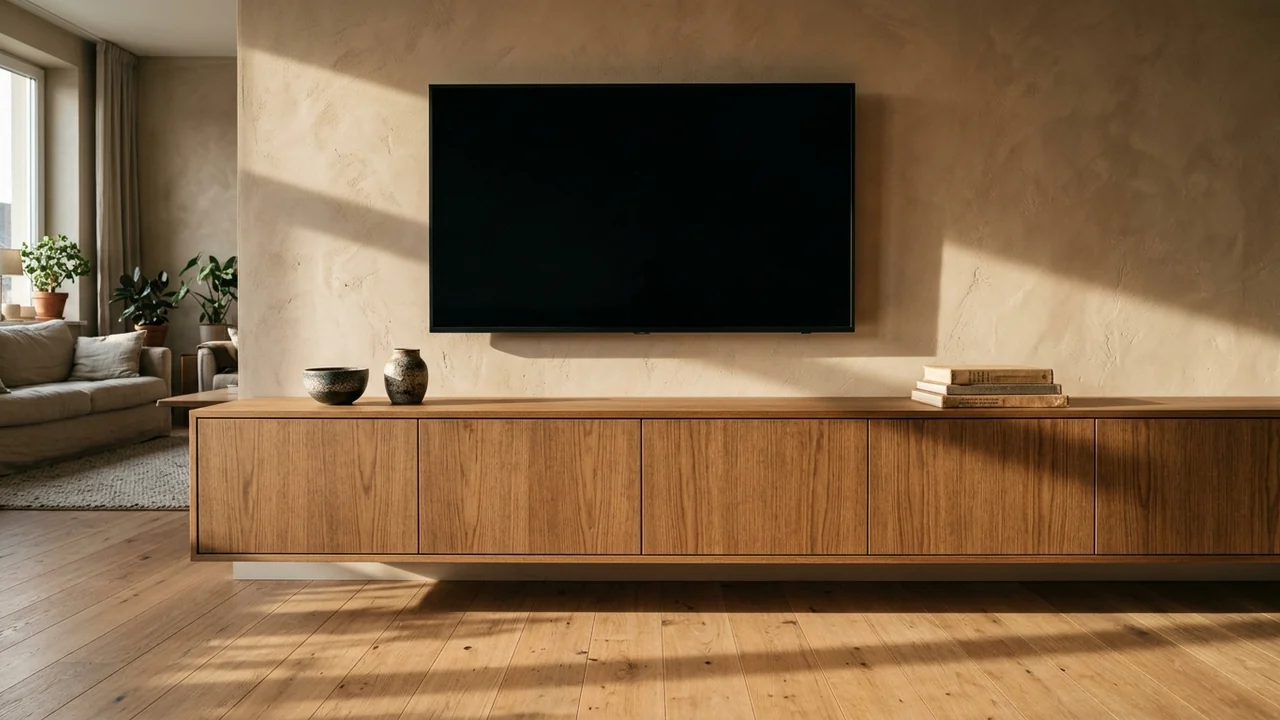
Two things kill this one in practice. Visible cables, which means you need to plan a recessed socket or a brush plate before the units go up, not after. And the floor gap being wrong: too small and it reads as a mistake, too large and it reads as a shelf. Aim for a gap you can see the shadow of from standing height.
10. BESTÅ as the base of a built in banquette
Four 23 5/8 inch BESTÅ frames at 45 dollars, eight STUBBARP legs at 10 dollars, boxed in with painted panels and topped with a bench cushion. Parts come to 260 dollars plus upholstery, for an L shaped banquette with four bays of hidden storage under the seat.
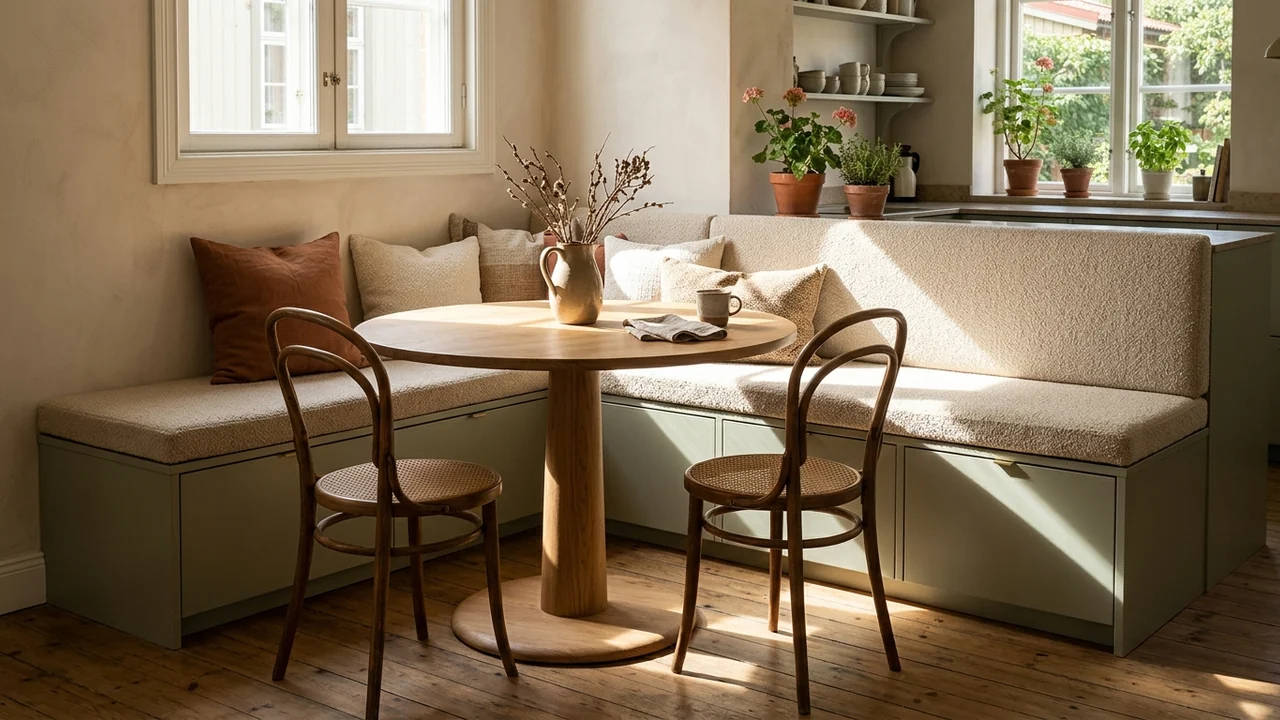
Read that caption carefully, because it is the difference between this working and this failing. The BESTÅ boxes here are enclosed inside a painted plywood or MDF surround that carries the seat load and transfers it to the floor. The cabinets provide the storage and the fronts, not the structure. If you sit directly on a honeycomb cored cabinet top, you get the same problem as the KALLAX bench below.
Banquettes are also one of the highest leverage moves in a tight kitchen, because bench seating buys back the circulation space that chairs need behind them. If you are working that out, our guide to open floor plan furniture layout covers the clearances.
11. The MALM hack that stopped working, and the one that still does
Here is the finding that surprised us. Every large IKEA hack roundup still in the top ten results tells you to hack a MALM chest of drawers: add legs, add a top, add fluting. You cannot buy one new in the US any more. Searching ikea.com/us for MALM on 29 July 2026 returns bed frames, storage beds, underbed boxes and the MALM dressing table, and no chest of drawers at all. IKEA now sells a “MALM / STORKLINTA” bedroom set, pairing the MALM bed with a STORKLINTA dresser, which is the clearest signal you will get that the MALM chest is done.
The current substitutes are STORKLINTA (3 drawer 129.99 dollars, 4 drawer 179.99 dollars, 6 drawer 229.99 to 249.99 dollars) and NORDLI (2 drawer 79.99 dollars, 4 drawer 199.99 dollars, 6 drawer 289.99 dollars). Both have different carcass widths and drawer boxes to MALM, so old cut lists, fluting templates and “buy this exact overlay” instructions do not transfer. Measure before you buy anything based on a 2021 blog post.
The MALM hack that does still work is the dressing table at 149.99 dollars: 47 1/4 x 16 1/8 inches, with a lift up mirrored lid. Put it on turned solid oak legs, add a warm oak top and slim brass hardware and it stops being recognisable.
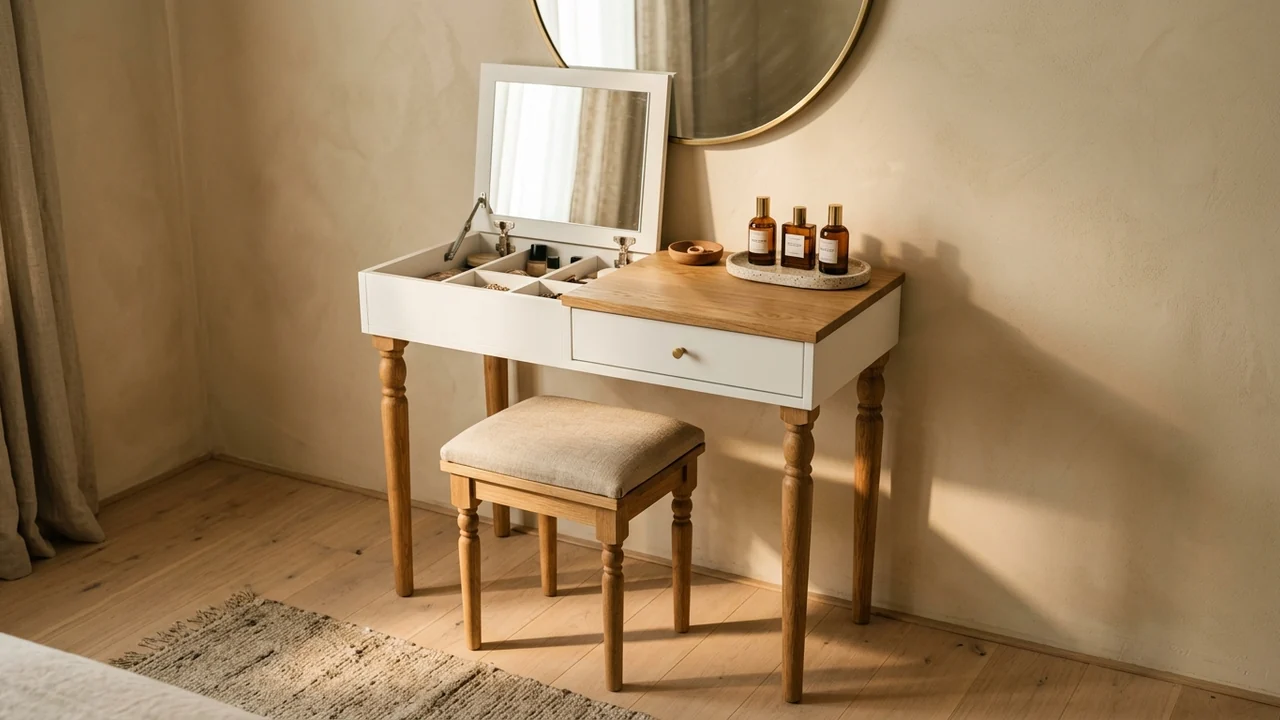
Legs are the cheapest lever in the whole IKEA catalogue. OLOV adjustable legs are 10 dollars, STUBBARP is 10 dollars, EKET legs are 15 dollars and CAPITA is 24 dollars. Four legs and four handles is under 150 dollars and changes a piece more than a full respray does.
12. IVAR, the only range you can treat like real wood
IVAR is solid pine. Not veneer over particleboard, not board with a paper core, actual pine. That single fact makes it the most hackable thing IKEA sells and the reason it has a cult following that KALLAX does not. You can cut it anywhere, plane it, sand it, stain it, screw into any face and stand on it.
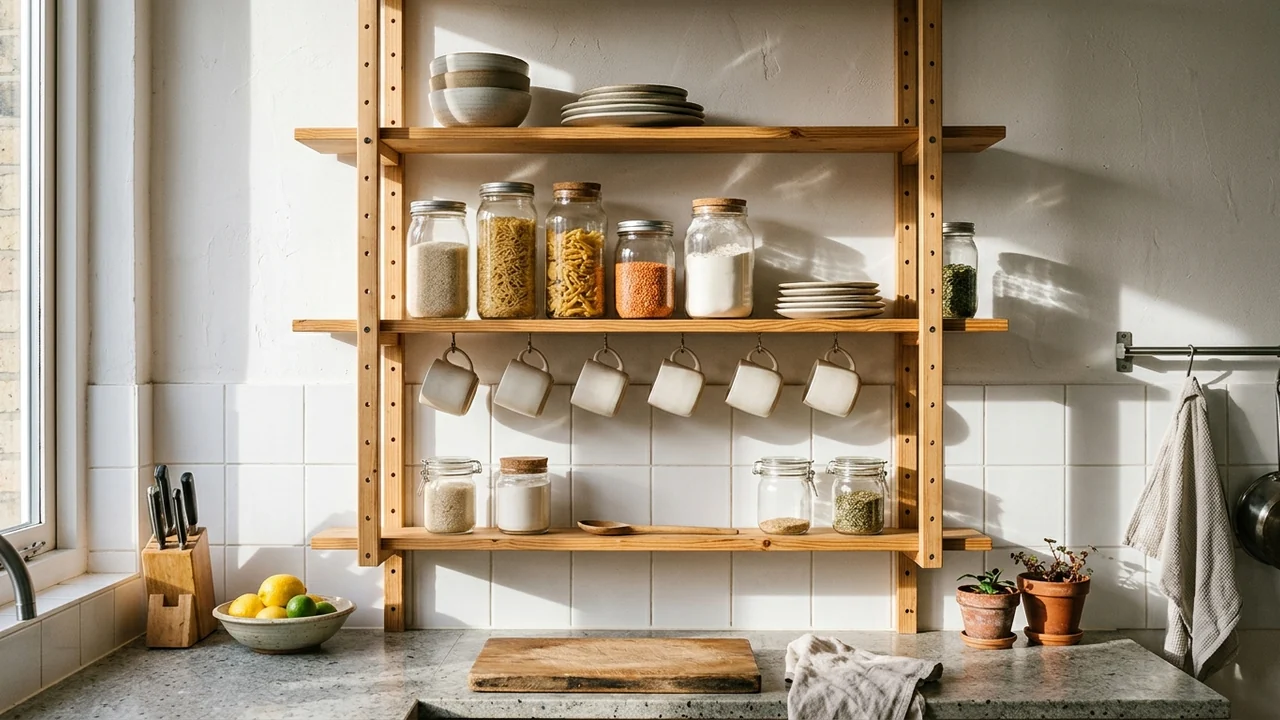
Two IVAR side units at 89 inches tall are 30 dollars each, and shelves at 33 x 12 inches are 15 dollars. Two uprights and six shelves is 150 dollars for a wall of open kitchen storage, plus about 25 dollars of stain and wax. Nothing else in the IKEA range gets you solid timber at that number, and stain on real pine looks like stain on real pine, which peel and stick film never will.
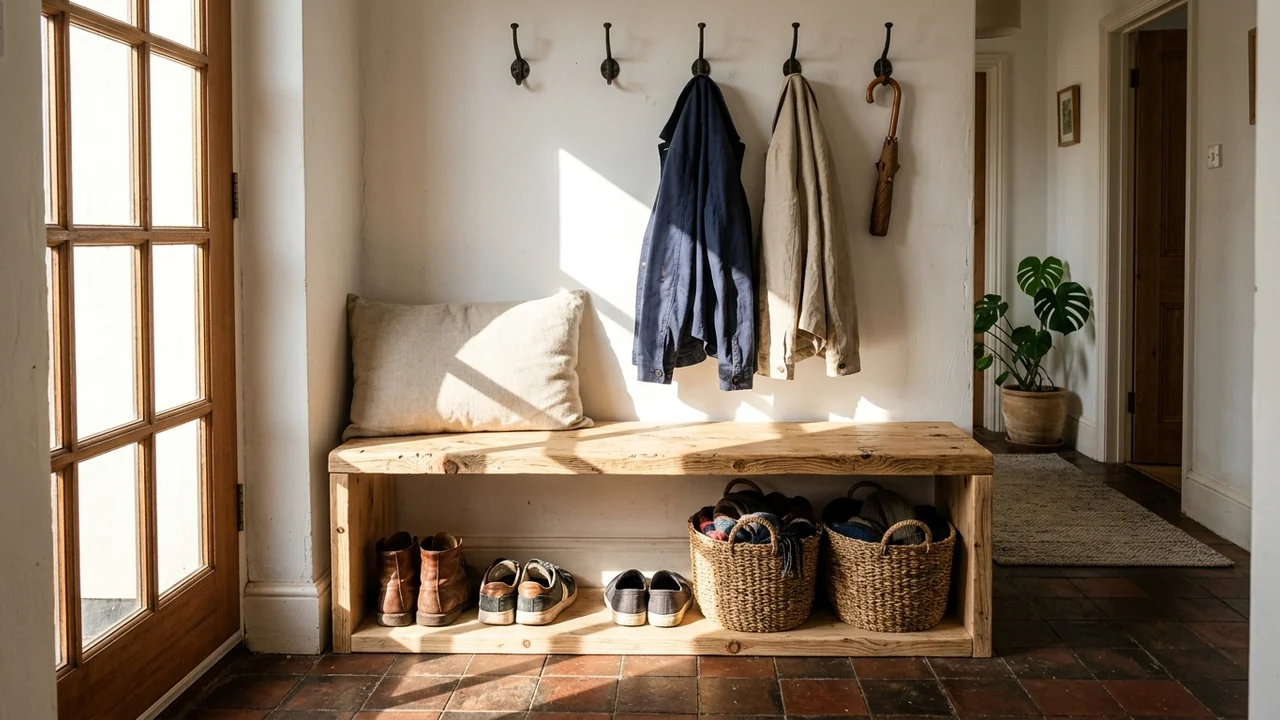
This is also the correct answer to the bench problem. If you want IKEA storage you can actually sit on, you use IVAR, not KALLAX.
What each hack really costs
IKEA parts only, at July 2026 US prices. Trim, paint, fixings and upholstery are listed separately because they are where most people underestimate, and because they are the part that decides whether the result looks fitted.
For context on whether those numbers are good, our breakdown of average US furniture prices puts a mid market fitted wardrobe well into four figures per linear metre, and the cost to furnish a house gives you the room by room picture.
Five IKEA hacks to skip
Being useful means saying which ones are bad. These five circulate constantly and all five are either structurally wrong or look worse than doing nothing.
The KALLAX bench. Lay a KALLAX on its side, add a cushion, sit on it. IKEA rates the top of a KALLAX at 55 lb. An adult exceeds that on their own, before anyone leans on the end. The core is honeycomb paper, so it does not fail gradually, the top skin delaminates and the cushion sinks. Use IVAR.
The KALLAX kitchen island. Same 55 lb ceiling, but now you are also chopping on it and splashing it. Particleboard with a paper foil edge and water is a solved problem with a known answer, and the answer is that the edges swell and never go back.
Cutting a KALLAX or BESTÅ to fit an alcove. Both are honeycomb cored. A cut opens a hollow cavity with no material to fix a new edge into, so you have to glue a timber batten inside the void before you can band it, which is more work than most tutorials admit. Cut a BILLY instead, which is solid board, or plan the run around stock widths.
Peel and stick film across whole wardrobe doors. It fails where people look. The film lifts at the door edge and the corner radius within a year, and a lifted edge reads cheaper than plain white ever did. Paint the surround and leave the doors stock, or replace the fronts properly.
The marble contact paper LACK table. A LACK side table is 16.99 dollars and honeycomb filled. After an evening of careful wrapping you have a 17 dollar table that looks like a wrapped 17 dollar table. Spend the same evening on legs and handles for something larger.
What hacking actually costs you in warranty
Worth knowing before you cut. IKEA’s US limited warranty says it “does not apply to products that have been stored or assembled incorrectly, used inappropriately, abused, misused, altered, or cleaned with wrong cleaning methods or wrong cleaning products”. Cutting, drilling and refinishing all count as altering.
There is one documented exception worth knowing: IKEA states that drilling holes to fit integrated lighting, or for a wall socket, does not affect the guarantee, provided you follow the instructions and do it in a reasonable and practical way. So the LED strip in your PAX build is fine. The 25 mm hole saw through a cabinet side is not.
Where this matters most is money, not principle. Most IKEA storage has no long warranty to lose. But SEKTION kitchen frames, fronts, drawers and countertops carry a 25 year limited warranty, ENHET and bathroom furniture carry 10 years, and seating carries 10 years. Hacking a 79 dollar BILLY risks nothing. Fitting non IKEA fronts to a SEKTION kitchen risks 25 years of cover on the most expensive thing in the house, which is a genuinely different calculation.
For scale on why IKEA is worth hacking at all: Inter IKEA Group reported EUR 44.6 billion in retail sales for FY25 across 915 million store visits, and says it cut prices by 10 percent over two years. Cheap, standardised, globally available parts in fixed module sizes are exactly the conditions that make a hacking community possible in the first place.
How we rendered every hack in this article
None of the images above are photographs of somebody else’s apartment, which is what you get in every other roundup. They are renders we generated ourselves so that each hack is shown finished, in one consistent light, at a realistic scale.
That is also the practical argument for testing a hack before you build it. A Pinterest photo tells you a KALLAX wall looked good in a room with 11 foot ceilings and north light. It cannot tell you what it does to your 8 foot ceiling and your window. MeltFlex takes a photo of your actual wall and renders the finished piece into it, and the 62 IKEA products we track in the furniture library can be dropped straight into the scene, so the proportions are the real ones.
If you want to try it on your own room, you can upload a photo and redesign your room with AI and describe the finished build, or start from photo to render if you already have a sketch. For a kitchen wall specifically, the AI kitchen design tool handles cabinetry and open shelving directly. And before you buy anything with a delivery slot attached, run the dimensions through the furniture fit calculator. Worked example: a PAX frame is 92 7/8 inches tall and 22 7/8 inches deep, so its diagonal is about 95 5/8 inches. Under an 8 foot ceiling that leaves roughly three eighths of an inch to tilt it upright, before you account for carpet or an uneven floor. Assemble it lying down and stand it up with the floor completely clear, or build it in place against the wall.
IKEA Hacks FAQ
What is an IKEA hack?
An IKEA hack is any modification of a stock IKEA product beyond what the assembly instructions describe: cutting it, painting it, adding trim or filler panels, swapping the legs, fronts or handles, or combining several units into one piece that IKEA does not sell. The term comes from the IKEA Hackers community, which has been collecting them since 2006. IKEA does not endorse hacking, and its limited warranty specifically excludes products that have been altered.
What are the best IKEA hacks?
The hacks with the best payoff for the effort are the ones that turn a freestanding box into fitted joinery: boxing a run of PAX frames into a wall to wall wardrobe, building a BILLY library wall with height extension units, and trimming a bank of KALLAX units into a built in cube wall. All three work by closing the gaps to the wall, ceiling and floor, then painting the unit and the wall the same colour. The cheapest high impact hack is swapping legs and handles, which costs under 100 dollars and changes the piece more than paint does.
How much weight can a KALLAX hold?
IKEA rates the KALLAX shelf unit at 29 lb per compartment and 55 lb maximum on the top surface. The carcass is particleboard and fiberboard with a honeycomb paper filling, so it is much lighter than it looks. That 55 lb top limit is the reason the popular KALLAX bench hack is a bad idea: an adult sitting on it exceeds the rated load. IKEA also flags the unit as a tipping hazard that must be anchored to the wall.
Does hacking IKEA furniture void the warranty?
Usually yes. IKEA’s limited warranty states that it “does not apply to products that have been stored or assembled incorrectly, used inappropriately, abused, misused, altered, or cleaned with wrong cleaning methods or wrong cleaning products.” Cutting, drilling or refinishing counts as altering. There is a narrow exception: IKEA says drilling holes to fit integrated lighting or a wall socket does not affect the guarantee if you follow the instructions. This matters most on SEKTION kitchens, which carry a 25 year warranty.
Can you cut IKEA furniture down to size?
It depends entirely on the core. BILLY is solid particleboard with a paper foil finish, so it survives a careful cut with a fresh blade and an edge banded afterwards. KALLAX and BESTÅ are built around a honeycomb paper filling, so cutting one opens a hollow void with nothing to screw or glue into, and you have to fill the cut end with a timber batten before you can band it. IVAR is solid pine and can be cut, planed and sanded like any board.
Why is the IKEA MALM dresser hack no longer possible?
The MALM chest of drawers has been dropped from the IKEA US range. Searching ikea.com/us for MALM in July 2026 returns bed frames, storage beds and the MALM dressing table, but no 6 drawer or 3 drawer chest; IKEA now pairs the MALM bed with a STORKLINTA dresser in its own bedroom sets. Older MALM dresser hacks still circulate on Pinterest and blog roundups, but you cannot buy the base product new in the US. STORKLINTA and NORDLI are the closest current substitutes, and both have different drawer boxes, so old cut lists do not transfer.
Which IKEA range is best for hacking?
IVAR, because it is solid pine rather than a veneered board with a paper core. You can cut it anywhere, sand it, stain it, screw into any face, and it takes real load. PAX and BILLY are the best bases for built in looks because they come in heights and widths that scale to a wall. KALLAX and BESTÅ are the easiest to restyle from the outside with inserts, fronts and legs, but the worst to cut into.
How can I see an IKEA hack in my room before I build it?
Upload a photo of the actual wall to MeltFlex, then either describe the finished hack in the prompt or drop real IKEA products from the furniture library into the space and render it. You get a photorealistic image of your own room with the piece in it, at your ceiling height and in your light, which is the part a Pinterest photo of somebody else’s apartment cannot tell you. The IKEA library is included in the free plan.
The short version
Hack the range that suits the job. IVAR when it has to carry weight or take a stain, BILLY when it has to be cut, PAX when it has to fill a wall, KALLAX and BESTÅ when you are restyling from the outside and never cutting into them. Close the gaps, match the paint, change the legs and handles, and check the load rating before you sit on anything.
Then render it into your own room before you spend the weekend and the 1,275 dollars. That is the part that costs nothing and saves the most, and it is why we built a free AI room design tool that works from a photo. If you want more IKEA specifically, our best IKEA pieces and 2026 trends guide ranks the range by real customer ratings, and IKEA furniture trends for 2026 covers full room schemes rather than single pieces. If a hack is really a shopping problem, our guide to finding furniture from a photo covers the dupe route instead, and Pottery Barn dupes prices up the look-for-less version of the expensive brand most people are actually copying.