The best fire pit ideas for most backyards are a 30 to 36 inch stone or steel fire pit on gravel or pavers, ringed by a seat wall or chairs 3 to 5 feet away and kept 25 feet from the house, fence and trees, for about $850 installed on average; in our MeltFlex AI test on November 26, 2026, the garden tool added a fire pit with seating to 18 of 18 real backyard photos, but none of the 18 put the fire 25 feet from the house, the fence or the trees.
Our articles are still written by humans!
Get human written articles in your Google feed.
Most fire pit idea pages are photo galleries. They show beautiful pits sitting a few feet from a house wall, a cedar fence or a covered patio, and they never mention that the International Fire Code asks for 25 feet. I wanted a list you can actually build from, so every idea below comes with the numbers that decide whether it works in your yard: what it costs, how far it has to sit from things that burn, and how much room the seating takes. Costs are from Angi, HomeAdvisor, Fixr, HomeGuide and Lawn Love, read on November 26, 2026; clearances are from the code text and from manufacturer guidance. I also ran the MeltFlex AI garden tool on three real backyard photos to see where an AI puts a fire pit. MeltFlex AI is ours, so you get every result, including the bad ones.
The short version
- Cost: $850 national average, most projects $200 to $3,000 (Angi, HomeAdvisor); a steel bowl is $75 to $500, natural gas $400 to $3,000 plus $15 to $25 per foot of gas line.
- Clearance: a wood fire pit is a recreational fire under IFC 307.4.2 and needs 25 feet from the house, fences, sheds and trees, unless your city says otherwise.
- Size: 30 to 36 inch opening, 12 to 14 inch walls, seating 3 to 5 feet from the pit, a patio about 12.5 to 17 feet across.
- Gas and decks: follow the manual (24 inches to the sides and 72 inches overhead in one maker’s guidance); no wood fires directly on composite decking.
- AI preview: MeltFlex AI added a fire pit to 18 of 18 backyard photos in 11 to 25 seconds for 10 credits each, kept the yard in 9 of 18, and met the 25 foot rule in 0 of 18.
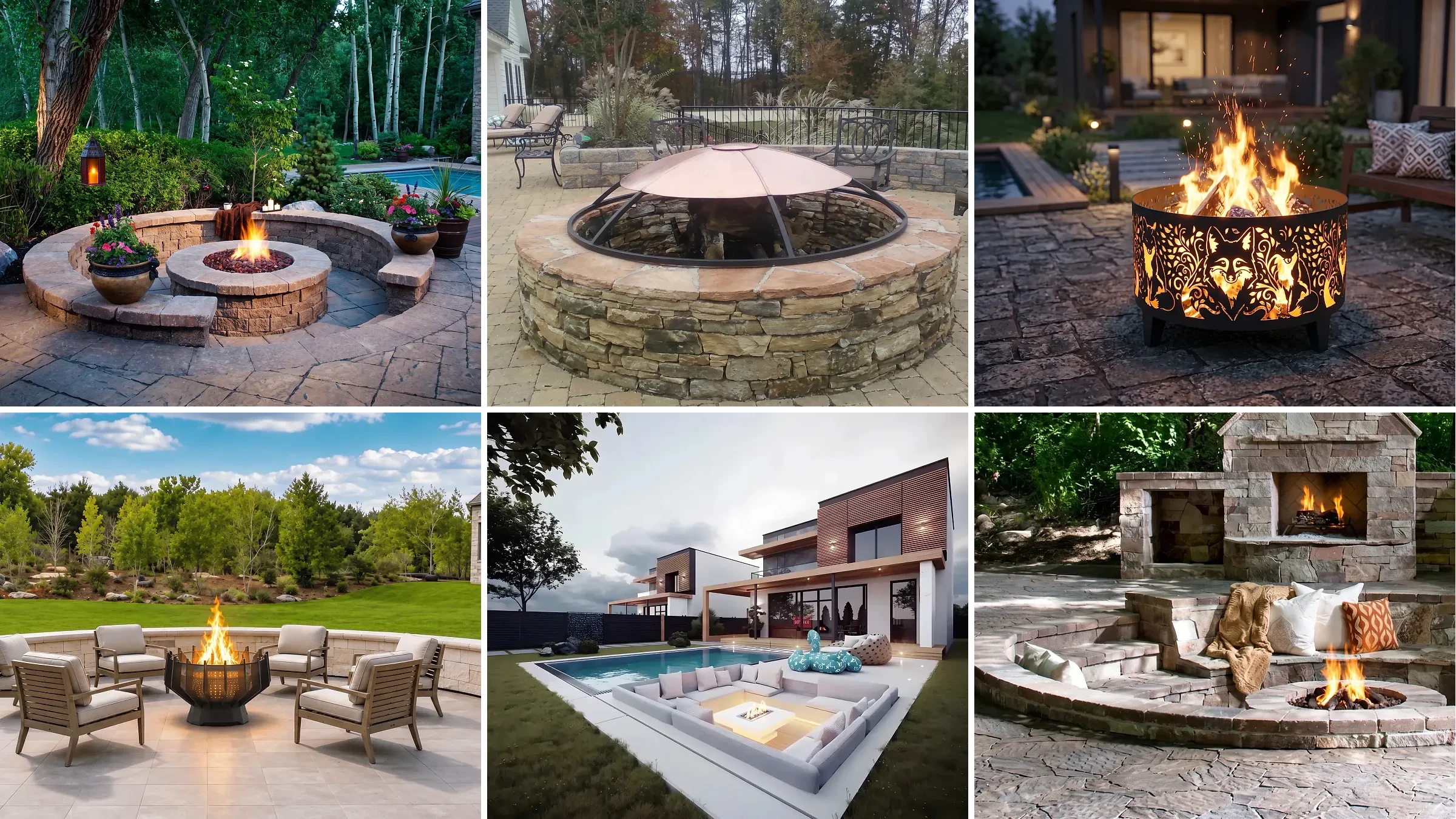
Backyard Fire Pit Ideas: Stone, Pavers and Seat Walls
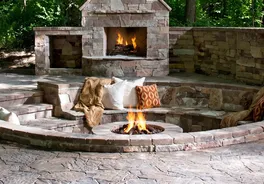
These are the wood-burning classics: a round pit in stone or concrete block with fixed seating around it. They suit a lawn or a patio at the back of the lot, which is also where the 25 foot clearance is easiest to find.
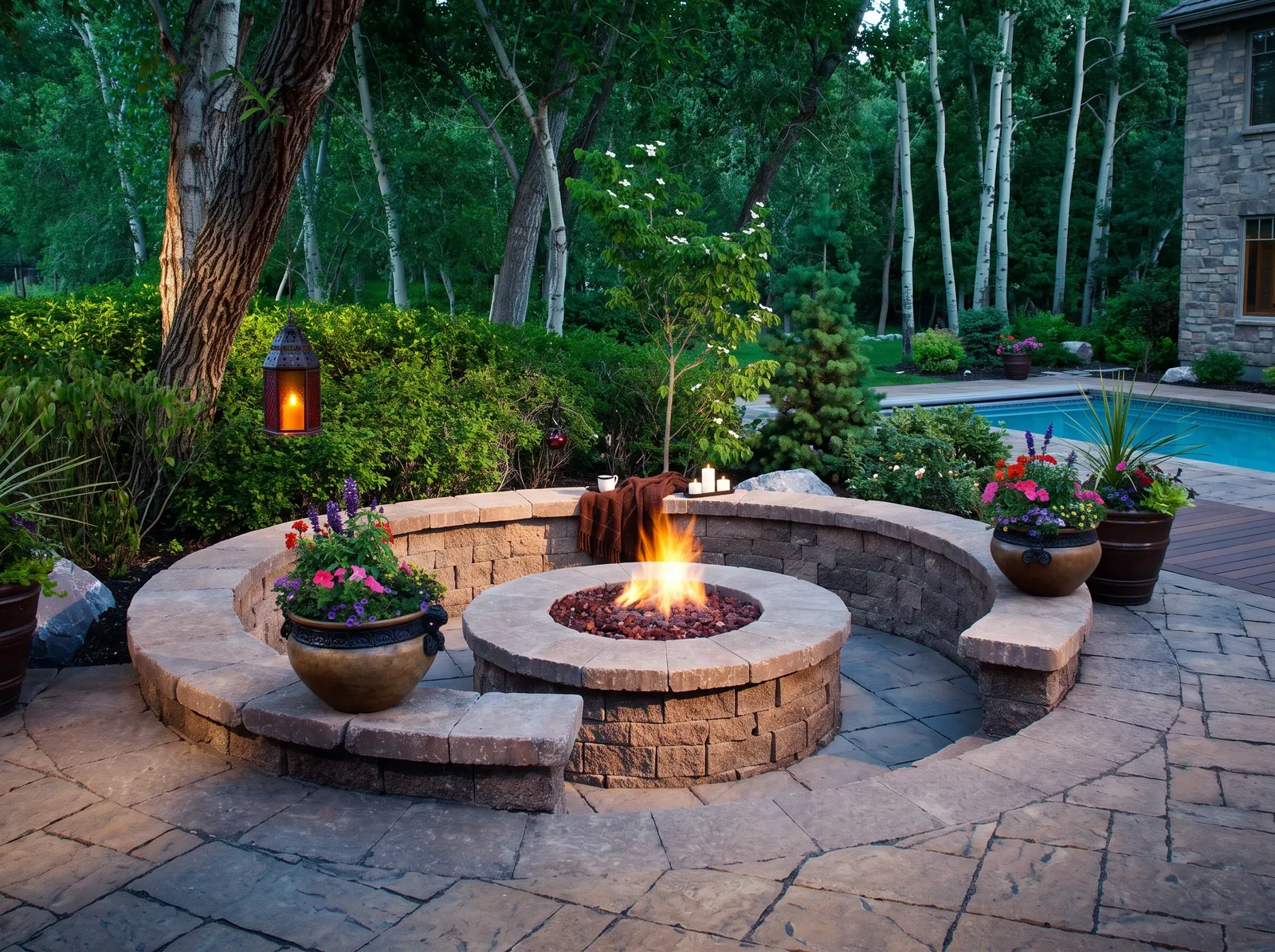
1. A stone seat wall around a round pit
The most built idea for a reason: a curved block seat wall gives everyone a place to sit without dragging chairs, and the planters on the wall ends make it look finished. Keep 3 to 5 feet between the wall and the pit so legs fit and people can walk around.
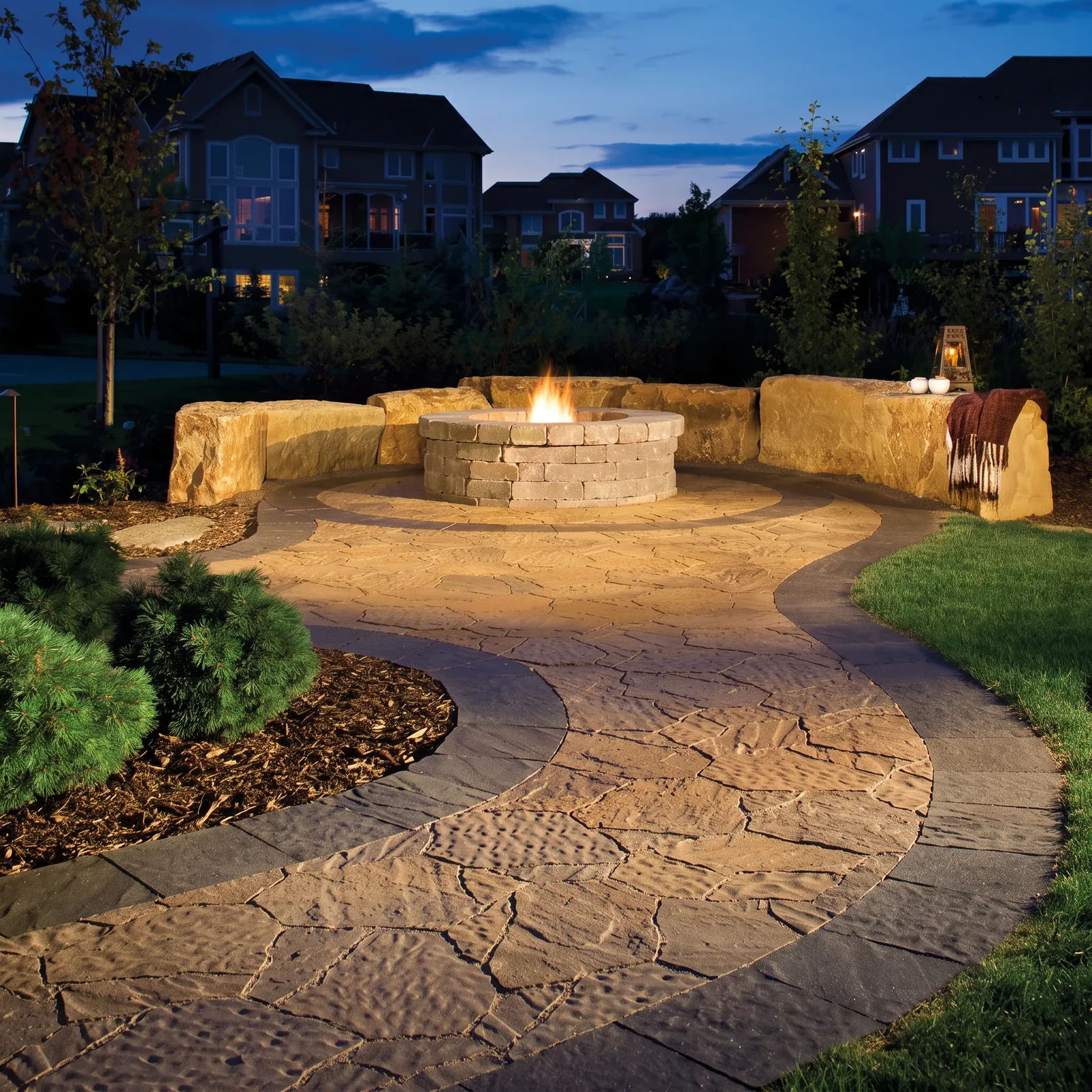
2. A fire pit at the end of a path
Putting the pit at the end of a curving path pulls it away from the house, which is exactly what the clearance rule wants. A long seat wall on one side and open lawn on the other keeps the smoke from trapping people.
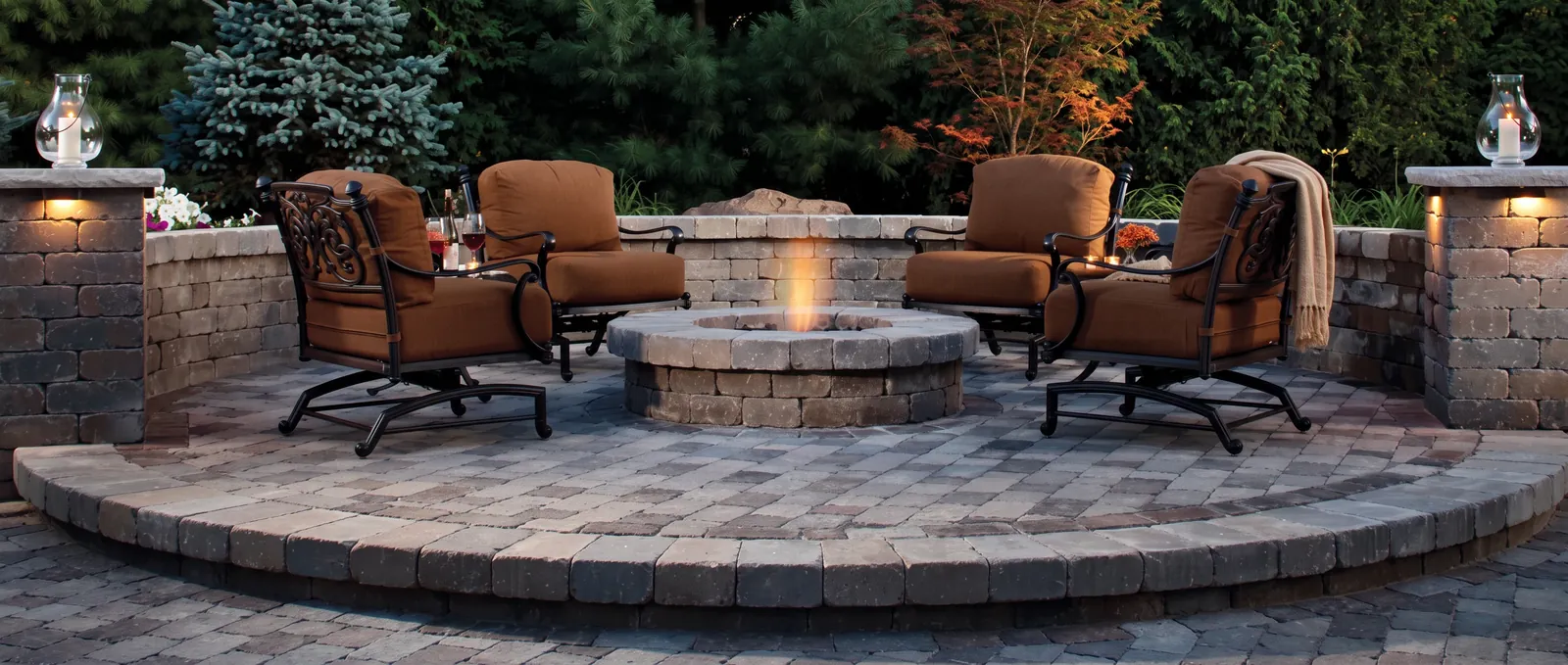
3. A raised round paver patio
A round patio raised one step above the lawn reads as a room of its own. Four chairs fit around a 36 inch pit on a patio about 13 feet across.
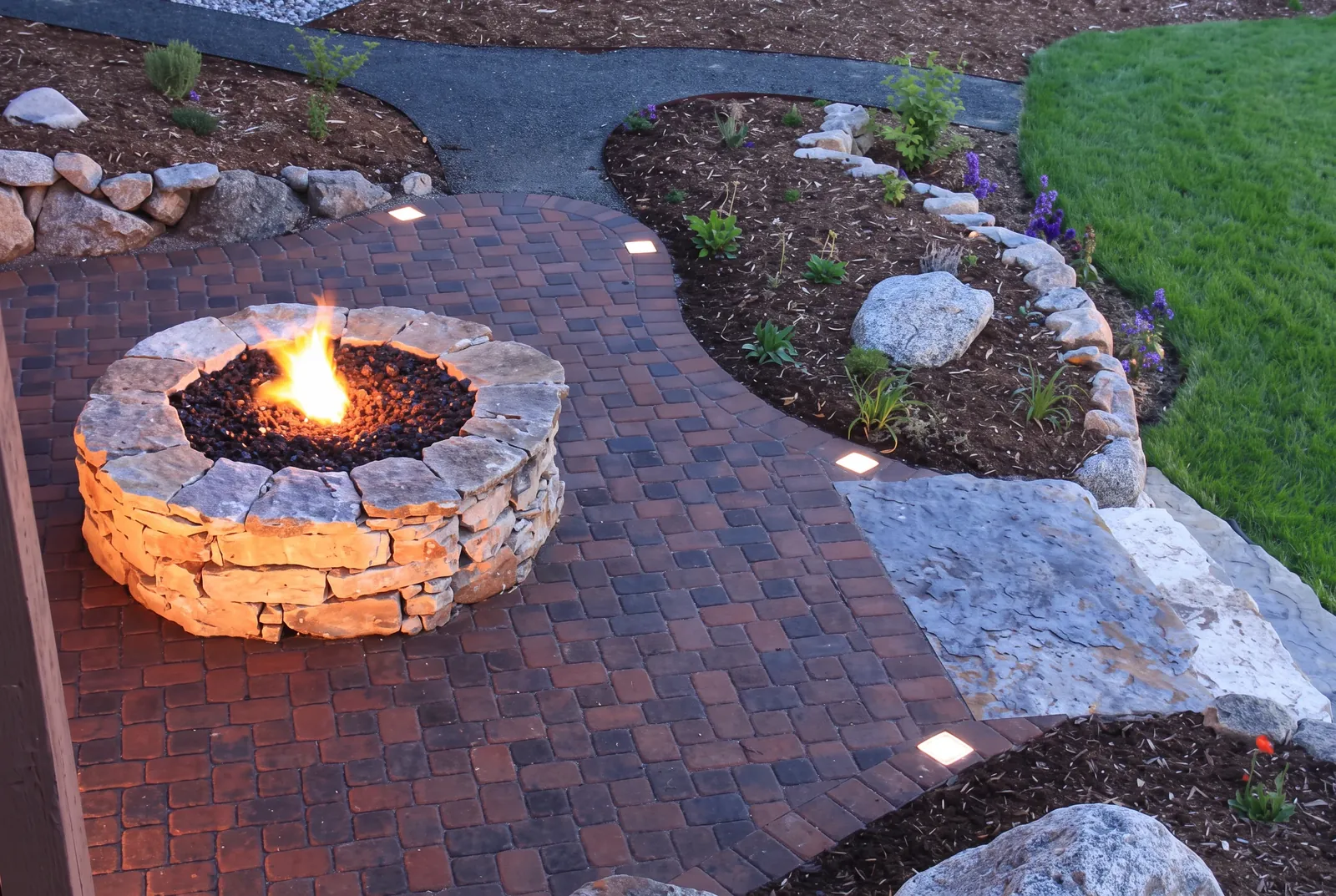
4. A stacked stone pit on a brick walk
Natural stacked stone looks right in a planted garden, and a pit that sits beside a walk rather than inside a patio needs the least paving. Leave the walk clear of chairs so nobody backs into the fire.
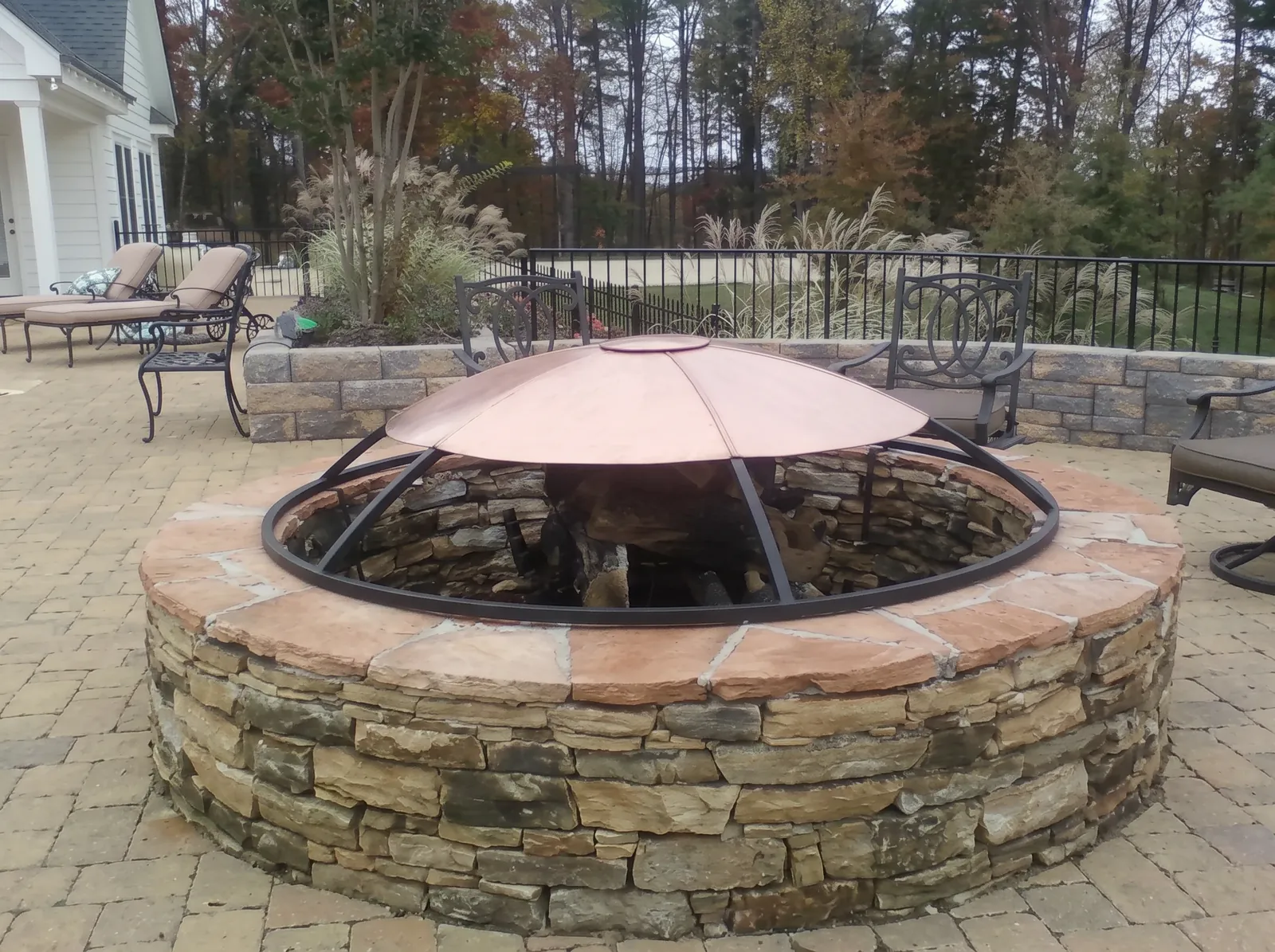
5. A stone pit with a spark screen
A spark screen or dome is the cheapest safety upgrade on a wood-burning pit, and a copper one ages into a feature. Note what this patio gets right: a wide pit, iron chairs that move, and open sky above.
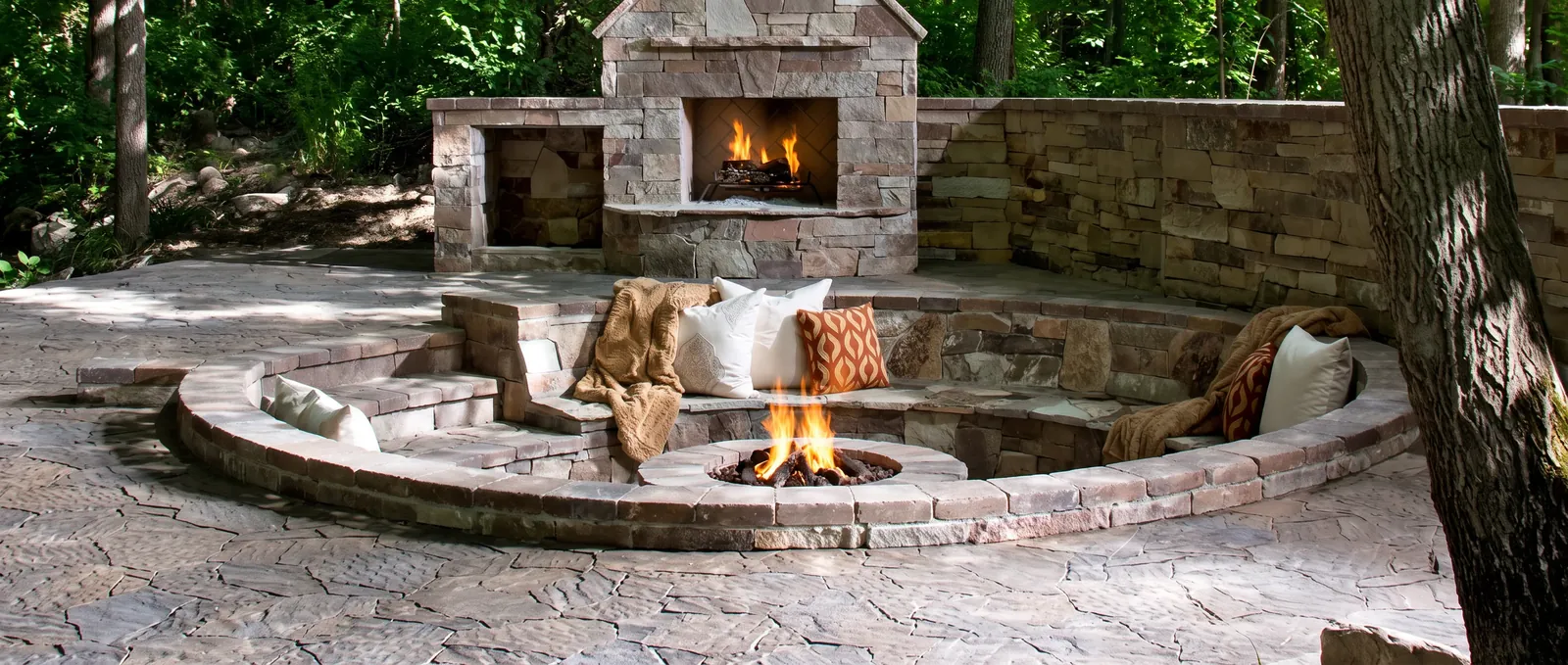
6. A sunken fire pit with a bench ring
Sinking the pit and the benches a step or two below the patio blocks the wind and makes the space feel enclosed without walls. Plan the drainage first: a sunken circle is a bowl that fills with rain. Fixr puts sunken pits at $1,000 to $3,000; HomeGuide quotes $3,000 to $8,800 with built-in seating.
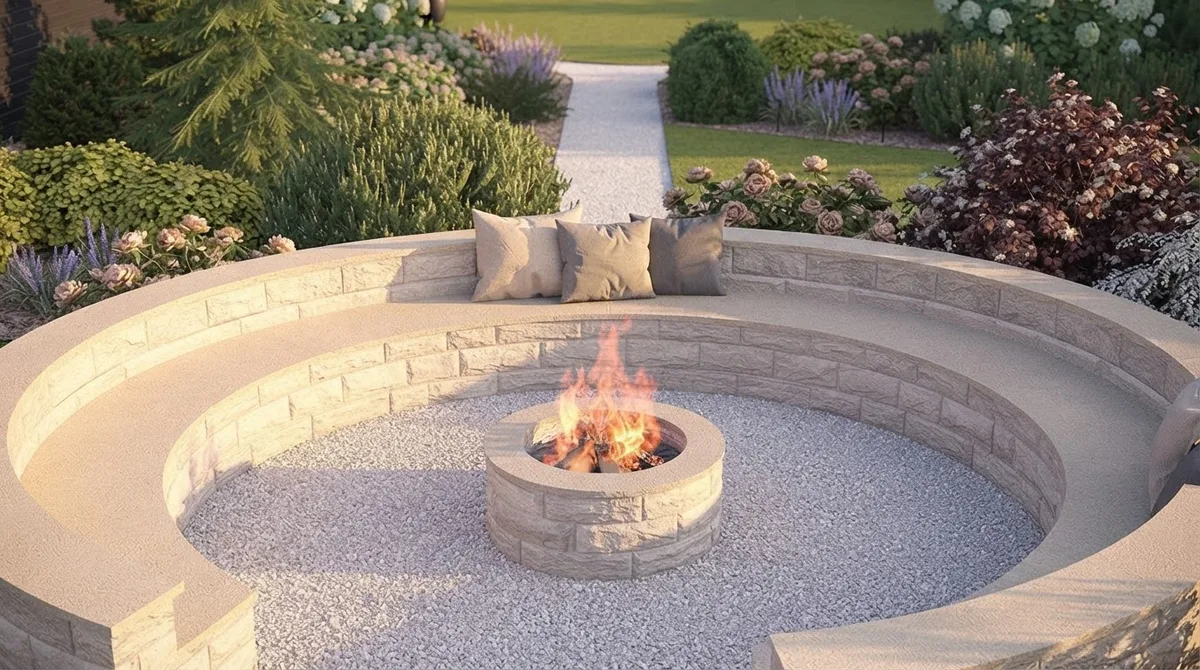
7. A gravel circle in the lawn
Gravel is the cheapest non-combustible ground you can put under a fire, it drains, and a circle cut into the lawn needs no mortar. A low curved bench on one side and open lawn on the other is enough.
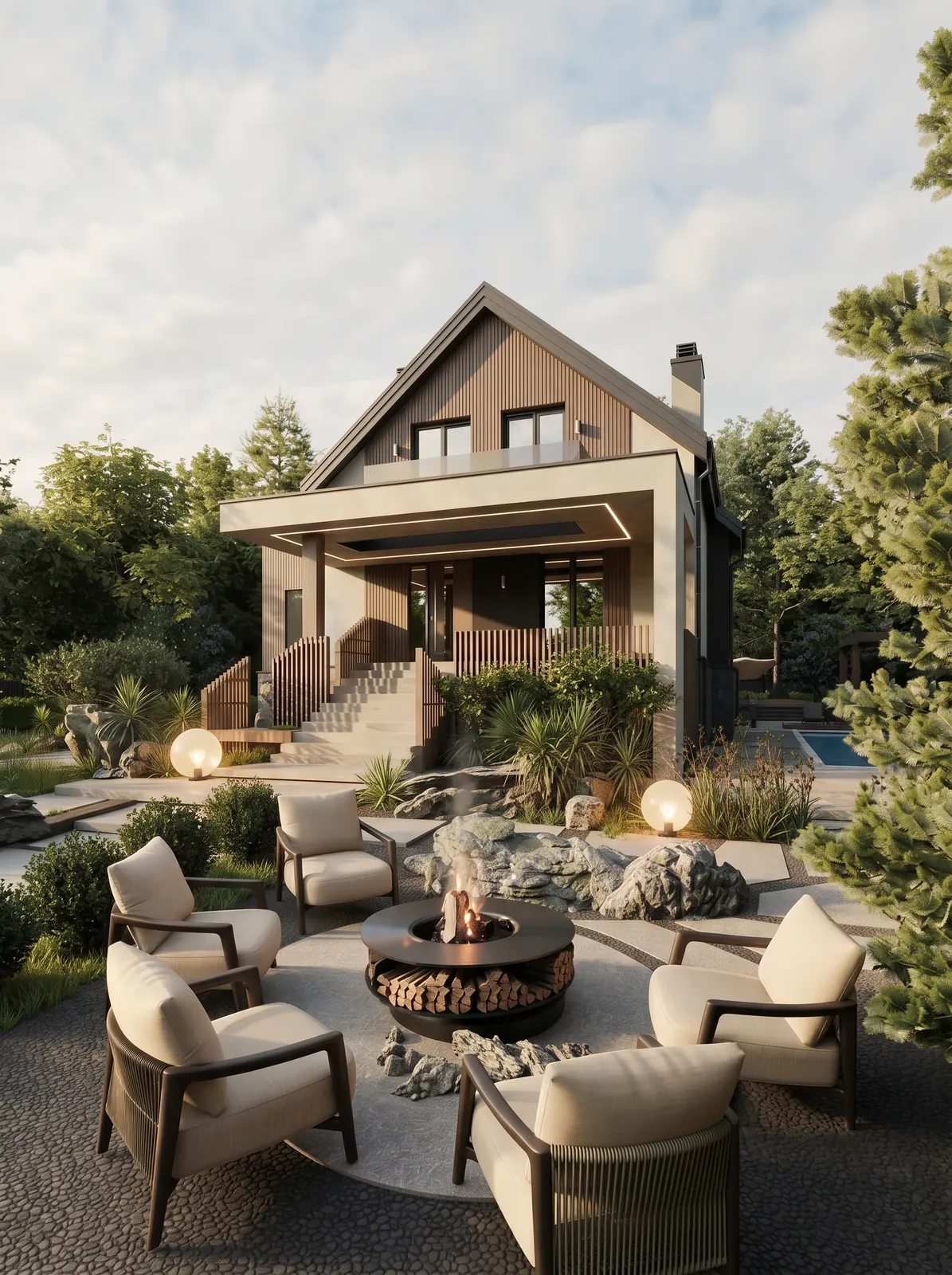
8. A gravel fire pit lounge with armchairs
Loose armchairs around a low pit on gravel give the same circle as a seat wall for a fraction of the cost, and they move back when the fire is big. Globe lights on the ground keep the path visible without lights strung over the flames.
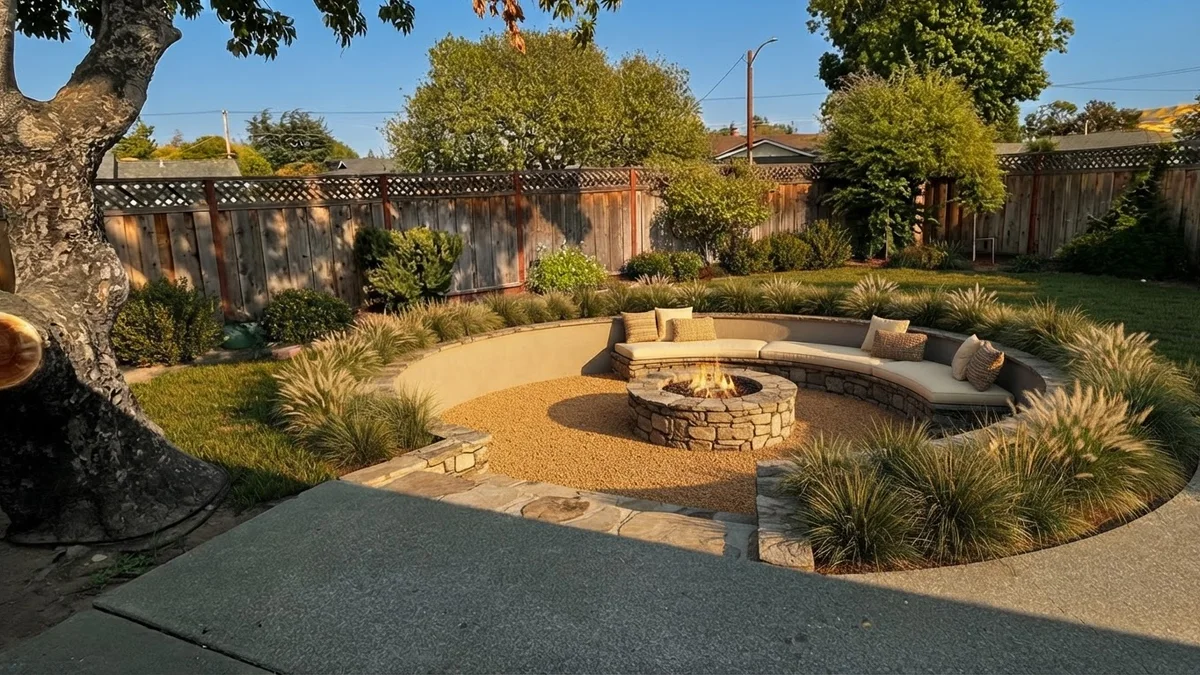
9. One fire pit zone in a bigger plan
In a deep backyard the pit works best as its own zone, set into the lawn away from the house with planting around it. Here the gravel circle is sunk into the lawn and ringed with grasses; note how close it still sits to the wood fence. If the fence itself is what you want to change, see our privacy fence ideas.
Steel Fire Bowl and Portable Fire Pit Ideas
A steel bowl is the fastest way to get a fire pit: no footing, no mortar, and you can move it when you learn where the smoke goes. Angi lists portable pits at $75 to $500. Under the International Fire Code a manufactured unit like this is a portable outdoor fireplace: 15 feet from structures, but the code exempts one- and two-family homes, so your city and the manual decide. Solo Stove itself asks for 6 feet from buildings and trees and 15 to 20 feet of open space overhead.
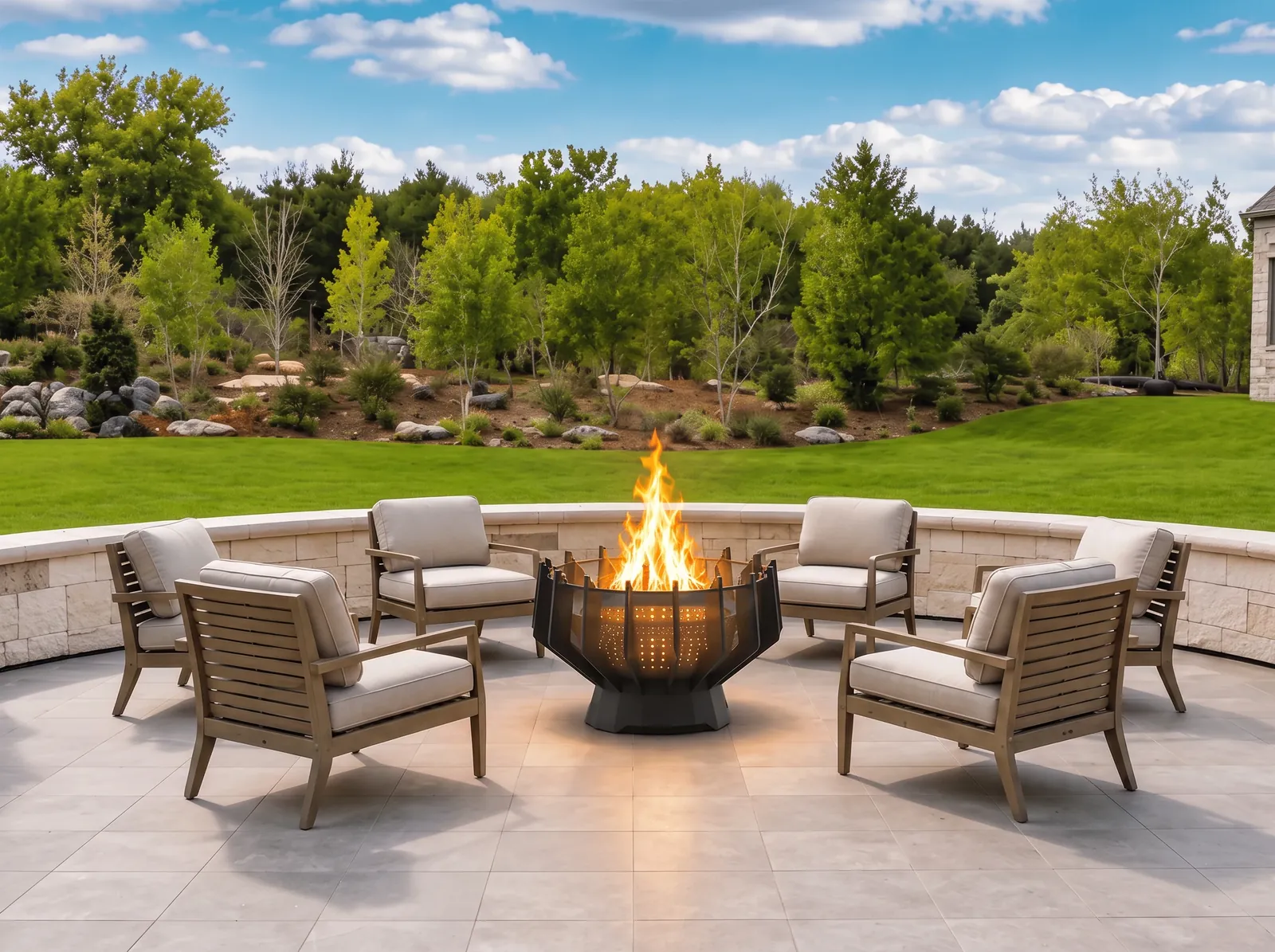
10. A steel bowl ringed by lounge chairs
A black steel bowl in the middle of a pale stone patio, with six deep chairs around it, is the simplest layout on this list and one of the best looking.
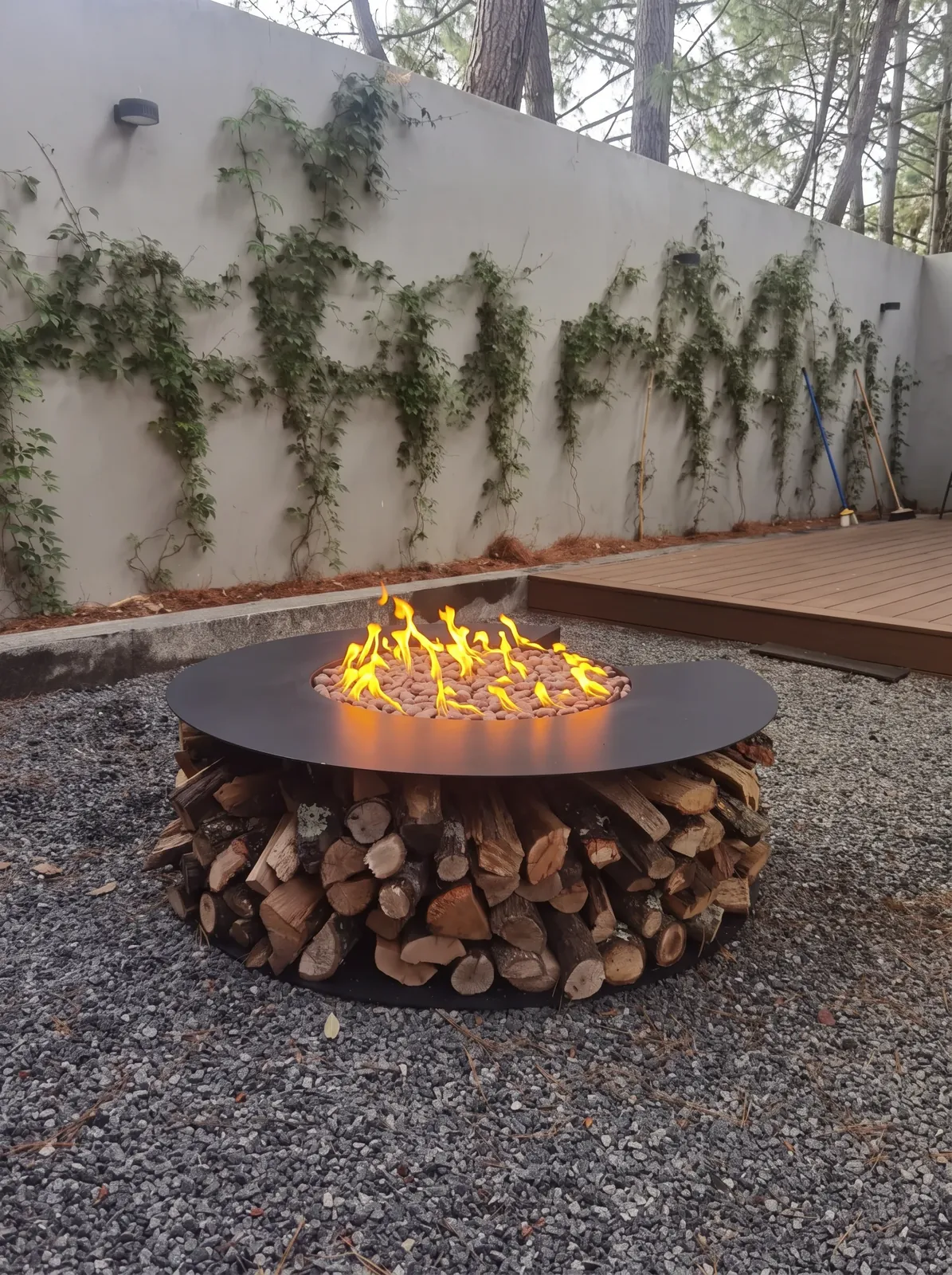
11. A steel pit table over a log store
A wide steel plate around the fire doubles as a table and keeps the firewood dry underneath. Set it on gravel, not on the deck beside it.
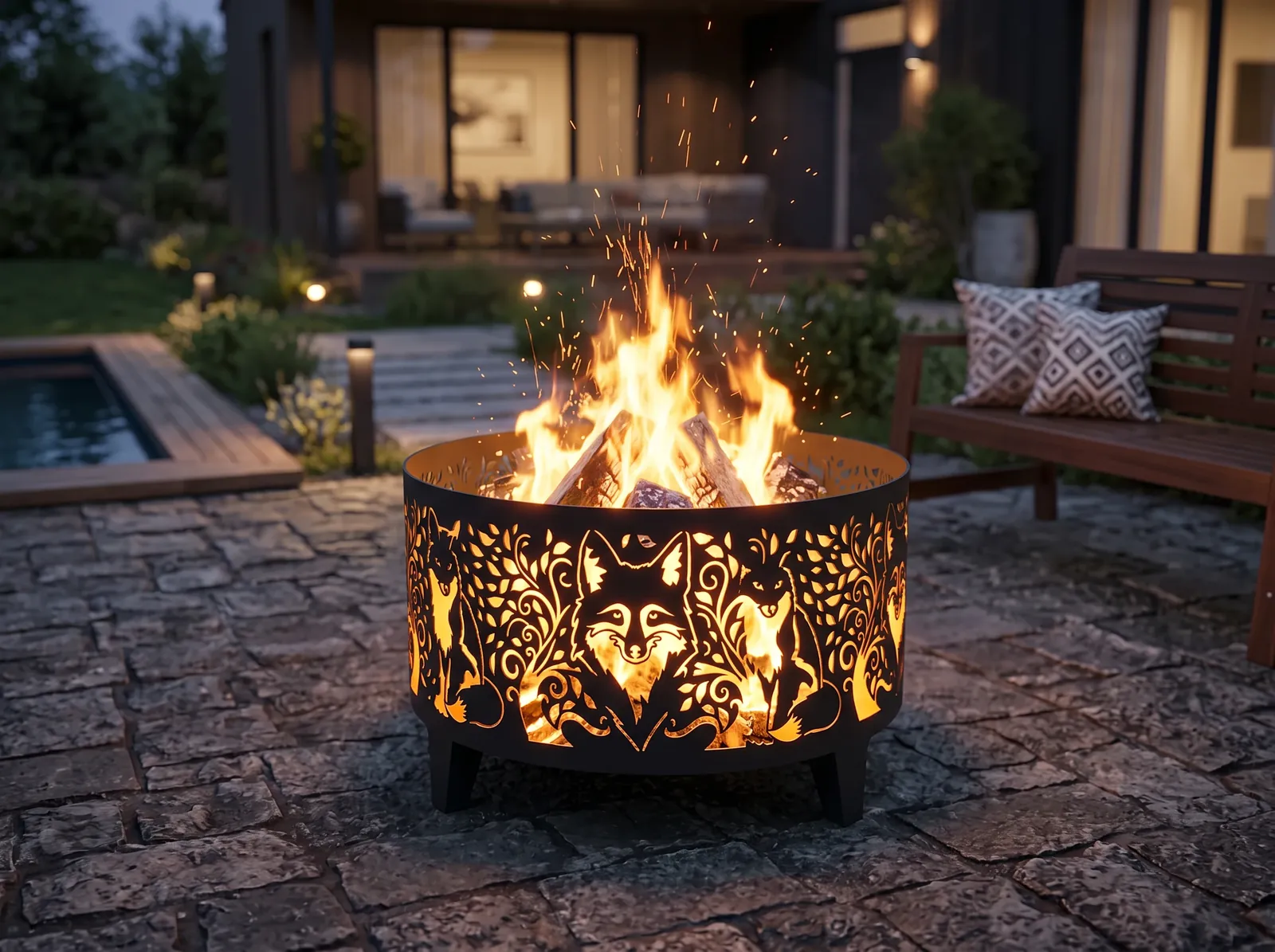
12. A laser-cut steel fire pit
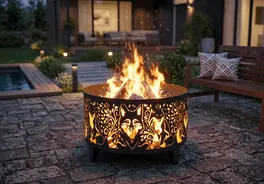
A pattern cut through the steel throws light across the patio, which is half the fun of a fire after dark. Cut-outs also let sparks out, so give this one more room than a solid bowl.
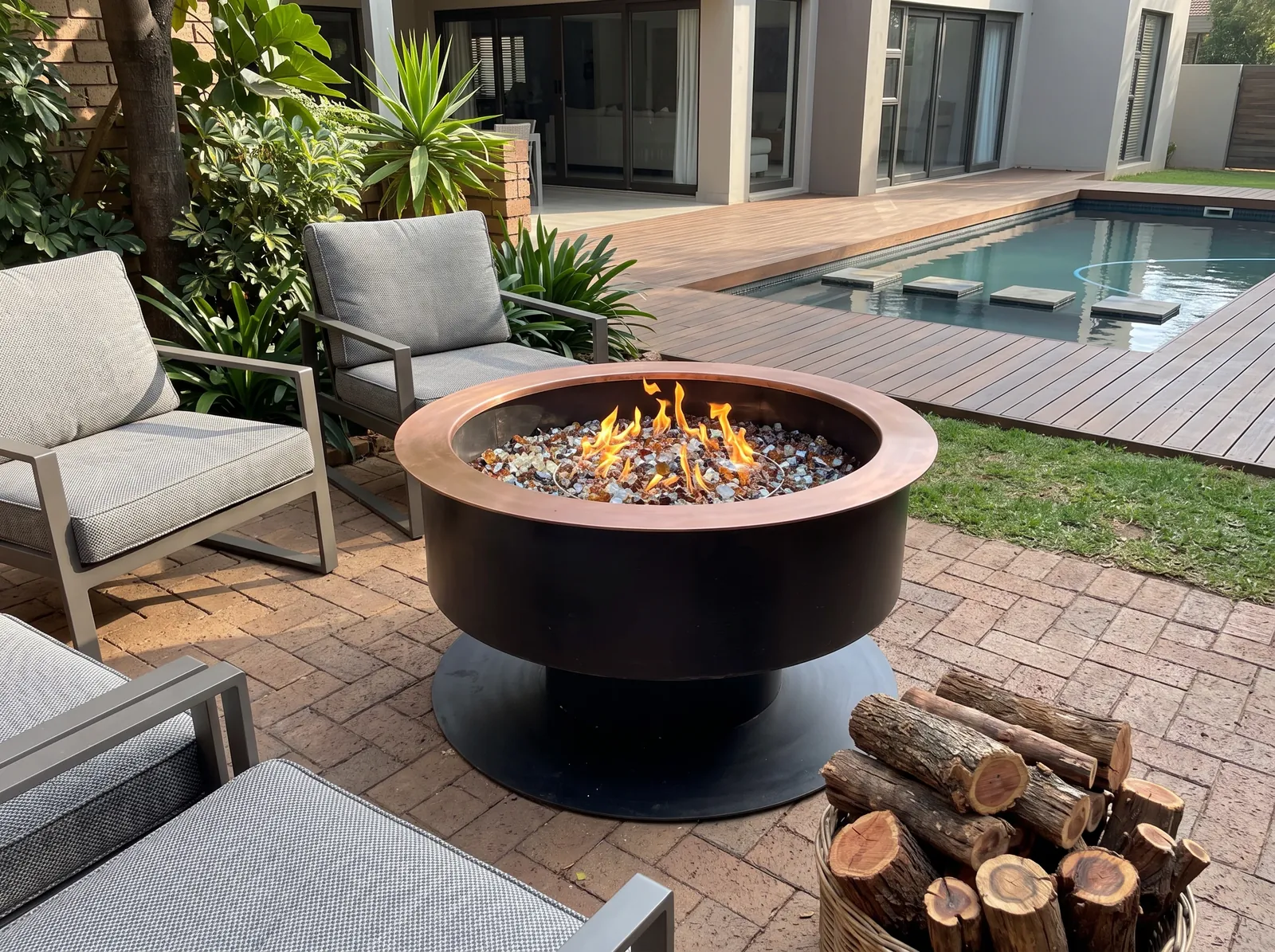
13. A steel bowl by the pool
A pool deck is a natural spot: the paving is non-combustible and the water is a few steps away. Keep the bowl off any wood decking around the pool.
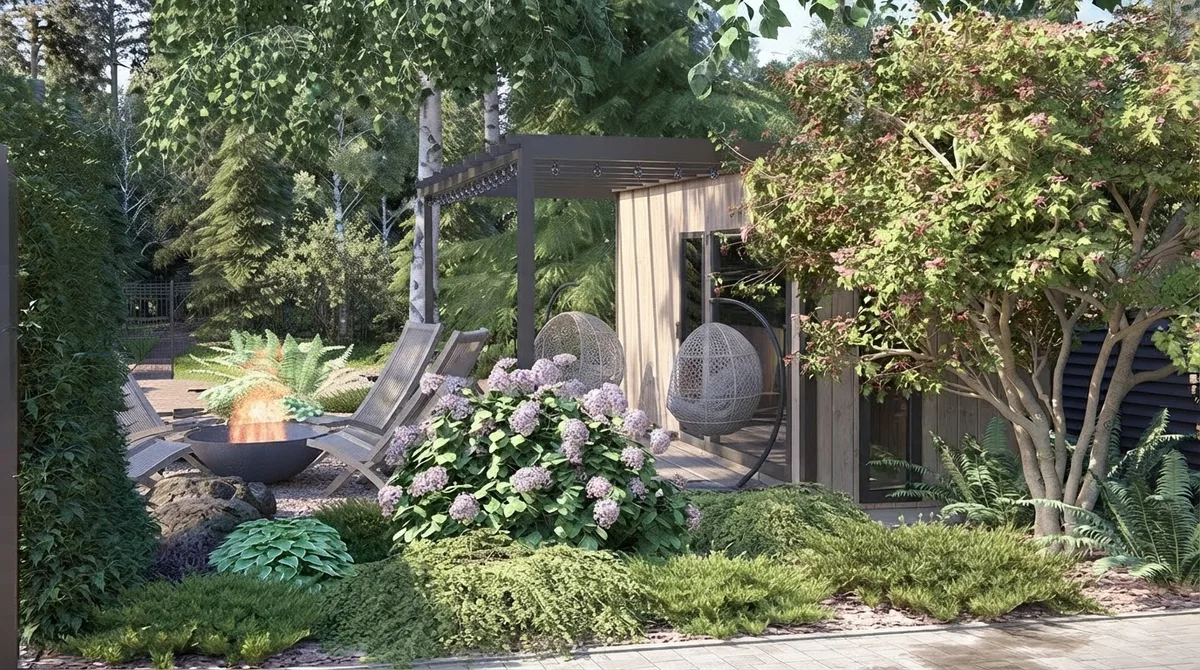
14. A fire bowl at the edge of the trees
This is the idea to copy for the feeling, not the placement: the bowl sits under trees, a few feet from a timber pergola and hanging chairs, which is exactly what the clearance rules warn about. Move the same bowl and chairs into the open and you keep the mood without the risk.
Modern and Gas Fire Pit Ideas
Gas changes the rules of the game: no sparks, no smoke, an instant off switch, and clearances set by the listed appliance (ANSI Z21.97 / CSA 2.41 for outdoor decorative gas appliances) rather than the 25 foot recreational fire rule. The cost is the gas line: $15 to $25 per linear foot (Angi), and HomeGuide quotes up to $50 or more. That is why most of the modern designs below are gas.
15. A sunken square lounge
The modern version of the sunken pit: a square concrete burner in a built-in lounge two steps down, with planting at ground level around the rim.
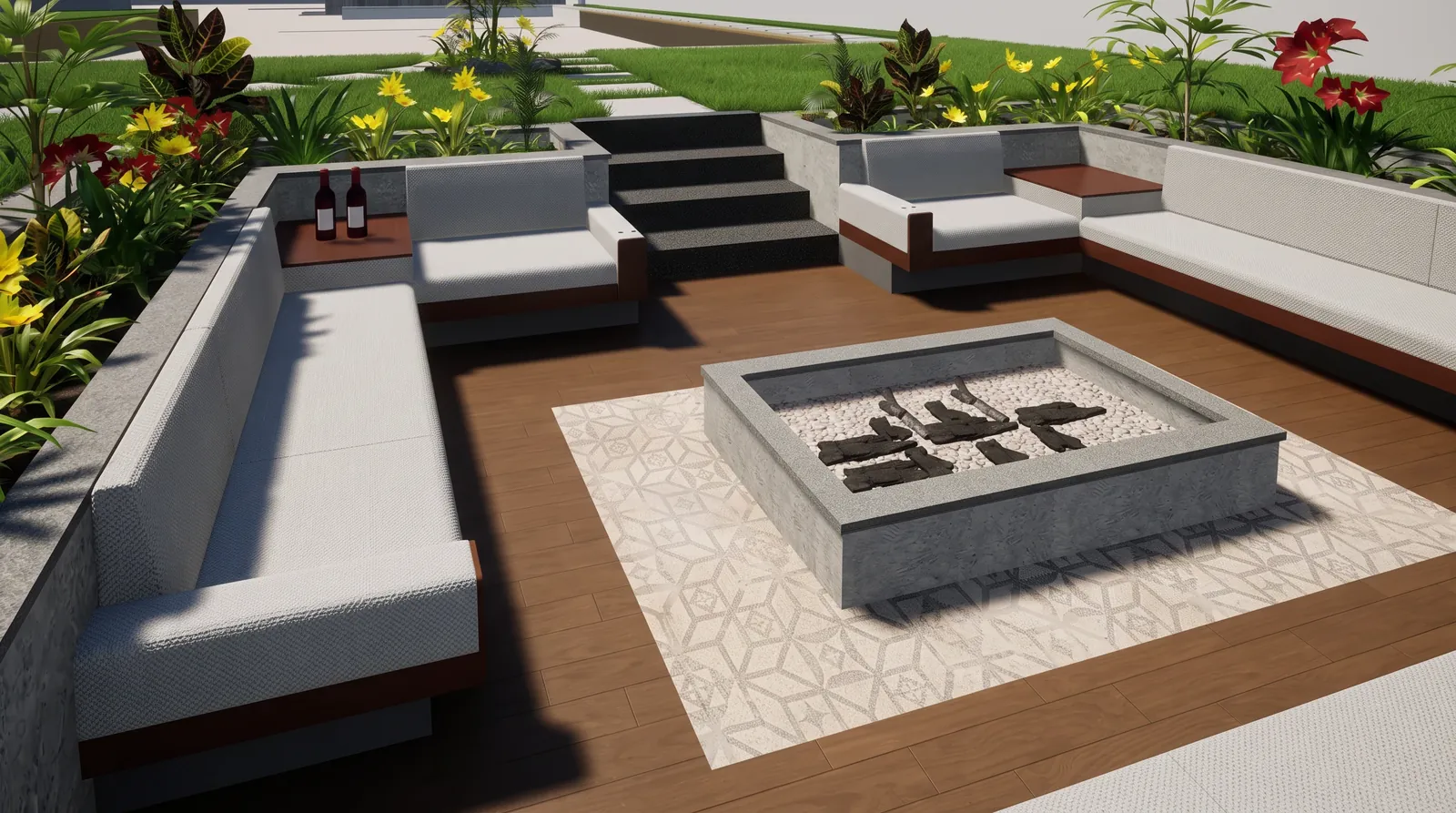
16. A sunken courtyard fire pit
In a walled courtyard the walls are the wind shelter. Check the burner manual against the walls: one maker asks for 24 inches from the burner edge to combustible side walls.
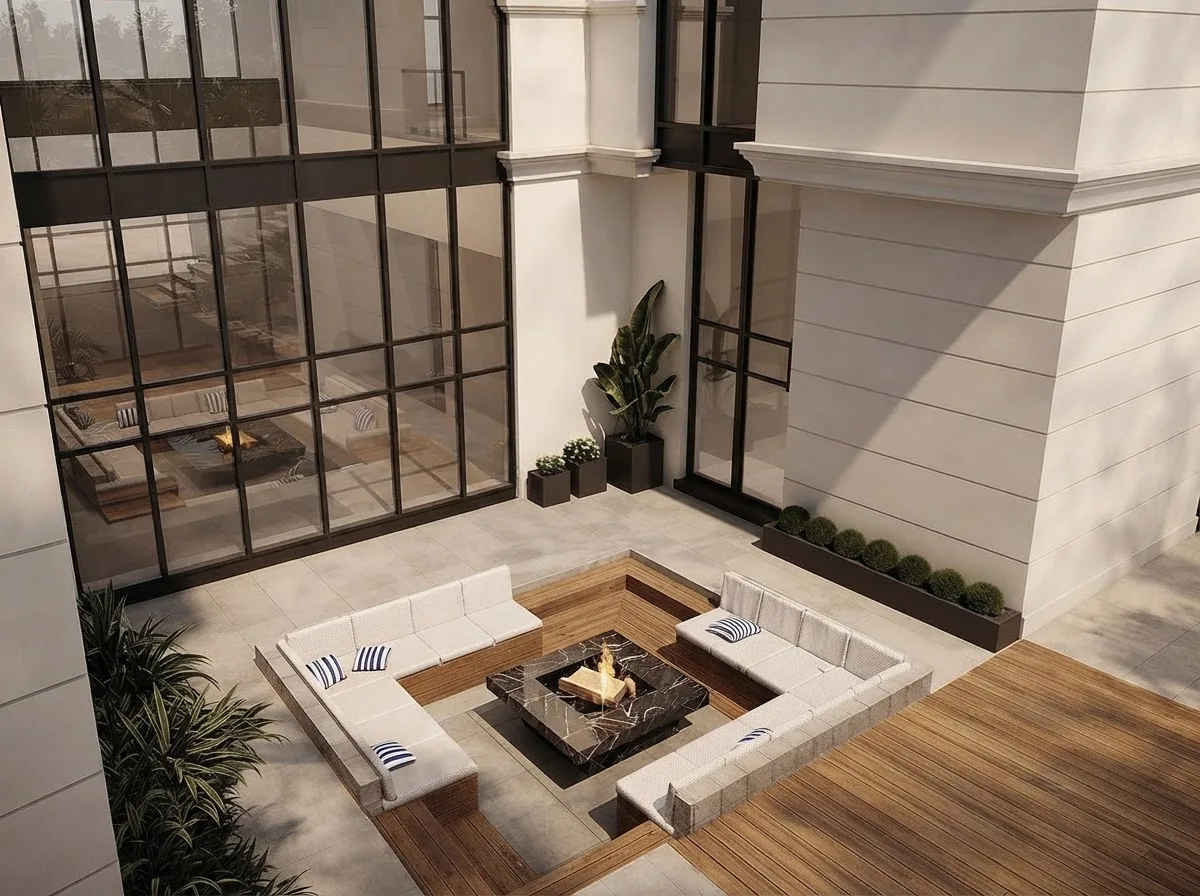
17. A sunken lounge beside the pool
A sunken gas fire lounge at the shallow end of a pool is the most requested modern idea, and the one that costs the most: HomeAdvisor puts a new patio with a built-in pit at $6,750 on average before the lounge.
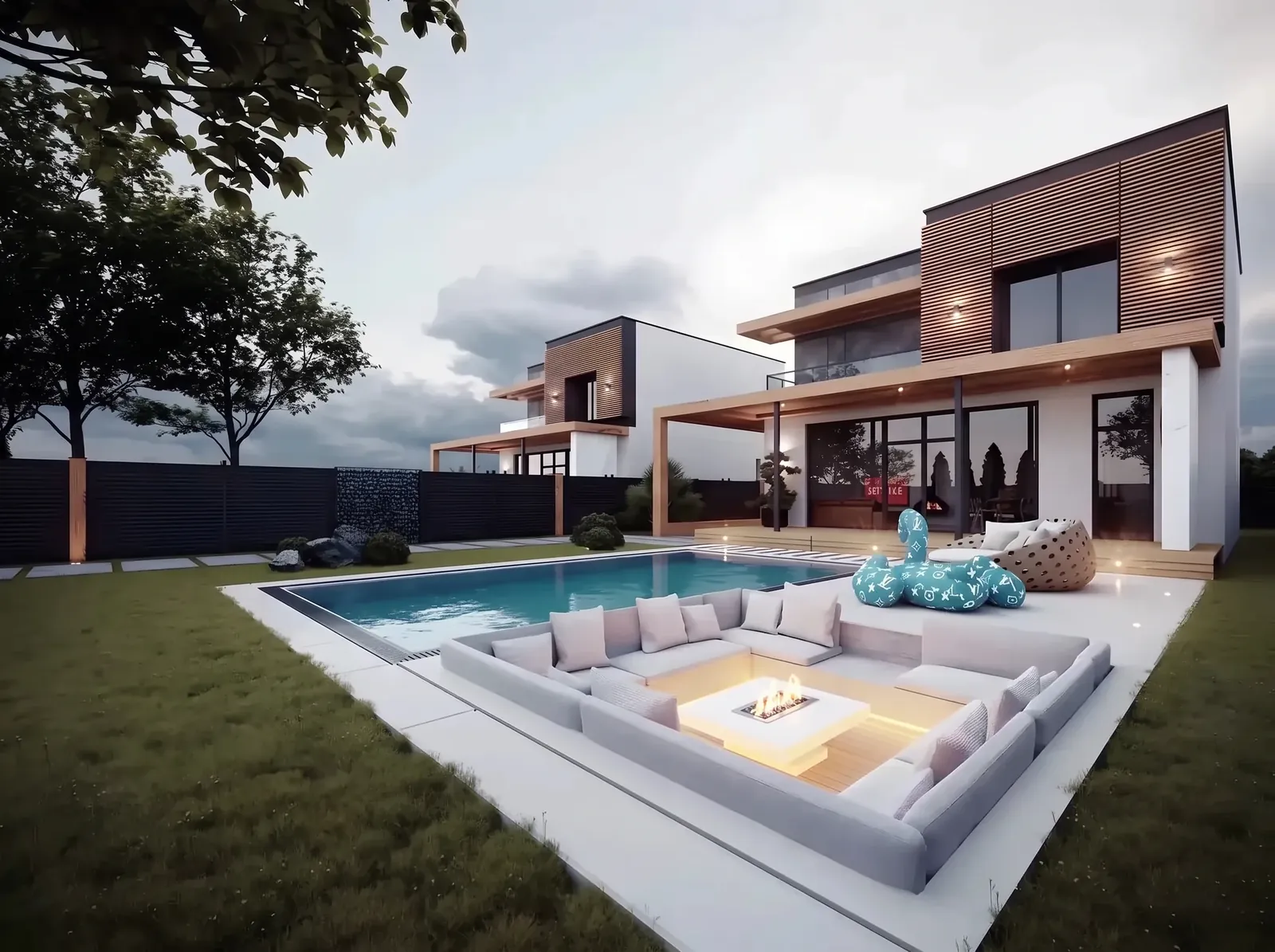
18. A fire pit at the end of the pool
Lining up the pit with the long axis of a pool gives the view from the house a focal point. It only works with a lot of distance: this one sits at the far end of a long pool.
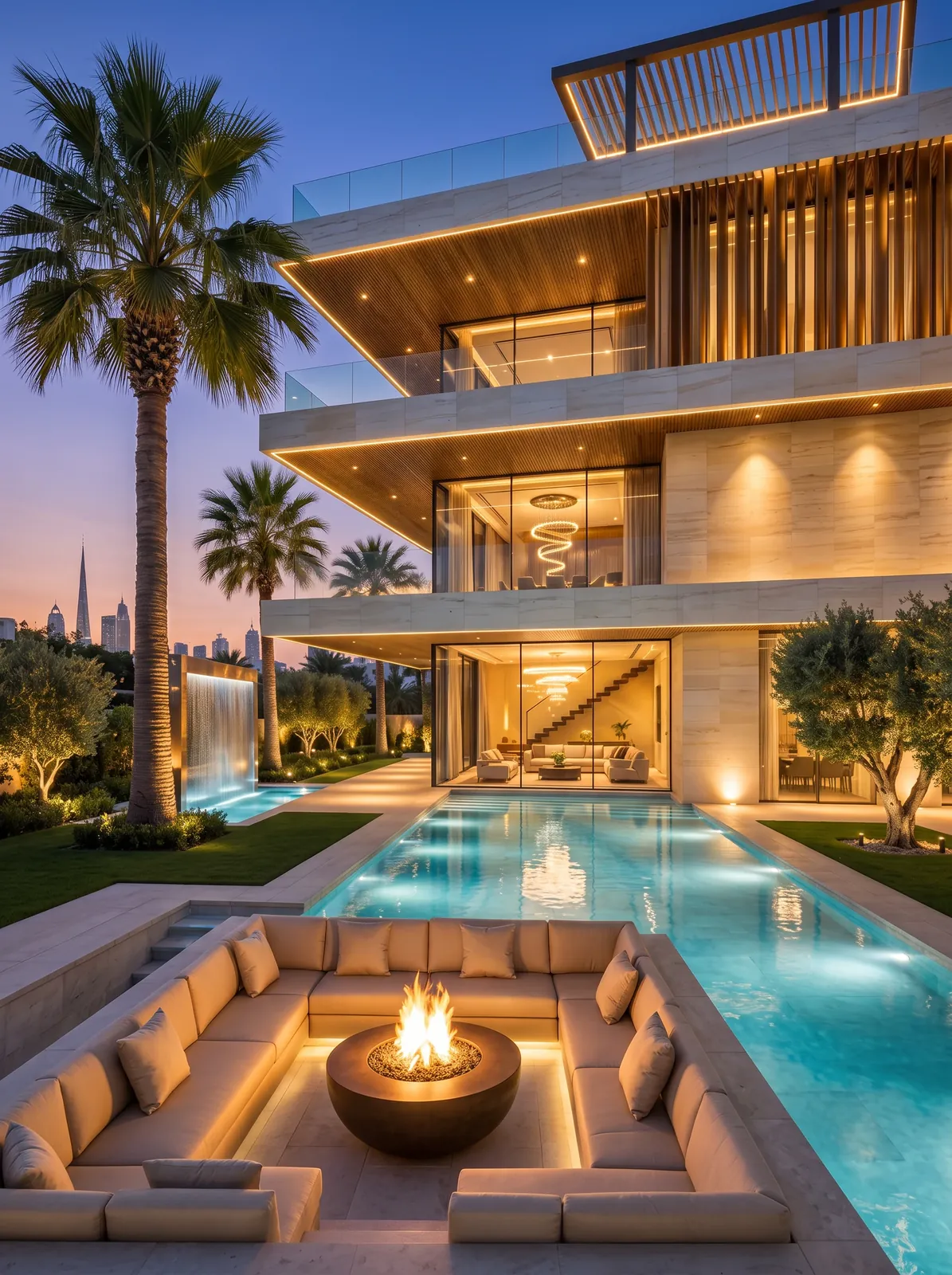
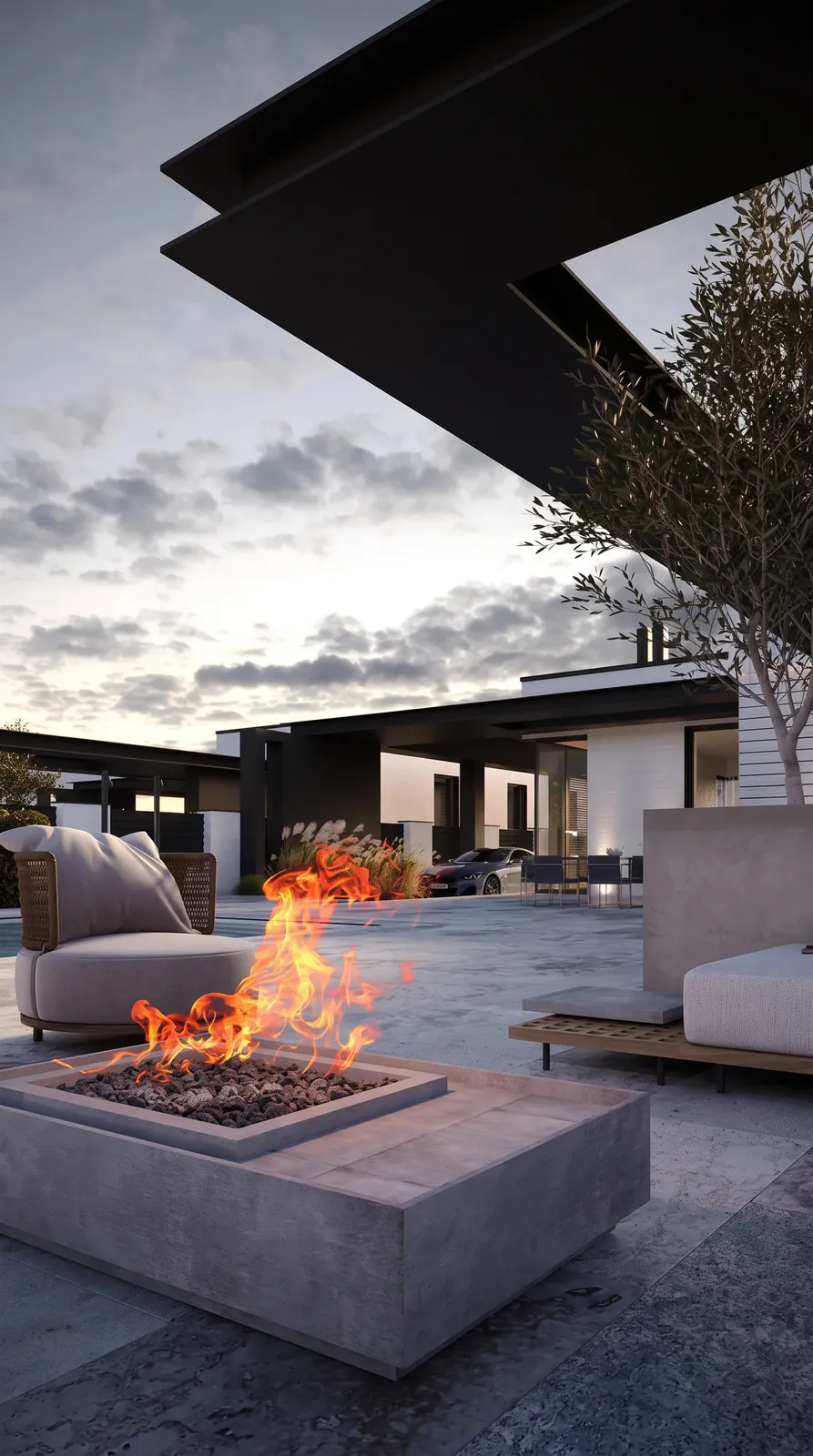
19. A concrete fire table on a terrace
A long gas fire table next to a built-in sofa works like a coffee table with a flame. Watch the roof: this one sits close to a deep overhang, and the same maker guidance asks for 72 inches of clearance above the burner.
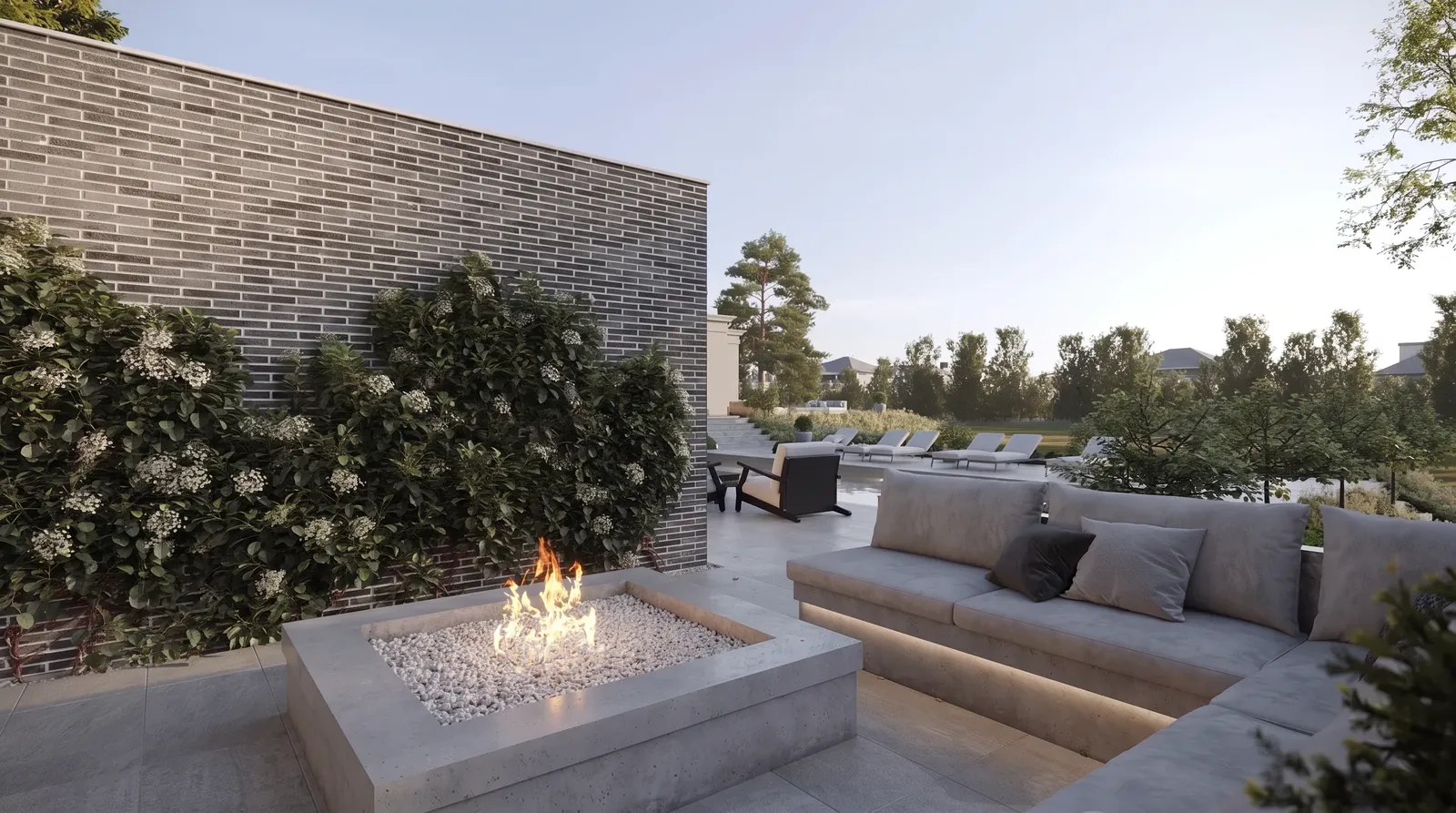
20. A low concrete pit in front of a built-in sofa
A low rectangular burner filled with white pebbles reads as part of the architecture. It suits a narrow terrace where a round circle of chairs would not fit.
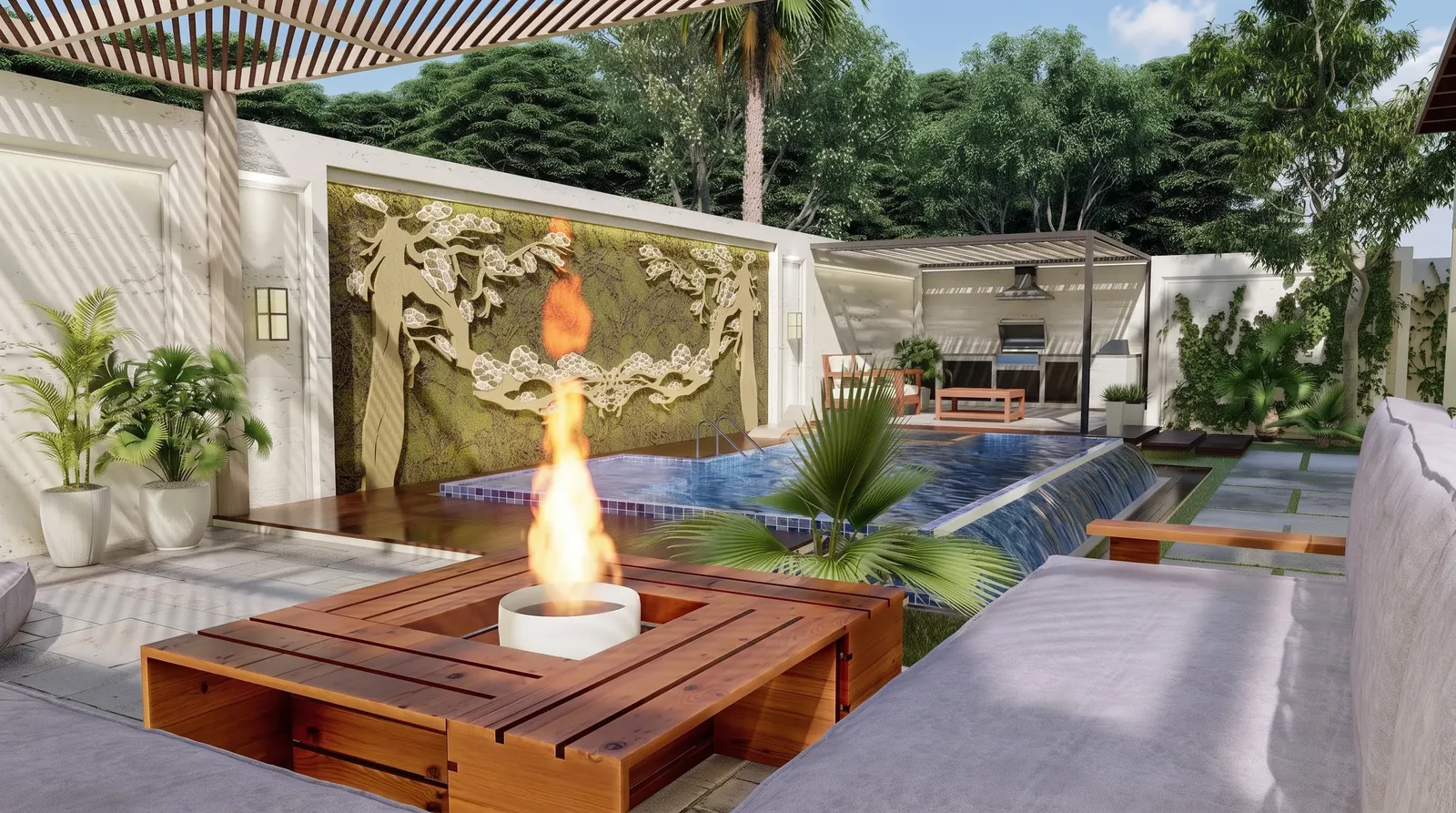
21. A courtyard fire table by the water
A tall glass flame on a wooden table is more sculpture than heater. It is the kind of piece that needs a listed gas or bioethanol burner, not an open wood fire, because it sits on wood.
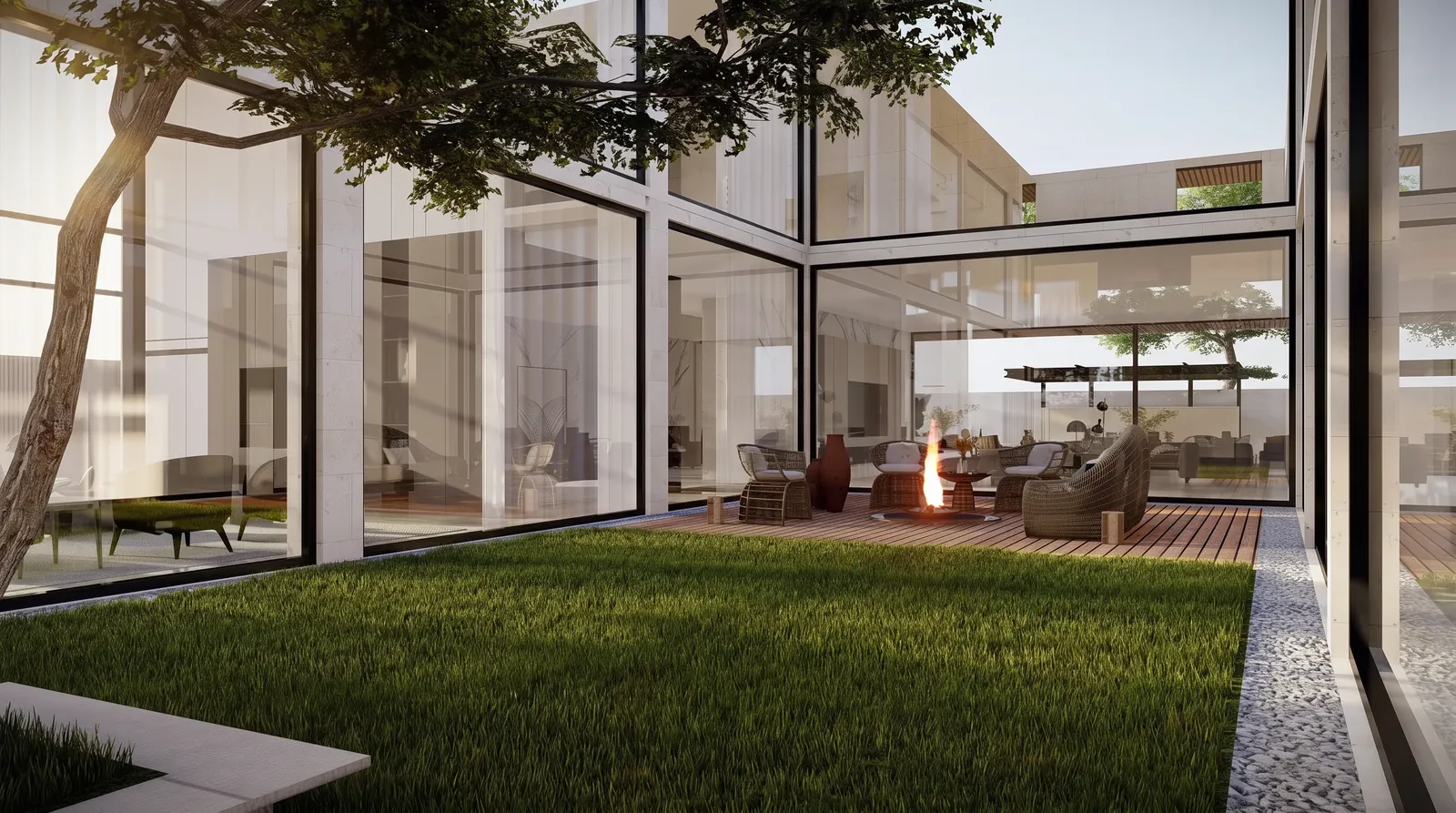
22. A fire bowl in a glass courtyard
A small fire in the middle of a courtyard enclosed by glass turns the whole house toward it. Keep it small and gas: the glass walls are close on every side.
Fire Pit Ideas for Decks, Rooftops and Small Yards
Small spaces are where fire pit photos and fire codes disagree the most. A 25 foot circle is 50 feet across, more than many small yards have, so in a tight space the realistic answer is a listed gas fire table placed by its manual, not a wood fire.
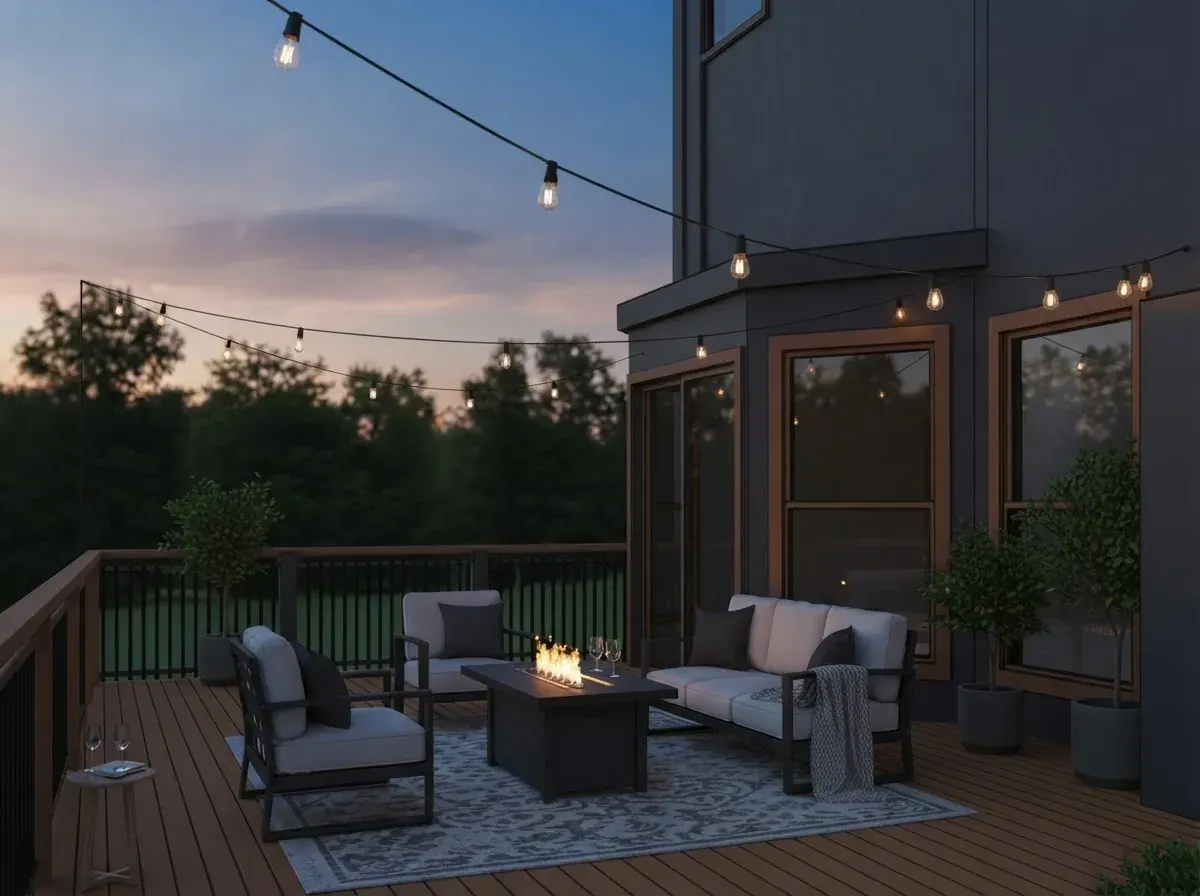
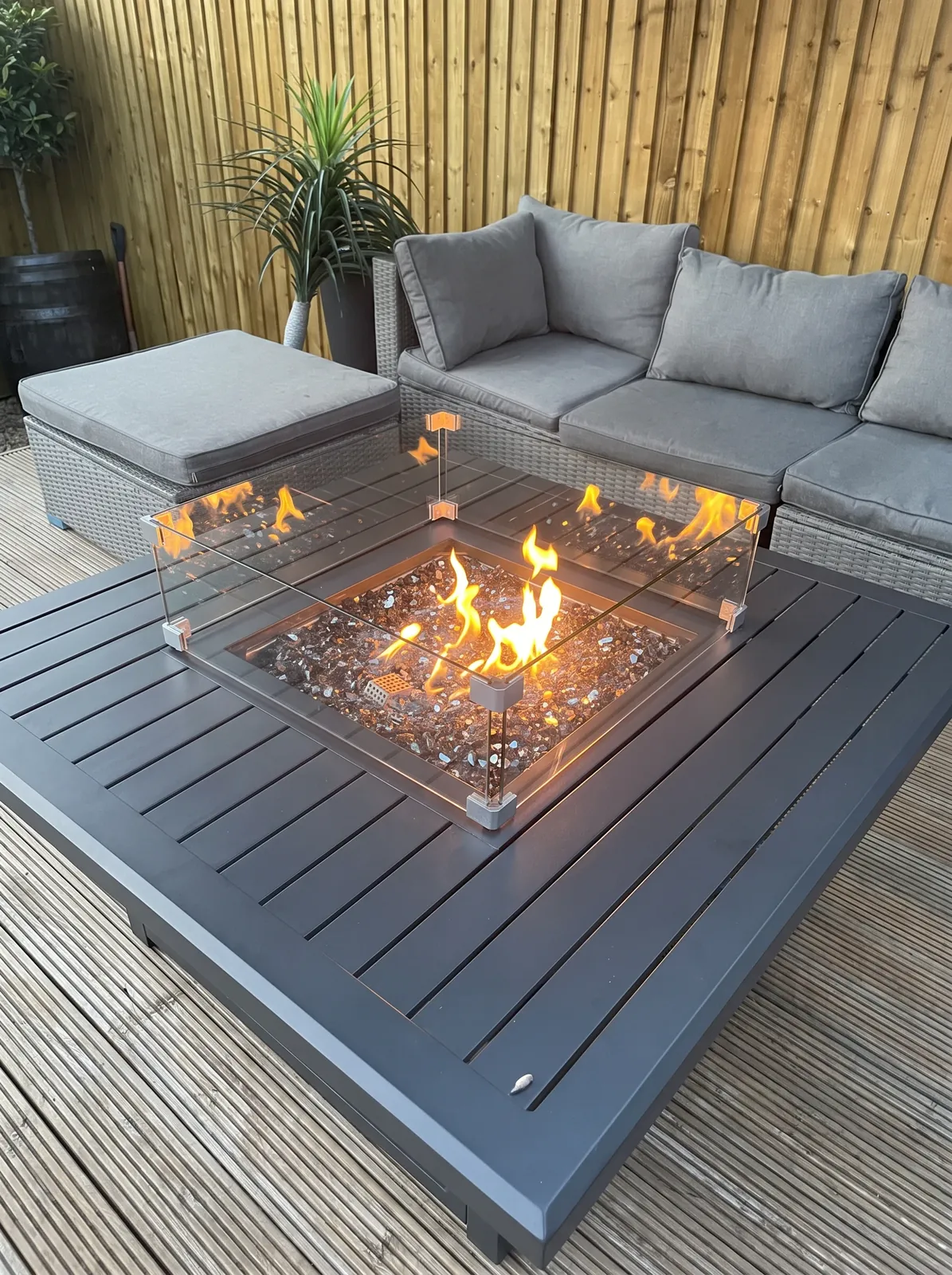
23. A gas fire table on a deck
Trex says wood-burning pits should not sit directly on its boards without a heat barrier, because the boards can soften at 176 degrees Fahrenheit. A gas fire table with a glass wind guard is the deck-friendly version, and string lights over the seating, not over the flame, finish it.
24. A rooftop fire table
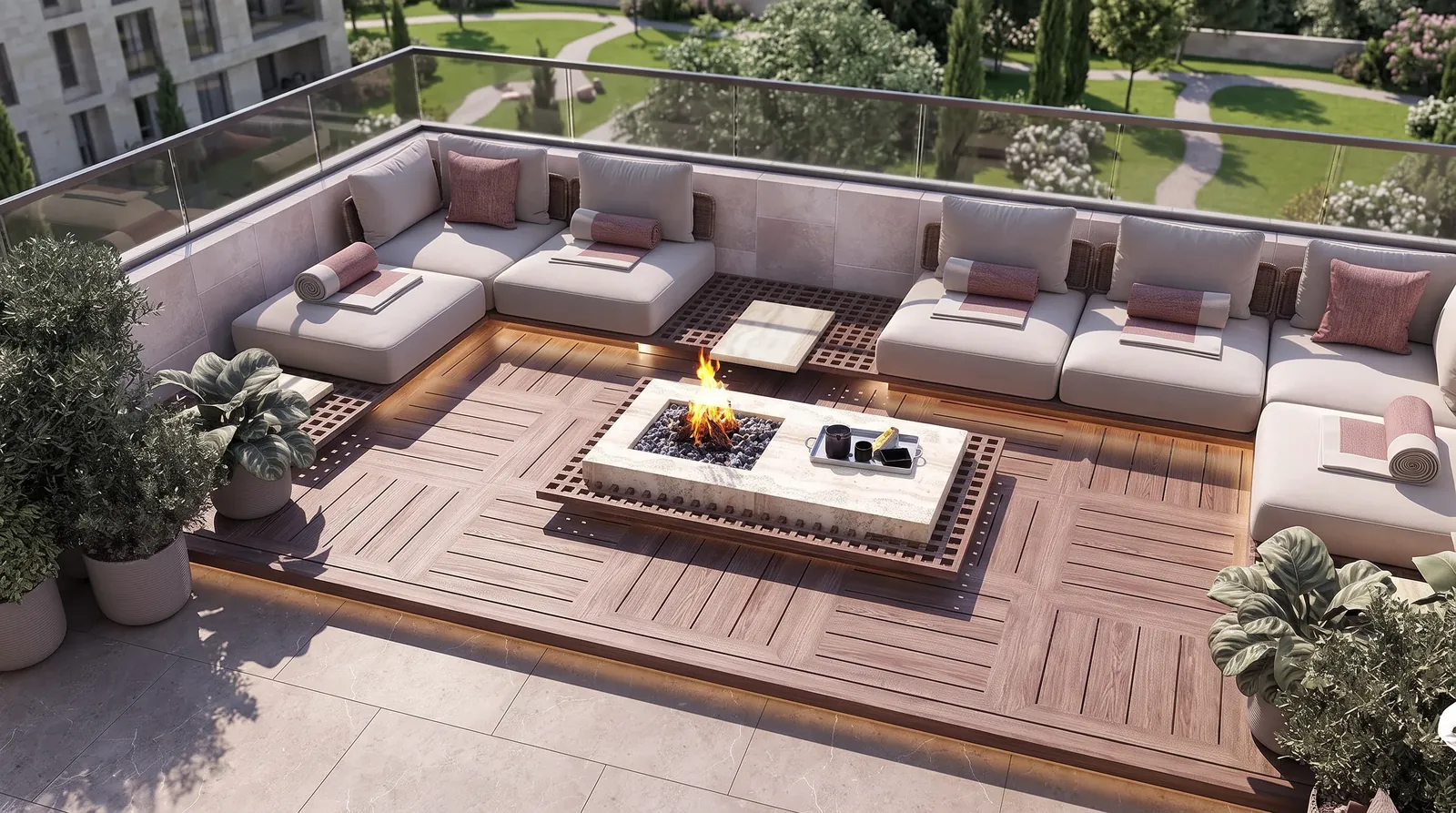
On a roof terrace the fire table is the center of a U-shaped lounge. Ask the building manager first, and use a listed gas unit placed by its manual.
25. A fire bowl on a covered terrace
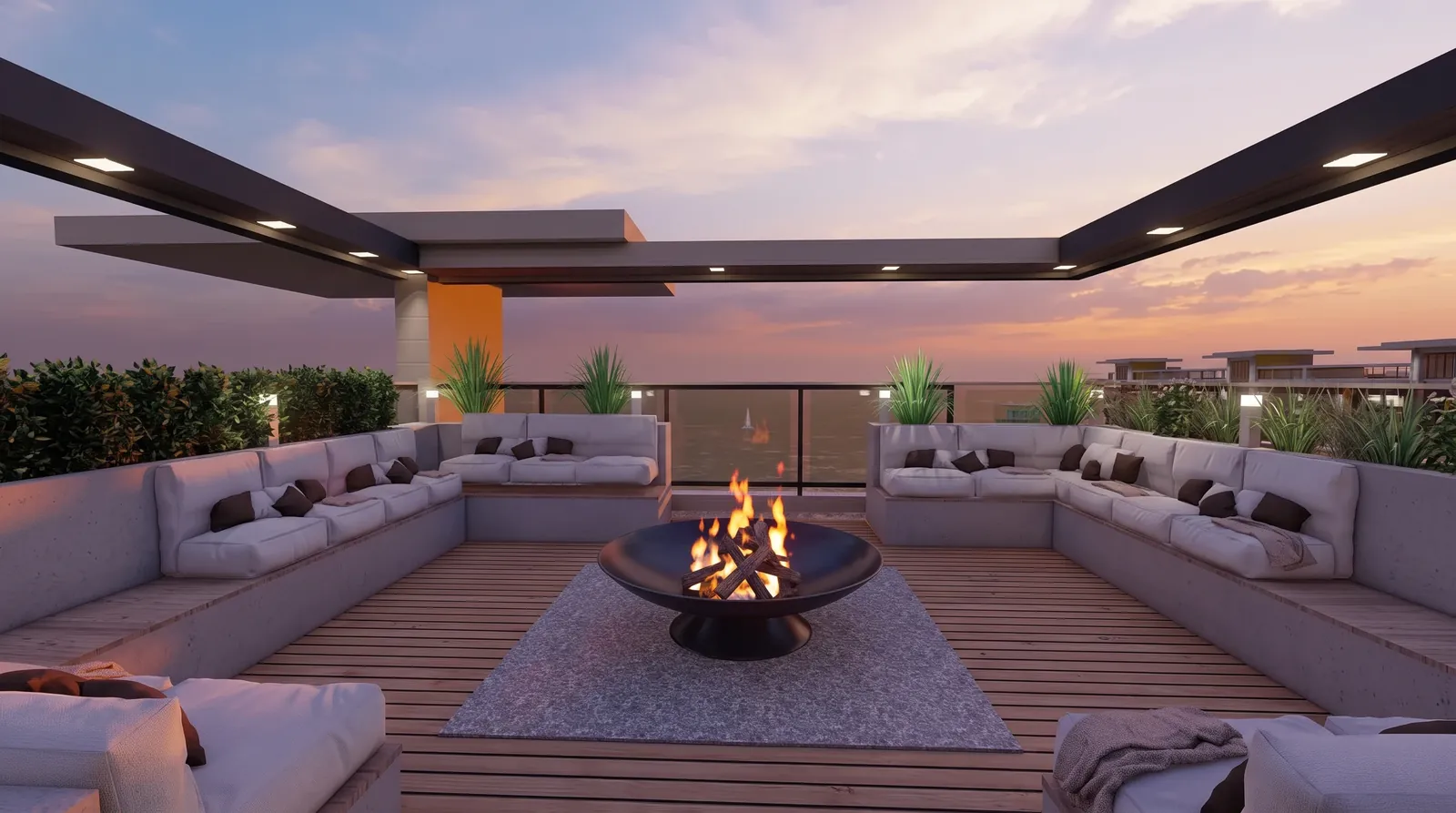
This is the most common mistake in fire pit pictures: a wood fire in a bowl under a roof. Solo Stove calls covered patios a no-go for its pits. If you want a fire under a roof, it has to be a gas appliance whose manual allows the ceiling height you have.
Low Cost Fire Pit Landscape Design
The cheapest good fire pit is a steel bowl on a gravel circle with chairs you already own. Lawn Love puts DIY materials at $150 to $300, HomeGuide prices a fire pit kit at $200 to $700, and Angi puts the national average for an installed pit at $850. The landscaping around the pit usually costs more than the pit, so that is where to save.
The paving is the hidden cost. In our MeltFlex AI calculation from the Fine Homebuilding sizes, a 30 to 36 inch pit with a seat wall 3 to 5 feet away needs a circle about 12.5 to 17 feet across, or 123 to 227 square feet. At Fixr’s $16 to $25 per square foot that is about $2,000 to $5,700 in pavers alone, two to six times the price of the pit. Gravel inside a steel or stone edge covers the same circle for a fraction of that, and it is what most of the cheapest ideas above stand on.
Fire Pit Seating Ideas and Sizes
Fire pit seating ideas come down to three choices: a fixed seat wall, built-in benches in a sunken circle, or loose chairs. Whatever you pick, these are the dimensions that make it comfortable.
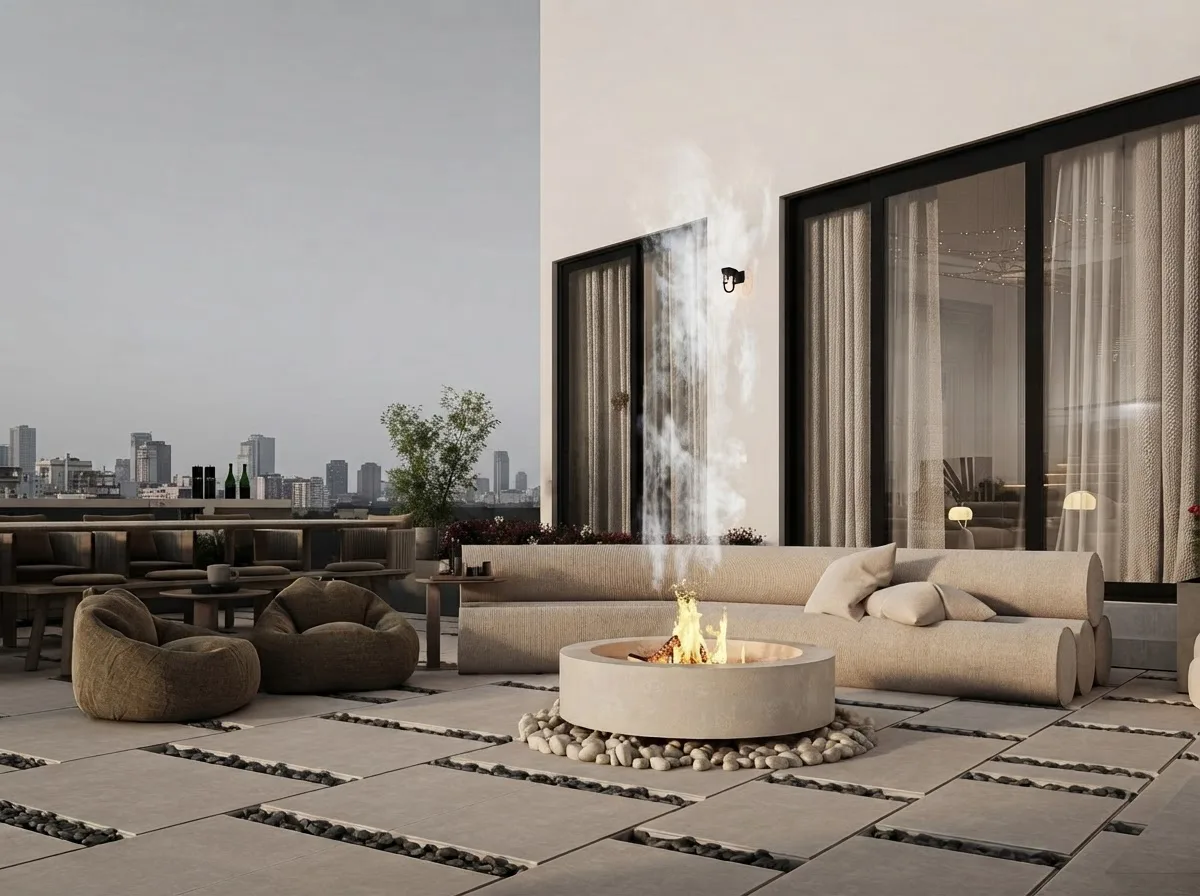
Loose chairs are the forgiving choice: they let you widen the circle when the fire is big and close it when it dies down. Seat walls are cheaper per seat than good outdoor chairs and never blow over, but they fix the distance forever, so build them at the 3 to 5 foot spacing, not closer. For chairs and loungers that survive outside, see our outdoor furniture ideas.
How Far Should a Fire Pit Be From the House?
Under the International Fire Code, a wood fire in a backyard fire pit is a “recreational fire”, and section 307.4.2 says it shall not be conducted within 25 feet of a structure or combustible material. That is the same in the 2021 and 2024 editions. Cities adopt and amend the code, so your local number may be smaller or larger. Before you dig, call the fire department or look up your city’s recreational fire rules.
Two things surprised me. First, the numbers in circulation disagree: HomeAdvisor tells readers 15 feet, which is the portable fireplace figure, not the recreational fire one, and Solo Stove says 6 feet for its own stoves. Second, almost none of the designs in this article, ours included, would pass a strict 25 foot reading. Design renders put the fire where it looks good, next to the house and under the trees. That is a picture, not a permit.
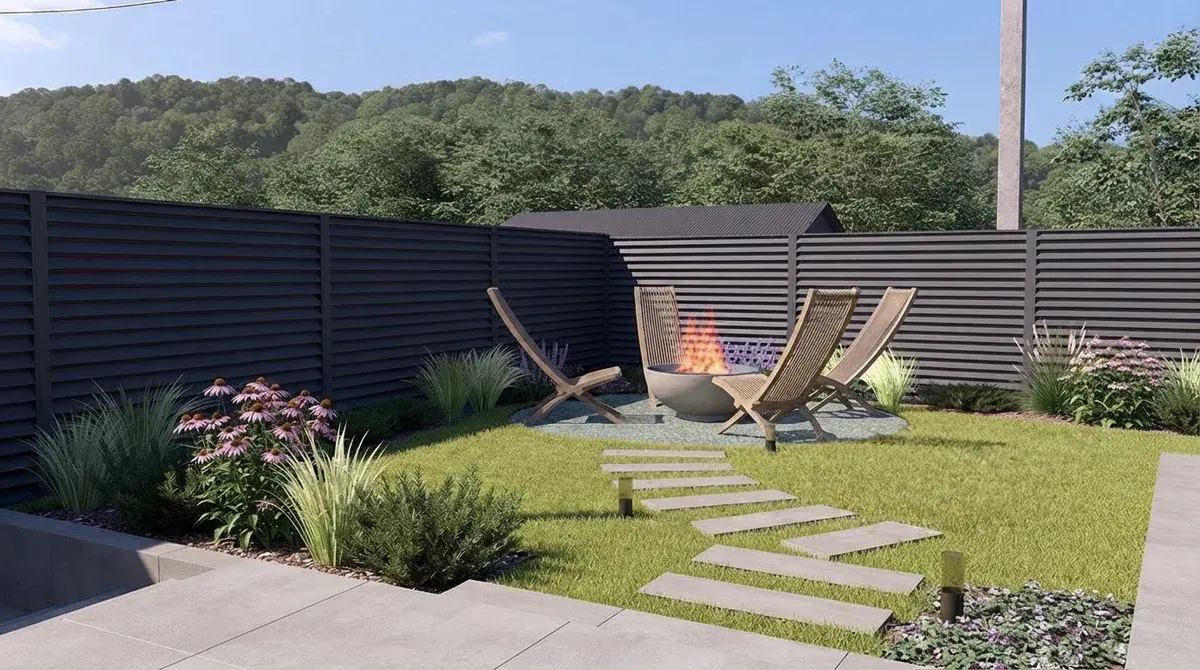
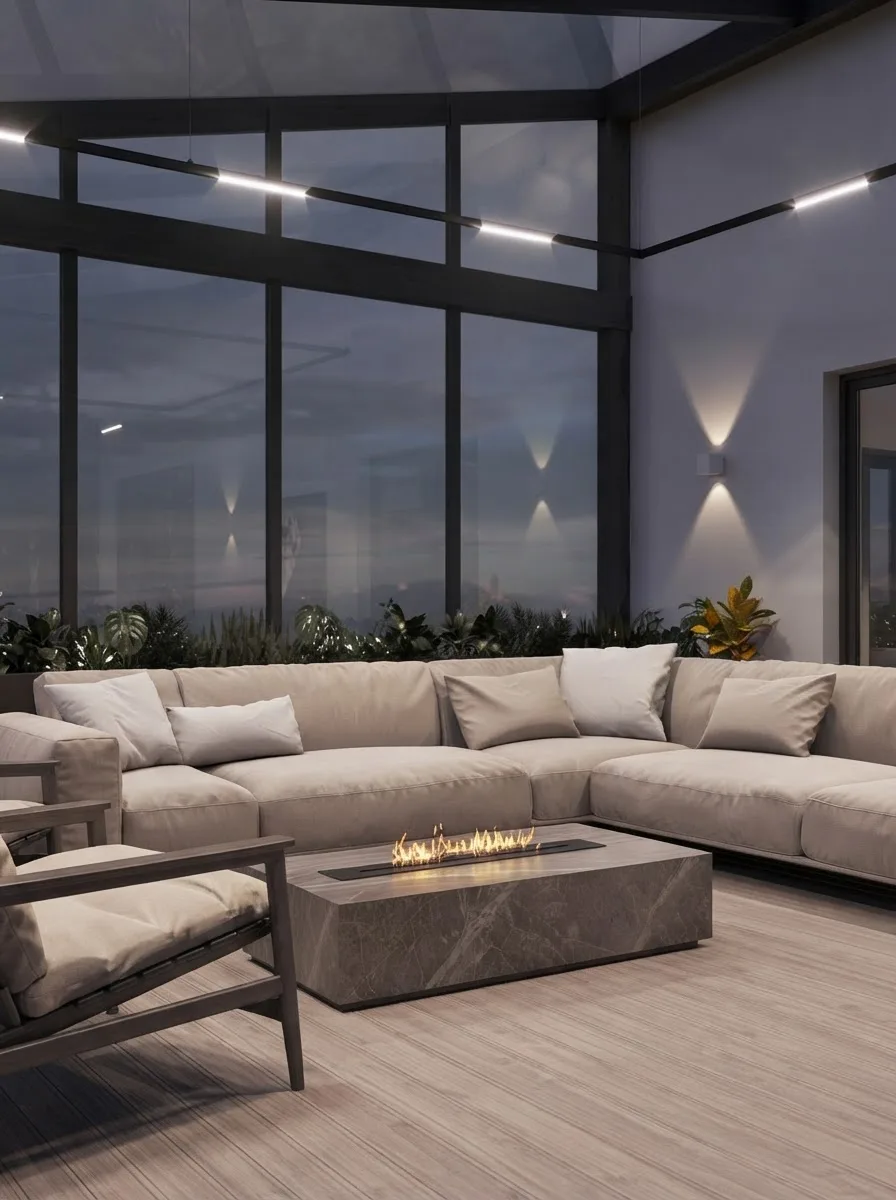
Smoke is the other neighbor problem. The EPA’s Burn Wise pages (now an archived record) call fine particles the biggest health threat in wood smoke, recommend wood at about 20 percent moisture, and say never to burn on air quality alert days. Some cities restrict backyard fires outright, which is one more reason to check before you build. If smoke over the fence is the worry, our backyard privacy ideas cover screens and planting, and the AI fence design tool shows a new fence on your own yard.
How Much Does a Fire Pit Cost?
The 2026 national average is $850 for an installed fire pit, with most projects between $200 and $3,000, according to Angi (updated October 28, 2026) and HomeAdvisor. The fuel type moves the price more than the material does, mainly because of the gas line.
Note where the sources disagree: HomeGuide’s gas numbers are two to three times Angi’s, most likely because it prices a complete gas installation rather than the pit alone. Ask for a quote that includes the gas line run from your meter, since that is the line item that changes the total. Fixr’s page was last updated January 31, 2025, so it is the oldest of the five. If the fire pit is part of a bigger backyard project, our pool renovation cost guide covers the other big line item.
See a Fire Pit in Your Own Backyard: Our MeltFlex AI Test
MeltFlex AI adds a fire pit to a photo of your own backyard in about 11 to 25 seconds for 10 credits through the AI garden design tool: upload the photo and pick Fire pit in the Feature row. New accounts get 15 free credits, so the first design is free; Standard is $20.99 a month, or $12.99 a month billed yearly, for 490 credits. In our test it added a fire pit with seating in 18 of 18 renders, but it does not measure, and it never kept the fire 25 feet from the house, fence and trees. MeltFlex AI is ours, so here is every result.
On November 26, 2026 I took three real backyards from Wikimedia Commons: an open suburban lawn with a split-rail fence and a drain grate, a small yard with a covered patio against the house and a wood privacy fence, and a long lawn with a picket fence in front of woods. I sent each one three briefs, twice: the Fire pit feature on its own, Modern style plus Fire pit, and Rustic style plus Fire pit plus Evening lighting. The test ran by script with exactly the prompt the garden sidebar builds and the same image model the app uses (gemini-nano-banana-2.1), so it skipped the web app itself; the scoring is mine, at full size.
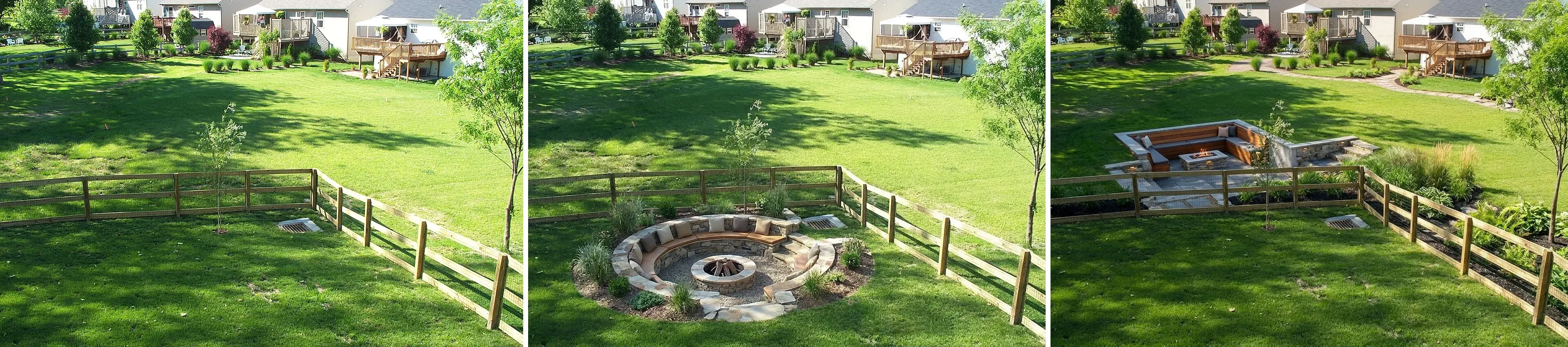
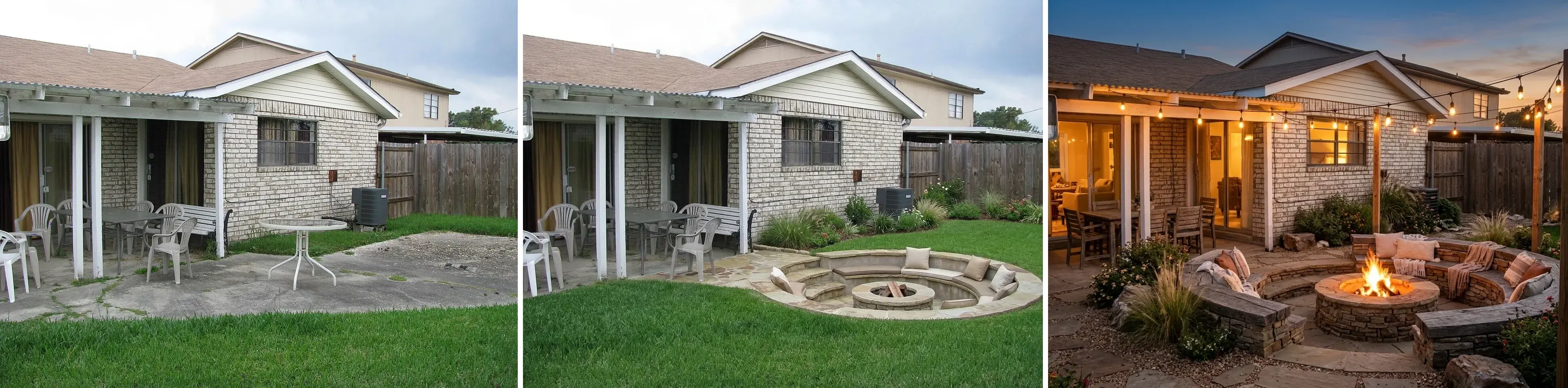
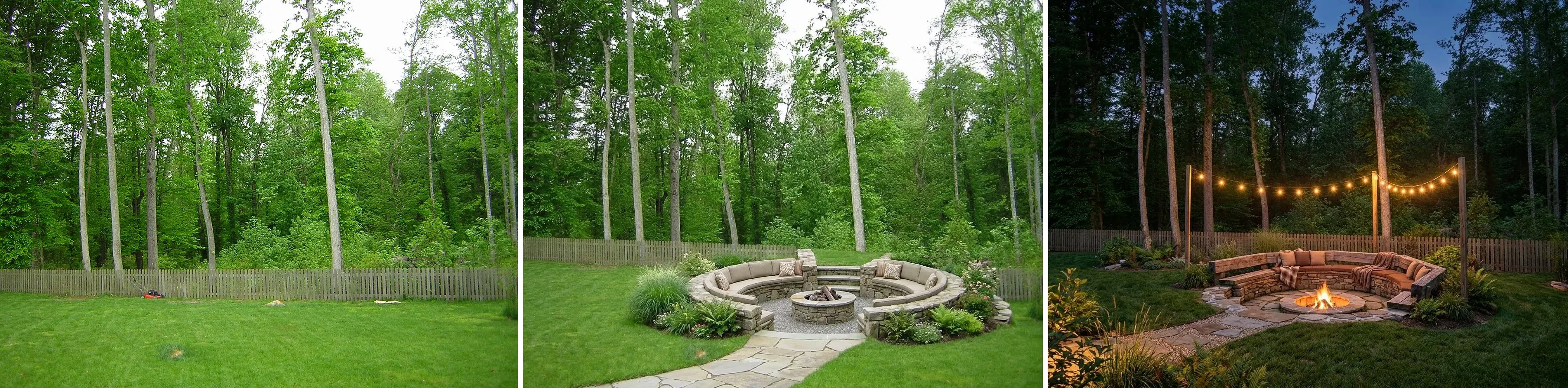
What it got right: every render had a believable fire pit with seating, sized for the yard, and the plain Fire pit feature kept the house, the patio, the fences and the camera in 5 of 6 runs. Modern briefs turned into gas burners with fire glass in 5 of 6 runs, rustic ones into wood fires in stone rings, which is what you would expect a designer to do. What it got wrong: the Evening brief moved the camera in all 6 renders and on the small yard redrew the house doors; on the open lawn one Modern render built the lounge on the other side of the fence and another grew the young tree out of the bench and paved over the drain grate. And not one render kept the fire 25 feet away. On the open lawn every pit backed onto the split-rail fence; on the small yard every pit sat within roughly 10 feet of the house or the covered patio, a lot that probably cannot fit a 25 foot circle at all.
So use the render for what it is good at: deciding between a sunken stone ring, a steel bowl and a gas table on your own yard, and showing it to the people who live there. Then put stakes in the ground at 25 feet, or at your city’s number, before anybody digs. MeltFlex AI also works inside Claude and ChatGPT through the MeltFlex AI MCP connector and for developers through the MeltFlex AI API. To compare it with other tools, read our AI landscape design tools test and best landscape design apps; for wording that works, see AI landscape design prompts.
Before You Build: A Fire Pit Checklist
- Local rules: look up your city’s recreational fire rules and any burn ban; ask whether a permit is needed ($20 to $500 per HomeAdvisor).
- Distance: stake out 25 feet from the house, fences, sheds and overhanging branches, or your local number.
- Fuel: wood for the open back of the lot, gas for decks, courtyards and anywhere close to the house, placed by its manual.
- Size: 30 to 36 inch opening, fire 3 feet across or less.
- Seating: 3 to 5 feet from the pit wall; seat walls 16 to 18 inches high.
- Ground: gravel, pavers or stone under and around the pit; never directly on composite decking.
- Safety kit: a garden hose or a 4-A extinguisher within reach, a spark screen for wood, and someone watching until it is out.
- Preview: try the look on a photo of your own yard before you buy stone.
Planning the rest of the yard around it? Start with how to design a garden layout, see backyard ideas without grass for gravel and paving, and browse more outdoor rooms in our creations gallery. For the house behind the yard, the AI exterior design tool works the same way.
Fire Pit Ideas FAQ
How far should a fire pit be from the house?
Under the International Fire Code, a wood fire in a backyard fire pit counts as a recreational fire and must be at least 25 feet from a structure or combustible material, which includes the house, a wood fence, a shed and overhanging trees (IFC 2021 and 2024, section 307.4.2). Many cities amend that number, so check your local fire code. In our MeltFlex AI test on November 26, 2026, none of the 18 AI renders placed the fire 25 feet from the house, fence or trees, so measure it on the ground yourself.
How much does a fire pit cost?
Angi and HomeAdvisor put the 2026 national average at $850, with most projects between $200 and $3,000. A portable steel bowl is $75 to $500, a wood-burning built-in pit $300 to $1,000, a natural gas pit $400 to $3,000 (HomeGuide quotes $3,500 to $8,000), and a gas line adds $15 to $25 per linear foot. To preview one first, MeltFlex AI adds a fire pit to your own backyard photo for 10 credits, and new accounts get 15 free credits.
Can I see a fire pit in my own backyard before I build it?
Yes. Upload a photo of the yard to the MeltFlex AI garden design tool and choose Fire pit in the Feature row. In our test on 3 real backyards it added a fire pit with seating in 18 of 18 renders in 11 to 25 seconds each, and kept the house, fence, trees and camera angle in 9 of 18. Treat the render as a look, not a site plan: it does not measure clearances.
What is the best size for a backyard fire pit?
A 30 to 36 inch inside diameter suits most backyards, and the finished pit is about 2 feet wider than its opening (Fine Homebuilding). Keep the fire itself 3 feet across or less: the International Fire Code defines a recreational fire as 3 feet or less in diameter and 2 feet or less high. Group pits run up to about 6 feet wide.
How far should seating be from a fire pit?
Leave 3 to 5 feet between the fire pit wall and a seat wall or the front of the chairs, and build seat walls 16 to 18 inches high and about 12 inches wide (Fine Homebuilding). A pit wall of 12 to 14 inches is typical, or 18 to 20 inches if you want to sit on the edge (Landscaping Network). With those numbers a seating circle needs a patio about 12.5 to 17 feet across.
Can you put a fire pit on a deck?
Not a wood-burning one directly on composite boards. Trex says wood-burning fire pits should not sit directly on Trex decking unless a heat barrier is used, and that the boards can soften at temperatures as low as 176 degrees Fahrenheit. Gas fire tables listed for decks are the usual answer; follow the manufacturer clearances, for example 24 inches from the burner to combustible side walls and 72 inches overhead in the Outdoor GreatRoom Company guidance.
Can you have a fire pit under a covered patio?
Not a wood-burning one. Solo Stove asks for 15 to 20 feet of open space above a fire pit and calls covered patios a no-go. Some gas fire pits are allowed under a high roof, but only at the clearances in their manual, and Outdoor GreatRoom says a space enclosed on four sides does not count as outdoors; a partial enclosure needs at least 30 percent of its wall area permanently open.
What is the cheapest fire pit idea?
A steel fire bowl on a circle of gravel. The bowl costs $75 to $500 (Angi) and DIY materials for a simple ring run $150 to $300 (Lawn Love), against an $850 average for an installed pit. Gravel is also the cheapest non-combustible ground around the fire; pavers cost $16 to $25 per square foot installed (Fixr).
Sources
- International Code Council, 2024 International Fire Code, Chapter 3, sections 307.1.1, 307.4.2, 307.4.3 and 307.5 (same text in the 2021 IFC); Chapter 2, definition of recreational fire; read November 26, 2026.
- Angi, How much does a fire pit cost?, updated October 28, 2026.
- HomeAdvisor, Fire pit cost, updated June 20, 2026.
- Fixr, Fire pit cost, updated January 31, 2025.
- HomeGuide, Fire pit cost, modified February 4, 2026.
- Lawn Love, How much does a fire pit cost?, updated December 27, 2025.
- Fine Homebuilding (Cody Macfie, from Masonry Complete), Building a fire pit: design and planning and freestanding seat walls.
- Landscaping Network, Fire pit size.
- Solo Stove, Peace of mind for your next fire, May 29, 2025.
- The Outdoor GreatRoom Company, FAQs (gas fire pit clearances and enclosures).
- Trex, Fire-resistant decking.
- U.S. EPA Burn Wise (archived), Wood smoke and your health and Backyard recreational fires.
- ANSI Z21.97 / CSA 2.41, Outdoor decorative gas appliances (standard name only; the text is paywalled).
- Test photos from Wikimedia Commons: “Typical suburban backyard” by Veracious Rey (CC BY-SA 3.0), “Harvey LA back yard 2” by Lisa Heindel (CC BY 2.0), “My old backyard” by Marcus Quigmire (CC BY 2.0).
Audio version by MeltFlex AI
Listen to this article
Prefer to listen? Matthew and Bryan, the founders of MeltFlex AI, talk through Fire Pit Ideas: 25 Backyard Designs, Costs and Clearances in about 16 minutes. The voices are AI-generated. Every section is a chapter, so you can jump straight to the part you need while you browse rooms or sketch a layout.
Chapters (9)
More narrated articles on AI Interior Design MeltFlex