A good bedroom design prompt does something most prompts skip: it treats the bedroom as a machine for sleeping, not a photo set. The formula is one specific sentence naming the style, the bed, the textiles and the light, plus a lock that keeps the bed on its wall and the window where it is. We build an AI interior design tool, MeltFlex, and bedrooms are where we see prompts fail most tenderly: renders that look beautiful at noon and would be miserable to sleep in. This guide is 35 copy and paste bedroom prompts organised by the brief you actually have, from main bedrooms to small rooms, couples, kids and guests, with the formula so you can write your own.
Our articles are still written by humans!
Get human written articles in your Google feed.
“A living room render can lie to you and you lose money. A bedroom render lies to you and you lose sleep. Prompt the light you will actually use at 11pm, not the daylight the model defaults to, and half the bad bedroom designs disappear before they happen.”
Branislav Hrivnák, Co-Founder, MeltFlex
The short version
- Four parts: style with named materials + the bed as anchor + textile story + the light you sleep with.
- Lock the bed wall and the window. Those are the two things the AI most wants to move and you least want moved.
- Prompt evening light for bedrooms. The model defaults to bright daylight, which hides exactly the qualities that matter at night.
- Small rooms: name the tricks, not the wish. Low bed, wall-mounted nightstands, ceiling-height curtains, one big mirror.
- Every prompt here is model-agnostic: ChatGPT, Gemini or a dedicated room tool, unchanged.
Jump to: The formula · Main bedroom · Small bedroom · Couples · Cozy and sleep first · Kids and teens · Guest room · ChatGPT vs Gemini · Why they fail · FAQ
FreeUpload photo · freeRedesign my bedroom for freeUpload a photo of your bedroom and let MeltFlex design it. Your first AI design is free, no card needed.
The bedroom prompt formula
Two bedroom-specific notes. First, the lock clause matters more here than in any other room: living room furniture can float, but a bed has one or two viable walls, and an AI that moves it has designed a different room. Second, prompt the light you will actually use. Image models default to bright daylight, which is exactly the light a bedroom is not for; every prompt below names lamps, sconces or morning side light on purpose. The same four-part structure powers our room makeover prompt library, where the generator can write the lock clause for you, and the kitchen prompt guide applies it to the other room where layout is destiny. For the room where the furniture is supposed to move, our 41 AI living room design prompts point the lock clause at the windows and the door instead.
Main bedroom design prompts
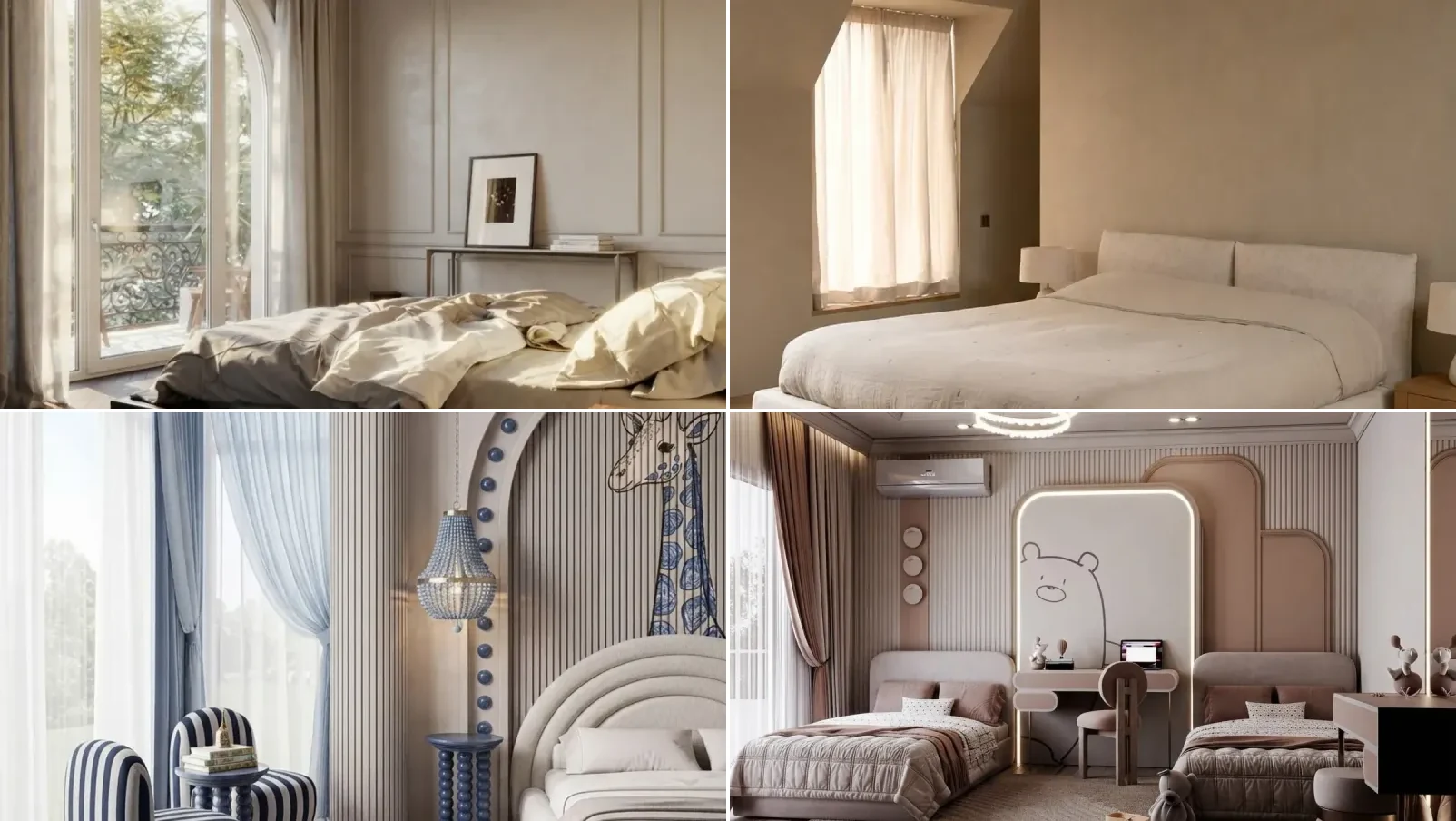
The full-room brief. Attach a wide photo shot from the doorway and run one of these unchanged, or swap the nouns. The renders in this article are from our creations gallery and show the finish level this kind of specific prompt points at.
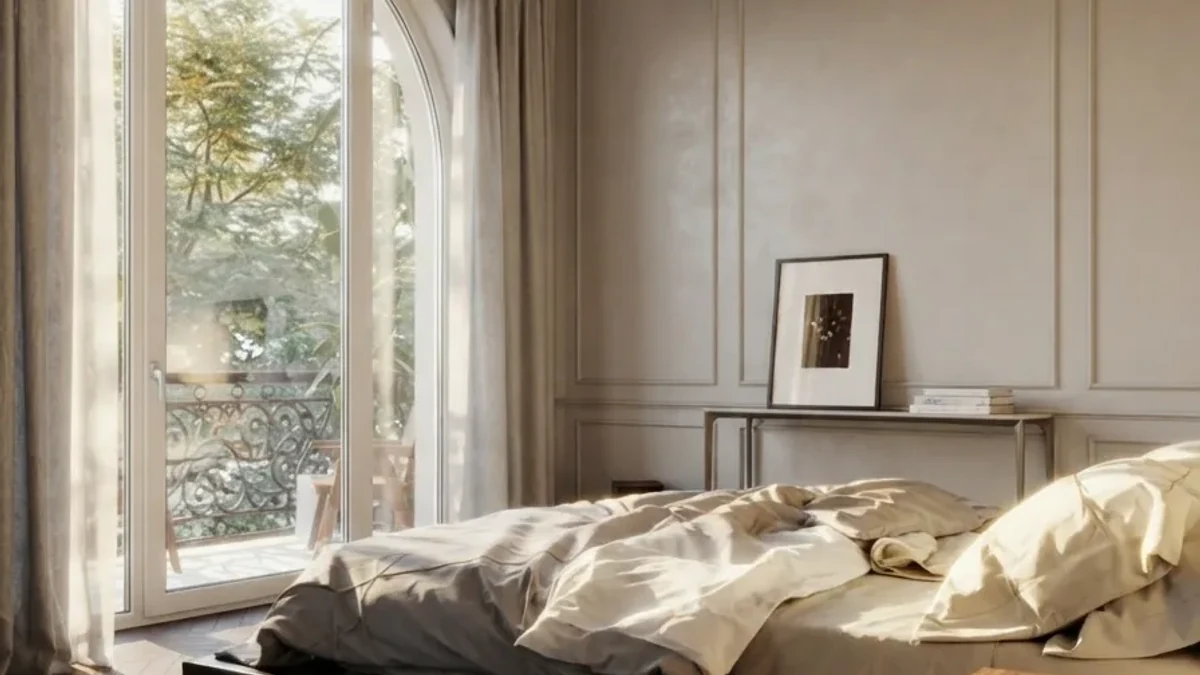
“Redesign this bedroom in a calm classic-modern style. Keep the bed on its current wall and the window unchanged. Cream panelled walls, low bed with washed grey linen bedding, slim brass wall reading lights, dark timber floor, soft morning side light, photorealistic.”
“Redesign this bedroom in a warm minimal style. Keep the bed wall and window unchanged. Low upholstered bed in oatmeal, full-height oak wardrobe wall with flush doors, bare pale floor, one framed drawing, linen curtains, quiet even daylight, photorealistic.”
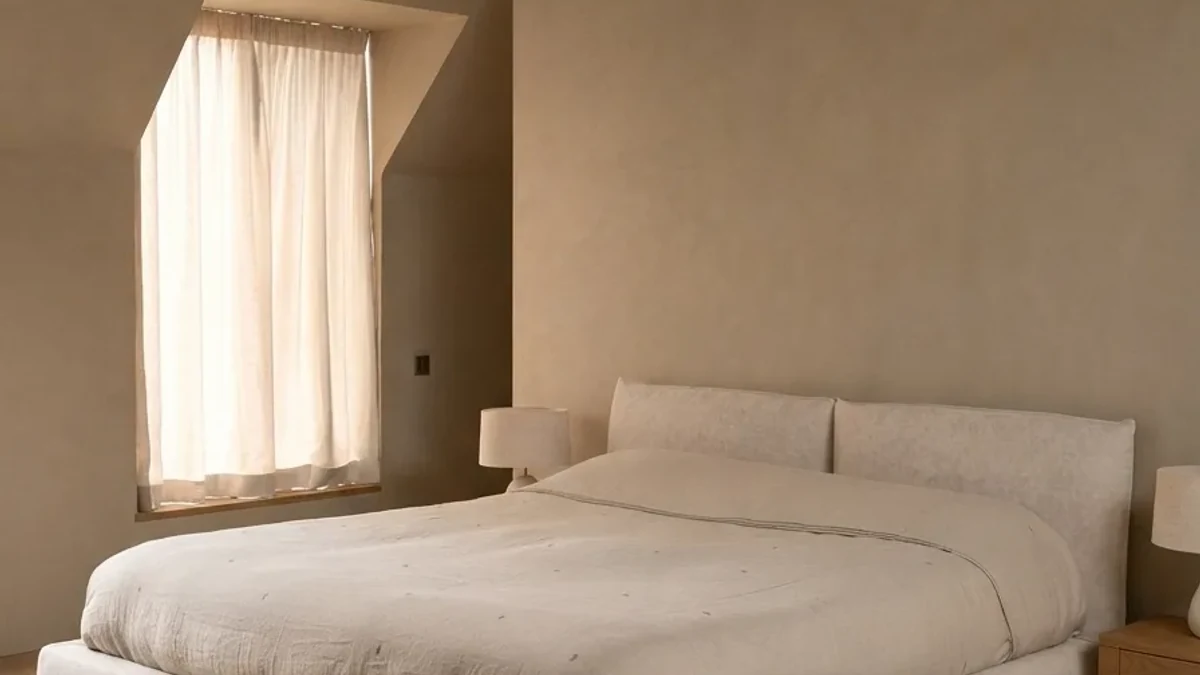
“Redesign this bedroom in a Japandi style. Keep the bed wall and window unchanged. Low walnut platform bed, off-white bedding with one charcoal throw, paper pendant, woven flat rug, a single ikebana branch on the nightstand, soft diffused light, photorealistic.”
“Redesign this bedroom in a moody hotel style. Keep the bed wall and window unchanged. Upholstered headboard wall in deep green, white hotel-fold bedding, twin brass sconces, dark carpet, blackout curtains behind sheers, warm low evening light, photorealistic.”
“Redesign this bedroom in a Scandinavian style. Keep the bed wall and window unchanged. Light oak bed frame, white and sand bedding, one sheepskin over a bench, pale wool rug, paper lampshade, bright soft morning light, photorealistic.”
“Redesign this bedroom in a quiet luxury style. Keep the bed wall and window unchanged. Wide upholstered bed in ivory boucle, travertine nightstands, full-height cream curtains on a ceiling track, brushed brass lamps, soft layered evening light, photorealistic.”
“Redesign this bedroom in a warm modern organic style. Keep the bed wall and window unchanged. Pale oak bed, oatmeal linen bedding, jute rug, one olive tree in the corner, plaster-white walls, warm afternoon side light, photorealistic.”
“Redesign this bedroom in a dark academia style. Keep the bed wall and window unchanged. Walnut bed with burgundy plaid bedding, a wall of books opposite the bed, brass swing-arm reading lamp, worn Persian rug, warm low lamplight, photorealistic.”
“Redesign this bedroom with a proper headboard wall. Keep the bed position and window unchanged. Floor-to-ceiling vertical oak slats behind the bed, integrated bedside shelves and reading lights, the rest of the room unchanged, warm evening light, photorealistic.”
“Redesign this bedroom for serious storage without visual noise. Keep the bed wall and window unchanged. One full wall of floor-to-ceiling flush wardrobes in the wall color, interior lighting, everything else minimal, soft daylight, photorealistic.”
Small bedroom prompts
“Make it look bigger” is a wish, not an instruction. These prompts name the actual moves, which is why they render reliably:
“Redesign this small bedroom to feel larger. Keep the bed wall and window unchanged. Low platform bed, wall-mounted nightstands, full-height sheer curtains hung at ceiling height, one large mirror catching the window, pale floor and walls in one tone, bright airy light, photorealistic.”
“Redesign this small bedroom with storage under the bed. Keep the bed wall and window unchanged. Platform bed with flush drawers, no freestanding wardrobe, floating shelf instead of a nightstand, nothing deeper than the bed, pale palette, soft daylight, photorealistic.”
“Redesign this narrow bedroom. Keep the bed wall and window unchanged. Bed lengthwise along the wall with a bolster back so it reads as a daybed, slim desk at the foot, vertical shelving above it, mirror on the long wall, warm light, photorealistic.”
“Redesign this box room as a single bedroom. Keep the window unchanged. Loft bed with a desk and wardrobe beneath, ladder at the safe end, pale walls, one strong color accent in the bedding, bright practical light, photorealistic.”
“Redesign this small bedroom without making it white. Keep the bed wall and window unchanged. Warm terracotta limewash walls, low bed, compact wall lights instead of lamps, one plant, small-scale furniture that fits the room rather than shrinking into it, photorealistic.”
“Turn this small bedroom into a sleep-and-work room honestly. Keep the bed wall and window unchanged. A 90 centimeter desk that closes or folds, the chair tucks fully under, work light separate from sleep light, visual separation with a rug edge, photorealistic.”
Couple bedroom prompts
The AI will not assume there are two of you. State the two-person constraints and the render stops quietly designing for one:
“Redesign this bedroom for a couple. Keep the bed wall and window unchanged. A 180 centimeter bed, symmetrical nightstands and wall lights, two equal wardrobes, independently dimmable reading lamps, calm warm palette, soft evening light, photorealistic.”
“Redesign this couple bedroom where one person reads at night. Keep the bed wall and window unchanged. Focused swing-arm reading light on one side only, warm ambient glow elsewhere, headboard tall enough to sit against, photorealistic.”
“Redesign this couple bedroom to merge two styles. Keep the bed wall and window unchanged. Base of warm minimal oak and white, layered with dark green textiles and brass details, so the calm side and the moody side both read on purpose, photorealistic.”
“Redesign this couple bedroom with a morning corner. Keep the bed wall and window unchanged. Two-seat bench or loveseat by the window with a small round table for coffee, soft morning light on that corner, the bed zone kept darker, photorealistic.”
“Redesign this couple bedroom for very different schedules. Keep the bed wall and window unchanged. Blackout curtains behind sheers, a dressing zone by the wardrobe lit separately from the bed, silent-close flush wardrobe doors, photorealistic.”
Cozy and sleep first prompts
Cozy is a lighting and textile problem wearing a style costume. These prompts solve it directly:
“Make this bedroom cozier without changing the furniture. Keep everything in place. Layer the bed with a chunky knit throw and two more cushion sizes, add a larger rug, swap the overhead light for two warm 2700K lamps, heavier curtains, evening scene, photorealistic.”
“Redesign this bedroom for deep sleep. Keep the bed wall and window unchanged. Blackout curtains behind sheer ones, no visible electronics or cables, warm dim wall lights, muted palette with nothing high contrast facing the bed, photorealistic.”
“Give this bedroom a warm autumn reset. Keep the bed wall, window and furniture unchanged. Bedding in rust and chocolate tones, a wool throw, warm low lamplight, one seasonal branch arrangement, no lettered signs or pumpkins, photorealistic.”
“Make this bedroom feel like a slow hotel morning. Keep the bed wall and window unchanged. White hotel-fold bedding, breakfast tray on the bed, sheer curtains glowing with morning light, everything else out of sight, photorealistic.”
“Calm this bedroom down visually. Keep the bed wall, window and furniture unchanged. Reduce to three colors, clear every surface except one lamp and one book per nightstand, one large calm artwork instead of many small ones, soft light, photorealistic.”
Kids and teen bedroom prompts
Kids rooms are where AI renders most often produce a catalog page instead of a room a child can actually live in. The fix is the same as everywhere: name the constraints.
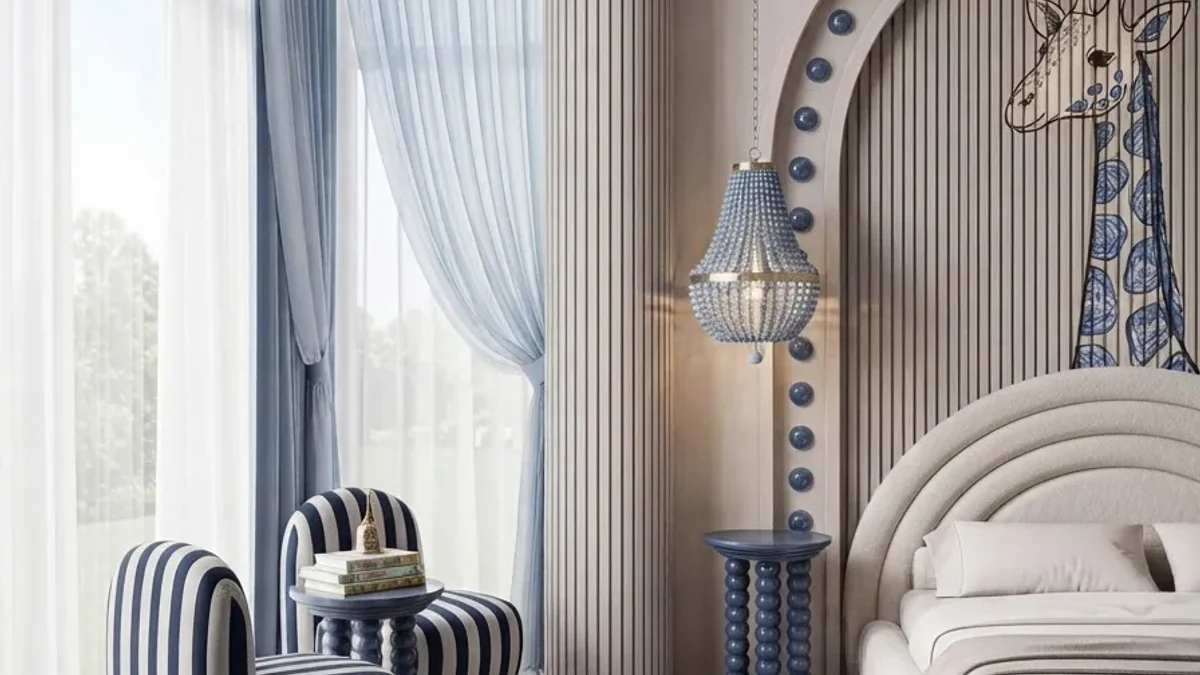
“Redesign this kids bedroom for a girl who wants a themed room that will not date in a year. Keep the bed wall and window unchanged. Cream fluted arched headboard wall, dusty blue accents, one themed element only as removable decor, a little vanity corner, soft pendant light, photorealistic.”
“Redesign this shared kids bedroom for two. Keep the window unchanged. Two matching single beds with a shared low unit between them, soft upholstered headboard shapes, one reading light each, floor space kept clear for play, warm calm palette, photorealistic.”
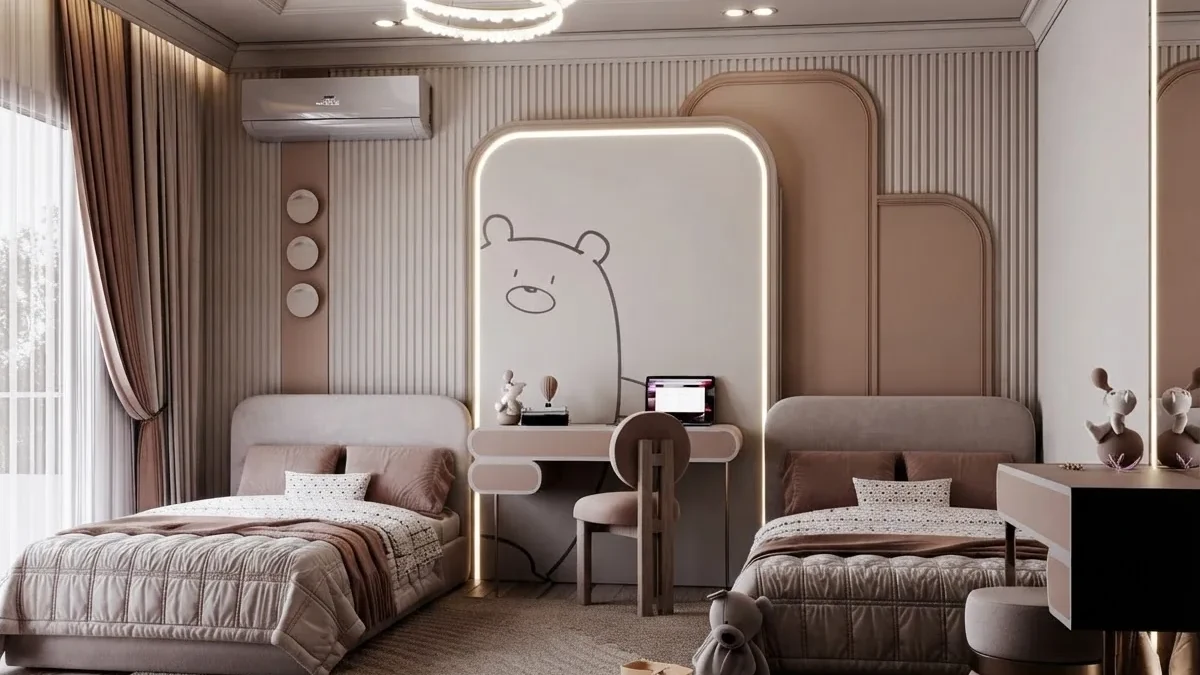
“Redesign this kids bedroom to grow with the child. Keep the bed wall and window unchanged. A proper single bed instead of a toddler bed, low open storage the child can reach, a reading corner with a small armchair, warm neutral base with one accent color in textiles, photorealistic.”
“Redesign this teen bedroom without it looking like a hotel or a nursery. Keep the bed wall and window unchanged. Double bed with dark bedding, a real desk setup with cable management, one wall for posters framed cheaply, warm dimmable lighting, photorealistic.”
“Redesign this kids bedroom for serious toy storage. Keep the bed wall and window unchanged. One wall of closed low cabinets with a padded play bench top, open cubbies only for books, rug with a soft pile, nothing tall that is not anchored, photorealistic.”
“Redesign this nursery to become a toddler room later. Keep the window unchanged. Cot placed where a single bed will fit, wardrobe and change unit that survive the transition, calm low-contrast palette, blackout curtains, warm night light, photorealistic.”
If you would rather skip writing the prompt, this tutorial does a kids room from a photo: upload the current room, pick a style, and compare the before and after.

Same caveat as the prompts above: check that the result is a room a child can play in, not a catalog page.
Guest bedroom prompts
“Redesign this guest bedroom to feel considered rather than leftover. Keep the bed wall and window unchanged. Neat double bed with white bedding and one folded blanket, empty luggage bench, two free hooks, one nightstand with a working lamp, calm neutral palette, photorealistic.”
“Redesign this guest room as a room that is mostly an office. Keep the window unchanged. A quality sofa bed or daybed with real cushions, the desk angled away from the sleeping zone, wardrobe space with six free hangers, warm switchable lighting for both modes, photorealistic.”
“Redesign this tiny guest room around a small double. Keep the window unchanged. A 140 centimeter bed, wall lights instead of nightstands, a fold-flat luggage rack, mirror to open the space, pale warm palette, photorealistic.”
ChatGPT vs Gemini vs a room tool for bedroom prompts
Every prompt above runs unchanged in all three. For the model-specific photo workflow, the ChatGPT room design tutorial covers the audit-first chain that noticeably improves bedroom results, and the Gemini room design guide covers Google’s side. CNET reached the same conclusion we see daily when they tested ChatGPT on a real bedroom: helpful, as long as you measure everything yourself, because no chat model checks whether the bed it draws fits the wall. That last step, real dimensions and real furniture, is what running the same prompt in MeltFlex adds. For bigger general libraries, the ChatGPT prompt collection and Gemini prompt collection both include bedroom sections, and the lighting prompt guide goes deep on the evening-light problem this post keeps flagging.
Why bedroom prompts fail
1. Daylight renders for a night room. The model’s default bright daylight hides bad lighting design completely. Prompt lamps and evening scenes, then judge.
2. The bed migrates. Without the lock clause, the AI puts the bed under the window or floats it mid-room. Pretty render, impossible bedroom.
3. Beds with no size. “A bed” renders anywhere from 120 to 200 centimeters wide, and the difference decides whether the room works. Name the size.
4. Storage amnesia. Renders love bedrooms with one floating shelf and no wardrobe. If you own clothes, prompt the wardrobe wall explicitly or the design is fiction.
5. Trusting the fit. No general model measures. Before buying the bed the render sold you, check it at true scale; the furniture placement guide covers how, and if it must fit through a door first, the fit calculator has saved more than one delivery day.
How we made the images in this article
The bedrooms in this article are AI renders from our own creations gallery, produced with the MeltFlex engine, and the cover is a collage of the same four rooms. They show the finish level a specific, well-built prompt points at rather than the output of any single chat session. Two of the four are kids rooms because that is where our gallery’s bedroom depth currently is, which we note rather than hide.
Bedroom design prompt FAQ
What is a bedroom design prompt?
A bedroom design prompt is a short instruction you give an AI, usually with a photo of your bedroom, that describes the redesign in one specific sentence: the style with named materials, the bed and textiles, the lighting, and what must not change. The bedroom-specific part is the lock: the bed stays on its wall and the window stays where it is, because in a real bedroom those are the two things you can least afford the AI to move.
How do I write a good prompt for bedroom design?
Name four things: the style with two or three concrete materials, the bed as the anchor piece, the textile story, and the light. For example: “Redesign this bedroom in a calm classic-modern style. Keep the bed on its current wall and the window unchanged. Cream panelled walls, low bed with washed grey linen bedding, slim brass wall reading lights, dark timber floor, soft morning side light, photorealistic.” Adjectives without nouns produce showroom-generic rooms.
What is the best ChatGPT prompt for bedroom design?
The strongest ChatGPT bedroom prompt runs in two turns. First: “Here is my bedroom. Describe the layout, light and what is working against sleep and storage. No images yet.” Then: “Based on that, redesign it in [style], keep the bed wall and window, [materials], [bedding], warm reading light, photorealistic.” The audit turn forces ChatGPT to read your actual room, and its renders land noticeably closer to it. The full chain lives in our ChatGPT room design tutorial.
What prompt makes a small bedroom look bigger?
Tell the AI the tricks explicitly instead of asking it to “make the room look bigger”: a low platform bed, wall-mounted nightstands instead of freestanding ones, full-height sheer curtains hung at ceiling height, one large mirror placed to catch the window, a pale floor-to-wall palette, and no furniture piece deeper than the bed. Named moves render reliably; the vague wish does not.
How do I prompt a bedroom design for a couple?
State the two-person constraints, because the AI will not assume them: symmetrical nightstands and reading lights, a bed at least 160 centimeters wide, storage split into two equal wardrobes or sides, and independently dimmable lamps. Then add one shared style direction. Symmetry is the single word that does the most work in couple bedroom prompts.
Does the AI keep my actual bedroom layout?
Only partially. General image models generate a new picture guided by your photo, so even with a lock clause the room can widen or the window can shift between runs. The lock clause reduces the drift a lot, and running the prompt in a purpose-built room tool removes it, because the geometry is locked by design rather than by politeness.
What is the difference between a bedroom design prompt and a bedroom makeover prompt?
A design prompt defines the destination: the style, materials and mood of the finished bedroom, and it works from an empty room or a full one. A makeover prompt is anchored to what you already own, with a stricter keep clause deciding what survives. If your brief starts with “keep my bed and change everything around it”, you want the room makeover prompt library rather than this one.



)