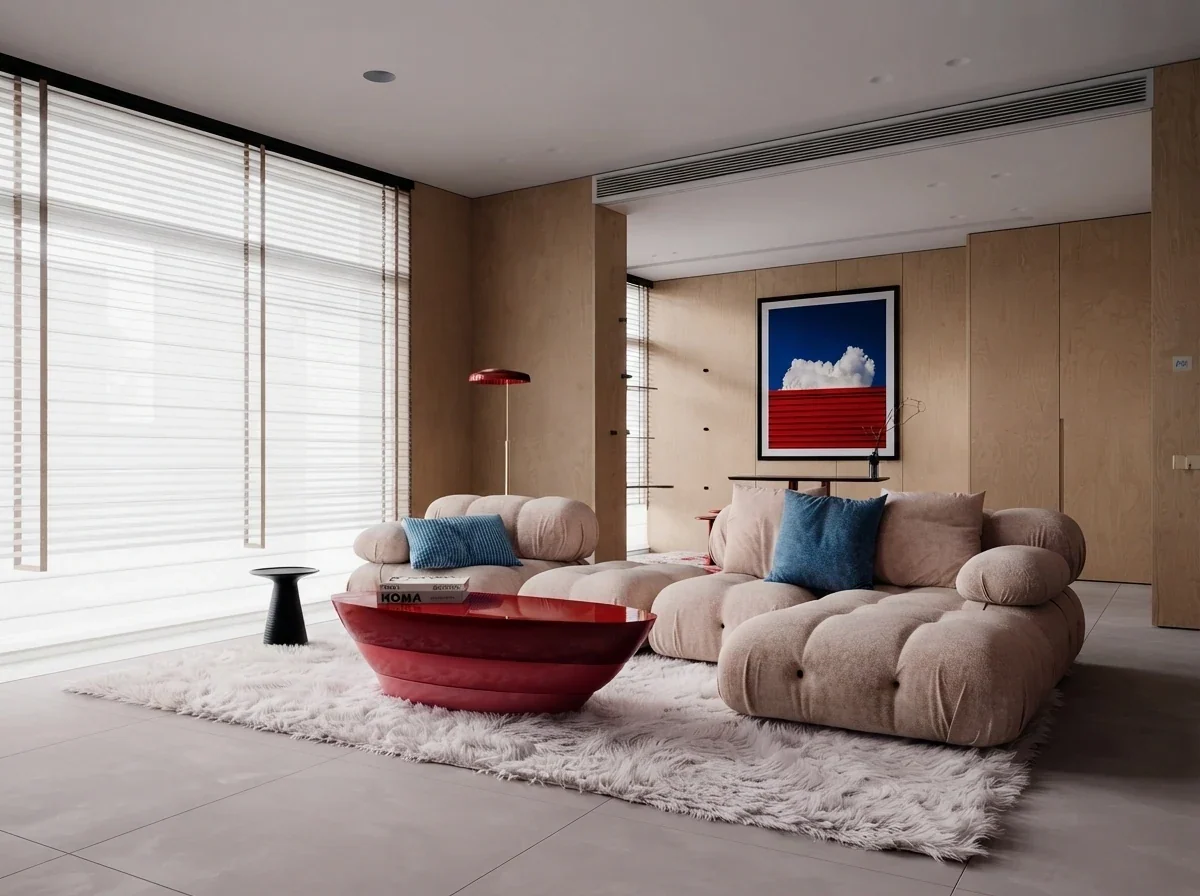
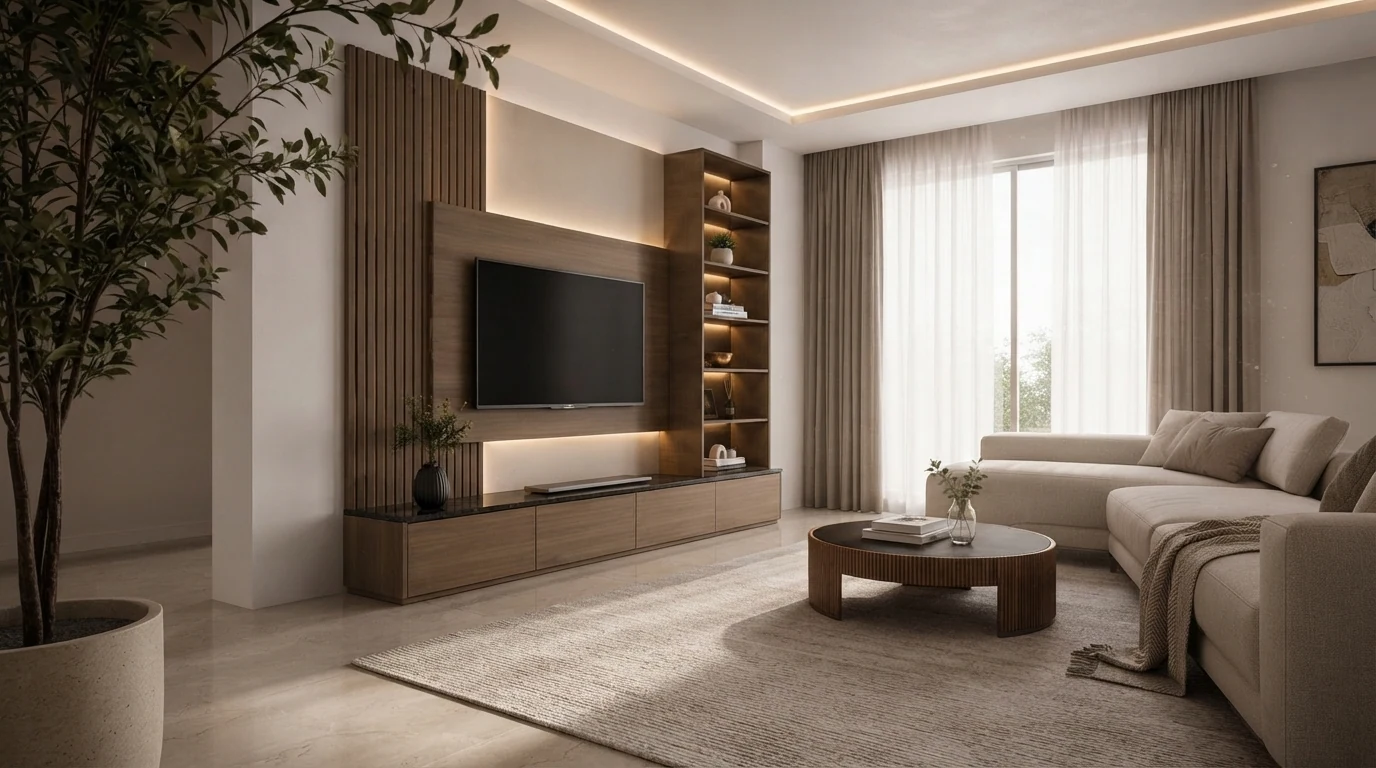
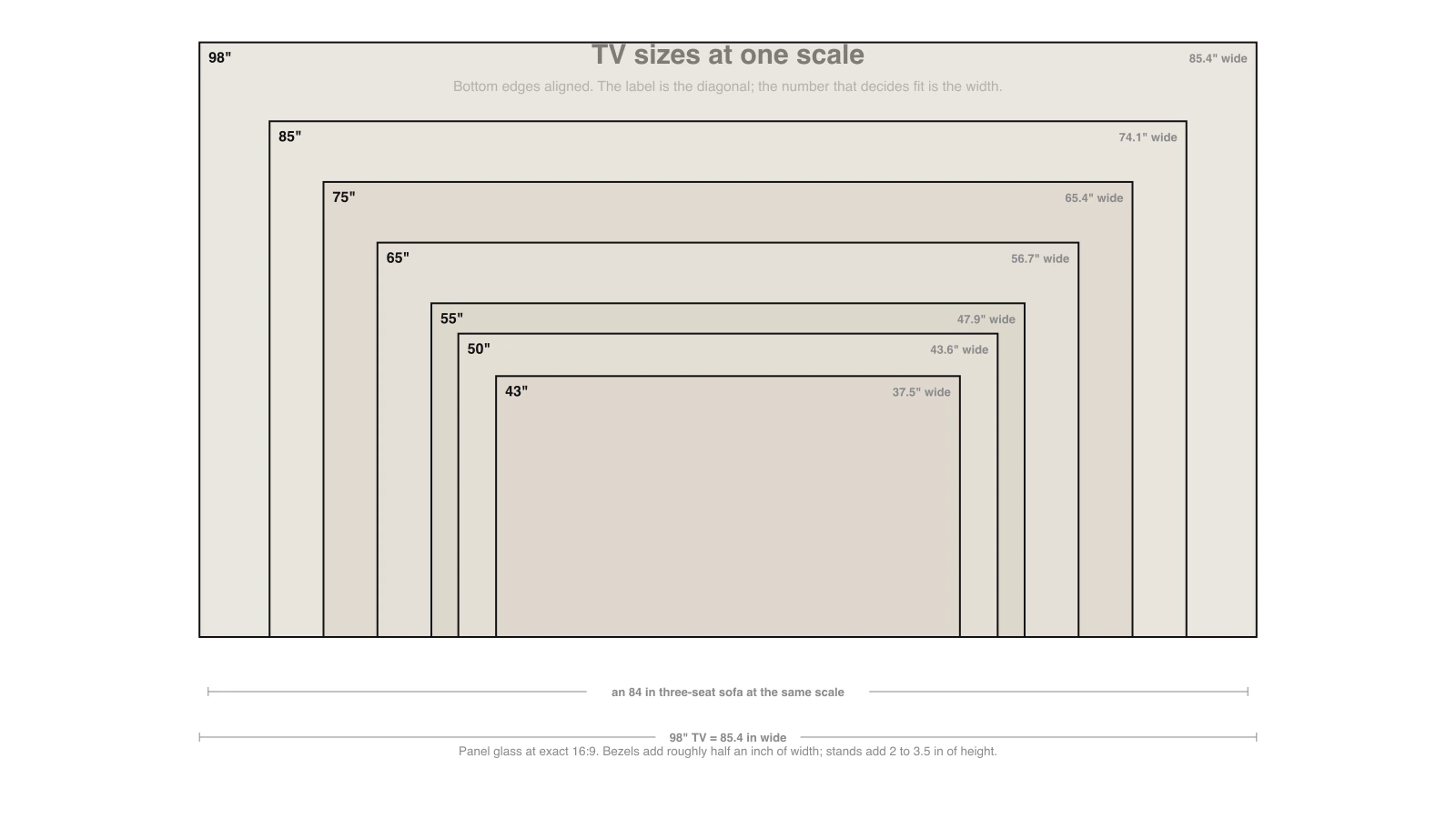
The number on a TV box is the diagonal of the glass, corner to corner, so a 65 inch TV is really about 56.7 inches wide and 31.9 inches tall. Every fitting question runs through that one fact: whether it fits the wall, how high to hang it, how far to sit. The chart below has the real dimensions for every stocked size from 43 to 98 inches, and the calculator turns your own sofa and eye height into a mounting height you can mark on the wall.
Our articles are still written by humans!
Get human written articles in your Google feed.


TV size chart: 43 to 98 inches
Width is the diagonal times 0.872 and height is the diagonal times 0.490 on any 16:9 screen. That is geometry, not a manufacturer choice, which is why this chart works for every current brand. Bezels add roughly half an inch to the glass width on a 2024 or newer model, and a stand adds 2 to 3.5 inches of height.
The distances come from the two published viewing standards rather than habit. SMPTE recommends the screen fill a 30 degree horizontal angle, which works out to 1.63 times the diagonal; THX certifies down to a 40 degree angle for cinema immersion, which is 1.2 diagonals. Past 2.5 diagonals the screen drops under 20 degrees and stops feeling like the main event. RTINGS publishes the same angular maths with resolution factored in, and lands in the same band.
One number in that chart deserves a second look. The jump from 65 to 75 reads as ten inches, but screens grow with the square of the diagonal: a 75 has 33 percent more picture than a 65, and an 85 has 71 percent more. The box dimensions look close. The thing you hang on the wall is not.
How to measure a TV (and the space it goes into)
Diagonal, glass only. Bottom left corner of the picture to top right corner, tape across the screen, and stop where the picture stops. The plastic or aluminium frame around it does not count, which is the first thing that trips people up when a “65 inch” TV will not fit a 57 inch alcove: the quoted size was never the width.
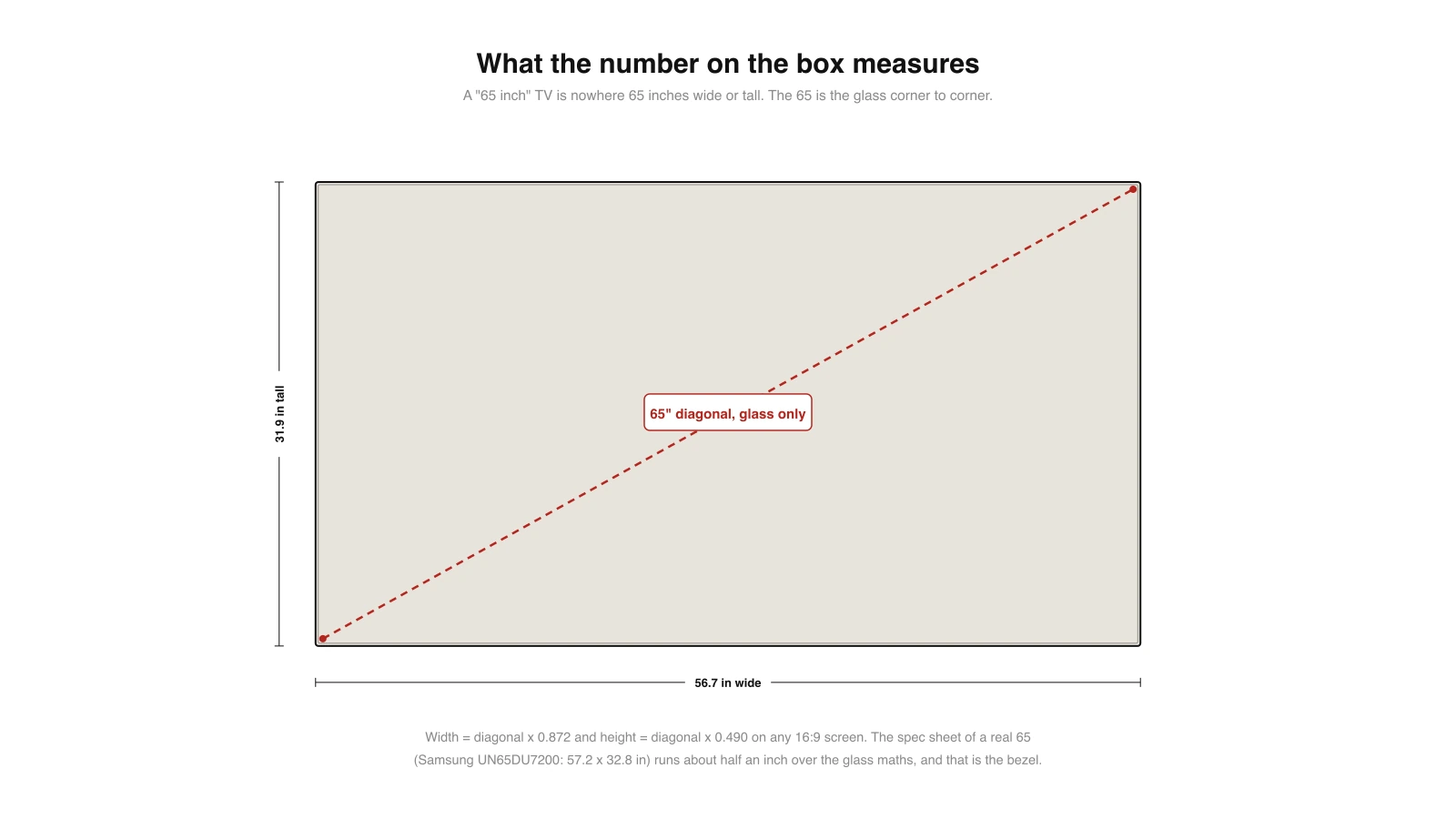
Going the other way, from a space to a size, three measurements settle it. First the clear wall width: a TV wants 3 to 4 inches of air each side, so a 65 needs about five feet of wall before it stops looking wedged in. We checked the glass maths against a real spec sheet: a Samsung UN65DU7200 measures 57.2 by 32.8 inches without its stand against the 56.7 by 31.9 the formula gives, so the bezel costs half an inch. Second the depth, if it slides into joinery: panels run 1 to 3 inches deep, but wall brackets add another 1 to 2.5 even when flat. Third, and most missed, the feet. Centre pedestals need a small surface; budget models spread two feet close to the panel edges, which is why the with-stand width on a common 65 is the full 57 inches, and why it refuses to stand on the console that held your old 55.
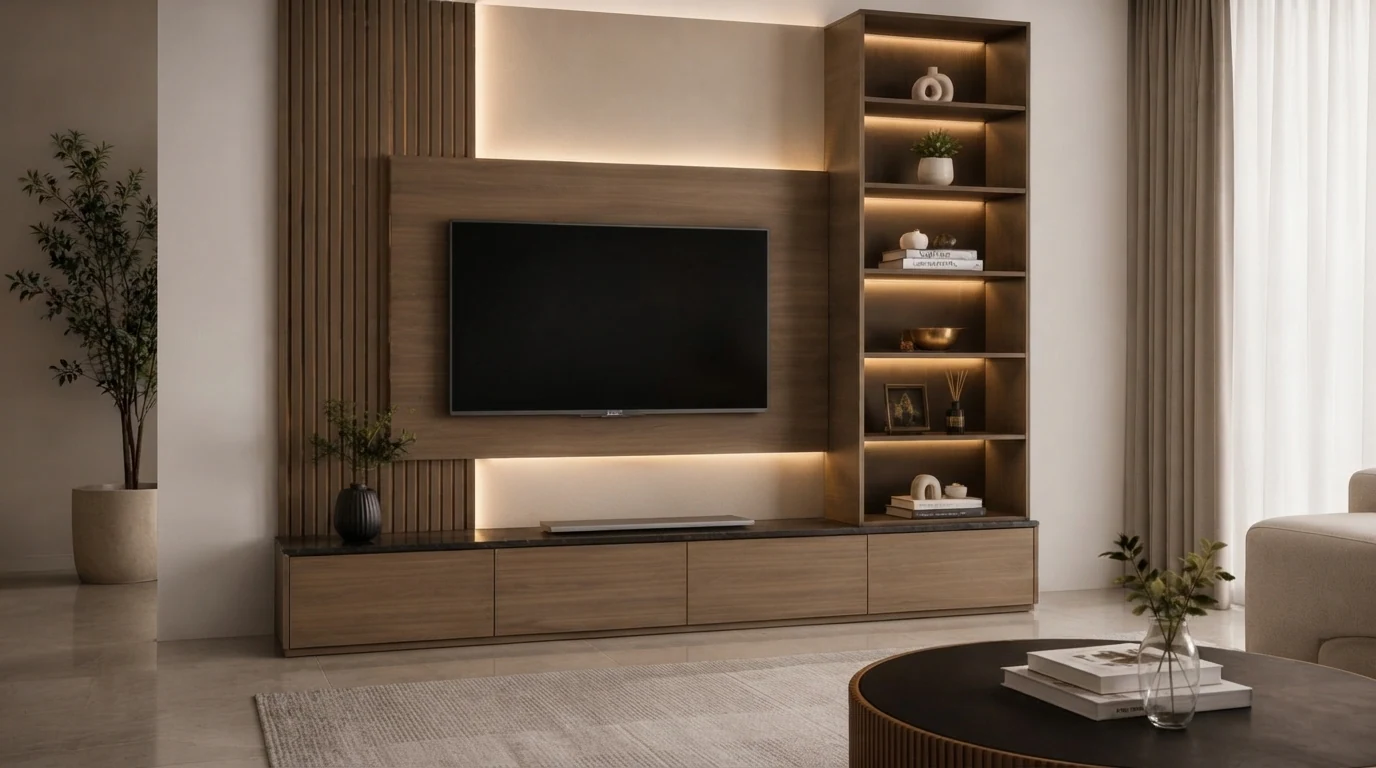
If the room itself is the open question, not just the TV wall, start with the room: calculate the square feet of the room and check it against average room sizes before committing to the biggest panel the wall can physically take.
55, 65, 75 and 85 inch TVs in a real room
Four sizes cover almost every living room decision, so here they are against real furniture rather than in the abstract.
55 inch: 47.9 x 27.0 in
The default bedroom-and-small-living-room size. It sits comfortably above a 48 inch console with overhang to spare, and at the 7.5 ft sweet spot it suits the sofa distance of most apartments. On an average living room wall of 12 feet it reads modest, which is either the point or the problem.
65 inch: 56.7 x 31.9 in
The best selling size in the US, and the one the maths keeps endorsing: its 8.8 ft sweet spot matches the seat-to-wall distance a typical living room layout produces once a sofa and a walkway are in place. It wants a five foot stretch of wall and a console at least 50 inches wide, more if the feet sit at the edges.
75 inch: 65.4 x 36.8 in
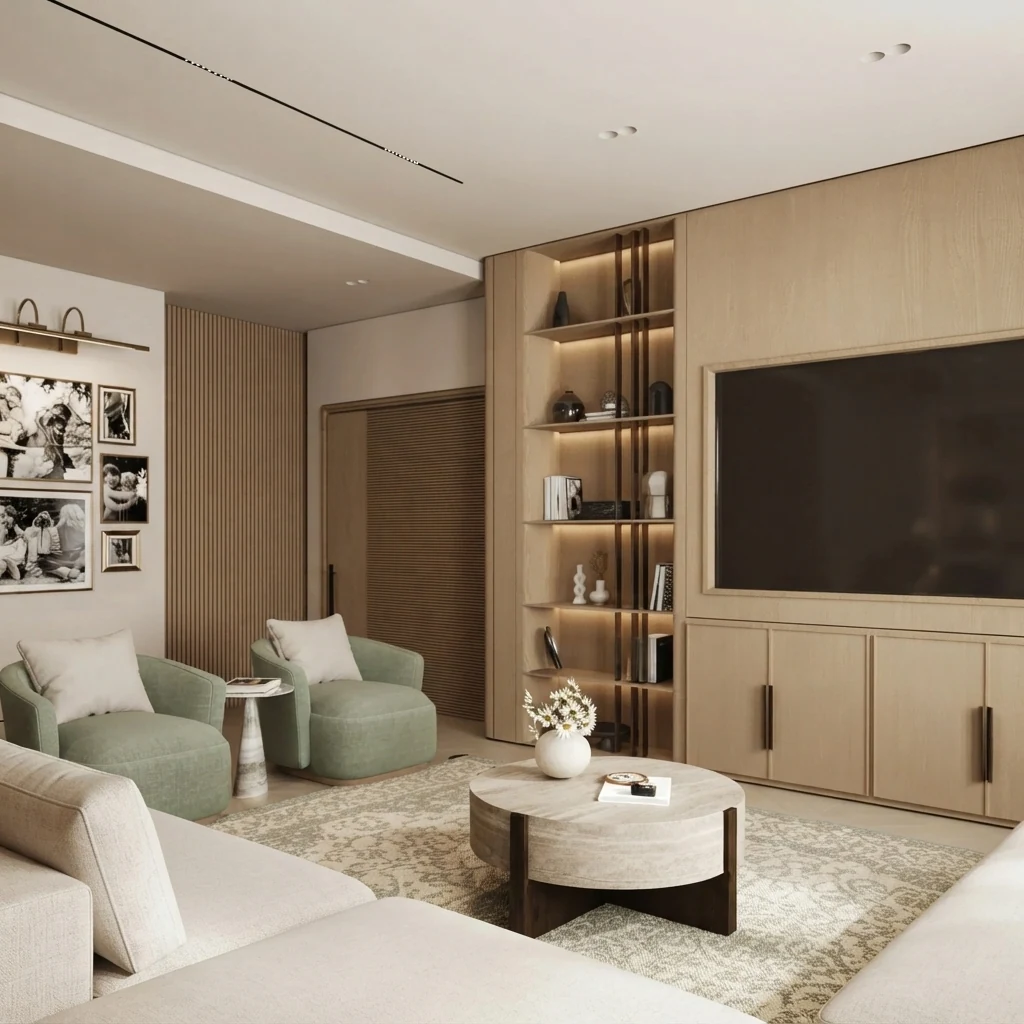
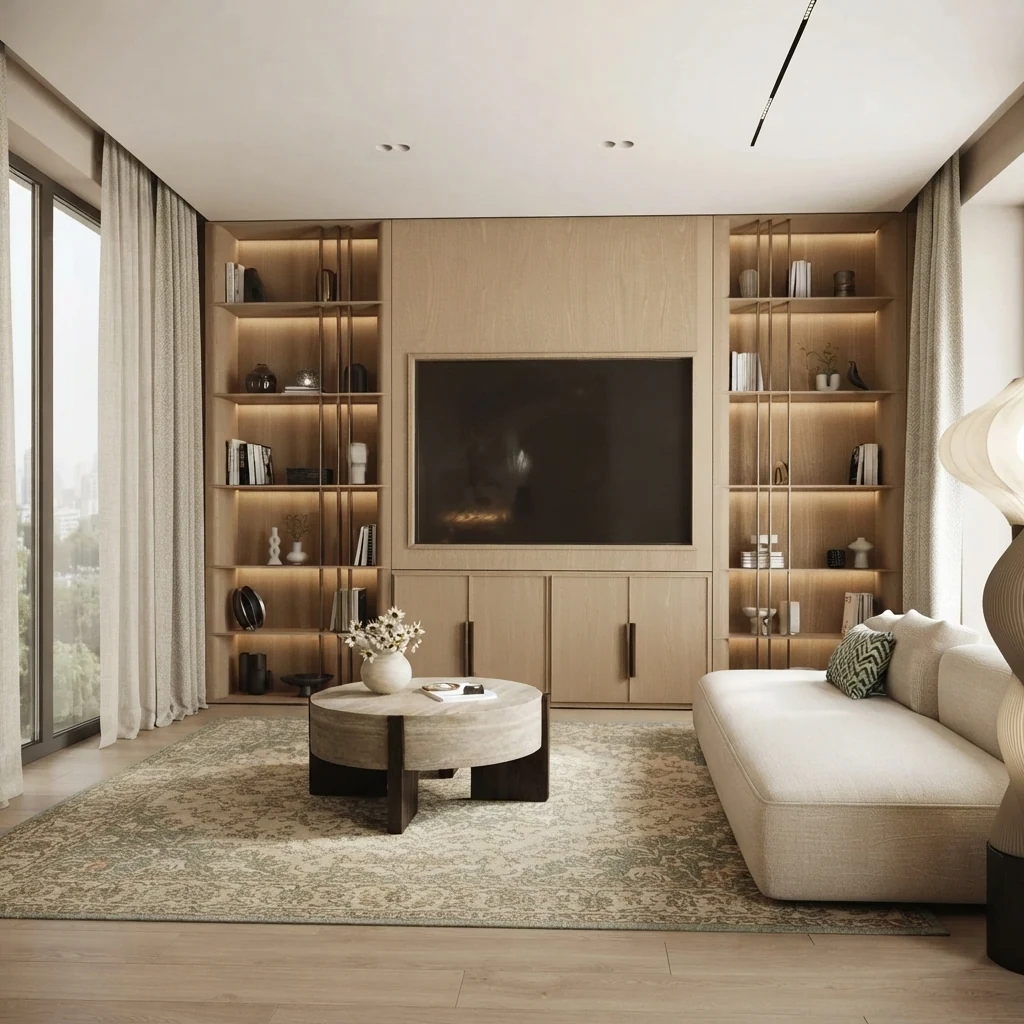
Nearly five and a half feet of screen. The wall needs to be about 6.5 feet clear, and the console conversation usually ends here: a 75 on edge-set feet wants roughly 58 inches of surface, which is sideboard territory. From 10 feet it is the correct size, not the indulgent one, and that surprises people who last bought a TV when 55 was big.
85 inch and up: 74.1 x 41.7 in
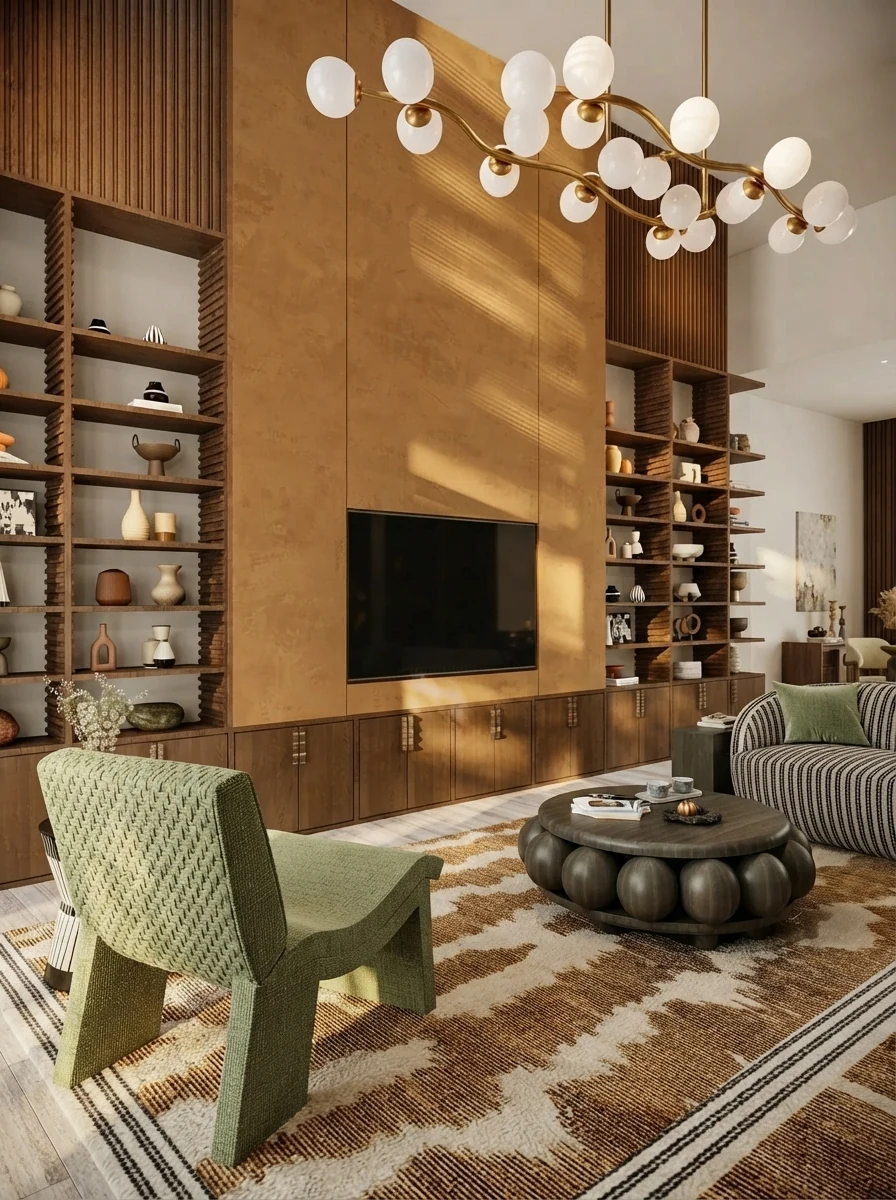
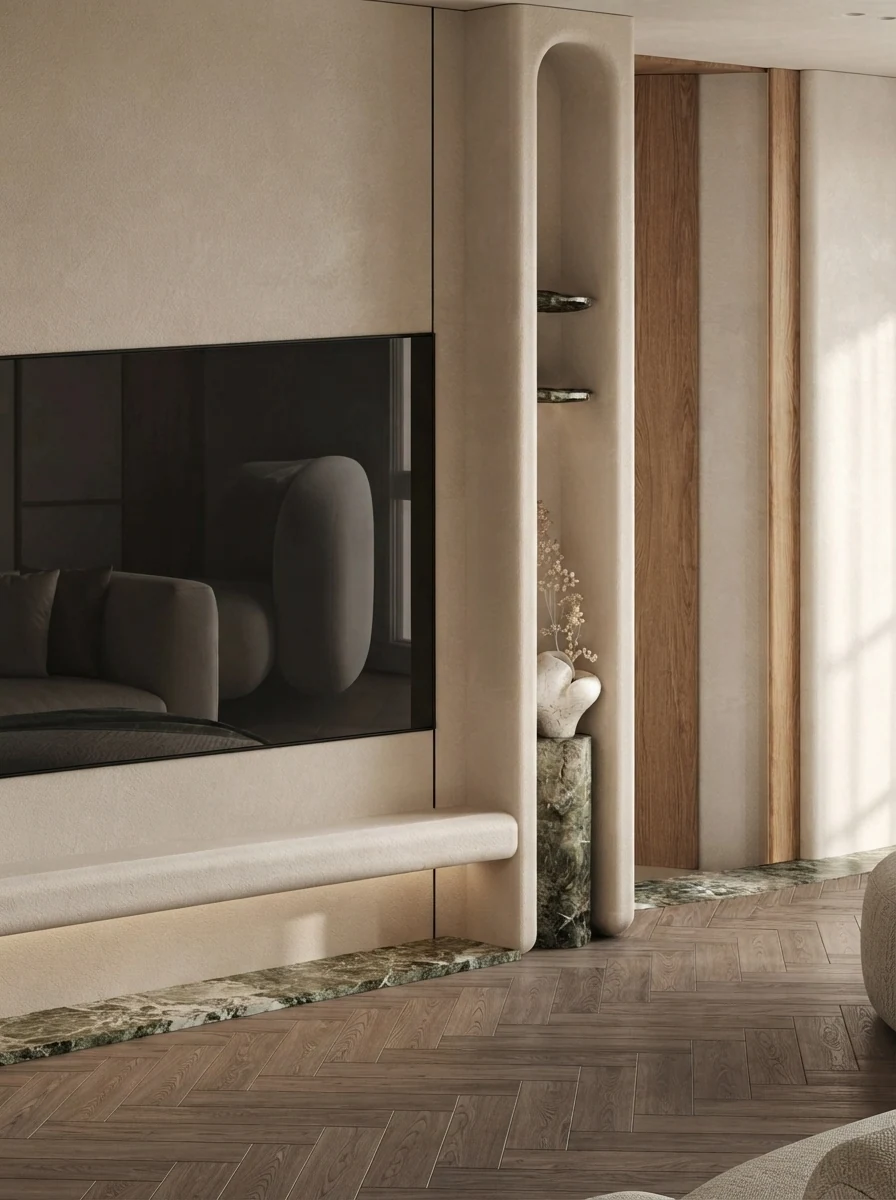
At 85 the screen is wider than a loveseat, and at 98 it is wider than many sofas are long. These sizes flip the design question from “where does the TV go” to “the wall is now the TV”, which is worth admitting before buying: treat it like a media wall or an accent wall project, not an appliance swap. There is also a mounting consequence the next section draws.
TV mounting height calculator
Pick your size, then sit where you actually watch and measure from the floor to your eyes. The calculator centres the screen on that line and gives you the bottom edge height, which is the number you can hold a bracket or a strip of painter’s tape against. The second tab works the other way: seat distance in, recommended size out.
Interactive calculator
Loading… if it does not appear, refresh the page.
Two details the plain numbers hide. Most brackets bolt to the panel below its centre line, so transfer the bottom-edge number to the wall, hang the bracket, and check with the TV’s own VESA holes rather than trusting the bracket’s printed centre. And if your eye height came out far from 42 inches, trust your tape: sofas run 15 to 20 inches in seat height, and four inches of sofa moves the whole installation four inches.
How high to mount a TV
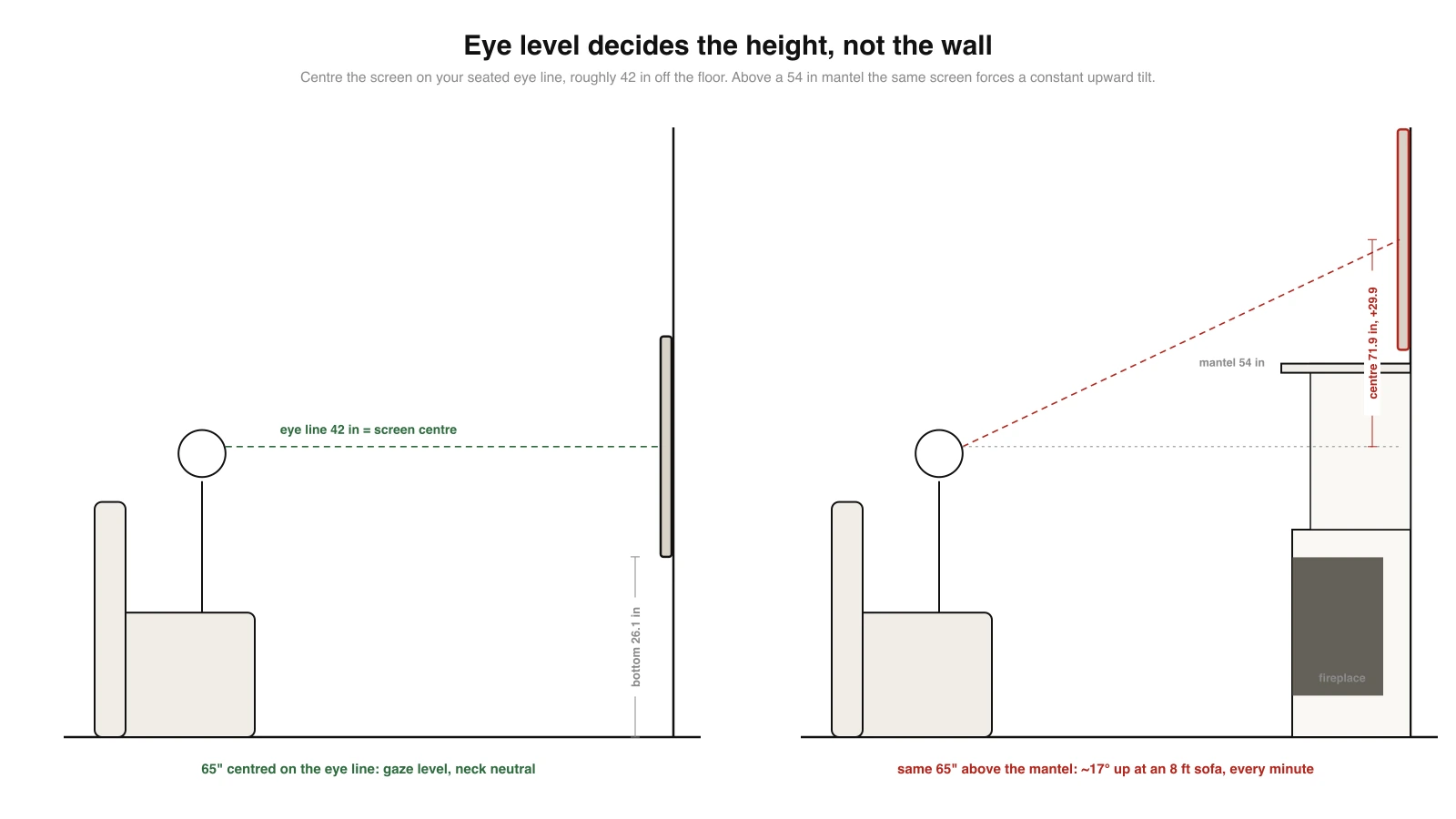
Centre the screen on your seated eye line. For most adults on most sofas that line sits close to 42 inches off the floor, which is where the popular “42 inches to centre” rule comes from; it is a good default and a worse answer than measuring your own. Wirecutter’s guide lands on the same method: eye level wins, conventions approximate it.
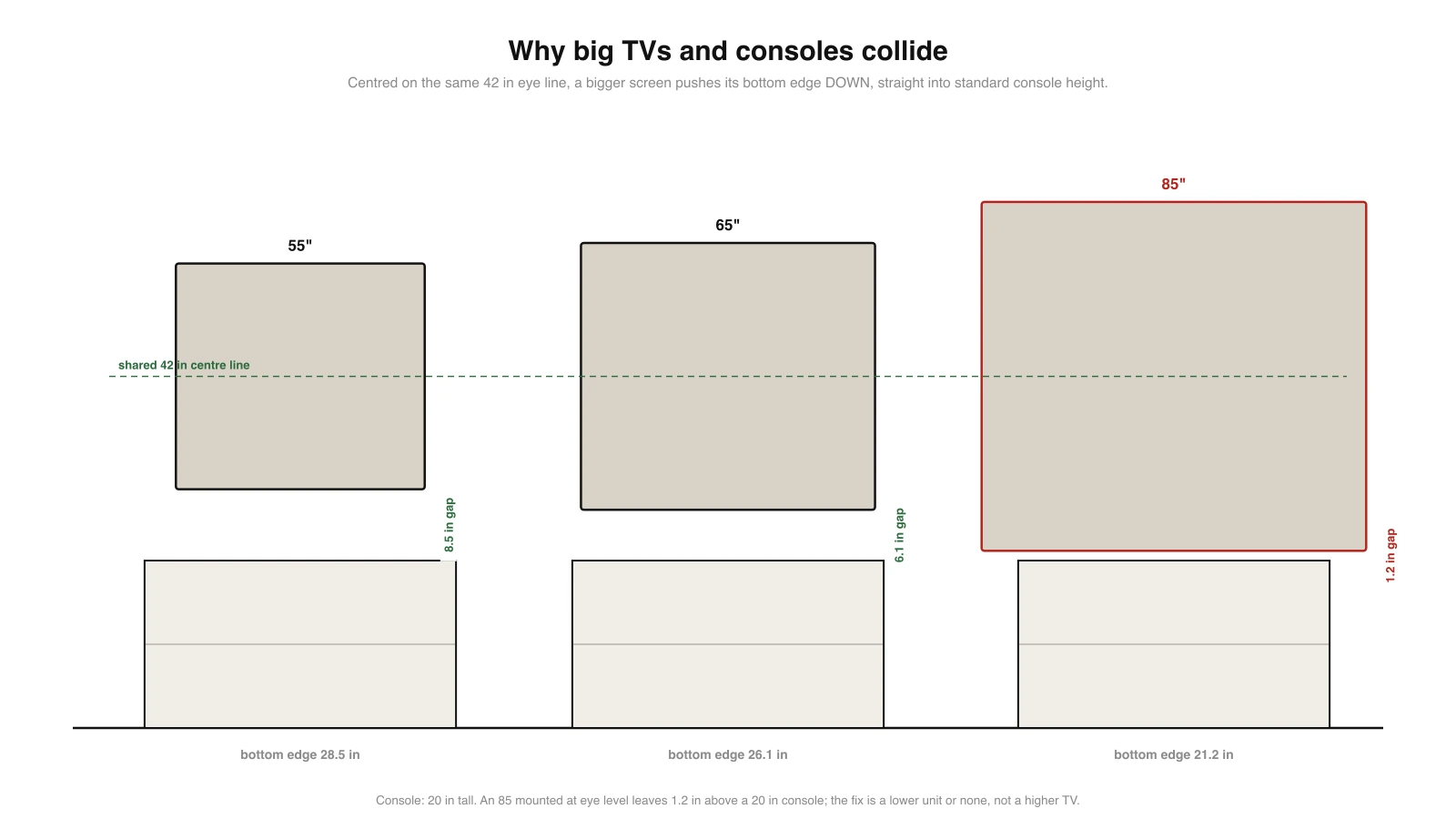
Read the third column top to bottom and the pattern most guides never mention appears: the bigger the TV, the LOWER its bottom edge has to sit. An 85 mounted correctly bottoms out at 21.2 inches, which is console height. People feel that a big TV should go higher; the geometry says the opposite, and raising it is how living rooms end up with everyone watching the ceiling.
The fireplace deserves its own paragraph, because it is the most requested mount and the least comfortable one. Above a typical 54 inch mantel, a 65’s centre lands at about 72 inches, thirty inches above the eye line. From an 8 foot sofa that is a constant upward gaze of roughly 17 degrees, the posture of the first row at the cinema. If the chimney breast is genuinely the only wall, a pull-down mount or a strong downward tilt turns a bad idea into a tolerable one; a fixed flat mount up there does not. The full version of that argument, with the heat limits, the clearance rules and the four fixes costed out, is in our guide to putting a TV above a fireplace.
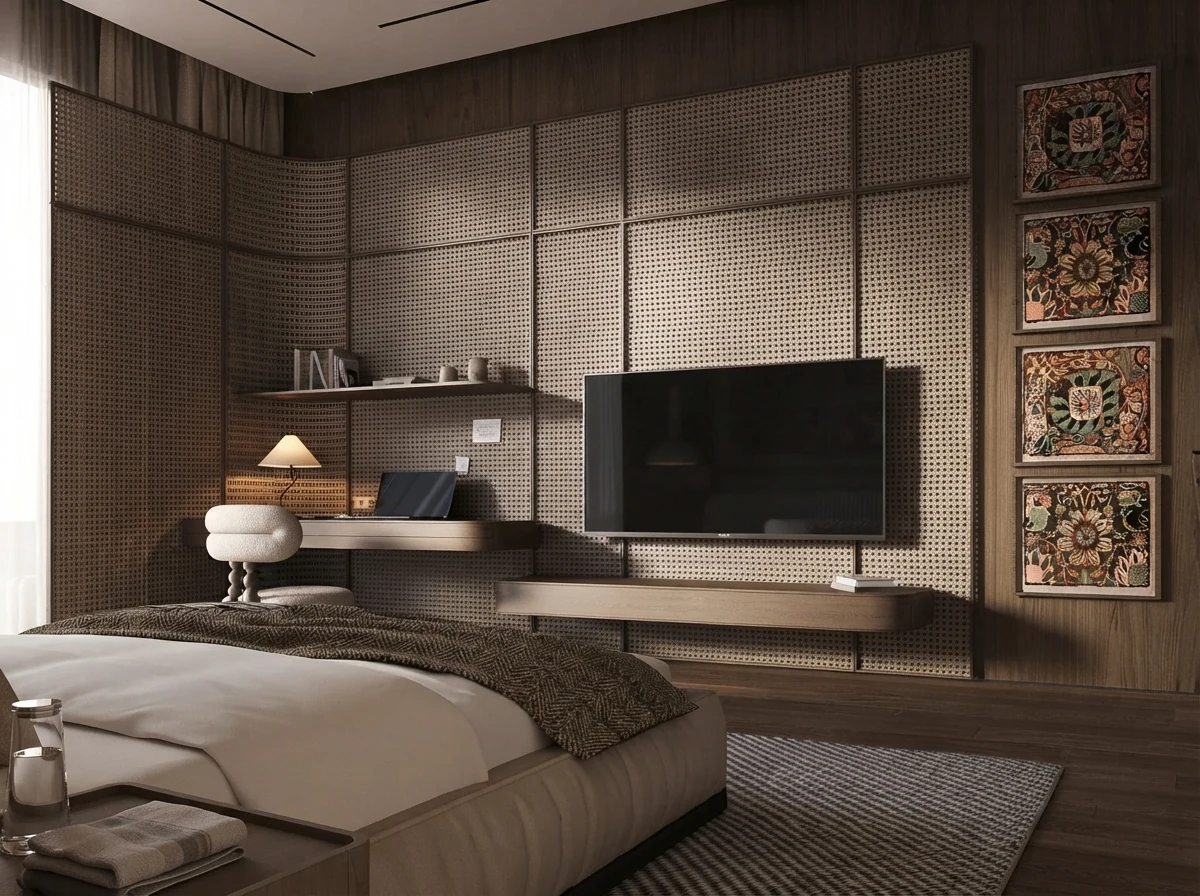
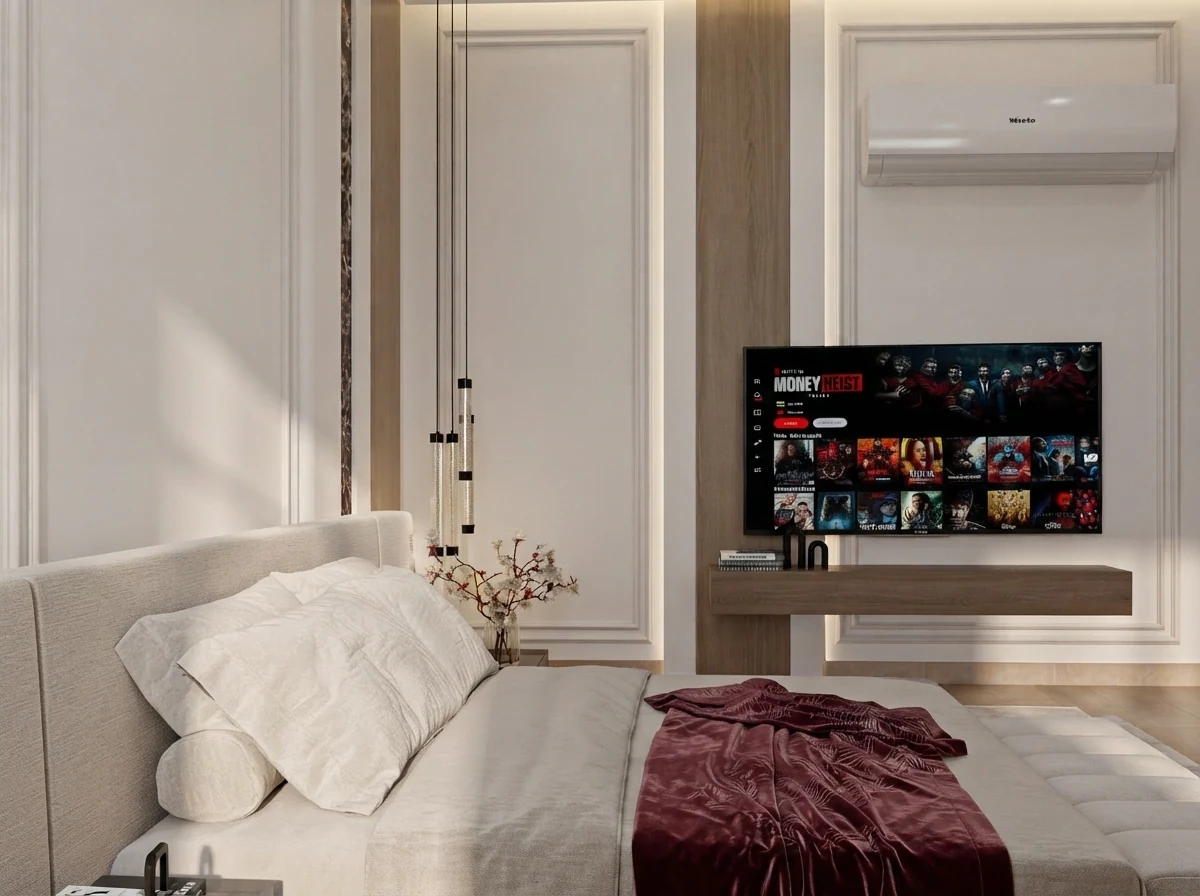
Bedrooms bend the rule on purpose: you watch reclined, head propped up, so the screen goes a touch higher than seated eye line and gets tilted down a few degrees. Measure from the pillows, the same way the bedroom layout decisions start from the bed. And check your wall can take the party: on a standard 8 foot wall with a standard ceiling height, a 98 inch panel mounted at eye level tops out at 66 inches, leaving barely 30 inches of wall above it.
One hardware note, because it decides whether the bracket you ordered even fits: VESA numbers are the millimetre spacing of the four bolt holes on the back. Most 43 to 55 inch panels use 200x200 or 400x400, most 65s and 75s use 400x400, and the 85-and-up class stretches to 600x400. The bracket box lists the patterns it accepts; two minutes with the spec sheet beats a second trip to the store.
What size TV for your room
Work backwards from the seat. Measure cushion edge to screen wall, then divide by 1.63 for the size that fills the SMPTE 30 degree view. The bands below show how much tolerance each size really has, and they overlap: most rooms honestly accept two sizes, and the decision between them is taste and budget, not correctness.
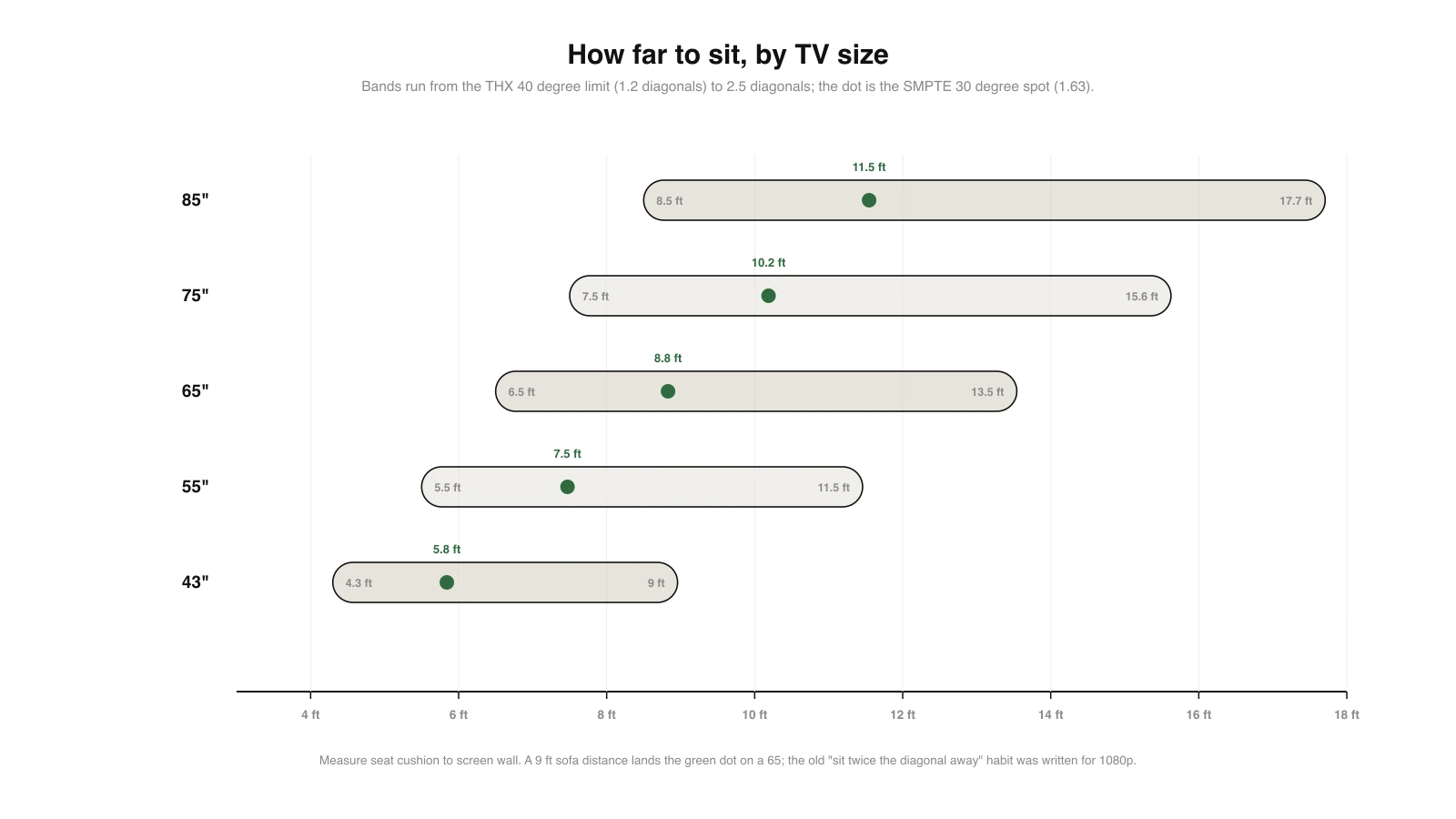
The rules changed and the folklore did not. The old advice to sit 2 to 2.5 diagonals away was written when screens were 1080p and sitting close meant seeing pixels. At 4K the pixel argument dies at any realistic distance, so the standards-based range moved closer, and a 9 foot sofa distance now points at a 65, not the 55 the old rule suggests. That single update explains most of the “we got it home and it feels small after a week” stories, and why the answer to how far your sofa should be from the TV is a range rather than one number.
Two sanity checks before the order button. In the store, every TV looks smaller than it will at home, because showroom walls are huge and hung with dozens of panels; tape the real width from the chart onto your own wall instead. And balance the whole elevation, not just the screen: the TV, the console, the rug size in front of it and any framed art around it read as one composition, which is the subject of what size furniture fits your room.
See the size on your own wall before you buy
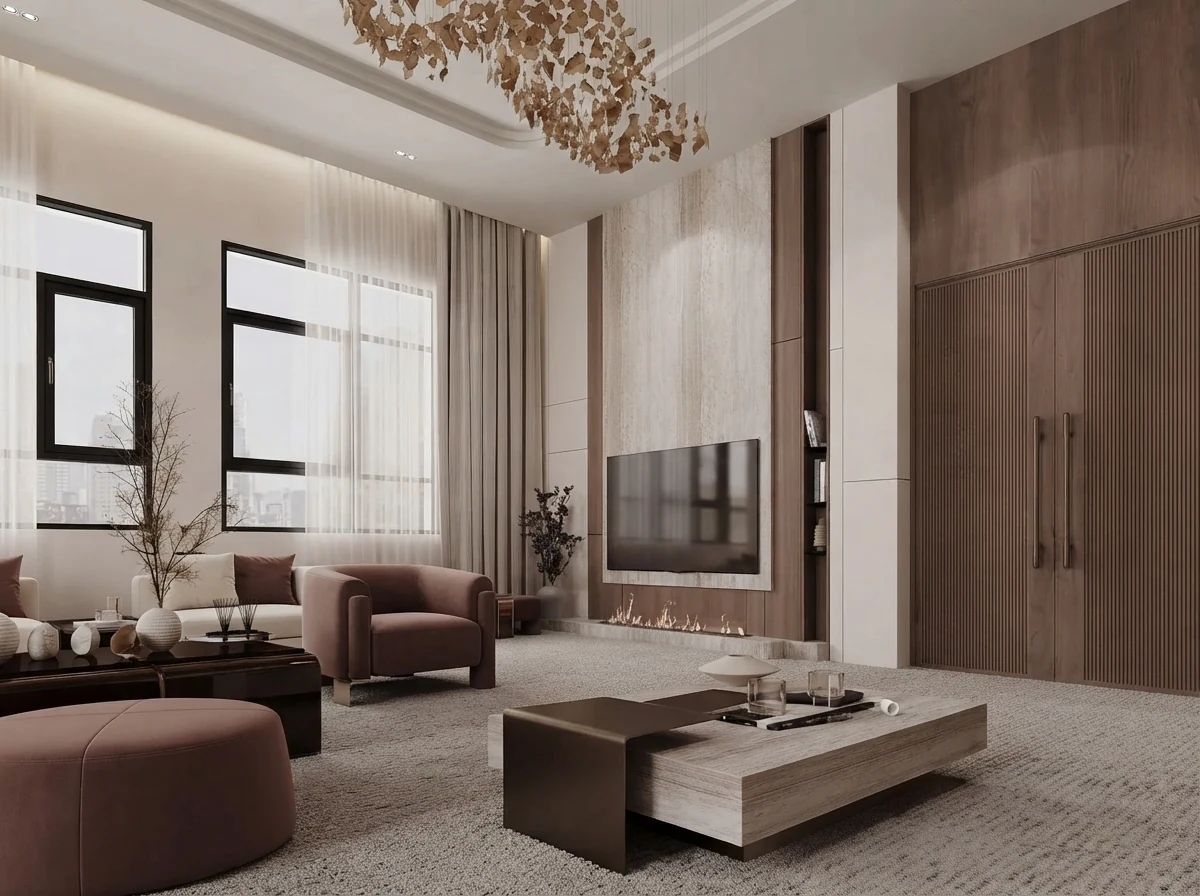
The chart settles the numbers; it cannot show you what a 65 versus a 75 does to your room’s proportions. Painter’s tape is the classic fix and still worth doing. The faster version is the one we built MeltFlex for: photograph your TV wall, and the AI furniture changer swaps the screen size, the console and the wall treatment in the same photo, so you compare finished rooms instead of tape rectangles. The renders in this post came from the same engine, and it is the test we run on our own walls: the 75 that felt obviously right in the store lost to the 65 on a real 12 foot wall in two renders.
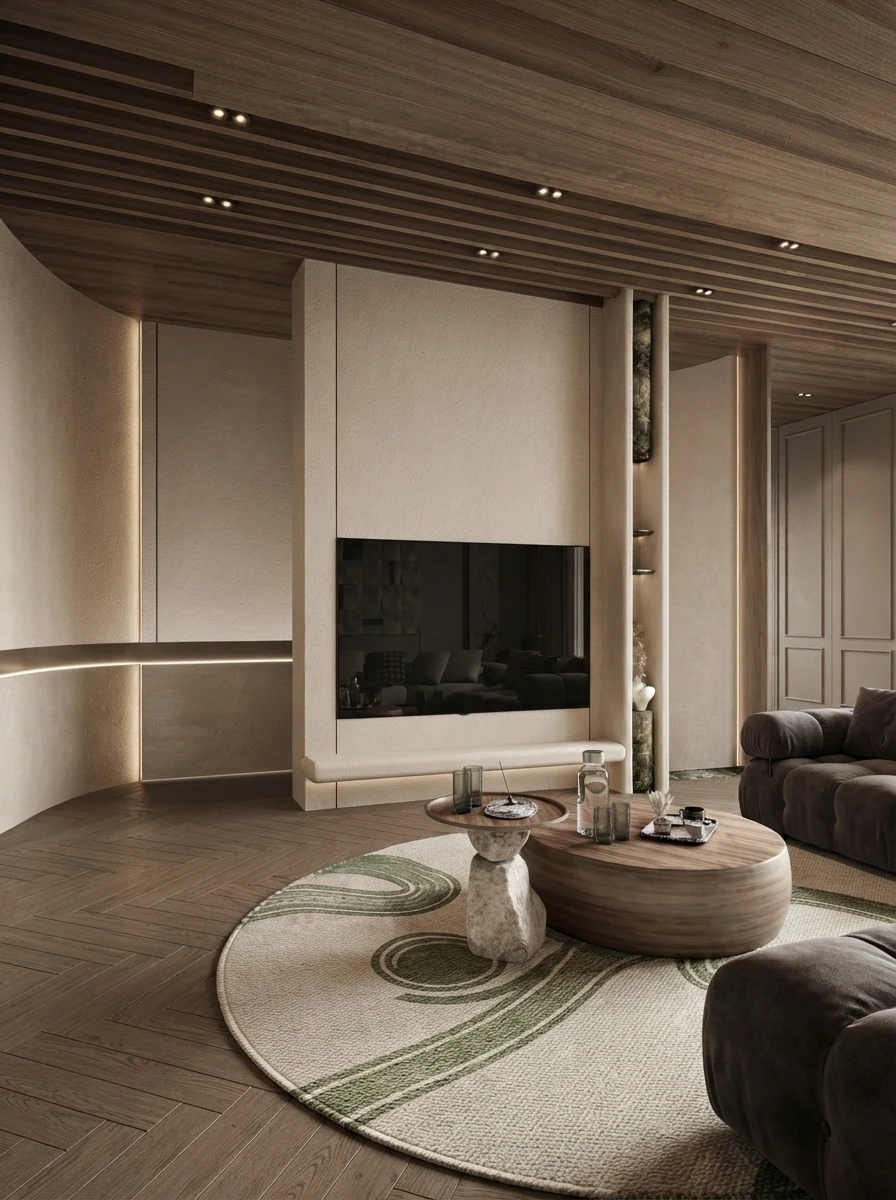
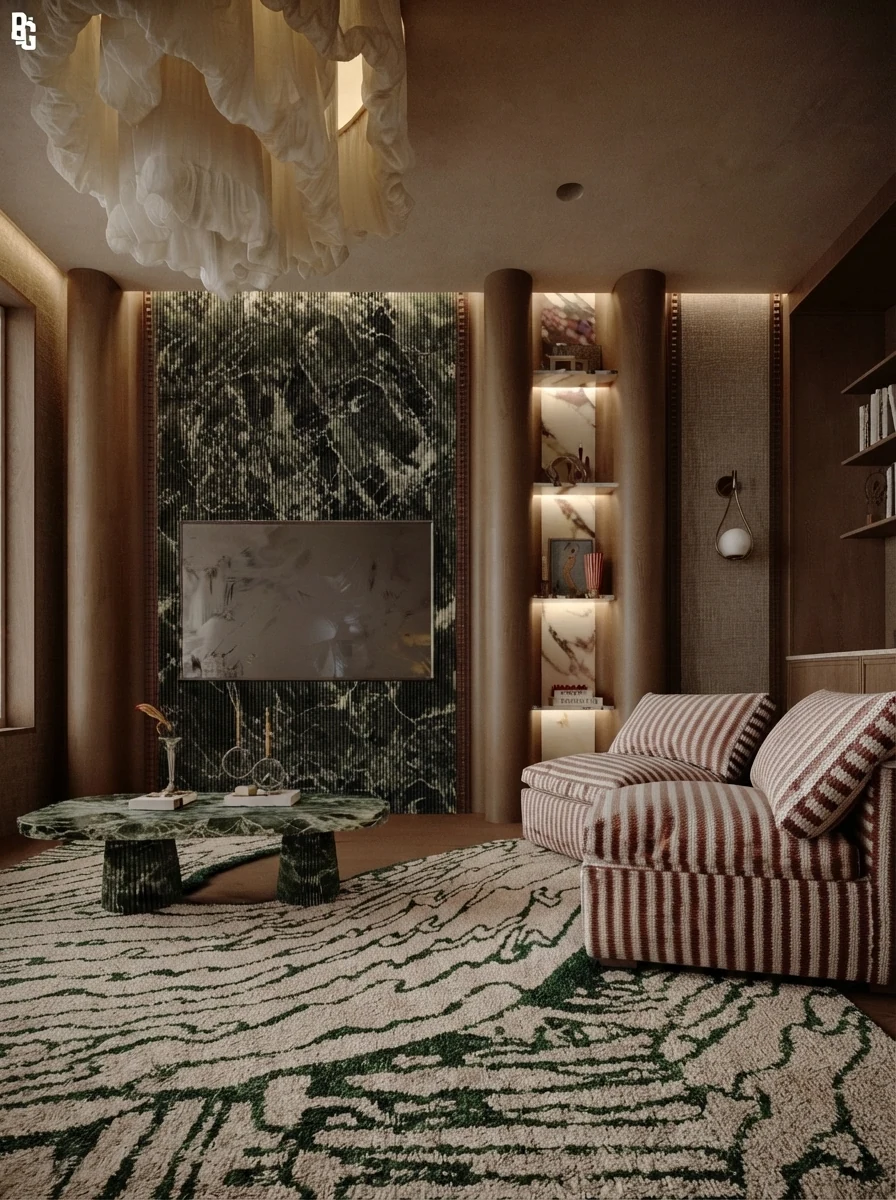
If the whole wall is up for redesign rather than just the screen, the TV wall and focal point prompts cover recessed niches, joinery and the projector route, and the panelled and stone walls in this post are exactly what those prompts produce. Upload your room at meltflexai.com/create, try the sizes, and buy the one that survived the photo of your actual wall.
Frequently asked questions
How do you measure a TV screen size?
Corner to corner across the glass, diagonally: bottom left of the picture to top right. The frame around the screen does not count. That is why a 65 inch TV is only about 57 inches wide, and why two TVs with the same quoted size can differ by an inch once their bezels are included.
How wide is a 65 inch TV?
The glass is 56.7 inches wide and 31.9 inches tall, because width on a 16:9 screen is the diagonal times 0.872. With the bezel, a current 65 measures about 57.2 inches wide, and on its stand it is around 35 inches tall. Plan wall space and furniture around the width, not the 65.
How high should a 65 inch TV be mounted?
Centre it on your seated eye line, which is roughly 42 inches off the floor for most sofas. For a 65 that puts the bottom edge at about 26 inches and the top at 58. If you skip the measuring, 42 inches to centre is the convention; measuring your own eye height takes one minute and beats it.
Is it OK to mount a TV above a fireplace?
It is the most common request and the least comfortable result. Above a typical 54 inch mantel the screen centre lands near 72 inches, about 30 inches above your eye line, which is a constant upward neck tilt of roughly 17 degrees from an 8 foot sofa. If the chimney wall is the only option, use a pull-down or tilting mount and treat it as a compromise.
What size TV should I get for my room?
Measure seat to screen wall and divide by 1.63 to land on the diagonal that fills a 30 degree view, the SMPTE recommendation. At 8 feet that is a 59, so a 65 is the right buy; at 10 feet a 75 fits. Anything between 1.2 times and 2.5 times the diagonal is comfortable, so most rooms accept two sizes.
What size TV is best for a bedroom?
Measure from your pillow, not from the foot of the bed. Most bedrooms put the screen 6 to 8 feet from your head, which lands between a 43 and a 55. A 55 at 7 feet fills a 32 degree view, already more immersive than most living rooms. Mount it a touch higher than eye line and tilt it down, since you watch reclined.
How much bigger is a 75 inch TV than a 65?
Only 8.7 inches wider on the wall, but a third more screen. Screen area scales with the square of the diagonal, so a 75 has 33 percent more picture than a 65, and an 85 has 71 percent more. That is why a one-size jump looks dramatic at home even though the box dimensions seem close.
Does the TV stand need to be as wide as the TV?
Check the feet, not the screen. TVs with a centre pedestal sit happily on a console narrower than the panel. But many models stand on two feet placed near the outer edges, and for those the console must be nearly as wide as the TV: the spec of a common 65 lists its with-stand width at the full 57 inches. The spec sheet calls it stand width.