To style plants, place them by light first and looks second: sun-loving plants within a few feet of the window, one floor plant tall enough to read from the doorway, smaller plants grouped in threes at stepped heights, and nothing on the coffee table taller than about a foot; in our MeltFlex AI test on November 19, 2026, AI placed real plants from The Sill into one living room 26 times and only got the light right once we told it which plants want sun.
Our articles are still written by humans!
Get human written articles in your Google feed.
Most plant styling advice stops at pretty photos. Each rule below comes with a real interior from the MeltFlex AI gallery, and then the numbers the photos leave out: how far from the window each light level really is, what big plants cost by size, which ones are safe for pets, and how well AI itself places plants in one real room (badly at first, then well after a fix). We pulled The Sill’s prices by size, and checked every plant against the ASPCA list. MeltFlex AI is ours, and the interior plant design tool used here is ours too. We are not paid by The Sill; we use its public catalog because its studio photos show the real plant and pot.
The short version
- Light decides the spot: high light is directly in front of an east or west window or up to 5 feet from a south one; low light starts 3 to 10 feet from an east or west window (University of Illinois Extension).
- One big plant beats five small ones: at The Sill on November 19, five medium fiddle leaf figs cost $295; one 5 to 6 ft fig was listed at $199.
- Group in threes, at three heights, and keep coffee table plants under about 12 inches.
- AI can preview it, with checks: MeltFlex AI placed 4 real plants per photo in 14 to 39 seconds for 10 credits a render; it kept the room untouched in 10 of 16 renders before our fix and 6 of 6 after.
- Pets: the ASPCA lists areca palm, parlor palm and calathea as non-toxic and bird of paradise as toxic.
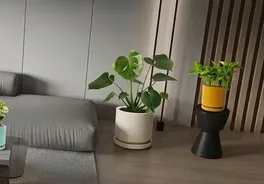
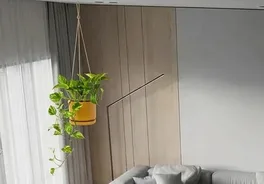
What Does Good Plant Styling Look Like?
Good plant styling looks like the plants were part of the plan for the room: a few deliberate shapes at different heights, each one in light it can live in, instead of a pot on every flat surface. That last part is where most styled photos cheat. A fiddle leaf fig in a dim corner looks great on the day of the shoot and drops its leaves within a month.
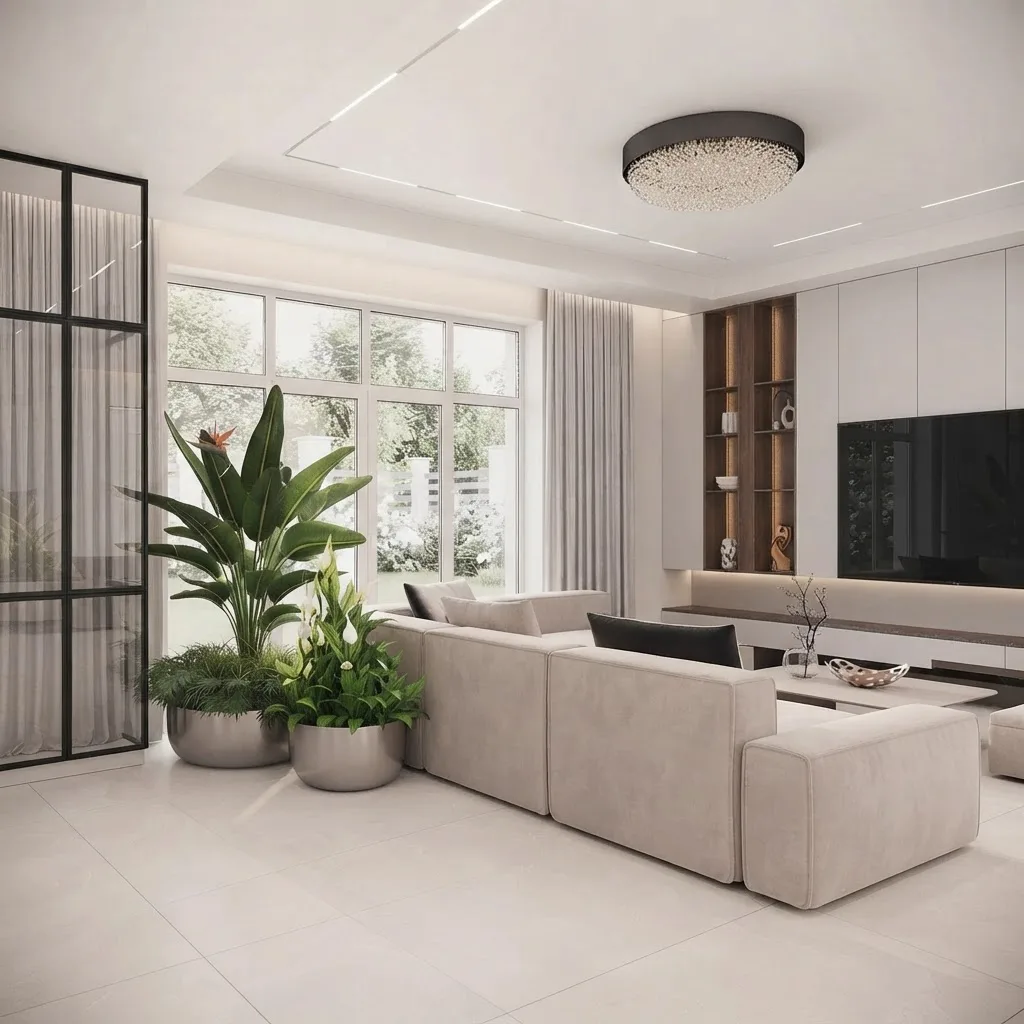
Here is what that looks like done well: a tall bird of paradise with two lower leafy plants in matching silver pots, grouped right against the glass where the light is strongest, and nothing else competing with them.
Rule 1: How Much Light Do Houseplants Need Where You Put Them?
Light is the rule the others depend on. Light drops off fast with distance from glass, and the window’s direction changes everything. University of Illinois Extension gives these working distances:
Source: University of Illinois Extension, Houseplants: Lighting. Other extensions draw the lines differently (University of Maryland calls 25 to 100 foot-candles low and 500 to 1,000 high), so treat the table as a map, not a law. Curtains matter too: Maryland Extension lists curtains and screens among the things that cut light, and recommends a sheer curtain to soften direct sun.
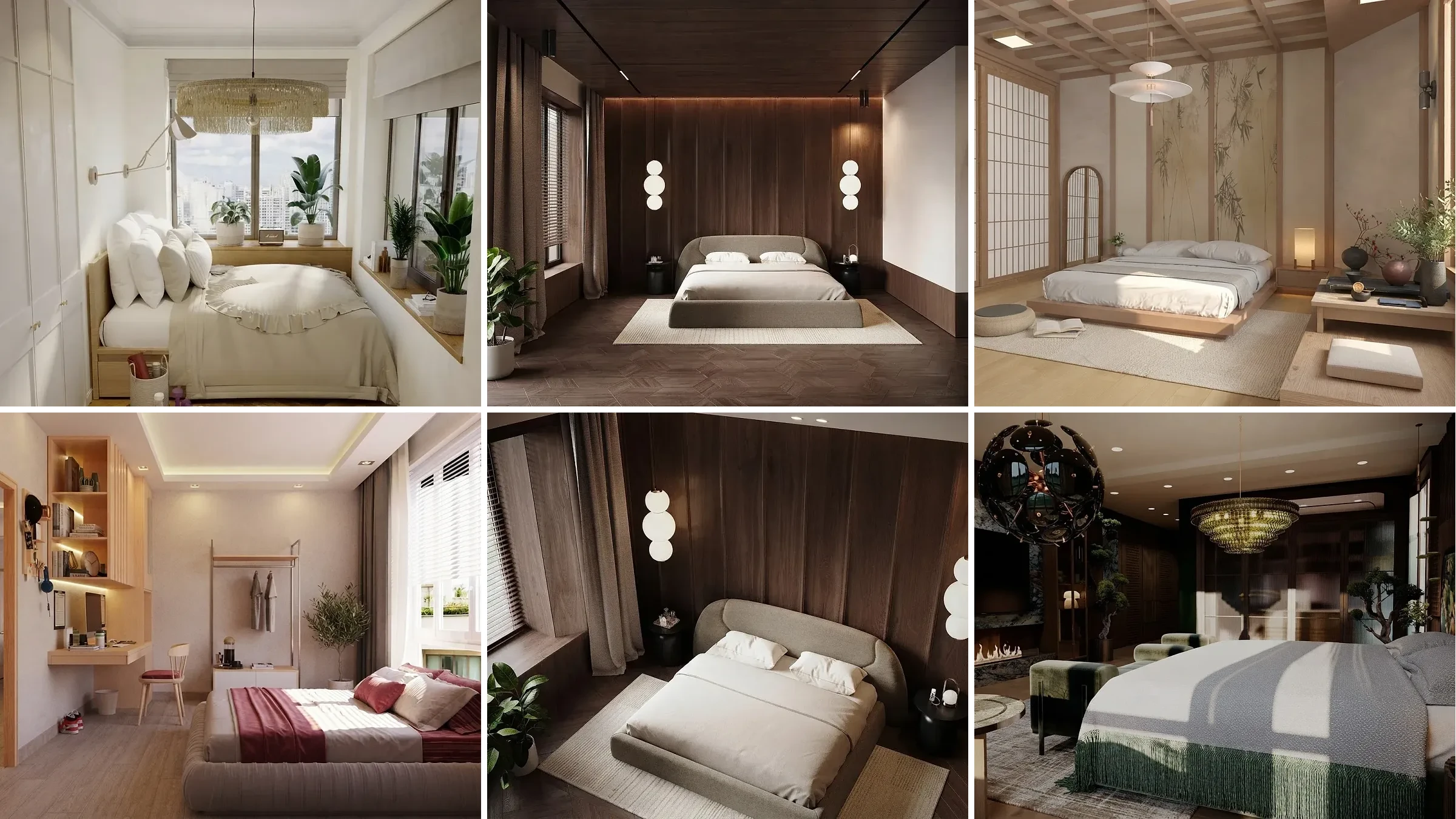
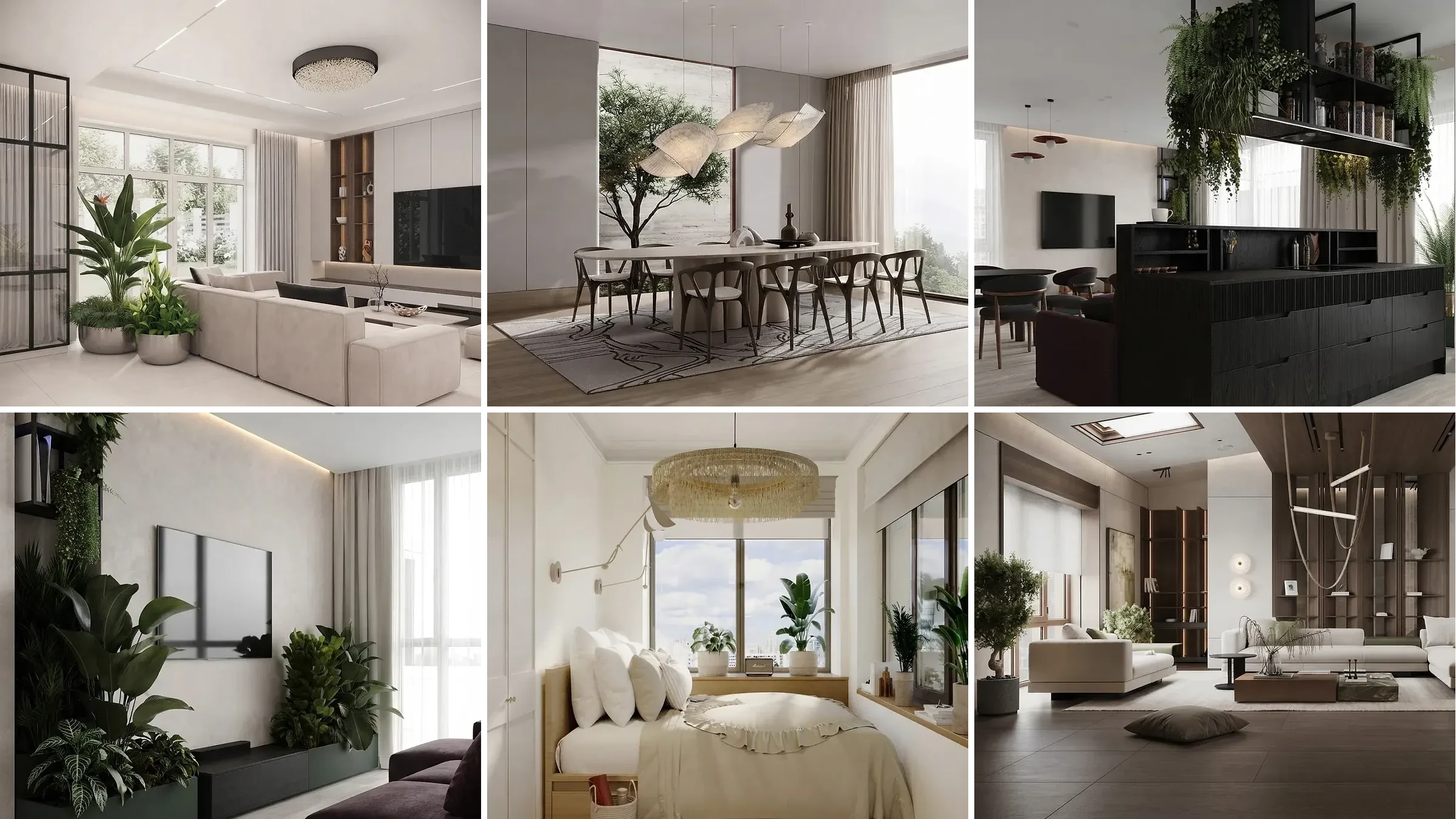
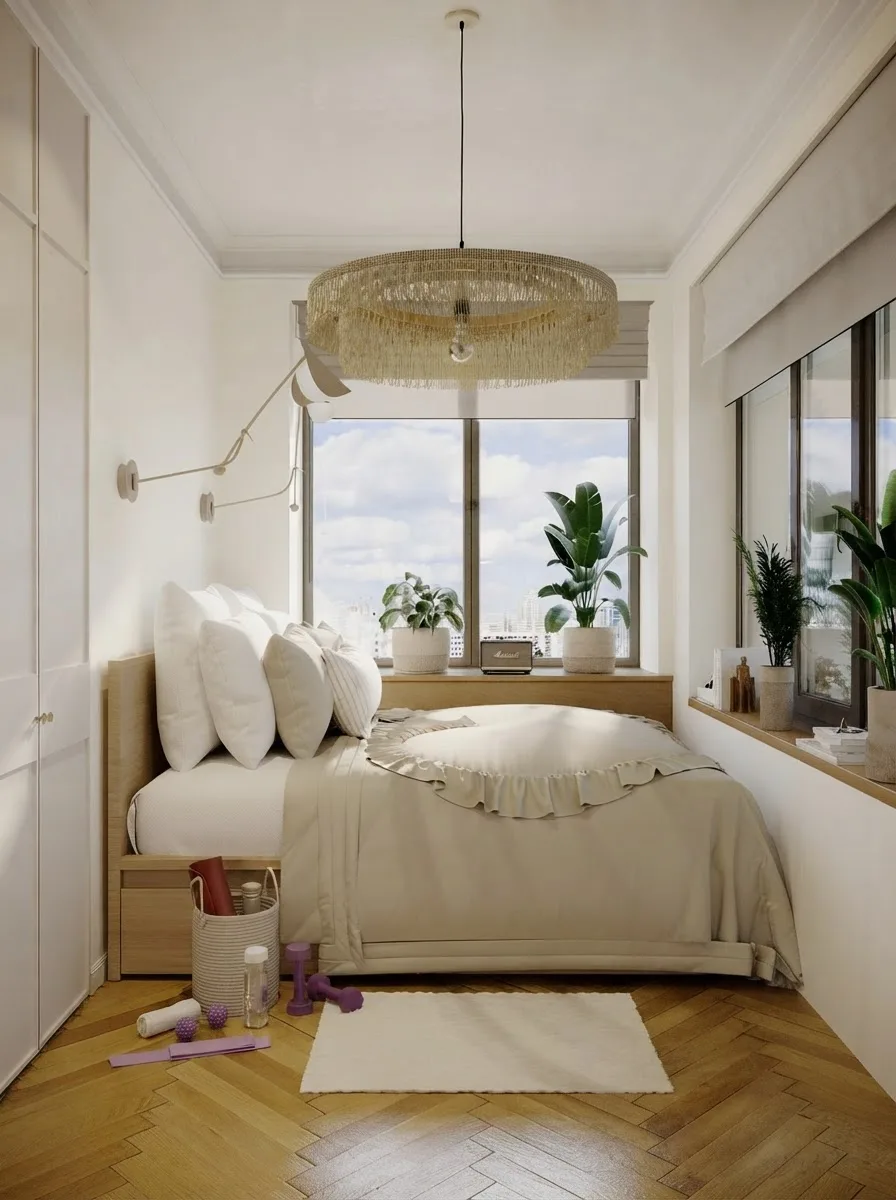
A free check: hold your hand a foot above the spot at midday. A sharp shadow means bright light, a soft shadow means medium, barely any shadow means low. The small bedroom below gets it right: every plant sits on the sill or on the floor right at the glass, where the shadows are sharp, and the dark side of the room is left to the furniture.
Rule 2: Why One Large Indoor Plant Beats Five Small Ones
One large floor plant gives a room a focal point; five small ones give it clutter. Tall plants fill the vertical space between the sofa back and the ceiling that nothing else in a living room uses, and they read from the doorway. Small pots read as accessories, and five accessories in a row read as a plant shop.
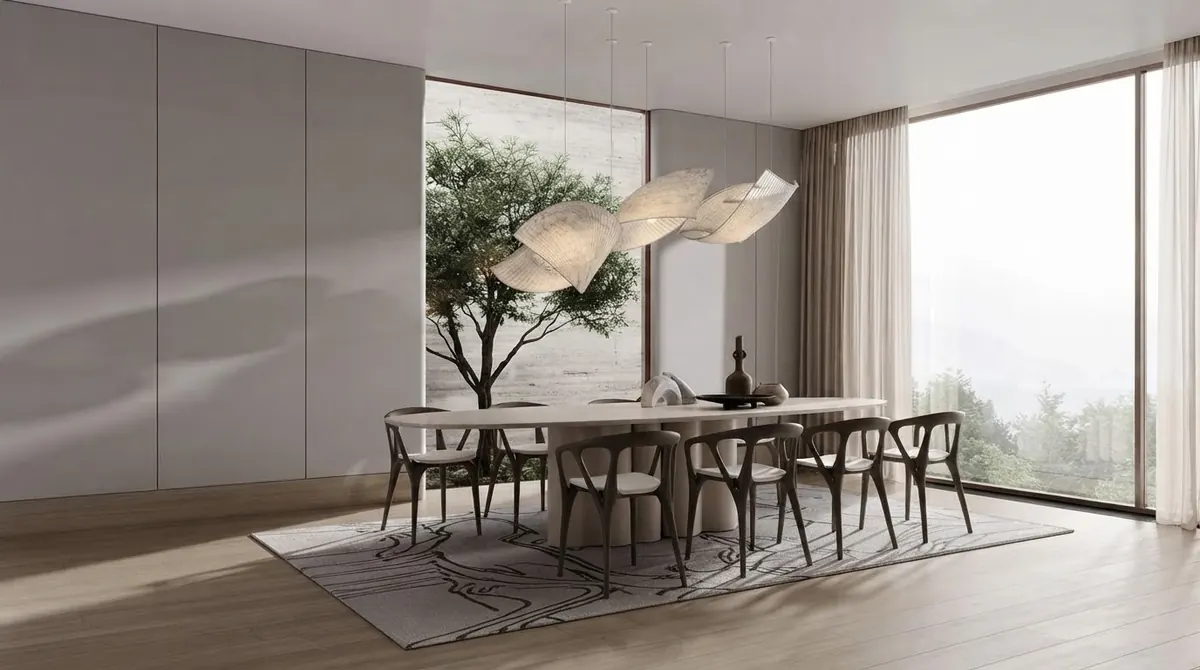
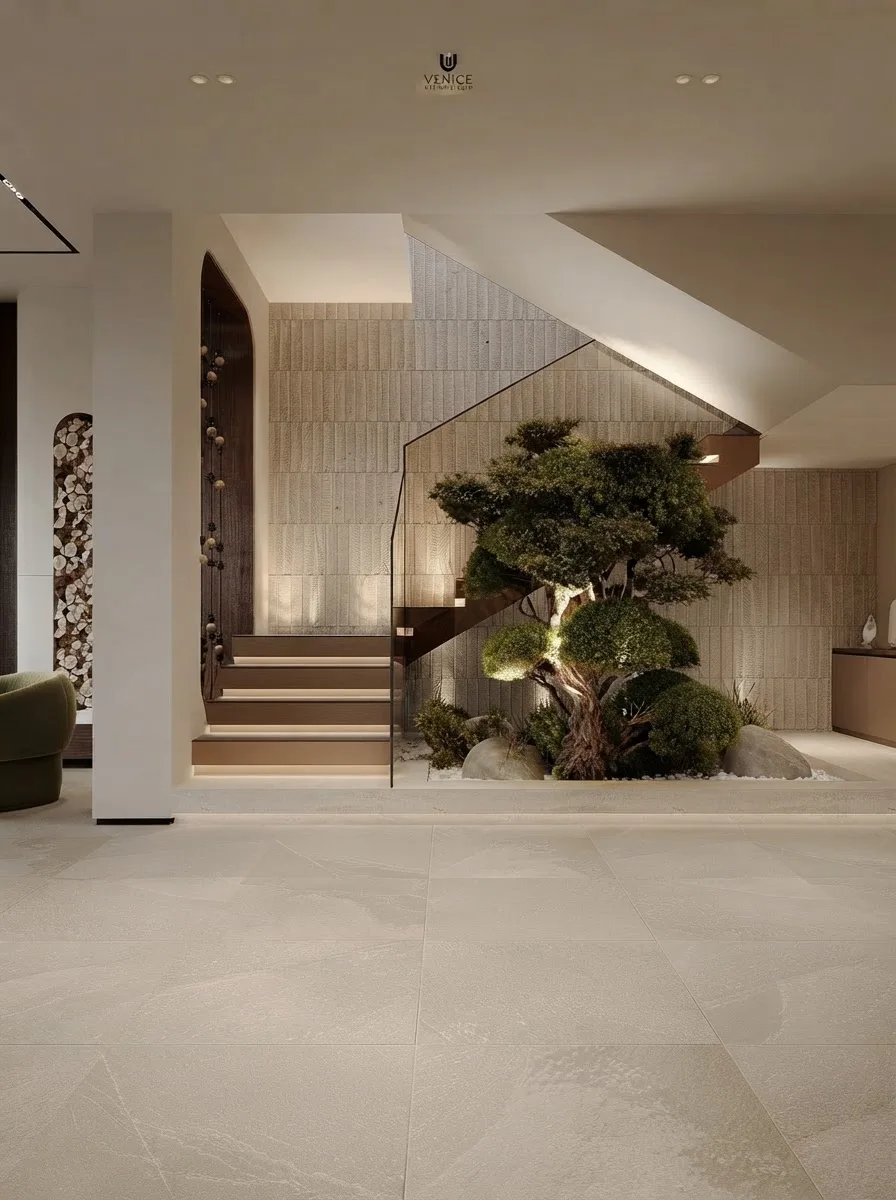
It is also not the expensive option people expect. These are The Sill’s listed prices on November 19, 2026, cheapest planter for each size, taken from the shop’s own product feed:
Two things stand out. Five medium figs ($295) cost more than one 5 to 6 ft fig ($199), and the tallest sizes are the first to sell out, because large plants ship by freight or local delivery. If you want a big plant, buy the size you want when it is in stock rather than buying small and waiting: a fiddle leaf fig grows slowly indoors. For tall but cheap, a 3 to 4 ft lady palm at $79 is the best value in this list.
Rule 3: What Plant Goes in a Dark Corner?
A dark corner needs a plant sold as low-light tolerant, and tall enough to matter: a dracaena, a cast iron plant, a ZZ plant or a snake plant. The dark living room below cheats a little, and it is a cheat worth copying: the walls and sofa are dark, but the lush planting sits in long troughs right next to the window, so the plants get the light and the room keeps its mood.
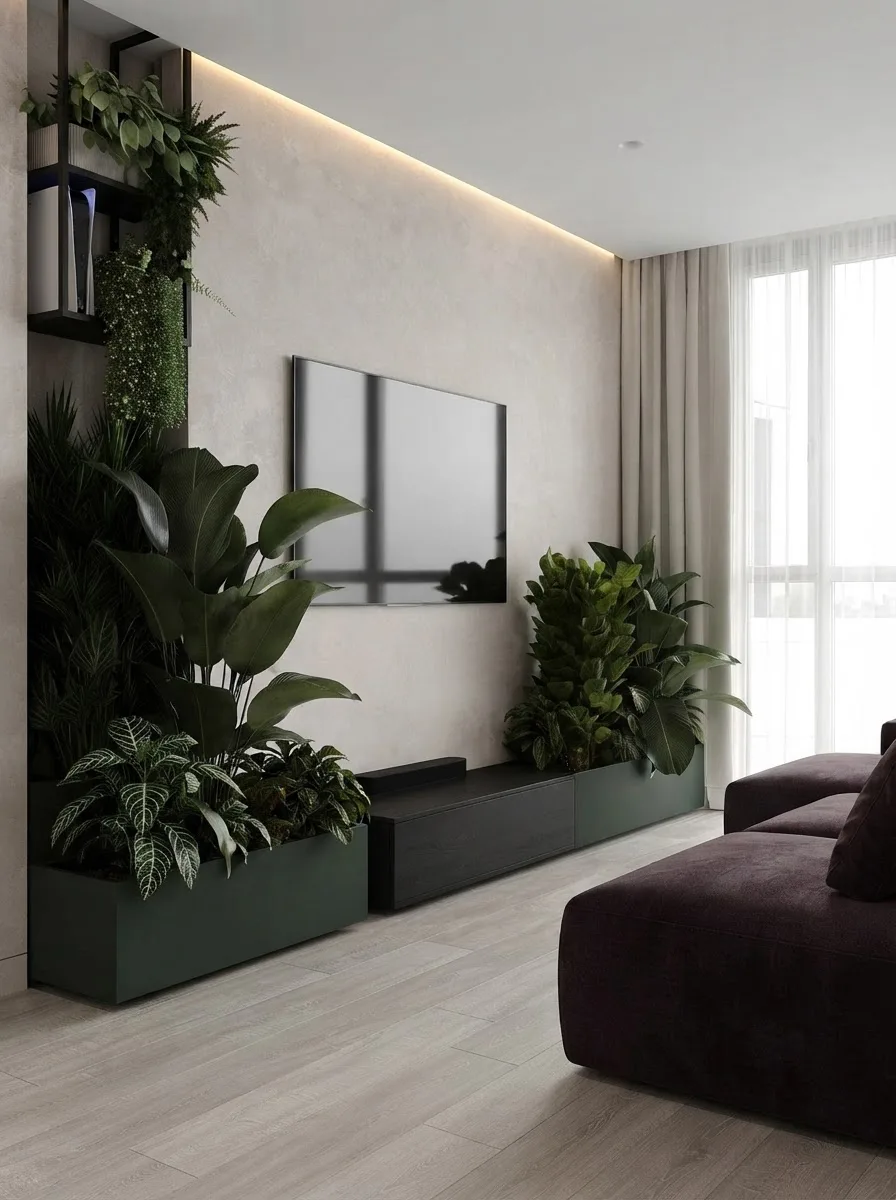
Be honest about “low light”: it means a plant survives and grows slowly, not that it thrives in a hallway with no window. If the corner gets no daylight at all, put a grow light bulb in the floor lamp beside it or use a good artificial plant.
Rule 4: How to Arrange Plants in a Group
Group plants in odd numbers, usually three, and step the heights so the group reads as a triangle: tallest at the back, mid-height in front of it, smallest at the front edge. Gardens Illustrated’s plant stylist adds a practical reason: plants grouped together raise the humidity around each other. In the villa living room below, an olive tree, a leafy plant on the shelving and a low plant by the sofa do it at room scale.
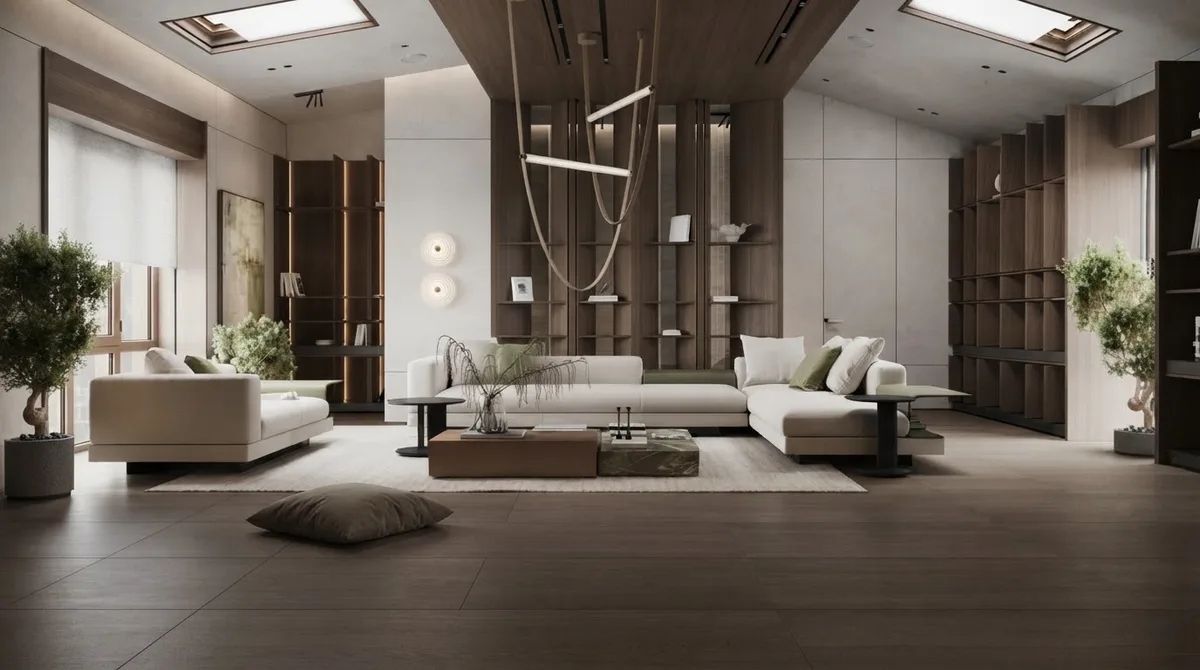
Why it works: a group reads as one object, so the room looks like it has one plant moment instead of three scattered pots. Mix leaf shapes inside the group (feathery palm, big split monstera leaves, small round peperomia) and keep the pots related in color. If your living room layout is still in flux, settle the furniture first with our living room layout guide; plants go into the gaps the furniture leaves.
Rule 5: Use a Matching Pair for Symmetry
Two identical plants, one at each end of a sofa, a console or a bed, make a room look calm and finished in the way a pair of lamps does. It suits formal and minimal rooms. It is also the easiest rule to get right, because there is nothing to judge: same plant, same pot, mirrored spots.
The catch is light. The two ends of a sofa rarely get the same light, so one plant of the pair grows slower and lean toward the window. Rotate both a quarter turn every couple of weeks, or swap them every month so they stay matched.
Rule 6: Keep Coffee Table Plants Low
A coffee table plant should sit below eye level for someone on the sofa, which in practice means under about 12 inches tall. Anything taller blocks the view across the room and the face of whoever sits opposite. A bird’s nest fern is ideal: low, wide, and listed by The Sill at $39 for the 4 to 8 inch size.
Rule 7: Put Trailing Plants Up High
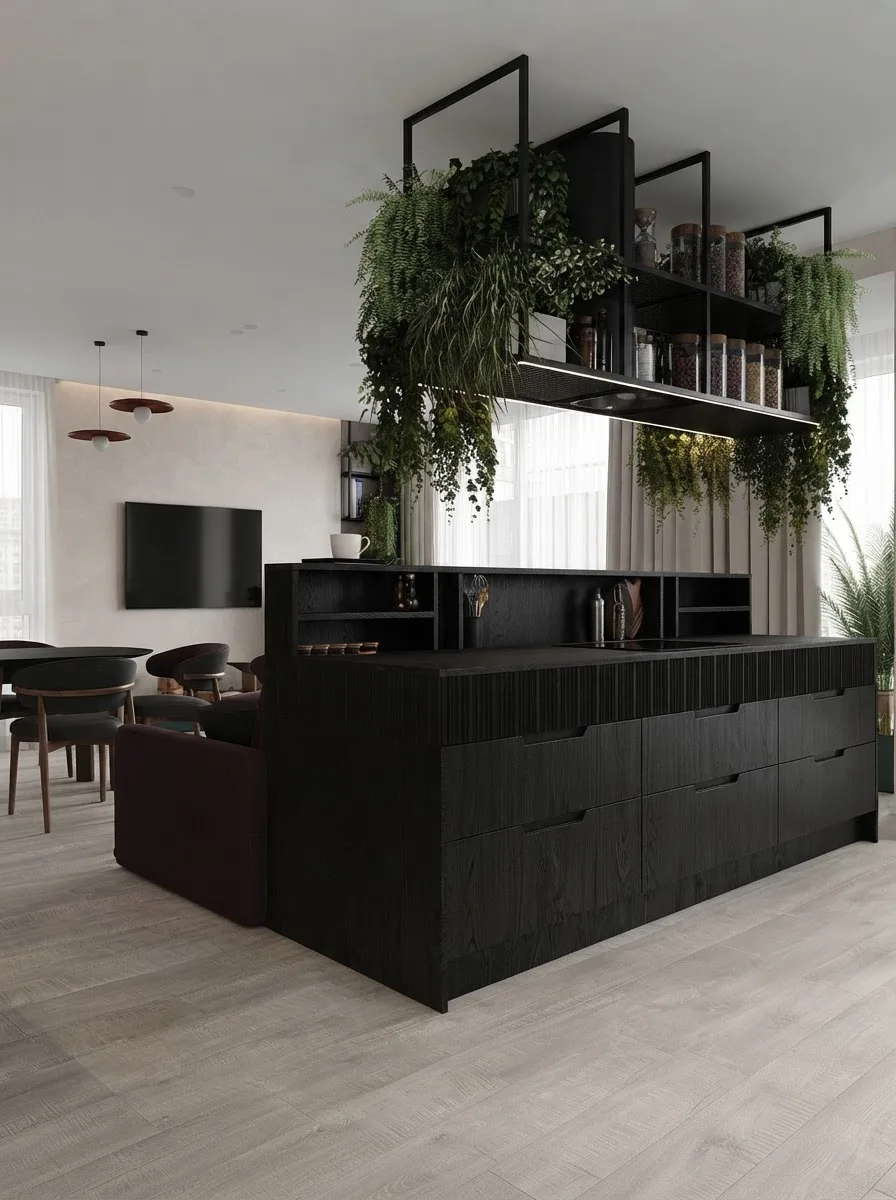
Trailing plants such as pothos, philodendron and string of pearls need height to trail, so hang them or put them on top of a tall cabinet or shelf. Set on a coffee table, a pothos just sprawls. The kitchen below takes it to the ceiling: trailing plants spill from a steel rack hung over the island, where nobody has to dust around them.
Plant wall decor and plant shelf ideas
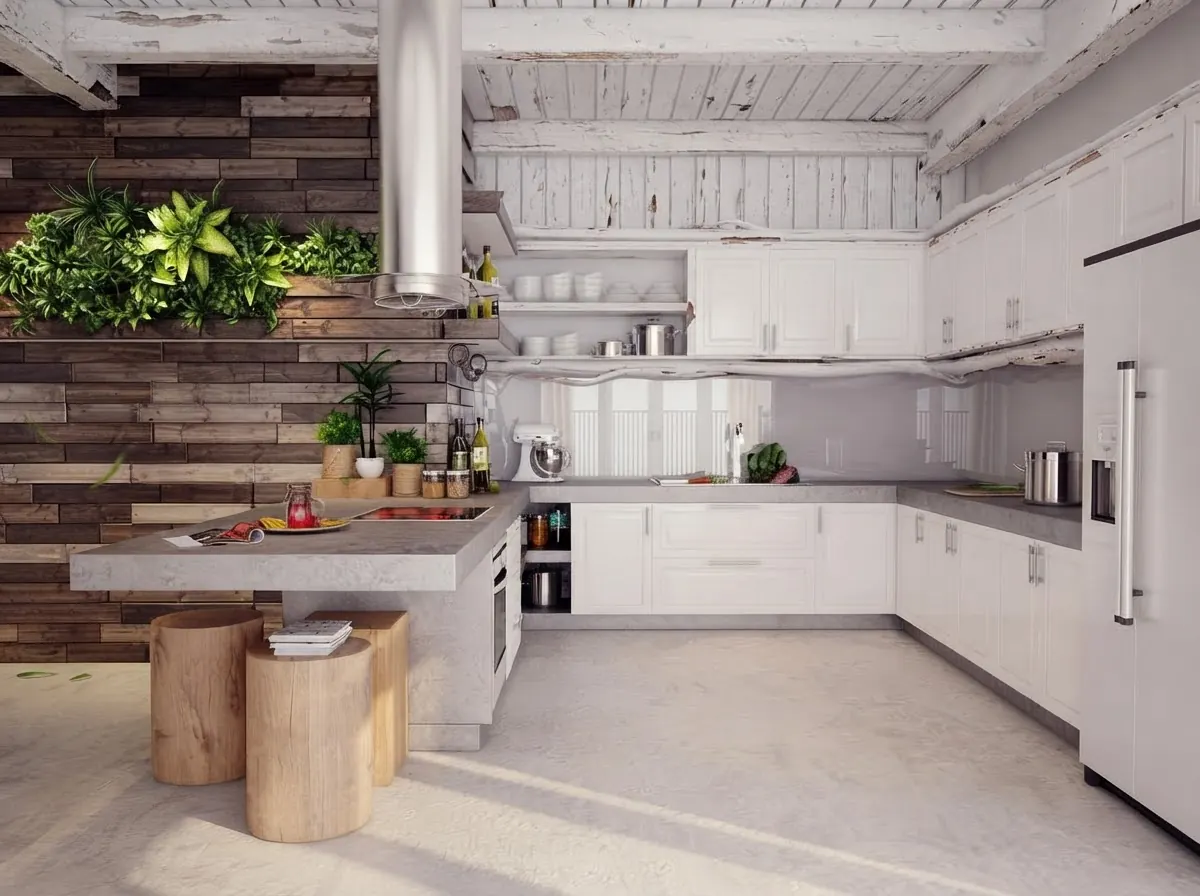
A plant wall is the same rule at scale: a run of wall shelves, a pegboard or a grid of wall planters near a window, filled mostly with trailing plants so the wall reads green from top to bottom. Two cautions. Water drips, so pick planters with a sealed inner pot or water them in the sink. And a wall is a commitment: a single shelf with three trailing plants gets most of the effect for a fraction of the drilling.
Rule 8: With Cats or Dogs, Pick From the Non-Toxic List
If a cat or dog shares the room, choose plants the ASPCA lists as non-toxic before you choose for looks. Here is the status of every plant in this guide that the ASPCA covers, plus The Sill’s own pet-friendly flag for the rest:
So a pet-safe living room could be an areca palm by the window, a calathea on a side table and a parlor palm on the coffee table: three heights, all on the ASPCA non-toxic list. More pet rules in our pet-friendly interior design guide.
Rule 9: Layer Three Heights, Then Stop
The finished look for a living room is plants at three levels: floor, furniture height and up high or trailing. In a typical living room that is three or four plants, and that is enough. A fifth would have started to look like a showroom, and every extra pot is another watering schedule.
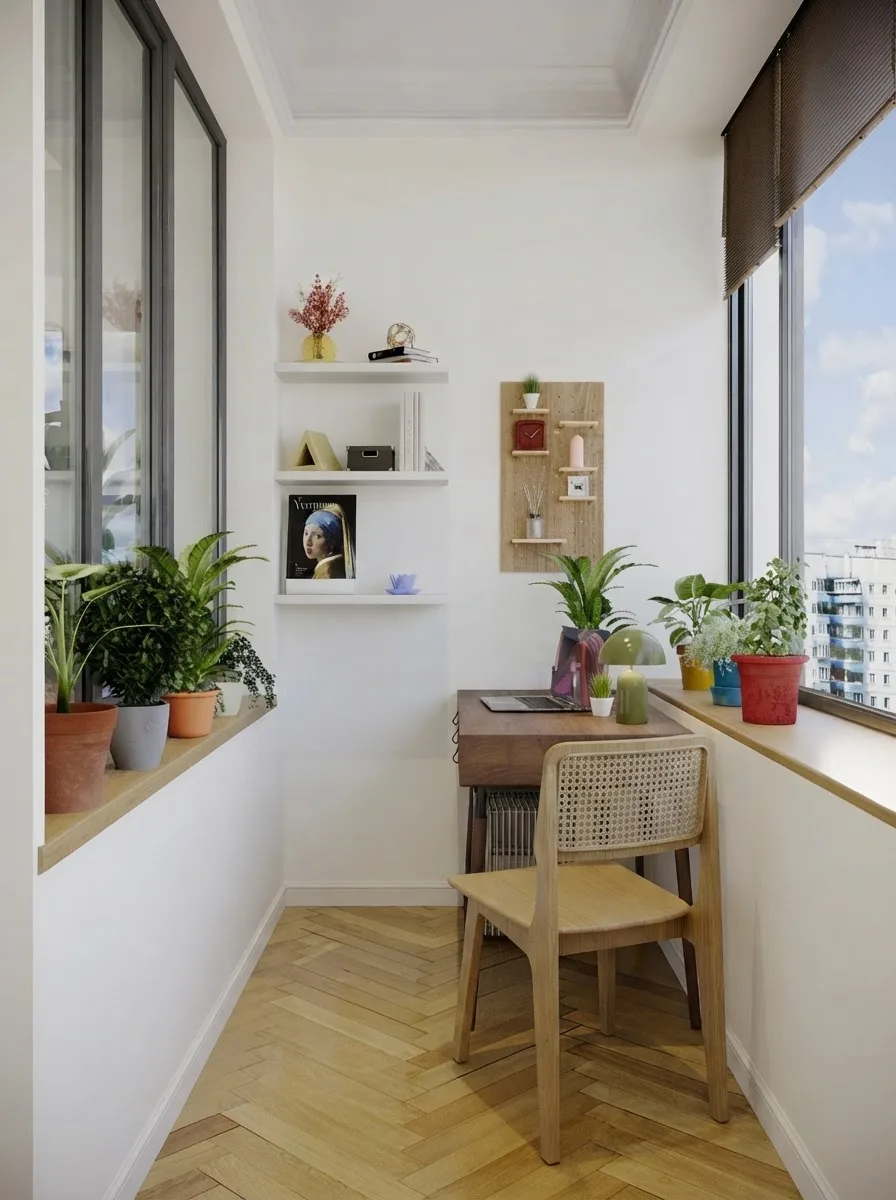
A simple order for decorating with plants from scratch: one large floor plant in the brightest free corner, then a group of three where the room feels empty, then one low or trailing plant near where you sit. Stop there and live with it for two weeks before buying more. If the room still feels off, it is often not the plants; see why a living room feels off.
Can AI Style Plants in Your Room? Our MeltFlex AI Test
MeltFlex AI can place real plants in a photo of your room: on the interior plant design page you upload the photo, pick up to four plants from The Sill catalog (or upload a photo of your own plant), and the AI places them at the size the shop lists, in 14 to 39 seconds per render in our test. A render costs 10 credits; new accounts get 15 free credits, which covers one render, and plans start at $20 a month on the pricing page. Free-account renders carry a watermark. The same engine is available to AI assistants through the MeltFlex AI MCP connector and to developers through the MeltFlex AI API.
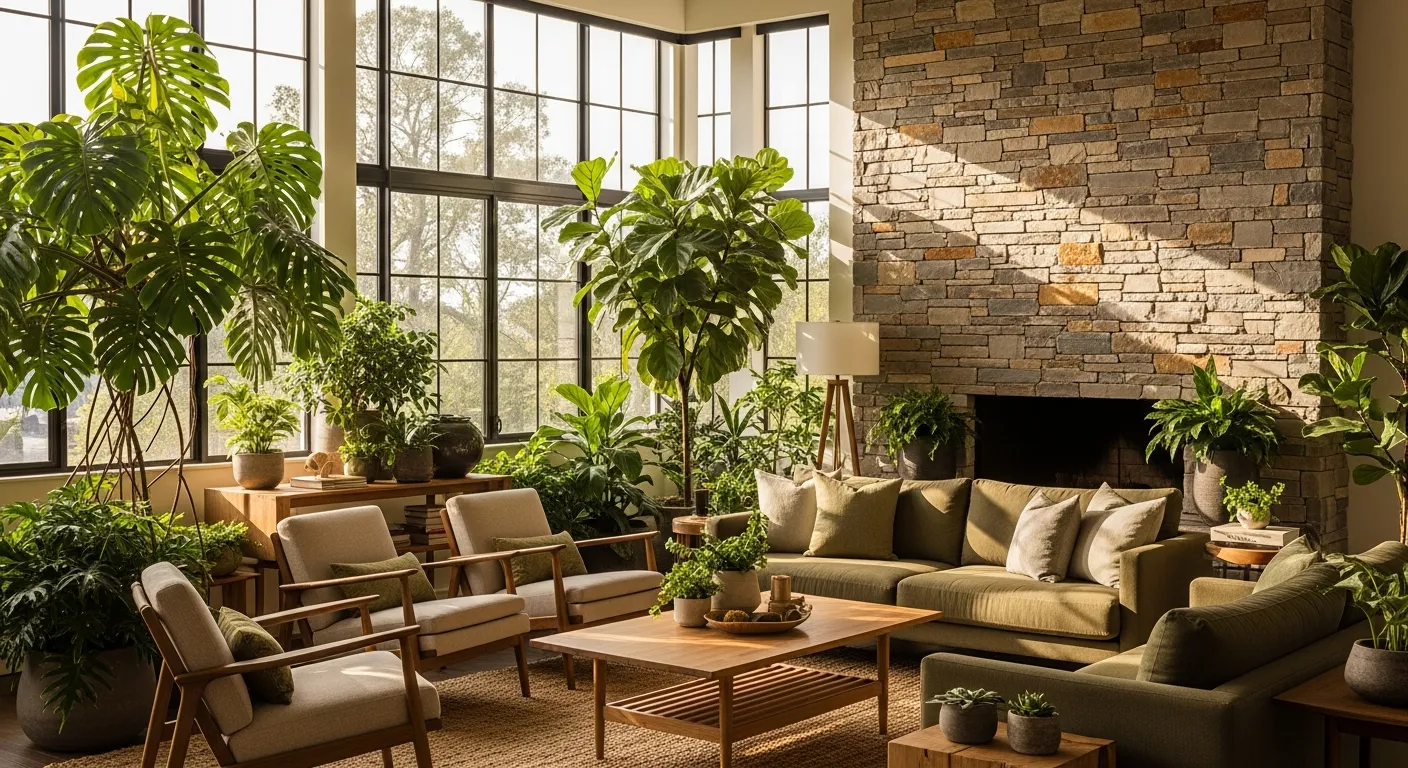
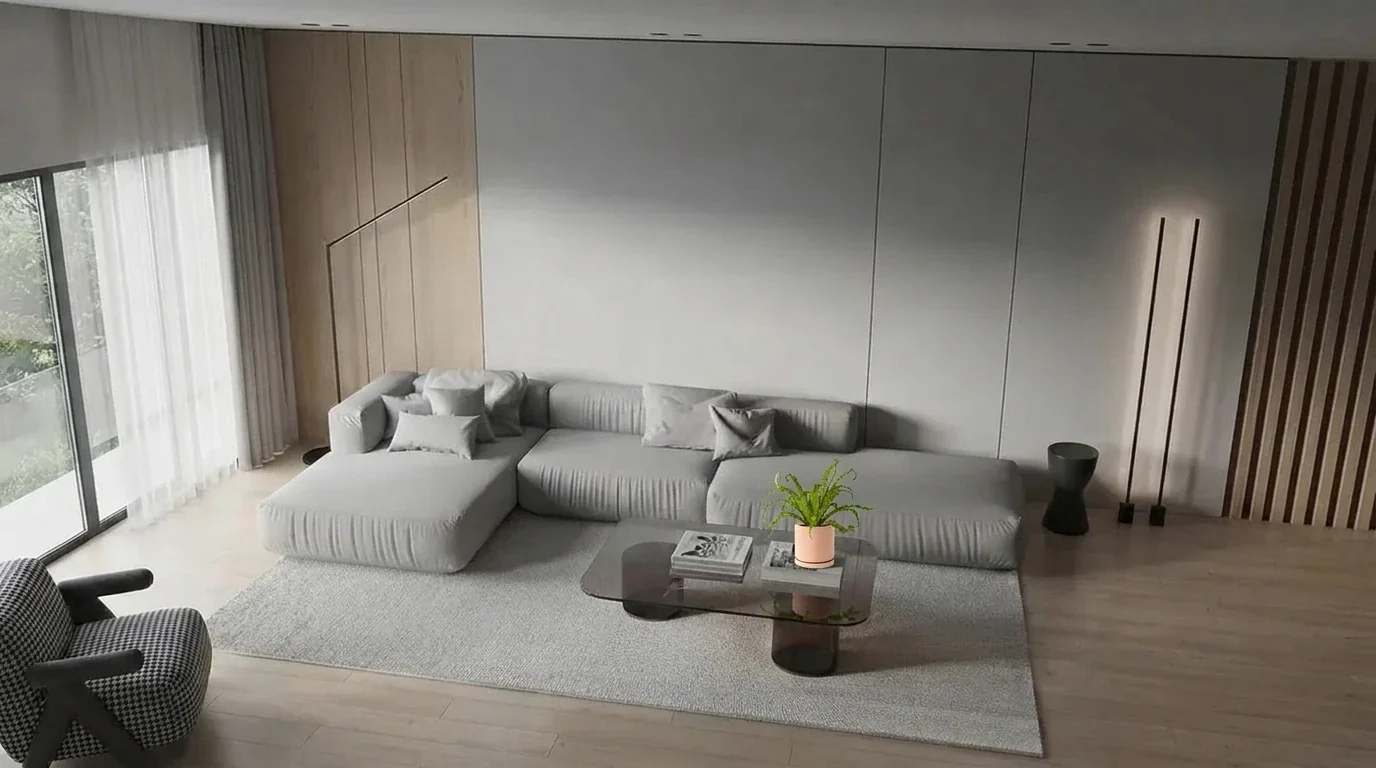
That is the pitch. Here is what happened when I tested it on November 19, 2026, on the living room below (a MeltFlex AI gallery render with no plants, design by Karim B.), logged in to a paid account, through the same endpoint the plant tool uses. I ran four plant sets twice each with the tool as it shipped (the AI chooses the spots), then the nine rules with the spot written out, then two rounds after fixing what broke. A render passed “room untouched” only if every piece of furniture, lamp and the camera framing matched the original.
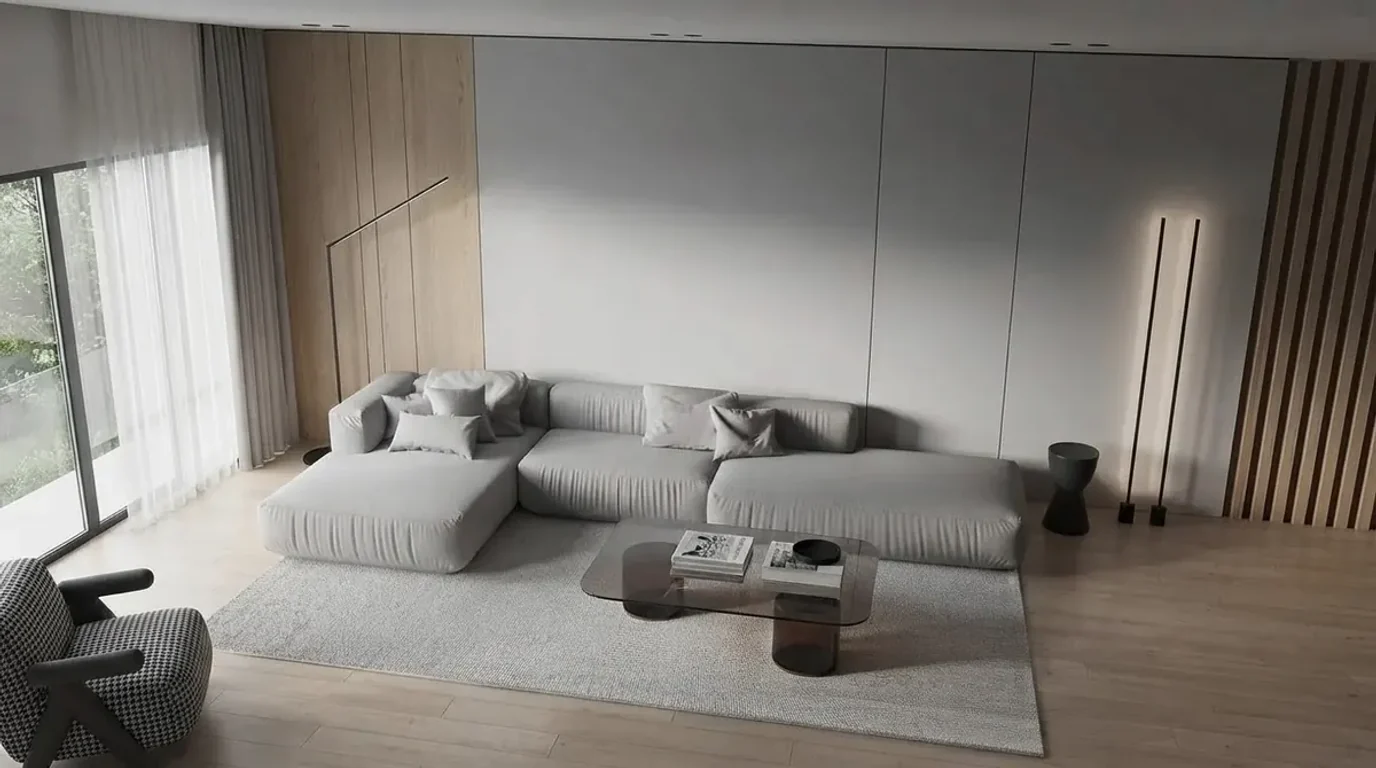
What went wrong in round 1, specifically: the AI erased the stand of a floor lamp to make room for a fiddle leaf fig, moved the armchair into the middle of the room in another render, and in both runs with a trailing pothos it built a wall shelf that does not exist, because our instruction said “on a shelf or cabinet” and the room had neither. Round 2 added two more: in one render the AI zoomed the camera out and nudged the armchair, in another it moved the black side table into the corner to make room for a monstera.
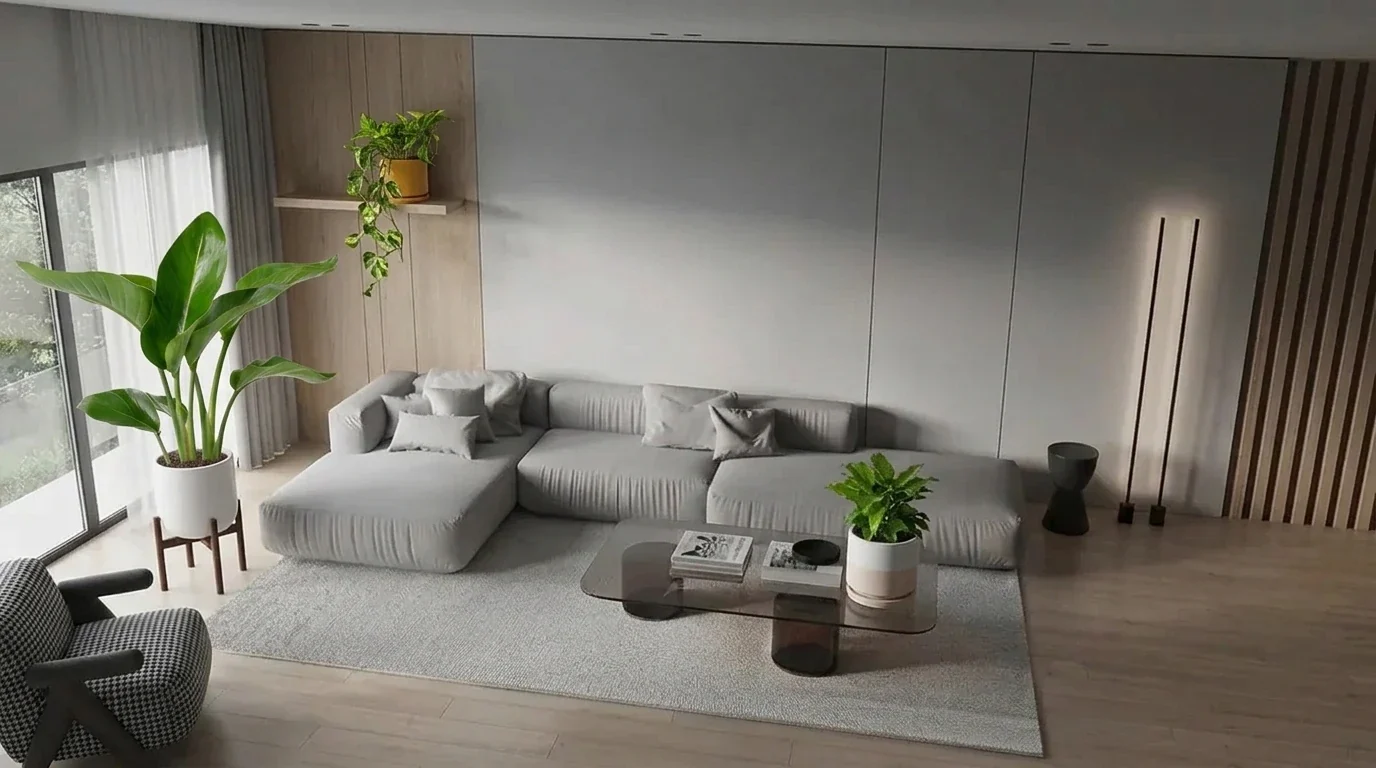
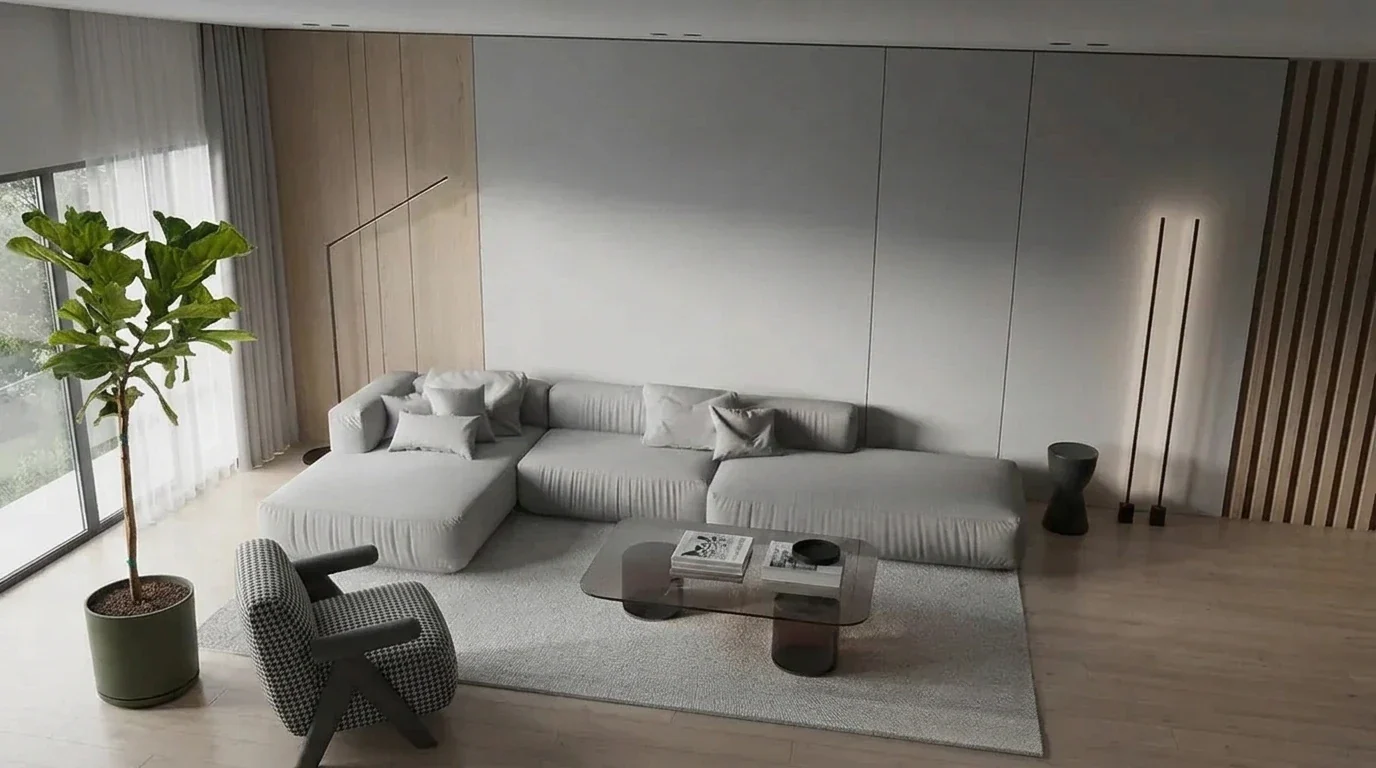
The fix was in our prompt, not in the model. First we told it outright not to add, move or remove furniture and to keep the framing (round 3). That solved the room, and immediately showed the deeper problem: with only “open floor” to go on, it put a fiddle leaf fig and a bird of paradise in the darkest corner every time. AI image models place plants for composition, not for light. So round 4 passes the light need from the catalog: sun lovers “close to a window”, low-light plants “can stand away from it”. That version kept the room and put every plant in sensible light in 6 of 6 renders, and it is now the plant tool’s default prompt.
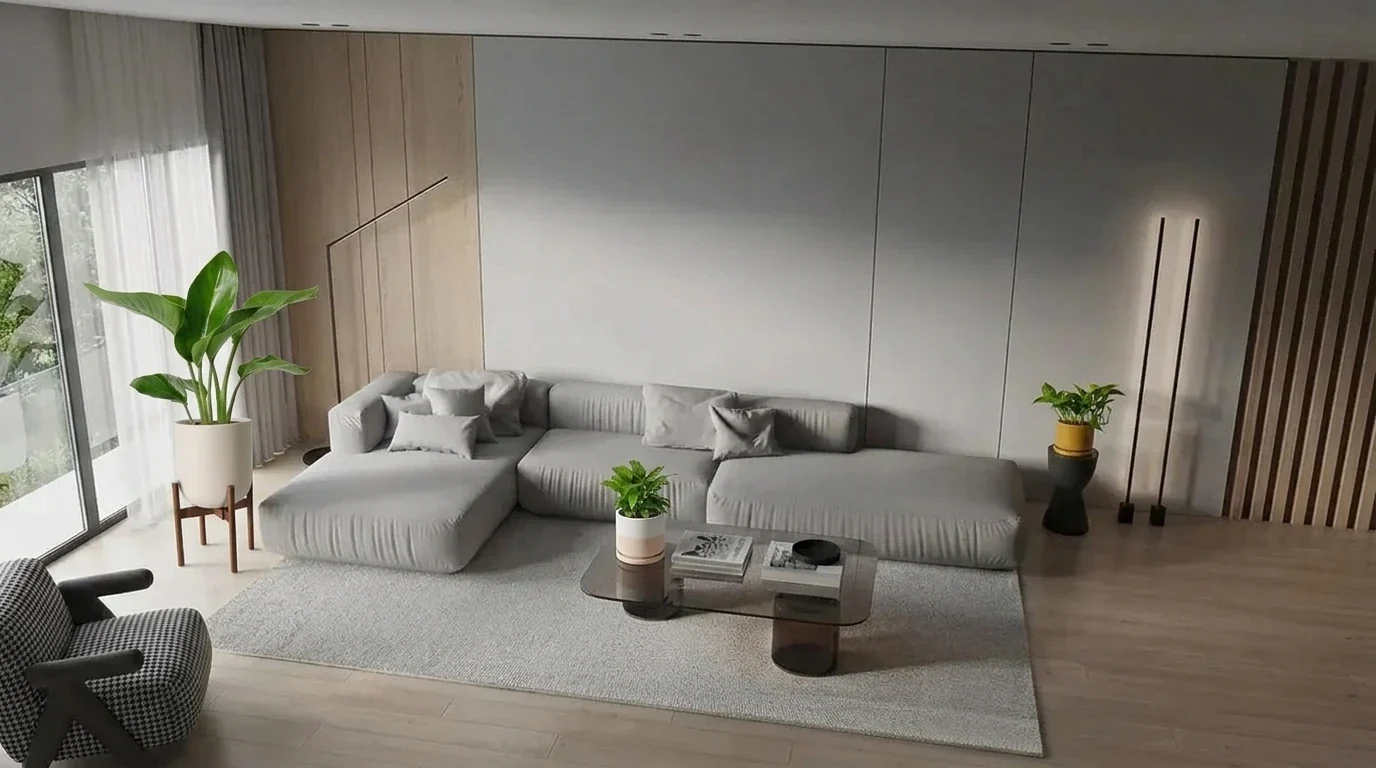
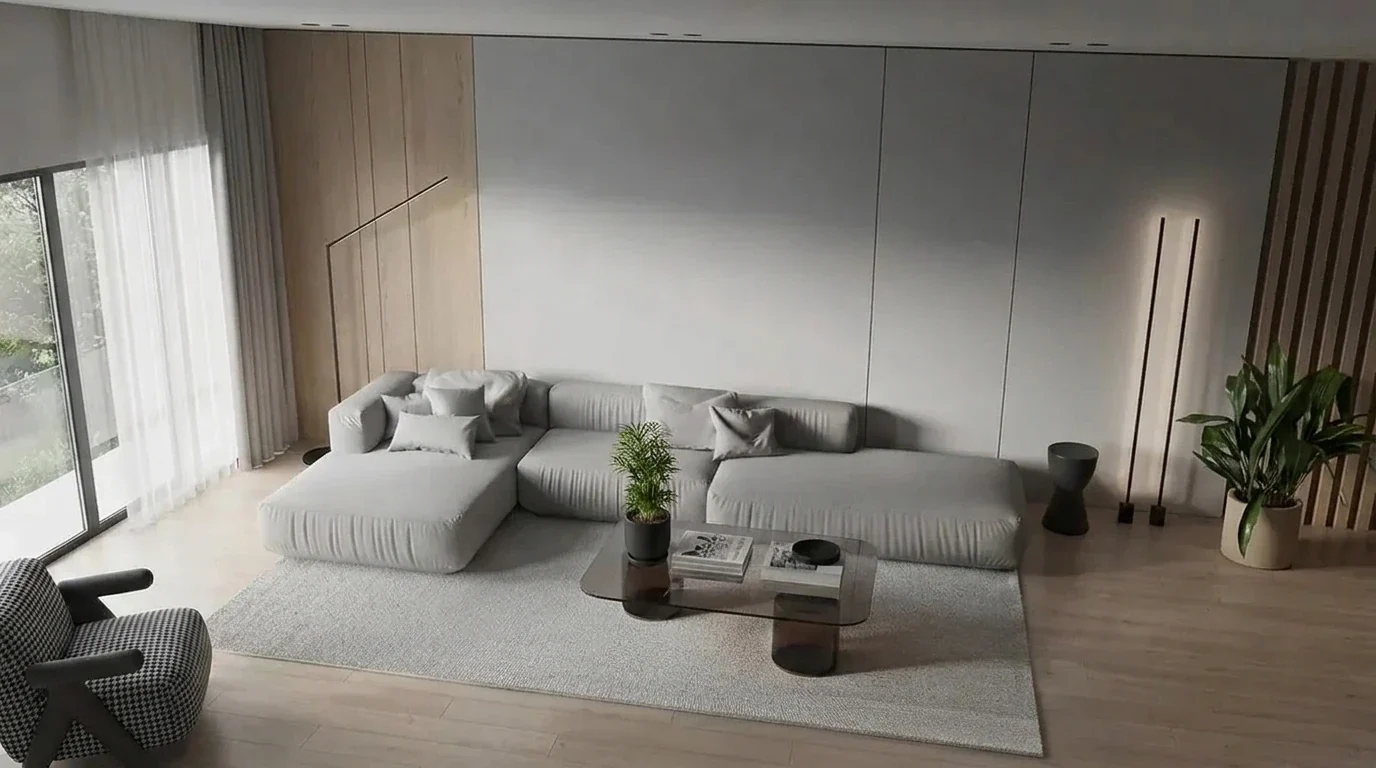
The honest limits: 26 renders, one room, one camera angle, judged by me, not by a horticulturist. The AI cannot know which way your window faces or how thick your curtains are, so it puts sun lovers near the glass and trusts you on the rest. And it sizes a plant from the largest size The Sill lists, up to 6 ft, while on the day of the test every fiddle leaf fig above 12 inches was sold out. Use the render to decide on a shape and a spot, then check what size you can actually buy. For whole-room changes rather than plants, the AI furniture changer works the same way, and AI interior design restyles the whole room.
Common Plant Styling Mistakes
- A sun plant in a dark corner. The single most common one, and AI makes it too unless told otherwise. Check the light table above first.
- One small pot per surface. Five 6 inch pots spread around a room read as clutter. Group them or swap them for one big plant.
- Blocking a walkway or the window. Leave about 3 feet of clear path, and keep big plants beside the window, not in front of it, or you shade everything else.
- Plant height that fights the furniture. A plant exactly as tall as the sofa back disappears; go clearly taller (a floor plant) or clearly lower (a table plant).
- Ignoring the pot. The pot is half of what you see. Two or three related colors across the room look intentional; a different color per plant does not.
Plants are the cheapest way to make a room feel alive, and they pair naturally with the other ideas in our biophilic interior design guide. If you are starting a room from zero, our how to decorate a room from scratch guide puts plants in the right order; in a tight room, one tall, narrow plant beats a group. For bedrooms, where light is lower and a pet may sleep next to the plant, see our best plants for bedroom guide. And for the rug under your new plant corner, the living room rug size guide has the numbers.
Sources
- University of Illinois Extension: Houseplants, Lighting (foot-candles and window distances).
- University of Maryland Extension: Lighting for Indoor Plants (light ranges, curtains).
- ASPCA Toxic and Non-Toxic Plants database, entries linked in the table above.
- Gardens Illustrated: How to style house plants (grouping and humidity).
- The Sill product feed, read on November 19, 2026 (sizes, prices, stock, pet-friendly flags).
- MeltFlex AI plant placement test, November 19, 2026: 26 renders on one room, method and results in the section above.
Audio version by MeltFlex AI
Listen to this article
Prefer to listen? Matthew and Bryan, the founders of MeltFlex AI, talk through How to Style Plants: 9 Designer Rules Tested on One Room in about 15 minutes. The voices are AI-generated. Every section is a chapter, so you can jump straight to the part you need while you browse rooms or sketch a layout.
Chapters (9)
More narrated articles on AI Interior Design MeltFlex