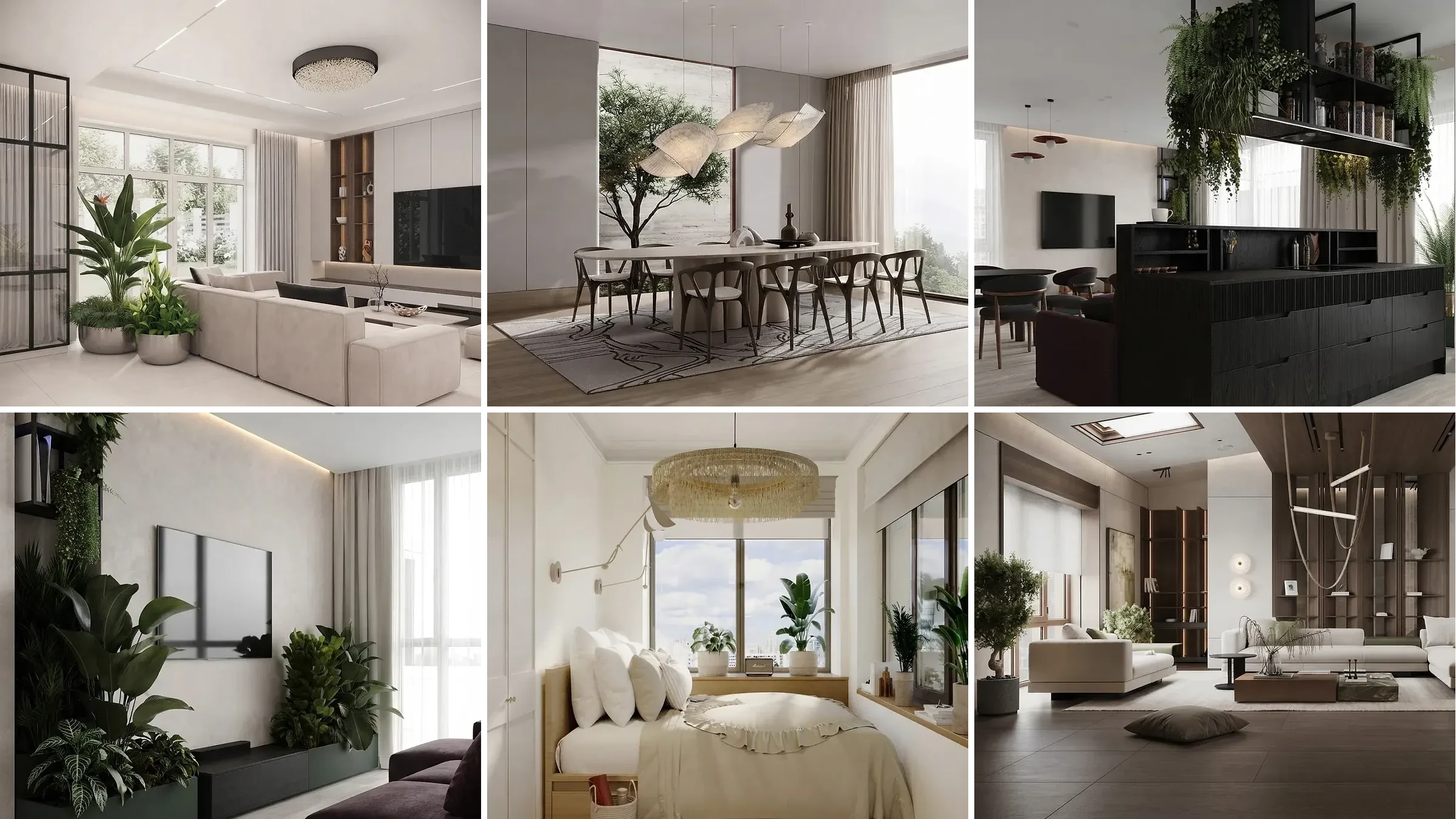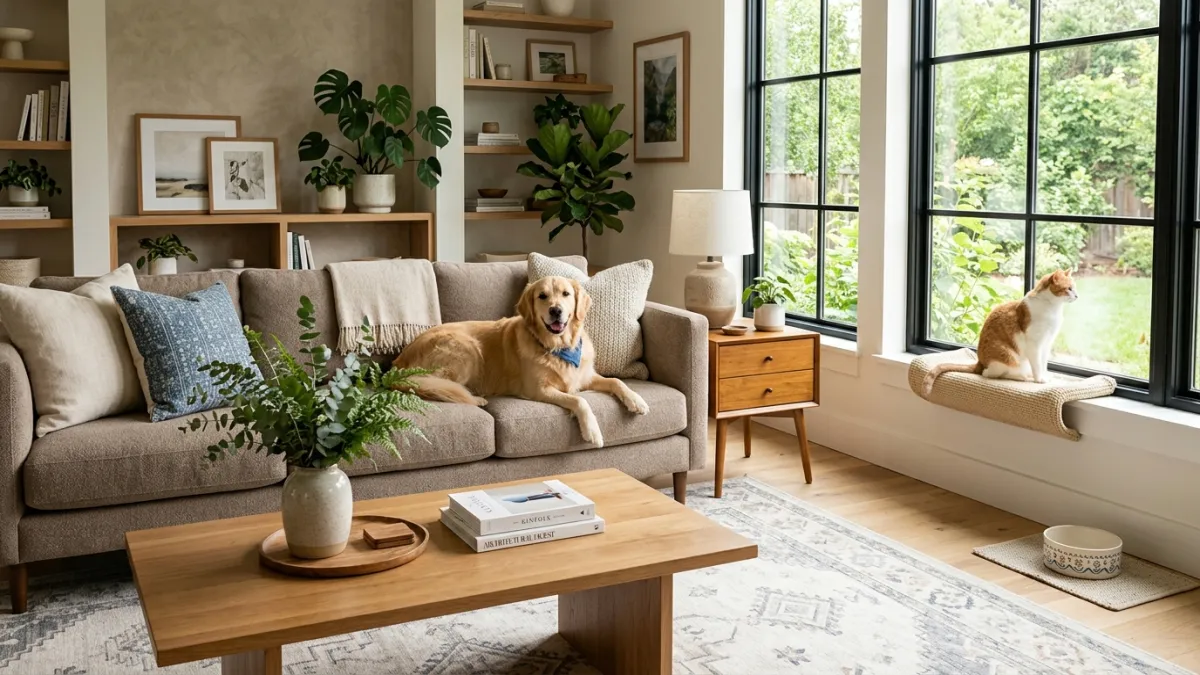
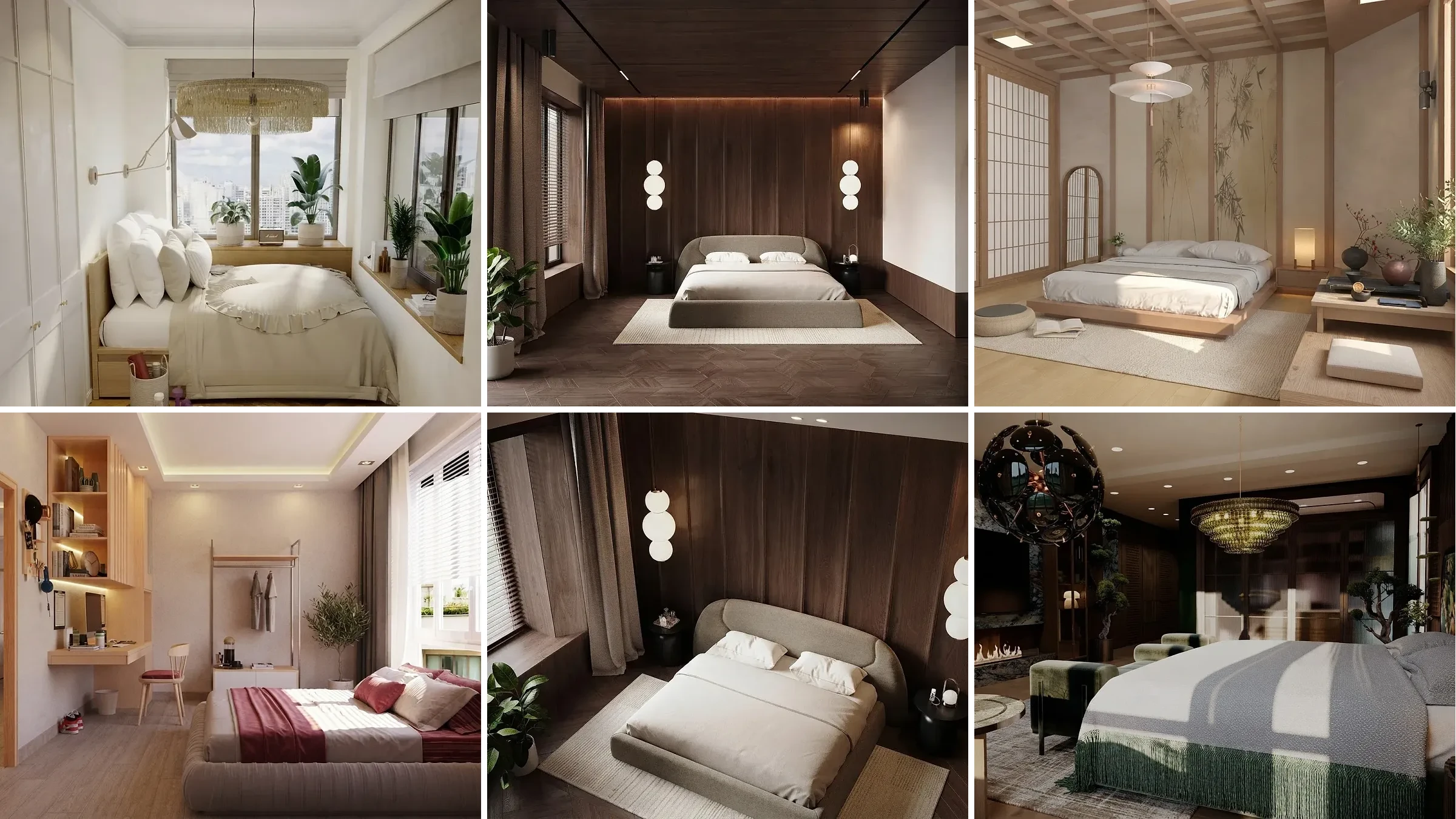
The best plants for a bedroom are the ones that fit the light where they will actually stand: a snake plant, peace lily, parlor palm or cast iron plant for a dim nightstand or corner, a lady palm or money tree on the floor near the window, and jasmine only on a bright sill; in our MeltFlex AI test on November 19, 2026, we placed these plants into five real bedrooms and 25 of 30 placements landed in a sensible spot.
Our articles are still written by humans!
Get human written articles in your Google feed.
Almost every bedroom plant list leads with the same promise: better sleep and cleaner air. I checked those claims against the studies they come from, and they do not hold up for a plant on a nightstand (details below). What does hold up is simpler: put a plant where its light matches, keep it safe for your pets, and pick a size the spot can take. So this guide is sorted by bedroom spot, with the ASPCA status and The Sill price of every plant, and a test of MeltFlex AI placing them into five different bedrooms. MeltFlex AI is ours, and so is the interior plant design tool used in the test. We are not paid by The Sill; we use its public catalog because its studio photos show the real plant and pot.
The short version
- Pick by spot, not by list: the nightstand is usually low to medium light, the floor right beside the window is the only bright spot most bedrooms have.
- No plant measurably improves sleep or bedroom air: one review puts it at 10 to 1,000 plants per square meter to match normal ventilation, which is 134 to 13,400 plants for a 12 by 12 ft bedroom.
- Pets: snake plant, peace lily and pothos, three bedroom-list favorites, are toxic to cats and dogs per the ASPCA; parlor palm, lady palm, cast iron plant and calathea are not.
- Preview before you buy: MeltFlex AI put real plants into five bedroom photos in 15 to 35 seconds for 10 credits a render; small plants landed right in 18 of 18 placements, tall floor plants in only 7 of 12.
Best Plants for Bedroom, Sorted by Where They Go
The best plants for a bedroom are low-fuss plants matched to the three spots a bedroom actually has: a bright strip at the window, medium light a few feet in, and a dim nightstand or corner. Prices are the lowest listed size at The Sill when we read its product feed on November 19, 2026; pet status is the ASPCA entry for that plant, read the same day.
Light levels follow The Sill’s own low-light flags and the extension guidance below; the ASPCA links are in the pet section. Two plants that show up on many bedroom lists are missing on purpose. Lavender needs the full sun of a garden, which almost no bedroom gives it, and the ASPCA lists it as toxic. Aloe is toxic too and wants a bright sill, not a nightstand. If you want a plant for the scent, jasmine is the non-toxic one, and it needs that sunny sill to flower.
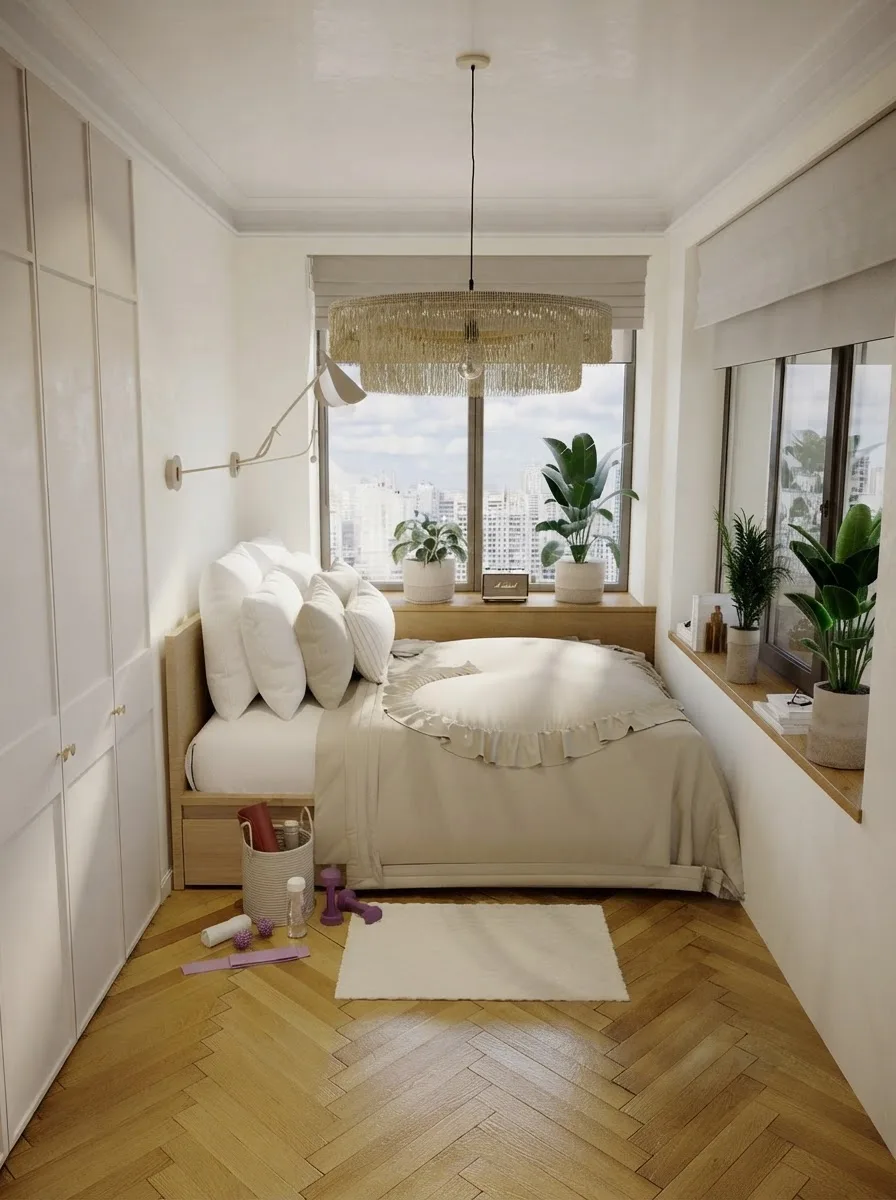
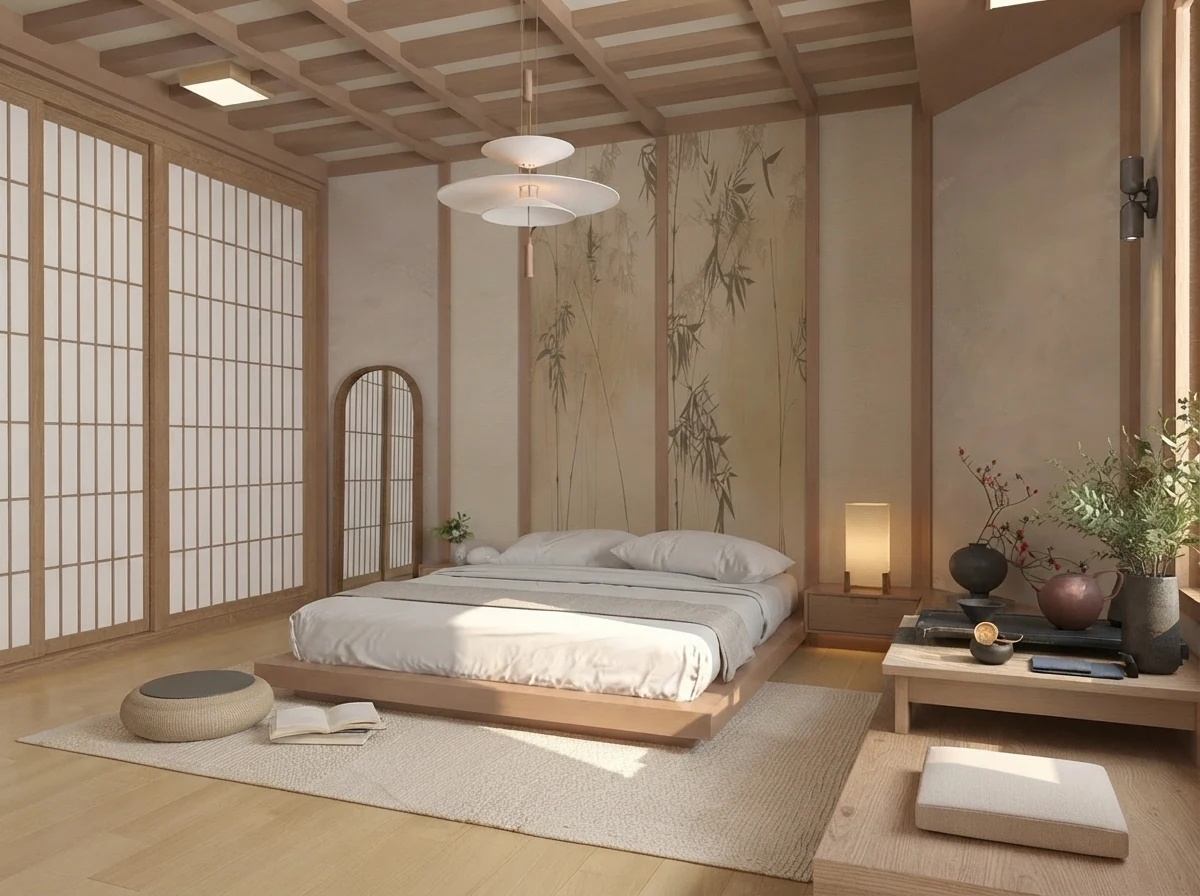
Here is the window strip used well, in a real interior from the MeltFlex AI gallery: every plant stands on the deep sill or on the floor right at the glass, and the rest of the room is left to the bed.
How Much Light Does Each Bedroom Spot Get?
Light drops fast with distance from the glass, and in a bedroom it drops again whenever the curtains stay closed. University of Illinois Extension gives these working distances for houseplant light:
Source: University of Illinois Extension, Houseplants: Lighting. University of Maryland Extension lists curtains among the things that cut light, which matters more in a bedroom than anywhere else: if blackout curtains stay shut until you get up, a plant by that window gets several hours less light than the same spot in a living room.
In practice that turns a typical bedroom into three zones:
- At the glass (bright): the sill, or the floor within a couple of feet of an east, west or south window. Jasmine, bird of paradise, spider plant, money tree.
- A few feet in (medium): the floor beside the window wall, a dresser near the window. Lady palm, money tree, baby rubber plant, snake plant.
- The bed side of the room (low): nightstands and corners 8 or more feet from the window. Snake plant, peace lily, parlor palm, calathea, pothos, cast iron plant.
A free check: hold your hand a foot above the spot at midday with the curtains as you normally keep them. A sharp shadow means bright, a soft shadow medium, barely any shadow low. Where the bed goes changes all of this, so if you are still planning the room, start with our bedroom layout guide.
What Plant Fits on a Nightstand?
A nightstand plant should be small, slow and happy in low to medium light: a baby rubber plant, a parlor palm, a calathea or a small peace lily. Keep it under about a foot tall in a pot no wider than 5 or 6 inches, so the lamp, a phone and a glass of water still fit, and so you are not knocking leaves off in the dark. Calathea and parlor palm are the two that are both low-light tolerant and non-toxic.
Plants for a Small Bedroom
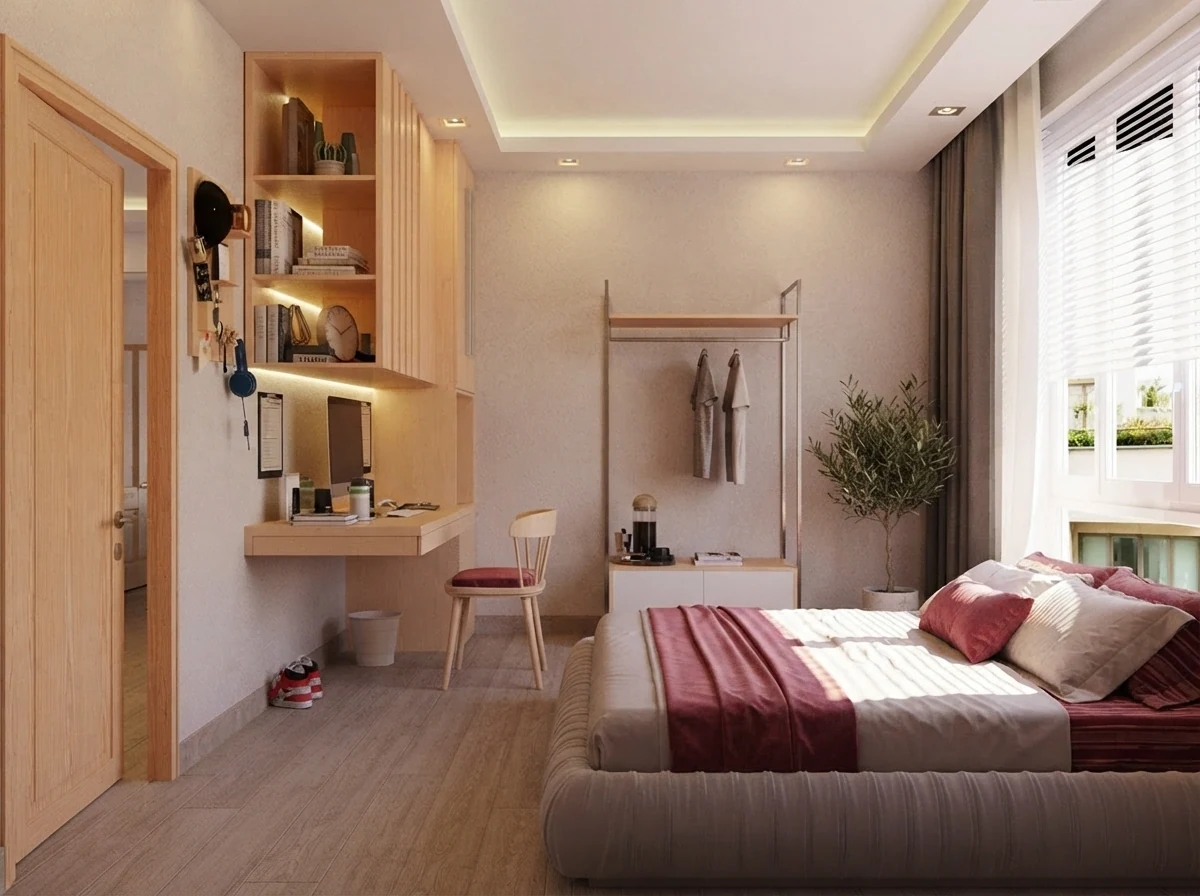
In a small bedroom, keep the floor clear and go up: one trailing plant on a shelf or wardrobe, one small plant on the sill, and no floor plant unless there is a corner nobody walks through. Leave about 2 feet of clear path beside the bed. A single narrow plant, such as a snake plant, takes far less floor than a palm of the same height. For the numbers on room sizes, see our average bedroom size guide.
Do Bedroom Plants Help You Sleep or Clean the Air?
No plant has been shown to improve sleep or bedroom air in a real home. The claims come from real studies, but each one tested something other than a plant on a nightstand:
The air one is worth doing the math on. A 12 by 12 ft bedroom is 13.4 square meters, so 10 to 1,000 plants per square meter means 134 to 13,400 plants to match what the room’s normal air exchange already does. Cummings and Waring put the median clean air delivery rate of a single potted plant at 0.023 cubic meters per hour. Open the window for ten minutes instead.
The worry in the other direction is a myth too: a few plants in a bedroom do not use up meaningful oxygen at night. And the honest benefit is not zero. Many people simply find a room with something green in it calmer, and a plant that needs watering twice a week is a small routine. That is a good reason to have one. It is not a sleep aid, and a list that sells it as one is selling you the wrong plant for the wrong reason, usually a sun lover for a dark bedroom. If you are thinking about what a bedroom does to sleep, the bed position and light matter more; our feng shui bedroom layout guide covers placement, minus the mysticism.
Which Bedroom Plants Are Safe for Cats and Dogs?
If a cat or dog sleeps in the room, choose from the ASPCA non-toxic list first. This matters more in a bedroom than in a living room: it is where a bored cat is alone with the plant for eight hours.
So a pet-safe bedroom set is a lady palm or money tree by the window, a parlor palm or calathea on the nightstand and a spider plant on a high shelf. Note that “jasmine” is not the same as star jasmine or Carolina jessamine, which are different plants; check the botanical name on the label. More in our pet-friendly interior design guide.
Can You Preview Plants in Your Bedroom? Our MeltFlex AI Test
MeltFlex AI can put real plants into a photo of your bedroom before you buy them: on the interior plant design page you upload the photo, pick up to four plants from The Sill catalog (or upload a photo of your own plant), and the AI places them at the size the shop lists, in 15 to 35 seconds per render in our test. A render costs 10 credits; new accounts get 15 free credits, which covers one render, and plans start at $20 a month on the pricing page. Free-account renders carry a watermark. The same engine is available to AI assistants through the MeltFlex AI MCP connector and to developers through the MeltFlex AI API.
How I tested it on November 19, 2026: five different bedrooms from the MeltFlex AI gallery, chosen to cover the cases above (a big bright window, a tall window with a nightstand, sheer curtains, a dark room with no window in view, and a small room with a desk). Each room got two plants picked for its light. I ran each set twice with the tool as it ships, where the AI chooses the spots, and once with one sentence saying where each plant goes, the way you would type it in the chat. That is 15 renders, plus 2 retries on the failures, through the same endpoint the tool uses, on a paid account. A placement counted as right if the plant stood in a spot that makes sense for its size and light, and a render counted as clean only if nothing else in the room changed.
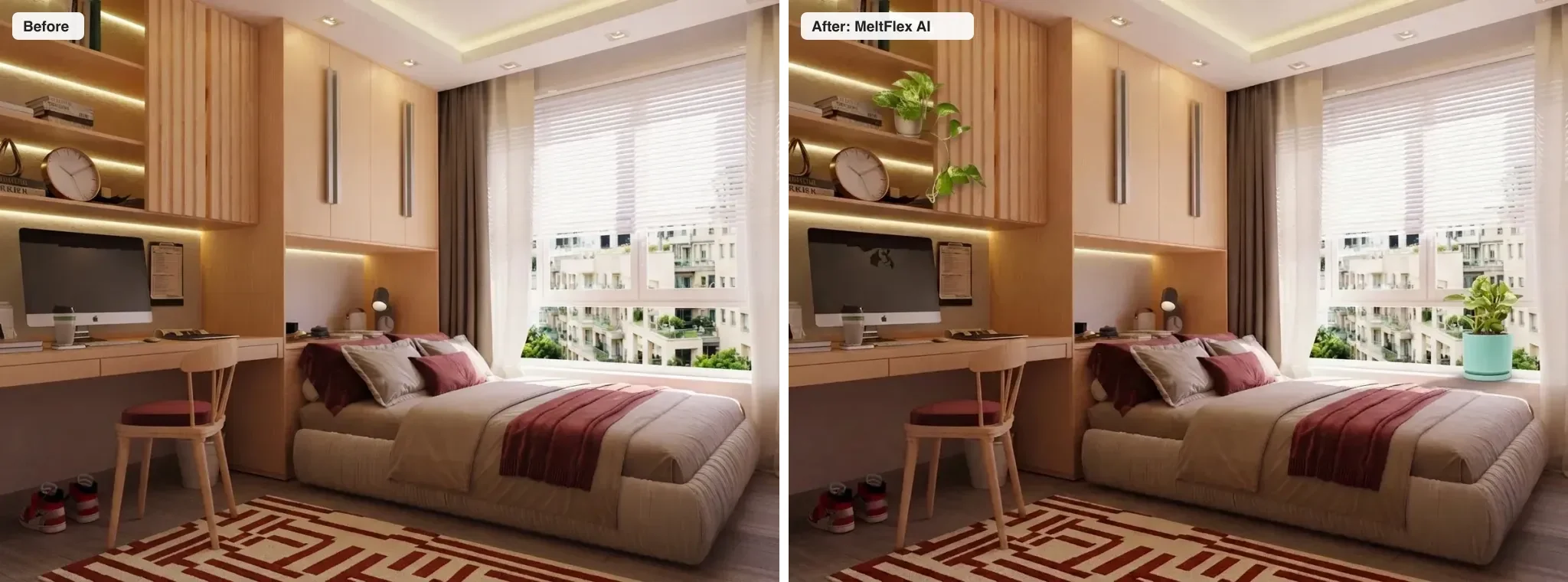
The pattern is clear and it is not random: every smaller plant (peace lily, both peperomias, calathea, both pothos) landed in a good spot in every render, 18 of 18. All five misses were tall floor plants, which were right in 7 of 12 placements. Here are three of the clean ones:
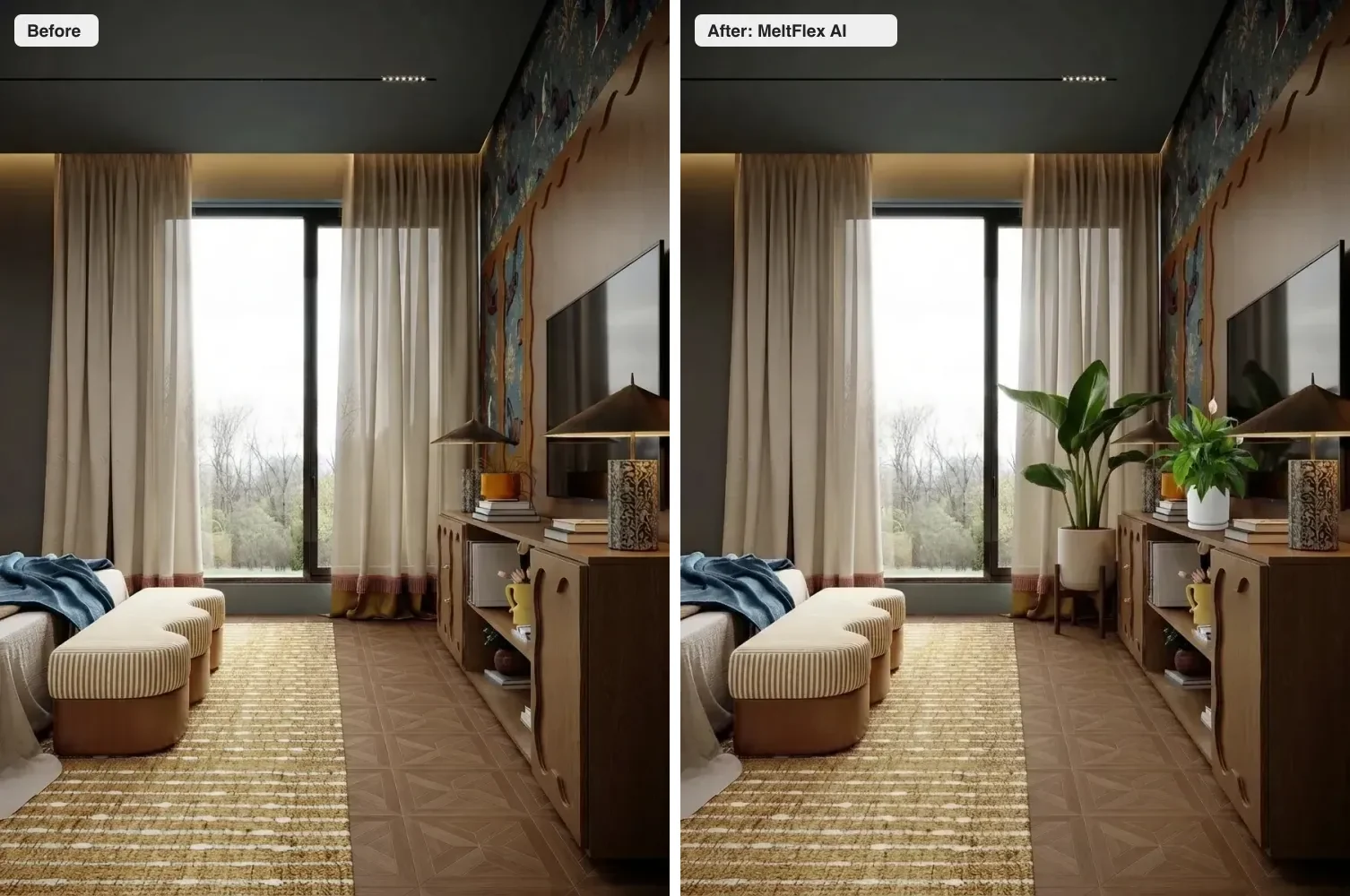
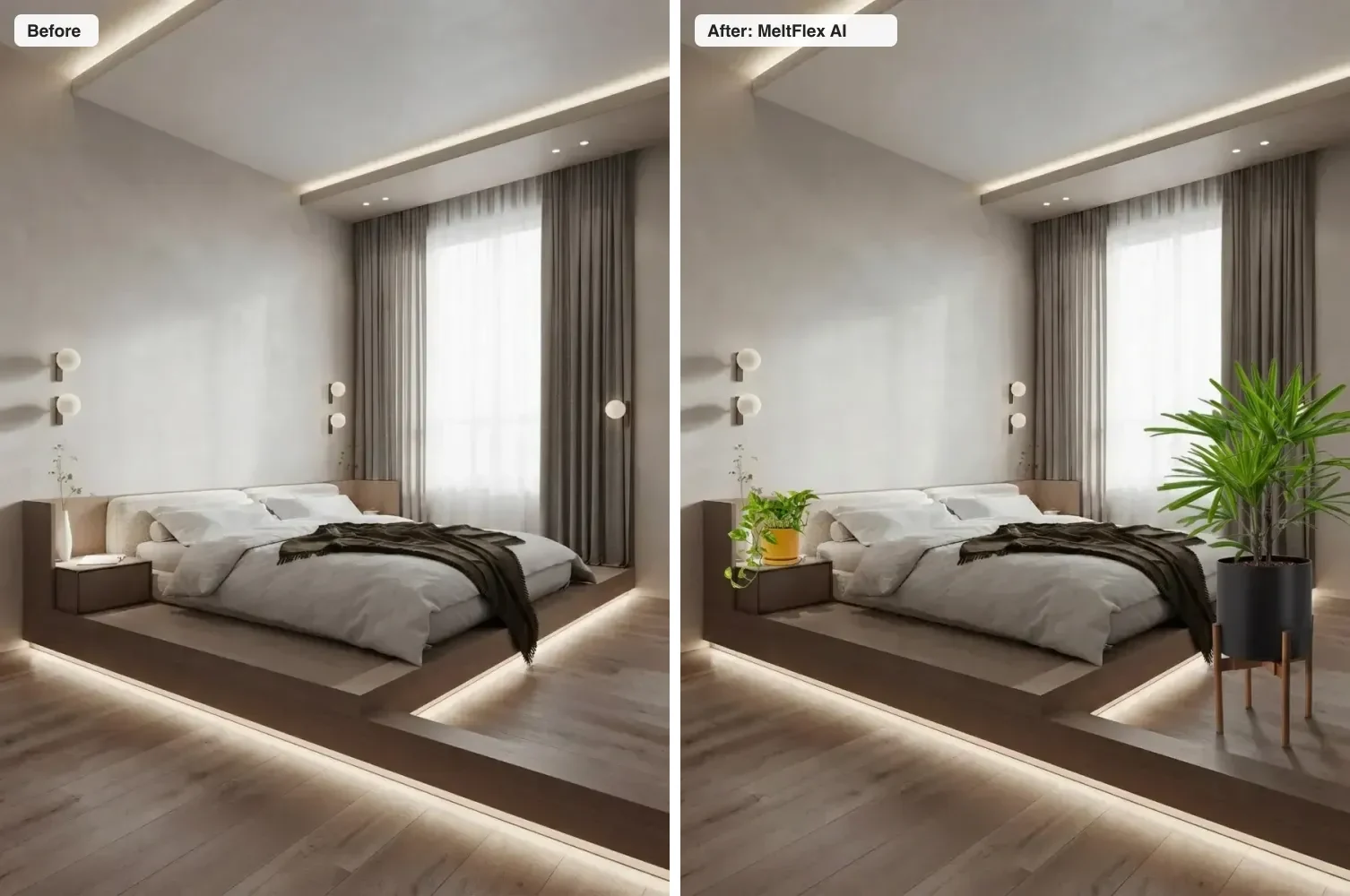
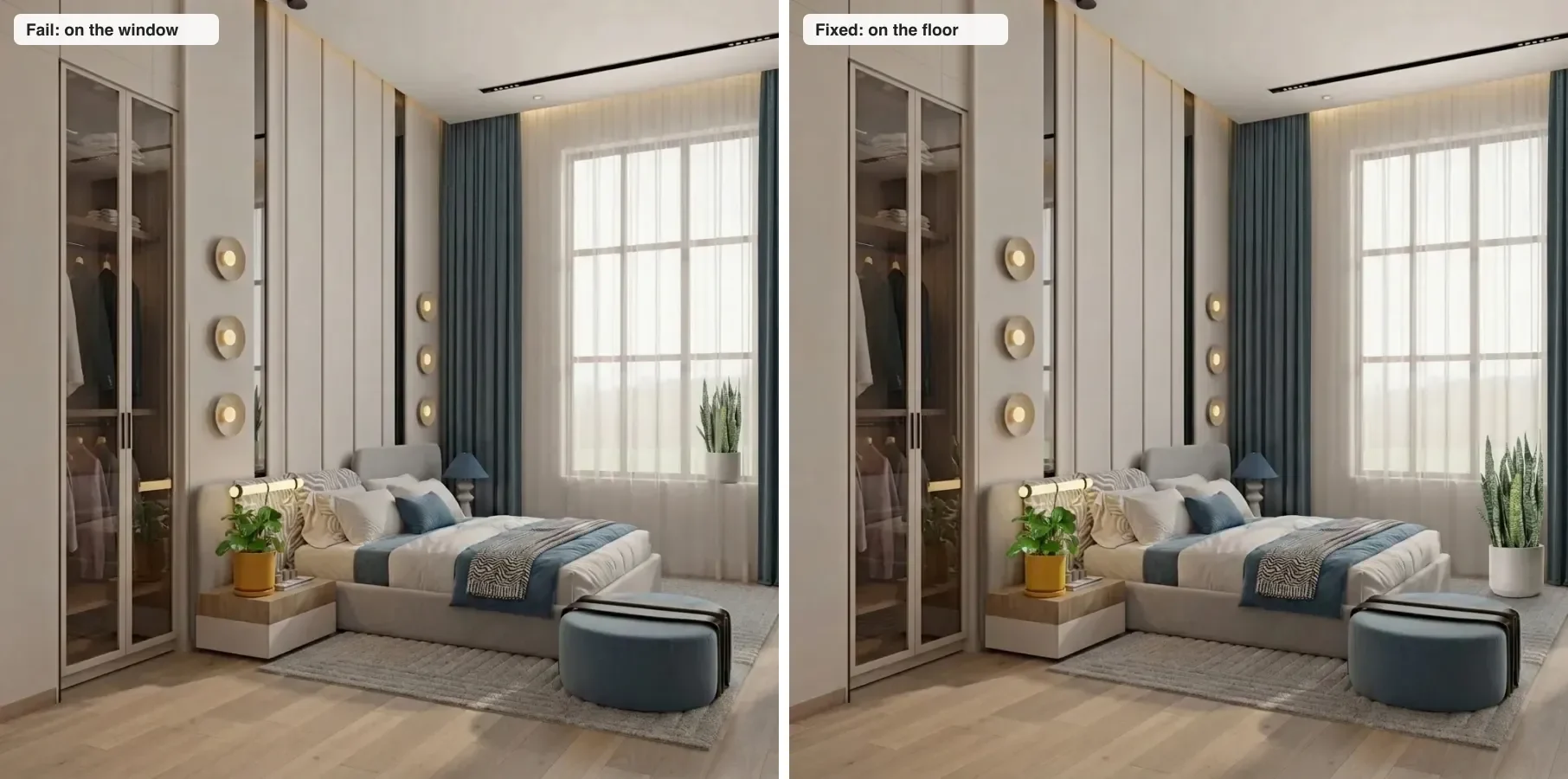
And the failures. In the room with the tall window, the AI twice put the snake plant on the window frame itself, floating against the glass, and swapped a small glass vase on the nightstand for the peperomia. Telling it the snake plant is a floor plant fixed the plant, but it still removed the vase.
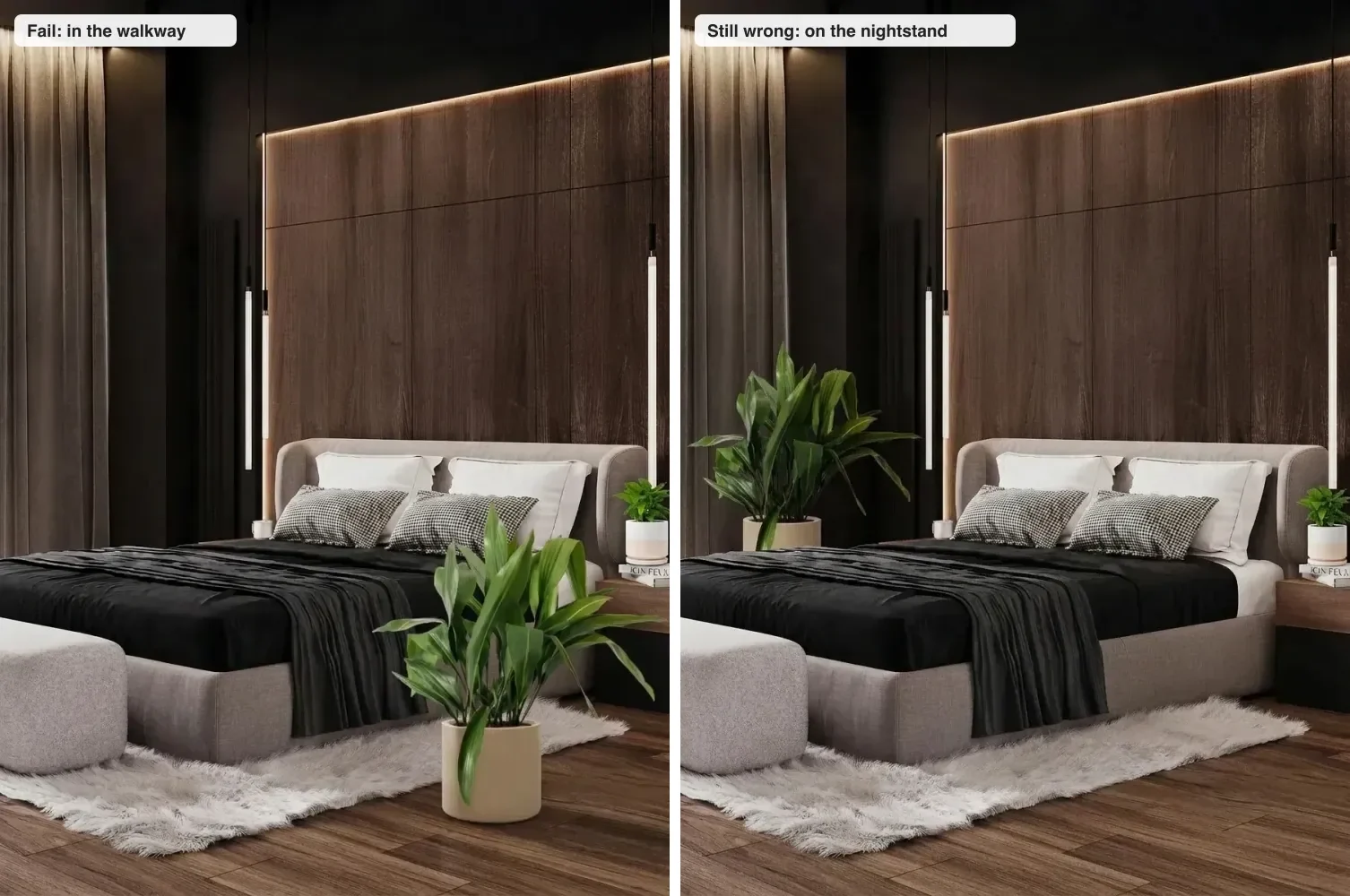
The dark room never worked. The free floor next to the bed is hidden behind the bed in that photo, so a 3 ft cast iron plant had nowhere visible to stand: the AI put it on the nightstand three times and once in the middle of the walkway at the foot of the bed, even when told to stand it on the floor. That is a limit of a single photo, not just of the model. If the spot you have in mind is not visible in your photo, take the photo from where it is.
The honest limits: 17 renders, five rooms, judged by me, not by a horticulturist. The AI cannot know which way your window faces or whether you keep the blackout curtains shut, so it follows the catalog: sun lovers near the glass, low-light plants further in. It also sizes floor plants from the largest size The Sill lists, up to 6 ft, so check what is actually in stock. Use a render to decide shape and spot, then check the light with your hand. If you want to change more than the plants, the AI furniture changer swaps the furniture in the same way, and our AI bedroom design prompts cover whole-room restyles.
Bedroom Plant Mistakes to Avoid
- Buying for a promise instead of a spot. A “sleep plant” that needs sun, such as lavender or jasmine, will decline on a dim nightstand.
- Overwatering in a cool room. Bedrooms are often kept cooler, and plants there dry out slower. Constantly wet potting mix is what breeds fungus gnats; let the top inch dry first.
- A floor plant in the walkway. You will walk into it at night. Floor plants go in corners or against the window wall, not between the bed and the door.
- A plant where the curtains swing. Long curtains brushing leaves every morning wear them down; leave a few inches.
- Toxic plants in a room a cat sleeps in. See the table above before buying.
For arranging the plants once you have them, our how to style plants guide has the grouping and height rules with real interiors. For the bigger picture of bringing nature into a room, read the biophilic interior design guide, and for full bedroom inspiration, the master bedroom design ideas.
Sources
- Cummings B.E., Waring M.S. (2019), Potted plants do not improve indoor air quality, Journal of Exposure Science and Environmental Epidemiology, PubMed.
- Wolverton B.C. et al. (1989), Interior Landscape Plants for Indoor Air Pollution Abatement, NASA.
- Ruhr University Bochum (2010), fragrance study in the Journal of Biological Chemistry, via ScienceDaily.
- Lillehei A.S. et al. (2015), Effect of Inhaled Lavender and Sleep Hygiene on Self-Reported Sleep Issues, PubMed.
- University of Illinois Extension: Houseplants, Lighting and University of Maryland Extension: Lighting for Indoor Plants.
- ASPCA Toxic and Non-Toxic Plants database, each entry linked in the pet table, read November 19, 2026.
- The Sill product feed, read November 19, 2026 (sizes, lowest prices, low-light flags).
- MeltFlex AI bedroom plant placement test, November 19, 2026: 17 renders in five gallery bedrooms, method and results in the section above.
Audio version by MeltFlex AI
Listen to this article
Prefer to listen? Matthew and Bryan, the founders of MeltFlex AI, talk through Best Plants for Bedroom: 12 Picks, Tested in 5 Bedrooms in about 16 minutes. The voices are AI-generated. Every section is a chapter, so you can jump straight to the part you need while you browse rooms or sketch a layout.
Chapters (9)
More narrated articles on AI Interior Design MeltFlex