The most popular roof shingle colors in 2026 are charcoal, weathered wood and pewter gray, in that order, with black, slate and the warm browns (driftwood, barkwood, shakewood) behind them. That ranking is not a trend forecast: GAF, one of the two biggest shingle makers in the US, built it from nationwide residential shingle sales and published it on 6 October 2026, with the line “Charcoal leads the pack by miles.” GAF also puts the roof at “up to 40% of a home’s visual exterior,” and an architectural shingle roof runs $4 to $6 per square foot installed in HomeGuide’s 2026 cost guide, so the color is a decision you live with for decades, on the biggest surface you own.
Our articles are still written by humans!
Get human written articles in your Google feed.
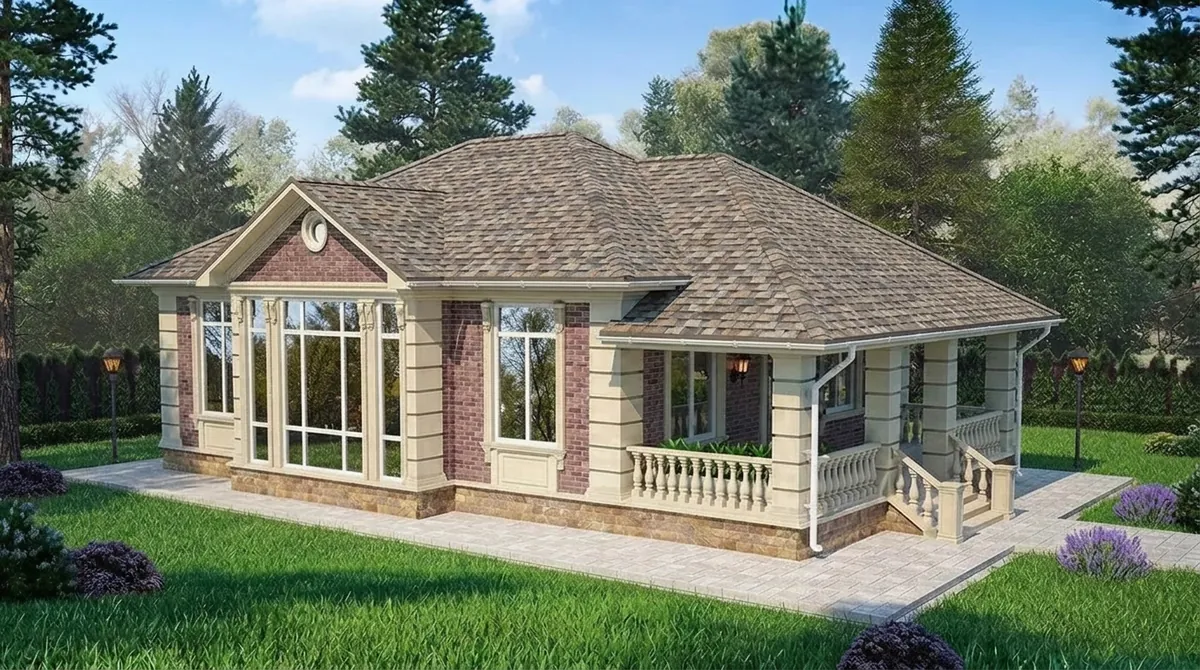
Charts and 2 inch chips cannot show you what a roof color does to a whole house, so we did the other thing. We took one red brick house from our gallery and re-roofed it in eight colors with our AI exterior design tool: same brick, same trim, same lawn, only the roof changing. Below that are the colors on real renders, the best roof for red brick, white, gray, tan and green houses, metal roof colors, what color does to attic heat (with numbers from Berkeley Lab), the brand names behind each family, and what it costs. We do not sell roofing, so no color wins here because a manufacturer paid for it.
The short version
- Most popular in 2026 (GAF sales): 1. Charcoal, 2. Weathered Wood, 3. Pewter Gray. Black, slate gray and warm browns follow.
- Safest pick for almost any house: charcoal. It suits white, gray, brick and stone and never looks dated.
- Red brick: charcoal or black first, Hunter Green for contrast, driftwood with light trim. Not red, not orange.
- White house: black or charcoal. Brown only when the white is a cream and there is stone or wood.
- Metal: gray, dark bronze, black and bare Galvalume lead; ask for a PVDF (Kynar 500) finish.
- Heat: dark roofs pass 150°F in summer sun; a cool colored roof of the same look runs about 22°F cooler (LBNL). It matters in the South and Southwest, much less up north.
- See it first: upload a photo of your house to the exterior design tool and compare three roof colors before you order samples.
See Eight Roof Colors on the Same House
Roof color is the exterior choice people regret most quietly, because the sample is the size of a hand and the roof is the size of the house. GAF’s own shingle color guide warns that “computer and smartphone screens may represent image colors differently” and tells you to ask the contractor for real samples. Both are true, and neither shows you the color on your own roofline. The step in between is to look at the color on a photo of your house. Take one picture from the street, upload it to the MeltFlex exterior design tool, and type one sentence such as “Re-roof the whole roof in charcoal architectural shingles, keep everything else the same.” About 20 seconds later you see your house with that roof. Change one word, run it again.
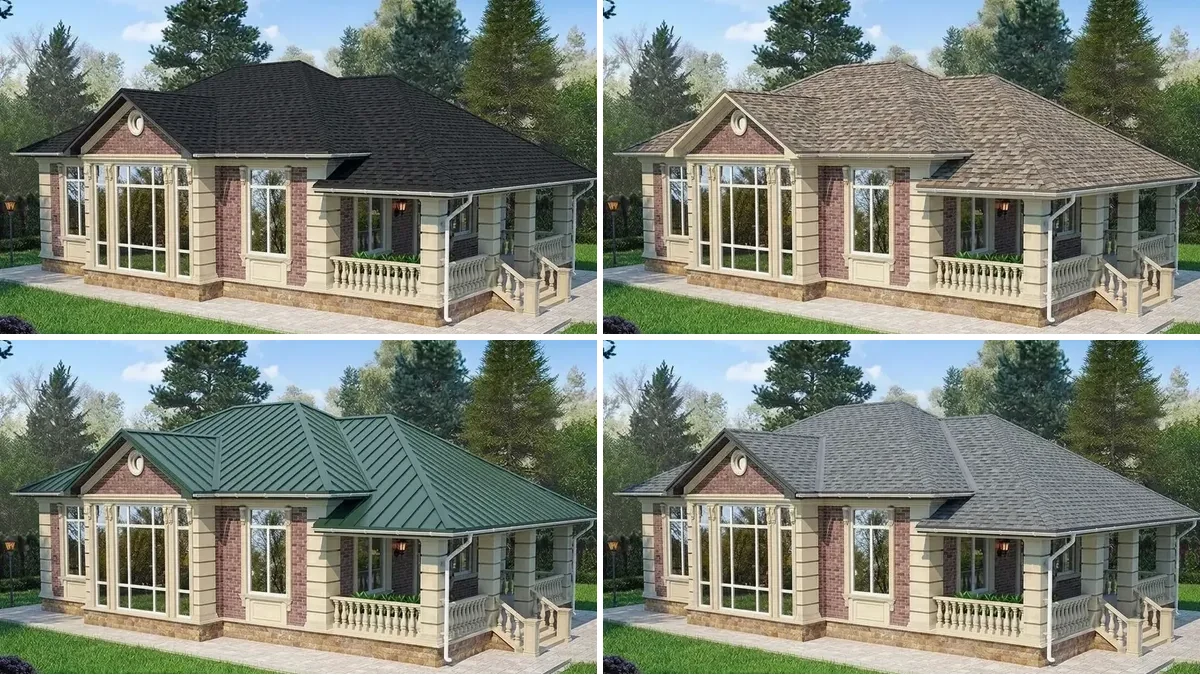
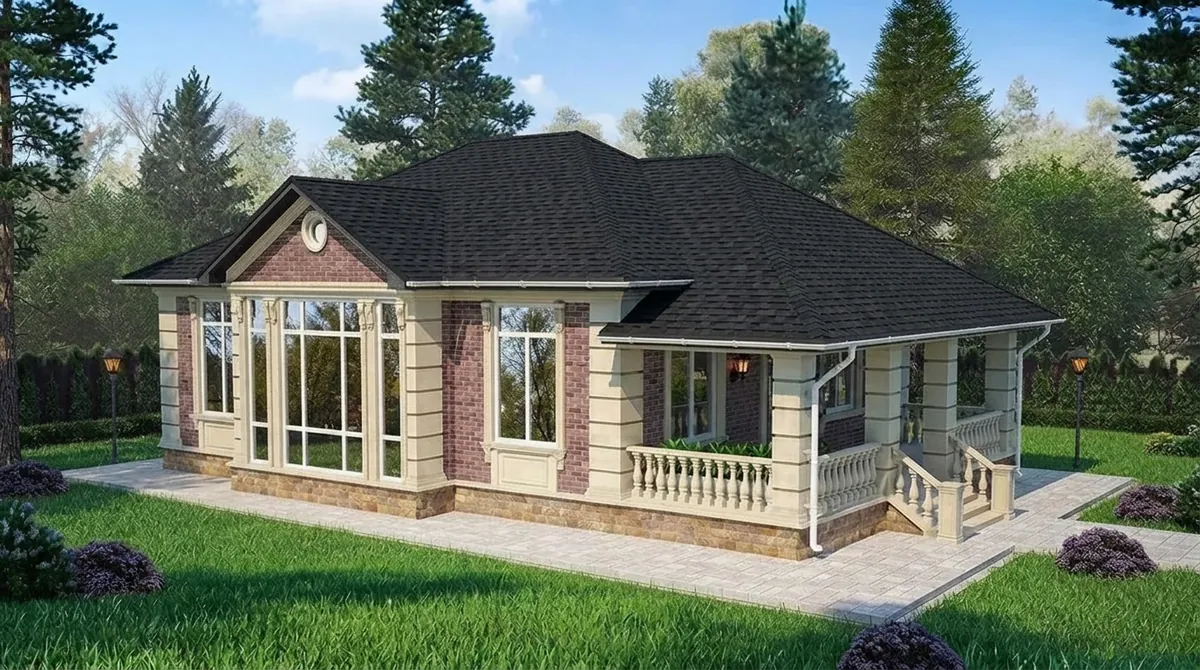
Here is that workflow on a red brick ranch from our gallery, chosen because a big hip roof over red brick is the hardest common case: the roof is most of what you see, and the brick already has a strong color. Every panel below was made from the same starting image on 28 October 2026, with a prompt that changed only the roof covering. The brick, the cream trim, the porch balusters and the lawn held in all eight, which is the point. You are comparing roofs, not houses.
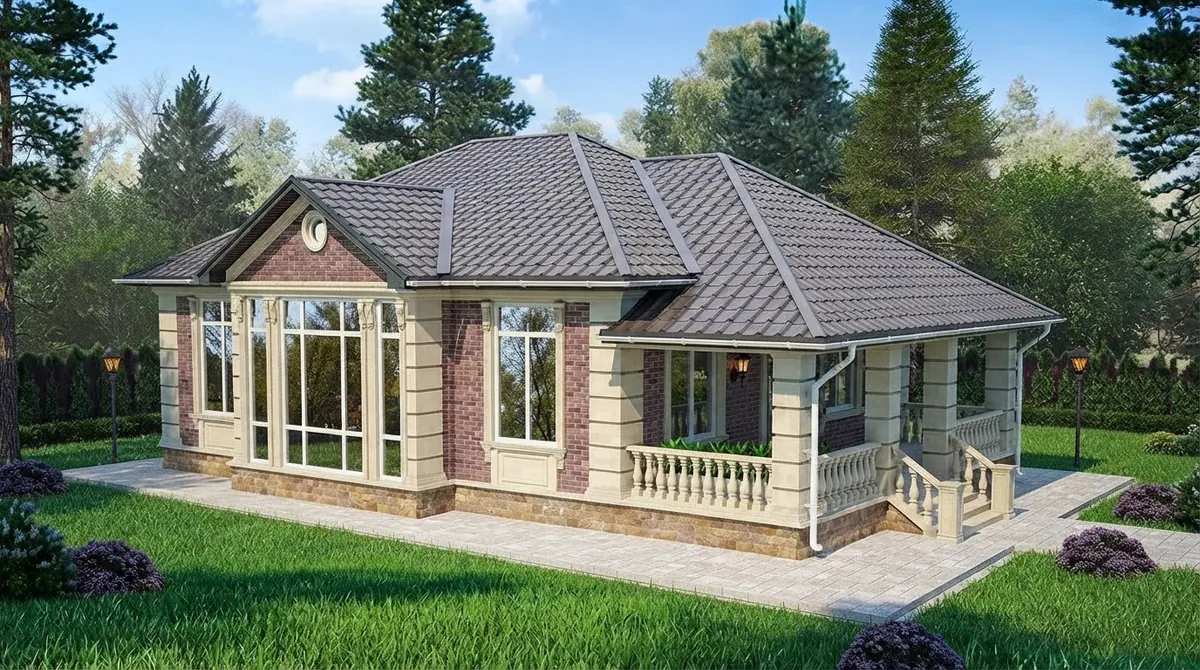
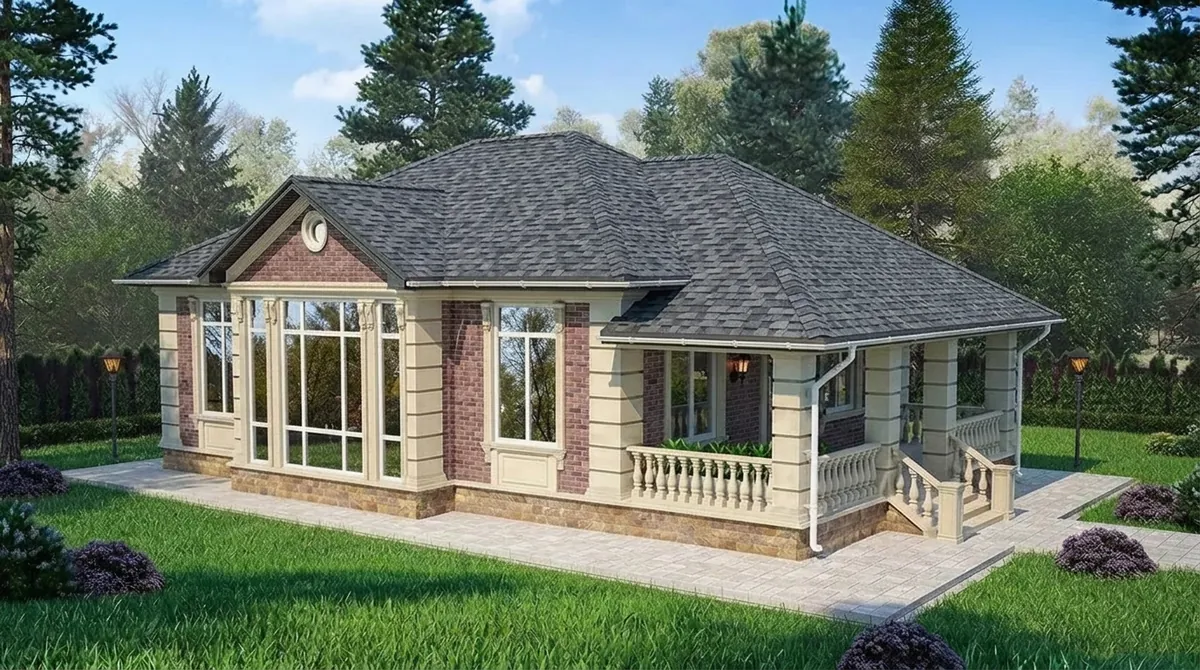
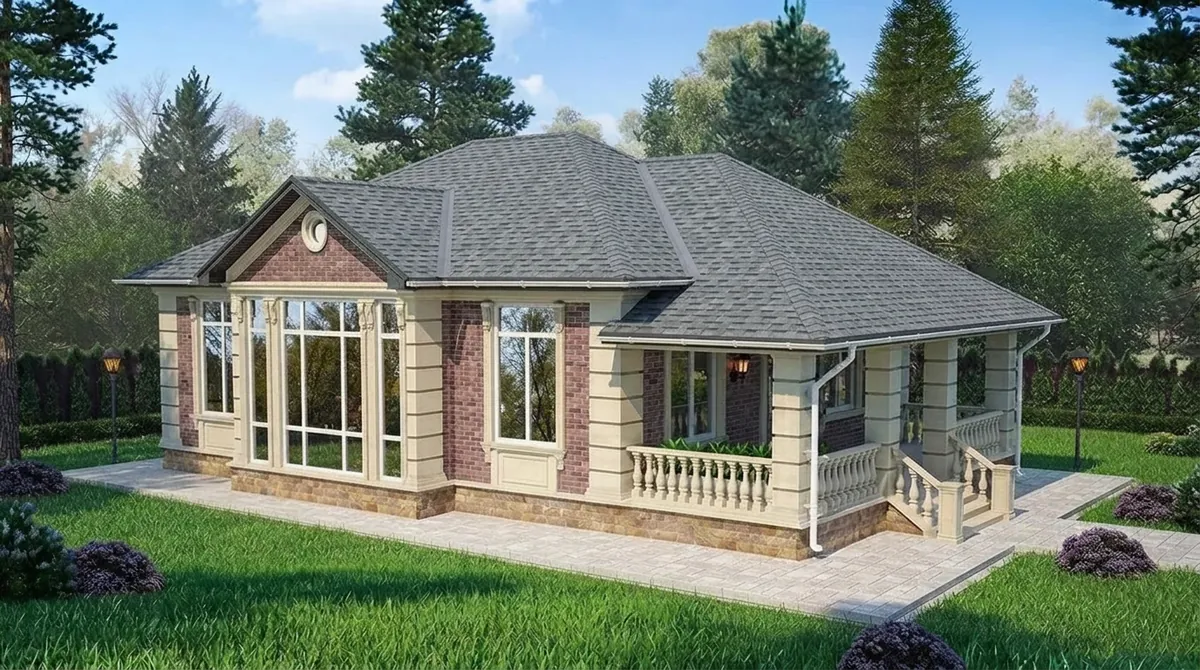
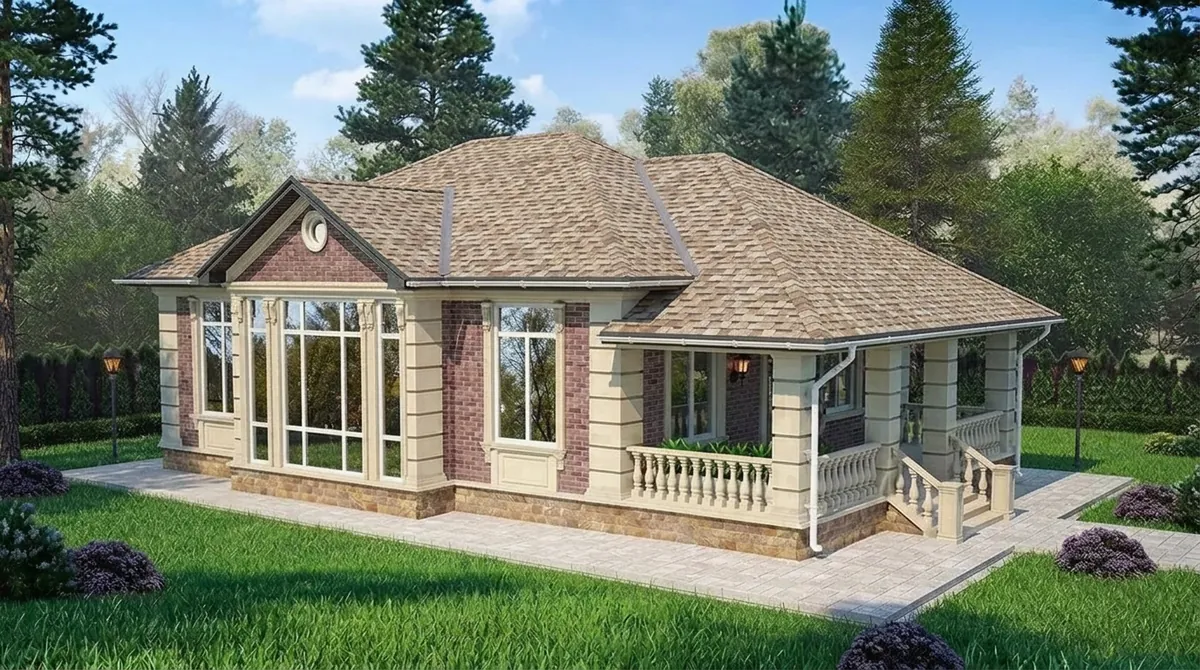
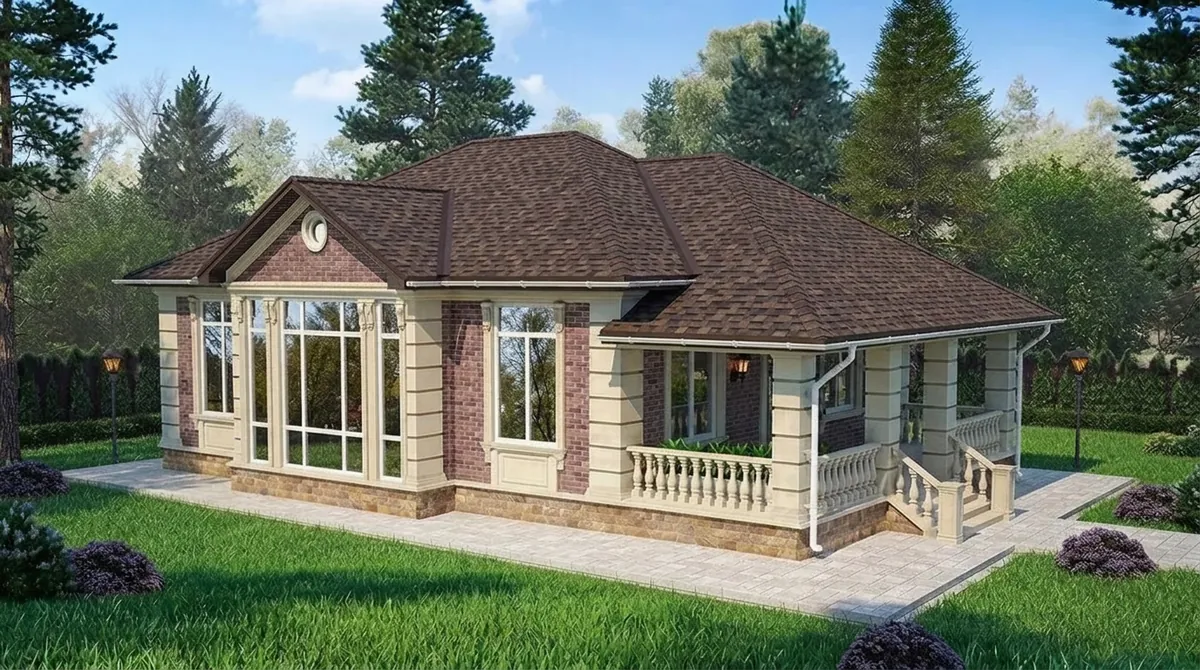
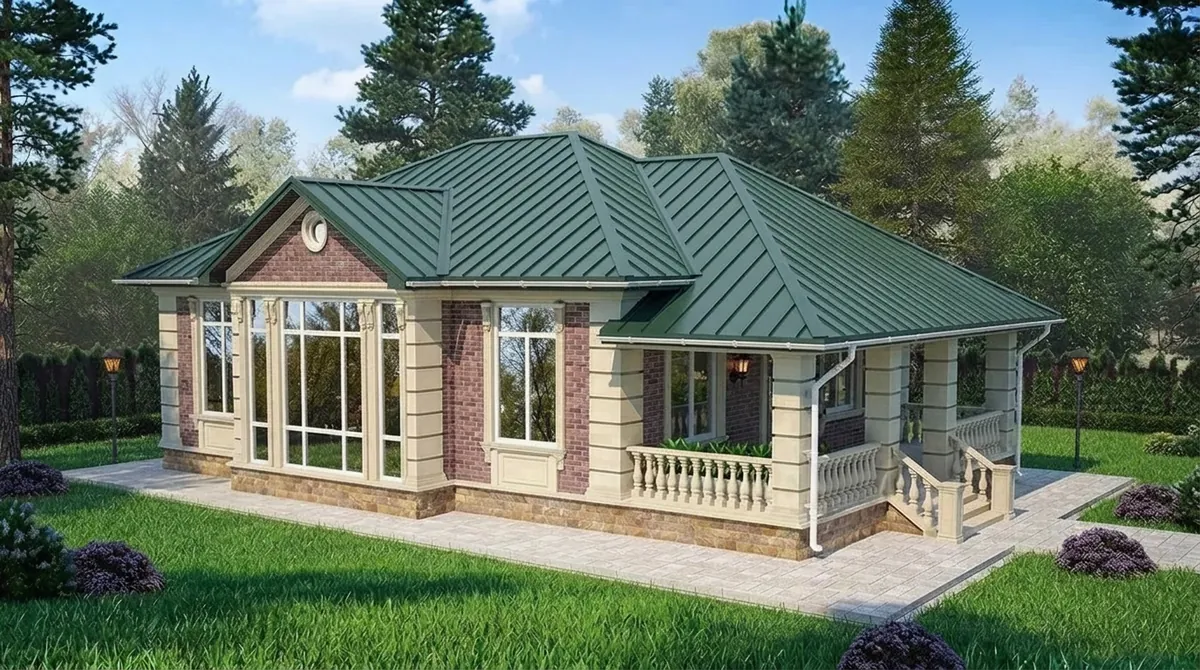
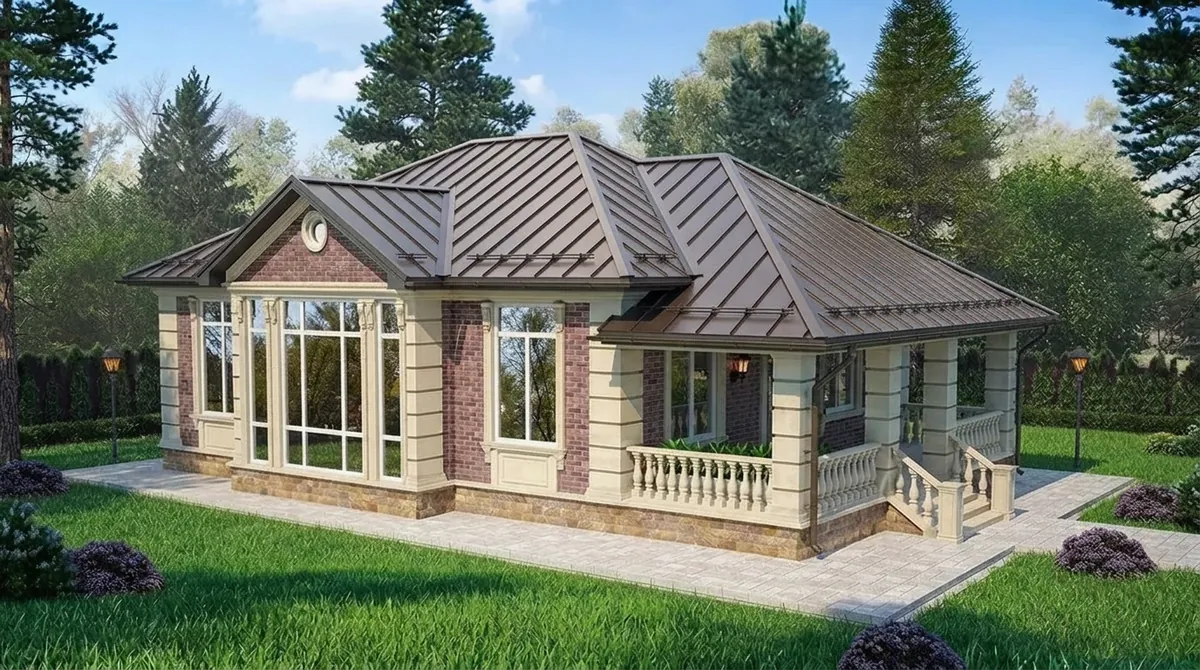
We asked for “dark bronze standing seam metal” and got a medium, almost copper bronze. Real dark bronze panels are close to a dark chocolate. It is still a useful lesson: a reddish bronze over red brick is the one combination in this series that fights the walls.
Three things the series shows that a chart cannot. First, on red brick the dark neutrals win, and not by a little: black and charcoal make the brick look redder and the trim look whiter, while every warm roof pulls the house toward one brown mass. Second, a light roof makes a low house look bigger and flatter; the pewter and driftwood panels read wider than the black one, which helps a tall narrow house and hurts a long ranch. Third, the trim decides between two good options: cream trim liked driftwood and charcoal, disliked pewter. Look at your trim and any stone before you fall for a color in a brochure. For prompt wording that gets specific results on roofs, siding and trim, our AI exterior design prompts list the lines that work; the visualize your home before renovating guide walks the whole workflow.
The Most Popular Roof Shingle Colors in 2026
Charcoal is the most popular roof shingle color in America, Weathered Wood is second and Pewter Gray third, according to GAF’s 2026 ranking from nationwide residential shingle sales. GAF’s exact words: Charcoal, Weathered Wood and Pewter Gray claim “the top three spots,” Charcoal is “the top seller over years,” and Pewter Gray holds what GAF calls a distant but respectable third place. One honest wrinkle: GAF’s older shingle color guide, still live, says “more GAF customers have been inspired by the rich tones and neutral highlights of Weathered Wood than any other shingle color,” and lists its most popular colors as Weathered Wood, Charcoal, Pewter Gray, Barkwood and Shakewood. We take the dated 2026 article as the current order. Either way, the same five colors have topped the list for years.
Owens Corning’s roof color guide says the same thing from the other big brand: popular roof colors “fell into neutral categories: black, brown, gray, and tan,” and “today, these colors remain popular.” It adds one regional fact worth knowing: “White-toned shingles are typically more popular in the sun-belt states.”
Ranking: GAF Top Roof Color Trends for 2026 (6 October 2026, nationwide shingle sales). Brand names: GAF Timberline HDZ, Owens Corning Duration and CertainTeed Landmark product pages, read 28 October 2026. Color names are close equivalents across brands, not exact matches; look at real samples.
A roofer’s view of the 2026 favorites from Owl Roofing, a contractor whose own guide ranks for the same searches. We have no relationship with them.
Charcoal and Black Shingles
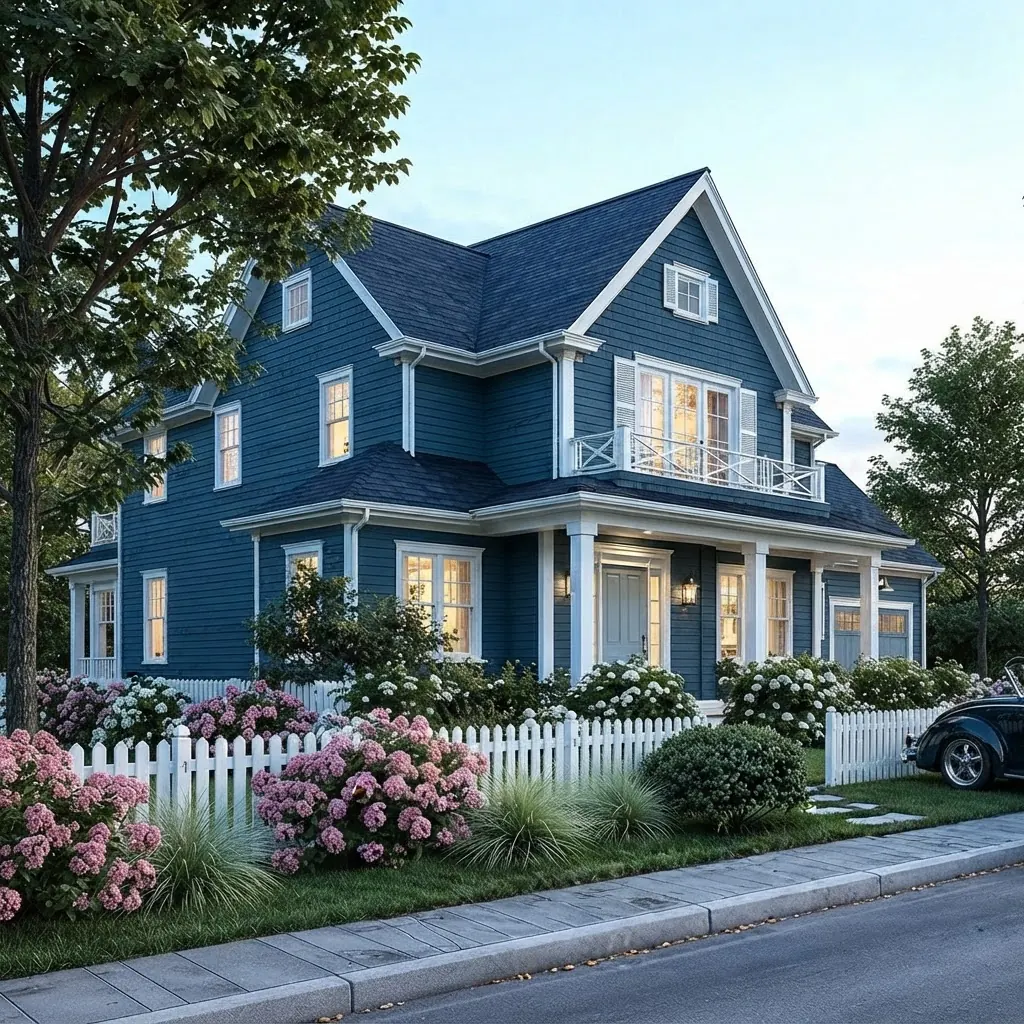
Charcoal is the default because it is the one roof color that does not have an opinion. It is dark enough to frame a light house and outline the roofline, but the gray and black granule blend keeps it from reading as a flat black hole. It agrees with white, gray, blue, green and sage siding, with red, brown and painted brick, and with black window frames, which is why builders put it on so many new houses. If you cannot decide, and nothing on your house is strongly warm, charcoal is the answer.
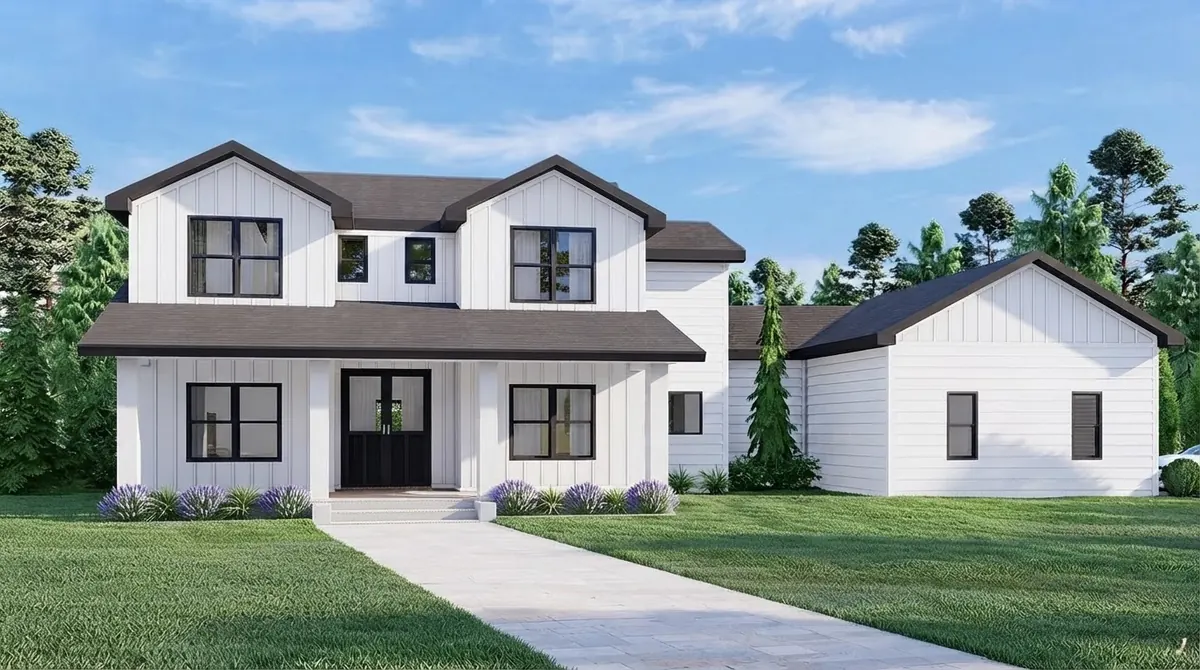
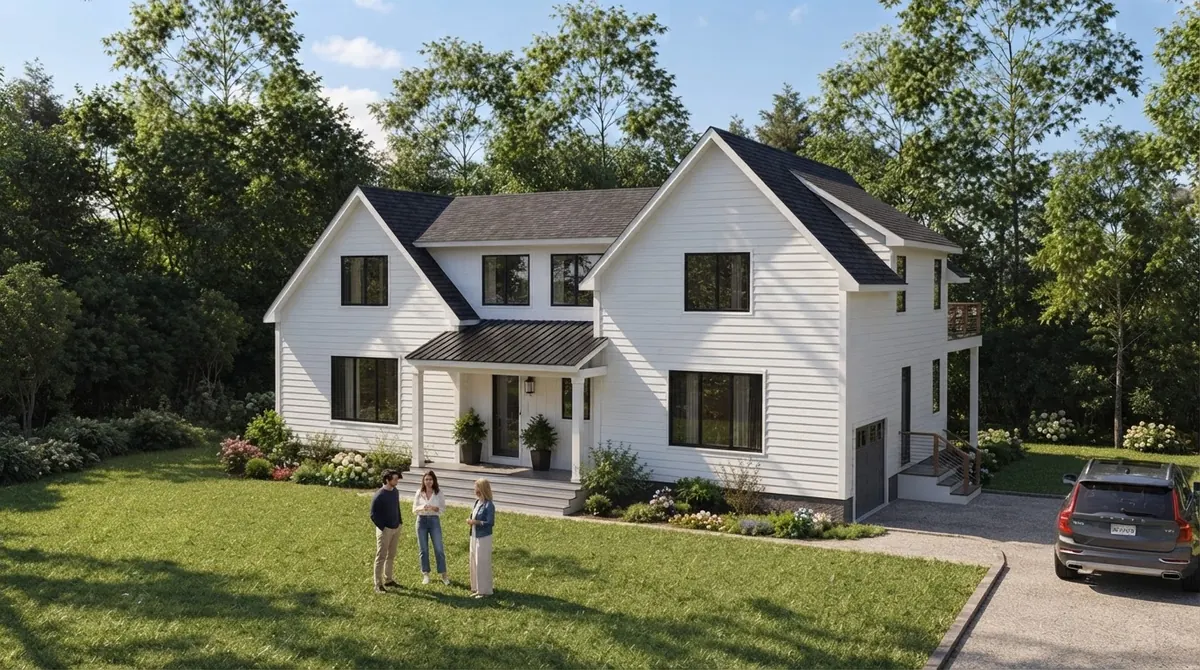
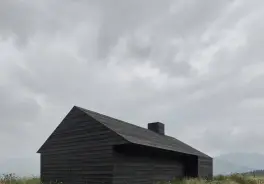
Black is the sharper version. It wins on modern farmhouses and anything with black windows, and it is the color people most often regret on a traditional house with brown trim, where it looks severe. Two practical cautions: a true black shows pollen, dust and granule loss earlier than a blend, and it is the hottest color you can put on a roof (see the heat section). Sage and soft green houses look especially good under black, as in our vinyl siding colors guide.
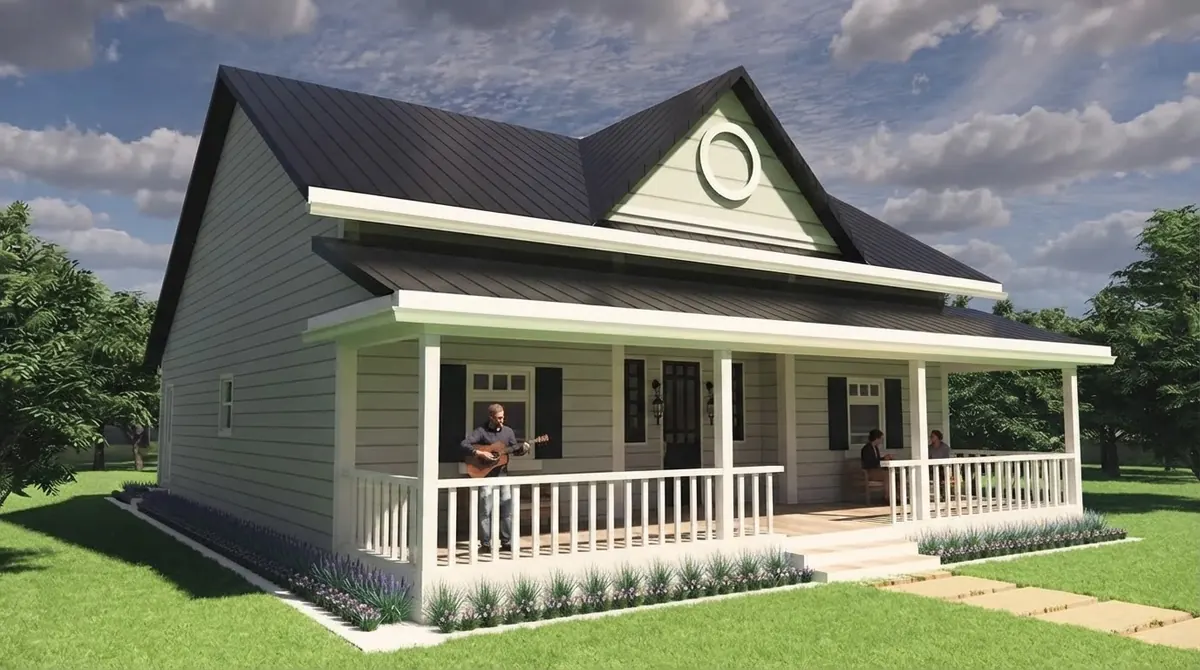
Black roof on a sage green cottage with white trim: the most reliable color combination on this page. Render from our gallery.
Gray Shingles: Pewter, Slate and Estate Gray
Medium gray is the softer alternative to charcoal: it lightens the roof, suits cool siding colors, and reads more traditional on colonials and Cape Cod houses. The trick with gray is undertone. Owens Corning’s advice is to “pair warm gray shingles with warm gray siding colors,” and the reverse holds: a cool blue gray like slate next to warm red brick or cream trim can look purple in evening light. Pewter Gray, GAF’s third best seller, sits in the middle and is the safest of the grays.
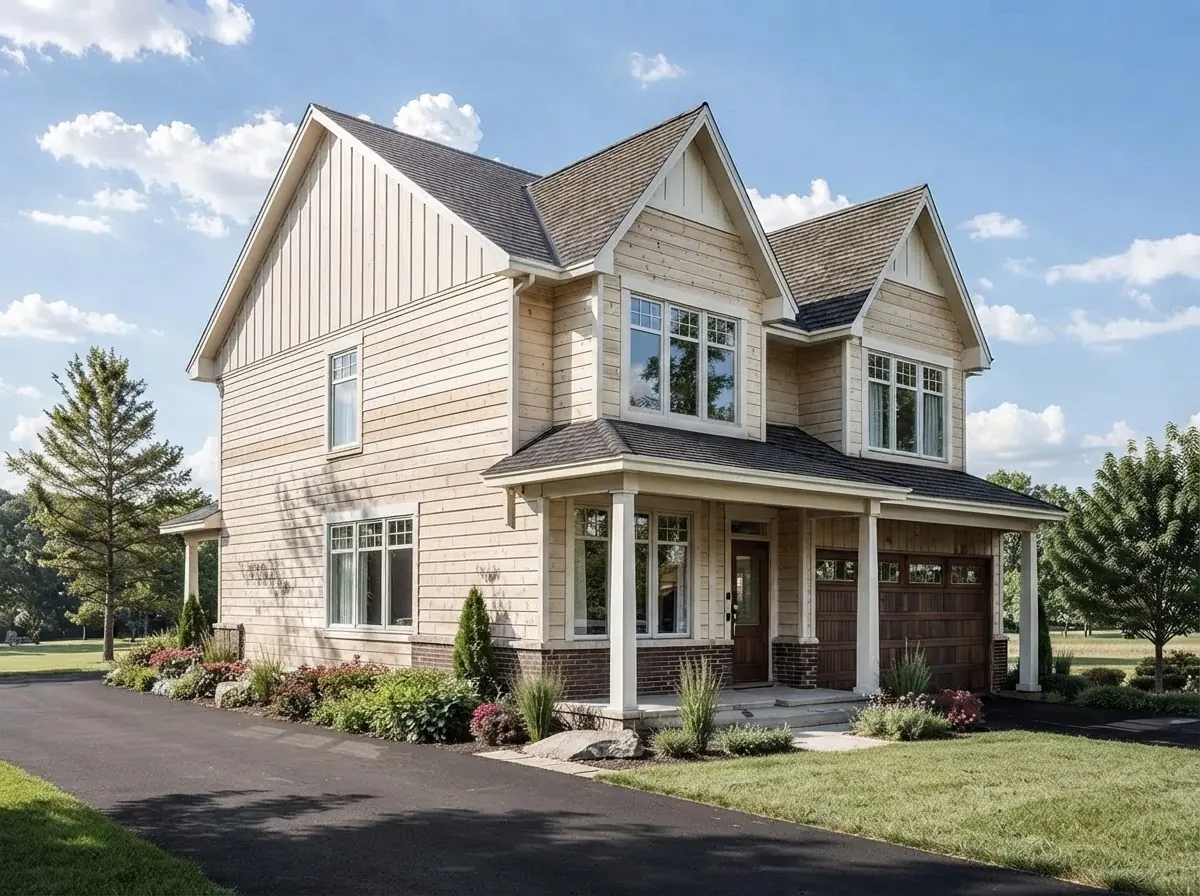
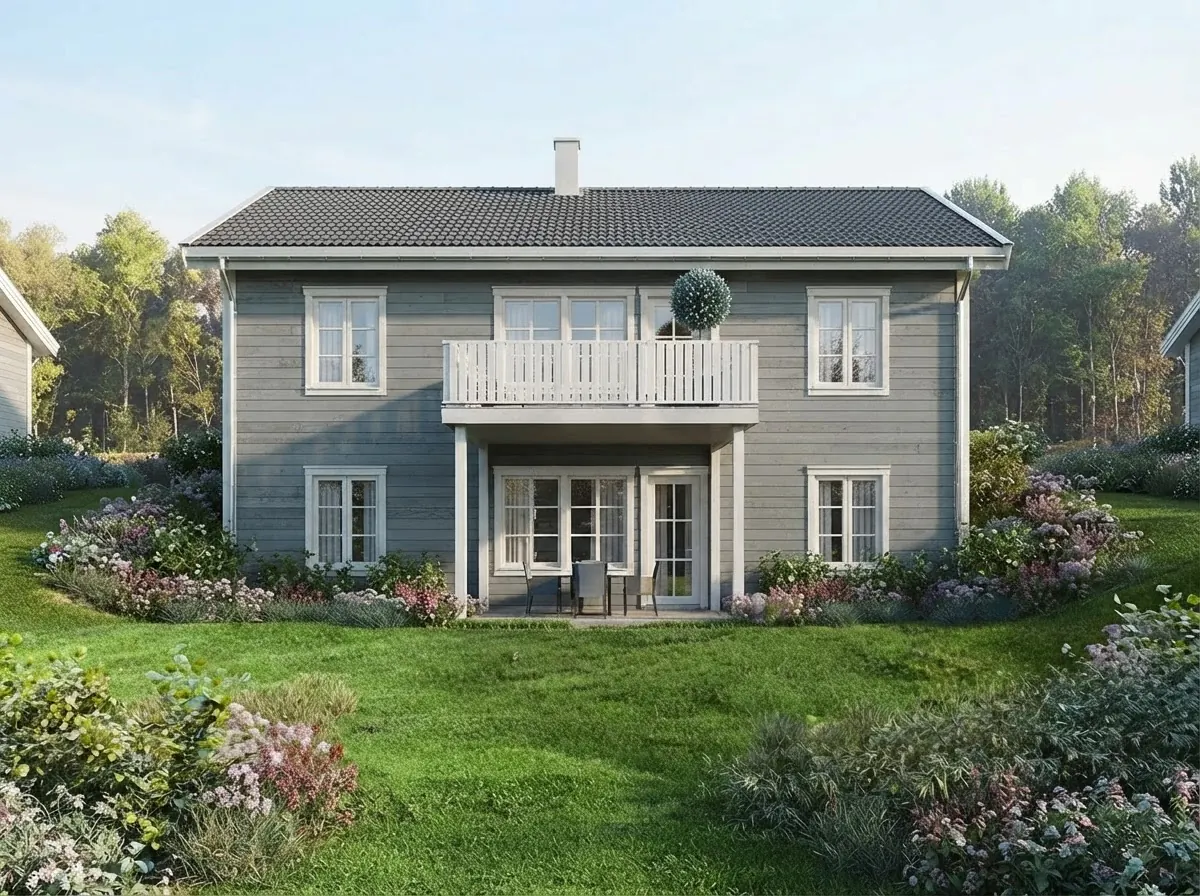
If the house is already gray, go two or three steps darker on the roof than the walls; the same gray on both makes the house read as a single block with no top. For the siding side of that pairing, the exterior house colors 2026 guide shows full palettes with doors and trim.
Brown Shingles: Weathered Wood, Driftwood and Barkwood
Weathered wood is the most popular brown roof color and the number two shingle color overall: a blend of brown, gray and tan granules that reads like aged cedar from the street. It is the right roof for tan, beige, cream and stone houses, log and craftsman styles, and warm brick. Driftwood is the lighter, tan leaning cousin; GAF recommends it on red brick specifically when “the neutral hue matches the trim of your home.” Barkwood, Hickory and Mission Brown get darker and warmer.
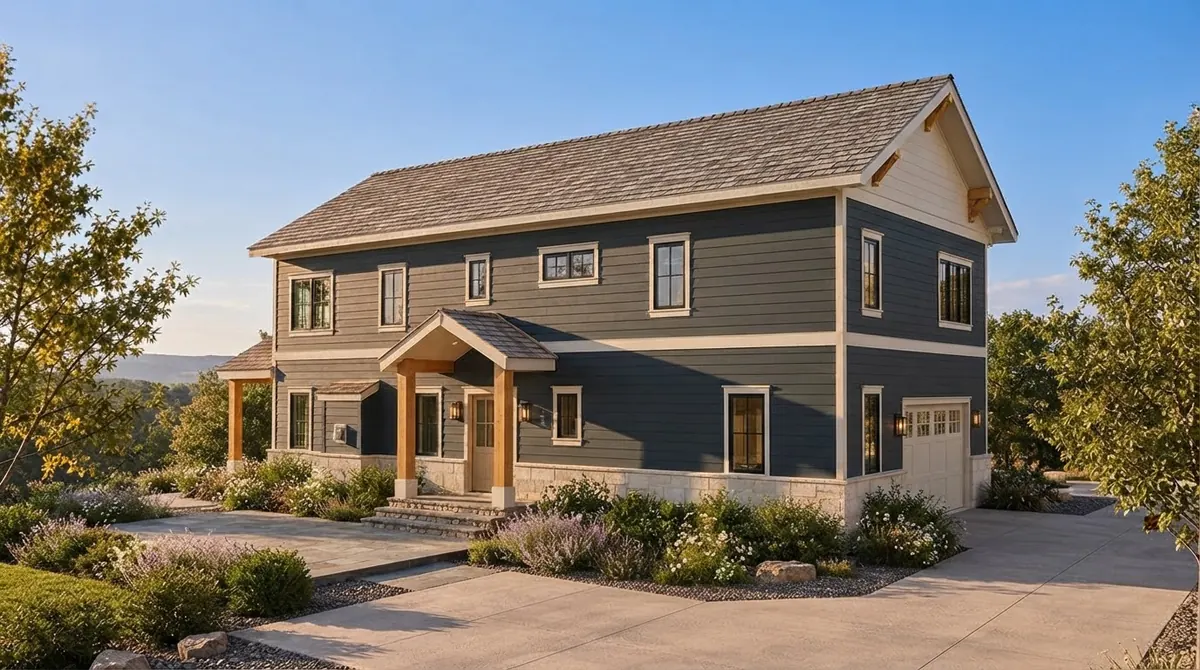
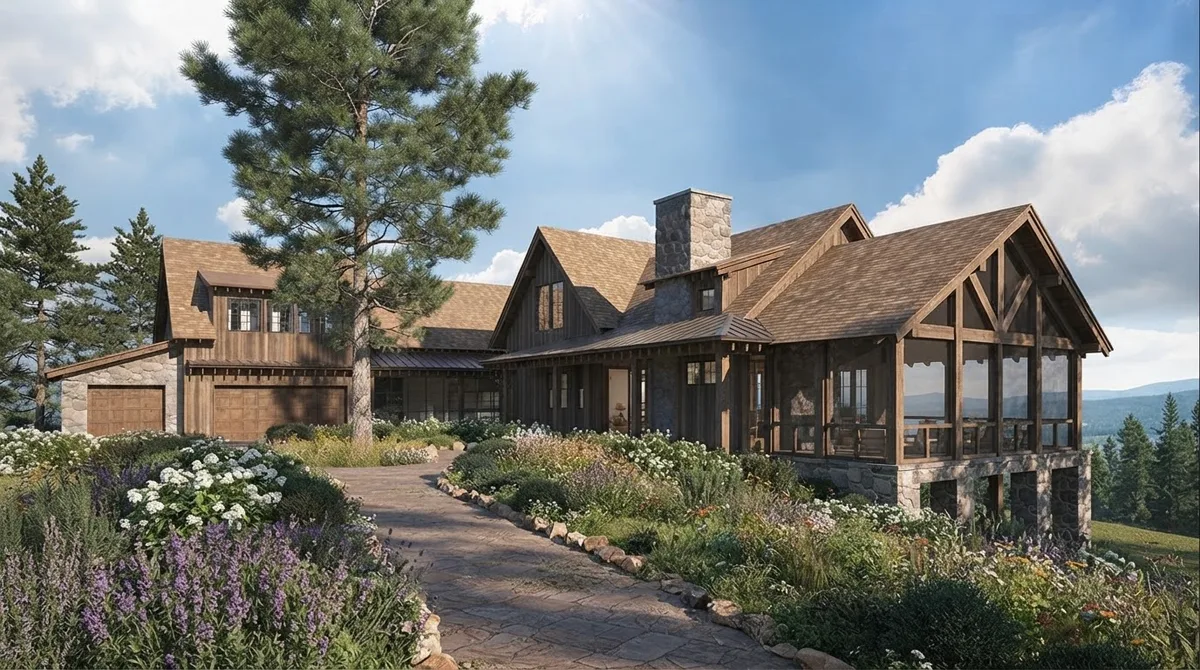
Where brown goes wrong is over cool colors. GAF’s own pro tip says that if cool colors dominate your central exterior features, you should not “create visual friction with Shakewood shingles.” A brown roof on white vinyl with gray trim is the combination that most often reads as twenty years old. If you already have a brown roof and are choosing siding, the colors that agree with it are cream, tan, greige, warm white, sage and olive; our vinyl siding colors guide covers that side, and the board and batten siding guide covers the vertical profile.
Green, Red, Blue and Terracotta Roofs
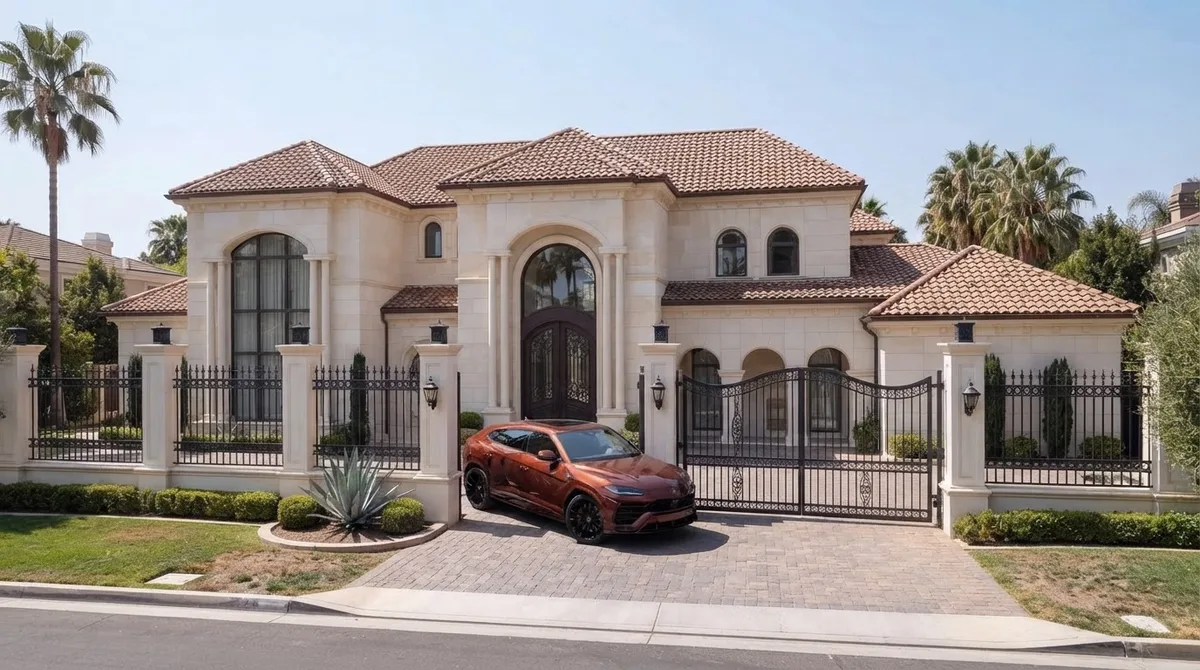
Colored roofs are a regional and architectural choice, not a trend: green and red metal on farmhouses and barns, terracotta tile on Spanish and Mediterranean houses, blue on a few coastal and Victorian ones. GAF still makes Hunter Green, Patriot Red, Biscayne Blue and Golden Amber in its Timberline HDZ line, which tells you there is steady demand, but none of them is near the top of the sales list. Pick a colored roof when the architecture asks for it, not to make a plain house interesting; on a plain house, a colored front door does that job for a fraction of the price.
The Best Roof Color for a Red Brick House
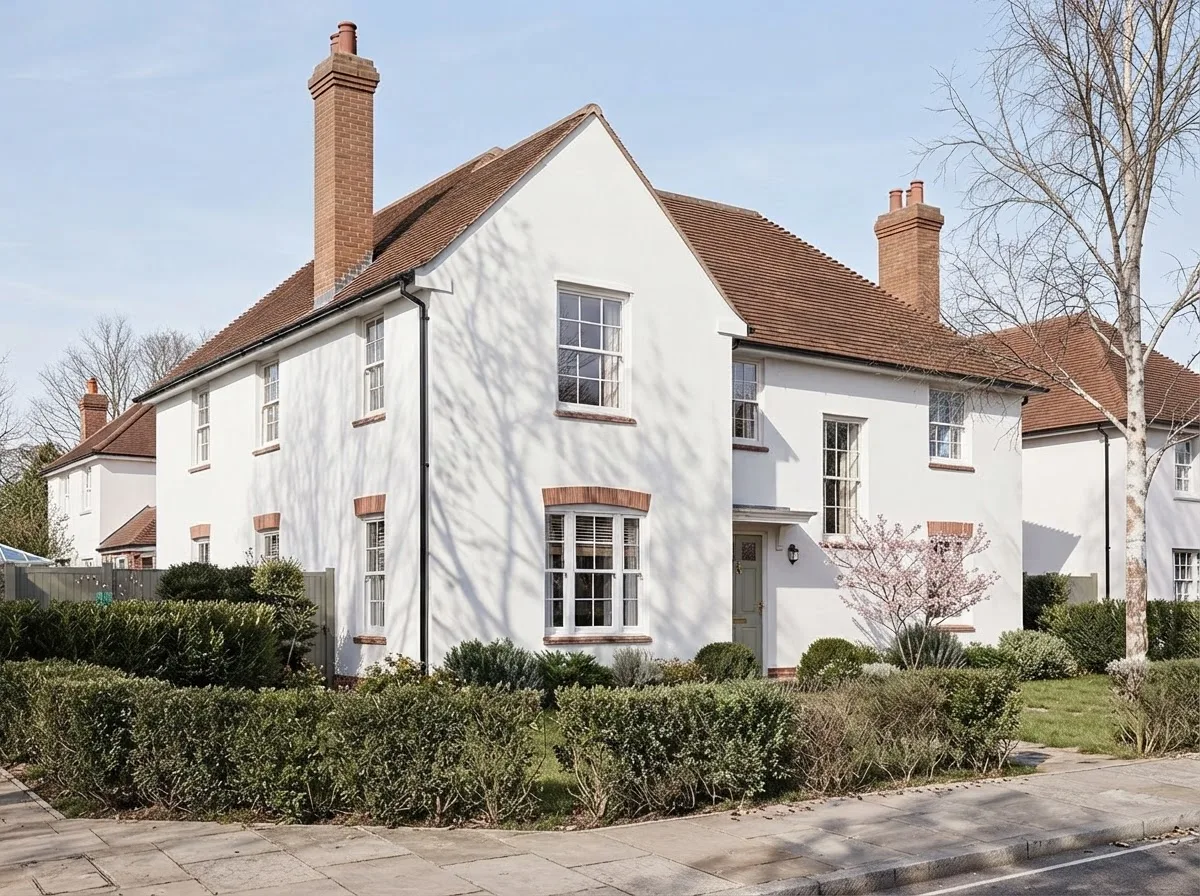
The best roof color for a red brick house is a dark neutral, charcoal or black, which lets the brick be the color; the classic contrast is dark green, and a light warm driftwood works when the trim is cream or tan. That is also what both big manufacturers say. Owens Corning’s designer Chad Esslinger, in a 2025 Q&A on red brick, gives two routes: “a roof color that is neutral and lets the color of the brick stand out,” such as Black Sable, or a roof with similar warm tones such as Sedona Canyon or Colonial Slate. GAF’s red brick guide calls Hunter Green “a classic combination for red brick,” recommends Driftwood when the neutral hue matches the trim, and Charcoal as “an elegant complement to red brick.”
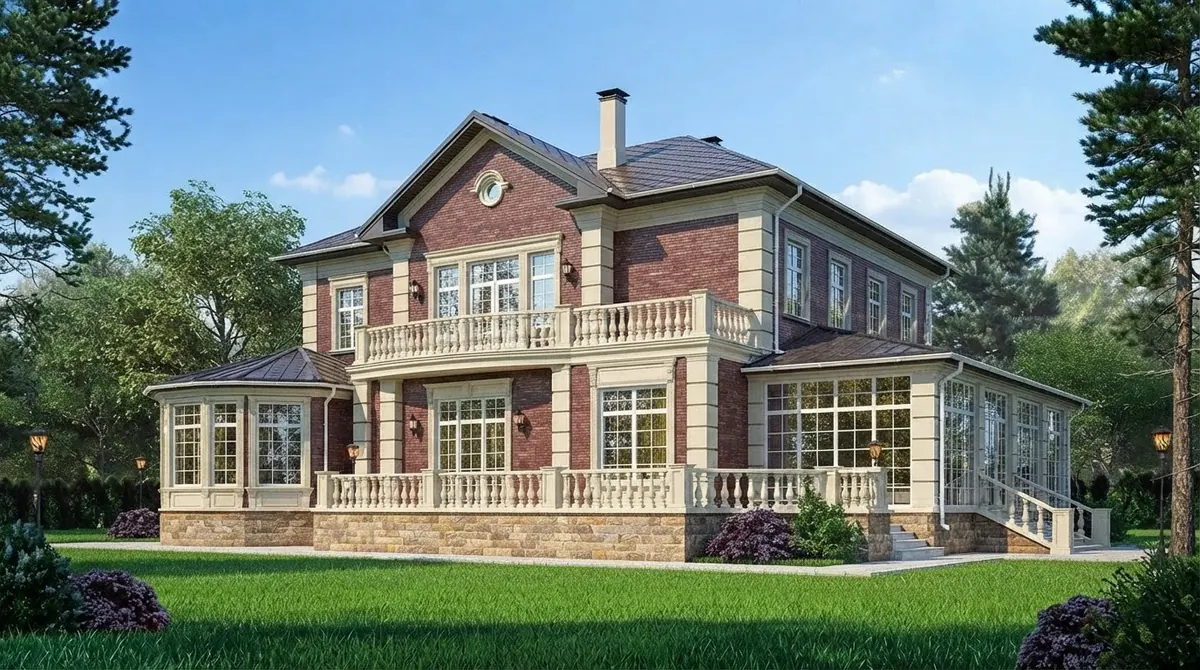
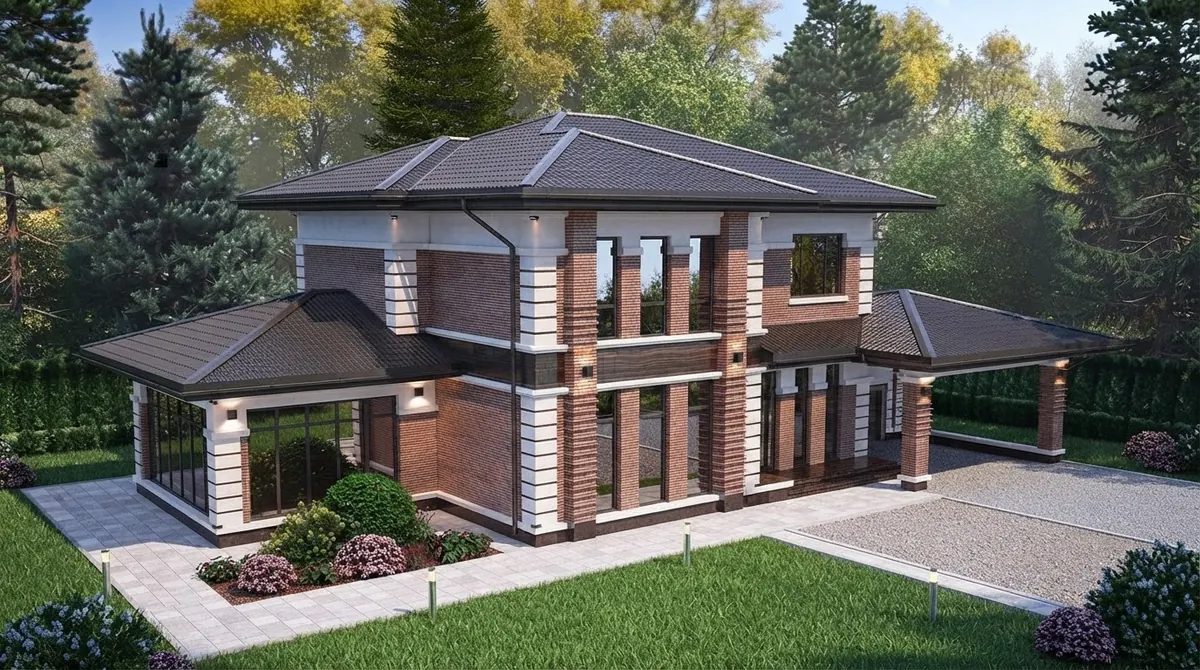
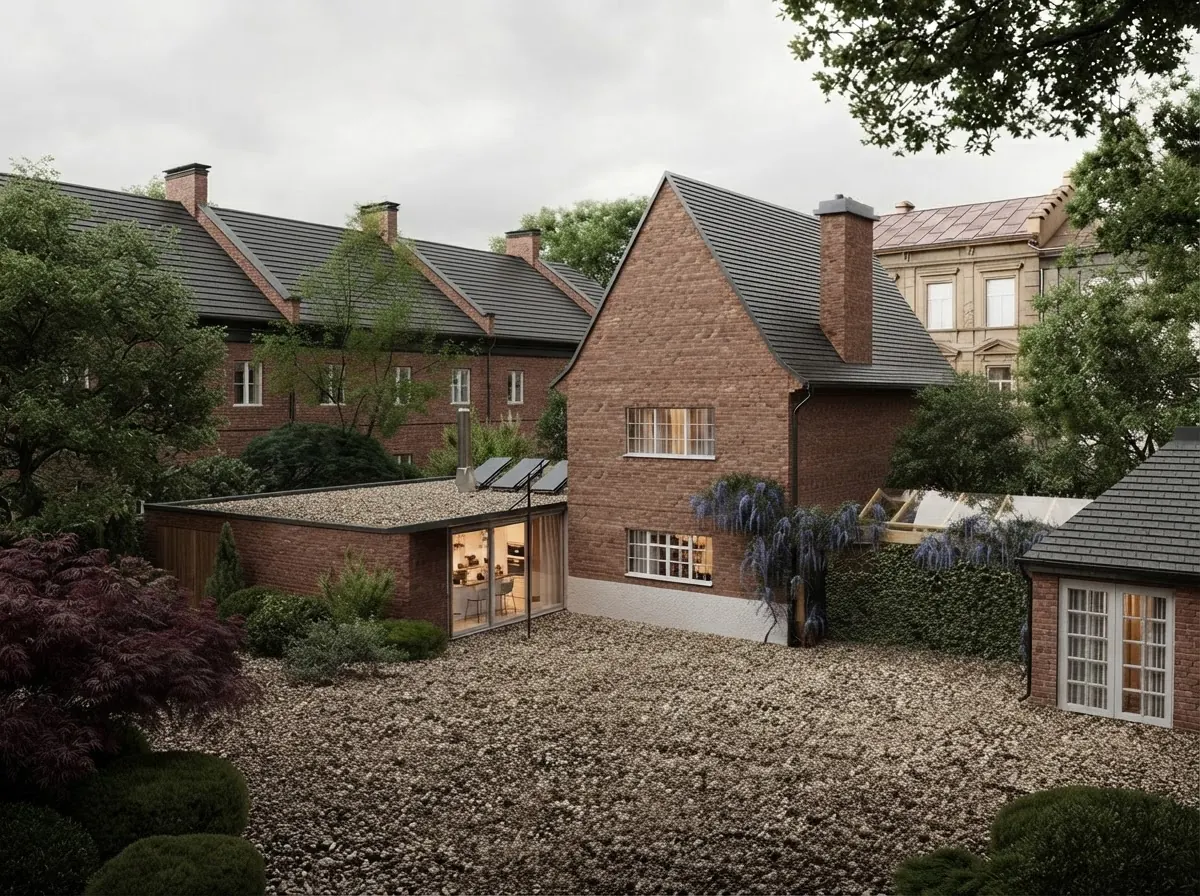
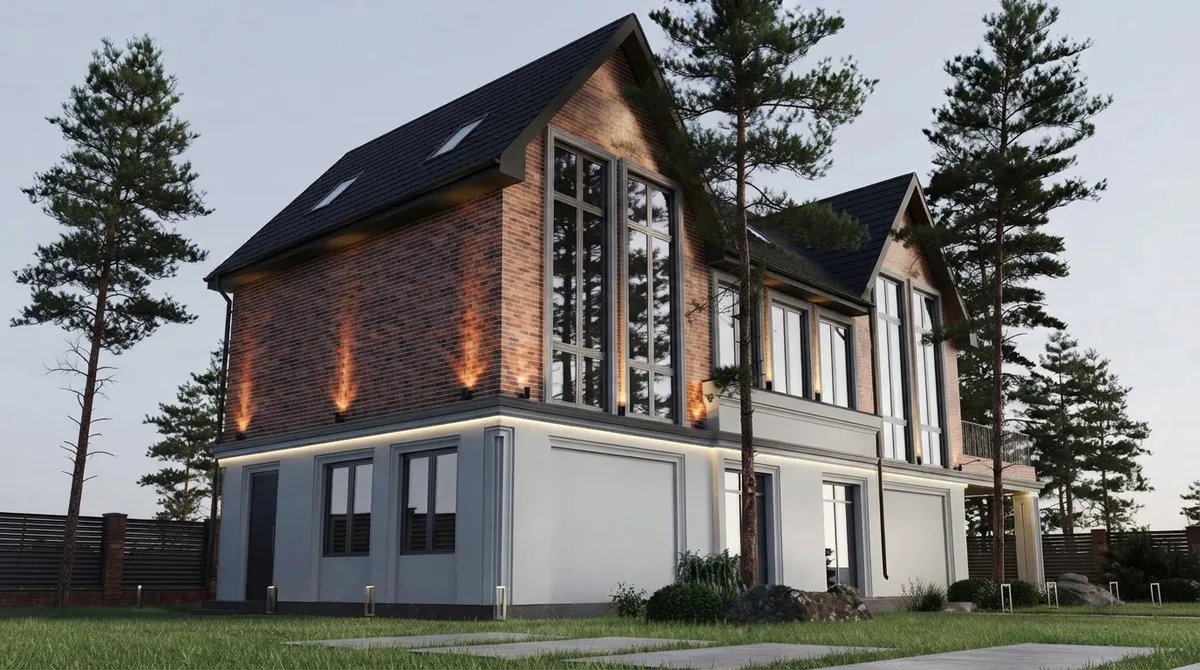
Built from the Owens Corning (28 August 2025) and GAF (5 February 2025) red brick guides plus the demo series above. GAF suggests Antique Slate and Pewter Gray for brick with charcoal accents.
GAF also suggests taking “a walk through your neighborhood” before you choose, and on a brick street it is good advice: brick houses tend to share a roof family, and the one house with a light gray or red roof is the one people notice for the wrong reason. Brick varies from orange to purple, so the safest test is to run charcoal, black and one warm option on a photo of your own house in the exterior design tool.
The Best Roof Color for a White House
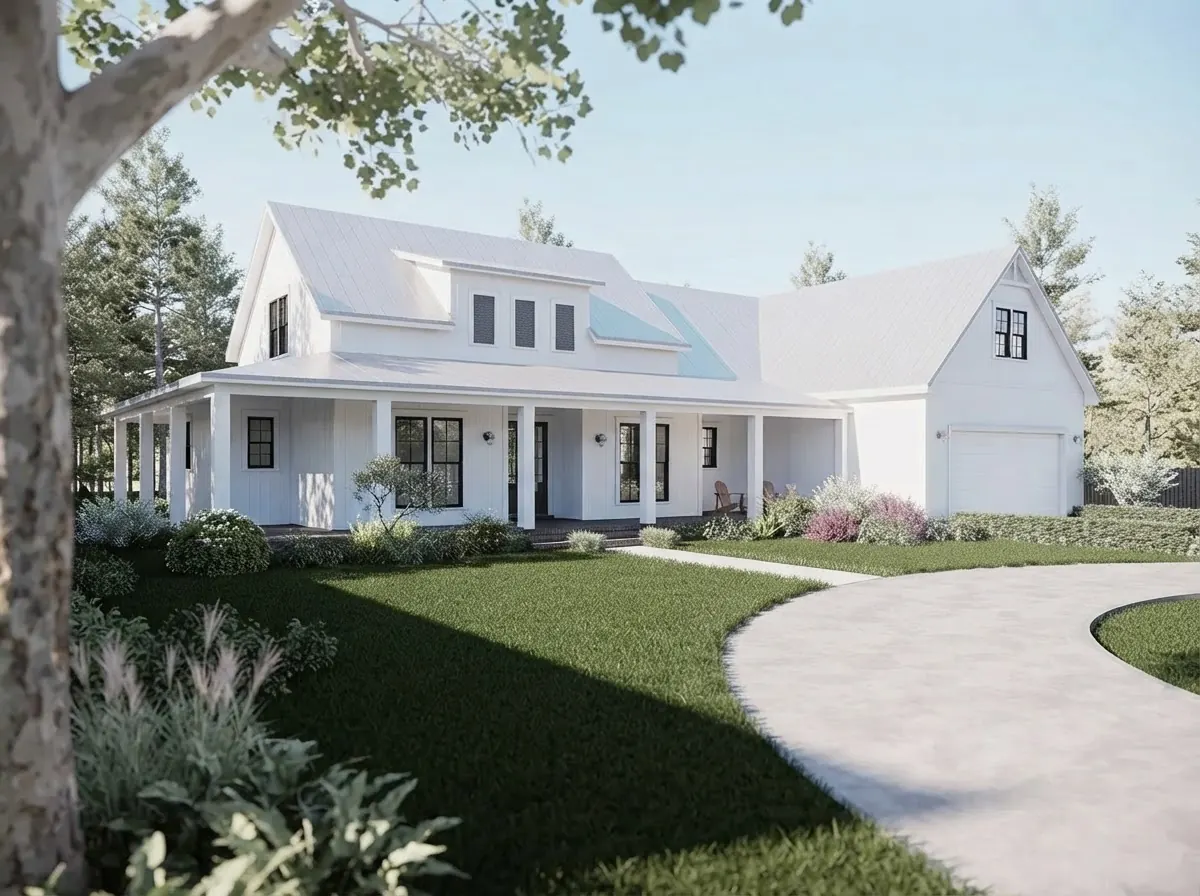
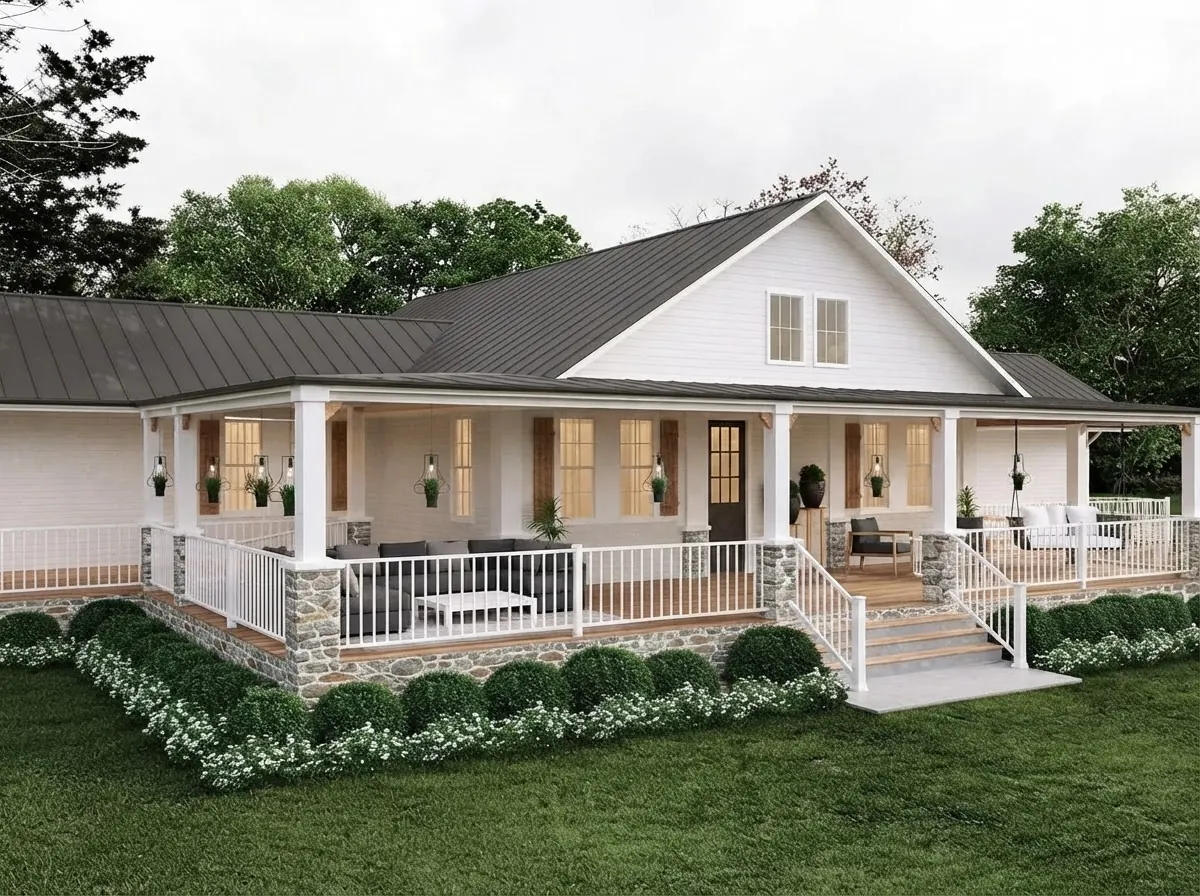
The best roof color for a white house is black or charcoal; medium gray is the softer option, and brown only works when the white is a warm cream with wood or stone on the facade. A dark roof outlines a white house the way a frame outlines a print, which is why nearly every white modern farmhouse carries one. On a cool, bright white with gray or black trim, a brown roof is the combination that most quickly looks dated. In hot climates, a white or light gray metal roof on a white house is the coolest choice and very much a style of its own.
Roof Colors for Gray, Tan, Green and Blue Houses
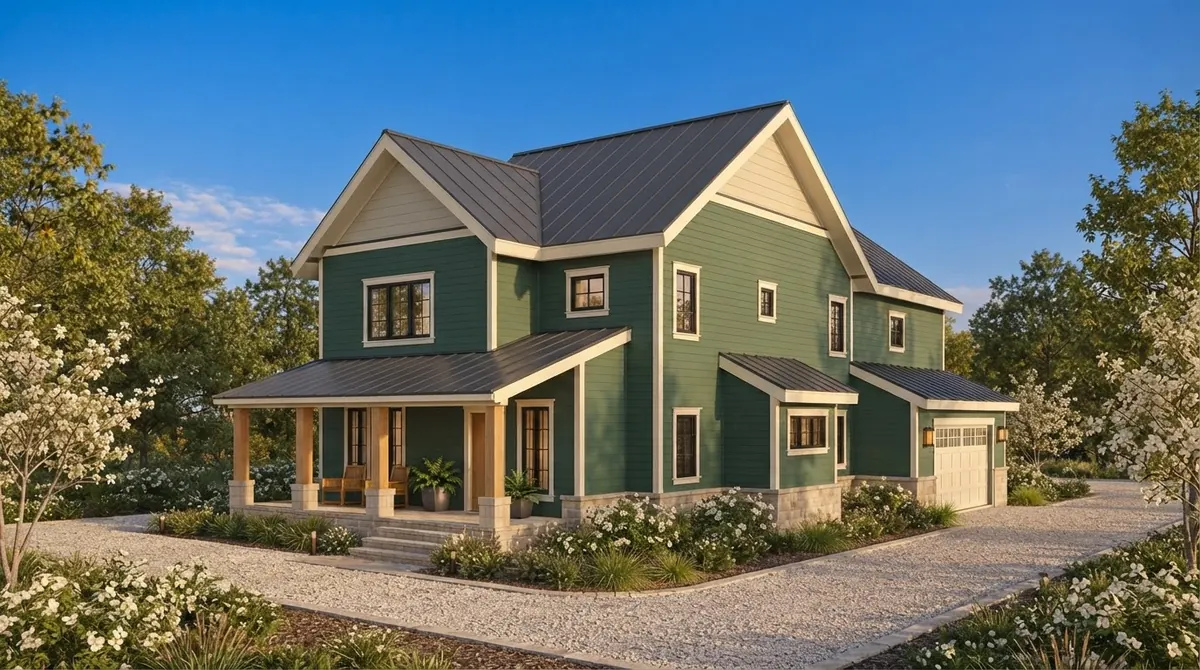
Match the roof to the temperature of the house first, then pick a value: cool houses (gray, blue, white) take cool roofs, warm houses (tan, beige, cream, yellow) take warm or neutral ones, and almost every house can take charcoal. The table covers the common siding colors; the first column is the one we would test first.
Our rules of thumb from the renders in this guide and the demo series, consistent with the GAF and Owens Corning guides cited above. No manufacturer publishes a full matrix like this, so treat it as a short list to test, not a rule.
Metal Roof Colors
The most popular metal roof colors are gray (charcoal and lighter dove gray), dark bronze, black and bare Galvalume, with forest green, barn red and white as the traditional and hot climate alternatives. Metal makers publish less sales data than shingle makers, but Sheffield Metals, a coil supplier, does: in its 2024 color trends it ranks gray first (“Two shades have topped the requests: Dove Gray and Charcoal Gray”) and bronze second, and its 2023 report says “Dark Bronze has been in the top three of our most purchased colors year after year” and that Galvalume “remains towards the top.” Sheffield has not published a 2025 or 2026 edition, so treat that as the latest data, not this year’s.
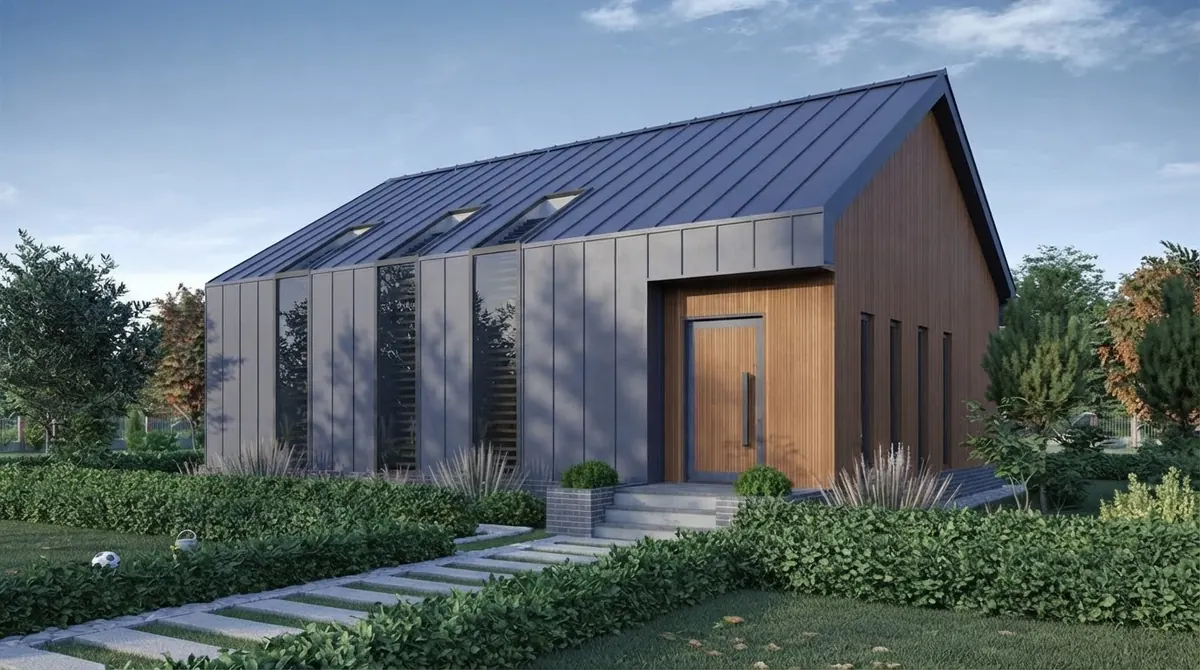
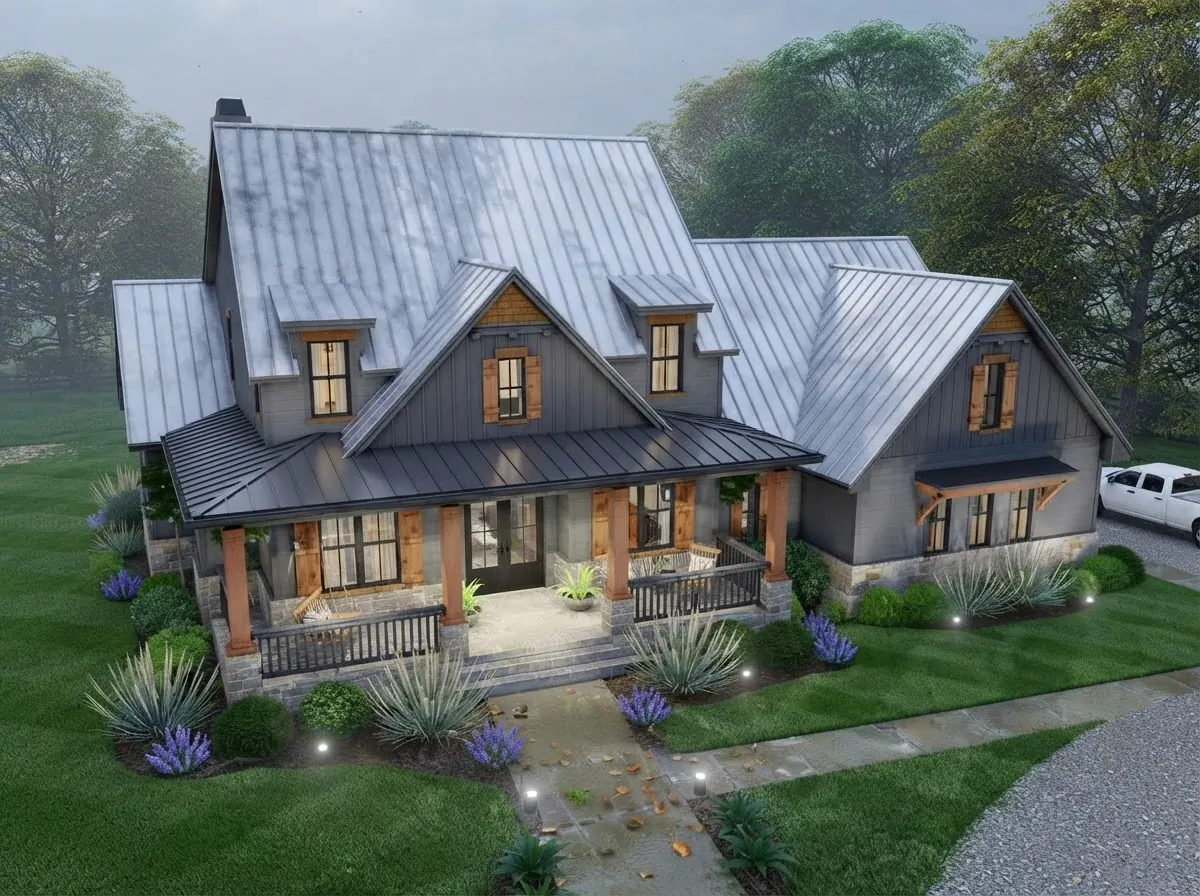
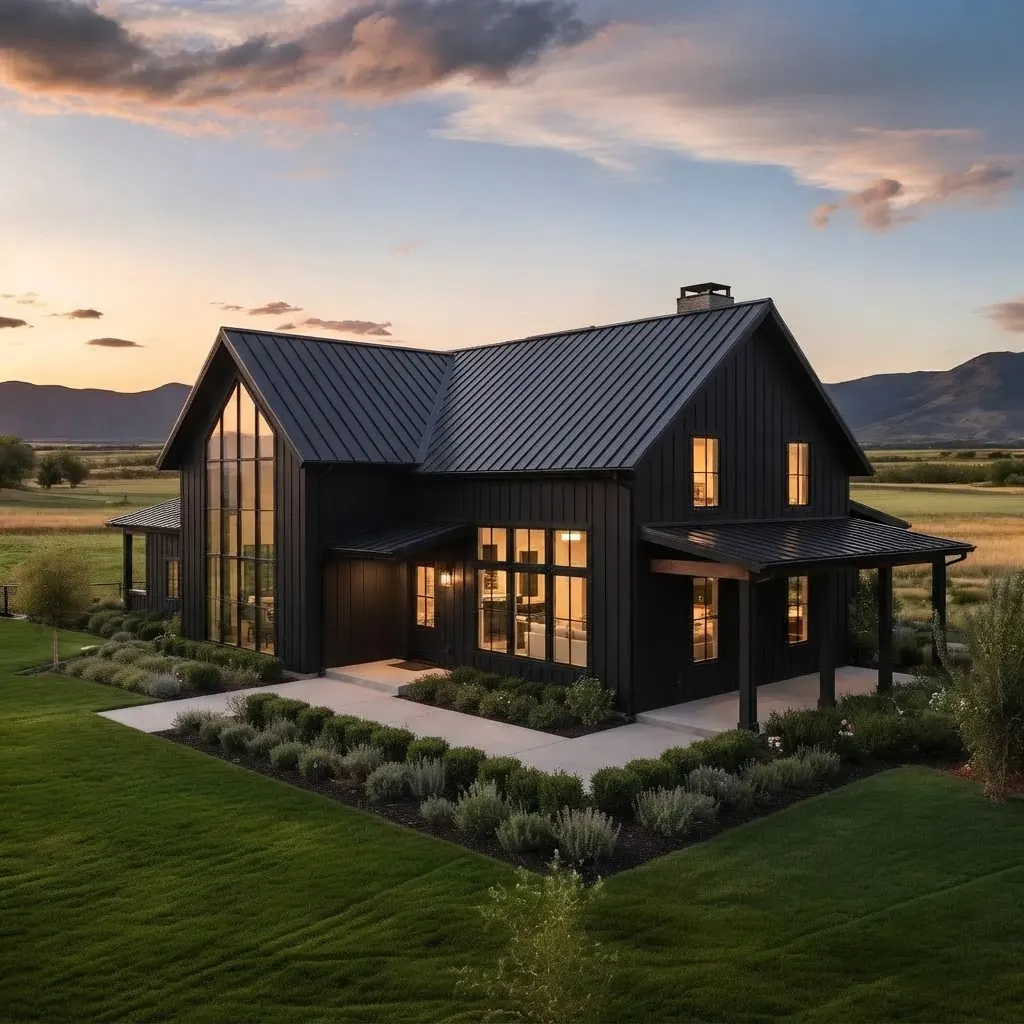
With metal, the paint system matters as much as the color. Ask for PVDF, sold as Kynar 500 or Hylar 5000; McElroy Metal calls PVDF coatings “the industry’s best-performing paint system.” The warranties are specific and worth reading: McElroy’s Kynar 500 warranty promises for 30 years that the coating “will not chalk more than a number 8 rating” and “will not change color more than 5 Hunter DE units,” and Drexel Metals’ 35 year warranty allows more fade on roofs (7 units) than on walls (5), because a roof takes more sun. Read the warranty for the exact color you choose, not just the paint system. The cheaper SMP (silicone modified polyester) paint is fine on a barn and a false economy on a house.
Popularity: Sheffield Metals 2023 and 2024 color trend reports. Fade behavior: the McElroy and Drexel PVDF warranty terms. Pairings are our recommendations.
If you are weighing metal against shingles, the trade is cost against life: standing seam ran $9 to $16 per square foot in HomeGuide’s guide against $4 to $6 for architectural shingles, and it recoups less at resale (50 percent against 68 percent in the 2025 Cost vs Value report, below). On a garage with an apartment above or a backyard ADU, matching the main roof color matters more than matching the material.
Does Roof Color Change Heat and Energy Bills?
Yes, measurably on the roof and in the attic, and modestly on the bill: dark roofs can pass 150°F in summer sun, and a roof that reflects more sunlight can stay 22°F to more than 50°F cooler, depending on how light it is. The numbers come from Lawrence Berkeley National Laboratory’s Heat Island Group, which says traditional dark roofs “can reach temperatures of 150 ºF (66 ºC) or higher in the summer sun,” while cool surfaces under the same conditions “could stay more than 50 °F (28 ºC) cooler.” The useful part for anyone who wants a dark roof is the cool colored comparison: “a cool-colored roof that reflects 35% of sunlight will stay about 12°C (22°F) cooler than a traditional roof that looks the same but reflects only 10% of sunlight.” Same look, cooler roof.
LBNL Heat Island Group pages read 28 October 2026. The DOE Energy Saver cool roofs page returned a 404 on 28 October 2026; the 30 to 60 percent figure is from its last archived copy (18 June 2026).
Three caveats keep this honest. First, the DOE’s own page, before it went offline, said cool roofs “achieve the greatest cooling savings in hot climates, but can increase energy costs in colder climates,” so in Minnesota a dark roof is not a mistake. Second, the effect on your bill depends on the attic: a well insulated, ventilated attic with no ductwork in it hides most of the difference, and ducts in a hot attic expose it. Third, there is no ENERGY STAR label to look for anymore: the ENERGY STAR specification for roof products was sunset on 1 June 2022. The rating to ask for now is the Cool Roof Rating Council’s, which lists solar reflectance and thermal emittance, both initial and “aged” after three years of outdoor weathering on a test farm. The aged number is the one that matters.
In California the color is partly a code question. According to the CRRC’s summary of the 2025 Energy Code (in force from 1 January 2026), re-roofing a steep slope single family roof in climate zones 4 and 8 to 15 needs an aged solar reflectance of at least 0.20 and a thermal emittance of 0.75, or an SRI of 16, with exceptions for extra insulation and heavy roofs. Most dark charcoal shingles do not reach 0.20 unless they are a cool rated line, so in those zones ask your roofer for the cool version of the color you want.
Roof Shingle Colors by Brand
The three big shingle makers each offer roughly 20 colors in their main architectural line, and the names differ more than the colors do. GAF’s Timberline HDZ, which GAF bills as its number one selling shingle, lists 23 colors: 19 High Definition colors plus 4 Bold Definition colors sold in the US only. CertainTeed Landmark lists more than 20 and tags each by sales region. Owens Corning’s Duration page filters colors by location, so the list you see depends on your zip code.
Read from the GAF Timberline HDZ, Owens Corning Duration and CertainTeed Landmark product pages on 28 October 2026. Owens Corning showed only the colors it offers for our location, so its US list is longer than this column. The groupings into families are ours; within a family the colors are not identical, so compare physical samples.
If you want a color that works with almost any brand your roofer carries, ask for “their charcoal,” “their weathered wood” or “their pewter.” Every major line has one.
Does Shingle Color Change the Price?
Within one shingle line the color usually does not change the price; the line, the material and the size of the roof do. We could not find a manufacturer or cost guide that charges more for one standard color than another. The two real exceptions are cool rated shingles, which the Department of Energy’s 2011 guide to cool roofs said “sell for up to $0.50 per square foot more” than conventional ones (a dated figure, and the DOE’s later page said cool products “usually cost no more”), and designer or regional colors that only exist in a premium line or that your distributor does not stock.
Per square foot and typical job: HomeGuide roof replacement cost guide (last modified 7 November 2025). Job cost, resale value and percent recouped: Remodeling Cost vs Value 2025, national averages for a 30 square asphalt re-roof and 3,000 sq ft of standing seam. The two sources measure different jobs, which is why the totals do not match; Cost vs Value prices a larger, fully specified project.
The Cost vs Value numbers are for the roof, not the color. No study we found isolates roof color at resale. Owens Corning’s line is the honest one: “The best shingle color for resale is the one that complements your home exterior and appeals to the masses.” In practice that is charcoal, gray or weathered wood. If you are pricing a whole exterior project, our renovation visualization guide for flippers shows how to test a full facade before you spend.
How to Choose a Roof Color: The Seven Checks
- Write down what you cannot change. Brick, stone, stucco, and siding you are keeping. The roof has to agree with these, not the other way round.
- Match temperature, then pick contrast. Warm house, warm or neutral roof; cool house, cool or neutral roof. Then decide: blend (a gray two steps darker) or contrast (black on white, green on red brick).
- Walk the street. GAF says it twice: look at similar homes in your neighborhood. The best roof is the one that fits the street with a better house under it.
- Check the HOA and the code. Many associations approve only a few colors, and parts of California need a minimum aged reflectance on re-roofs.
- Think about your climate. Hot and sunny: a lighter color or a cool rated dark. Cold: dark is fine. Heavy tree cover: a blend hides debris and moss better than solid black.
- See it on your house. Upload a street photo to the exterior design tool and run your three finalists. Then order full size samples of those three only.
- Look at real shingles on the roof, in two kinds of light. Granule blends shift with the sun. Morning and late afternoon are the tests; a sample on the kitchen table is not.
For the tools that do step 6, our roundup of the best AI exterior design tools and the exterior paint visualizer comparison cover the alternatives, including manufacturer visualizers that show only their own colors.

This Old House on shingle color selection (2 minutes). We have no relationship with them.
How We Wrote This Guide
We are not roofers and we do not sell shingles or metal. We build MeltFlex, an AI interior and exterior design tool, so the part of this subject we know first hand is what a roof color does to a whole house in a photo, which is why the eight panel demo exists. We made it on 28 October 2026 from one render in our gallery with the same one sentence prompt shape the exterior tool uses, changing only the color words. The tool rendered the bronze lighter than we asked for, and its weathered wood is lighter than GAF’s real Weathered Wood; we say so in the captions rather than regenerate until it flatters the point.
The facts come from primary sources read on 28 October 2026: GAF’s Top Roof Color Trends for 2026 (6 October 2026), its shingle color guide, its red brick article (5 February 2025) and its Timberline HDZ product page; Owens Corning’s roof color guide (9 August 2023), its red brick Q&A with Chad Esslinger (28 August 2025) and its Duration page; CertainTeed’s Landmark page; Lawrence Berkeley National Laboratory’s Heat Island Group; the Department of Energy’s archived Energy Saver cool roofs page (the live page now returns a 404) and its 2011 guide to cool roofs; ENERGY STAR’s roof products sunset notice; the Cool Roof Rating Council’s program page and its 2025 Energy Code summary; Sheffield Metals’ 2023 and 2024 color reports; McElroy Metal’s and Drexel Metals’ PVDF warranty documents; HomeGuide’s roof replacement cost guide; and the 2025 Cost vs Value report.
What we could not verify, and therefore left out or flagged: the California Energy Commission’s own code text would not load for us, so the Title 24 figures are the CRRC’s summary; Owens Corning’s full US color list, because its site shows colors by location; any metal roof sales data newer than 2024; and any study of roof color and resale value, because we did not find one. The images are renders from our gallery, chosen because each shows a roof color this article describes; none is a photograph of a specific product. The two videos are from This Old House and Owl Roofing.
Roof Shingle Colors FAQ
What is the most popular roof shingle color?
Charcoal. GAF, one of the two biggest US shingle makers, published its 2026 ranking on 6 October 2026 from nationwide residential shingle sales, and Charcoal is first “by miles,” followed by Weathered Wood, with Pewter Gray a “distant but respectable” third. Older GAF material still calls Weathered Wood its most popular color, so the order between the top two has shifted, but the top three have not changed in years: a dark gray, a brown and gray blend, and a medium gray.
What color roof goes with a red brick house?
A dark neutral is the safest choice: charcoal or black lets the brick be the color and makes the mortar lines read crisp. Owens Corning’s designer Chad Esslinger puts it the same way, a neutral roof such as Black Sable that lets the brick stand out, or a roof with similar warm tones. GAF adds Hunter Green as the classic contrast for red brick and Driftwood when the trim is light. Avoid a roof in the same red or orange family as the brick, which turns the house into one warm block, and test the choice on a photo of your own house first, because brick varies from orange to purple.
What is the best roof color for a white house?
Black or charcoal is the most popular roof on a white house and the safest one: it outlines the roofline, matches black window frames and suits farmhouse, colonial and modern houses alike. Medium gray is the softer choice if the trim is gray or the house is traditional. Warm browns such as weathered wood work when the white is a cream and there is stone or wood on the facade. On a crisp cool white with no warm materials, brown tends to look dated. In hot climates a white or light gray metal roof on a white house is the coolest option of all.
Does roof color affect the temperature of a house?
Yes, mostly in the attic and on the roof itself. Lawrence Berkeley National Laboratory says traditional dark roofs can reach 150°F or more in summer sun and that cool surfaces under the same conditions can stay more than 50°F cooler. Between two roofs that look the same color, a cool colored one that reflects 35 percent of sunlight stays about 22°F cooler than a conventional one that reflects 10 percent. The savings are largest in hot climates and can turn into a small heating penalty in cold ones. With a well insulated attic, the effect on your bill shrinks; with ducts in the attic, it grows.
Is a black roof a bad idea?
Not in most of the country. Charcoal is the best selling shingle color and black is a common choice, and in cold and mixed climates the extra heat a dark roof absorbs does little harm and can help melt snow. In hot climates, and in California where the 2025 Energy Code sets a minimum aged solar reflectance of 0.20 for steep slope re-roofs on single family homes in climate zones 4 and 8 to 15, choose a cool rated dark shingle or a lighter color. Check your HOA list too: many associations approve only a handful of shingle colors.
What are the most popular metal roof colors?
Gray, dark bronze, black and bare Galvalume. Sheffield Metals, a coil supplier that publishes its order data, ranked gray first in 2024 with Dove Gray and Charcoal Gray as the most requested shades, and bronze second; its 2023 report said Dark Bronze had been in its top three most purchased colors year after year and that Galvalume stayed near the top. Forest green and barn red are the traditional rural colors and still common on farmhouses. For any color, ask for a PVDF (Kynar 500 or Hylar 5000) paint system, which carries the longest fade and chalk warranties.
Does roof color affect resale value?
No study we could find isolates roof color from the rest of the house, so any dollar figure for a roof color is a guess. What is measured is the roof itself: in the 2025 Cost vs Value report, an asphalt shingle roof replacement cost $31,871 nationally and recouped 68 percent at resale, a standing seam metal one cost $51,865 and recouped 50 percent. Owens Corning’s advice on color is the honest one: the best shingle color for resale is the one that complements your exterior and appeals to most buyers, which in practice means charcoal, gray or a brown and gray blend.
Do darker or designer shingle colors cost more?
Within one shingle line, the color usually does not change the price; the line does. A standard architectural shingle ran $4 to $6 per square foot installed in HomeGuide’s 2026 cost guide, a metal roof $5 to $16 and standing seam $9 to $16. Two exceptions: cool rated shingles with reflective granules can carry a small premium (the Department of Energy’s 2011 cool roof guide put it at up to $0.50 per square foot), and some designer colors exist only in premium lines or only in some regions, so your contractor may steer you to what the local distributor stocks.
How do I choose a roof color?
Start with what you cannot change: the brick, stone or siding, and the roofs on your street. Pick a roof in the same temperature as those fixed materials, warm with warm and cool with cool, then decide between blending in (a gray or charcoal) and contrast (black on white, green on red brick). Check the HOA list and your climate. Then look at your top three on a photo of your own house, for example with an AI exterior design tool, and only after that order full size samples and look at them on the roof, in morning and afternoon light, because screens and small chips both lie about shingle color.
The summary, if you read nothing else: charcoal, weathered wood and pewter gray are the roof shingle colors most Americans buy, and charcoal suits nearly every house. Match the roof to the temperature of your brick, stone or siding, go dark on red brick and white houses, keep brown for warm houses, and choose a cool rated shingle or a lighter color if you live somewhere hot.
Before you order samples, upload a photo of your house to the AI exterior design tool and try your three finalists on your own roof. For the walls under it, read vinyl siding colors next; for the door, front door colors; for the whole palette with trim, exterior house colors 2026.