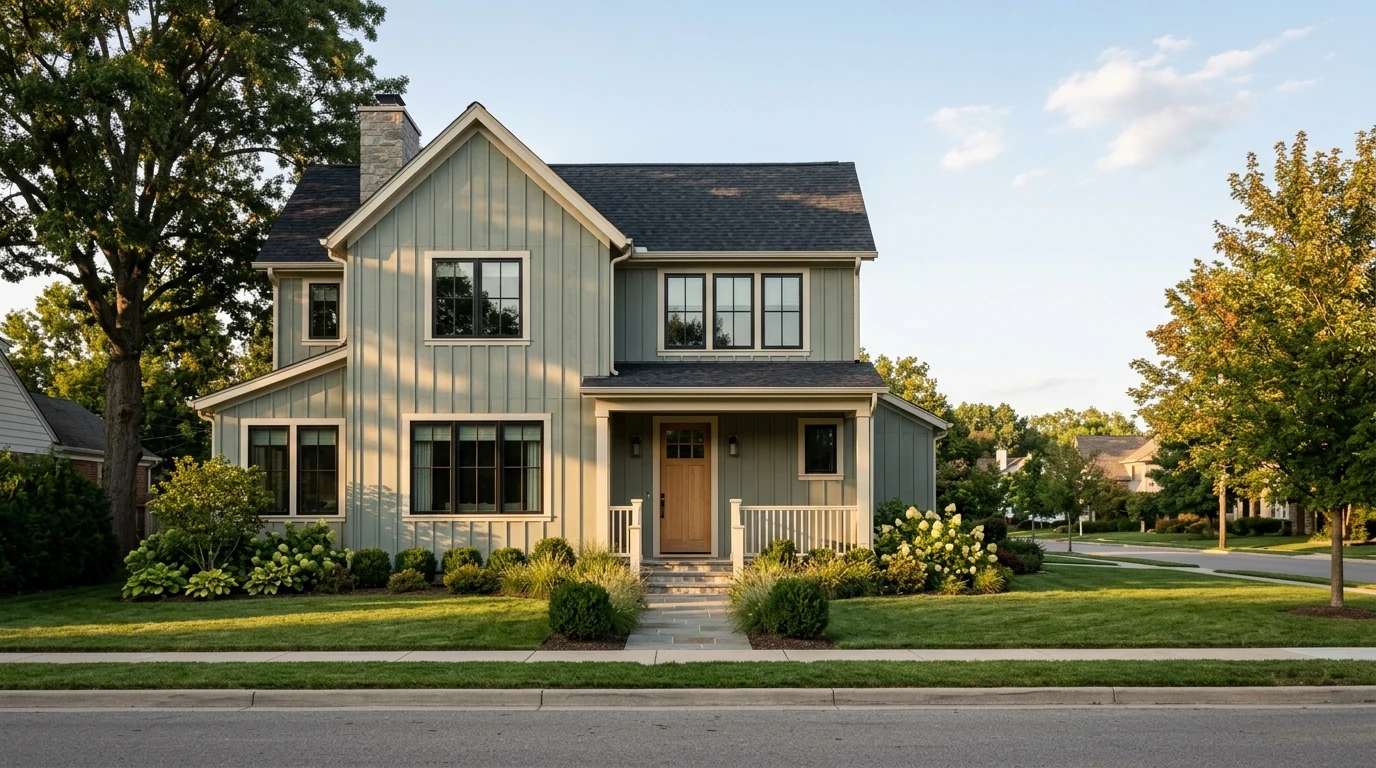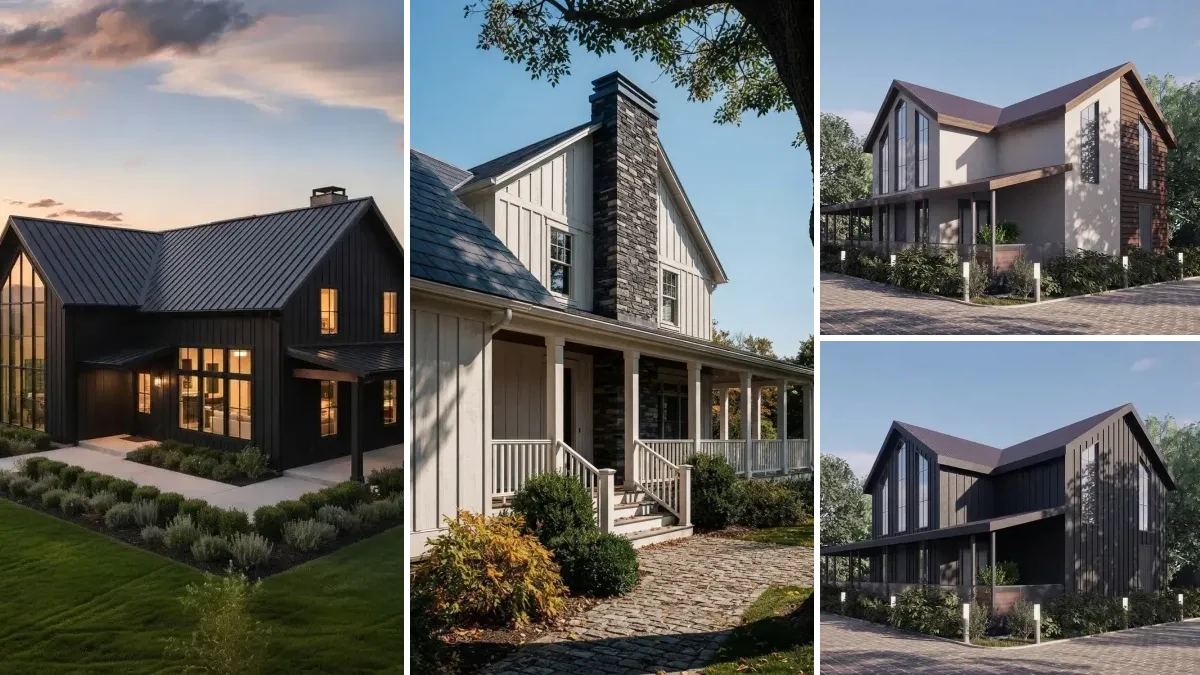
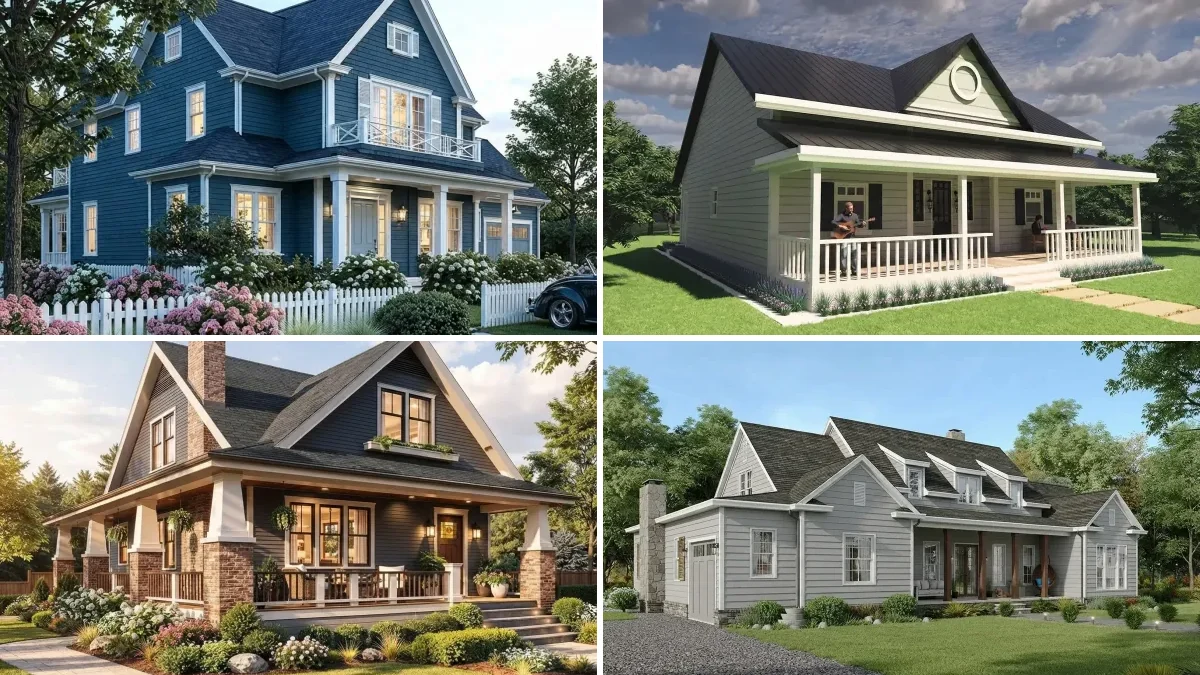
The most popular vinyl siding colors in 2026 are light gray, warm white, greige, sage green, soft coastal blue and charcoal, in roughly that order, with sandstone tan, cream and barn red holding on as regional favorites. Gray has led the market since the last ranked manufacturer list was published, Alside’s May 2022 survey that put Cape Cod Gray, Sterling Gray and Midnight Blue on top, and the shift since then has been toward warmer grays and muted greens. Vinyl siding installed runs $3 to $12 per square foot in 2026, about $12,000 for an average house, according to Fixr’s cost guide, and the color is the one part of that purchase you cannot change later without paint and a warranty argument.
Our articles are still written by humans!
Get human written articles in your Google feed.
That is why this guide does something a color chart cannot. We took one ordinary cape style house from our gallery and re-sided it in eight vinyl colors with our AI exterior design tool, so you can compare white against greige against charcoal on the same walls, same roof, same light. Below that are the colors on real renders, what each one does to a house, which trim and roof it wants, the heat and fading rules that make dark vinyl a different product, the paint question, what each brand actually sells, and the 2026 cost. We do not sell siding, so no color wins because a manufacturer paid for it.
The short version
- Most popular in 2026: light gray and greige, warm white, sage green, soft blue, charcoal. Tan, cream and red are regional, not national.
- The safe pick: a light warm gray or greige body, white trim, black or dark bronze door. It suits any roof except a strong brown one.
- Dark colors are a different product: vinyl softens from about 142 to 192°F (average 166°F) and dark panels absorb up to 80 percent of the sun. Buy darks only from a reflective line with its own fade warranty.
- Painting: vinyl-safe paint only, and never darker than the original or below LRV 55 unless the paint maker’s vinyl palette says so (Benjamin Moore’s rule).
- Cost in 2026: $3 to $12 per sq ft installed, $12,000 average, $6,000 to $24,000 typical (Fixr). Dark premium colors add to the material line.
- See it first: upload one photo of your house to the exterior design tool and compare three colors on your own walls before you order samples.
See Eight Vinyl Siding Colors on the Same House
Siding color is the decision people get wrong most often from a 4 inch sample chip, because a chip has no roof, no windows and no neighbor next door. The fix is to look at the color on your own house before you commit. Take one photo of the house from the street, upload it to the MeltFlex exterior design tool, and type one sentence: “Re-side every wall in light gray vinyl lap siding, white trim, keep everything else the same.” About 20 seconds later you see your house, your roof and your windows in that color. Then change one word and run it again.
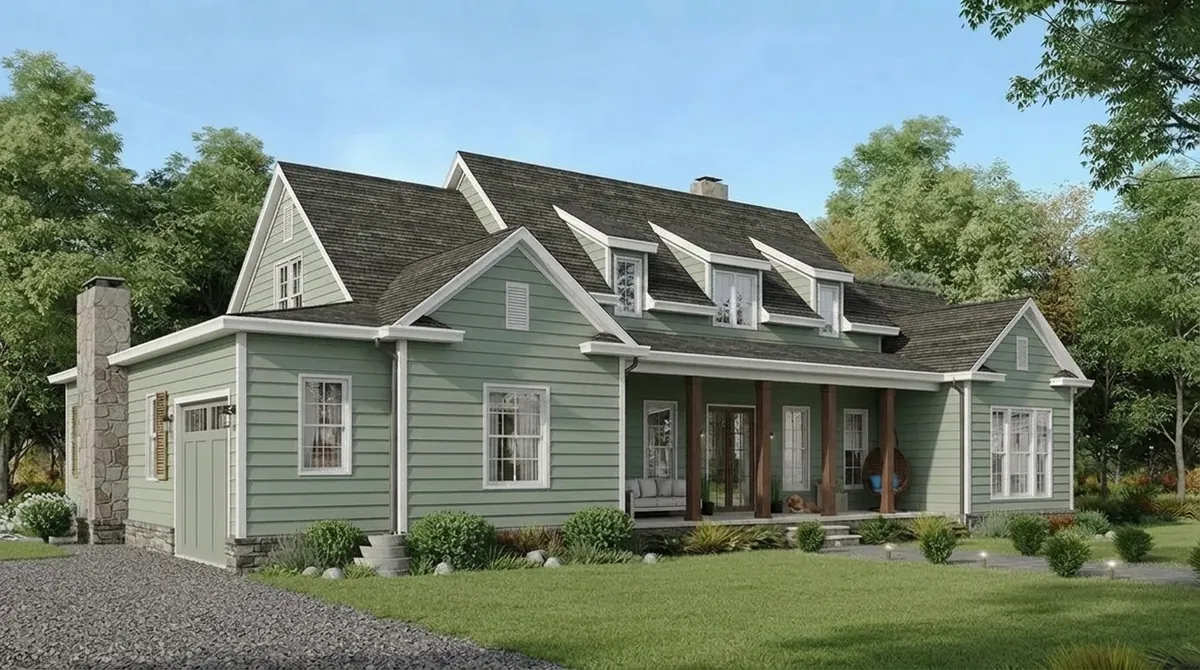
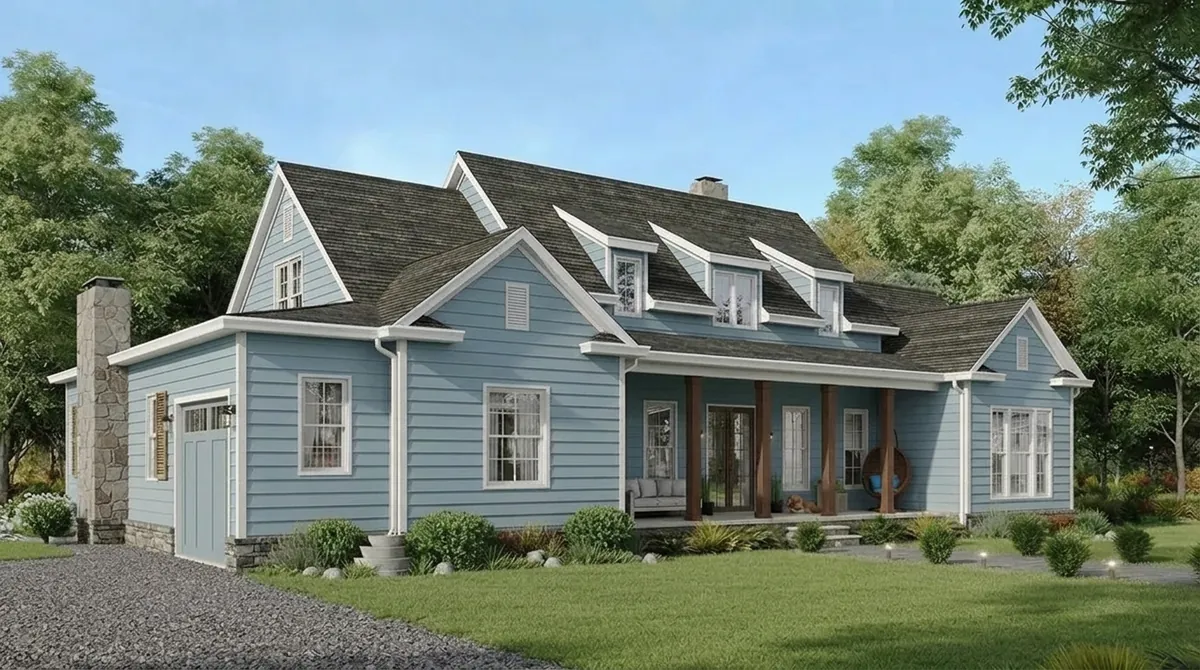
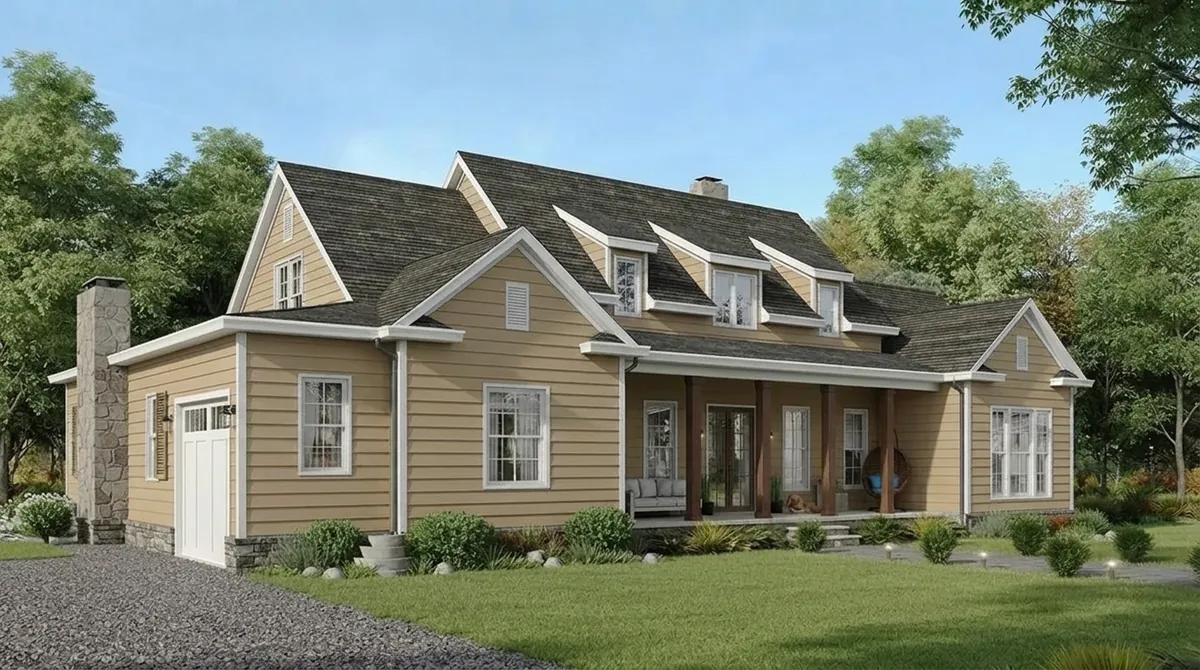
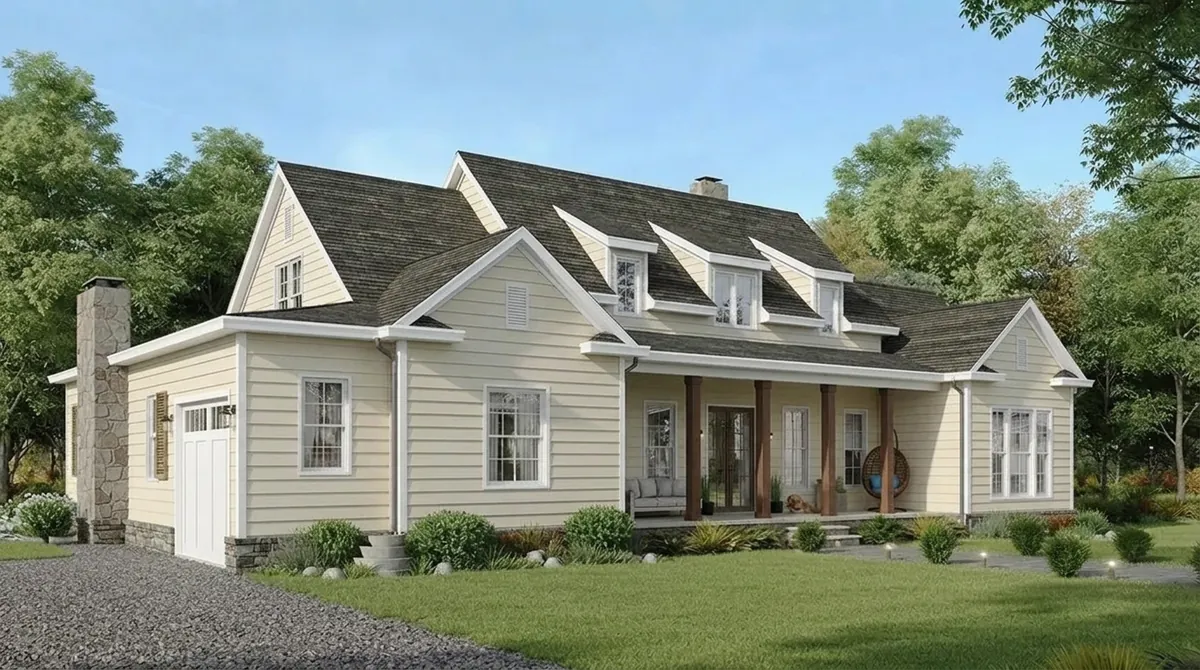
Here is that workflow on one house from our gallery, a cape with light gray lap siding, three dormers, a stone chimney and a covered porch. Every panel below was made from this same starting photo on 17 October 2026, with the prompt asking for one new siding color and nothing else changed. The dormers, porch posts, chimney and planting stayed put in all eight, which is the point: you are comparing colors, not houses.
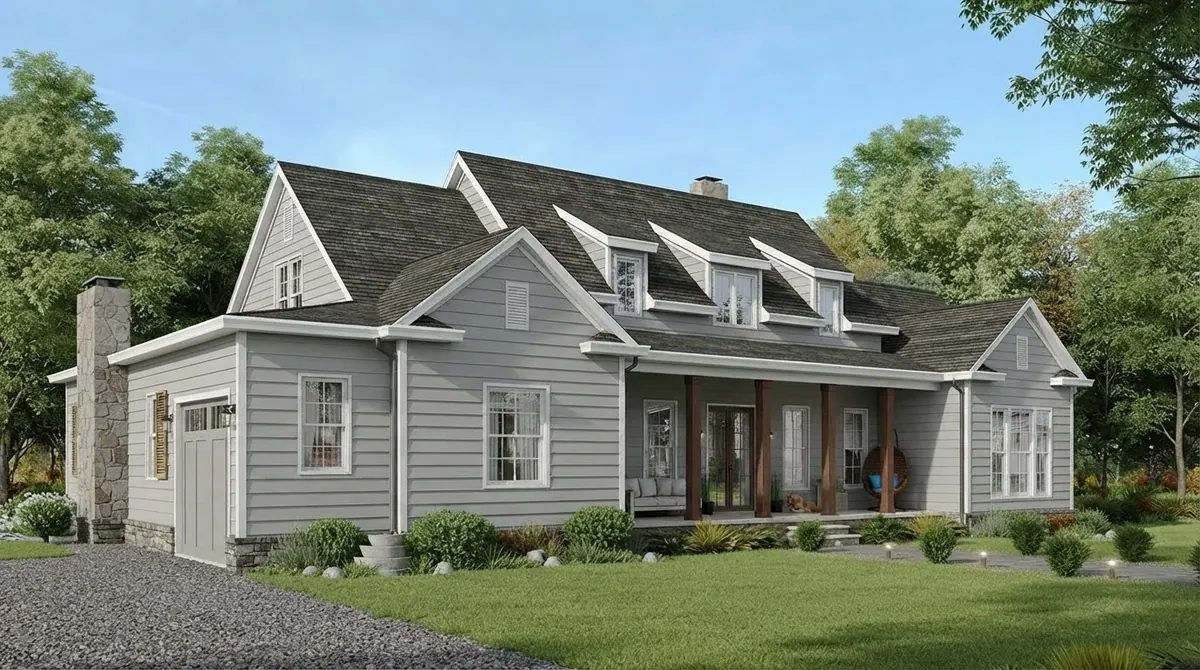
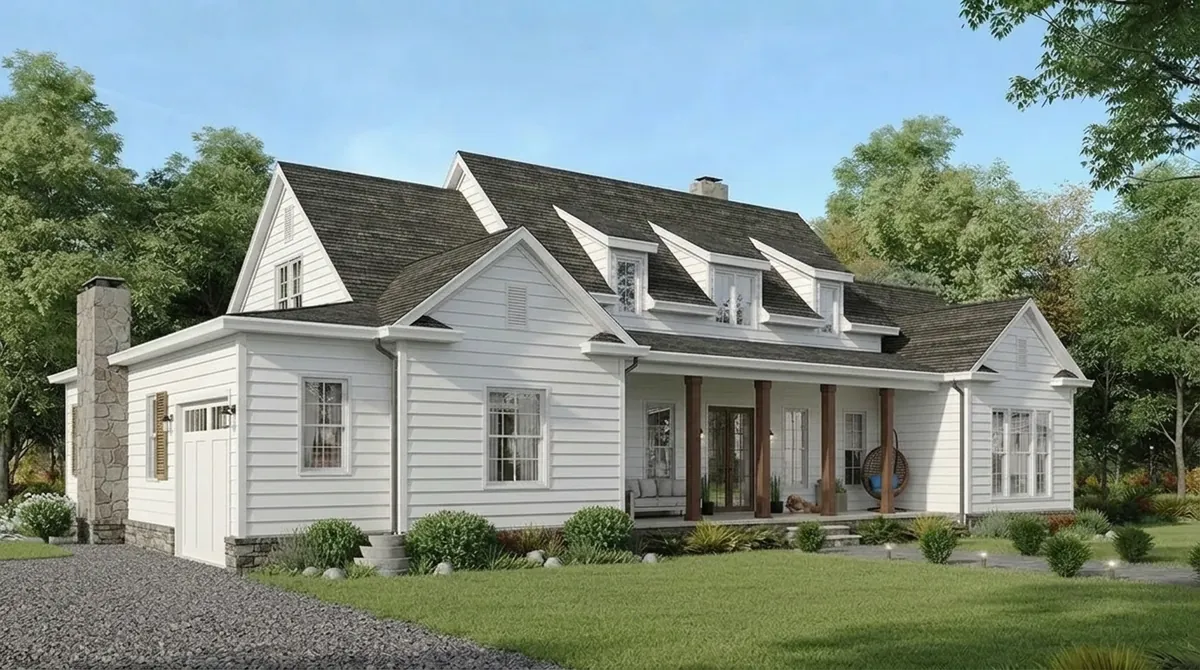
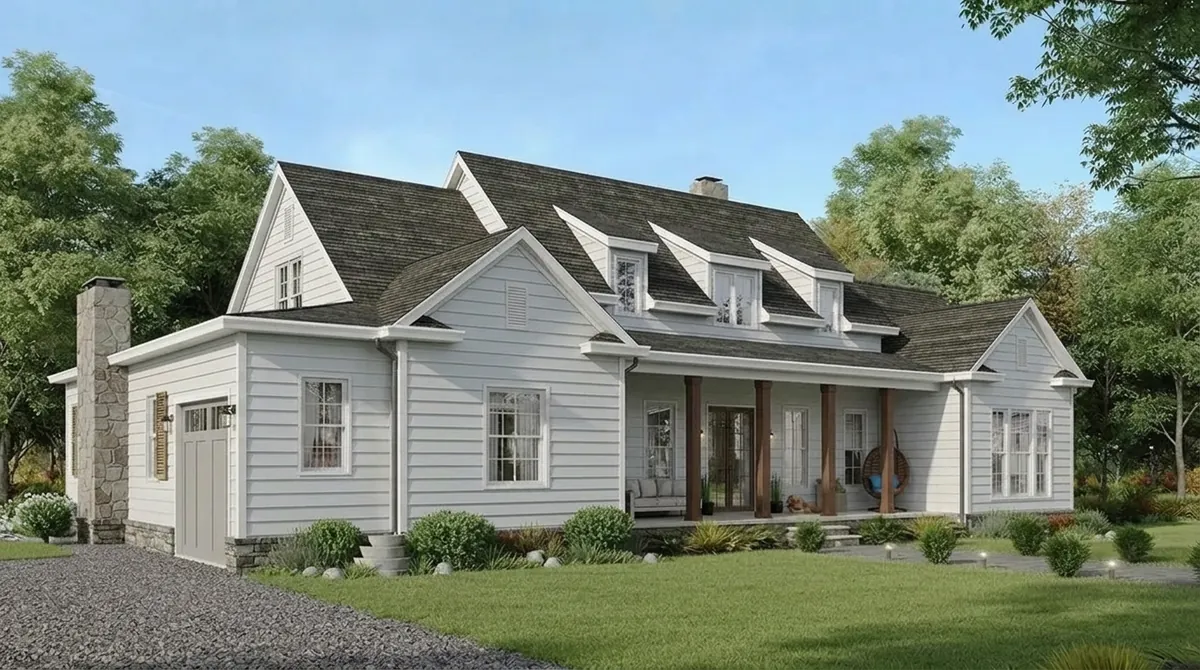
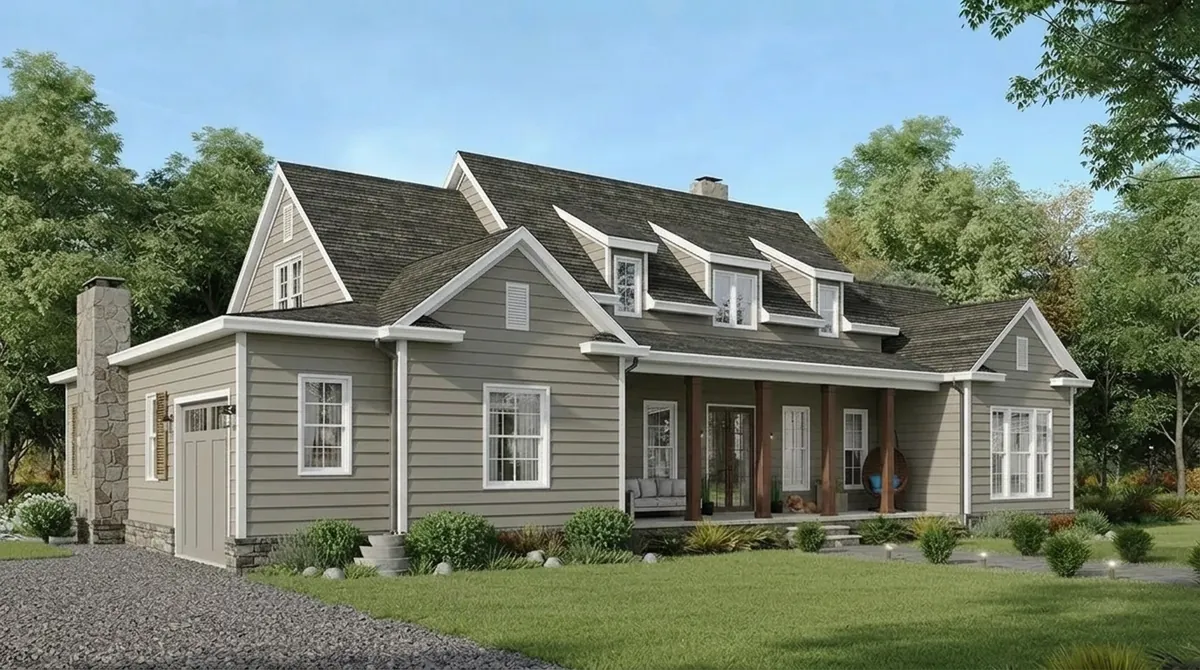
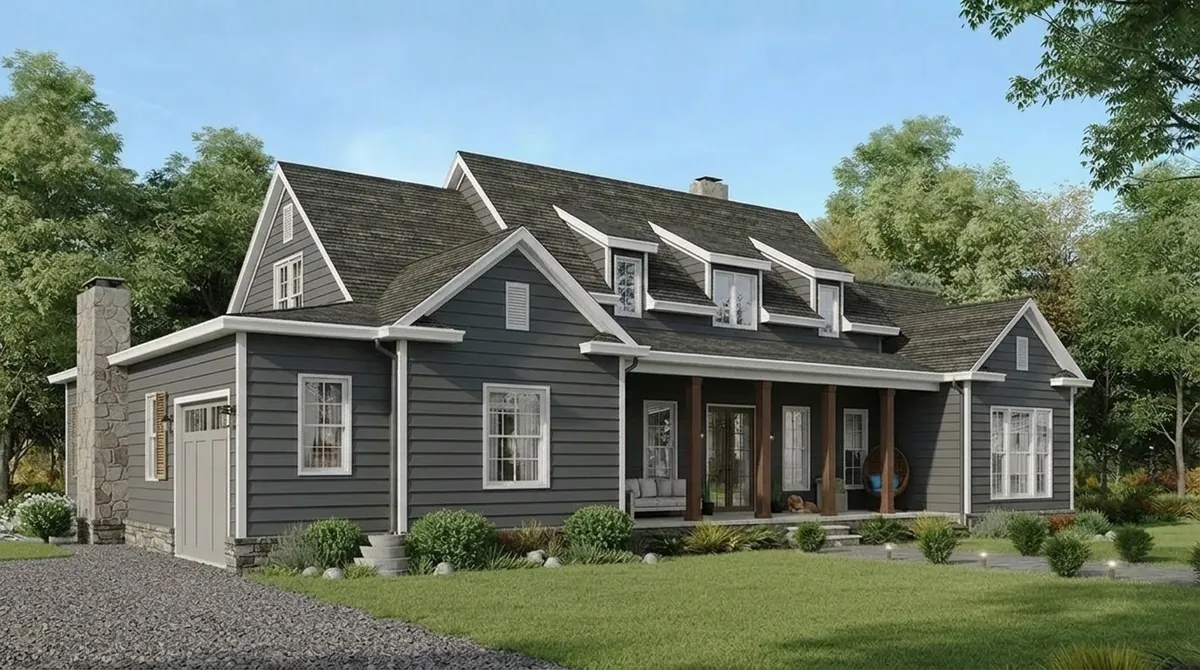
“Dark charcoal gray.” Dramatic, and the roof nearly disappears into it. This is the color to read the heat section for before you order.
Three things the series shows that a chart cannot. First, the roof decides more than the siding: under this dark shingle roof, white, light gray, greige, sage and coastal blue all look finished, charcoal turns the house into one dark mass with white dormers floating on it, and sandstone looks like it was sided twenty years ago. Second, the trim color changes the apparent size of the house: white trim on cream, gray or blue outlines every window and dormer and makes the facade busier, which is good on a plain box and bad on a house with 20 windows; on white siding the trim disappears and the house reads as one calm shape. Third, the stone chimney is the tell for undertone: greige and sage agree with it, the cool light gray is neutral to it, and sandstone and charcoal argue with it. Check your own house for a fixed element like that before you fall for a chip. For wording that gets specific results, our AI exterior design prompts cover siding, trim and roof lines; the visualize before renovating guide walks the whole workflow.
The Most Popular Vinyl Siding Colors in 2026
Popularity in siding moves slowly, because a house is re-sided every 20 to 40 years, so the list below is built from the last ranked manufacturer data and what has shifted since, not from a trend forecast. Alside’s ranked list, reported by ProBuilder in May 2022, went Cape Cod Gray, Sterling Gray, Midnight Blue, Ageless Slate, Glacier White, Platinum Gray, Harbor Blue, Storm, Coastal Sage, Charcoal Smoke: four grays, three blues, one white, one green, one charcoal. James Hardie’s sales data (fiber cement, not vinyl, but the same homeowners) adds the direction of travel: Arctic White still sells 35 to 45 percent of its siding but is slipping, while the warm taupe Cobble Stone and Iron Gray grew about 7 and 6.5 percent year on year, and the Midwest, Northeast and South all put Cobble Stone first.
Rankings combine Alside’s 2022 list, James Hardie’s regional sales data and what the big three vinyl makers now put in their dark and designer lines. No single 2026 national survey of vinyl colors exists; if someone sells you one, ask for the sample size.
If you would rather see the families on real houses than in a table, HomePortfolio’s nine minute walk through the most popular siding colors covers the same ground, with the trim pairings that make each one work.

White and Warm White Vinyl Siding
White is the color that never has to be defended, and in vinyl it has one real advantage over every other shade: it runs coolest, so it fades least and warps never. At about 20 percent solar absorptance, a white panel on a 95°F day stays close to air temperature while a charcoal one climbs toward the softening range. It also hides the one thing vinyl does badly, which is joints: on a white wall the overlaps disappear, on a dark wall every seam catches the light.
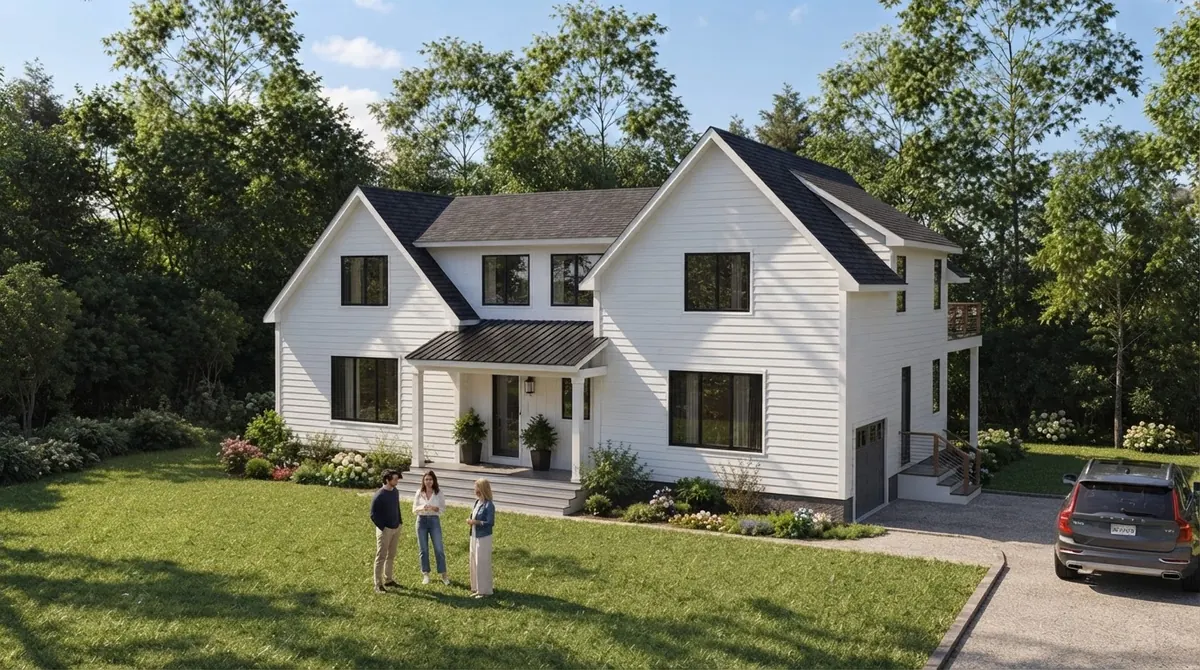
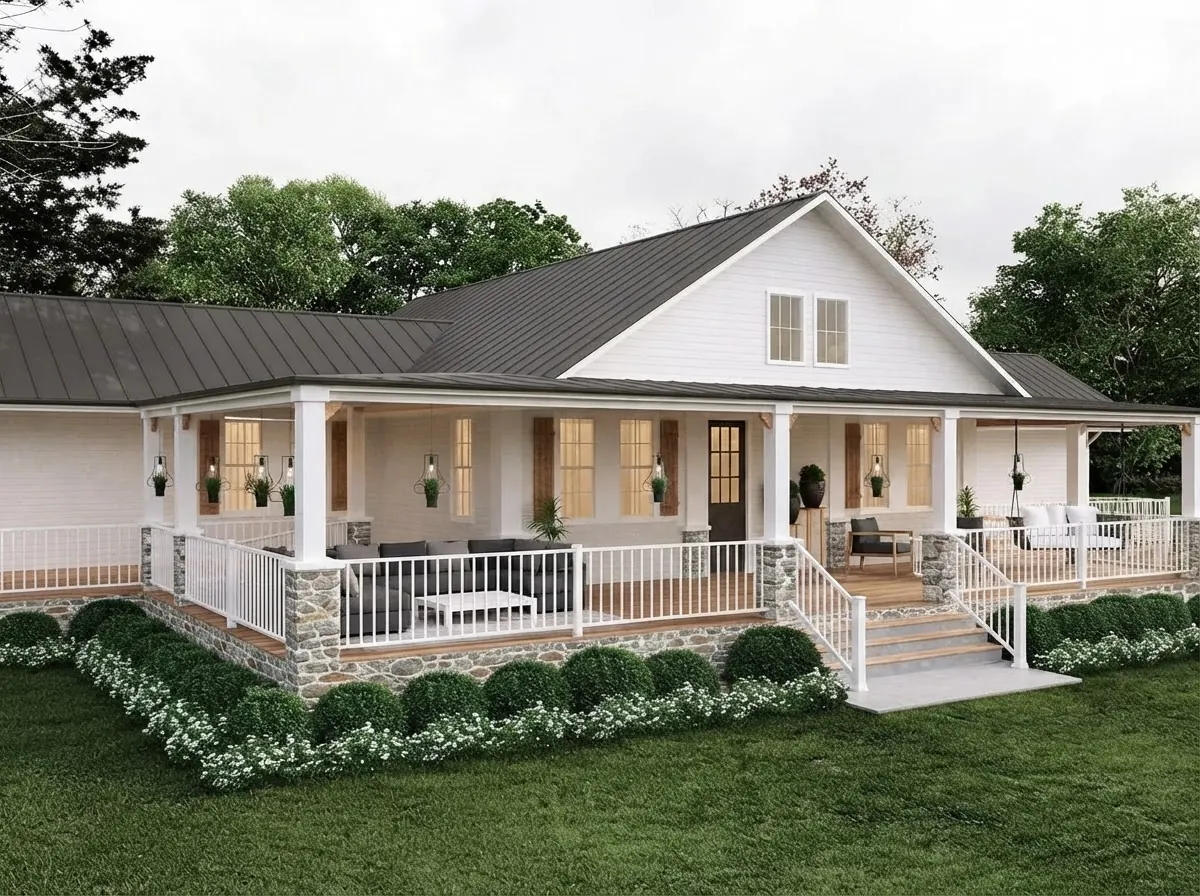
The decision inside white is temperature. A stark cool white looks blue on a north facing wall and glares on a south one; a warm white with a drop of yellow or gray in it reads as white from the street and as calm up close. Most vinyl lines sell both and name them differently, so compare chips outdoors at noon and at dusk. If you want the paint version of this conversation, our guide to Sherwin-Williams Alabaster is the warm white most people end up at, and black window frames covers the trim side.
Our take: the right choice for a farmhouse, a colonial or any house with a strong roof and good trim. The wrong choice for a plain box with no trim detail, where it looks like a storage building.
Light Gray and Greige Vinyl Siding
Gray has been the best selling vinyl siding color family for most of a decade, and in 2026 the movement inside it is from cool blue-grays toward warm grays and greige. The reason is the roof: most American roofs are charcoal or brown asphalt, and a warm gray sits under both, while a blue-gray only works under black. Greige, a gray with enough beige in it to read warm, is the shade that has grown fastest since 2022, the same shift James Hardie reports as Cobble Stone overtaking its cooler grays region by region.
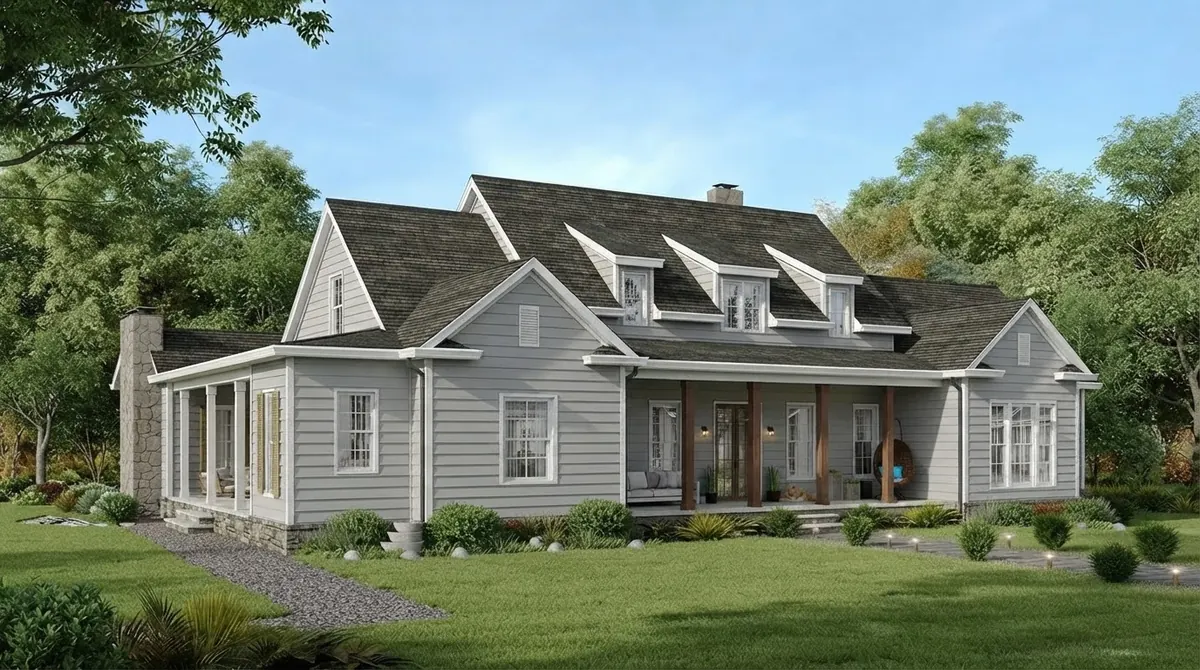
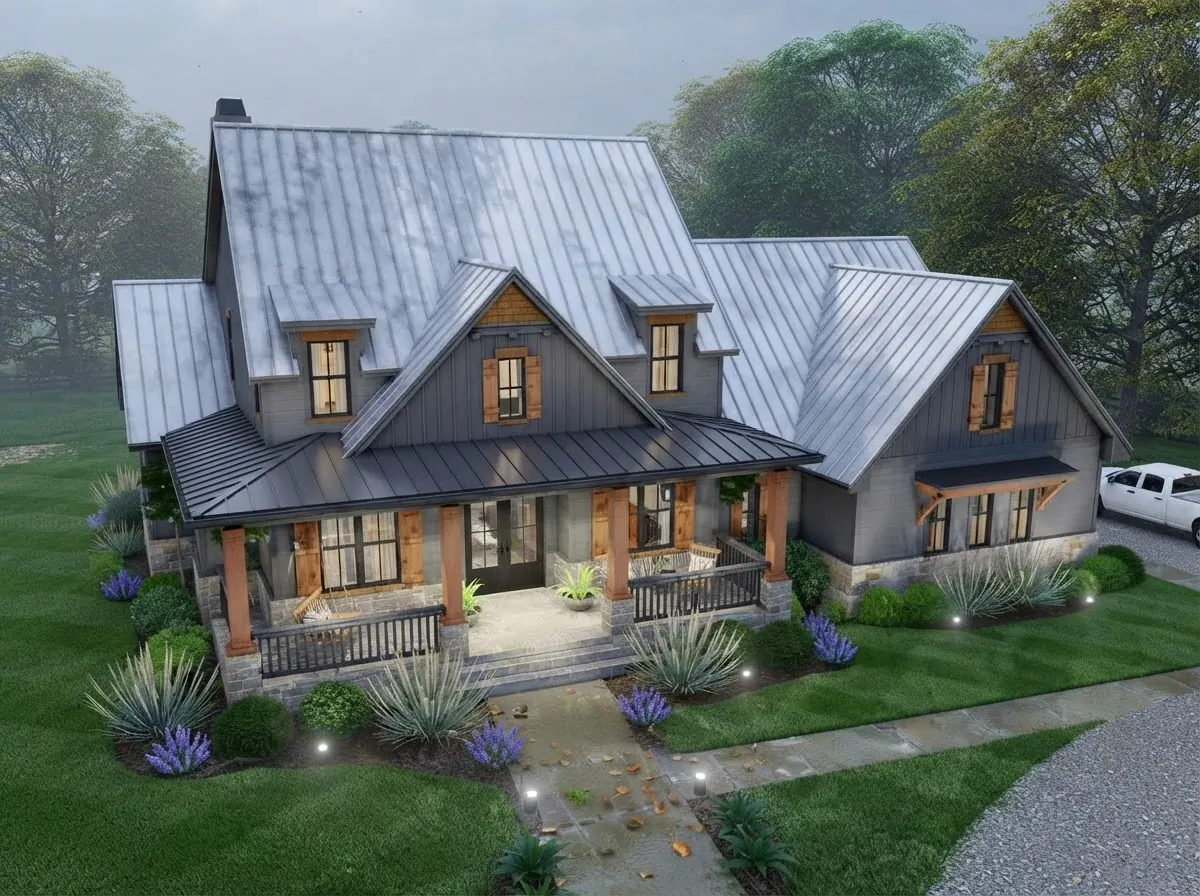
The trap is undertone. Gray vinyl comes in green-grays, blue-grays and violet-grays, and a chip that looks neutral in the showroom turns lavender at sunset on a west wall. Hold the sample against the roof shingles and the brick or stone on the house, not against the sky. If the roof is brown, choose a greige with a visible yellow or red undertone; if the roof is black, almost any gray works, and the lighter it is the larger the house will read. The paint world’s equivalent is the debate in our Agreeable Gray guide, and the same rules carry outside.
Our take: the one color family we would put on a house we had not seen. Light gray with white trim and a black door is the vinyl equivalent of a navy suit.
Sandstone, Tan and Clay Vinyl Siding
Tan was the default vinyl color of the 1990s and 2000s, which is both why it is everywhere and why it reads dated when it is paired with the white vinyl windows and gray roof of that era. In 2026 it survives where the light and the landscape are warm: the South, the Southwest, the Plains. James Hardie’s regional data puts Navajo Beige and Khaki Brown in the South Central top three and nowhere else.
Sandstone on the demo house. Under this cool gray roof it fights; under a brown roof with bronze trim it would settle down. Our gallery has no plain tan lap-sided house, so this is the only render of it here.
The way to make tan look current is to take the white out: bronze or black window frames, trim in the same color as the body or a shade darker, a brown or weathered wood roof, and stone or brick at the base. Clay, the pinker end of the family, works the same way and is the natural match for a terracotta or Spanish tile roof.
Our take: right on a ranch or a Southwestern house with a brown roof and dark trim. Wrong on a two story colonial with white windows, where it is the color buyers mean when they say “the siding needs updating.”
Cream and Pale Yellow Vinyl Siding
Cream is white with the glare taken out, and on a cottage, a colonial or any house that faces south it is often the better white. It keeps white trim legible, which stark white does not, and it flatters green landscaping. Pale yellow, the next step along, is a regional color: common in New England and the Mid-Atlantic, rare west of the Mississippi.
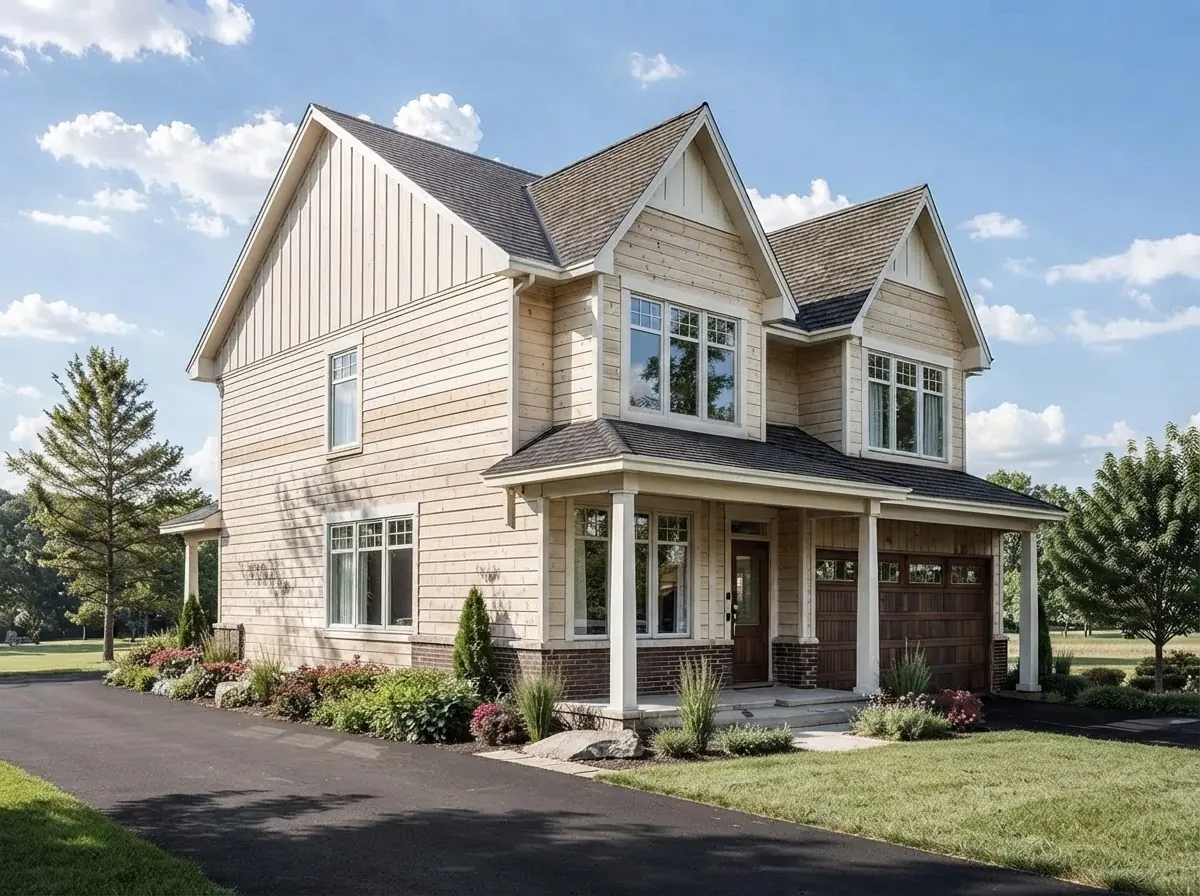
Cream lap siding with white trim on a craftsman. From the street it reads as a soft white; the trim stays legible, which is the whole point of cream. Render from our gallery.
The honest catch with cream and yellow vinyl is aging. Every vinyl color chalks slowly as the surface oxidizes, and on a cream or yellow panel the chalk shows as a dull, slightly dirtier version of the same color rather than the lightening you see on gray. A wash every year or two keeps it, which is less work than it sounds. The demo house in cream is in the series above; compare it to the white panel and notice that the trim stands out on cream and disappears on white.
Our take: the best white for a house with white trim you actually want to see. Keep yellow pale; a saturated yellow is the one exterior color we have never seen improve a house.
Sage, Olive and Forest Green Vinyl Siding
Green is the color family that moved most between 2022 and 2026: Coastal Sage was ninth on Alside’s list, and today a muted sage or olive is the first non-neutral most installers suggest. It works because it is a neutral in disguise. A grayed sage sits between gray and green and takes white trim, black trim or natural wood equally well, and it looks right in front of trees, which most American houses are.
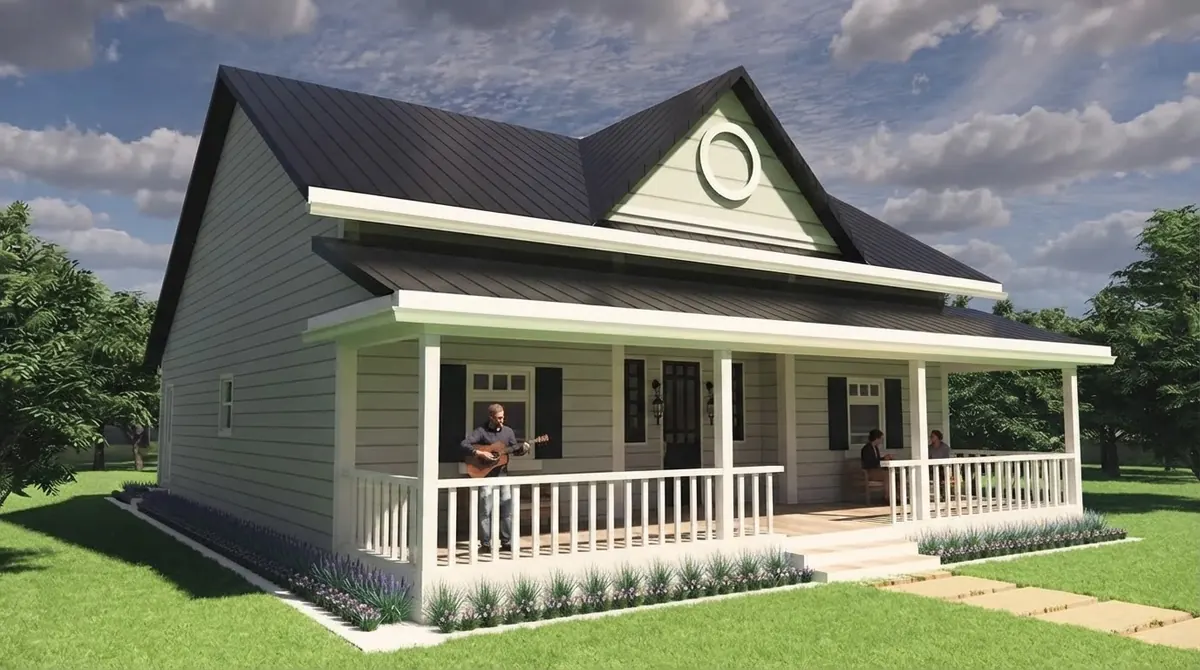
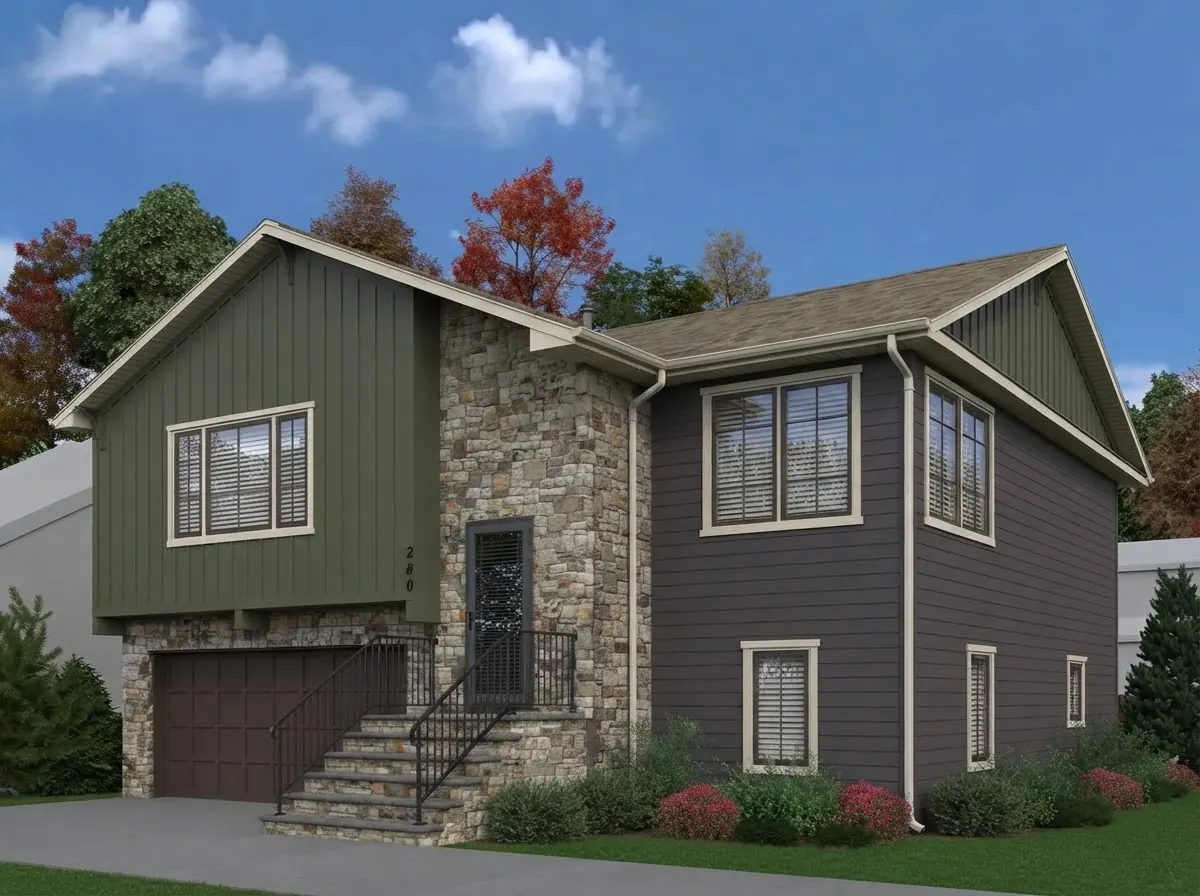
Forest and hunter green are a different proposition. They are dark colors with all the heat questions of charcoal, they are sold mainly in the premium lines, and they date faster than sage. They look best on a house with a lot of white trim, a cabin, or a house that sits in snow for four months. If you want deep green on part of the house only, the gables or a lower band, the board and batten siding guide covers how to mix profiles at a real break in the wall.
Our take: sage is the color to pick if you want something that is not gray and still want to sell the house someday. Olive is for a house with stone or wood to answer it. Forest green is a commitment.
Coastal Blue, Slate Blue and Navy Vinyl Siding
Blue is the most regional of the popular families: three blues sat in Alside’s 2022 top ten and James Hardie puts Boothbay Blue in the West’s top three, but you will rarely see it in Texas. The shade matters more than in any other family. A dusty coastal or slate blue is a neutral that happens to be blue; a bright or saturated blue is a statement that is hard to live with for 30 years.
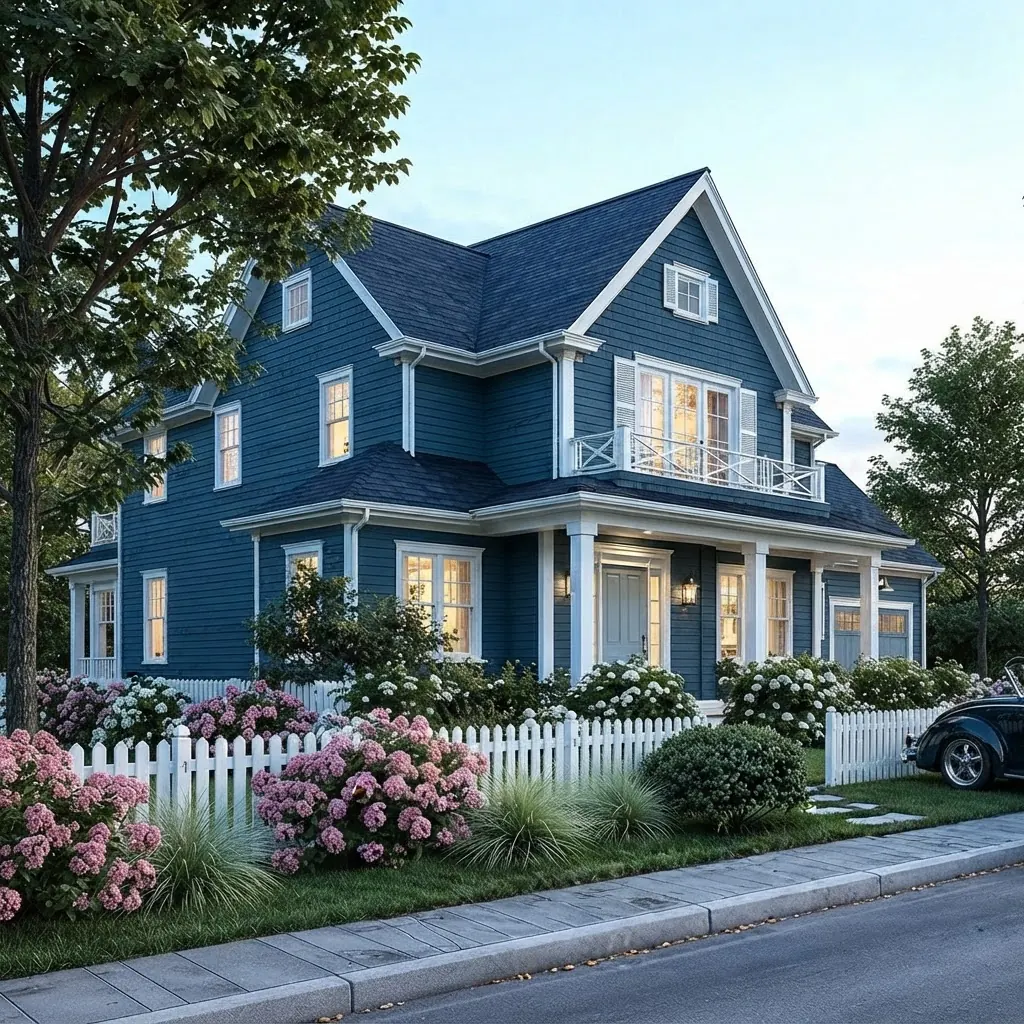
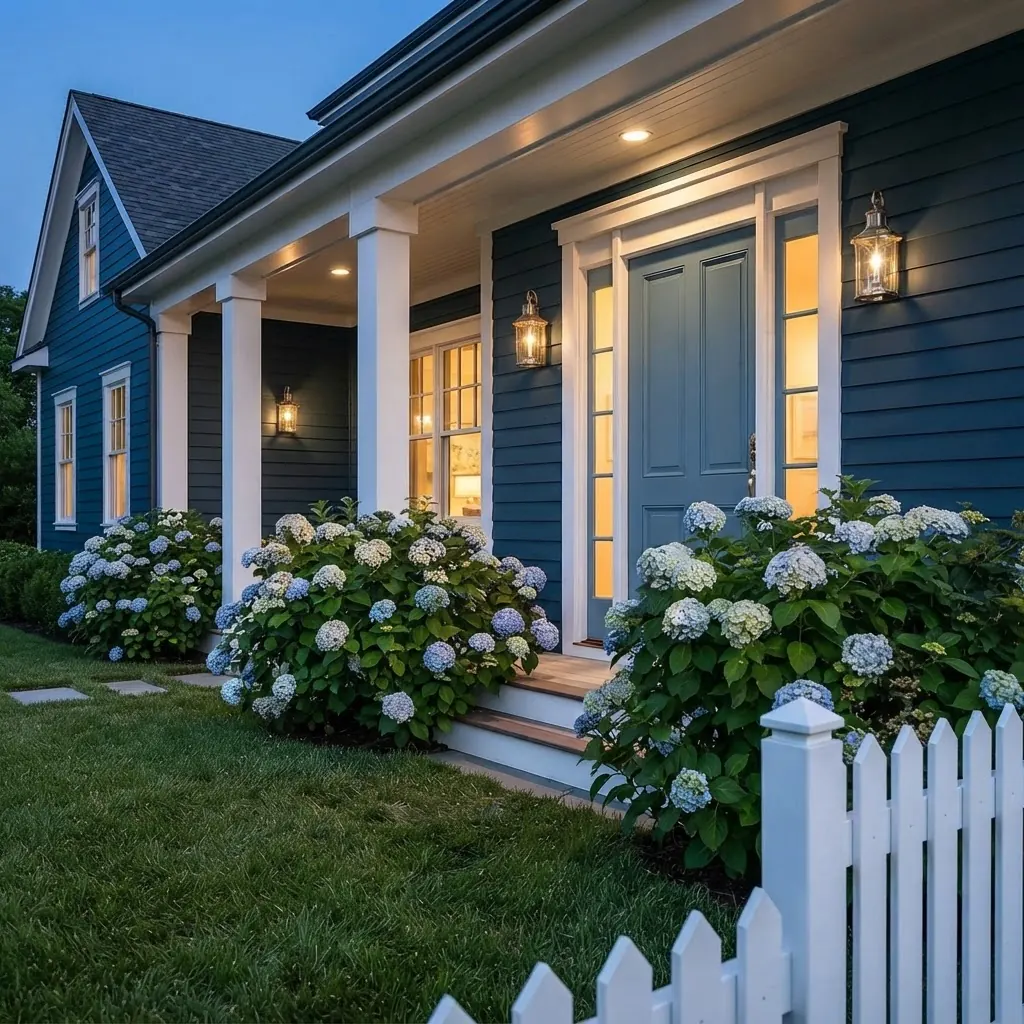
Navy is a dark color in every way that matters for vinyl. It absorbs heat like charcoal, it is sold in the reflective premium lines (Mastic’s Newport Bay is one of its named SolarDefense dark picks), and it fades first on the wall that faces the afternoon sun, which is why navy with white trim and a white porch is the classic: the white carries the house while the navy ages. Soft coastal blue, on the demo house in the series above, has none of those problems and most of the charm.
Our take: coastal or slate blue with white trim for a whole house; navy for gables, a lower band or a cabin, and from a premium line only.
Charcoal, Graphite and Black Vinyl Siding
Charcoal is the most searched dark siding color and the one with the most asterisks: it is sold only in premium lines, it costs more per square, and on a vinyl panel it is the color most likely to show heat distortion if the house has the wrong neighbor. It is also, on the right house, the best looking color in this guide. The modern farmhouse, the barn house and anything with a black metal roof were designed for it.
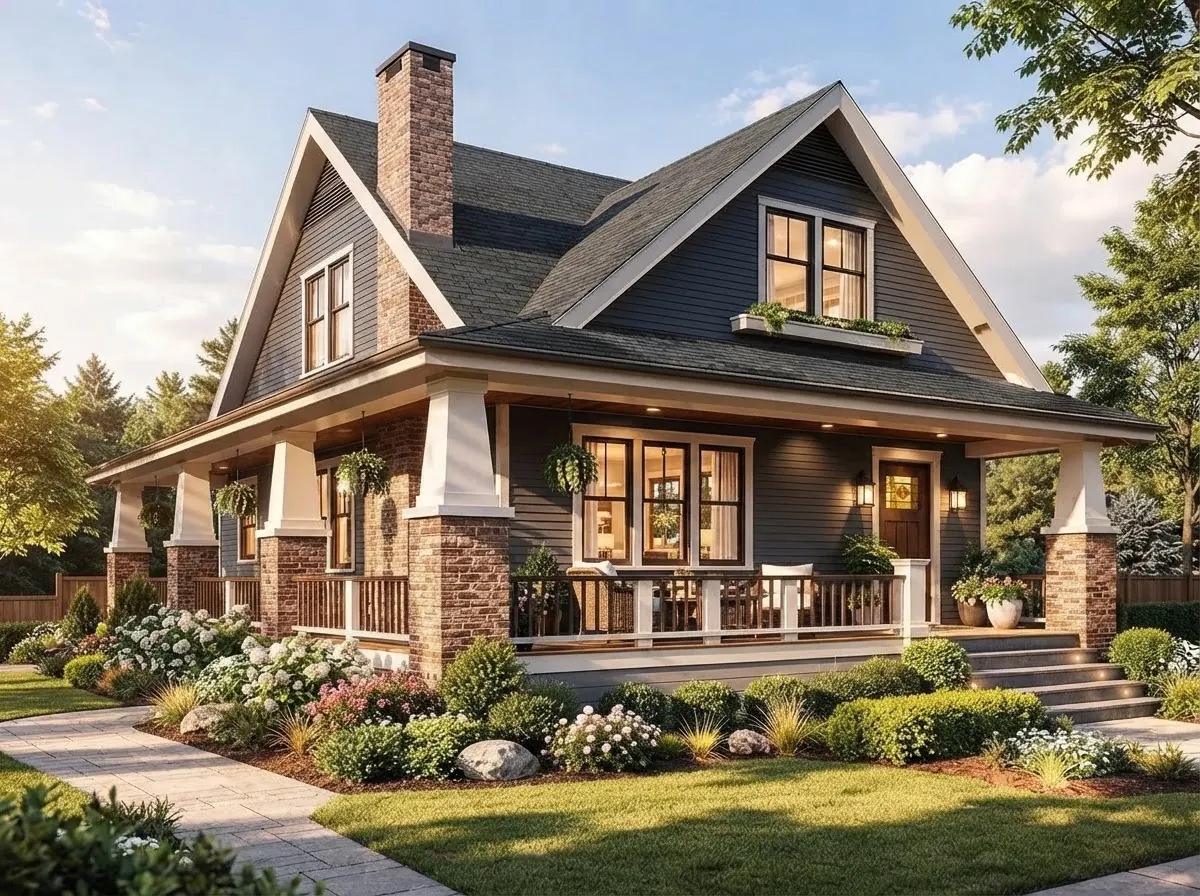
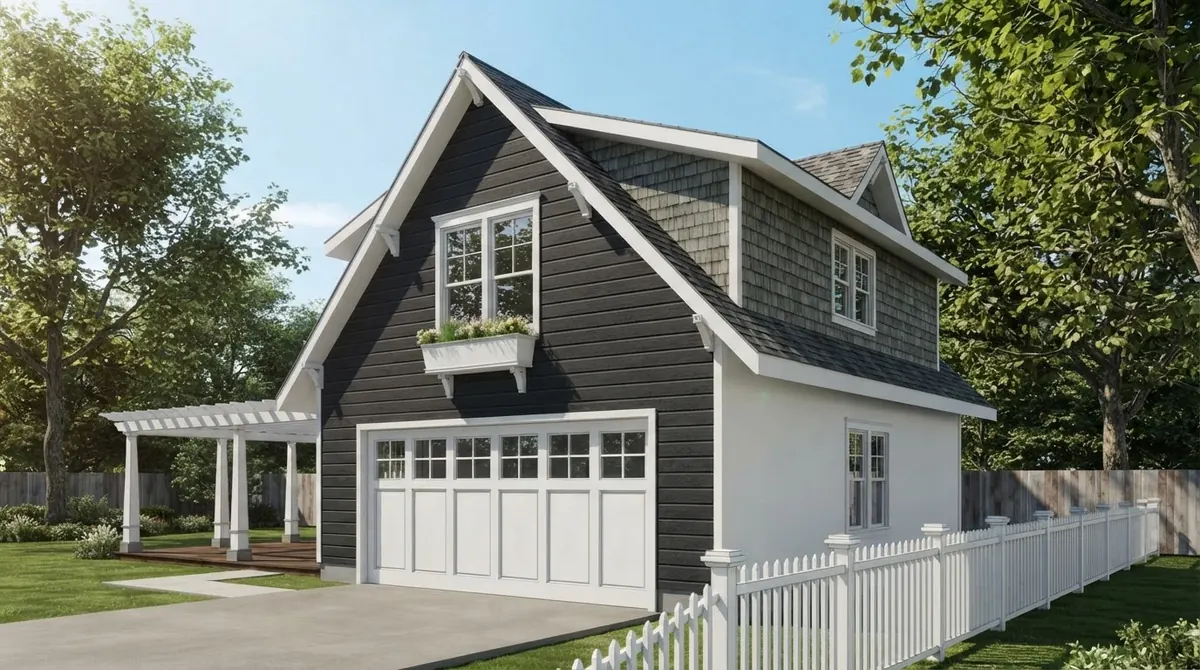
True black vinyl barely exists; what the brands sell as black is a very dark charcoal or graphite, because the panel has to stay below its softening point in July. If you want a flat, matte, actual black, fiber cement or steel is the right material and our siding materials comparison lays out the price difference. On vinyl, keep charcoal for houses with simple forms and few windows, pair it with white or same color trim, and read the next section before you sign.
Our take: wonderful on a modern farmhouse or a barn house in a cool climate, from a reflective line with a written fade and distortion warranty. On a 1980s colonial with white vinyl windows, it is a costume.
Autumn Red, Barn Red and Brown Vinyl Siding
Red and brown are the oldest siding colors in America and in vinyl they are now niche, which is exactly why a red farmhouse or a deep brown ranch stands out on a street of grays. Autumn Red is a named color at CertainTeed and Mastic, barn red is what everyone calls it, and the browns run from Mastic’s Brandy Wood, one of its named SolarDefense dark picks, to the chocolate and espresso shades that look like stained wood from the road.
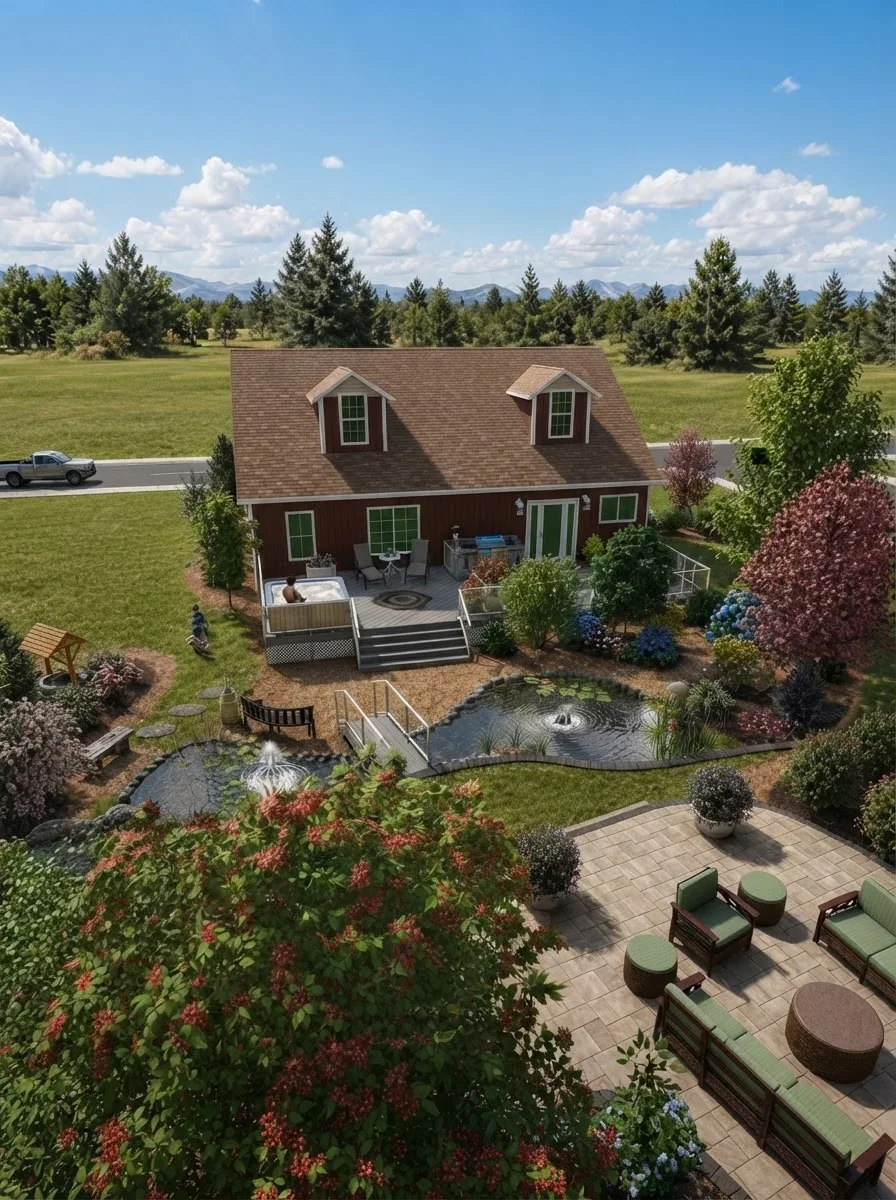
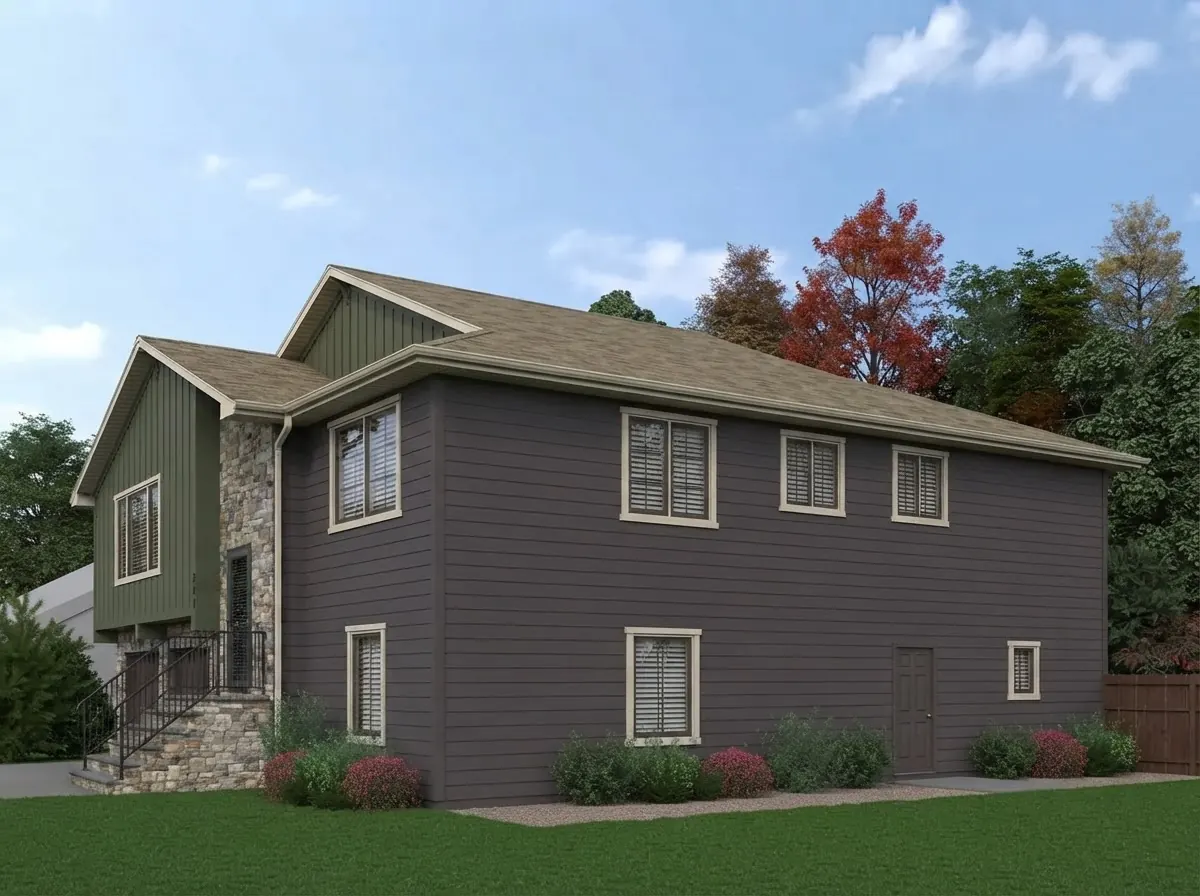
Both are dark colors for warranty purposes and both fade on the sunny wall first, red visibly. Buy them from the premium lines, give them white or cream trim, and put them on a house with a simple roof. For the whole house palette, with front door and trim pairings for each of these families, our exterior house colors 2026 guide shows the same seven palettes on one house.
Our take: red for a farmhouse with white trim and a metal roof; brown for a ranch or a house in the trees. Neither for a house you plan to sell within five years.
Dark Vinyl Siding Colors: Heat, Fading and What the Warranties Say
Dark vinyl siding is a different product from light vinyl siding, and the number that explains why is 166°F. A Cardinal Glass technical bulletin (August 2022), citing Lawrence Berkeley National Laboratory, states that “the heat deflection temperature of vinyl siding ranges from 142°F to 192°F with an average distortion temperature of 166°F,” and that “in general, the darker the color, the more absorptive the siding. The absorptance values can range from 20% to 80%.” A white panel on a 95°F day stays near air temperature; a charcoal one in direct afternoon sun can approach the range where it softens, and the bulletin’s own chart shows the 60 and 80 percent panels crossing it far sooner than the 20 and 40 percent ones.
Two different problems get mixed up here. The first is ordinary sun: a dark panel runs hot every summer afternoon, which over years means more fading and, in a bad spot, a visible wave in the wall. That is a color problem, and it is the one the premium lines were built for. Mastic describes its SolarDefense Reflective Technology as a three layer panel, a top layer that manages light and heat, a cooling compound that reflects heat away and a base that resists warping, sold in nine colors across its Carvedwood 44, Board & Batten Designer and Ovation lines under the headline “No Fading. No Distortion. No Exceptions.” CertainTeed, Royal, Alside and Kaycan each sell an equivalent dark collection; the names differ, the idea is the same.
The second problem is reflected sun from a neighbor’s low-E windows, which can focus enough heat to melt siding of any color. The Polymeric Exterior Products Association, the trade body formerly called the Vinyl Siding Institute, says “concentrated reflected sunlight has caused distortion of light and dark siding,” that color, thickness and quality “are not likely to be major factors” in those cases, and that “the chances of siding distortion or melting occurring on any given house are extremely small.” So: if your neighbor’s windows throw a hot spot on your wall at 3 pm, the fix is a screen or an awning, not a lighter color. If they do not, the question is only how hot your own dark wall gets, and that is what the reflective lines and their warranties address.
The practical rules: buy any color darker than mid gray from a line that names its reflective technology and prints a separate fade and distortion warranty; read the warranty for the words “normal climate conditions” and “reflective light sources,” because those are the exclusions; expect to pay more per square for the dark shades; and put the darkest color on the north and east walls if you are mixing.
Siding, Trim, Roof and Door Combinations That Work
The roof is the fixed point, so start there: a house keeps its roof through two or three sidings, and the combinations that fail almost always fail because the siding ignored it. Match the temperature of the roof (brown roofs want warm siding, black and gray roofs take either) and then choose trim to either outline the house or disappear into it.
Two rules cover most of the rest. Keep the number of colors to three: body, trim, door; a fourth color for shutters is where houses start to look like catalogs. And change color only at a real break in the building: a gable, a floor line, a change of wall plane. A darker gable over a lighter body, as on the greige demo panel and the navy and olive houses above, is the two tone that works; a dark bottom band under a light top on a flat wall is the one that does not. For the porch, which is where most of these changes land, our modern front porch ideas show the transitions on real houses.
Can You Paint Vinyl Siding a Different Color?
Yes, with a vinyl-safe exterior paint, as long as the new color is not darker than the old one, and if it is, only from the paint maker’s vinyl-safe palette. The clearest rule in print is Benjamin Moore’s, on the datasheet for its Regal Select Exterior REVIVE for Vinyl Siding: “Do not paint vinyl with any color darker than the original color or having a Light Reflective Value (LRV) of less than 55 unless it is from this palette and comports with the specific vinyl manufacturer guidelines when making the color selection and painting. Otherwise the color will absorb more heat, possibly causing the siding to warp, resulting in additional repairs and expenses.” Sherwin-Williams publishes a VinylSafe palette on the same principle.
For the hands on side, a painting contractor’s seven minute walk through of whether and how to paint vinyl siding, prep, product and the color warning, is below.

LRV is the number to look for on any paint chip. White is around 85 to 93, a light gray about 60 to 70, greige 50 to 60, sage in the 30s and 40s, charcoal under 15. So a faded tan house (LRV around 55) can be painted light gray or white with ordinary vinyl-safe paint, but painting it charcoal means a vinyl-safe charcoal formulated with reflective pigments, from the palette, and even then you have changed what the siding warranty covers; most vinyl warranties exclude painted panels outright. Our exterior paint visualizer guide covers how to test paint colors on a photo of the house before you buy a gallon.
Our take: painting lighter is a good way to get ten more years out of sound vinyl. Painting darker is a way to buy new siding in five.
Vinyl Siding Colors by Brand
Every brand names its own colors, which is why “sandstone” from one maker is a half shade off “sandstone” from another, and why the only sample that counts is a chip of the exact product you will buy. The table is what we could verify from each brand’s own pages; where a brand does not publish a count, we say so instead of guessing.
Counts and program names from each brand’s own site or product literature where we could reach it on 17 October 2026 (Kaycan, Mastic, Georgia-Pacific, CertainTeed spec sheet, Alside via ProBuilder). ProVia returned a 403 to our fetch, so its row is marked unverified rather than filled in from third party pages.
If you are choosing between brands rather than colors, do it on the dark-color warranty and the panel thickness, not on the chip. Fixr’s cost guide puts standard residential vinyl at 0.042 inch and premium at 0.046 inch, and the thicker panel is the one that stays flat in heat and lies straight on a wavy wall, which matters more for dark colors than light ones.
How Much Does Vinyl Siding Cost in 2026?
Fixr’s guide, updated 28 January 2026, puts vinyl siding at $3 to $12 per square foot installed, an average project of about $12,000 and a typical range of $6,000 to $24,000. Labor is 30 to 50 percent of that, about $2 to $5 per square foot. Color is not a line in Fixr’s table, which is itself the useful fact: standard colors cost the same, and the dark premium shades are priced by the brand as a different product, typically a few dollars more per square (100 square feet) than the same line in white.
Source: Fixr, vinyl siding cost guide, updated 28 January 2026. The two halves of the table are independent: area rows on the left, grade rows on the right. Fixr is a contractor marketplace, which is worth knowing when you read any cost guide.
To size your own job, measure each wall as width times height, add each gable as half its width times its height, subtract garage doors and big windows, and add 10 percent for waste; our square footage guide walks the same math for rooms. If you are siding a garage with an apartment above or a backyard ADU to match the house, order from the same lot: vinyl colors drift slightly between production runs, and a mismatch shows most on gray.
How to Choose a Vinyl Siding Color: The Six Checks
- Start with the roof. Brown roof, warm siding. Black or gray roof, almost anything. Write the roof color down before you look at a single chip.
- Look at it on your house, not on a chip. Upload a street photo to the exterior design tool and run your three finalists. Then order real samples of those three only.
- Test samples outdoors on two walls. The sunny wall at 3 pm and the shaded wall at 9 am. Grays and greiges change most; whites change temperature; blues go gray in shade.
- Check the LRV and the line. Anything darker than mid gray comes from a reflective premium line with a written fade and distortion warranty, or it does not come at all.
- Count to three. Body, trim, door. Shutters match the door or the trim. A second body color only at a gable or a floor line.
- Ask the HOA and look up the street. Many associations keep an approved siding list, and the house that sells is the one that fits the street with a better door, not the one that argues with it.
For the alternatives to our tool, the roundup of the best AI exterior design tools compares what each one does with siding. If the farmhouse look is the goal inside as well, our farmhouse interior design guide carries it through the house.
How We Wrote This Guide
We are not siding installers and we do not sell siding, paint or anything named here. We build MeltFlex, an AI interior and exterior design tool, so the part of this subject we know first hand is what a color does to a real house in a real photo, which is why the demo series exists. The facts come from primary documents fetched on 17 October 2026: Fixr’s vinyl siding cost guide (updated 28 January 2026); Benjamin Moore’s datasheet for Regal Select Exterior REVIVE for Vinyl Siding for the LRV 55 rule; Cardinal Glass technical bulletin IG14 (August 2022), which cites Lawrence Berkeley National Laboratory for the heat deflection and absorptance figures; the Polymeric Exterior Products Association’s solar reflection page; Mastic’s SolarDefense product page; ProBuilder’s report of Alside’s ranked colors (4 May 2022); James Hardie’s most popular house colors article (9 November 2023, its own ColorPlus sales data, fiber cement rather than vinyl); Kaycan’s all-colors page; and Georgia-Pacific’s board and batten spec page, fetched for our siding materials guide on 1 October 2026.
What we left out on purpose: any dollar figure for how much a siding color adds at resale, because no study we found isolates it; ProVia’s and CertainTeed’s full color counts, because their pages would not load for us or did not state one; and a 2026 “color of the year” for vinyl, because nobody who makes vinyl publishes one. The LRV ranges for paint families are typical values, not a specific product’s. The images are renders from our gallery, chosen because each shows a color this article describes, plus one gallery house re-sided eight ways with our exterior tool on 17 October 2026. None of them are photographs of a specific product. The two embedded videos are from HomePortfolio and Tribble Painting Company; we have no relationship with either.
Vinyl Siding Colors FAQ
What is the most popular vinyl siding color?
Gray, in its light and mid shades, is the most popular vinyl siding color in the United States right now, with white a close second. The last ranked list a vinyl manufacturer published, Alside’s in May 2022, put Cape Cod Gray, Sterling Gray and Midnight Blue in the top three. James Hardie’s own sales data, which covers fiber cement rather than vinyl, tells the same story from the other side: Arctic White is still its best seller at roughly 35 to 45 percent of sales, but the share is slipping while warm gray Cobble Stone and Iron Gray grow. In 2026 the fastest growing picks are warm greige, sage green and soft blue.
What color siding has the best resale value?
There is no national study that isolates vinyl siding color from everything else a buyer sees, so anyone quoting a dollar figure for siding color is guessing. What the data does support: neutral exteriors photograph well and offend nobody, which matters because most buyers see the house online first. If resale is the priority, choose a light gray, greige or warm white body with white or black trim, keep the roof and siding in the same temperature, and spend the money you saved on the front door and the entry.
Do dark vinyl siding colors fade faster?
Dark vinyl does not fade faster by itself, but it runs hotter, and heat is what ages the color and distorts the panel. A Cardinal Glass technical bulletin citing Lawrence Berkeley National Laboratory puts the heat deflection range of vinyl siding at 142 to 192 degrees Fahrenheit, average 166, and notes that solar absorptance runs from about 20 percent for the lightest colors to 80 percent for the darkest. That is why darks were a special order for decades. Today Mastic, CertainTeed, Royal and others sell dark shades with reflective pigments and separate fade warranties; buy a dark color from one of those lines, not a standard one.
Can you paint vinyl siding a darker color?
Only with a vinyl-safe paint, and usually not darker than the color the siding came in. Benjamin Moore’s datasheet for its Regal Select REVIVE vinyl siding paint says not to paint vinyl any color darker than the original, or with a Light Reflectance Value below 55, unless the color comes from its vinyl-safe palette and follows the siding maker’s guidelines, because a darker color absorbs more heat and can warp the siding. Painting also voids most siding warranties, so read yours before you buy primer.
What siding colors go with a brown roof?
Warm colors that share the roof’s undertone: cream, sandstone, warm greige, sage and olive green, and warm white with brown or bronze trim. Cool gray and blue-gray siding under a brown roof is the combination that most often looks like two different houses stacked on top of each other. If you love gray with a brown roof, choose a greige with a clear yellow or red undertone rather than a blue-gray.
What is the best vinyl siding color for a small house?
A light, warm color on every wall, with the trim in the same color or one shade lighter. Light colors read larger from the street and a single body color keeps the eye moving across the house instead of stopping at every change. White, cream, light gray and pale sage all work. Save dark charcoal or navy for one element such as the door, the shutters or a single gable, or for a house with enough wall to carry it.
Does vinyl siding come in black?
Yes, but only from the premium dark-color lines. Standard vinyl is not made in true black because the panel would run too hot in sun. Charcoal, graphite and near-black shades are sold by Mastic in its SolarDefense colors, by CertainTeed and Royal in their dark collections and by several regional makers, usually at a higher price per square and with the dark-color warranty attached. Georgia-Pacific, for example, lists three dark shades at an upcharge on its board and batten vinyl. If you want a true matte black, steel or fiber cement is the safer material.
How many colors does vinyl siding come in?
It depends on the brand and the product line, not on vinyl as a material. Kaycan lists 51 colors across its collections, Georgia-Pacific’s board and batten vinyl comes in 20, and the big three, CertainTeed, Mastic and Royal, run from roughly 20 to 40 colors per line, with the darkest shades limited to their premium lines. Across the whole market there are a few hundred named colors, but they cluster into about eight families: white, gray and greige, tan and clay, cream, green, blue, charcoal and red or brown.
The summary, if you read nothing else: light gray, warm white and greige are the vinyl siding colors most people choose in 2026 and the ones that suit most roofs; sage green and soft coastal blue are the colors to pick if you want more than a neutral; charcoal, navy, forest green and red are premium-line products with their own heat and fade rules. Match the roof first, keep it to three colors, and buy any dark shade from a reflective line with a written warranty.
Before you order samples, upload a photo of your house to the AI exterior design tool and run your three finalists on your own walls. For the whole palette with doors and trim, read exterior house colors 2026 next; for the vertical profile, board and batten siding.