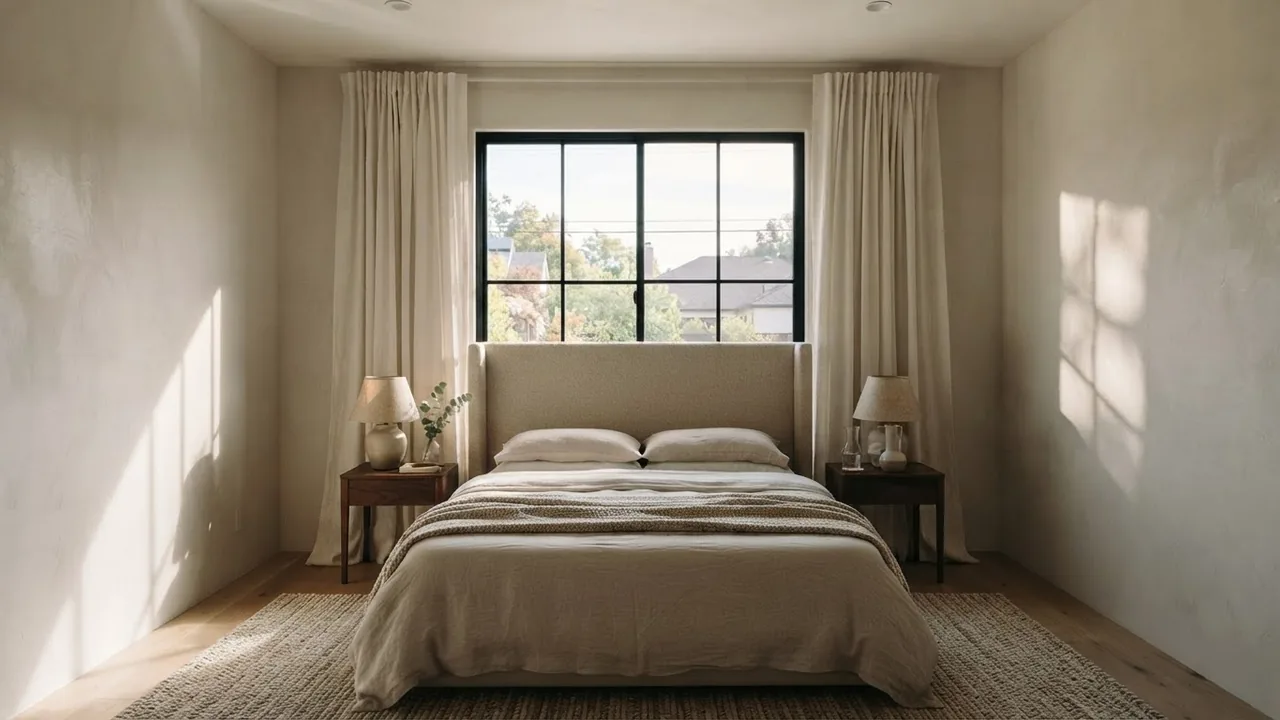

A feng shui bedroom layout puts the bed where you can see the door without lying in its direct line, backs the headboard with a solid wall, and keeps both sides of the bed walkable. That is the commanding position, and it is geometry you can draw, not energy you have to take on faith, and two published experiments back it up. This guide draws it to scale, shades the 32 inch door line that the coffin position rule is actually about, sorts 17 feng shui bedroom dos and don'ts into real and ritual, scores all four walls of a real room, and gives you a checker that does the same for yours. The compass and color layer is here too, labelled honestly as ritual rather than dressed up as physics.
Our articles are still written by humans!
Get human written articles in your Google feed.


The commanding position, drawn to scale
Every feng shui source agrees on one rule before any of them mentions compasses: from the pillow you should see the door, without the bed sitting straight in the door's path, with a solid wall behind your head. The traditional reading is about chi entering the room. The measurable reading is about a sightline: a bedroom is the one room where you are deliberately unconscious for eight hours, and nobody fully relaxes facing away from the entrance. Hotels put the bed diagonal to the door for the same reason without calling it anything.
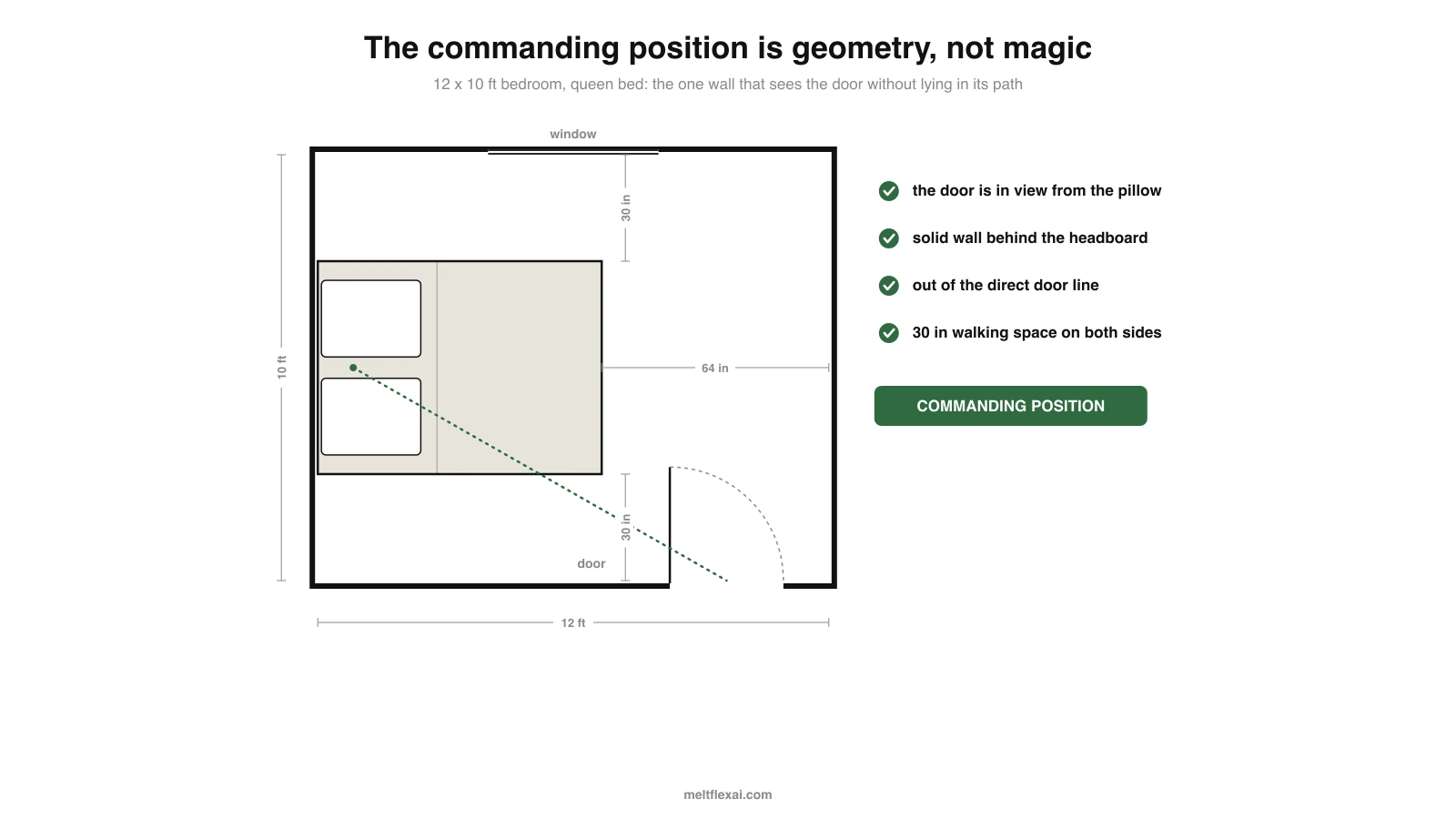
The plan above is a 12 by 10 foot bedroom, close to the median secondary bedroom in average room sizes, with the door near the right corner and one centered window. The commanding wall is the left one: the door is in view, the bed is nowhere near the door's swing or line, the headboard has drywall behind it, and a queen leaves 30 inches of walking space on each side with 64 at the foot. Every number on that drawing comes out of the same functions as the checker below, so when your room disagrees with this one, the checker recomputes rather than guesses.
Is the commanding position backed by research?
Partly, and better than any other feng shui rule. Two experiments found that people given a bedroom floor plan and movable furniture put the bed where they can see the door, as far from it as the room allows. Nobody told them about feng shui. The compass and color layers have no comparable evidence.
The original study is Matthias Spörrle and Jennifer Stich, Sleeping in Safe Places, published in Evolutionary Psychology in 2010 (volume 8, pages 405 to 419). They gave 138 participants floor plans that changed which way the door opened and whether there was a window. In the paper's own words, participants “predominantly positioned the bed in a way that (a) allowed them to see the door, (b) was as distant as possible from the door, and (c) was on the side of the room toward which the door opened.” Read that third finding slowly, because no feng shui page states it: the leaf of an opening door screens the bed on its swing side for a moment, so the sleeper sees the visitor first.
In 2023 a French and Slovak team led by Patrick Bonin repeated the experiment in Evolutionary Psychological Science: French participants on 2D plans, Slovak participants on 3D room plans, and a third study asking both groups how uncomfortable they would feel sleeping in a less protected spot. Their conclusion was that modern bed placement still reflects an ancestral need to be protected at night. We build MeltFlex from Slovakia, so we read the Slovak half with some home-team interest, but the result holds in both samples.
One number we left out on purpose: you will find “83 percent placed the bed with a view of the door” repeated across feng shui and design sites. It is not in the 2010 abstract, and we could not open a full text that states it, so this page sticks to the direction of the finding, which both papers state plainly.
Check your own bedroom
Type in the two wall lengths, pick the bed size, and place the door and window the way you see them standing in the doorway. The checker scores all four walls with the same rules this article derives: door visibility, the door line, the door swing, the wall behind the headboard, and real clearances from standard mattress sizes. When a wall is rescuable by sliding the bed sideways, it tells you by how many inches.
Interactive calculator
Loading… if it does not appear, refresh the page.
The clearance floor matters more than it looks. A queen is 60 by 80 inches, so a 12 by 10 room holding one is really a room minus a 33 square foot rectangle, and the walking space that remains decides whether the layout works at 7 a.m. If the checker keeps saying does not fit, that is not the room failing feng shui, it is the bed failing the room; the sofa fit calculator makes the same argument about doorways.
Feng shui bedroom dos and don'ts, sorted into real and ritual
The feng shui bedroom rules that matter are the ones about the door, the wall behind your head and the space around the bed. Mirrors and screens facing the bed come next. Plants, water pictures, birth-year directions and pairs of objects are ritual: harmless, optional, and nothing to lose sleep over.
Most lists of feng shui bedroom dos and don'ts give every rule the same weight, which is how people end up rehanging a painting of a lake while the bed still sits in the door line. Here are the 17 rules that come up most often, with what each one is really about. Geometry means you can measure it, sightline means you can test it by lying in bed, and ritual means the reason only exists inside the tradition.
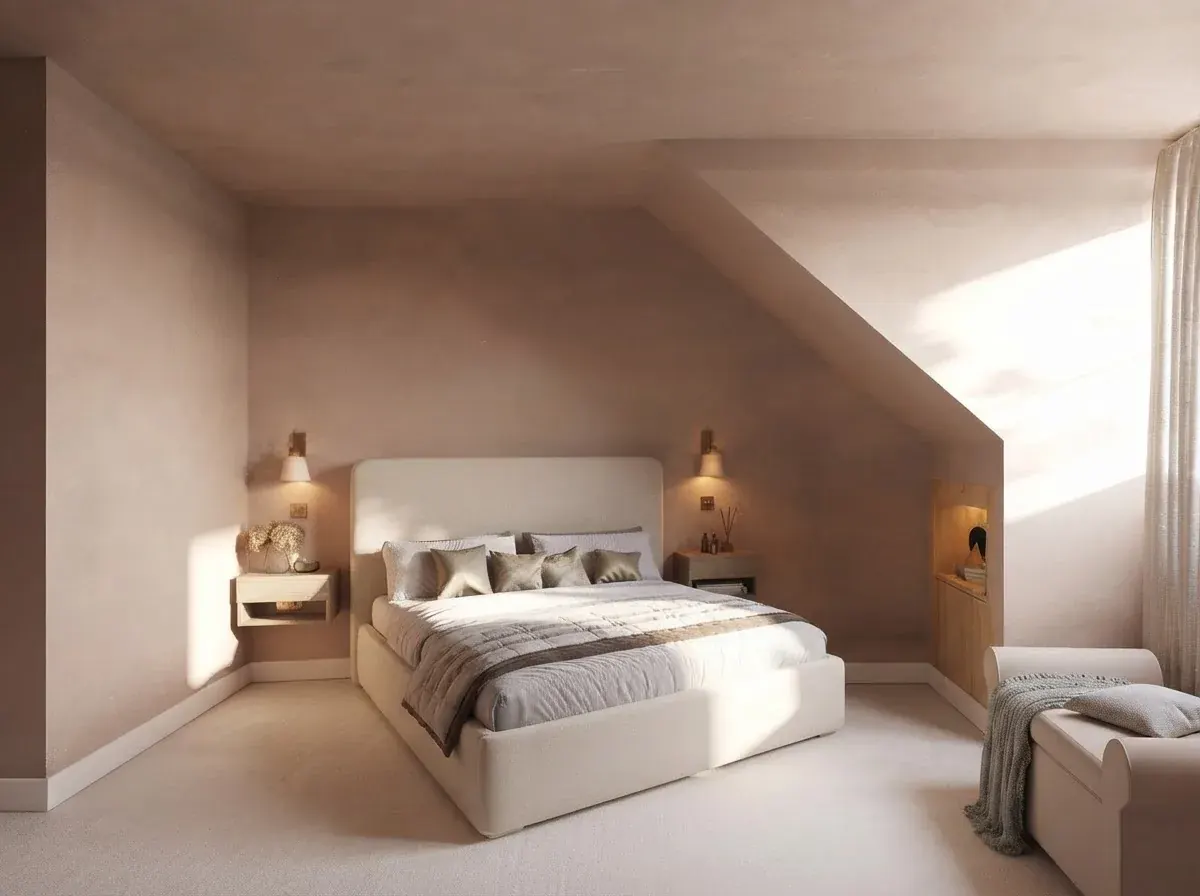
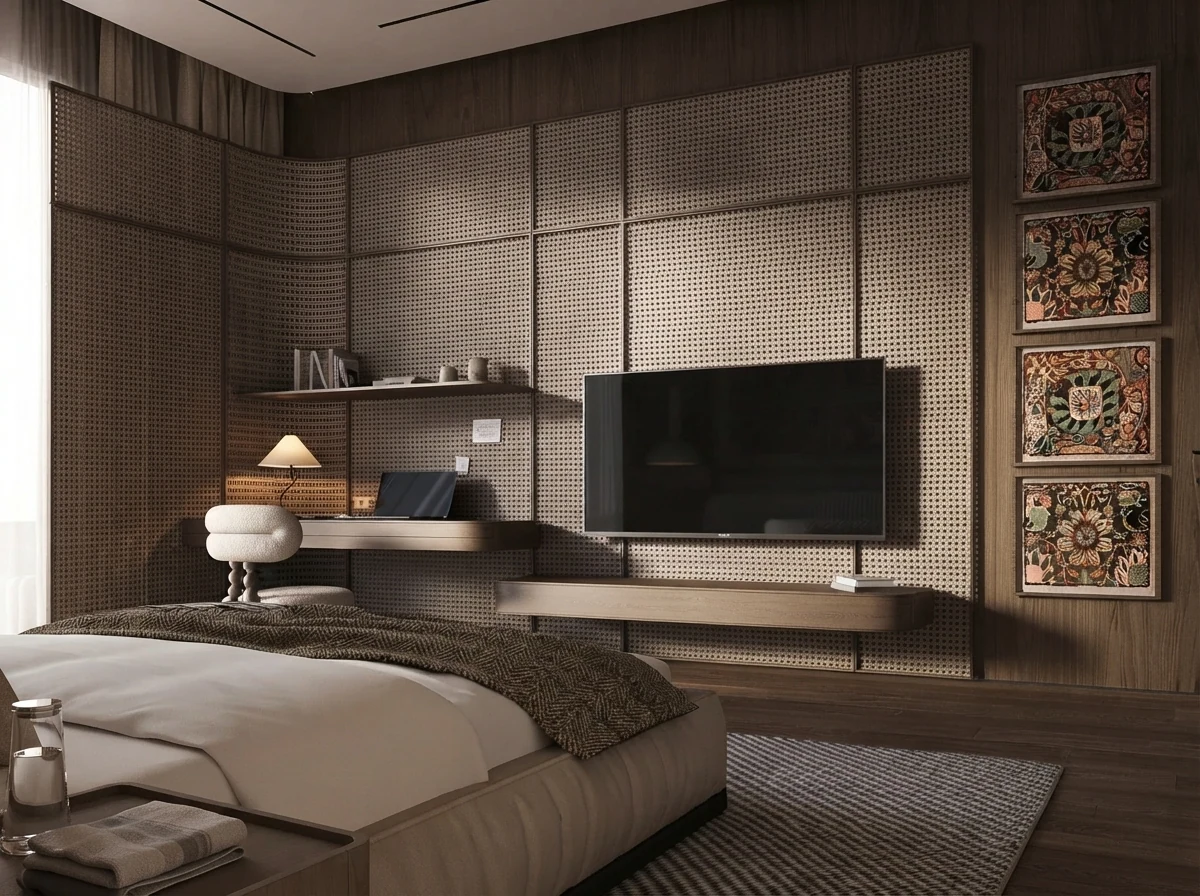
Positive energy placement, the phrase people search for when they want the feng shui bedroom to feel better rather than just pass, is mostly the first six rows of that table. Get the door, the wall and the walking space right and the room already feels settled; the ritual rows only decorate a layout that works.
The door line you can measure
The most repeated warning in bedroom feng shui is the coffin position: do not sleep with your feet pointing straight out the door. It survives translation better than any other rule, because the door line is a real, measurable strip. An interior door leaf is about 32 inches wide, and the strip it opens into runs the depth of the room. A bed in that strip sits in the walking path, catches the draft, faces the light from the hallway, and greets every arrival feet first.
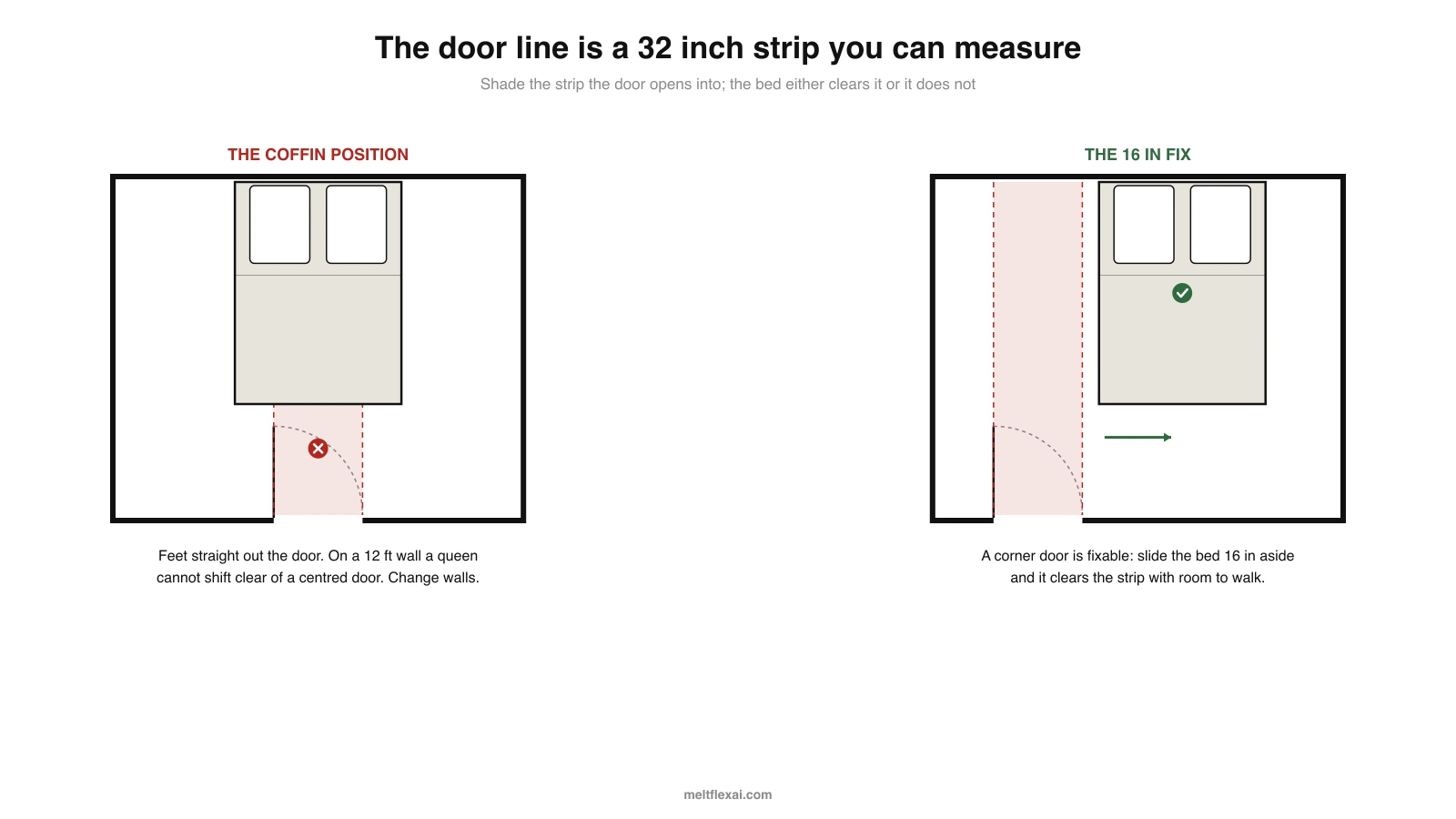
The fix is usually a slide, not a new wall: move the bed along its wall until the whole footprint clears the strip by at least 6 inches. But the arithmetic has a hard edge that no feng shui blog states. On a 12 foot wall facing a centered door, a 60 inch queen cannot clear a 32 inch centered strip and still keep 15 inches of walking space on the squeezed side; the equation only opens up past 16 feet of wall. A corner door is the forgiving case: in the worked example, a 16 inch slide clears it completely. Centered door, normal room: change walls, and stop feeling bad about it.
Same room, four walls, four verdicts
Feng shui advice usually names the one good spot. It is more useful to see why the other three lose, because your room will disagree with the example in some detail and the reasons transfer better than the answer. Here is the same 12 by 10 room with the bed tried on every wall.
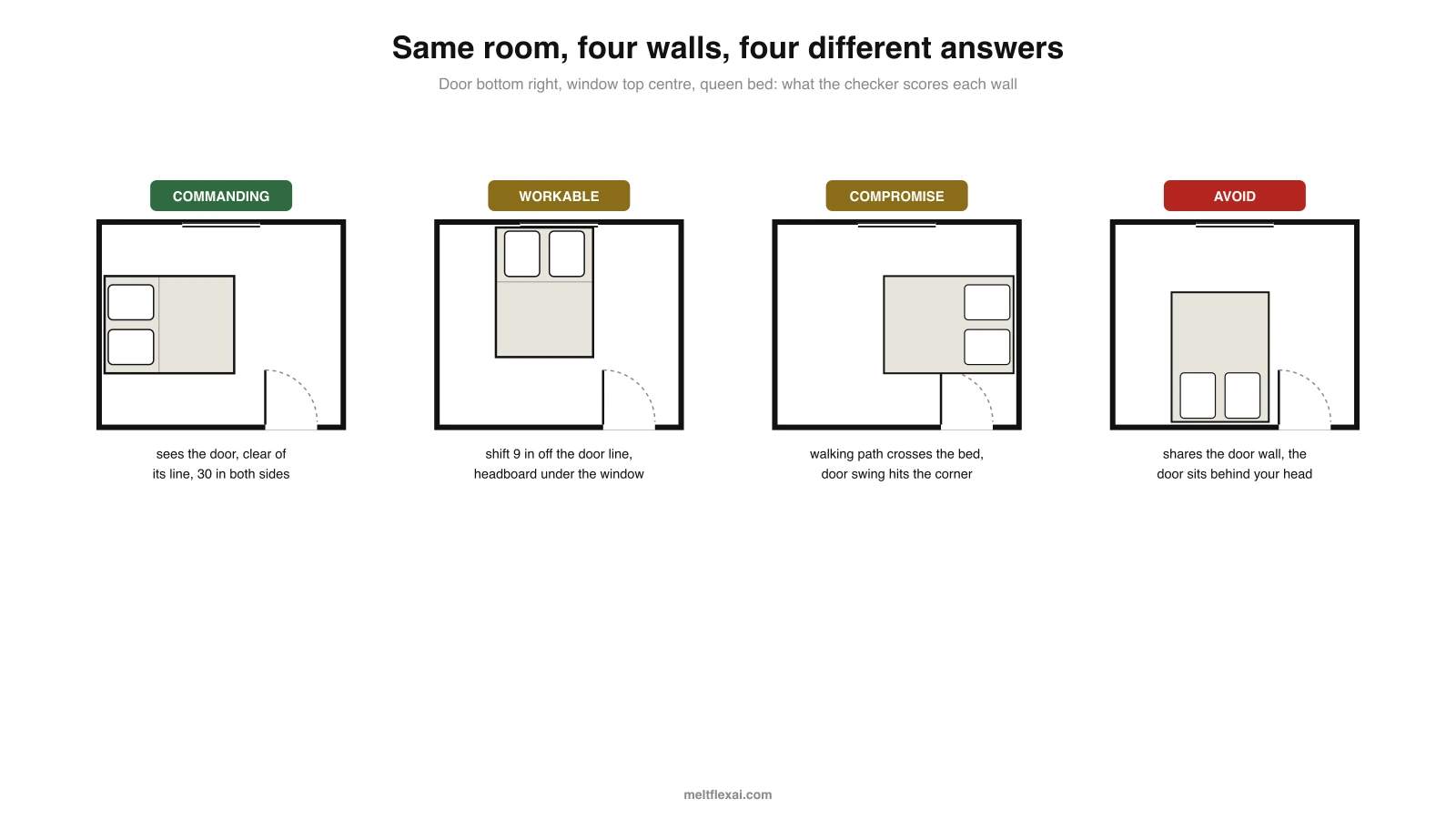
Two things worth stealing from that table. A wall can lose for a physical reason before any feng shui reason: the right wall fails mostly because a door needs its full 32 inch swing. And the difference between workable and commanding is often furniture, not walls: the top wall's penalty is the window behind the headboard, which a tall headboard partially buys back.

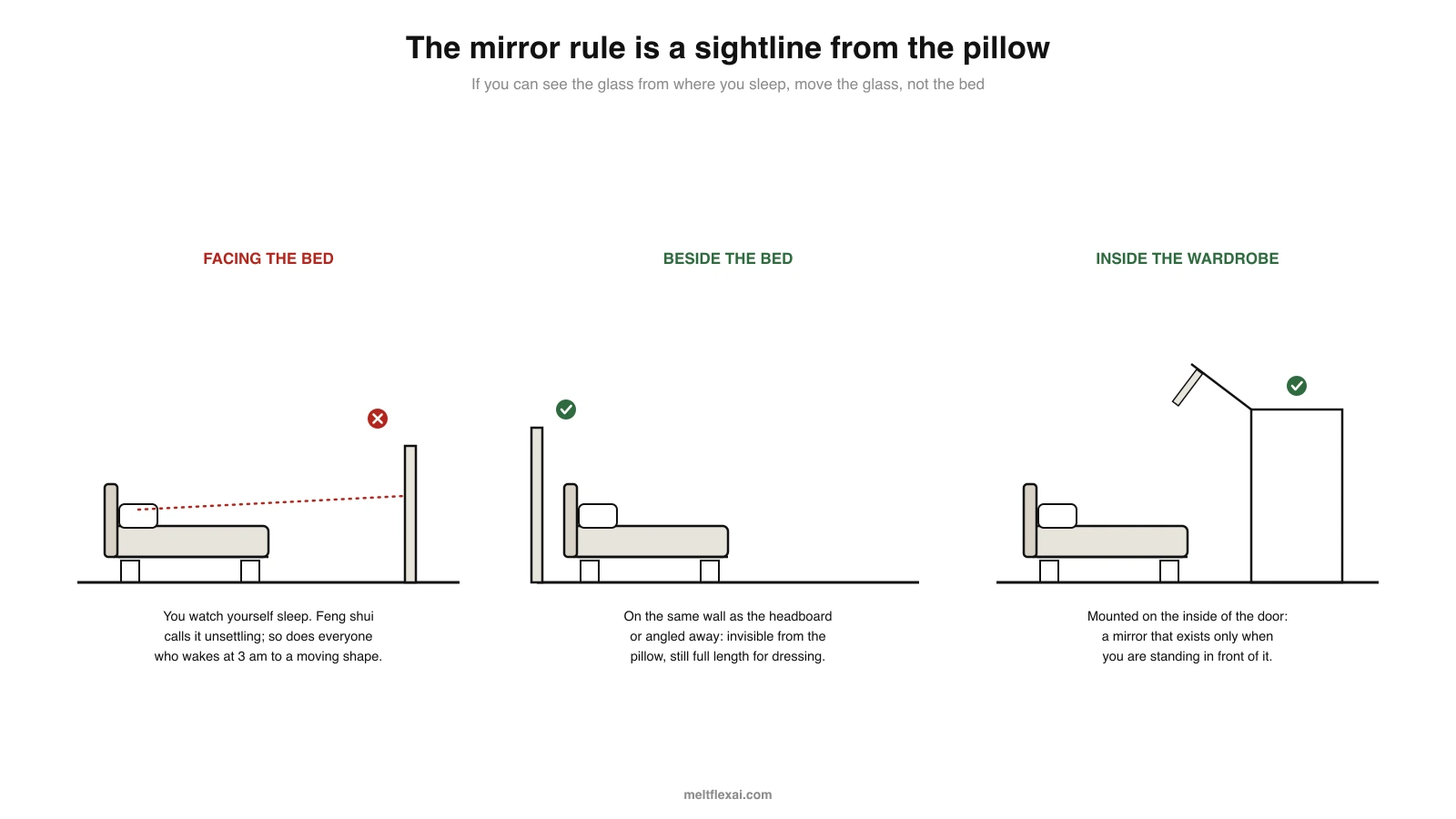
Mirrors, windows, and the wall behind your head
After the bed wall is chosen, three secondary rules earn their keep, and all three are sightlines or backing rather than magic.
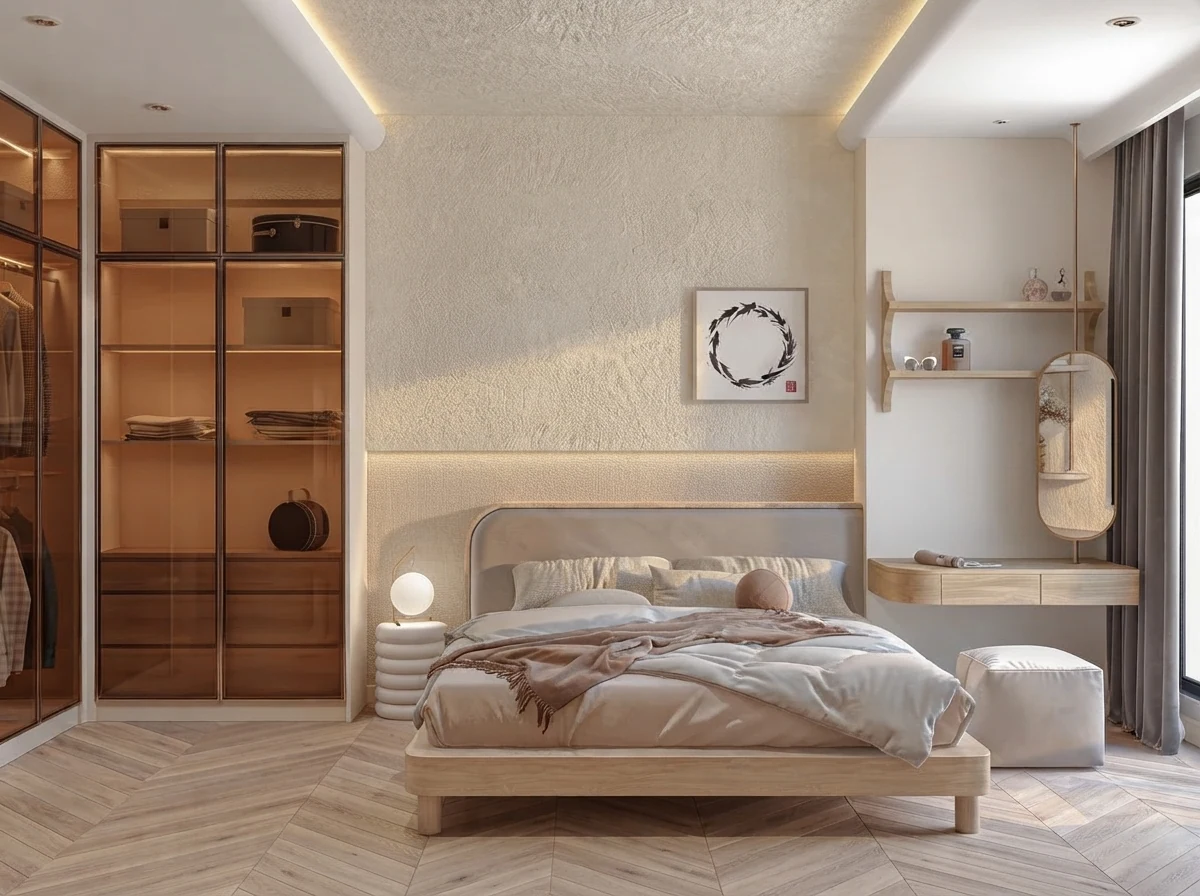
The window rule deserves its own caveat, because it is broken beautifully all the time: we wrote a full verdict on it in bed in front of a window, and the summary is that a tall headboard and layered curtains buy back most of what the glass takes. What hangs over the headboard matters too: art sized to the wall, hung on real hardware, using the numbers in standard picture frame sizes, and window treatments measured properly per how to measure for curtains keep the backing wall calm instead of busy.
Small bedroom feng shui: bend the rules in order
Small rooms are where feng shui advice usually collapses into "do your best". A priority order works better, because the rules are not equally important and two of them cost nothing to keep. Solid wall and door visibility are never traded away; they are decisions, not space. The door line asks for a slide before it asks for a new wall. Clearances bend first, one side at a time.
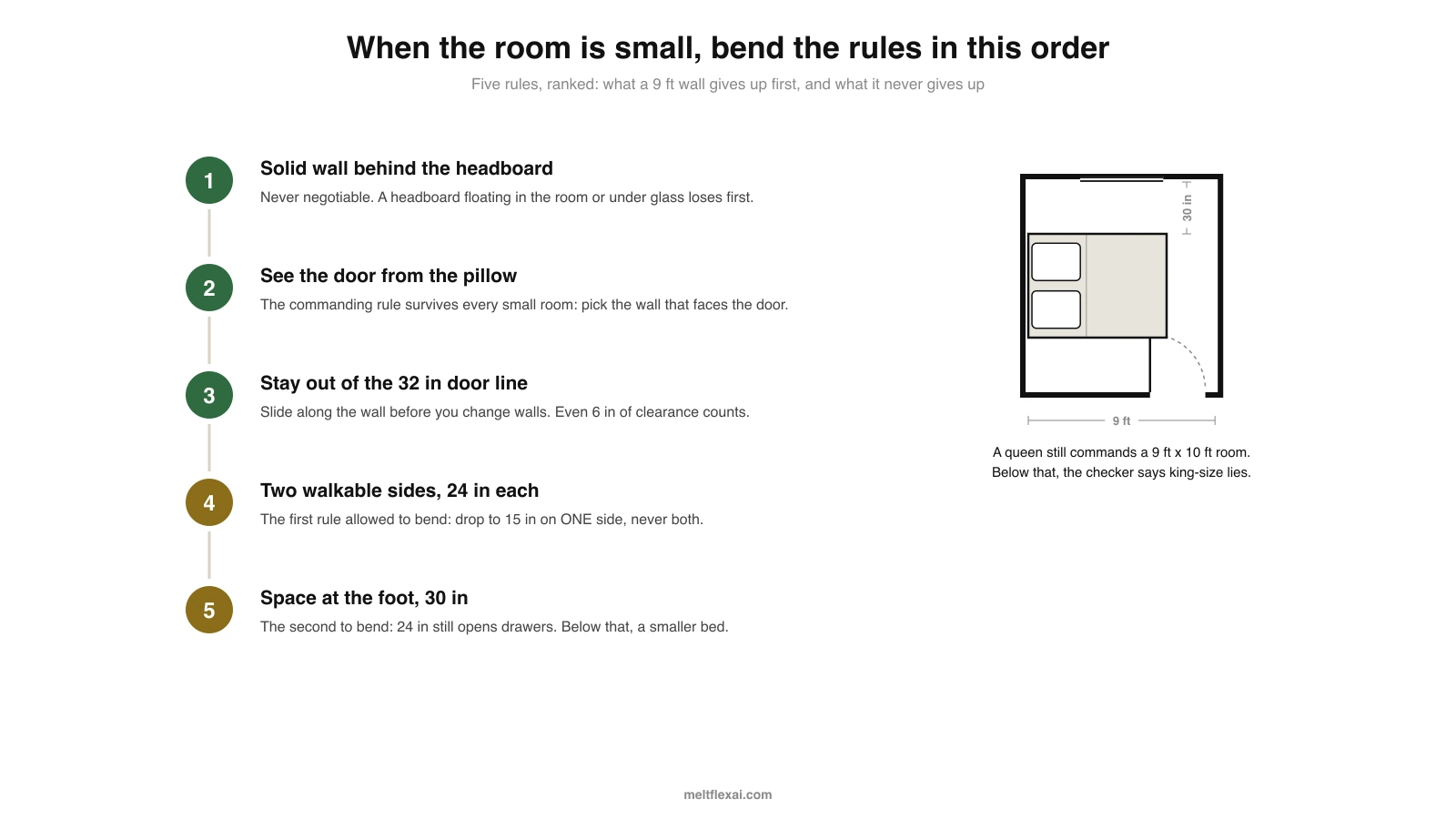
The honest end of that ladder is bed size. The minimum wall for a bed is its width plus 15 inches of walking space each side; comfortable is 24. Run those numbers and the small-room verdicts write themselves.
A queen commands a 9 by 10 foot room. A king in the same room pins one side against the wall, which feng shui reads as one partner boxed in, and which a designer reads as one person climbing over another every night; for once the two languages agree completely. Storage pressure belongs outside the sleeping box where possible, which is what walk-in closet design is for, and a rug sized to land under the bed's lower two thirds, per the logic in our rug sizing guide, keeps the floor calm instead of patchy.
Feng shui bedroom colors and direction: the ritual layer
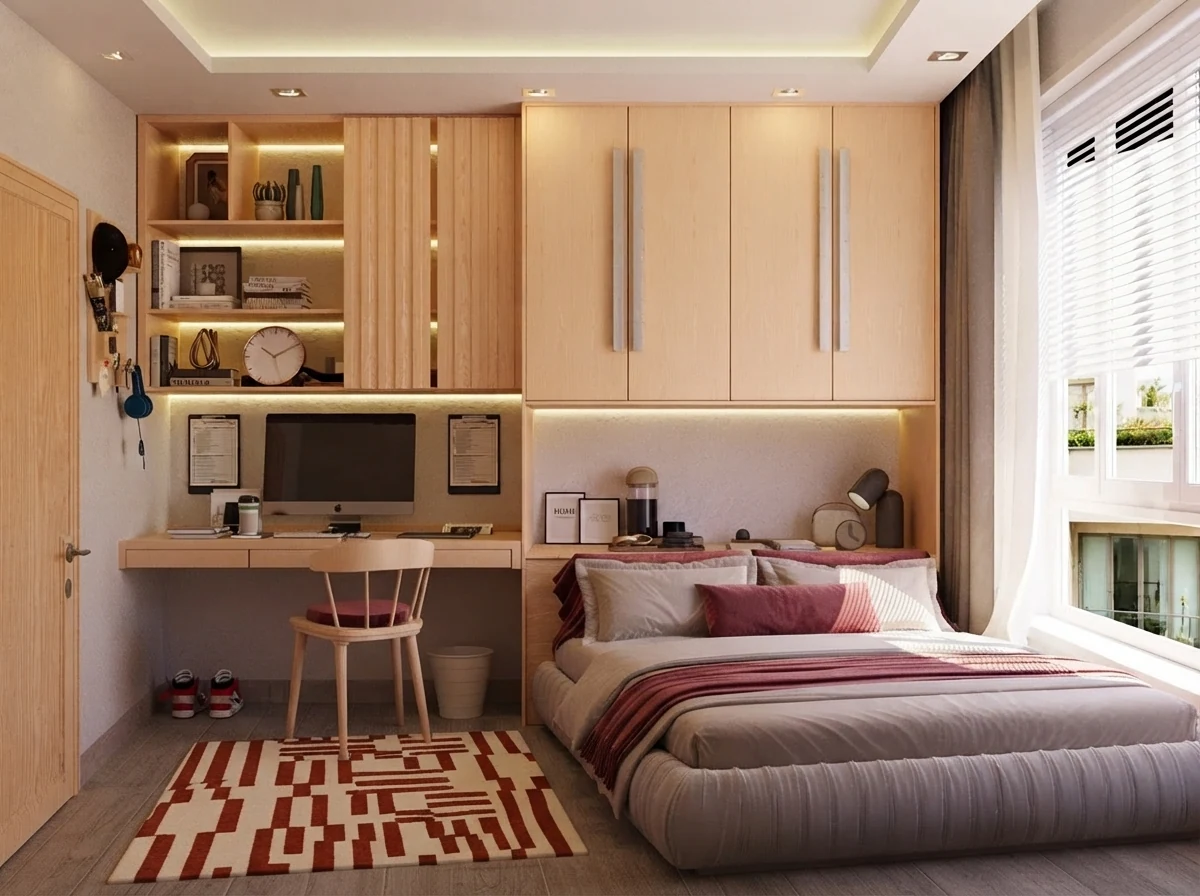
Now the honest paragraph most pages skip. Feng shui also prescribes compass directions for the bed, element colors by sector, and a money corner, and none of it survives the translation the placement rules survive. The compass schools contradict each other: classical practice computes a personal best direction from your birth year, the Black Hat school throws the compass away and reads everything from the door, and both trace to the historical practice of siting houses and graves described in the feng shui canon and its bagua map. If two systems disagree and neither can be tested, a layout guide should say so rather than pick a winner with a straight face.
What the color layer gets right by accident is restraint. The element palettes push bedrooms toward earth tones, soft neutrals and muted greens, which is also just what reads calm: the same reasoning as our verdict on what color curtains go with gray walls, arrived at from the other direction. Treat the palette as taste with a vocabulary, keep the screens out of the sightline, and spend the saved worry on the TV size and distance if a screen is entering the room at all.
For readers who want the color layer anyway, here is the five element palette as feng shui sources usually apply it to bedrooms, with what we would actually do with it.
Generate feng shui layouts for your own room
The checker above answers the wall. Seeing the room furnished on that wall is the part that used to take an afternoon of dragging furniture, and it is now the part AI is genuinely good at. Upload a photo of the bedroom to the MeltFlex planner and ask for the bed on the commanding wall; the furniture changer moves the bed without repainting the room, so you can compare the checker's top two verdicts as finished photos. Working from a plan instead, sketch it per how to draw a floor plan and convert it to a 3D model to walk the layout before committing.
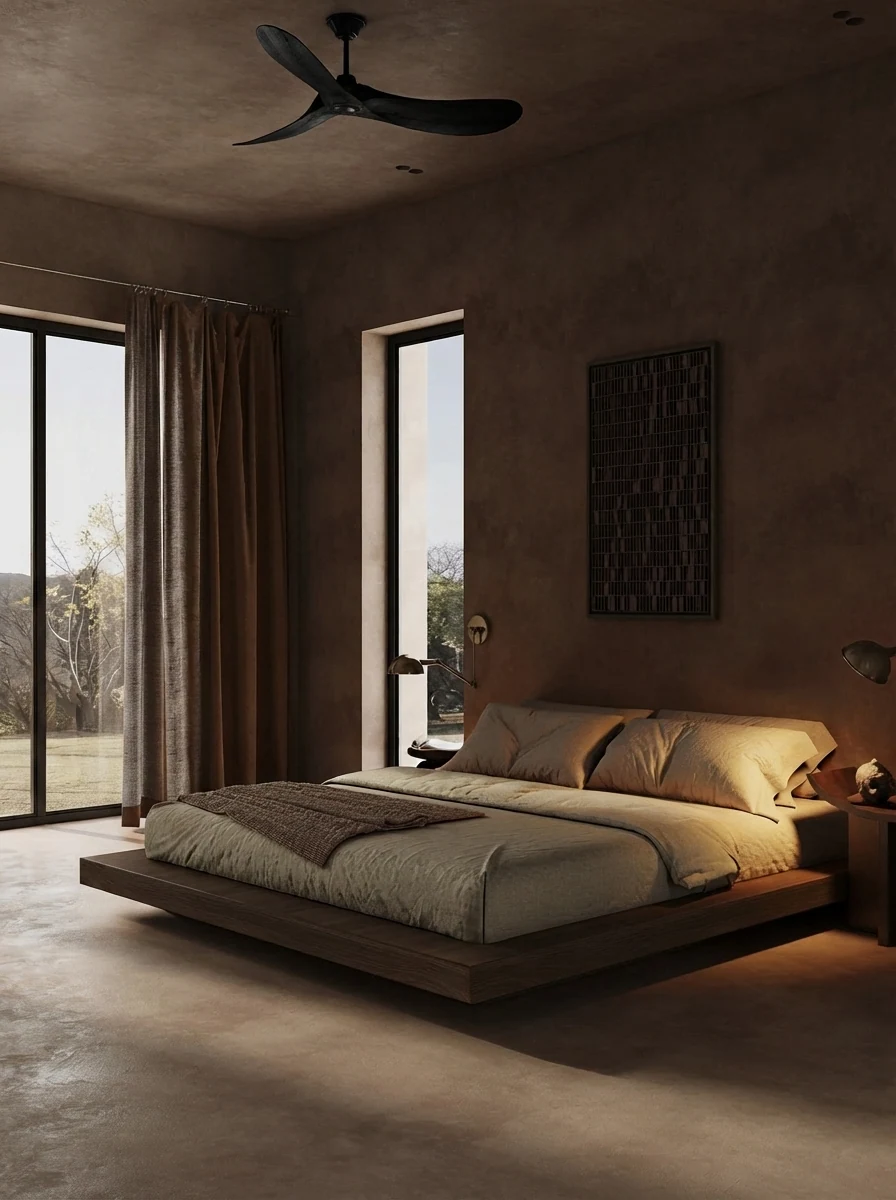
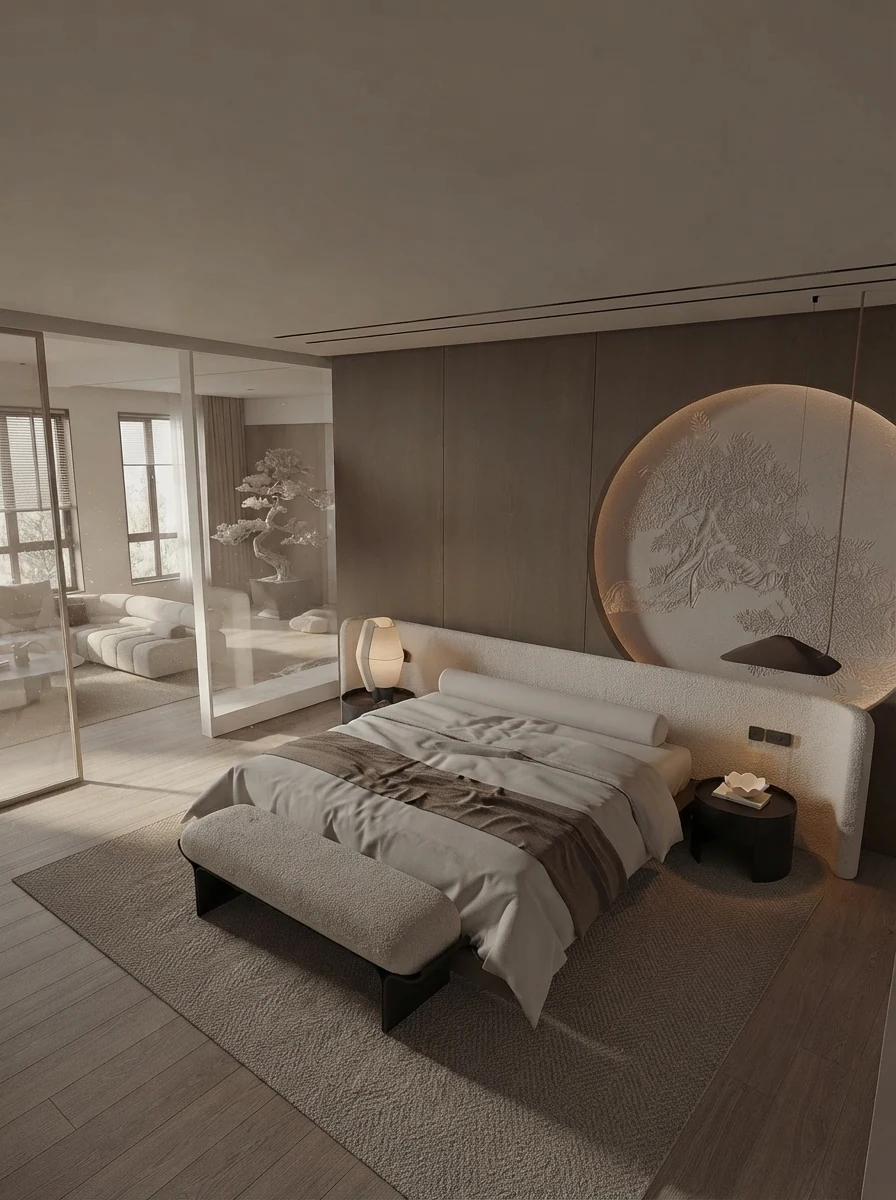
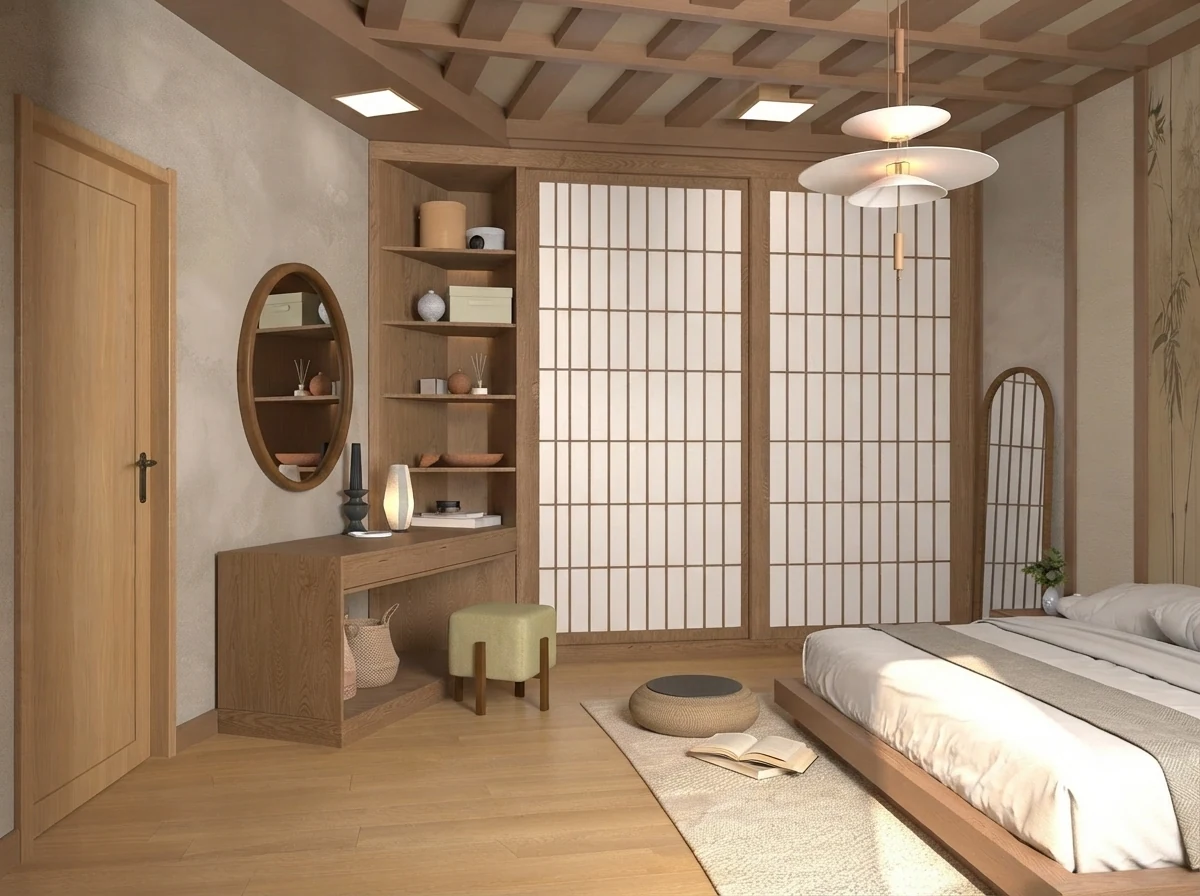
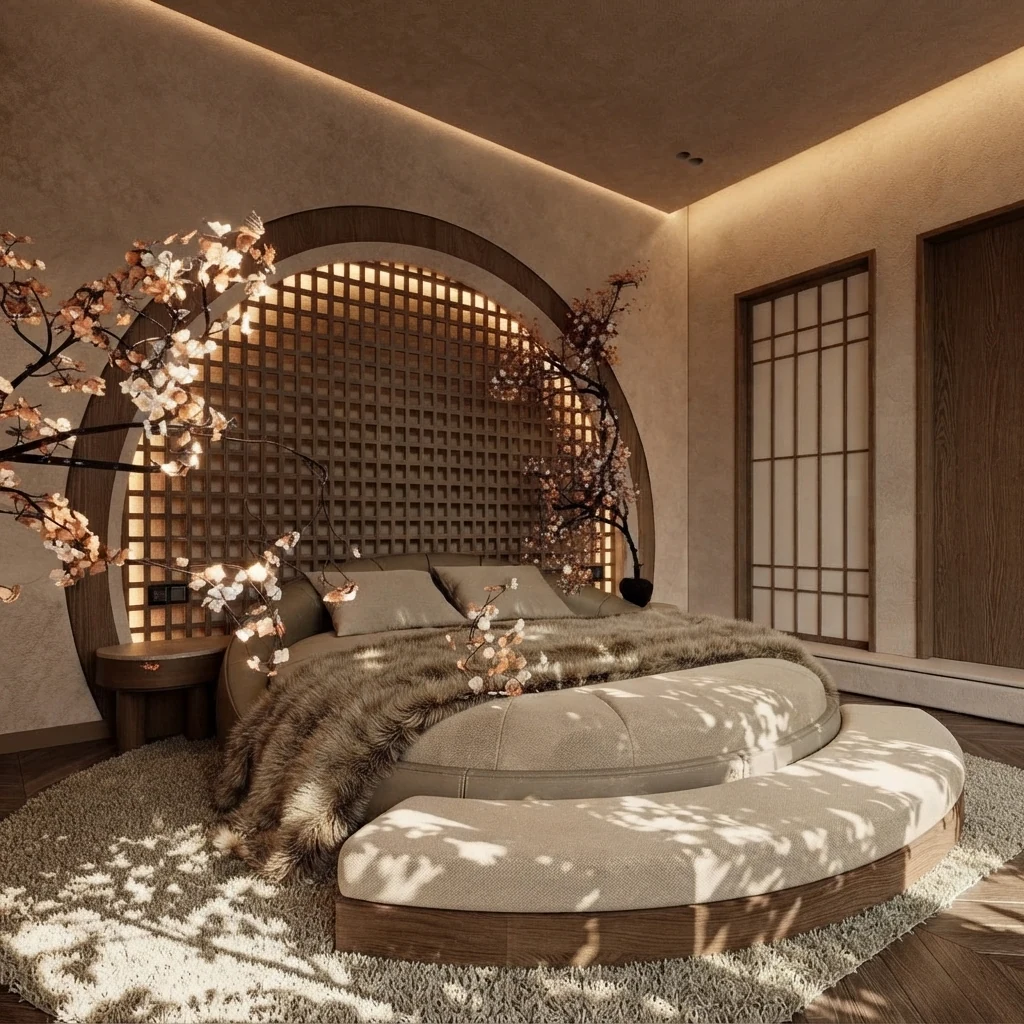
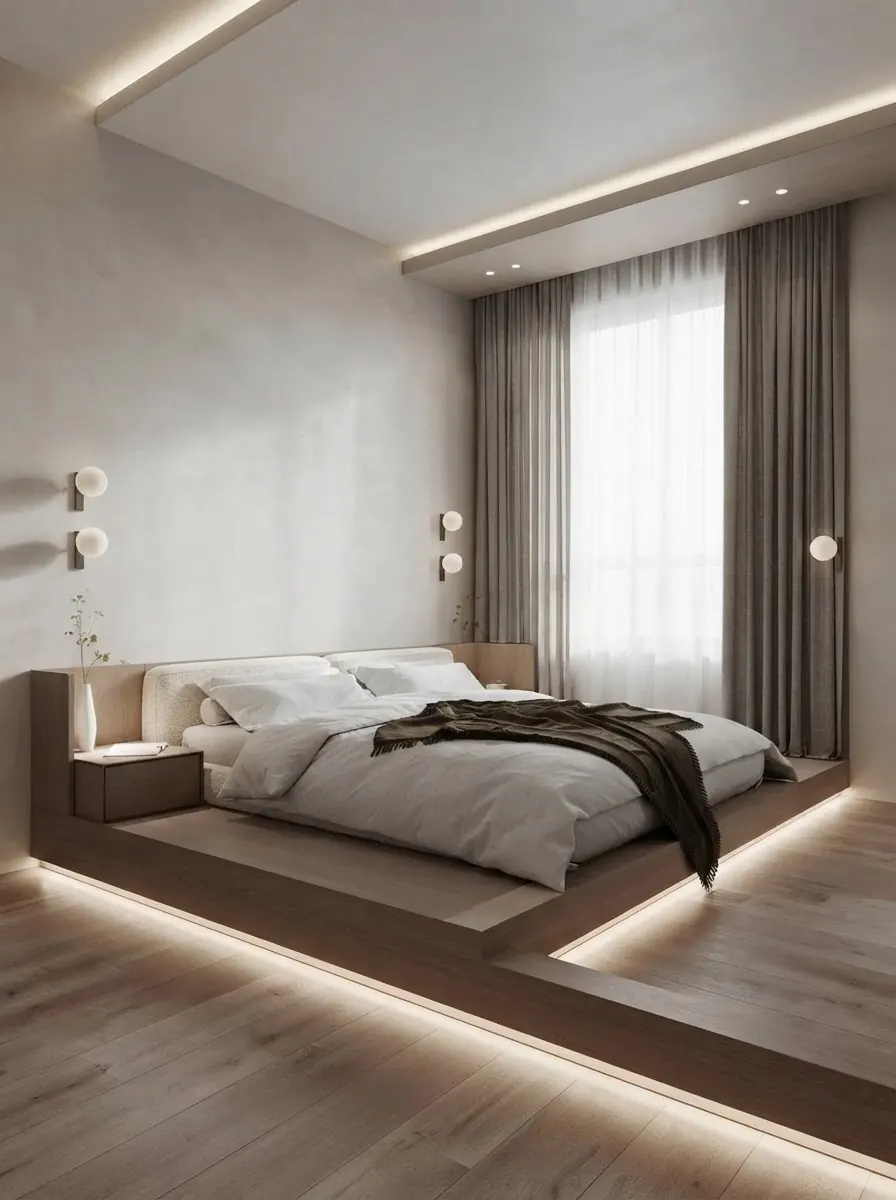
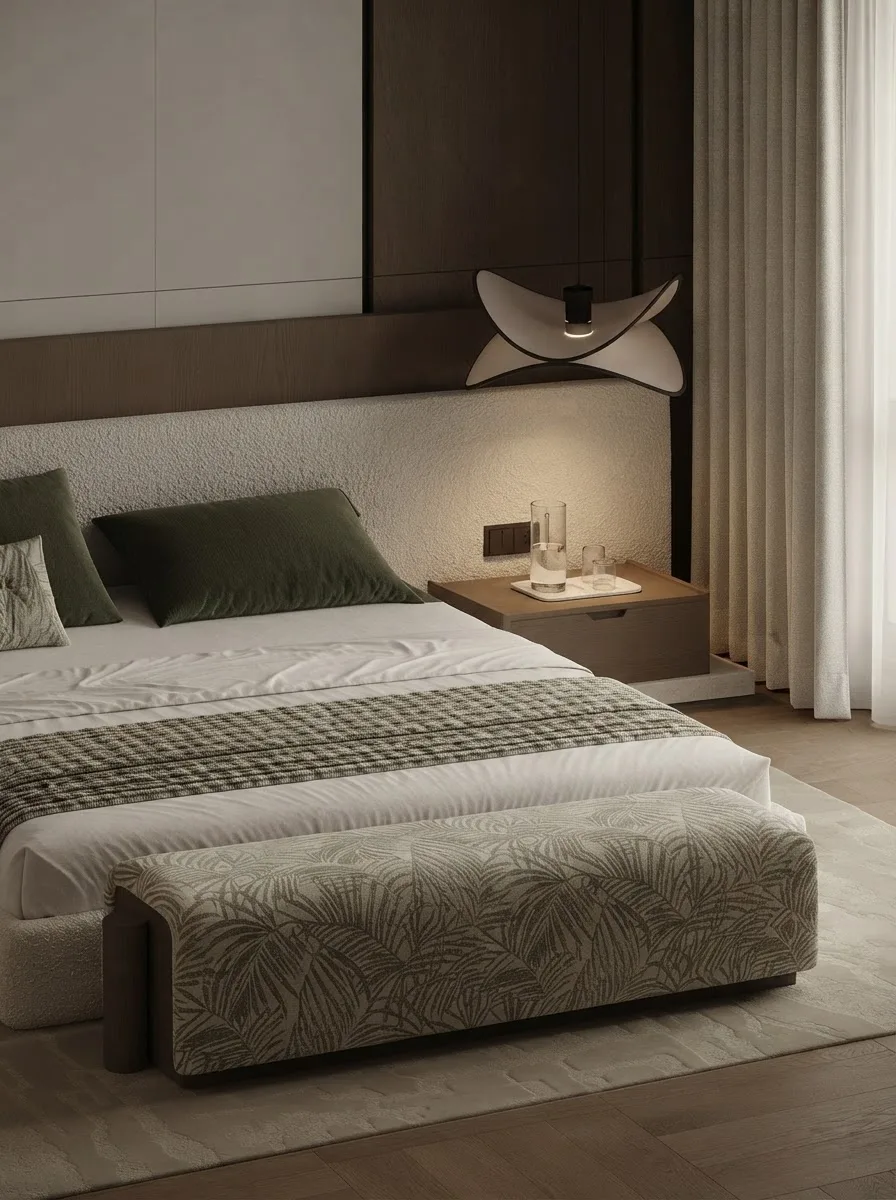
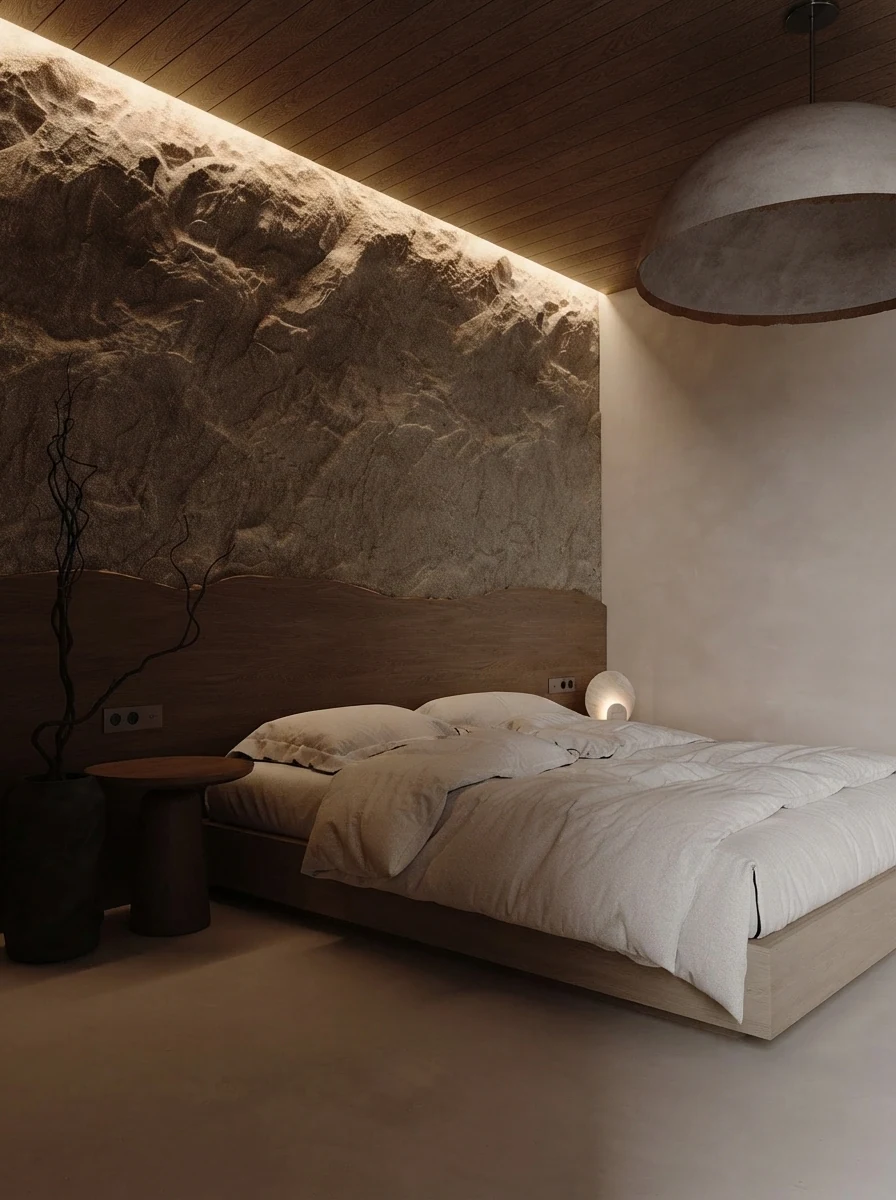
The layouts in this article, including the moon wall on the cover, are AI re-renders of bedroom concepts, generated with the same engine, and the full set lives in our creations gallery. For the geometry underneath, room proportions and furniture clearances without the feng shui vocabulary, the companion page is bedroom layout, which owns the measurements the way this page owns the placement rules.
FAQ
What is bad feng shui for a bedroom?
The big three are the bed in line with the door (the coffin position), no solid wall behind the headboard, and a mirror or TV screen facing the bed. After those come a bed under a window, beam or sloped ceiling, a bed pushed against a side wall so one sleeper is boxed in, and clutter piled under the bed. The first three are sightline problems you can test; plants, water pictures and compass direction are ritual, and nothing measurable rides on them.
What is the commanding position in feng shui?
The bed placed so you can see the door from the pillow without lying directly in line with it, ideally diagonal from the door with a solid wall behind the headboard. Strip away the energy language and it is a sightline rule: nobody rests facing away from the entrance of a room. It is the one feng shui rule that survives as pure geometry, and it decides the bed wall in almost every room.
Which direction should your bed face in feng shui?
The compass schools disagree with each other: classical compass feng shui derives a personal direction from your birth year, while the Black Hat school ignores compass bearings entirely and reads the room from the door. What every school agrees on is the geometry: see the door, stay out of its direct line, solid wall behind your head. Get those three right and the compass question becomes decoration.
Why should a bed not face the door directly?
Feng shui calls it the coffin position, after the way coffins were carried out feet first. The measurable version: the door opens into a strip about 32 inches wide, and a bed with its feet in that strip sits in the walking path, catches the draft, and faces every arrival head on. Slide the bed sideways until it clears the strip by 6 inches. On a 12 foot wall opposite a centered door, a queen cannot clear it at all, and the answer is a different wall.
Is it bad feng shui to have your bed under a window?
Feng shui reads a window behind the headboard as unstable backing, and the practical complaints line up: drafts, morning light, less structural sound blocking, nowhere to lean. It costs a placement about 18 points in our checker, which usually demotes a wall to workable rather than banning it. If the window wall is the only commanding wall, take it with a tall solid headboard. The full trade-off is in bed in front of a window.
Why should a mirror not face the bed?
The traditional reason is that a mirror bounces energy and startles the soul at night. The version you can test: a mirror opposite the bed reflects movement at you in low light, and a half-asleep brain treats moving shapes as company. The rule is a sightline: if you can see the glass from the pillow, move the glass, not the bed. Beside the bed or inside a wardrobe door, the same mirror is invisible from the pillow and stays useful.
How do you feng shui a small bedroom that breaks every rule?
Bend the rules in priority order instead of abandoning them. Solid wall behind the headboard and seeing the door are never traded away. The door line comes next: slide along the wall before you change walls. Clearances bend first: one side can drop to 15 inches, and foot space to 24. When even that fails, the honest fix is a smaller bed, because a queen commands a 9 by 10 foot room that a king only blocks.
What colors are good feng shui for a bedroom?
Earth and wood colors: sand, beige, terracotta, clay, soft greens and warm browns. Feng shui reads them as grounding, and they also happen to be low saturation, which is what reads calm in a room you sleep in. Fire colors such as red and orange are kept to accents, and deep water blues and blacks to small doses. The color layer is ritual, so treat it as a sensible palette, not a rule with consequences.
Is there science behind the commanding position?
Some. In a 2010 study in Evolutionary Psychology, 138 people arranged furniture on floor plans and predominantly placed the bed where they could see the door, as far from it as possible, on the side the door opened toward. A 2023 replication with French and Slovak participants reached the same conclusion. These are preference studies on plans, not sleep trials, and they say nothing about compass directions or colors.
Can AI generate a feng shui bedroom layout?
Yes, in two steps on MeltFlex. The checker on this page scores all four walls of your room and draws the bed on the winner, shifted out of the door line when that is the fix. Then the AI planner furnishes it: upload a photo or a floor plan, ask for the bed on the commanding wall, and compare finished versions of the layouts the checker approved before moving anything heavier than a phone.
Does feng shui actually work?
Split the canon in two and the answer stops being a shrug. The placement rules encode sightline psychology and circulation: seeing the door, staying out of its path, solid backing, walkable clearances. Those survive contact with any skeptic, and designers apply them without the vocabulary. The energy layer, compass directions, element colors and money corners, is belief, and this page labels it as such rather than selling it as physics.