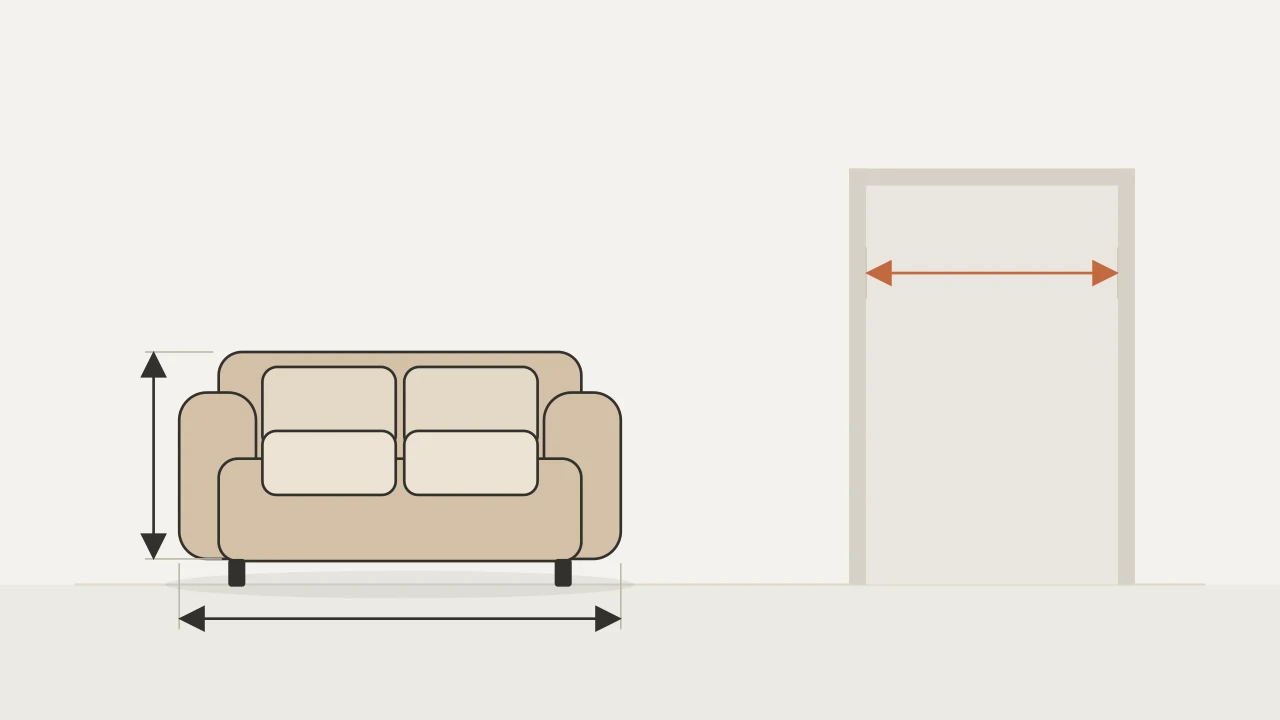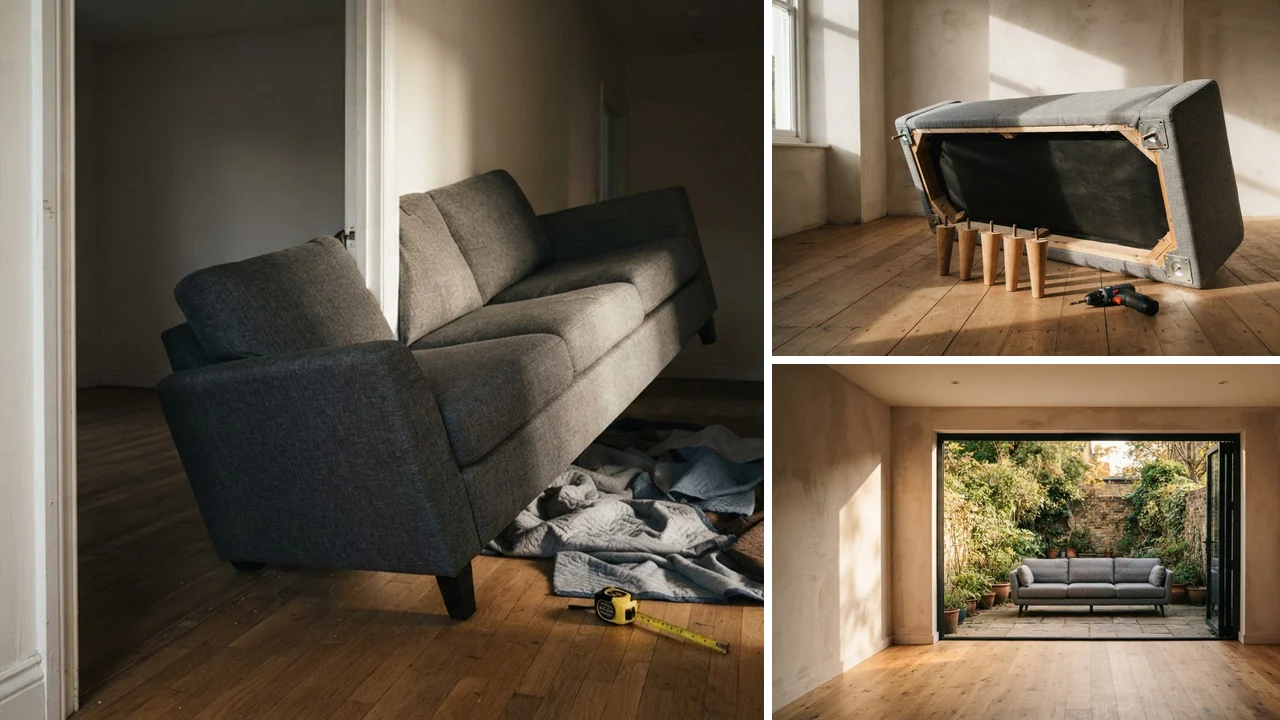
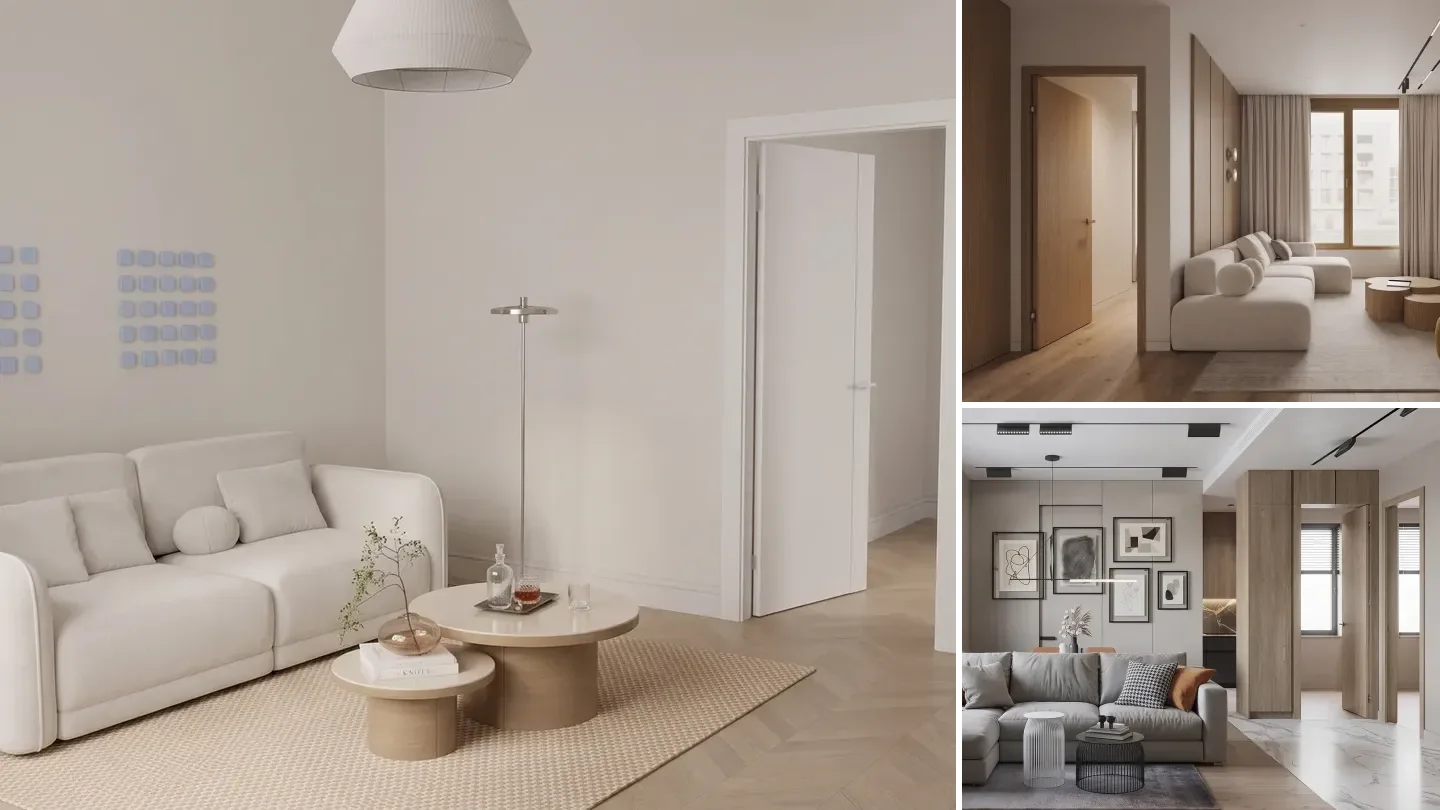
A sofa fits through a narrow door if the smaller of its height and its depth, legs off, is under the door’s clear opening, the real gap with the door open. A 30 inch door gives about 27½ to 28 inches of it, a 32 inch door about 29½ to 30. Six of the seven assembled sofas we checked for this guide are 32 to 39 inches on that face, so for a narrow door the honest answer is not “a smaller sofa”. It is a sofa that arrives in pieces, and those pieces are published: the biggest Lovesac seat is 18 inches thick, Albany Park’s largest box 15, Floyd’s base 6.
Our articles are still written by humans!
Get human written articles in your Google feed.
We build the furniture fit calculator and the will my sofa fit through the door guide, and the question we kept seeing after people ran their numbers was the next one: fine, mine will not fit, so which one will? Searches like “sofa that will fit through a 29 inch door” land on a calculator that cannot answer them. So we pulled the published dimensions, box sizes and assembly details of eight sofas sold as narrow-door friendly, checked each one on the maker’s own page on 6 October 2026, and ran them through the same rule the calculator uses. Two of the brands people still recommend did not survive the check, and we say why below.
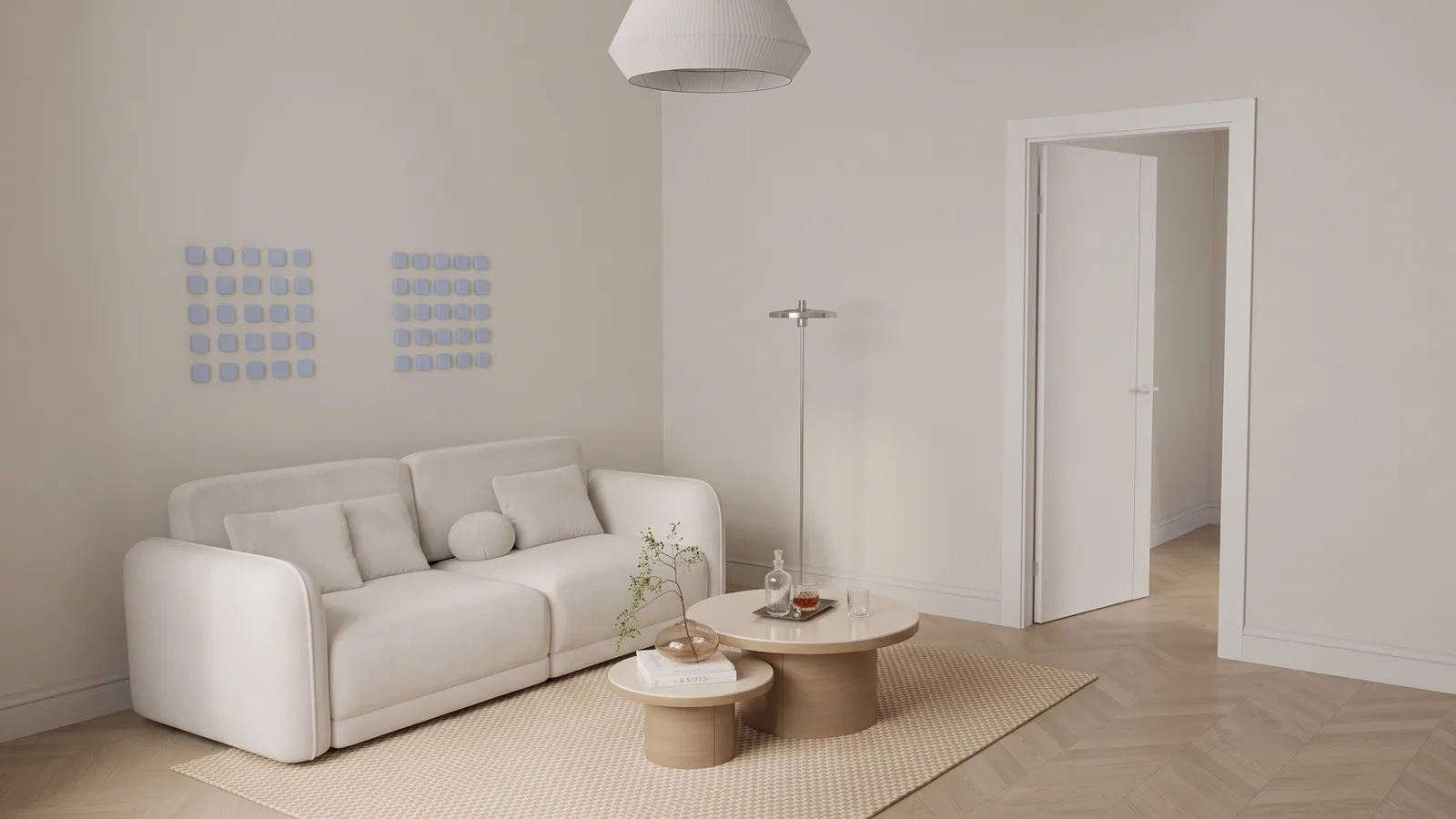
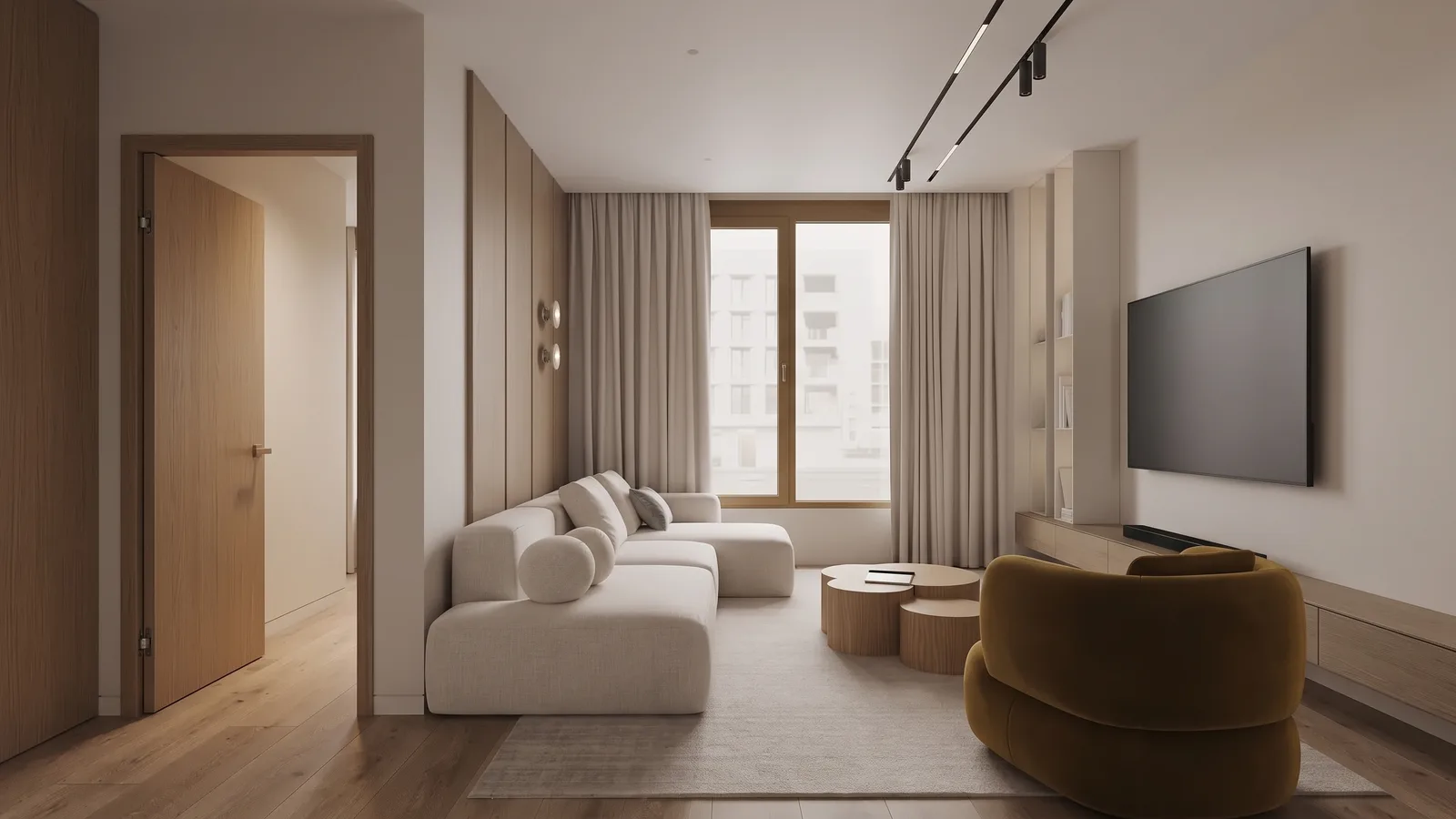
The door is the problem, not the room. A sofa like this one fits the space easily and still has to get past a 30 inch leaf to get there. A render from our gallery, regenerated with the doorway added.
The short version
- Measure the gap, not the door. Clear opening is measured from the face of the open door to the stop, and it is about 2 to 2⅜ inches less than the door size.
- Height or depth decides, never width. The sofa goes through on its back or on end; its smaller face, legs off, must beat the gap.
- Most assembled sofas are 32 inches or more on that face. For a 30 inch door or smaller, look for pieces, not a smaller sofa.
- Pieces that pass every interior door: Floyd base 6 in, Albany Park box 15 in, Lovesac seat 18 in, IKEA KIVIK package 19¾ in, Article Hanson box 23 in.
- Boxed is not the same as small. The Albany Park Kova ships in 15 inch boxes and is 39 inches tall built; it will not leave through a 36 inch door in one piece.



What size couch will fit through a 29 inch door?
Start with which 29 inches you mean. If you measured the gap yourself with the door swung open, that is your clear opening, and a couch fits when its smaller face, legs off, is under 29 inches. If 29 inches is the size of the door, the gap is closer to 27 inches. That difference is the whole reason so many deliveries go back on the truck: the door you see is not the door the sofa sees.
The federal accessibility standards measure a doorway “between the face of the door and the stop, with the door open 90 degrees” (ABA/ADA 404.2.3), and HUD’s Fair Housing design manual uses a 34 inch door as the one that delivers 31⅝ inches clear, which puts the loss at about 2⅜ inches. Our own standard door sizes chart measures it at about 2 inches on a typical interior door. The range depends on the hinge and the stop, so the table below uses the more cautious figure.
If both the height and the depth are over the gap, the last chance is the pivot: stand the sofa on end, hook the back through first and swing the seat around the frame. Whether that works depends on the diagonal depth, which the next section shows how to take, and it only works if the hallway in front of the door is long enough to tilt in. Our fit calculator does that geometry for your exact sofa; this guide is about choosing one that never needs it.
How to measure a sofa and a doorway before you buy
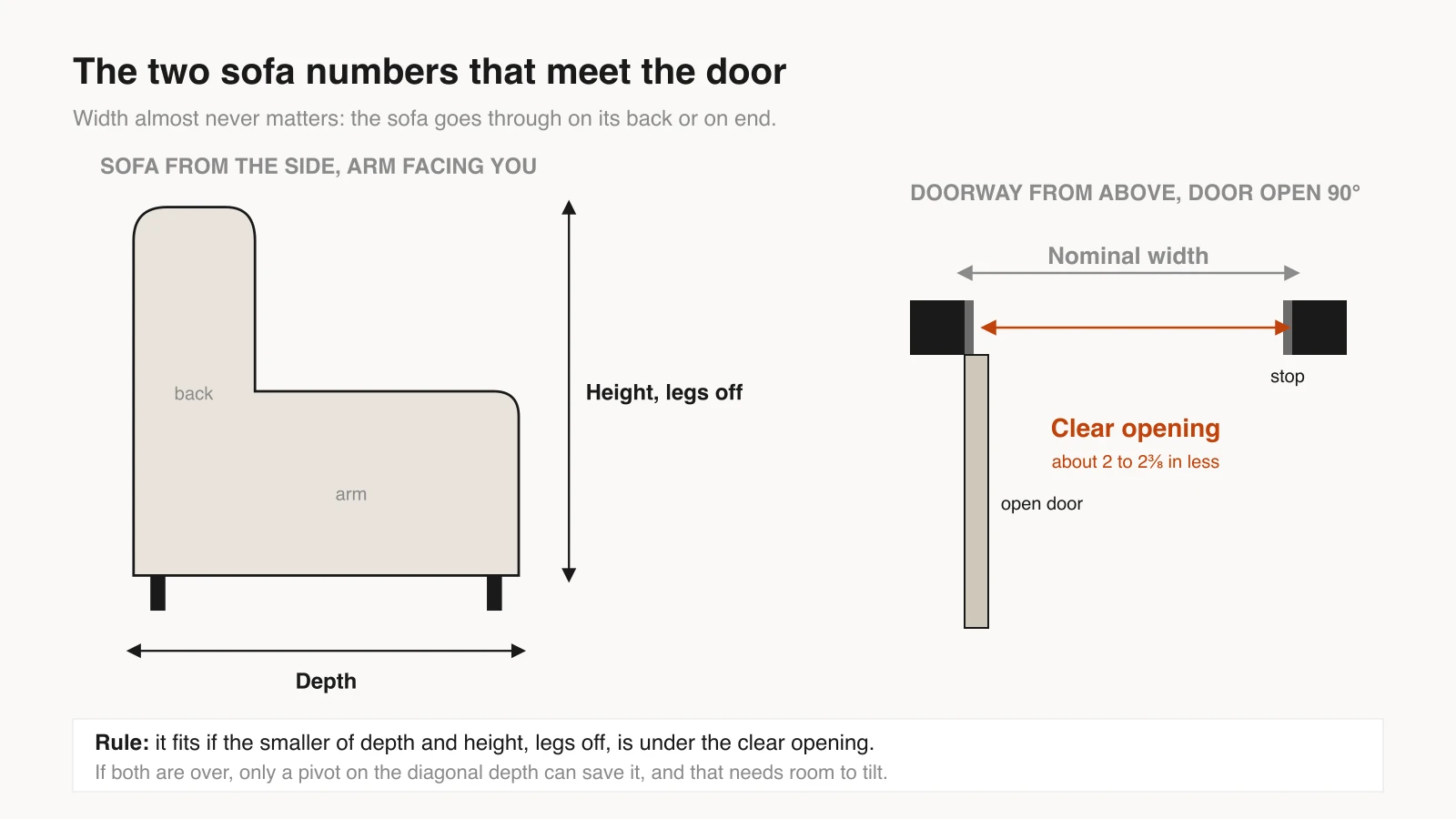
Width almost never decides it. Depth and height do, against the gap between the open door and the stop. The diagonal depth is the fallback when both are too big, and step 3 below shows how retailers measure it.
- Height without the legs. Floor to the top of the back, minus the legs if they unscrew. Check that they do before you count on it.
- Depth. Back of the frame to the front of the arm or seat, whichever sticks out more.
- Diagonal depth. Pottery Barn’s delivery guide puts it in one line: “the diagonal depth must be less than the width” of the opening (Pottery Barn, How to Measure). CB2 measures it corner to corner on the side of the sofa, pillows off (CB2, How to Measure).
- The clear opening of every door on the route. Door open 90 degrees, face of the door to the stop. The front door is rarely the narrowest one; the apartment door or the bedroom door often is. If there is a stair on the way, the turn at the landing is usually tighter than any door; our stair dimensions guide has the code minimums.
- The turns. A long box or base has to swing out of a hallway into the door. Measure the hallway width and the space in front of the door, because an 86 inch package that clears the frame can still jam on the corner.
This short lesson shows the diagonal depth being taken on a real armed sofa, which is the one measurement most people have never done:
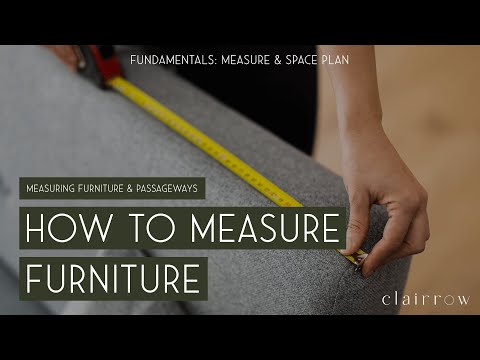
How to measure furniture, by Clairrow (2 min 27 s). A clear demonstration of height, depth and diagonal depth. It is a classroom clip, so it stops at the tape measure and never carries a sofa through a door.
Sofas that fit through narrow doors, measured
Every number below is from the maker’s own product page, FAQ or assembly guide, read on 6 October 2026. “Largest piece” is the biggest single box or part that has to go through the door. The verdict uses the cautious clear openings from the first table, and it assumes the hallway lets a long piece line up with the door. Prices move often; treat them as a range, not a quote.
The right column is the one people forget. It is what the sofa measures when you move it out again, or carry it to another room, without taking it apart. Only the Burrow Range is low enough to cross a 32 inch door built, and the Albany Park Kova, the easiest of all to get in, is the hardest to get out.
Modular sofas solve the narrow door by never being one big piece. Each seat block goes through on its own and the chaise is just another module. A render from our gallery, regenerated with the open door added; the camera pulled back a little in the edit.
Lovesac Sactionals: the smallest pieces, the highest price
A Sactional is not a sofa that comes apart, it is a pile of parts that becomes a sofa. A Seat is 35 by 29 by 18 inches and weighs 53 pounds; a Side is 6 inches thick (Lovesac). Eighteen inches goes through any interior door, a closet door included, which is why this is the sofa people ask about in walk-ups, and why it is the one brand that appears by name in the searches that reach our fit guides. The catches are price and weight in one place: the recliner seat is 79 pounds at the same size, and Lovesac’s site does not publish a doorway claim at all, only room-of-choice delivery. The configuration price we could find, $3,250 for 3 seats and 5 sides, came from a Lovesac email archived by a third party, so check it at checkout.

How to unbox your Sactionals, presented by Lovesac founder Shawn Nelson (12 min 19 s). Useful for seeing how small each box really is. It is the brand’s own video and it is long; skip to the first few minutes.
Floyd The Sofa 2.0: the thinnest box on the list
Floyd ships the three-seater in three packages, and the biggest is the base at 86 by 32 by 6 inches and 92 pounds; the cushions come in a 42 by 32 by 24 box (Floyd). Six inches thick means the door is never the problem. The 86 inch length is: it has to line up with the doorway, so a short hallway with a turn can stop it where a thicker but shorter box would swing through. Floyd calls the boxes “stairwell-friendly flat pack”. We could not confirm on its page whether the arms come off separately or whether tools are needed.
Albany Park Kova: easy in, hard out
The Kova arrives in four boxes, two of them 43½ by 43½ by 15 inches, and goes together with alligator clips under the frame; Albany Park says the only tool is the Allen wrench for the legs, and it is included (Albany Park FAQ). Fifteen inch boxes pass any door. Built, though, the Kova is 42½ inches deep and 39 tall (Albany Park, Kova), the bulkiest sofa here, and it will not go through even a 36 inch door in one piece. It is a good answer for a narrow door as long as you accept that it leaves the way it came: in parts.
IKEA KIVIK: the cheap way to a sofa in packages
IKEA lists the KIVIK three-seat sofa as three packages; the largest is 72½ by 37½ by 19¾ inches and 118 pounds, and the armrests are removable (IKEA, KIVIK). At $899 it is the least expensive sofa here that publishes every package, and a 19¾ inch package clears a 28 inch door with room for fingers. Two honest limits: the 118 pound frame package is a two-person carry up any stairs, and the color we priced was marked “Last chance”, so that exact cover may not last.
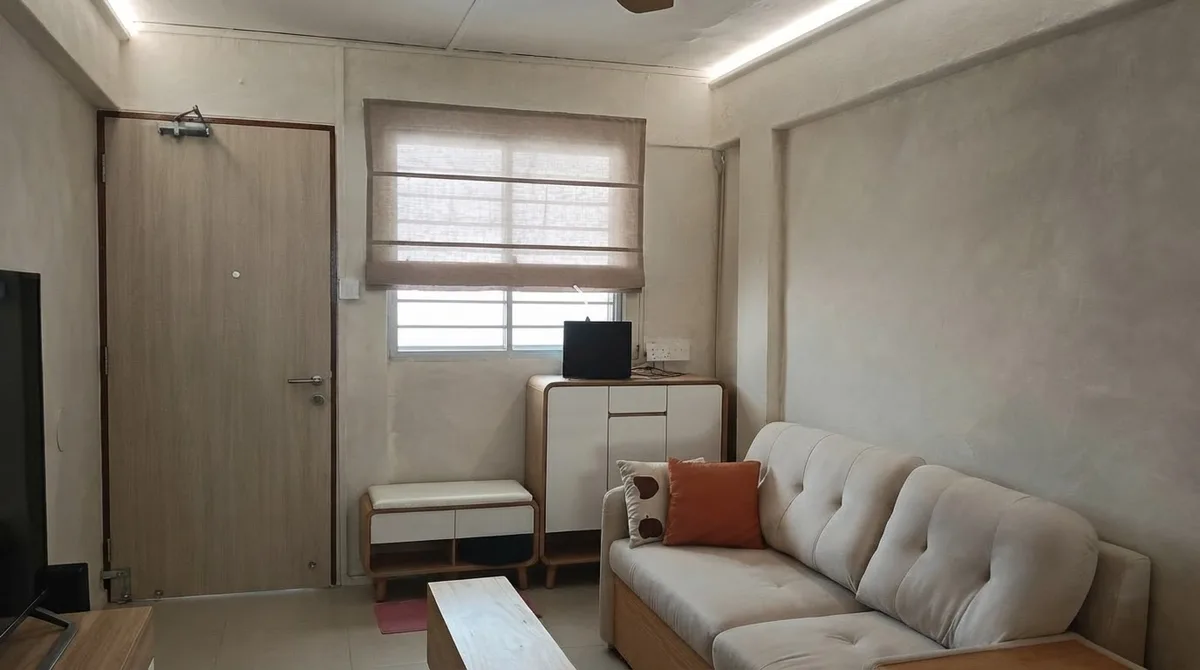
The usual layout in a small apartment: the entry door sits a few feet from where the sofa ends up, with no hallway to tilt in. That is when the size of the biggest box matters more than the size of the sofa. A render from our gallery.
Burrow Range and Nomad: low, modular, partly unpublished
The Burrow Range is the only sofa here low enough to matter assembled: 28 inches tall and 31 deep, with legs 7¼ inches tall, joined from seat modules with steel latches (Burrow, Range). A 28 inch module clears a 32 inch door as it is. For a 30 inch door it would depend on the legs coming off, which we could not confirm from Burrow’s page, so the table says no. The Nomad is taller at 33 inches and ships, Burrow says, “in a normal shipping box” with pieces that connect without tools (Burrow, Nomad), but neither model publishes box sizes. Ask for them before you order for a tight door; a brand that will not tell you is not one to bet a delivery on.

Assembling a Field sofa, by Burrow (30 s). It shows how Burrow’s modular pieces latch together. It is an ad for a different model than the two above, with no door and no measurements in it.
Sabai The Essential Sofa: bolts together, sizes not published
Sabai’s assembly guide lists two arms, a back, a front rail, three seat panels and six legs, bolted together with a ratchet wrench that comes in the box (Sabai). The arms are 7 inches thick, so the parts are flat, and a sofa built from flat parts is the right shape for a narrow door. What Sabai does not publish is the box count or the box sizes, so we cannot give a verdict, only a likely one. Assembled it is 85 by 34 by 32 inches, the same envelope as the Floyd.
Article Hanson: one big box, and a useful rule
The Hanson is the contrast case: one box, 81 by 38 by 23 inches, with about ten minutes of assembly (Article, Hanson). Twenty-three inches clears a 28 inch door, so the box gets in, but an 81 inch box is the hardest shape on this list to turn out of a hallway. Article’s own delivery page has the line worth remembering for any sofa: “you can unbox your item to help it fit” (Article, measure for delivery).
Two brands we left out, and why
Allform still turns up in lists of sofas for small doorways. Its own site says it has not been available since 28 March 2025 (Allform). Interior Define may well qualify, but its product pages would not load for us without a full browser session and we will not print dimensions we could not read. If a list still recommends Allform, it has not been checked since last year.
Couches that come apart: which design actually helps
“Comes apart” covers four very different things, and only three of them help at a narrow door.

A sectional is two or three sofas bolted together, so each section is judged on its own against the door, and the chaise section is usually the deepest. A render from our gallery, regenerated with the doorways added.
Sleeper sofas and recliners through a narrow doorway
A sleeper hides a folding steel mechanism and a mattress inside the frame. That makes it heavier and deeper than the same sofa without a bed, and it usually cannot be split or stood on end without the mechanism shifting. Recliners carry a mechanism in every seat; Lovesac’s own figures show the gap, 79 pounds for a recliner seat against 53 for a standard one at the same size. For a narrow door, a modular sleeper or a sofa bed in a flat pack is a safer plan than counting on a pivot, and the mattress tricks in our mattress doorway guide do not carry over to a sleeper’s steel frame. If a new refrigerator is coming through the same door, the fridge doorway guide has the spec sheet numbers.
If the sofa you already own will not go through
Before you sell it, work through the free steps: cushions and cover off, legs off, the door lifted off its hinges, then the hook-and-pivot. Our furniture will not fit through the door guide covers each one in order, and the will my couch fit through the door answer has the short version. This video shows the pivot better than a diagram can:

How to get my too big couch through the too small door, by HouseBarons (7 min 37 s). The hook-and-pivot shown end to end, plus taking the hinge pins out for an extra inch or two. A DIY channel, not a professional mover, and longer than the trick needs.
See the sofa in your room before it reaches the door
Getting it through the door is half the decision; the other half is whether it suits the room once it is there. Upload a photo of your living room and try the shape and the color in your own space with MeltFlex, then check the size against your floor plan with the what size furniture fits my room guide and the sofa size answer. If your sofa has to share a small room with a dining corner, the studio apartment layouts and the small living room ideas are worth a look first, and the apartment furnishing budget guide puts a sofa price in context.
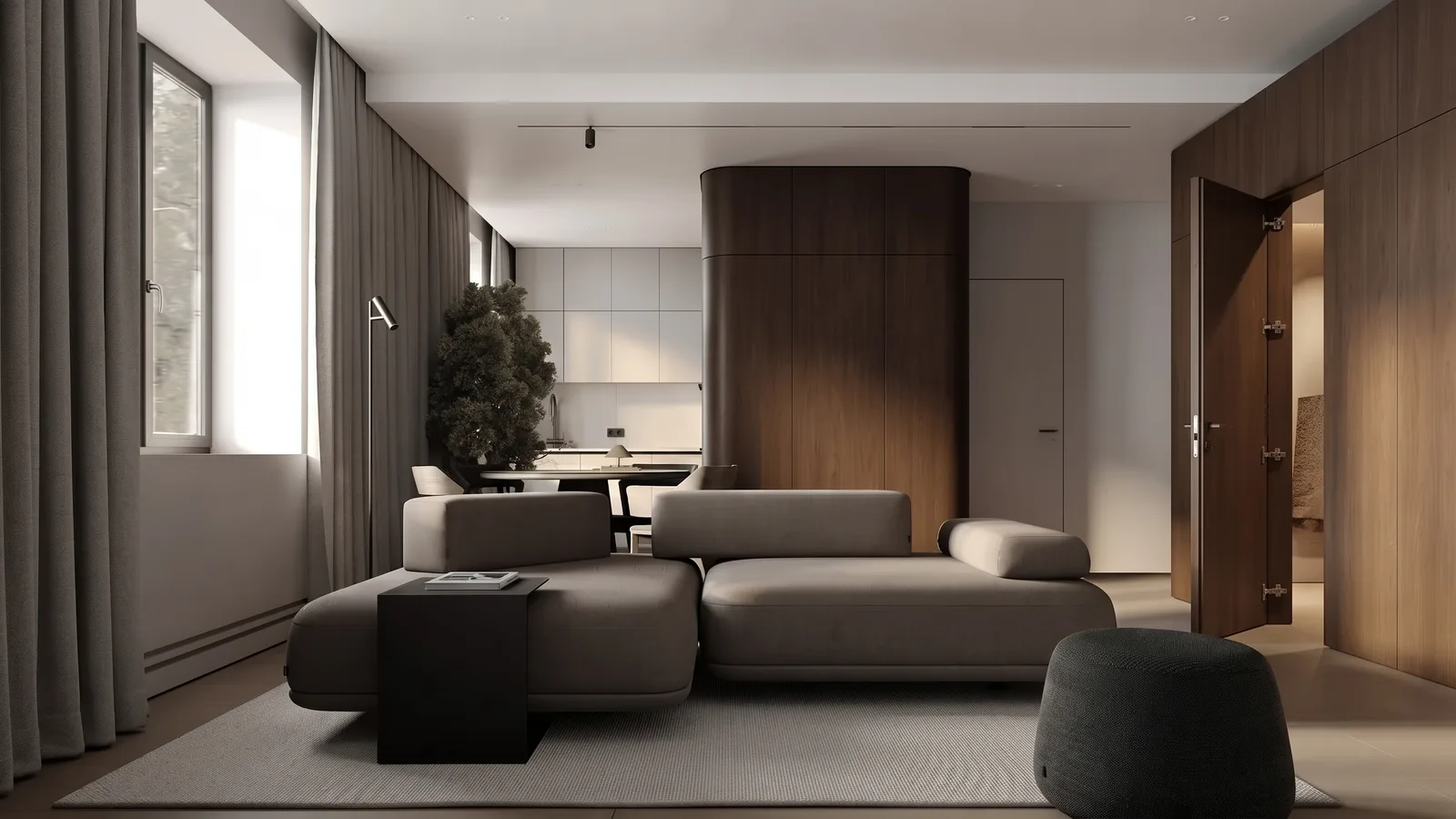
Low, deep modular sofas like this one are the easiest to live with behind a narrow door: each block is a separate piece and none of them is tall. A render from our gallery, regenerated with the panel door opened.
How we checked
Matúš Koleják, who built the MeltFlex furniture fit calculator, read every dimension on the maker’s own product page, FAQ or assembly PDF on 6 October 2026 and did not take any number from a reseller or another list. Verdicts apply the cautious clear openings above and assume a straight approach to the door. We did not carry these sofas through a door ourselves, and no brand paid for or reviewed this guide. Where a maker does not publish a number, the table says so rather than estimating it.
Sources
- U.S. Access Board, ABA Standards chapter 4, 404.2.3: clear width measured between the face of the door and the stop, door open 90 degrees.
- HUD, Fair Housing Act Design Manual, chapter 3: a 34 inch door hung in the standard manner provides at least 31⅝ inches clear.
- Pottery Barn, How to Measure guide (PDF): diagonal depth must be less than the width of the opening.
- CB2, How to Measure: diagonal depth measured corner to corner, pillows off.
- Lovesac, Sactionals: Seat 35 × 29 × 18 in, 53 lb; Side 6 in thick; recliner seat 79 lb.
- Floyd, The Sofa 2.0: 86 × 34 × 32 in; packages 86 × 32 × 6 (92 lb), 42 × 32 × 24, 27½ × 24 × 6.
- Albany Park, Kova and FAQ: 85½ × 42½ × 39 in; boxes 43½ × 43½ × 15 and 43 × 17 × 7; alligator clips, Allen wrench included.
- IKEA US, KIVIK sofa 694.997.04: 89¾ × 37⅜ × 32⅝ in; three packages, largest 72½ × 37½ × 19¾ in, 118 lb 7 oz; removable armrests.
- Burrow, Range 3-piece and Nomad: 91½ × 31 × 28 in with 7¼ in legs; 85 × 35 × 33 in.
- Sabai, The Essential Sofa and its assembly instructions: 85 × 34 × 32 in; arms, back, rail and seat panels bolted together.
- Article, Hanson 79″ and Measure for delivery: 79 × 35 × 33 in; box 81 × 38 × 23 in.
- Allform: no longer available as of 28 March 2025.
Sofas for narrow doorways FAQ
What size couch will fit through a 29 inch door?
If 29 inches is the gap you measured yourself with the door open, a couch fits when the smaller of its depth and its height, legs off, is under 29 inches. Six of the seven assembled sofas we checked for this guide measure 32 to 39 inches on that face, so they do not go straight through; you need a low sofa (around 28 inches tall), one that pivots through on its diagonal depth, or one that arrives in pieces. If 29 inches is the size on the door itself, the real gap is closer to 27 inches, and only modular or flat pack sofas are a safe bet.
Will a couch fit through a 30 inch door?
A 30 inch door leaf leaves roughly 27½ to 28 inches of clear opening once the open door and the stop take their share. An assembled sofa fits if its height or depth without legs is under that, which rules out most standard sofas but not low ones. The modular and flat pack sofas that publish their piece sizes all get through as parts: the largest pieces are a 6 inch thick Floyd base, a 15 inch Albany Park box, an 18 inch Lovesac seat and a 19¾ inch IKEA KIVIK frame package.
Will a couch fit through a 32 inch door?
A 32 inch door gives about 29½ to 30 inches clear. That passes a sofa whose height or depth without legs is under that number, so a low modular sofa such as the Burrow Range (28 inches tall) goes through as modules, while a typical 33 to 37 inch sofa still needs the diagonal depth pivot or to come apart. Measure the gap with the door open; do not trust the number on the door.
Which sofas come apart to fit through a door?
Three designs come apart in a way that actually helps. Modular sofas (Lovesac Sactionals, Burrow Range) separate into seats you carry one at a time. Flat pack sofas (Floyd, Sabai, IKEA KIVIK) bolt or clip together from a base, back and arms. Boxed knock-down sofas (Albany Park Kova, Article Hanson) ship as large boxes you assemble in the room. A sofa that only has screw-off legs is not a sofa that comes apart; legs buy you a few inches (Burrow's are 7¼), not a new shape.
Will a sofa in a box fit through any door?
The box will fit through almost any interior door, the assembled sofa often will not. Albany Park ships the Kova in boxes no thicker than 15 inches, but the built sofa is 39 inches tall and 42½ inches deep, too big even for a 36 inch door. That matters the day you move out: buy a boxed sofa only if you are prepared to take it apart again.
How do I measure a sofa for a narrow doorway?
Measure the sofa height and depth without the legs, and the diagonal depth: CB2 measures it corner to corner on the side of the sofa with the pillows off, and Pottery Barn states that the diagonal depth must be less than the width of the opening. Then measure the doorway with the door open 90 degrees, from the face of the door to the stop on the other side. That gap, not the size printed on the door, is the number every sofa dimension has to beat.
Are sleeper sofas and recliners harder to get through a doorway?
Yes. A sleeper hides a steel mechanism and a mattress inside the frame, so it is heavier, deeper and usually cannot be pivoted or split, and recliners carry a mechanism in every seat. Lovesac publishes a 79 pound recliner seat against 53 pounds for its standard seat, at the same size. If the door is tight, choose a modular sleeper or plan on a wider entrance rather than counting on a pivot.