Short answer: black window frames are worth it on large windows, in rooms with plenty of daylight, and in materials built for the heat, which means aluminium, fibreglass or timber rather than vinyl. They are a bad idea on small windows, in dark north-facing rooms, and on dark vinyl in strong sun where surface temperatures above 180°F can bow the frame and void the warranty. The frame colour is a cheap decision to reverse on paper and an expensive one to reverse in glass, which is why it is worth seeing black frames on your own window before anyone quotes you.
Our articles are still written by humans!
Get human written articles in your Google feed.

Why Almost Every Guide on This Topic Says Yes
Before the pros and cons, one thing worth knowing about the pages you are reading. We went through the first page of results for this exact question. Nearly every one of them is published by a company that sells, installs or manufactures windows. Manufacturer blogs from Pella and Marvin, plus a long tail of regional installers and one roofing contractor.
That does not make them wrong. Installers know things a design blog never will, and some of the most useful warnings in this article came from them. But it does mean the genre has a shape: a list of pros, a short list of manageable cons, and a conclusion that black windows are a great choice. Nobody whose revenue depends on the upgrade writes the sentence your window is too small for this.
We do not sell windows. We make a window design tool that shows you the result before you buy anything, which means our incentive is that you get the answer right, not that you get the black one. So this guide is organised around the cases where the answer is no.
The Same Room, Both Ways
The core problem with every article in this SERP, including the good ones, is that they show you a beautiful house that is not yours. You cannot tell whether the black frames look good because of the frames or because the room has four metre ceilings and a garden view.
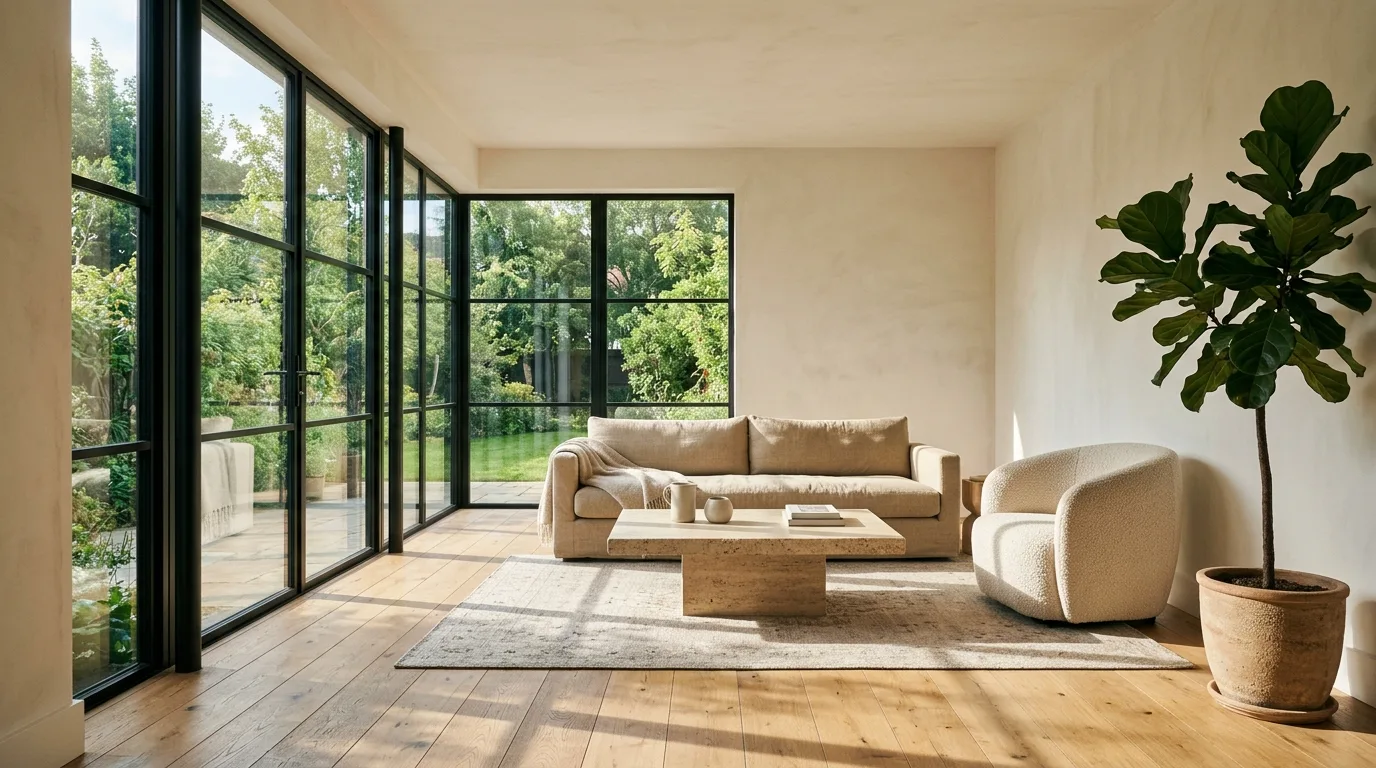
So we rendered the room once, with white frames, and then repainted the frame on that exact image rather than generating a second room. Same sofa, same rug, same plant, same garden through the glass, same light, same four panes. The only thing that changes is the frame colour. That constraint is harder than it sounds, and it is why nobody publishes this comparison: ask an image model to make a window black and it will happily hand you a completely different window.
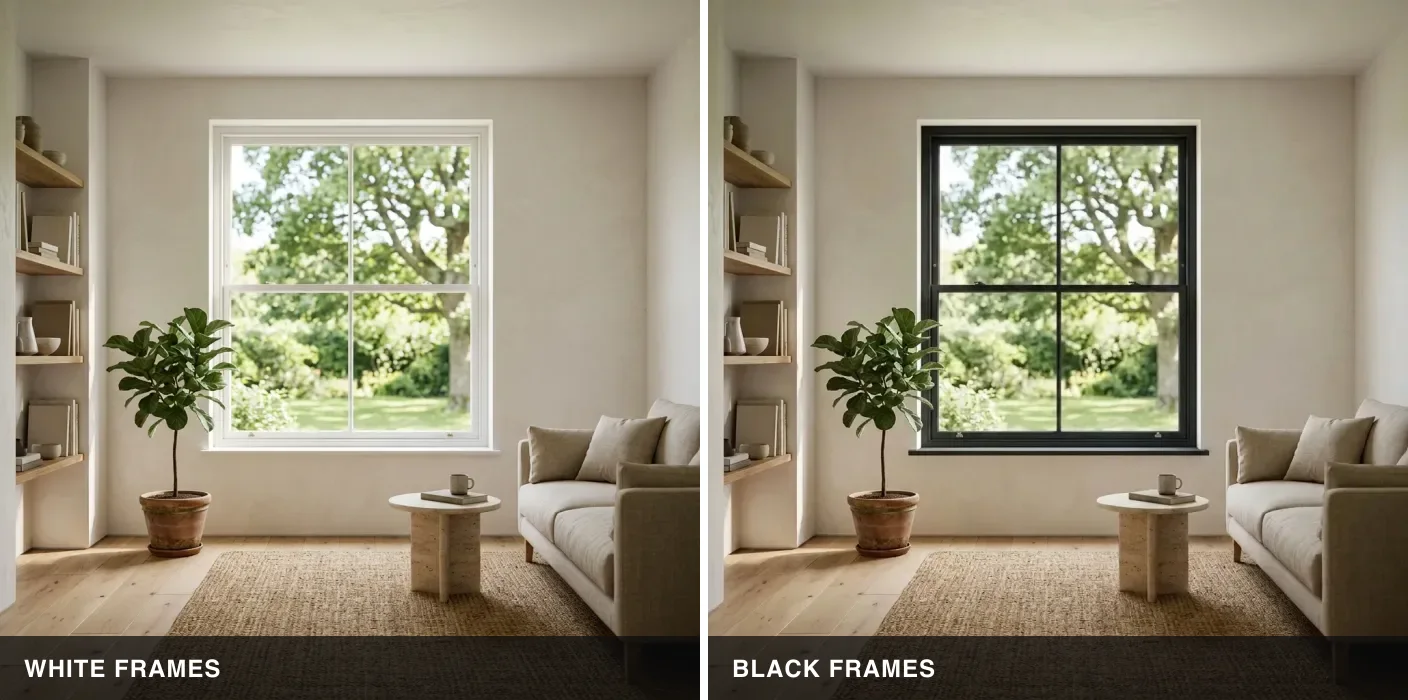
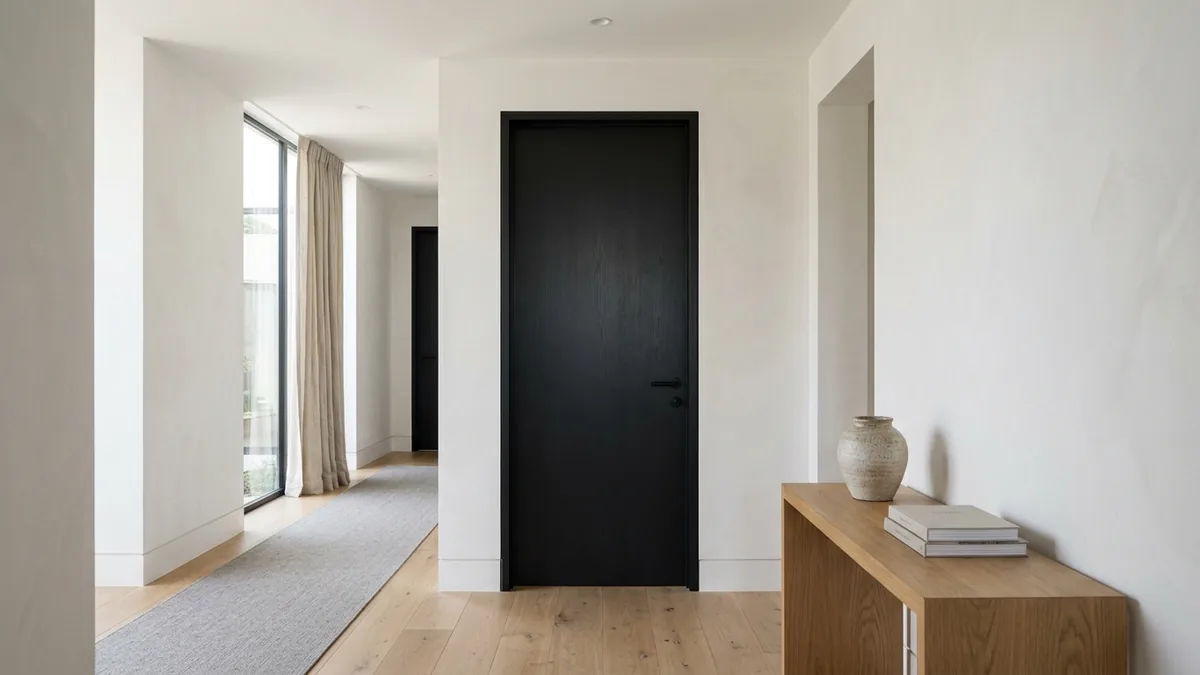
Notice what the black frame does to the view. It behaves like a picture mount, pushing your eye through the opening and out. If the view is a mature garden or a city skyline, that is a gift. If the view is a fence two metres away or a neighbouring wall, a black frame frames the fence and draws attention to the thing you would rather not notice. The same logic we use for black interior doors applies here, except a door has no view to sell.
The Pros That Actually Hold Up
Black window frames are window frames whose sash, outer frame and glazing bars are finished in a dark near-black colour, either applied at the factory as a baked powder coat or a co-extruded capstock layer, or painted on site after installation. The distinction matters more than the shade does, because the factory versions carry a colour warranty and the painted ones generally do not.
Stripping out the marketing, four advantages survive scrutiny.
They frame a view worth framing. This is the real one. Dark frames read as a border, and a border is only an asset when the thing inside it is worth looking at. On a window facing a garden, black earns its price.
They hide dirt and wear better on the inside. Handprints, scuffs and the grey shadow that builds along the bottom rail all show less on black. The same practical argument that makes dark flooring finishes forgiving applies to frames people touch daily.
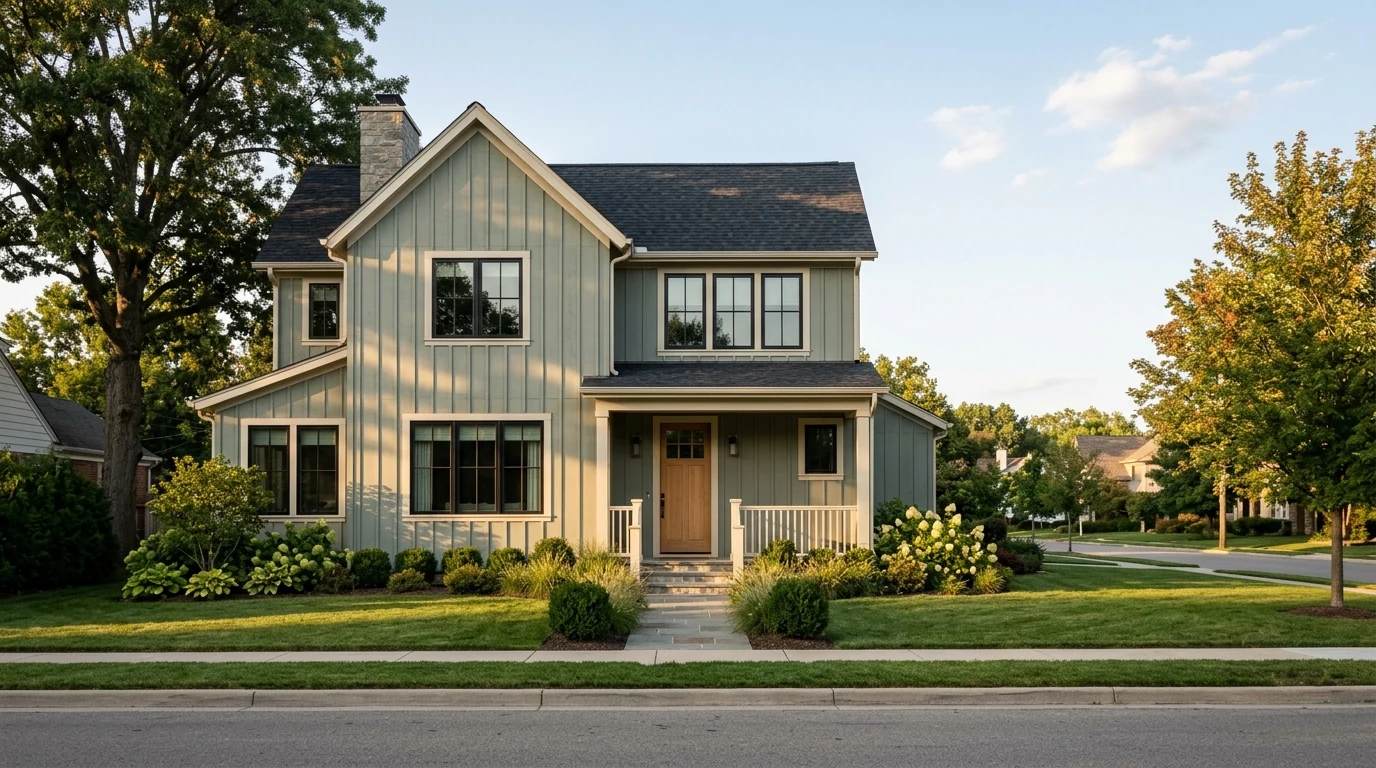
They unify mismatched glazing. If your house has three window shapes from three eras, painting or specifying them all in one dark colour makes the elevation read as intentional. It is the cheapest way to make an inconsistent facade look designed, which is also why it shows up so often in exterior colour schemes.
They suit more interior styles than white does. Black frames sit comfortably in warm industrial, mid-century, modern and even classic schemes. White frames look wrong in exactly one of those, but black looks deliberate in all four.
The Cons Nobody Selling Windows Leads With
Here is where this article stops agreeing with the rest of the page.
Dark vinyl and direct sun are a genuinely bad combination. Dark vinyl surfaces have been recorded above 180°F in direct sunlight. Vinyl moves more with temperature than aluminium or fibreglass, so a frame with one sunlit face and one shaded face can bow or twist. When it bows, the weatherstrip no longer compresses evenly and the seal leaks. Heat stress on the glazing seals can also let the argon or krypton fill escape, at which point you have paid for insulating glass that no longer insulates. Several vinyl manufacturers limit or exclude warranty cover on dark colours specifically because of this, which tells you more than any brochure (Installix, Brennan). This is not a fringe worry either. The industry standard for rigid PVC window profiles, AAMA 303, sets requirements for heat build-up alongside impact and weathering, tests it under the ASTM D4803 method, and specifically flags darker substrates and high-solar locations as the cases where its deformation guidance matters. When a standards body writes a clause about your colour choice, that is worth more than a showroom opinion.
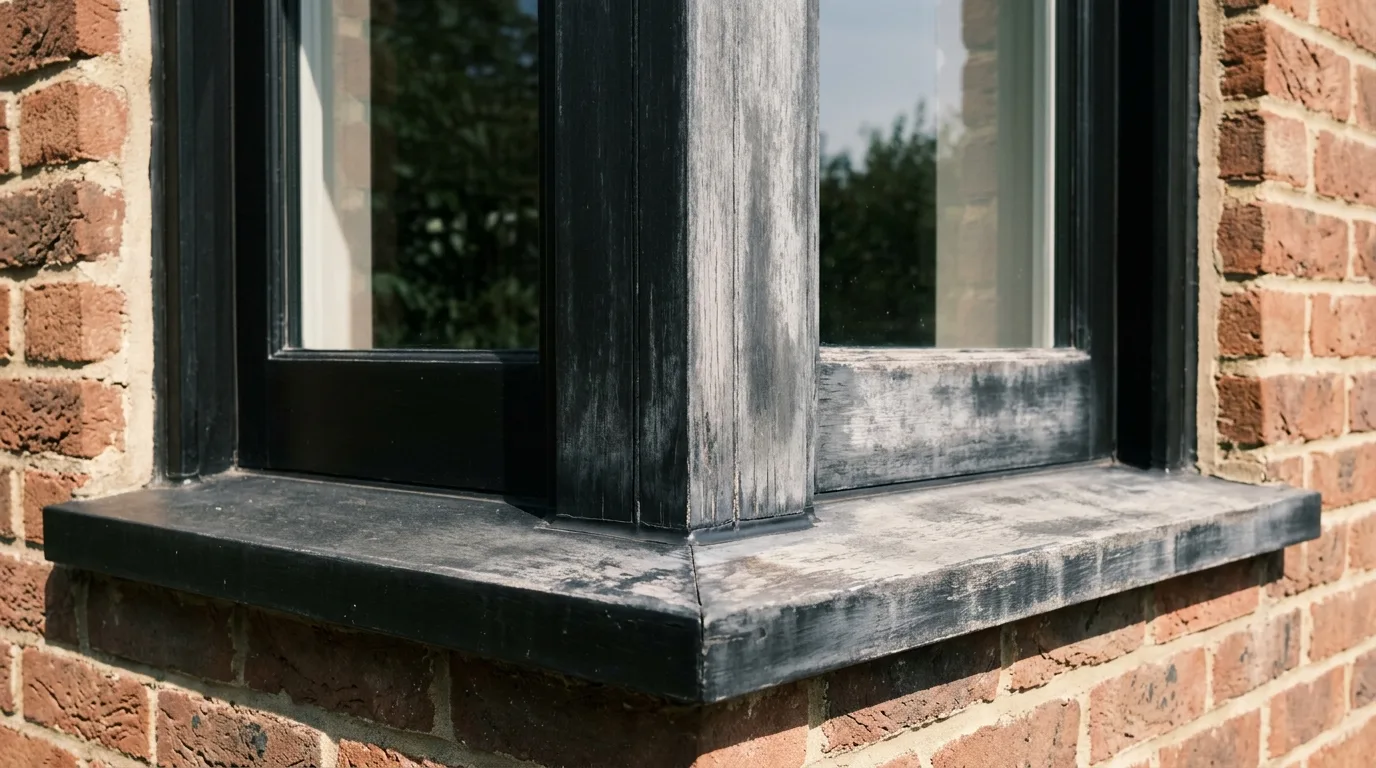
Fading is asymmetric. All frames chalk with UV exposure. White vinyl has titanium dioxide through the body, so as it chalks it stays roughly white. A dark pigment that chalks does not go slightly darker, it goes patchy and grey. This is why a fifteen year old white frame looks tired and a fifteen year old black frame looks neglected, even when the actual degradation is identical.
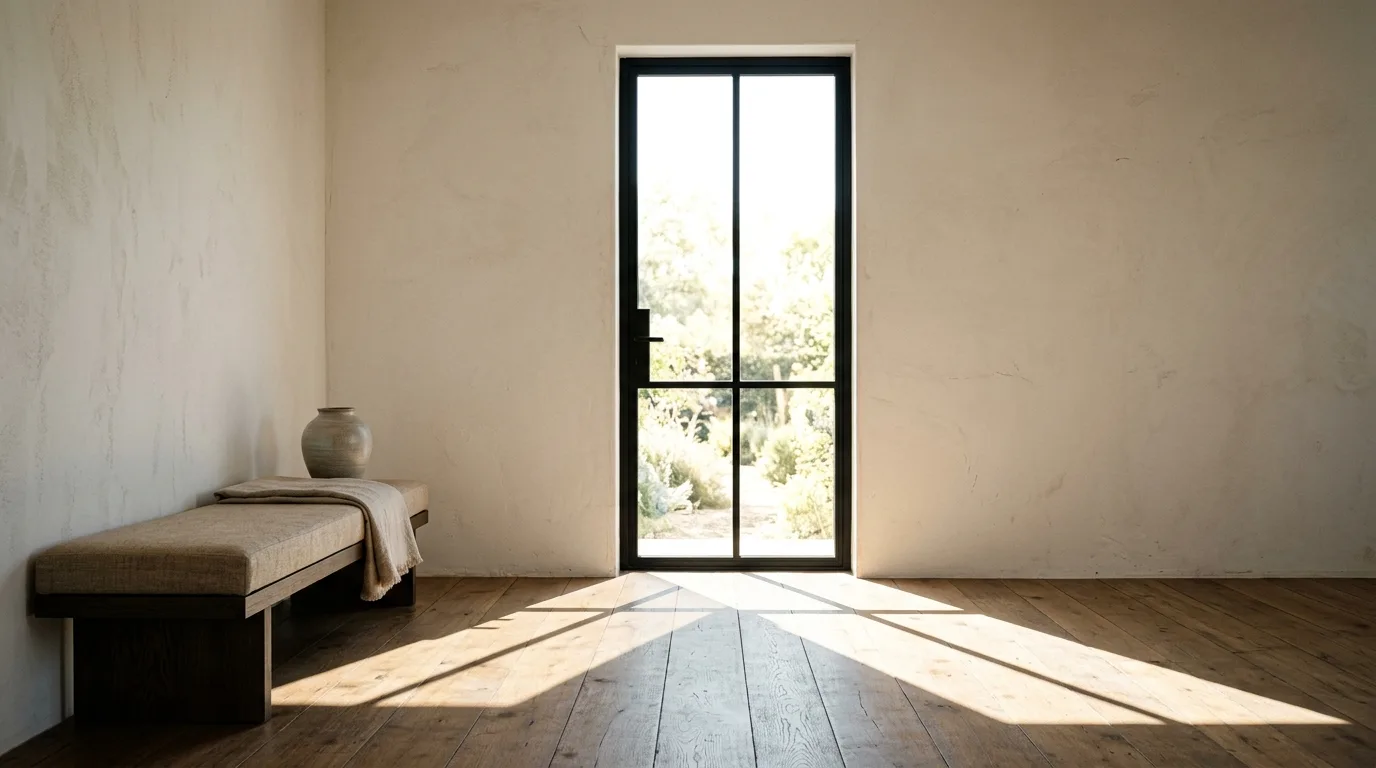
Small windows get smaller. A black frame is a hard visual border. On a large opening the border is a small fraction of the area and disappears. On a small bathroom or landing window it is a large fraction, and the window reads as a dark hole in the wall. Every inspiration photo you have seen uses generous glass, which quietly conceals this.
Dust and pollen show immediately. On the exterior, black frames are excellent at hiding rain marks and terrible at hiding pollen. In dry or agricultural areas this is a fortnightly cleaning job rather than an annual one.
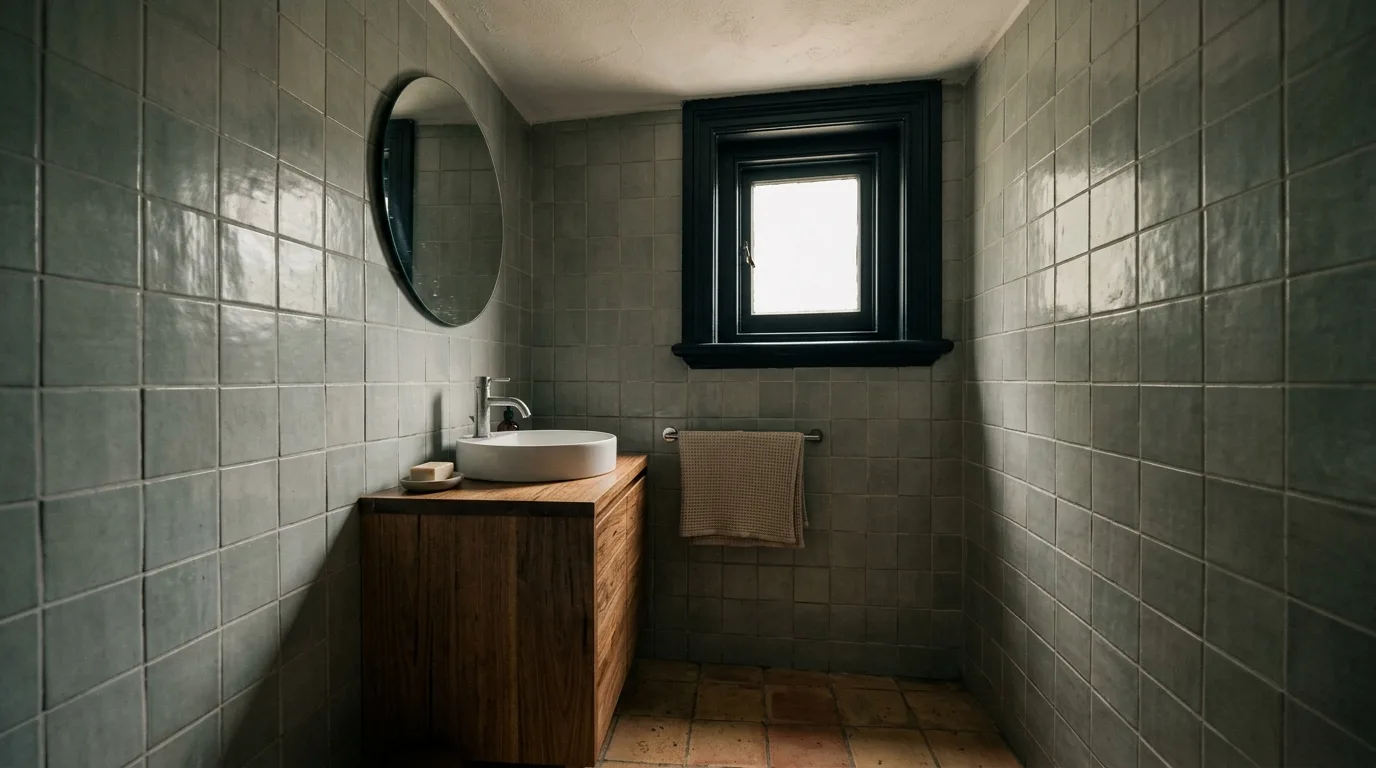
Black Window Frames Pros and Cons at a Glance
The honest comparison, with the caveats attached rather than buried.
Black Inside, White Outside, or Both
This is the decision most people skip and then regret, and it is a standard factory option on almost every line. You can have a dark exterior and a white interior for close to nothing extra, because the exterior finish is a separate operation from the interior one.
Think of it as two separate questions. Outside, the frame competes with cladding, brick or render, and a dark frame almost always wins that fight. Inside, the frame competes with your trim, doors and skirting. If those are white, a black frame is now the only black object in the room and it needs a reason to be there.
The version that goes wrong most often is black inside a small room where the skirting, doors and ceiling are all white. The frame stops looking like architecture and starts looking like something was forgotten. If you want to test this properly, render your room both ways rather than trusting the showroom, which is always larger and brighter than your house.
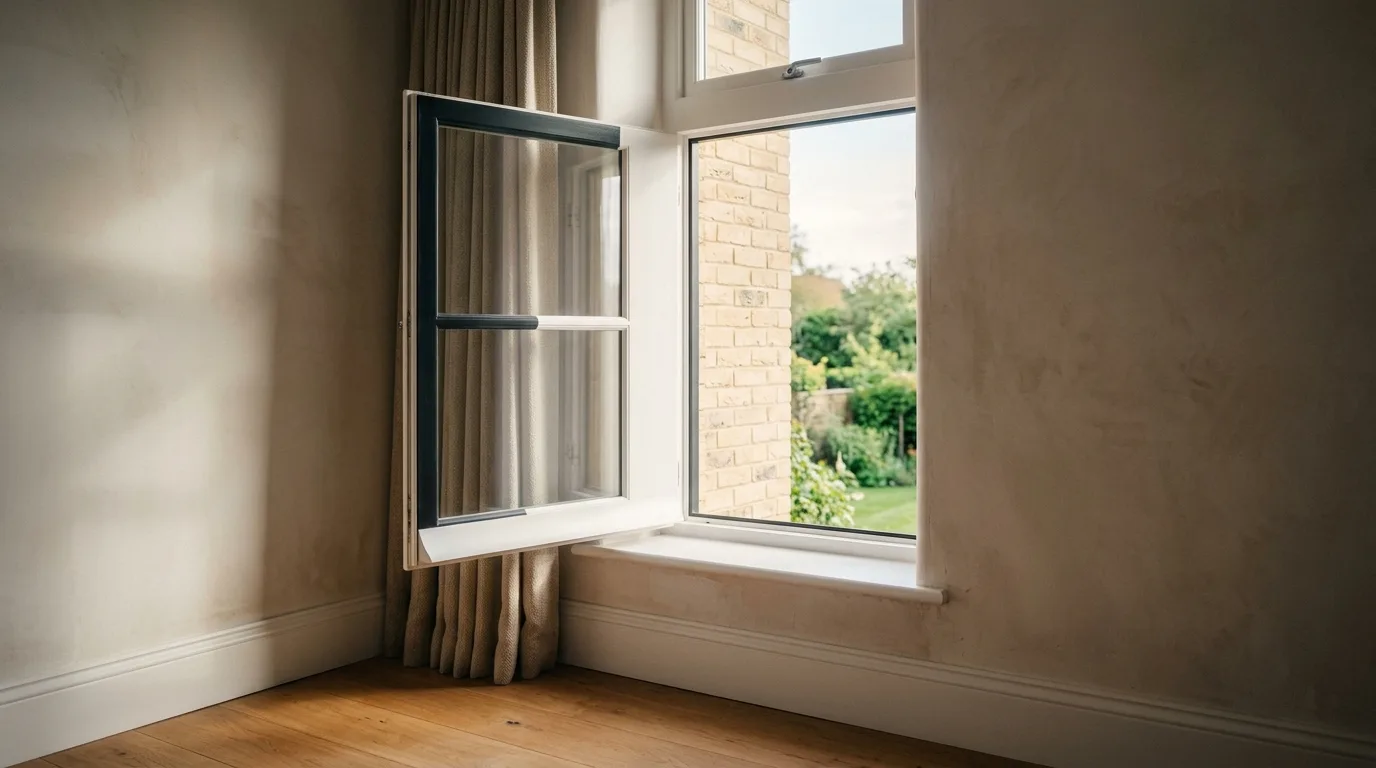
Where Black Frames Fail, Room by Room
Generic advice is why people repaint. Here is the room level version.
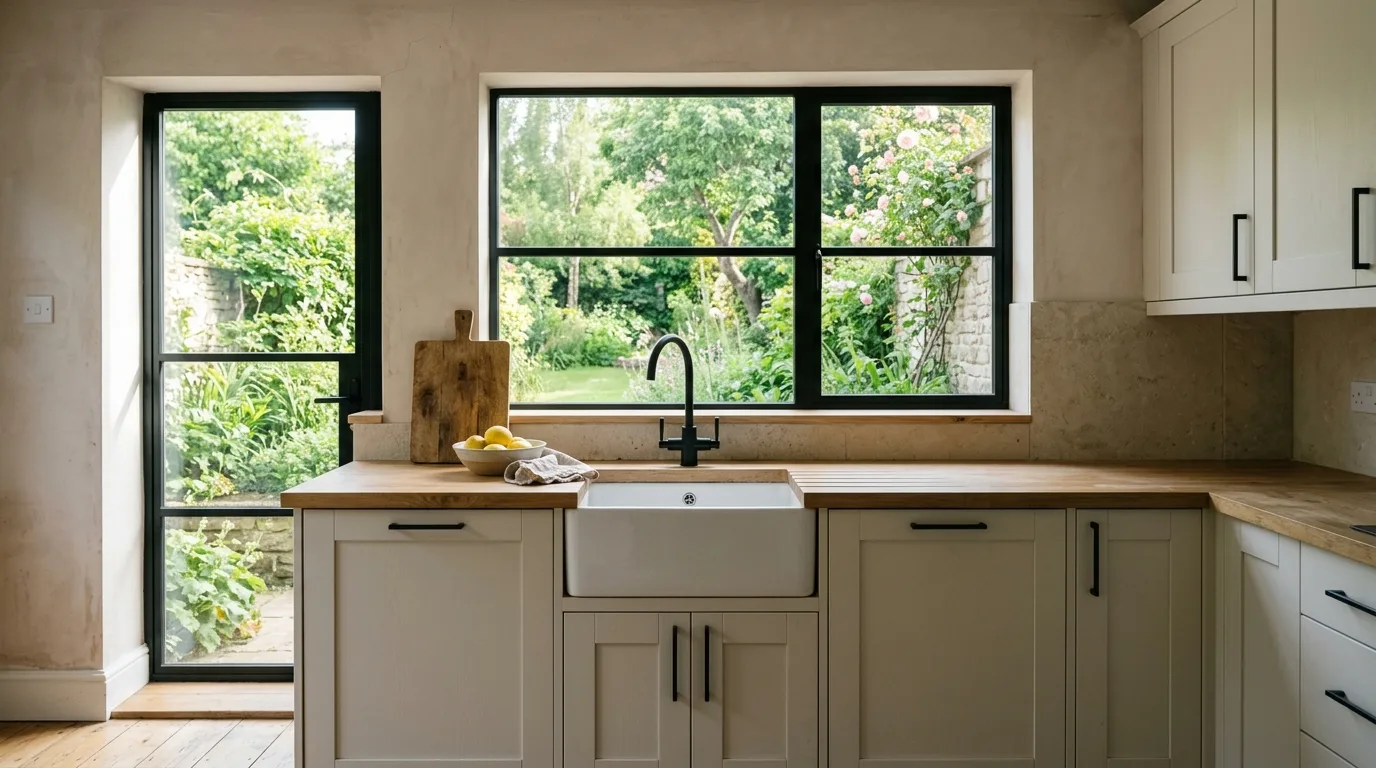
What to Pair Black Frames With
Black frames are not a neutral. They are a strong accent that changes everything near them, which is the same mistake people make with an accent wall: treating a decision as small because the surface is small.
If you are unsure how a black frame sits against your existing wall colour, that is a question worth testing rather than guessing. Our guides on choosing paint colours with AI and changing wall colour in a photo cover the same method applied to the wall instead of the frame, and what colour furniture goes with grey walls is worth reading first if grey is what you already have.
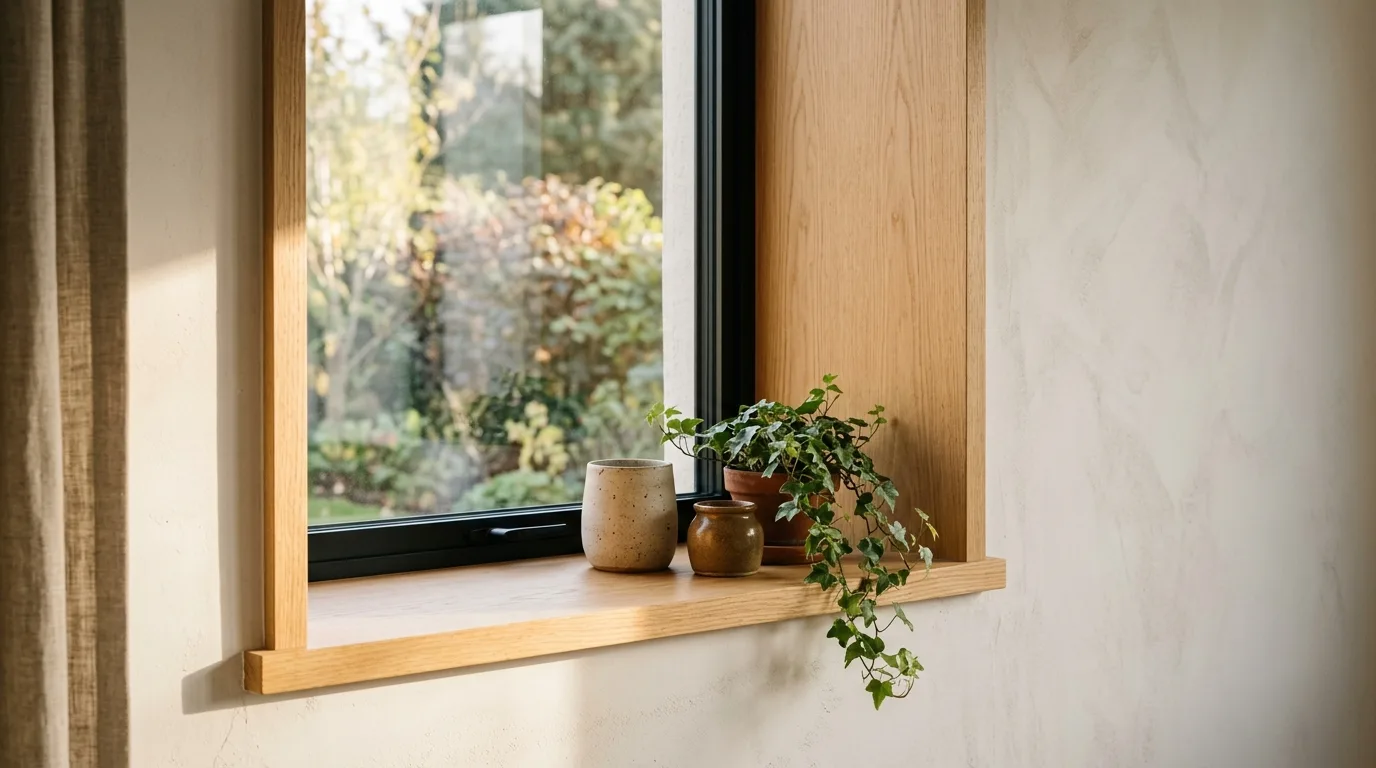
What Black Frames Actually Cost
Quoted premiums for black over white run from nothing to about 30 percent, with 15 to 25 percent the range you will meet most often. The spread is that wide because suppliers are not pricing the same thing.
The detail worth arguing about at the quote stage is what the upcharge buys. Sometimes it is genuinely a finish cost, a powder coat or a co-extruded capstock layer instead of white body vinyl. Often it is not a colour charge at all. It is the supplier moving you from vinyl to aluminium or fibreglass because they know dark vinyl comes back as a warranty claim. In that case you are not paying more for black, you are paying more to make black survivable, and the upgrade would have been worth having anyway.
Ask two questions and the quote becomes readable. First, is the black finish factory applied or painted after the fact. Second, does the warranty on this frame differ from the white version of the same product. If the answer to the second is yes, the colour is not the only thing changing.
Steel Crittall style glazing sits in a different bracket entirely, several times the cost of a standard replacement window, which is why most of what people call Crittall is an aluminium or steel-look system imitating the profile. If the thin black grid is what you actually want, say so, because it is a profile decision rather than a colour decision.
Painting Frames You Already Own
The cheapest way to test this trend is paint, with one large caveat that splits by material.
On timber, painting frames black is straightforward and completely reversible. Clean, sand, prime, two thin coats of exterior grade satin. On aluminium it works with a correct etch primer. On vinyl and uPVC it is the version most likely to end badly, because you are adding a heat absorbing coating to a substrate that was never engineered for the load, which is precisely the combination behind the bowing and the excluded warranties. Coatings formulated for vinyl with solar reflective pigment exist and are the only sensible route, but you have taken on a risk the manufacturer specifically declined.
Whichever material you have, render the room first. A tin of paint is cheap, but a weekend of masking, two coats and the discovery that your window was too small for a black border is not. Upload a photo of the room to the AI window design tool and you get the black version of your actual window in about thirty seconds. If you want to test the frames and the walls in one pass, start from a room photo instead.
So, Should You Do It
Black window frames are a good decision when the glass is large, the room has daylight, the walls are warm rather than cold, and the frame material can take the heat. They are a poor decision on small openings, in north facing rooms, and in dark vinyl in strong sun no matter how good the brochure photograph is.
The trend is not going anywhere, so timing is not your risk. Fit is. And fit is the one thing every guide in this SERP, ours included, cannot tell you from a stock photo of someone else’s house. That part you have to see on your own window. If you want to understand why some AI previews of this look convincing and others look like a sticker on the glass, our breakdown of why AI renders look fake explains what to look for, and the anatomy of a photorealistic render goes deeper on the lighting side.
Common Questions About Black Window Frames
Are black window frames going out of style?
No, but the loud version of the trend is. Black frames trace back to Victorian steel casements and Crittall glazing, so they are closer to a recurring classic than a fad. What is fading is the all-black-everything phase. The current direction is thinner sightlines, matte and powder-coated finishes instead of gloss, and black paired with wood or warm metals rather than black on black. If you are worried about dating your house, the frame profile will look dated long before the colour does.
Are black window frames more expensive than white?
Usually yes, by roughly 10 to 30 percent, with 15 to 25 percent being the common range. Some suppliers charge nothing extra and offer black as one of a dozen standard colours. The important detail is what the upcharge is actually for. In many quotes it is not the colour at all, it is a forced step up from vinyl to aluminium or fibreglass, because those materials handle the heat that a black frame absorbs. You are often paying to avoid a problem rather than paying for a look.
Do black window frames fade?
Dark frames fade faster than white ones, and in high-sun climates it is visible. White vinyl has titanium dioxide through it, so as the surface chalks it stays roughly the same colour. A dark pigment that chalks goes patchy and grey instead. Factory-applied powder coating and co-extruded capstock hold colour far better than paint, which is why painting an existing frame black is the version most likely to look tired in five years.
Do black vinyl window frames warp?
They can, and this is the single biggest practical objection. Dark vinyl in direct sun has been measured above 180 degrees Fahrenheit at the surface. Vinyl expands more than aluminium or fibreglass, so one hot side and one shaded side can bow or twist the frame. Once it bows, the weatherstrip stops compressing evenly and the seal leaks, and heat stress on the glazing seals can let the argon fill escape. Several manufacturers limit or exclude warranty cover on dark vinyl for exactly this reason, so read the warranty before the brochure.
Do black window frames make a room look smaller or darker?
They make the opening look smaller, not the room. A black frame reads as a hard border around the glass, so on a small window the frame eats visual area and the window looks meaner than it is. On a large window the same border works in your favour because it disappears against the view. The rule that holds up in practice is that black frames reward big glass and punish small glass, which is the opposite of what most inspiration photos suggest.
Should the window frame be black inside as well as outside?
Not always, and this is the choice most people get wrong. Black outside with white inside is a standard factory option and it is often the better answer, because the exterior gets the contrast against the cladding while the interior keeps the light and matches existing trim. Go black on both sides when the room has generous glass, pale walls and a reason for the frame to be a graphic element. Go black outside only when the room is small, north facing, or the trim and doors are already white.
What colours and materials go with black window frames?
Warm neutrals rather than cold white. Soft white, cream, greige, clay and mushroom keep the contrast expensive rather than harsh. Natural oak and walnut are the safest pairing because the warmth stops the black reading as cold, and unlacquered brass or bronze hardware does the same job in small doses. The combination to avoid is black frames against grey walls with chrome fittings, which is how a room ends up looking like an office.
Can you paint existing window frames black?
On timber and properly primed aluminium, yes, and it is the cheapest way to test the look. On vinyl and uPVC it is the version most likely to end badly, because a dark coating on a substrate never engineered for the heat load is the exact combination that causes bowing and voided warranties. If you paint vinyl at all, use a coating formulated with solar-reflective pigment for vinyl substrates, and accept that you have taken on the risk the manufacturer declined.