Christmas Tree Light Calculator: Lights, Ornaments, Garland and Ribbon by Tree Height and Width

Plan on 100 mini lights per foot of a standard-width tree for a soft glow, 150 for a classic look and 200 for a full one: a 7 ft tree takes 700, 1,050 or 1,400 lights, which at the usual 4 inch bulb spacing is about 233 to 467 feet of lit string. That per-foot rule is what Balsam Hill, King of Christmas and The Christmas Light Emporium all publish. What none of their charts do is ask how wide your tree is, and a slim tree has about 30 percent less branch surface than a standard one of the same height. The calculator below starts from the published rules and scales them by the tree’s real shape, then does the same for ornaments, garland, ribbon and the skirt.
Our articles are still written by humans!
Get human written articles in your Google feed.
Every rule in it was read on the publisher’s own page on 9 November 2026 and is listed under Sources, and every number in the tables of this guide was printed by the same code the calculator runs. Where a source contradicts itself, or where nobody publishes a rule and we had to work one out, the text says so.
Interactive calculator
Loading… if it does not appear, refresh the page.


How Many Lights Do You Need for a 6, 7, 7.5 or 9 ft Tree?
Multiply the height in feet by 100 for a soft glow, 150 for a classic tree and 200 for a full, bright one, then cut about 30 percent if the tree is slim. The 100 per foot floor is the one rule every source agrees on: Balsam Hill calls it “a common rule” and says you “can double that amount” for drama, King of Christmas gives 100 per foot for a “soft, cozy glow” and 150 to 200 for a “bright, layered look”. The table uses mini lights, which means 5mm and M5 LEDs and classic incandescent minis alike: the Emporium applies the same counts to both LED styles.
“Standard width” is 60 percent of the height, the middle of King of Christmas’s “55-65%” guide, which puts a 7.5 ft tree at 54 inches against their quoted 52 to 60. Counts are rounded to the nearest 50 because nobody buys 1,125 lights. If your tree is on the box as 7.5 ft and 60 inches wide, type 60 into the calculator’s width field: the classic count goes from 1,150 to 1,250, because a wider cone has more outside to cover.
How Many Feet of Lights for a 6 or 7 Foot Tree?
A 6 ft tree needs about 200 feet of mini lights for a soft look and 400 for a full one; a 7 ft tree needs about 233 to 467 feet. Feet follow from the bulb count and the spacing printed on the box: at 4 inch spacing, which Christmas Lights, Etc. calls the “most popular”, every three bulbs take a foot of wire. If you wrap each branch rather than circling the outside, the same retailer recommends 6 or 8 inch spacing, and the string gets 50 percent longer for the same number of bulbs.
The feet are for the sets you actually buy, so a 650 light target becomes seven sets of 100 and 233 feet. Two things the table cannot know. Lead wire between the plug and the first bulb is extra, and long-run LED products such as Govee’s 66 to 328 foot strings put a different number of bulbs on each foot. With any non-standard string, divide the bulb count from the calculator by the bulbs on your box, not the feet.
Why Do Christmas Light Charts Disagree So Much?
Because some publish a minimum, some publish a target, and only one of them looks at how wide the tree is. We read eight light guides on 9 November 2026 and asked each the same question: how many mini lights for a 7.5 ft tree? The answers run from 300 to 1,500.
Two of those are worth reading twice. Christmas Lights, Etc. states a 100 per foot minimum and, a few lines later, an example that works out to about 33 per foot; both cannot be right, and we use the rule, not the example. Tru-Tone’s lower number comes from a company that makes vintage-style C7 and C9 strings, and it is the only publisher whose formula includes the tree’s diameter. That formula is where the width idea in this calculator came from.
The honest summary: 100 per foot is the floor almost everyone agrees on, 200 is where “full” stops being a matter of taste and starts costing an extra outlet, and anything below 70 per foot reads as a tree with lights on it rather than a lit tree. If you like the look of a tree at a friend’s house, count one string’s worth of bulbs across a branch and you will know where on that scale you sit.
Does a Slim Tree Need Fewer Lights?
Yes, about 30 percent fewer for a slim tree and about half for a pencil tree, because lights cover the outside of a cone and a narrow cone has less outside. A per-foot chart cannot see this; it gives a 7.5 ft pencil tree the same 1,150 lights as a 54 inch wide one. We work out the surface of the tree as a cone, π × radius × slant height, and compare it with a standard tree of the same height.
- Standard, 60% as wide as tall: the reference, factor 1.0.
- Slim, about 42%: factor 0.69, so 31% fewer lights, ornaments, garland and ribbon. The Christmas Light Emporium, working from experience rather than geometry, tells readers to reduce the count by 25 to 30 percent for a slim tree. Two methods landing a point apart is the best check this calculator has.
- Pencil, about 30%: factor 0.48. A 7.5 ft pencil tree takes about 550 lights for a classic look, not 1,150.
The 42 and 30 percent ratios are our estimates of typical retail profiles, not a standard; brands use “slim” for anything from 35 to 50 percent. That is why the calculator has a width field. Measure across the lowest ring of branches, tip to tip, after you have fluffed it, and the box’s profile name stops mattering.
How Many C7 or C9 Bulbs for a Christmas Tree?
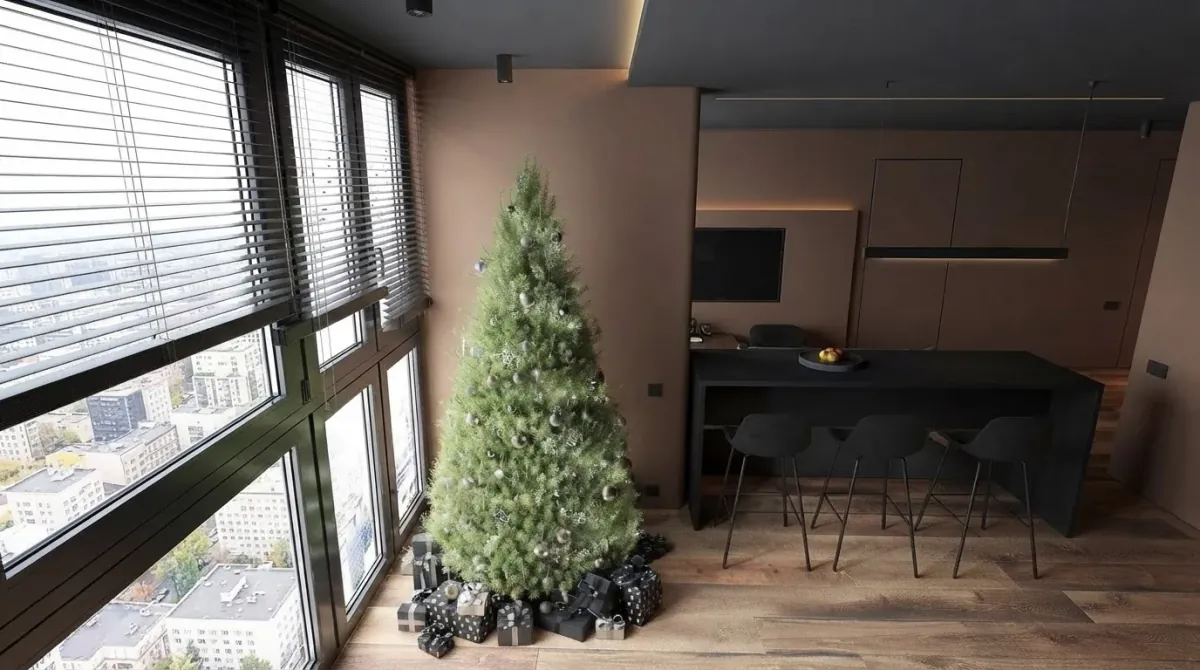
Use Tru-Tone’s formula: height in feet × base diameter in feet × 4 for a light look, 5 for medium and 6 for dense. A standard 7 ft tree, about 4.2 feet across, comes out at 125, 150 or 175 bulbs in 25-count strings, and a 6.5 ft tree that is 3.5 feet wide gives Tru-Tone’s own example of 91, 114 and 137. Large bulbs are spaced 12 inches apart, so the bulb count is also the length of string in feet.
This is the least settled number on the page and you should know it. The Christmas Light Emporium’s table gives a 7 ft tree only 60 C7 bulbs, and Christmas Lights, Etc. says C7s need “approximately half as many” as minis, which would be 350 or more. That is a sixfold spread for the same tree. We use Tru-Tone because it comes from a maker of C7 and C9 strings and because its formula accounts for width; the Emporium also warns that on a standard indoor 6 to 8 ft tree, “C7s are often too bold”. C9s are for outdoor trees and rooflines, which is what our outdoor Christmas lights guide covers, and the MeltFlex exterior tool can preview them on a photo of your house.
How Many Ornaments for a 6, 7, 7.5, 8 or 9 ft Tree?
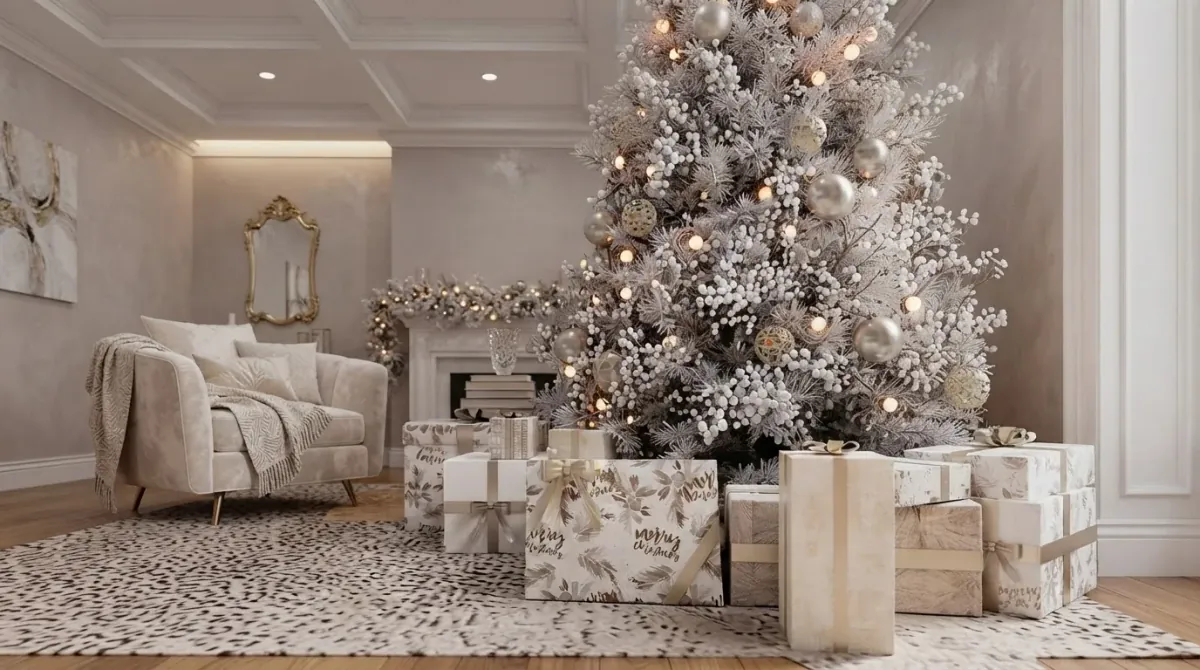
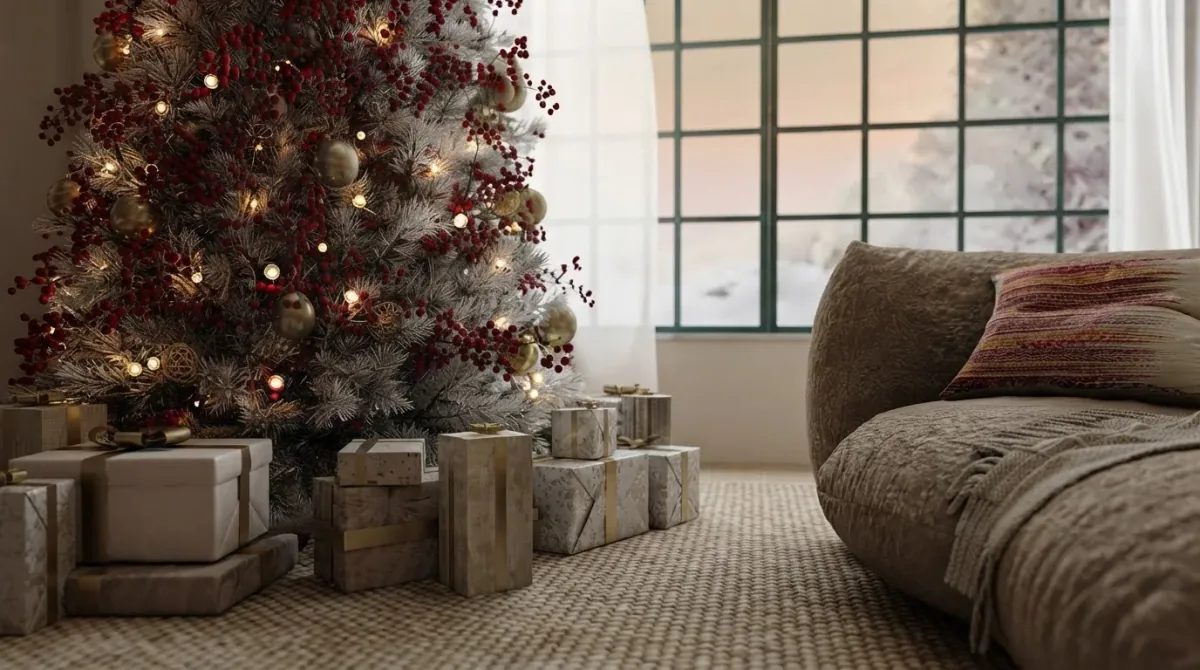
About 10 ornaments per foot for a minimal tree, 15 for a classic one and 25 for a full one: 70, 105 or 175 on a 7 ft tree and 75, 115 or 190 on a 7.5 ft tree. Balsam Hill’s decorating guide puts the range at about 10 to 20 ornaments per foot of tree height and counts 175 to 250 or more for a full, maximalist tree, Apartment Therapy says about 10 per vertical foot, and Courtney Warren’s chart gives 60 for 6 ft and 90 for 9 ft. The calculator scales the same way as the lights, by the tree’s width, and takes a quarter off for a tree in a corner.
The mix follows two rules we could source. Mahoney’s Garden Center says “about 40% of the decorations should be filler ornaments”, the plain small baubles that fill gaps, so that is the small column. Balsam Hill suggests 2 to 3 inch ornaments on trees of 4 to 6 feet and 4 to 6 inch ones on taller trees, so below 6 feet the calculator drops the large size entirely. Balsam Hill’s own count for a 7.5 ft tree, 105 for light coverage and 140 for heavy, brackets our classic 115; their table assumes 4 to 8.75 inch ornaments, bigger than a typical box of baubles, which is why even their heavy count sits well under our full row of mostly small ones.
How Much Garland for a 7 or 7.5 Foot Tree?
About 53 feet of garland for a classic 7 ft tree and 61 feet for 7.5 ft, in rows roughly 12 inches apart; a minimal look takes 35 to 40 feet and a full one 70 to 81. No retailer we read publishes a garland rule. Balsam Hill only says to drape it “in a spiral pattern, starting from the top”, and the five ornament guides we read say nothing about garland length at all. So this one is our geometry, and you should treat it as a measured estimate rather than a published rule.
The method: each row of garland is a ring around the cone at that height, so its length is the tree’s circumference there. We add up the rings from the lowest branches to a foot below the top, at 18 inches apart for minimal, 12 for classic and 9 for full, then add 15 percent for a loose drape between branch tips rather than a tight wrap. A sanity check that does not depend on any of this: a 54 inch tree is 14 feet around at the base, so a single lap at the bottom already takes more than one and a half of the 9 foot garlands most stores sell.
How Much Ribbon for a Christmas Tree?
Three yards of ribbon per foot of tree: 19.5 yards for 6.5 ft, 22.5 for 7.5 ft and 27 to 30 for a 9 to 10 ft tree. That is the one decorating number two sources state identically. Balsam Hill: “at least 3 yards of ribbon per foot of tree”, with exactly those three figures in its table; David Christopher’s floral shop: “3 yards of ribbon for every foot of tree”, the same table again. Our classic column reproduces it to the half yard for a standard-width tree, which our test file checks on every build.
Wired ribbon usually comes in 10 yard rolls, so a 7.5 ft tree is three rolls. Interior designer Courtney Warren gives “two to three” 10 yard rolls for 7.5 ft, the same answer from someone who decorates trees for clients. Balsam Hill adds the sentence the per-foot rule skips: “The wider your tree, the longer the ribbon you’ll need”, which is why the calculator scales ribbon by width too. How to hang it, as a spiral, cascades or bows, is in our Christmas tree decorating ideas. The minimal (2 yards per foot) and full (4 yards) settings are our brackets around that rule, not a published figure.
Do You Need Fewer Decorations for a Corner Tree?
About a quarter fewer ornaments, garland and ribbon, and the same number of lights. David Christopher’s says to use three quarters of the total “if you are only decorating 3/4 of your tree with the back in a corner”, and the calculator’s corner setting does exactly that. We deliberately do not cut the lights: the bulbs at the back light the wall behind the tree and the inside of the branches, which is what makes a corner tree glow instead of looking flat. A 7.5 ft classic corner tree comes out at 85 ornaments, 46 feet of garland and 17 yards of ribbon.
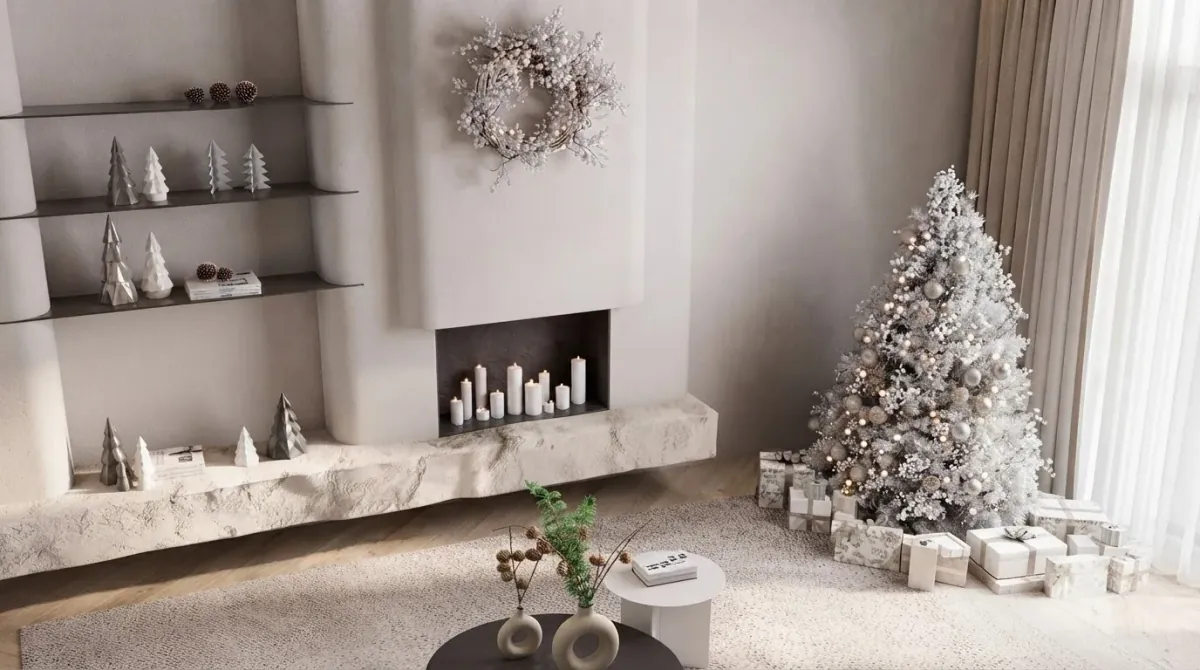
Which corner, and how far from the fireplace, is a separate decision with its own rules. Our guide to where to put the Christmas tree works through the window, the TV wall, small rooms and open plans with the NFPA safety numbers, and if the tree means moving the sofa, start from your living room layout rather than the tree.
What Size Tree Skirt Do You Need?
One at least 6 inches wider than the tree: about 60 inches for a standard 7 ft tree, 70 to 72 for 7.5 ft, and 48 inches for a slim 7.5 ft tree. Balsam Hill publishes both the 6 inch rule and a table by tree width, and the two disagree at the bottom of each band: the table offers a 36 inch skirt for a 30 to 42 inch tree, which leaves a 36 inch tree with a skirt the same width as its branches. The calculator applies both, the table and the 6 inch floor.
A tree collar is the other option, and it is sized by the trunk, not the branches: Balsam Hill’s small collars fit trees under 7 feet and the large ones 7 to 11 feet. A collar takes no floor beyond the stand, which matters in the small-room corners where a 72 inch skirt would reach the sofa.
What Size Tree Fits an 8, 9, 10 or 12 ft Ceiling?
6.5 ft for an 8 ft ceiling, 7.5 ft for 9 ft, 8 ft for 10 ft and 10 ft for 12 ft, with a 10 inch topper. The calculator’s ceiling check takes the ceiling, subtracts the topper and Balsam Hill’s minimum “6 inches of space between the ceiling and the top of the tree topper”, and returns the tallest height retailers stock under that line. With those defaults it lands on King of Christmas’s “with tree topper” column at all four ceilings. One thing we could not settle: the model treats the height on the box as including the stand, while the same King of Christmas page says a stand adds 6 to 12 inches. If your tree was measured without its stand, the next paragraph is for you.
A cut tree in a separate stand, or any tree measured without its base, sits higher: measure from the floor to where the trunk starts and enter it in the calculator’s “separate stand adds” field. A 6 inch stand drops a 9 ft ceiling from 7.5 to 7 ft. Ceiling heights in general are covered in our standard ceiling height guide.
How Many Light Strings Can You Connect?
Whatever the tag on the set says, and no more than three standard sets per extension cord. The U.S. Fire Administration’s instruction is simply to “read manufacturer’s instructions for the number of light strands to connect”, and the Consumer Product Safety Commission’s holiday safety leaflet says to “use no more than three standard-size sets of lights per single extension cord”. The calculator’s plug-in runs use that three as the default and let you raise it to the number on your tag.
The tag is where the real difference shows. Christmas Lights, Etc. says you can typically connect 5 to 10 incandescent mini sets on one run depending on grade, and about 44 sets of 5mm LED minis, because LEDs draw a fraction of the power. That is the practical argument for LED on a 9 or 10 ft tree: 1,350 classic lights is 14 sets of 100, which is five separate runs of incandescent minis at three sets each but a single run of LEDs. The USFA notes that “almost one-third of home Christmas tree fires are caused by electrical problems”, so every extra cord across the floor is a real cost, not a tidiness one. Lighting the outside too? The Christmas light calculator for your house does the same runs and adds the 15 amp circuit check, which matters far more on a roofline than on a tree.
How Do You Put Lights on a Tree So the Count Works?
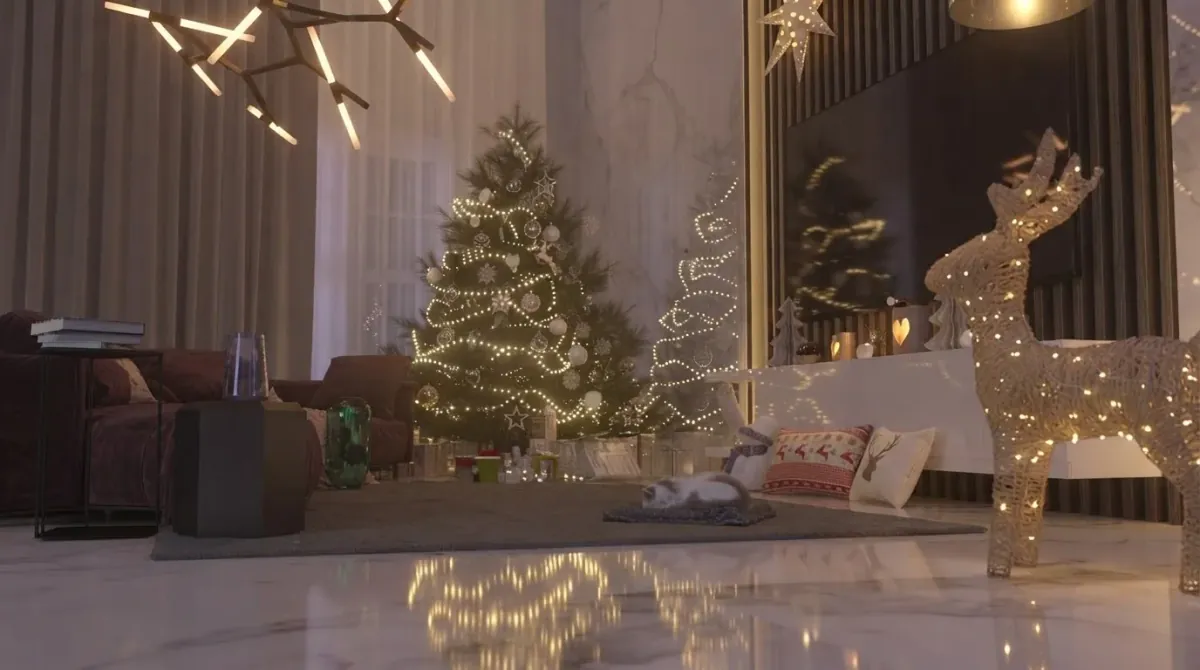
Work in vertical sections from the trunk outward, not in rings around the outside. Every count on this page assumes the lights go into the branches. Christmas Lights, Etc. says wrapping “from the tree interior out as opposed to circling the outside edge” gives more even light, and the Emporium says to “wrap your first strand around the inner trunk and branches before working outward” and to work in vertical sections. Circle only the tips and the same number of bulbs looks like fewer, because you only see the front half of each ring. The tree is also the brightest thing in the room for a month, so switch off the overheads and keep the lamps, which is the same layered lighting that flatters a room the rest of the year.
- Plug the first set in before it goes on the tree and test every set on the floor. Finding a dead set after three more are woven in is the worst hour of December.
- Start at the bottom, near the outlet, so the plug end is where the power is and no cord climbs back down the front.
- Divide the tree into three or four vertical wedges and give each one the same number of sets. That is the easiest way to stop the top third getting half of everything.
- Lights first, then the large ornaments, then the small ones with the garland and fillers, then the topper and skirt. That is Balsam Hill’s order, and it hangs the heavier ornaments low.
Can You See the Finished Tree in Your Room Before You Buy?
Yes, roughly, with an AI room render; just do not trust it to count. Upload a photo of the room and describe the tree: “a 7.5 ft slim flocked tree in the left corner with warm white lights and champagne ornaments”. You will see whether a full tree crowds the sofa or a pencil tree looks lost, which is the decision this calculator cannot make for you. What an image model will not do is put 1,150 lights on it; it draws a tree that looks lit. Use the render for the shape and the spot, and this page for the shopping list. For an evening view, the wording in our lighting prompts guide keeps the room’s own lamps on instead of inventing new ones. We compared the tools that do this in AI decorate my house for Christmas and the year-round ones in the best AI for decorating a room, and MeltFlex does it from a photo with the room left as it is.
How This Calculator Works, and What We Could Not Verify
The maths lives in one file with no interface code in it, and a test file with 55 checks runs against it. The checks include every published number we claim to reproduce: 100 per foot at every height, Balsam Hill’s 6 ft range of 600 to 1,200, its ribbon table to the half yard, Tru-Tone’s 6.5 ft example, King of Christmas’s ceiling column, and that the slim tree lands within the Emporium’s 25 to 30 percent. They also feed it nonsense, a blank height, a 999 ft tree, a negative one, and check that nothing comes back as an error or a negative skirt.
- Sourced: lights per foot (Balsam Hill, King of Christmas, Emporium), bulb spacing (Christmas Lights, Etc.), the C7 and C9 formula and 25-count strings (Tru-Tone), ornaments per foot and the size bands (Balsam Hill, Apartment Therapy), 40% filler (Mahoney’s), ribbon per foot and 10 yard rolls (Balsam Hill, David Christopher’s), the corner three quarters (David Christopher’s), the skirt table and the 6 inch ceiling clearance (Balsam Hill), the ceiling column and the 55 to 65% width (King of Christmas), three sets per cord (CPSC).
- Ours, and labeled as ours: the cone-surface width scaling; the slim (42%) and pencil (30%) profiles; the 150 per foot classic midpoint; the ornament split between medium and large; garland row spacing, the 15% drape allowance and the 9 foot pieces; the 2 and 4 yard ribbon brackets.
- Could not verify: Balsam Hill’s tree size guide returned a 404, so their slim and full diameters are not in here. The Electrical Safety Foundation’s holiday page refused automated reading (403). Vickerman’s ornament calculator ranks for these searches but its logic runs in the browser and is not published as text, so we could not compare against it. King of Christmas’s buyer guide has an FAQ on whether its heights include the stand, but the answer is collapsed, and its ceiling article says a stand adds 6 to 12 inches. Our default of no extra stand height rests on matching their ceiling table, not on a sentence, which is why the stand is an input.
If you count the bulbs on a tree you love and it disagrees with this page, the calculator has a width field and three looks for exactly that reason. The rules are a starting point for a shopping list, not a standard. Like our rug size calculator, the furniture fit calculator and the sofa through the door calculator, it is free and needs no account.
Christmas Tree Calculator FAQ
How many lights do I need for a 7 ft Christmas tree?
700 mini lights for a soft glow, 1,050 for a classic look and 1,400 for a full, bright tree, if it is a standard tree about 50 inches wide. A slim 7 ft tree needs about 500, 700 or 950. At 4 inch spacing that is 233 feet of lit string for 700 lights and 467 feet for 1,400.
How many feet of lights do I need for a 6 foot tree?
About 200 feet of mini lights for 600 bulbs, the soft 100 per foot look, and 400 feet for 1,200 bulbs, the full look, both at the usual 4 inch spacing. If you wrap each branch with 6 inch spaced sets, the same bulb counts take 300 to 600 feet.
How many lights per foot of Christmas tree?
100 mini lights per foot of height for a soft glow, 150 for classic and 200 for full. Those per-foot figures assume a standard tree about 60 percent as wide as it is tall. A slim tree needs about 30 percent fewer and a pencil tree about half, because there is less of the cone to cover.
How many ornaments do I need for a 7.5 foot tree?
About 75 for a minimal tree, 115 for a classic one and 190 for a full one, with roughly 40 percent of them small filler baubles. Balsam Hill’s own figure for 7.5 feet is 105 to 140 using larger 4 to 8.75 inch ornaments. A tree in a corner needs about three quarters of that.
How much garland do I need for a 7 foot tree?
About 53 feet for a classic look in six rows roughly 12 inches apart, 35 feet for a minimal one and 70 feet for a full one. No retailer publishes a garland rule, so this is calculated from the tree’s circumference at each row plus 15 percent for drape.
How much ribbon do I need for a Christmas tree?
Three yards per foot of tree, the rule Balsam Hill and David Christopher’s both publish: 19.5 yards for 6.5 feet, 22.5 yards for 7.5 feet and 27 to 30 yards for 9 to 10 feet. Wired ribbon usually comes in 10 yard rolls, so a 7.5 ft tree takes three.
How many strands of Christmas lights can you connect?
As many as the tag on your set allows, and no more than three standard sets on a single extension cord, which is the CPSC’s advice. Christmas Lights, Etc. says incandescent mini sets typically allow 5 to 10 on one run and 5mm LED minis about 44, which is why LED sets suit big trees.
What size tree skirt do I need for a 7.5 foot tree?
A 70 to 72 inch skirt for a standard 7.5 ft tree about 54 inches wide, and 48 inches for a slim one about 38 inches wide. The rule is at least 6 inches wider than the tree’s widest branches.
Sources
All pages read on 9 November 2026. Quotes are copied from the publisher’s own page.
- Balsam Hill, How Many Lights Do I Need for My Christmas Tree? (updated 30 March 2026): 100 per foot, double for drama, 600 to 1,800 by height.
- Balsam Hill, Christmas Tree Decorations: The Ultimate Guide: 10 to 20 ornaments per foot, ornament table, ornament sizes, 3 yards of ribbon per foot and table, skirt table and 6 inch rule, collar sizes, 6 inches above the topper, decorating order.
- King of Christmas, What Size Christmas Tree for 8, 9, 10 and 12 Foot Ceilings?: ceiling table, stand of 6 to 12 inches, width 55 to 65 percent of height, 100 and 150 to 200 lights per foot.
- The Christmas Light Emporium, How Many Lights Do I Need for My Christmas Tree?: 100 and 200 per foot, LED and C7 table, slim trees 25 to 30 percent fewer, wrapping method.
- Christmas Lights, Etc., Christmas Tree Light Calculator (updated 13 August 2026): 100 per foot minimum, 4 inch and 6 to 8 inch spacing, sets per run for incandescent and LED, wrapping from the interior out.
- Tru-Tone, How Many Lights Do I Need?: C7 and C9 formula with diameter, 25-count strings, 300 to 500 minis for 6 to 8 ft.
- Govee, How Many Feet of Lights Do You Need for a 7-Foot Christmas Tree? (27 November 2025): 100 per foot, up to 1,000 for 7 ft.
- Apartment Therapy, Christmas tree measurements: 100 lights per 1 to 1.5 feet, 10 ornaments per foot, 1 to 1.5 feet under the ceiling.
- David Christopher’s, Christmas Tree Decorating Recipe Guide: 3 yards of ribbon per foot, 10 yard rolls, three quarters for a corner tree.
- Mahoney’s Garden Center, Christmas Tree Decorating by the Numbers (4 November 2025): 40 percent filler ornaments, ornament counts by height.
- Courtney Warren, How Many Ornaments for a Christmas Tree?: ornaments by height, ribbon rolls by height.
- U.S. Fire Administration, Holiday fire safety (reviewed 7 October 2026): follow the manufacturer on strands, almost one-third of tree fires electrical, 3 feet from heat.
- U.S. Consumer Product Safety Commission, Holiday safety leaflet, publication 611 (PDF): no more than three standard-size sets per extension cord.
Got the numbers? See the tree in your room. Upload a photo of the room, ask for the height and shape the calculator settled on in the corner you picked, and check the size against your sofa before you carry a box up the stairs.
Audio version by MeltFlex AI
Listen to this article
Prefer to listen? This narrated video reads the full article, Christmas Tree Light Calculator: Lights, Ornaments, Garland and Ribbon by Tree Height and Width, in about 41 minutes. Every section is a chapter, so you can jump straight to the part you need while you browse rooms or sketch a layout.
Chapters (17)
More narrated articles on AI Interior Design MeltFlex