
Put the Christmas tree in the corner you can see from both the sofa and the front door, at least 3 feet from any fireplace, radiator, heater or candle, within reach of an outlet, and not where it blocks a doorway or a light switch. That is the whole answer for most living rooms, and it is usually not the window. A tree in the window is lit for the neighbours and dark for you. The rest of this guide is the exceptions: small rooms, open plans, bay windows, the TV wall, the fireplace, and the ceiling that decides how tall the tree can be.
Our articles are still written by humans!
Get human written articles in your Google feed.
The safety numbers in here are the NFPA’s and the U.S. Fire Administration’s, read from their own pages on 20 September 2026 and listed under Sources. The rooms are AI renders from our gallery, chosen because each one shows a placement decision you can copy or avoid. If you would rather see the tree in your own room before you buy it, the last section shows how.
FreeUpload photo · freeRearrange my room for freeUpload a photo and MeltFlex plans a new furniture layout around your walls, windows and doors. Your first AI design is free, no card needed.


Where Should You Put the Christmas Tree?
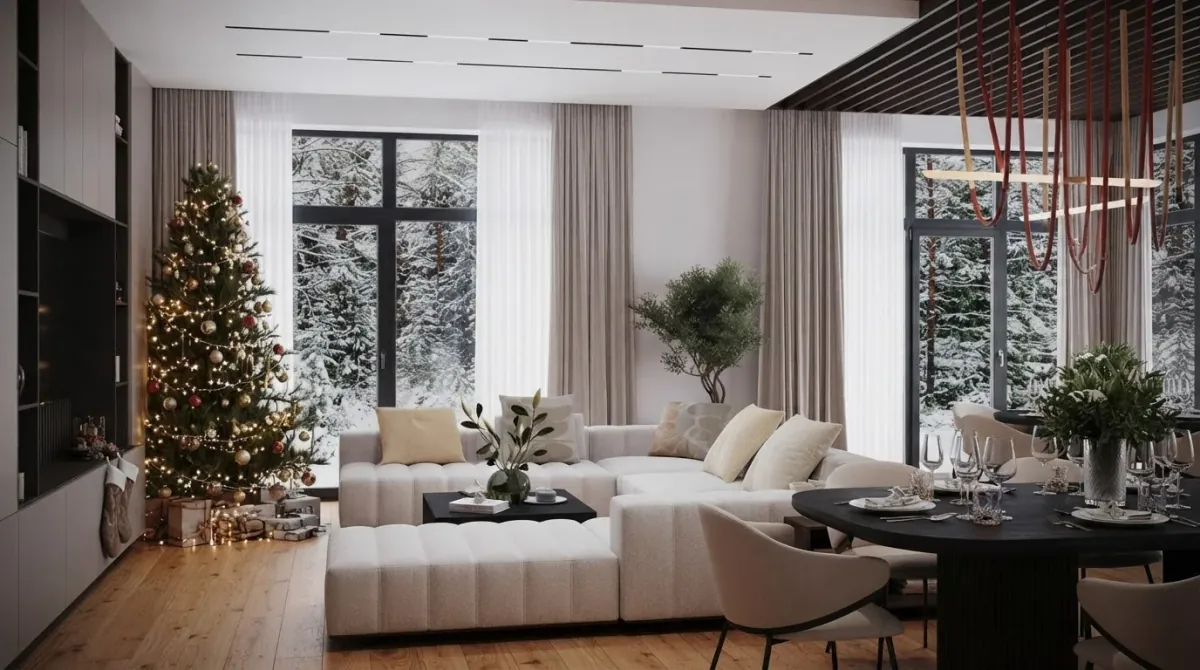
In the corner that the sofa faces and the door reveals, because a tree is a focal point and a focal point has to be where people look. Stand in the doorway, then sit on the sofa, and find the corner both views share. In most living rooms that is the corner diagonally opposite the door, beside rather than in front of the window. Then run the four checks that decide whether that corner is allowed.
- Three feet from heat. The NFPA and U.S. Fire Administration rule is at least 3 feet from fireplaces, radiators, space heaters, candles and heat vents. A heat source too close starts nearly one in four Christmas tree fires.
- An outlet you can reach without an extension cord across the floor. Nearly half of tree fires are electrical, and a cord under a rug is the classic cause.
- Nothing behind it that you need. Balsam Hill’s own placement guide says not to block light switches and doorways, because people dislodge ornaments and trip on low branches. Add the thermostat and the radiator valve to that list.
- Room to walk round it. Apartment Therapy’s measurement rule is a one-foot border on all sides. Less than that and the tree gets brushed every time someone passes, which is how the good ornaments end up on the floor.
If the corner that passes all four checks is not the corner you wanted, change the tree, not the rule. A slim tree fits a corner a full tree does not, and a 4-foot tree on a console table fits a corner that has no floor at all. The only corner that is genuinely disqualified is the one next to the fire.
Should You Put the Christmas Tree in Front of a Window?
Usually no, and the reason people do it is the reason not to: a tree in the window is displayed for the street. From inside, the tree becomes a silhouette against daylight for most of the day, it stands in front of the glass you want to look out of, and in a great many houses it stands on top of the radiator that sits under the sill, which is both a fire rule and a fast way to dry a real tree out. Balsam Hill lists “by wide windows” as a good spot precisely because you can view it “even from outside”, which is an honest description of who it is for.
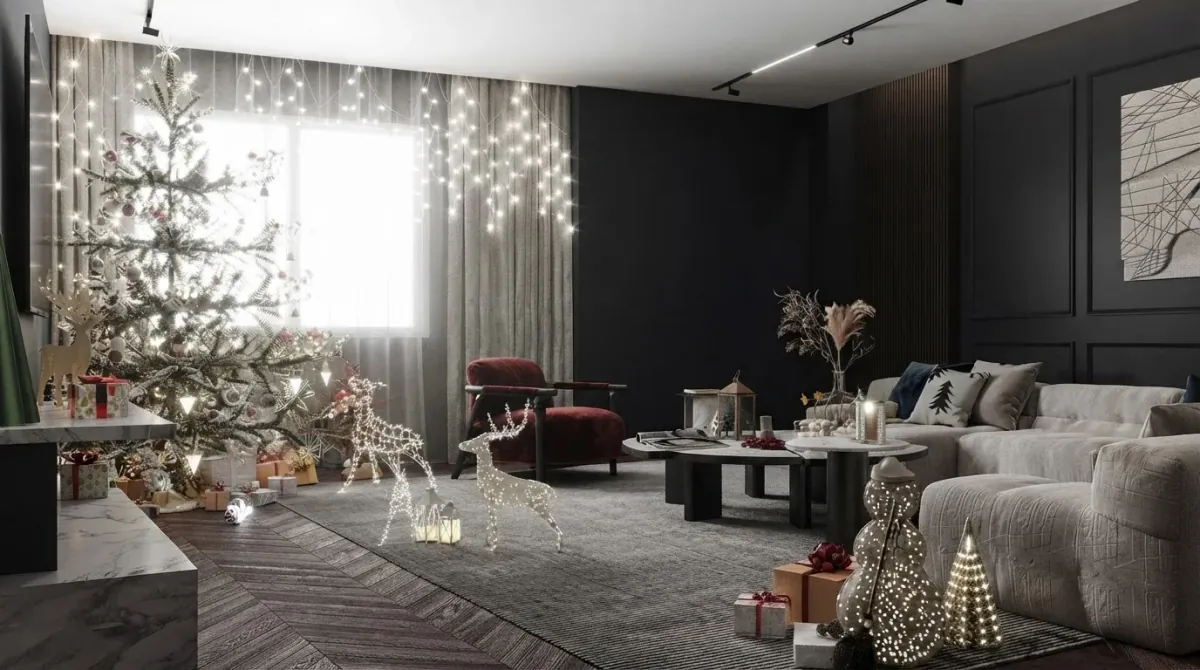
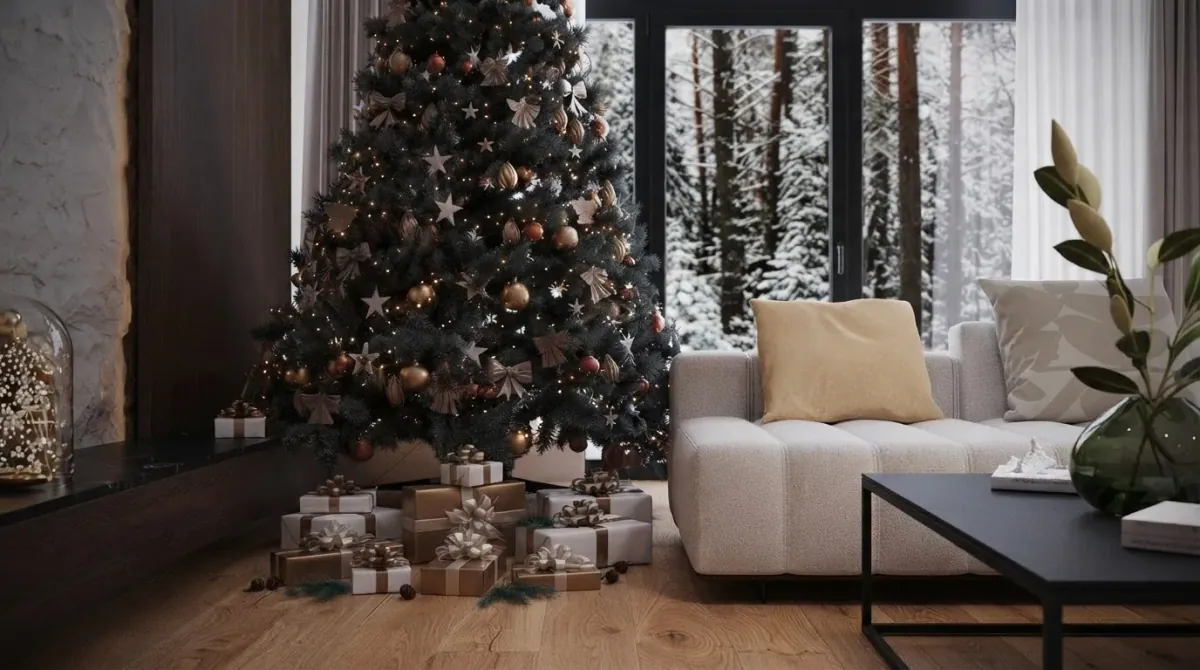
There are three cases where the window wins. A bay window is the best of them: the tree sits inside the bay, out of every walking line, the room keeps its daylight through the side panes, and the bay was built to hold something. A room with windows on two walls can spare one of them. And a narrow room with only one usable corner sometimes has that corner at the window, in which case pull the tree 12 inches into the room so the curtain still closes behind it and the radiator has air. If the sill is low and the window is big, a tree in front of it also blocks the only real light in the room, and the same instinct that says no to a bed in front of a window applies.
Where Do You Put a Christmas Tree in a Small Living Room?
In the corner nearest the window on the side away from the door, and buy a slimmer tree than you think you want. Small rooms lose the December argument on width, not height. A standard tree is about 55 to 65 percent as wide as it is tall, so a 7-foot tree spreads roughly 4 feet across the floor and its lowest branches reach into the walking line. A slim or pencil version of the same height needs about 3 feet or less and leaves the room usable.
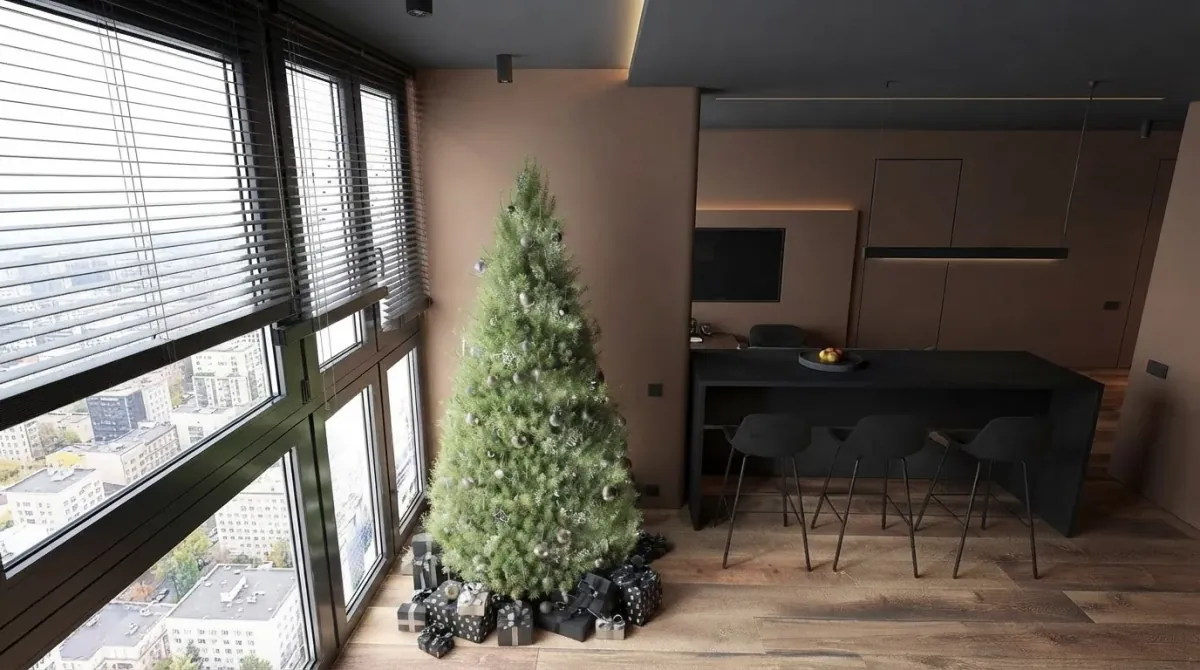
- Move one chair out for the month. A tree is temporary furniture. The armchair nobody sits in from late November goes in the bedroom and the tree takes its footprint.
- Go up, not out. A tall slim tree reads as generous in a small room; a short fat one reads as a room that ran out of space. Check the ceiling table below first.
- Consider the console. A 3 to 4 foot tree on a console, sideboard or plant stand puts the lights at eye level and leaves the floor free. Balsam Hill’s guide suggests tabletop trees and multiple smaller trees for exactly this.
- Keep the sofa where it is. Do not rearrange a small room around a tree; you will live with the compromise until January. The tree goes where the room already has a gap.
The rest of the small-room playbook is the same as in any month: our guide to making a small room look bigger and the small living room layouts cover the furniture side.
Where Does the Christmas Tree Go in an Open Floor Plan?
On the boundary between zones, where the kitchen, the dining table and the sofa can all see it, not in the far corner of the living zone. The mistake in open plans is to treat the living area as a room and put the tree in its corner, which means the tree is invisible from the island where everyone actually stands in December. Balsam Hill’s advice to use the fireplace side in “open-layout floor plans” is really advice about sight lines: the fireplace wall is usually the one every zone faces.
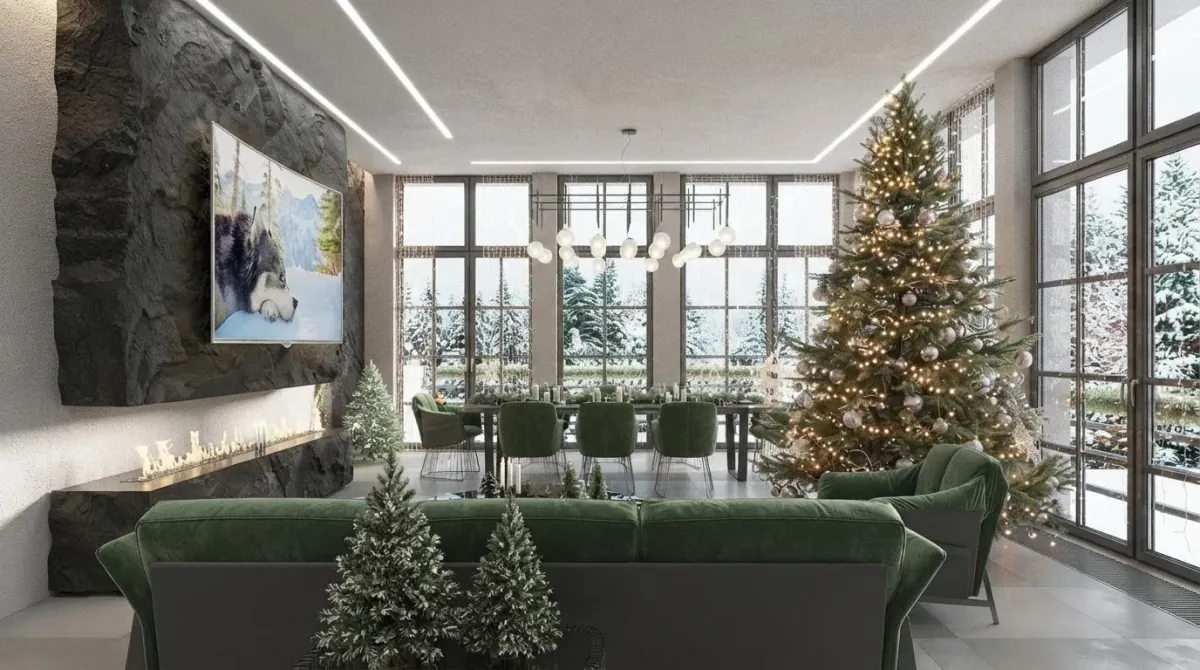
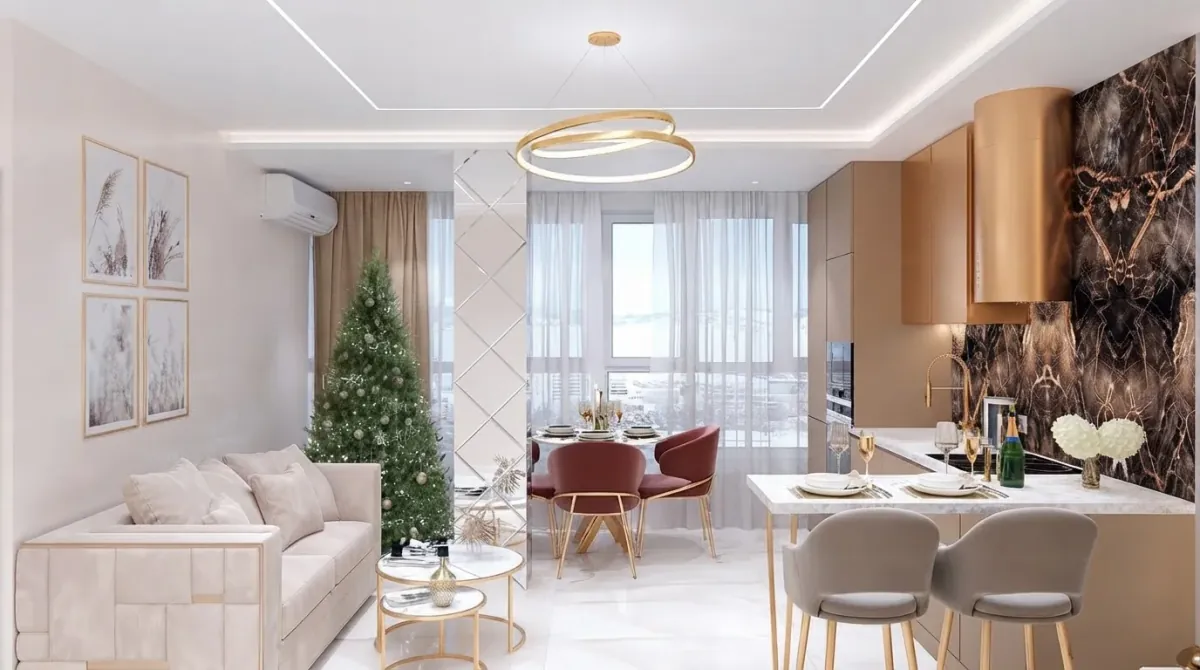
Two open-plan traps. The first is the walking line between the kitchen and the seating, which is the most used path in the house and cannot have a tree in it. The second is scale: an open plan can take a taller tree than the ceiling table suggests, because it is judged against the whole volume, and a 6-foot tree in a 400 square foot space looks like a shrub. Our open floor plan layout guide has the zoning rules the tree is borrowing.
Can You Put the Christmas Tree Next to the TV?
Yes, at the far end of the TV wall, not beside the screen. A tree and a television are both focal points, and two focal points side by side make the eye bounce between them. Tree lights also reflect in a dark screen. The fix is distance along the same wall: the TV stays centred on the sofa, the tree takes the corner at the end of that wall, and for one month the sofa gets angled a few degrees toward the tree.
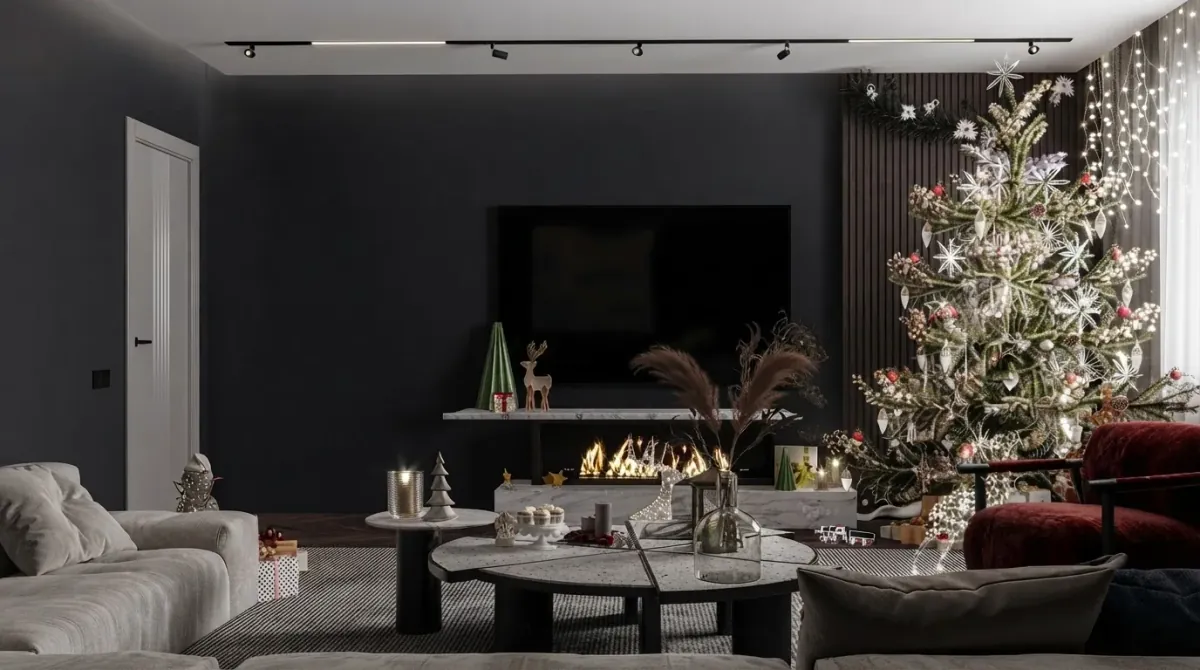
The TV wall is often the only wall with the outlets, which is the real reason people ask. Use the outlet, but run the lights on a plug-in timer and keep the cord off the walking line. If the TV sits above a fireplace, the fireplace rule wins and the tree moves to the other side of the room; the geometry of that wall is covered in TV above a fireplace.
How Far Should the Christmas Tree Be From the Fireplace?
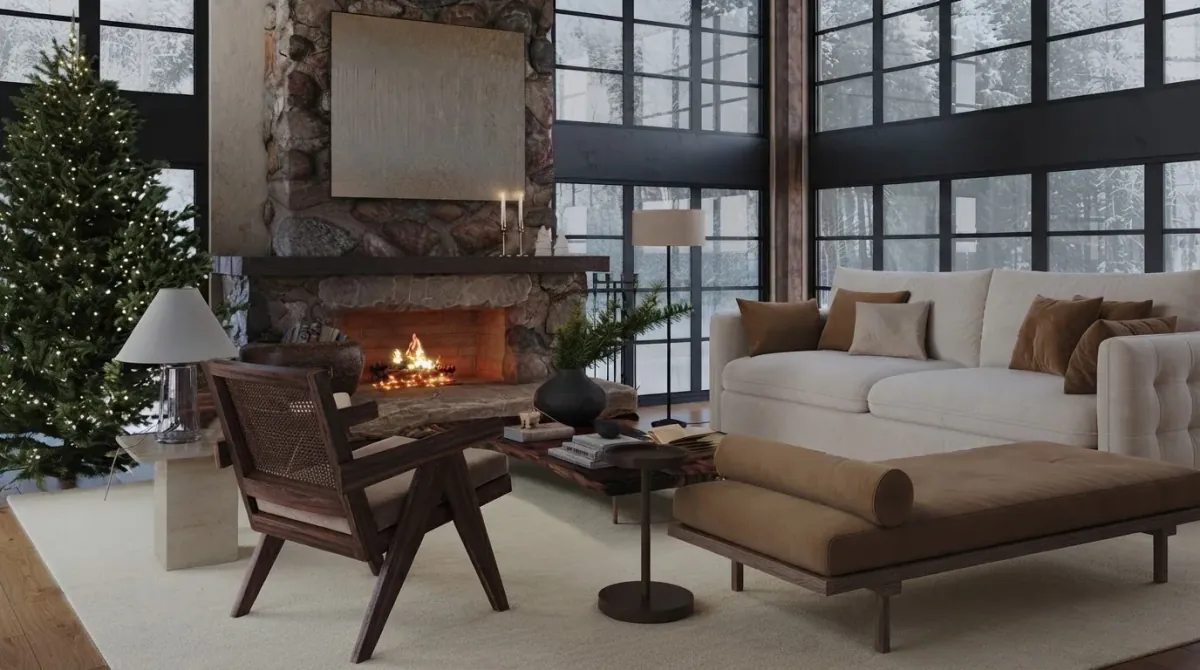
At least 3 feet, measured from the firebox, the radiator, the space heater or the candle, and 5 feet is the better habit with a real tree. The 3 feet is the NFPA and U.S. Fire Administration rule. The 5 feet is Apartment Therapy’s recommendation, and the reason to prefer it is not only fire: heat dries a cut tree, the needles brown and drop, and a dry tree is the one that burns.
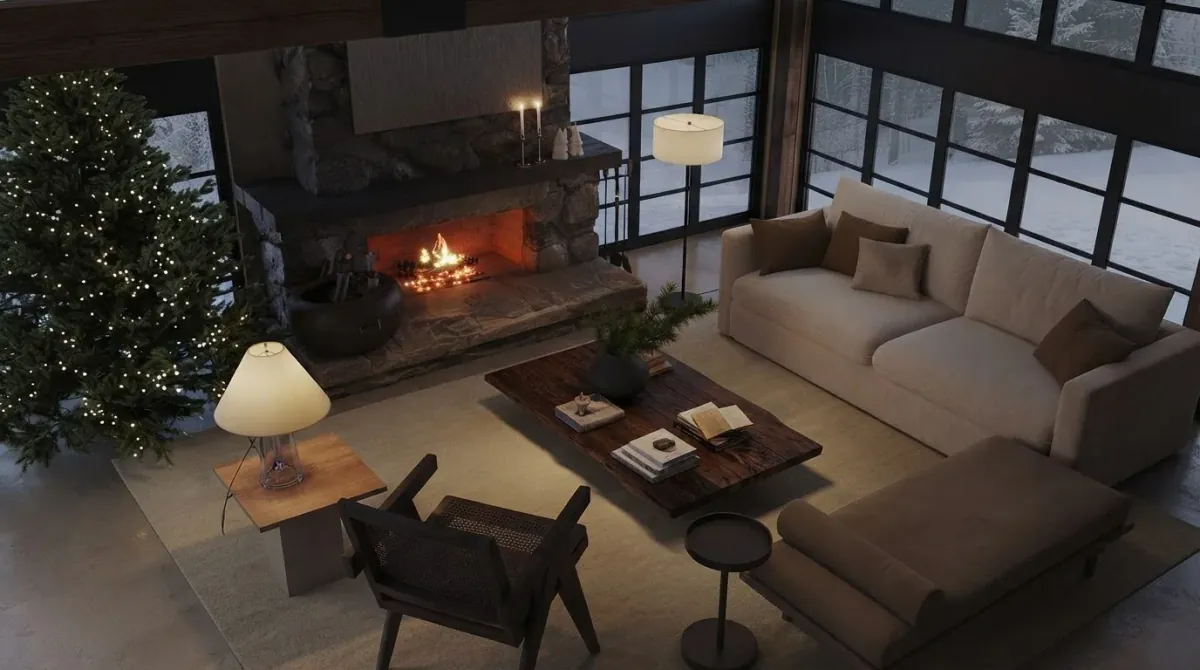

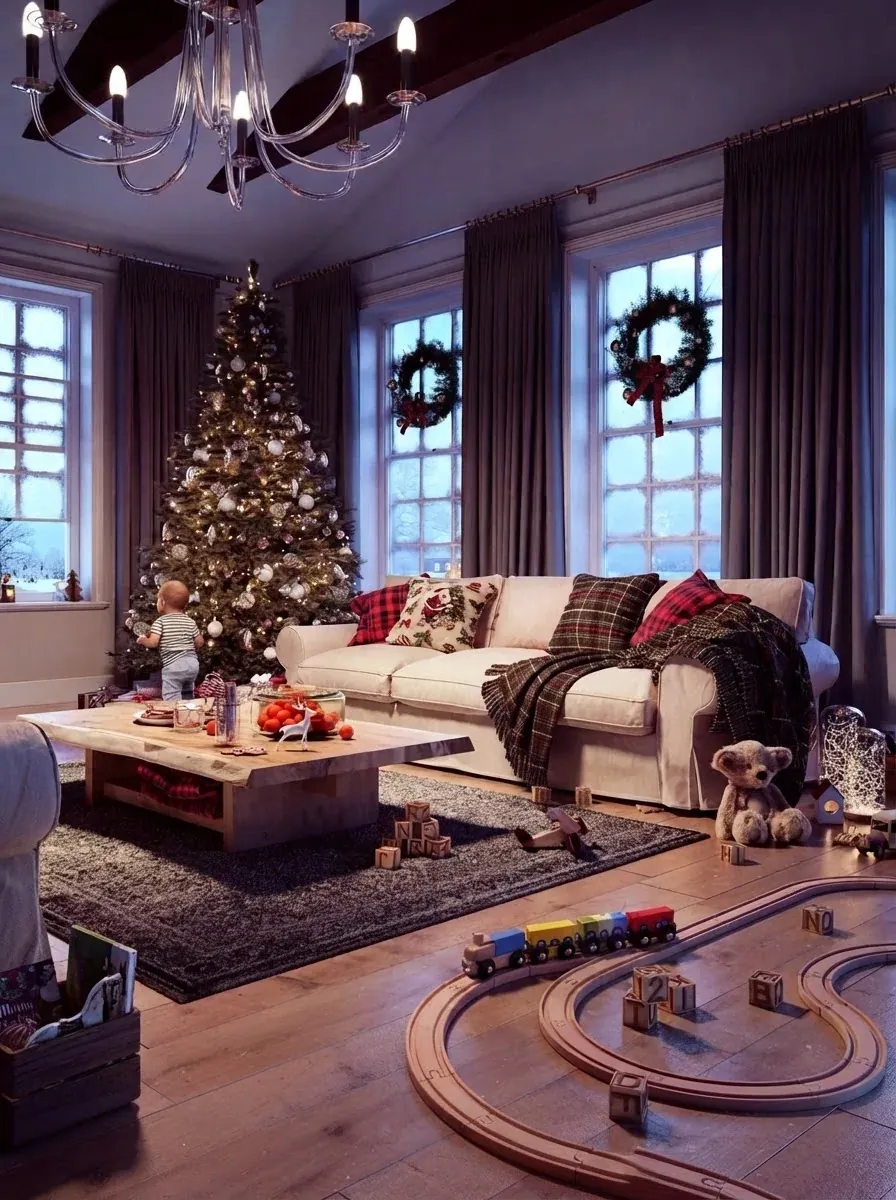
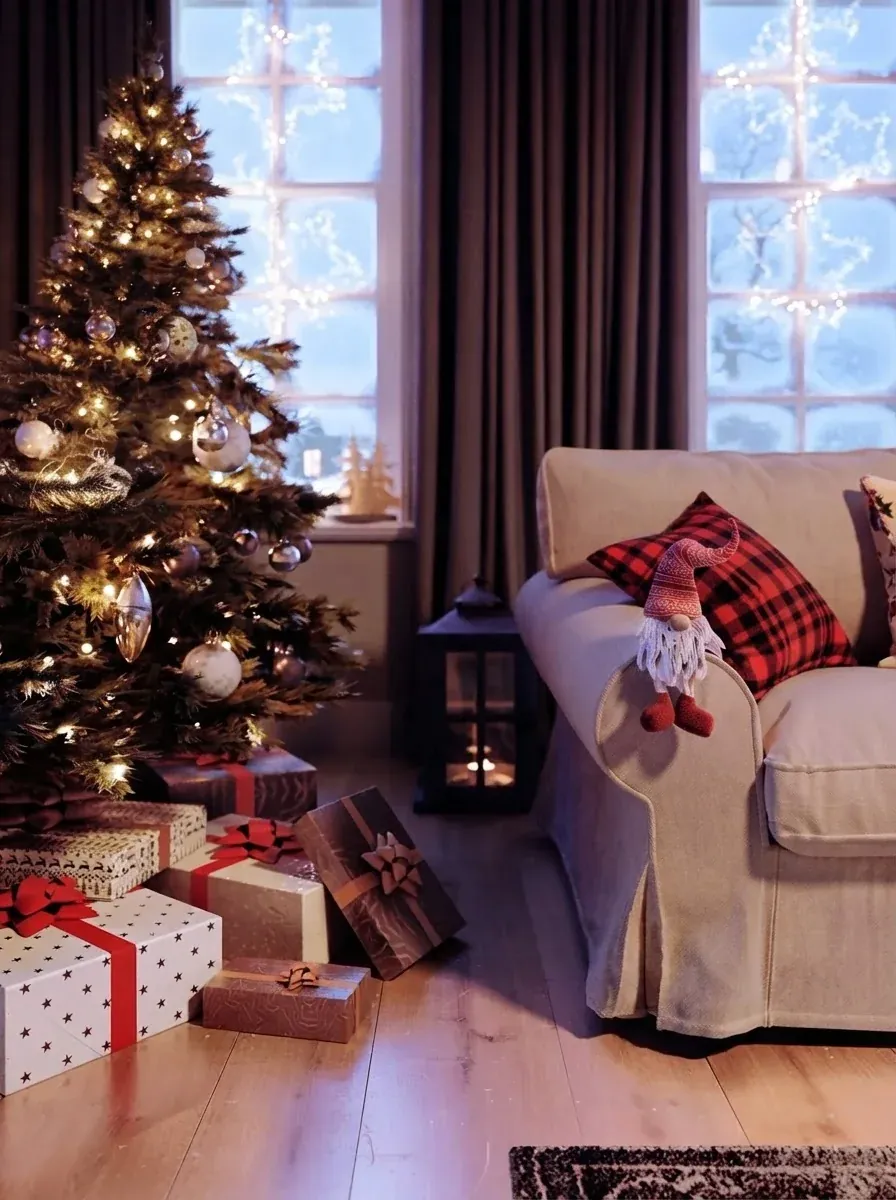
A gas or electric fire changes the ignition risk, not the drying. Electric fires and radiators still put out enough heat to dry the side of a real tree that faces them within a fortnight, which is why the “beside the fireplace” photograph that sells trees every year is a photograph of an artificial one. If the fireplace is the only focal wall the room has, put the tree at the opposite end of that wall, as in the pair above, and let the mantel carry the garland.
What Size Christmas Tree Fits Your Ceiling and Your Corner?
One to two feet shorter than the ceiling, and about 60 percent as wide as it is tall. The stand adds 6 to 12 inches and the topper needs air above it, which is why a 9-foot ceiling takes a 7.5-foot tree and not an 8.5-foot one. Both King of Christmas and Apartment Therapy publish the same rule; the table is theirs, rounded to what shops actually sell.
Measure the corner before the ceiling. Apartment Therapy’s one-foot border means a full 7.5-foot tree wants a clear floor patch about 6 feet across; a slim one wants about 4. If your ceilings are the standard height, the standard ceiling height guide tells you which row you are in without a ladder, and if the corner is tight, our furniture fit calculator does the same arithmetic for the sofa the tree is about to crowd.
Where Does Feng Shui Say to Put the Christmas Tree?
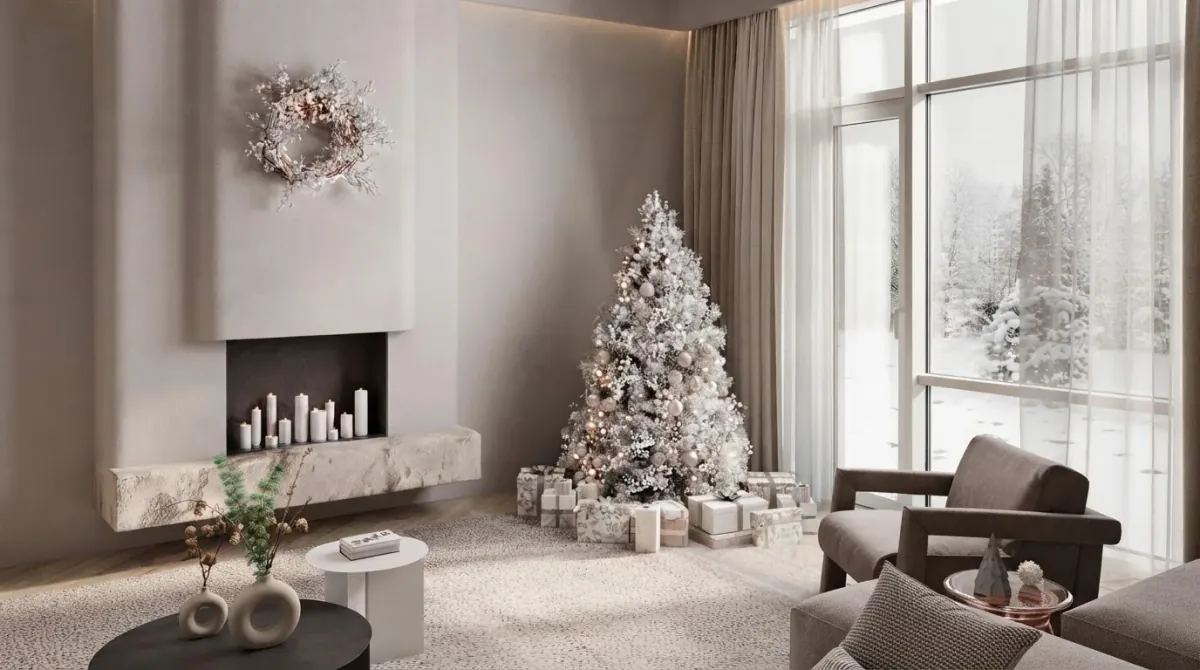
The far-left corner as you enter the room, according to the version most decorating guides repeat, and the honest answer is that the tradition has no rule about Christmas trees at all. Balsam Hill’s guide suggests “the upper-left corner of the room, which naturally draws the eye” and notes that “feng shui believers also say this is a beneficial spot”. The bagua map that idea comes from assigns the far-left sector to wealth and abundance, so a tree of lights there is read as a wish. It is a pleasant framing, and it happens to coincide with the sight-line answer from the top of this guide more often than not.
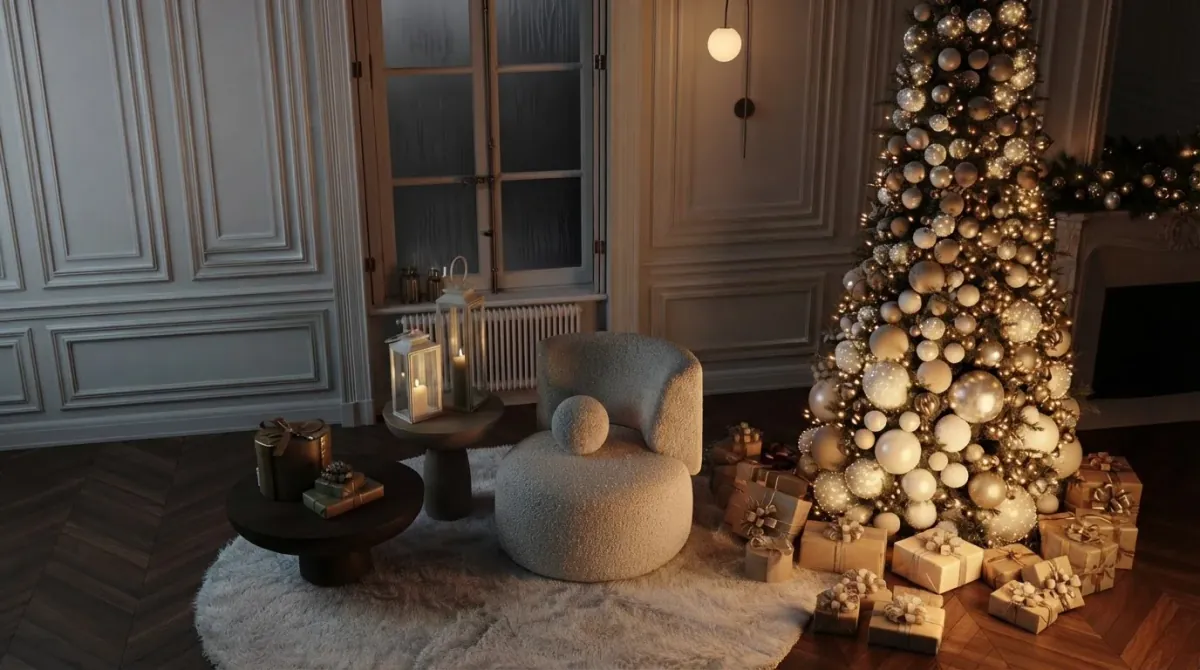
What the tradition does care about is what it always cares about: clear paths, nothing blocking the door, nothing looming over where you sit. All three agree with the fire rules. If you want the fuller version of how these principles play out in a real layout, our feng shui bedroom layout guide strips the idea down to what actually helps.
When Should the Tree Go Up, and Does the Spot Change the Answer?
Whenever you like with an artificial tree; with a real one, the spot decides how long it lasts. The fear behind “is it bad to put the tree up in November” is dryness, and dryness is a placement problem before it is a calendar problem. A real tree beside a radiator or in a south window is done in three weeks. The same tree in a cool corner, watered daily, lasts five or six. The NFPA notes that 35 percent of Christmas tree fires happen in January, when the tree has stopped taking water and nobody is looking at it.
- Cut half an inch off the trunk before it goes in the stand, straight across, so it takes water.
- One quart of water per inch of trunk diameter, the National Christmas Tree Association’s rule as quoted by Apartment Therapy. A 4-inch trunk wants a gallon-capacity stand.
- Check the stand twice a day for the first week; a fresh tree drinks most in the first days.
- Take it down when needles drop, not on a date. A dried-out tree can reach flashover in under a minute in the NFPA’s own burn test.
How Do You Test a Spot Before You Buy the Tree?
Tape the footprint on the floor, photograph the room from the door and from the sofa, and put the tree into the photograph before you put it into the room. The tape tells you whether the walking line survives. The two photographs tell you whether the tree is where people look. The render tells you whether a slim white tree or a full green one suits the corner, which is the decision that costs money if you get it wrong.
- Mark the footprint. Masking tape in a circle the width from the table above, plus the one-foot border. Live with the tape for a day. If you step over it, the corner is wrong.
- Photograph in daylight, landscape, from the doorway, with the candidate corner in frame. Then the same from the sofa.
- Upload one photo to an AI room tool and ask for a tree in that corner, then the other corner, then the window. On MeltFlex’s layout tool the first render is free without an account, and it keeps your real furniture where it is, which is the whole point of the exercise. Our guide to whether AI can decorate your house for Christmas compares eight tools that do this and gives the exact sentence to type so the model adds a tree instead of redrawing the room.
- Judge the pair, not the picture. A tree that looks right from the sofa can block the door from the hall. If both views work, buy that height and that width.
If the tree ends up sharing its corner with furniture that has to move, the AI furniture placement guide covers the December rearrangement without a tape measure, and the living room layout guide covers where the sofa should have been all year. For the outside of the house, AI Christmas lights on my house does the same photo-first exercise on the roofline.
Frequently Asked Questions
Where is the best place to put a Christmas tree in a living room?
The corner you can see from both the sofa and the door, at least 3 feet from any fireplace, radiator, heater or candle, within reach of an outlet, and not in front of a doorway or a light switch. That spot exists in almost every living room. If the only corner that qualifies is small, buy a slimmer tree rather than a different corner.
Should you put your Christmas tree in front of a window?
Only if the window is not the room’s only daylight and the tree does not block a radiator under it. A tree in a window is lit for the street and dark for the people in the room, it sits in front of the glass you want to look out of, and a real tree beside a radiator dries out faster. A bay window is the exception: the tree sits inside the bay, out of the traffic, and the room keeps its light.
How far should a Christmas tree be from a fireplace?
At least 3 feet from the firebox, radiator, space heater or candles, which is the NFPA and U.S. Fire Administration rule. Apartment Therapy suggests 5 feet, which is the safer habit with a real tree. Heat sources placed too close start roughly one in four Christmas tree fires, and a dry tree can reach flashover in under a minute.
Where do you put a Christmas tree in a small living room?
In the corner nearest the window, on the side away from the door, with a slim or pencil tree instead of a full one. A slim tree is roughly 55 to 65 percent as wide as it is tall, so a 7-foot slim tree needs about 3 feet of floor. If even that is too much, move one armchair out for December or put a 4-foot tree on a console.
Where does the Christmas tree go in an open floor plan?
On the boundary between the living zone and the dining or kitchen zone, where it can be seen from all three, rather than in the far corner of one of them. Balsam Hill recommends the fireplace side of an open layout for the same reason. Check the sight line from the kitchen island first; that is where people spend December.
Can you put a Christmas tree next to the TV?
Yes, but give it the other corner of the same wall, not the space beside the screen. Two focal points side by side compete, and tree lights reflect in a dark screen. If the TV wall is the only wall with an outlet and no heat, place the tree at the far end of it and angle the sofa toward the tree for the month.
What size Christmas tree should I get for a 9-foot ceiling?
A 7.5-foot tree, or 7 feet if you want a tall topper. The rule from every retailer is one to two feet shorter than the ceiling, because the stand adds 6 to 12 inches and the topper needs air above it. For an 8-foot ceiling buy 6 to 7 feet, for 10 feet buy 8 to 9, for 12 feet buy 9 to 10.
Is it bad luck or unsafe to put the Christmas tree up early?
Not bad luck, and not unsafe if the tree is artificial. With a real tree the risk is dryness, not the date: 35 percent of Christmas tree fires happen in January, when trees have stopped taking water. If you want a real tree up from late November, buy it fresh, cut half an inch off the trunk, water it every day and take it down when the needles start to drop.
Sources
- National Fire Protection Association, Winter holidays: 2020 to 2024 averages, electrical share, heat-source share, living room share, January share, dry-tree burn demonstration. Read 20 September 2026.
- National Fire Protection Association, Christmas tree fires report (November 2022, data 2016 to 2020): time-of-day and room-of-origin figures.
- U.S. Fire Administration, Holiday fire safety: the 3-foot rule, daily watering, exits.
- Balsam Hill, The best places to put a Christmas tree at home: outlet, switches and doorways, tabletop trees, the upper-left corner note.
- King of Christmas, What size Christmas tree for 8, 9, 10 and 12 foot ceilings: ceiling table, 55 to 65 percent width rule.
- Apartment Therapy, Every measurement you need to know: 1 to 1.5 feet under the ceiling, one-foot border, 5 feet from heat, National Christmas Tree Association watering rule.
Ready to see the tree in your corner? Upload a photo of your living room, ask for a tree in the corner you have in mind, then in the other one, and pick the render you would rather walk into on Christmas morning.