
FF&E means furniture, fixtures and equipment: every movable item in a building that is not part of the structure. Sofas, beds, desks, chairs, lamps, rugs, artwork and freestanding equipment such as computers or refrigerators are FF&E. Walls, floors, built-in cabinets, toilets and faucets are not. The term comes from commercial projects like hotels, restaurants and offices, where the FF&E is bought and budgeted separately from the construction work.
Our articles are still written by humans!
Get human written articles in your Google feed.
The quickest test comes from Melissa Lemaster, an interior designer and architect at the architecture and engineering firm Dewberry: “if you turn a building upside down and shake it, FF&E is everything that would fall out.” Below are the rules behind that joke, the cases where it breaks, and the other abbreviations you will meet on the same drawings.
The short version
- FF&E = furniture, fixtures and equipment. FFE and FF and E mean the same thing. The AIA writes it as furniture, furnishings and equipment.
- Included: anything movable, from a sofa to a copier. Excluded: finishes, built-ins and plumbing.
- OS&E = operating supplies and equipment: towels, linens, glassware, uniforms. Hotels budget it separately.
- Money: FF&E runs 10 to 15% of a hotel’s construction budget, and hotels reserve 4 to 5% of revenue to replace it.




What Does FF&E Stand For?
FF&E stands for furniture, fixtures and equipment. You will also see it written FFE, FF and E, or F, F and E. They are the same term.
There is one wrinkle worth knowing if you work with architects. The American Institute of Architects writes it differently. Its owner and architect agreement for this work, B152, covers “interior design and furniture, furnishings, and equipment (FF&E) design services”, and its services forms split the work further: B252 for interior design plus FF&E, B253 for FF&E design alone, and B254 for an architect acting as a purchasing agent who buys the FF&E for the owner. The second F changes from fixtures to furnishings, but the scope is the same.
The other point to understand is the word fixture. In property law a fixture is the opposite of what FF&E means. Cornell Law School’s Legal Information Institute defines it as movable property “that becomes part of real property due to an attachment between the two”, and its example is a brick stove built into a restaurant wall. Fixtures in FF&E are the decorative ones that come out again: lamps, art, mirrors, decorative lighting. That is why the AIA’s furnishings is arguably the clearer word.
What Is Included in FF&E?
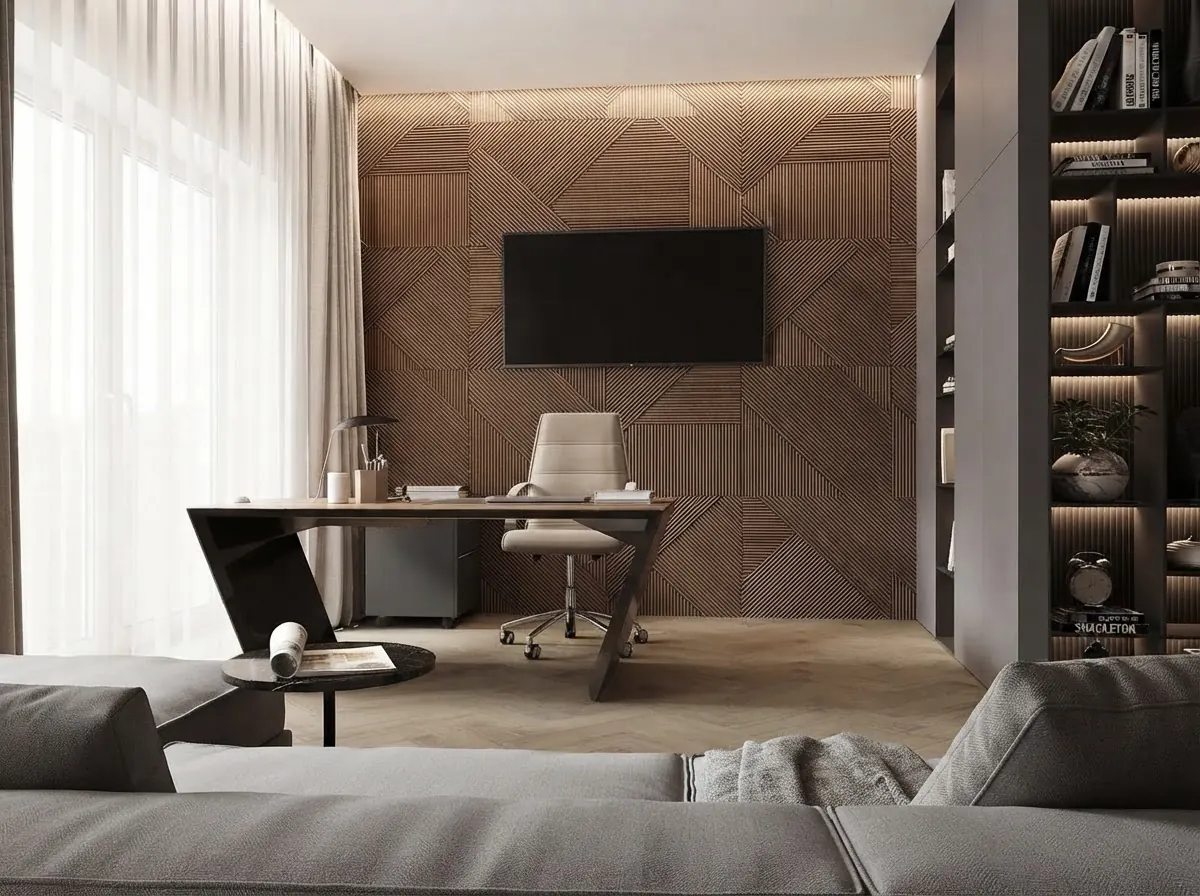
FF&E includes the loose furniture, the decorative fixtures and the freestanding equipment of a space. Jeff Pelletier, founder of the architecture practice Board & Vellum, lists it for a living room as “the couch, the throw pillows on it, the art on the wall behind it, the coffee table in front of it”. In a commercial project the list gets longer:
Lemaster’s examples in the Dewberry video match this split: desks, chairs, tables, bookcases and lounge furniture as furniture, “decorative lighting, lamps, artwork” as fixtures, and “computers, monitors, refrigerators, copiers, and even medical equipment” as equipment. Her video is the best two minute explanation I found.

Dewberry, “What is FF&E?”, June 11, 2024, 2 min 7 s. A clear commercial project definition. It does not cover OS&E or budgets, which are below.
What Is Not FF&E?
Anything that is part of the building is not FF&E: finishes, built-in millwork, plumbing and the building systems. Lemaster names “casework, shelving, or other immovable building parts like HVAC, windows, toilets, and faucets”, and Pelletier adds that FF&E “doesn’t typically imply finishes, such as tile, wallpaper, paint”. Finishes go on a separate material board and in the construction specifications.
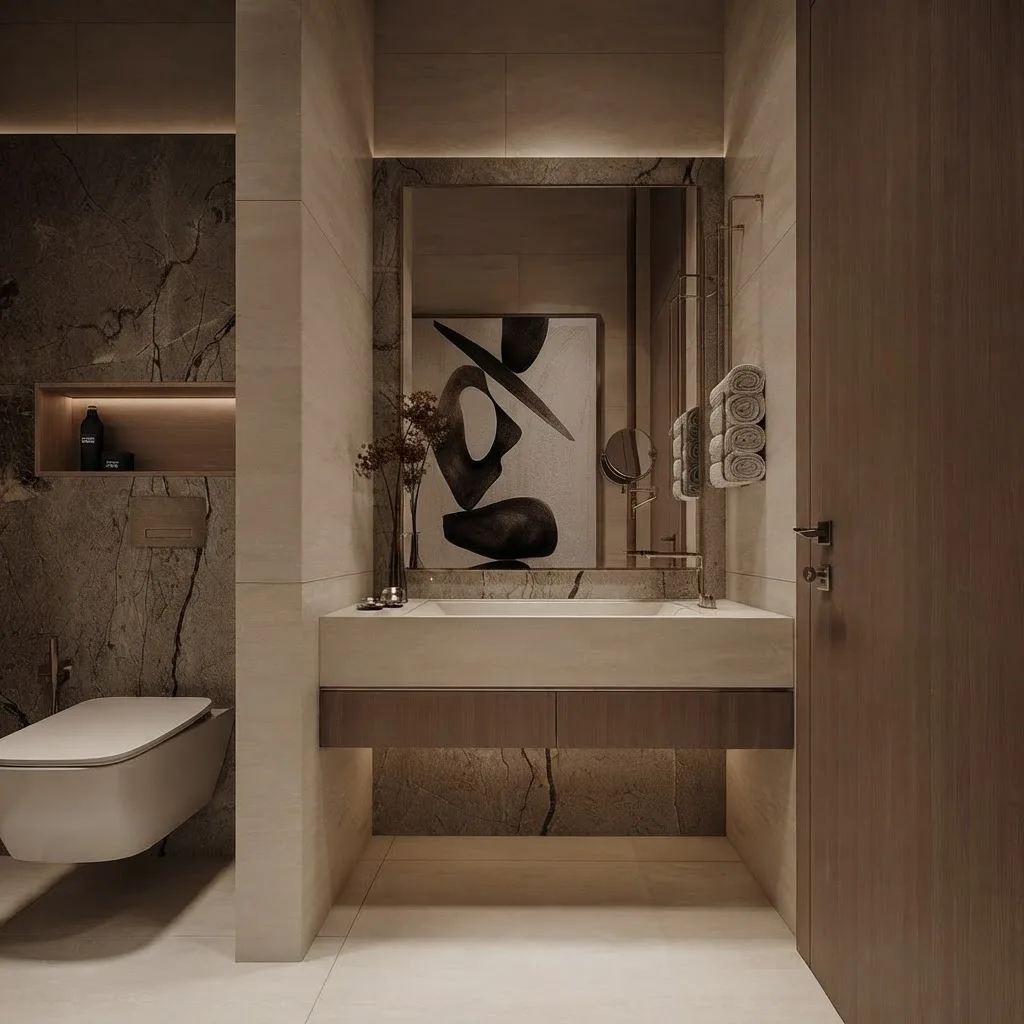
Residential projects are looser. Pelletier writes that finishes are “often blended into the definition on smaller and more residential projects”, and his own example of a condo FF&E remodel includes new furniture, appliances, door hardware and lighting. If you hire a designer for a home, ask for the scope in writing rather than assuming the commercial definition.
FF&E vs OS&E: What Is the Difference?
OS&E means operating supplies and equipment: the smaller items a business uses every day and replaces often. Hospitality designer Kate Mooney of OCCA Design defines FF&E as “the movable, non-fixed furnishing products that are specified for an interior project” and gives OS&E examples for guests (“towels, bed linen, crockery and glassware, irons and hairdryers”) and for staff (“uniforms, office equipment and cleaning equipment”).

What Does FF&E Mean in Construction?
In construction, FF&E is the package that is usually not in the general contractor’s contract. Lemaster explains why that matters: “owners often have different pools of money within the overall project budget for each one of these items.” The drawings and specifications then say who buys each item and who installs it, with three abbreviations:
A real specification shows what OFCI costs the contractor. Section 01 1100 of a Moorpark College project manual requires the contractor to “unload, store, uncrate, assemble, install, and connect OWNER supplied materials”, to give the owner 60 days’ notice before they are needed on site, and to unpack them within ten days in front of the owner. It also makes the contractor responsible for their security until substantial completion. That is why the FF&E has to be fixed early. Equipment locations drive power and data, and anything wall mounted needs blocking inside the wall before the drywall closes. Those locations end up on the electrical plan.
How Much Does FF&E Cost?
For hotels, FF&E is commonly put at 10 to 15% of the construction budget, and the replacement reserve at 4 to 5% of revenue. Both figures come from the hospitality industry, so treat them as orders of magnitude rather than a quote:
- Initial FF&E: OCCA Design puts FF&E “between 10-15% of the overall construction budget” of a hotel, with items lasting “between 3-7 years”.
- Replacement reserve: Stephen Rushmore of the hotel consultancy HVS wrote in the Canadian Lodging Outlook that the industry standard “has risen to 4% to 5% of total revenue”, up from 2% forty years earlier. Hotel lawyer Albert Pucciarelli gives the same range in a 2016 HospitalityNet article on management agreements. The HVS piece is old, so check the number in your brand’s agreement.
- Taxes: IRS Publication 946 lists “office furniture and fixtures (such as desks, files, and safes)” as 7-year property. Its worked example gives an office desk a 7-year recovery period under GDS and 10 years under ADS.
For a home there is no standard percentage, because the furniture is the whole budget. Our numbers for what it costs to furnish a living room and what it costs to furnish a whole house are the closer comparison. A short term rental sits in between, and our Airbnb interior design guide covers the linens, lamps and props that a hotel would split between FF&E and OS&E.

Other Abbreviations You Meet Next to FF&E
FF&E rarely travels alone. Before writing this I checked how often Americans search each architecture and construction abbreviation. A general list of construction abbreviations gets about 150 searches a month. The individual terms get far more, because people look up the one they just met on a drawing. These are the neighbors of FF&E that have real search volume:
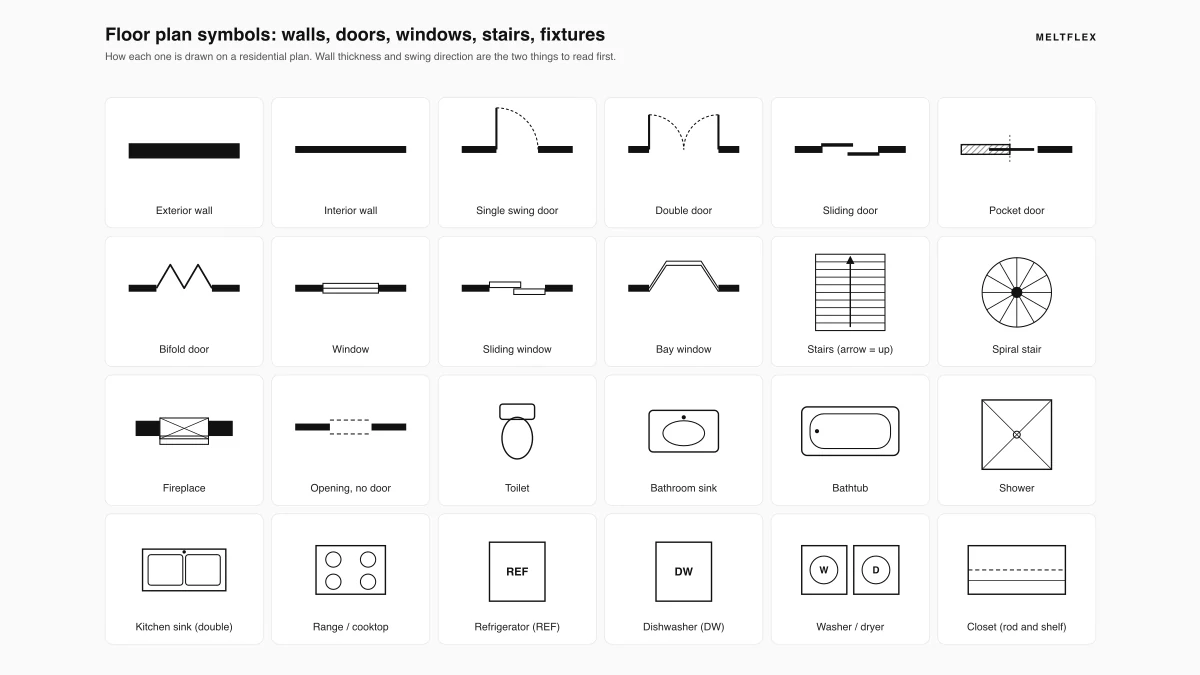
Volumes are US monthly averages from Ahrefs, pulled on October 27, 2026, for the exact phrase shown. For the symbols and short labels on a residential plan, such as REF, DW and W/D, see our guide to floor plan symbols and abbreviations. For LOD and the rest of the model side, start with what BIM is and our ranking of the best BIM software.
How to Check FF&E in the Room Before You Buy It
Approving FF&E is mostly a fit question: whether the piece suits the room and whether it fits the room. An FF&E schedule answers the second part on paper, with dimensions, finish and lead time on every line. It does not show the client the room.
That gap is what we built MeltFlex for. Upload a photo of the space and you can redesign the room from the photo, swap individual furniture pieces for real products, or find furniture from a photo of a room you like. The furniture fit calculator checks whether a sofa gets through the door, which is the delivery problem every OFOI package runs into. For commercial spaces there are dedicated office design and coffee shop interior design tools, and the floor plan to 3D converter works before the space exists.
To be clear about the limits: MeltFlex is a visualization tool, not FF&E procurement software. It will not track purchase orders, lead times or OFCI deliveries. Designers who need that run a dedicated schedule tool and use renders for client approval, which is the split we describe in our AI workflow for interior designers. If you also need a modeling tool, compare our list of 3D interior design software.
Sources We Checked
Every quote above was read on the publisher’s own page or PDF on October 27, 2026.
What we could not verify and left out: the buildingSMART IFC definitions of CFCI, OFCI and OFOI (the site blocked every request), and residential FF&E percentages, for which we found no published source.
FF&E Meaning: FAQ
What does FF&E stand for?
FF&E stands for furniture, fixtures and equipment: the movable items in a building, such as sofas, beds, tables, lamps, artwork and freestanding equipment. The American Institute of Architects spells it furniture, furnishings and equipment in its contracts. Both versions describe the same scope.
What is the difference between FF&E and OS&E?
FF&E is the furniture and larger items that stay in a room for years, like beds, chairs and lamps. OS&E means operating supplies and equipment: the smaller things a business uses up or replaces often, like towels, bed linen, glassware, uniforms and cleaning equipment. Hotels and restaurants budget the two separately.
What does FF&E mean in construction?
In construction, FF&E is the package that usually sits outside the general contractor’s contract. The owner buys it separately, and the drawings mark who buys and who installs each item: OFCI (owner furnished, contractor installed), OFOI (owner furnished, owner installed) or CFCI (contractor furnished, contractor installed).
Is lighting considered FF&E?
Decorative lighting usually is. Lamps, pendants and statement chandeliers are often specified by the interior designer and bought with the FF&E. General hardwired lighting, such as recessed downlights and the ceiling grid on a reflected ceiling plan, belongs to the electrical contract. Check the project’s responsibility matrix, because offices draw the line differently.
Are appliances FF&E?
Freestanding appliances and equipment usually are: refrigerators, copiers, computers, monitors and medical equipment appear in FF&E examples from architecture firms. Built-in appliances that need plumbing or dedicated wiring are often bought through the construction contract instead. On a home remodel the line is loose, and designers often include appliances in the FF&E scope.
What is an FF&E schedule?
An FF&E schedule is the list of every furniture, fixture and equipment item on a project, usually with a tag number, room, manufacturer, model, finish, dimensions, quantity, cost and lead time. Designers use it for approval and procurement, and contractors use it to plan power, data and blocking for anything that mounts to a wall.
How long is FF&E depreciated?
For US federal taxes, office furniture and fixtures are 7-year property under the General Depreciation System, according to IRS Publication 946. Assets used in a specific activity can fall into a different class, so confirm the class with your accountant before you book it.
Is FF&E the same as FFE?
Yes. FFE and FF and E are the same term written without the ampersand, which is common in file names, software and job titles. All three spellings mean furniture, fixtures and equipment.
The summary: FF&E is everything that falls out when you shake the building, OS&E is what the staff restock, and everything that stays put belongs to the contractor. When the line is unclear, the contract decides, not the dictionary.