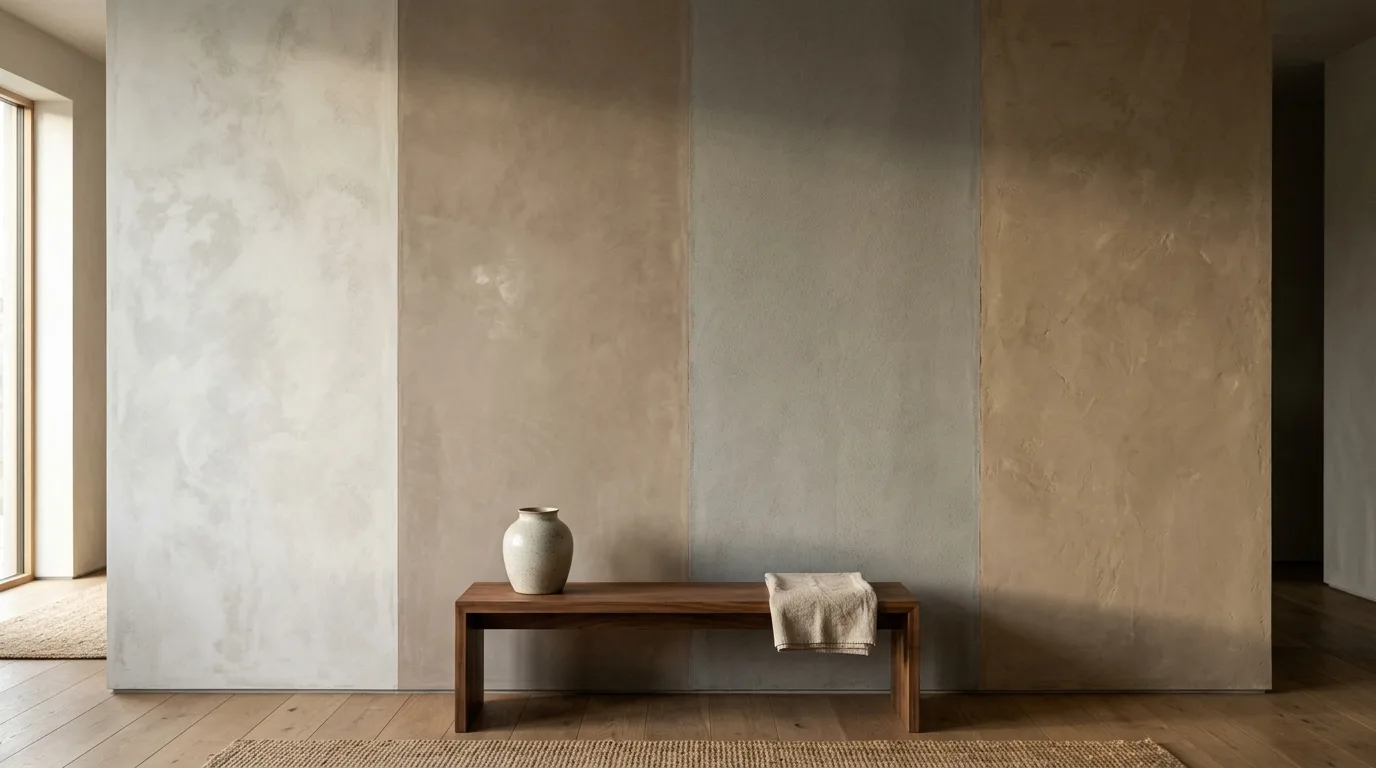
Limewash is slaked lime and water brushed onto a wall, where it soaks in and cures into a chalky, cloudy layer of stone. Whether it works in your house is decided by one thing: the surface. Bare brick, stone and plaster take it straight. Painted drywall, which is what most walls are, takes it only over a mineral primer. Get that one call right and limewash is cheap, forgiving and repairable with a wet brush. Get it wrong and it wipes off on your sleeve. This guide covers the surface rule, the real 2026 costs of the three product routes, how the application actually goes, and 20 rooms worth of before and afters to steal a color from.
Our articles are still written by humans!
Get human written articles in your Google feed.



Before and after: the same rooms, walls swapped
Every pair below is the same room twice: once with flat painted walls, once limewashed. Nothing else changes, which is the honest way to judge a wall finish. The first pair is the one to study, because the before is what almost everyone owns: a builder grade flat white.
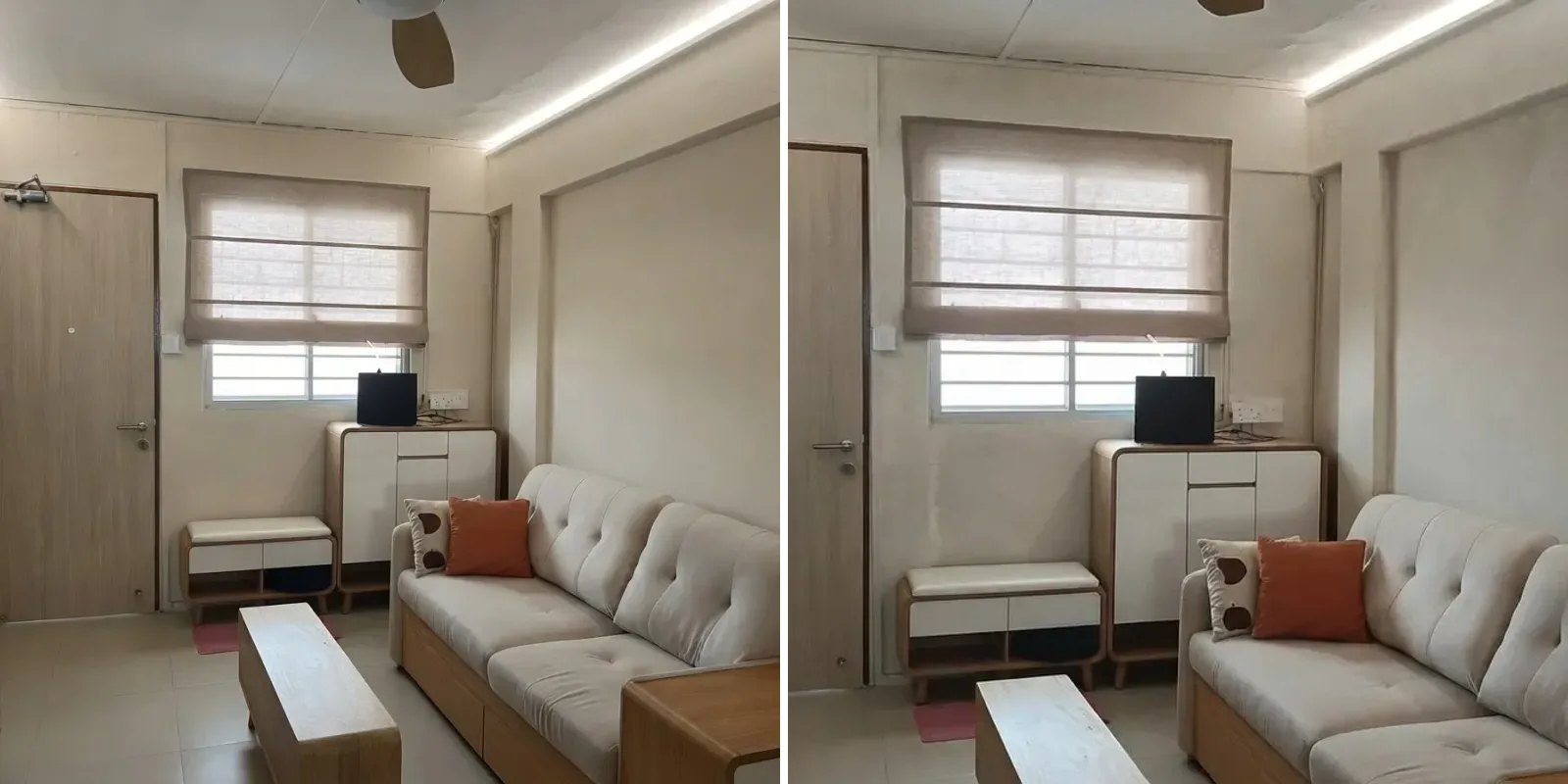
A small apartment living room, before and after. The furniture budget is identical, the room just stops looking like a rental. Texture does the work that a gallery wall usually gets hired for.



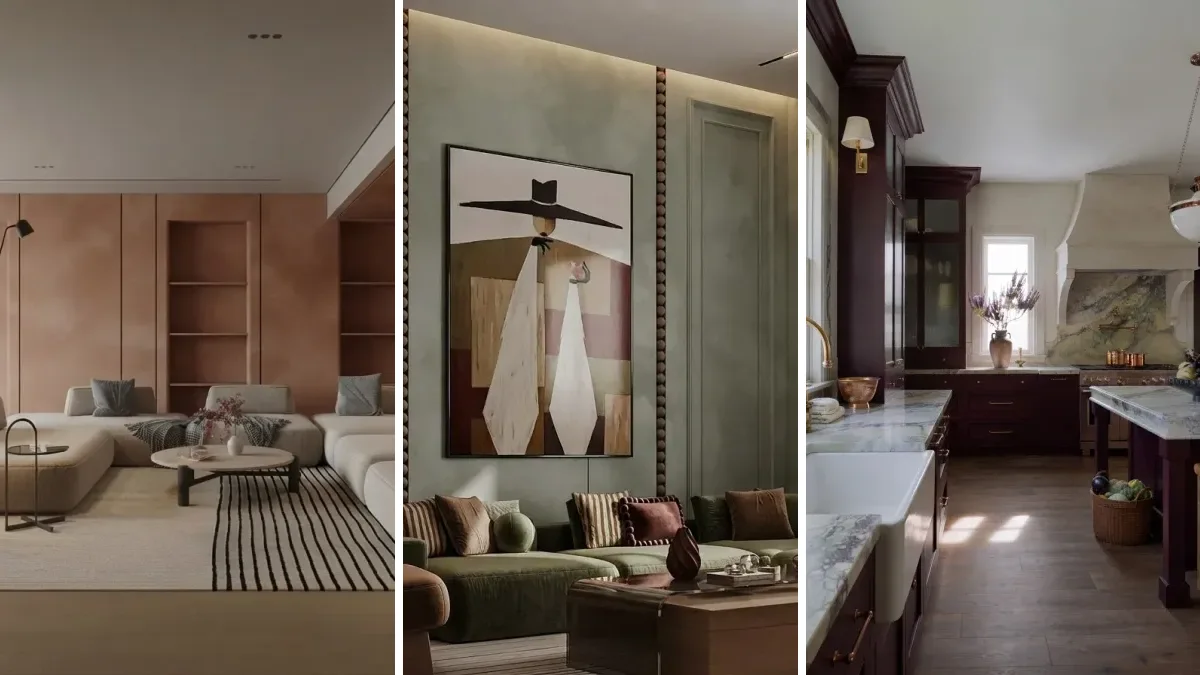
Notice what the color is doing in the terracotta and sage pairs: the furniture, which looked provisional against white, suddenly looks chosen. That is the usual direction of the effect. Limewash flatters what sits in front of it, which is why it pairs so well with rooms that are already moody or nearly empty.
The surface rule that decides everything
Limewash is not paint. Paint is a plastic film that sticks to almost anything. Limewash is a mineral in suspension that needs to soak into an absorbent surface, carbonate and become part of it. The National Lime Association, whose technical bulletin on limewash is the closest thing this field has to a standard, describes the mix as lime and water at roughly 15 to 20 percent lime, the consistency of whole milk. Milk does not stick to plastic. It soaks into stone.
The test takes ten seconds and the bulletin spells it out: apply water and watch. Darkens and absorbs, limewash will bond. Beads and runs, it will not, and no number of coats fixes that.
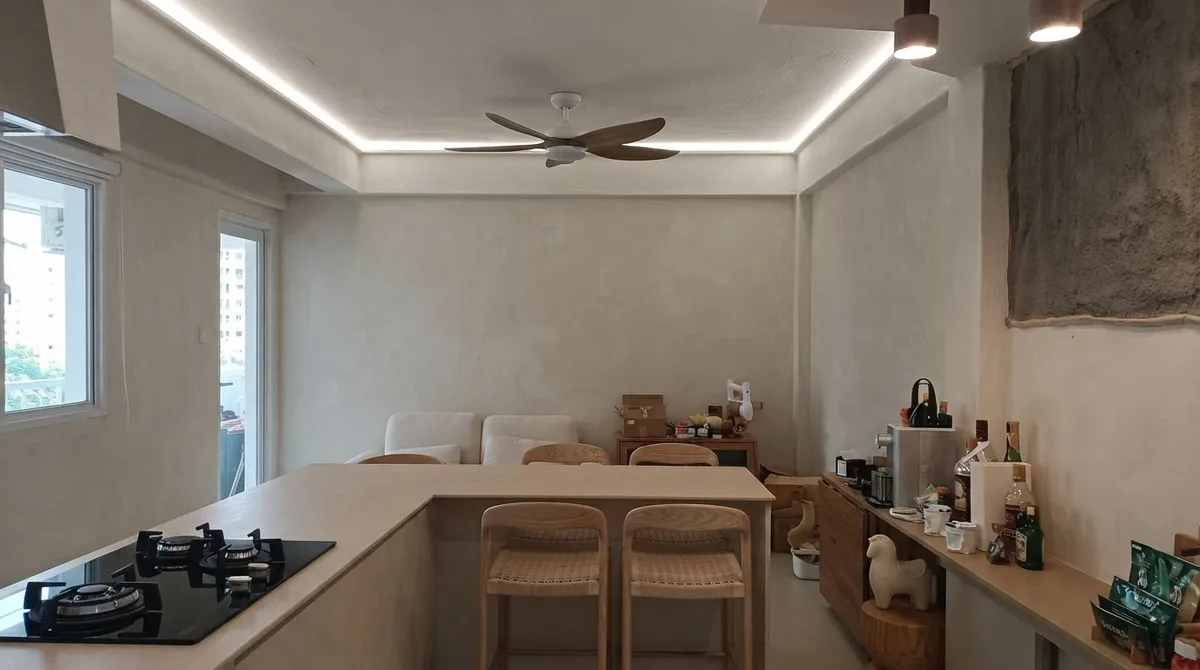
A renovated flat where the owners left a patch of the raw render exposed above the kitchen. The limewash around it bonded to exactly that kind of surface, which is why it will still be there in twenty years.
The undercoat step on painted walls is not optional, and this is where most of the horror stories start. Portola Paints, whose lime wash is the one you have seen all over design Instagram, says it verbatim in their own FAQ: always use a mineral undercoat for previously painted walls. The primer gives the wash a uniform mineral surface to grab, so the finish is even instead of blotchy and it stops rubbing off on clothes. If the wall is coming out from under old paper, wash off every trace of paste and repair any torn drywall first, as covered in how to remove wallpaper and the glue. A clean, sound wall takes a primer far better than one with paste still on it.
How to limewash a wall, without the panic repaint
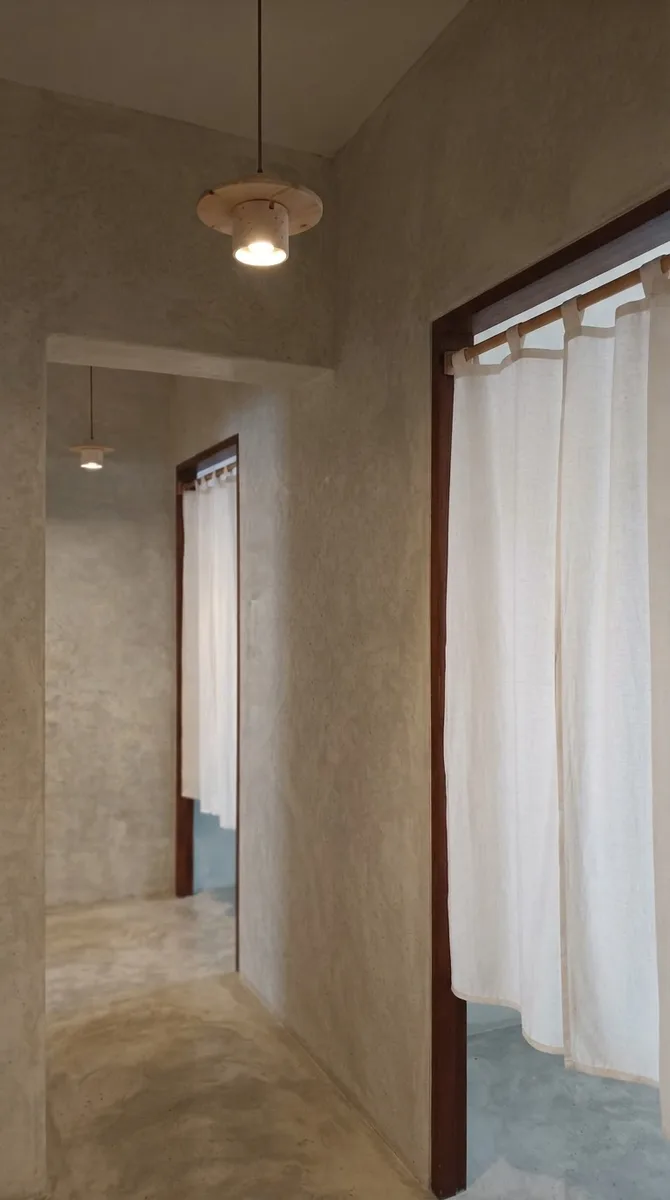
The application itself is close to unskilled labor, which is the nicest thing about this finish. Brush, X strokes, wet edge, walk away. What needs managing is the drying, because limewash lies to you for the first two hours.
Work with a wide masonry or stain brush, never a roller: the mottled movement that makes limewash worth doing is literally the record of the brush. Portola's application guide calls for overlapping cross hatch strokes and a wet edge from corner to corner, with 2 to 4 hours between coats. Two coats is standard on a primed wall. On bare masonry, plan for more: the National Lime Association's own case study needed five unpigmented coats plus two pigmented ones on raw stucco, and their bulletin is blunt that the milk-thin consistency, quote, cannot be overemphasized. Many thin coats build a stronger surface than one thick one, which also means every coat is fast and low stakes.
The one moment that separates finished walls from abandoned ones: wet limewash looks wrong. Dark, streaky, patchy wrong. It dries 5 to 10 times lighter and evens out as it carbonates, and the color keeps settling for days. Judge the wall tomorrow, not at minute forty. If you want the exact seven steps with the surface test and the undercoat rule, the structured version is in the how-to schema of this page, and the short answer to every mid-project doubt is: one more thin coat.
What it costs: one finish, three prices, 40x apart
Every article prices limewash as if it were one product. It is three routes, and the wall you own picks the route, which is why quotes for the same square footage come back 40x apart. Prices below were checked in September 2026.
The arithmetic worth staring at is the last row. The National Lime Association's mixing table turns one 50 pound bag of hydrated lime and about 30 gallons of water into more limewash than a designer brand sells for two thousand dollars. That is not a knock on the brands: formulated lime wash is pre-pigmented, consistent between batches and engineered to work over their undercoat on drywall, which raw hydrated lime will not do. But if your surface is bare masonry, a barn, a garden wall, a basement, the traditional material still exists and still costs almost nothing. Coverage numbers above are the manufacturers' own: Portola states 150 to 200 sq ft per gallon over two coats, and Romabio's technical data sheet gives 80 to 100 sq ft per diluted gallon on masonry, with mortar joints and texture eating into both. Measure your walls with the square footage guide before ordering, and round up: leftover wash is your touch up kit.
Labor is the wildcard. Limewashing is brush work a patient amateur does well, so the professional premium buys speed and edge control rather than a skill you cannot learn in one feature wall. If a quote prices limewash like Venetian plaster, which genuinely is skilled trowel work, the quote is wrong, and the comparison post breaks down why the two get confused.
Colors, and why every one of them dries lighter
Limewash color has a ceiling, and it is worth knowing before you fall for a swatch. The lime itself is white, so every pigment is diluted milk-glass pale by the binder. Portola says it without marketing: really dark or vibrant colors are not achievable, the lime particles will always naturally mute colors. What limewash does instead of saturation is movement, the cloudy tonal shift inside one color that flat paint cannot fake.
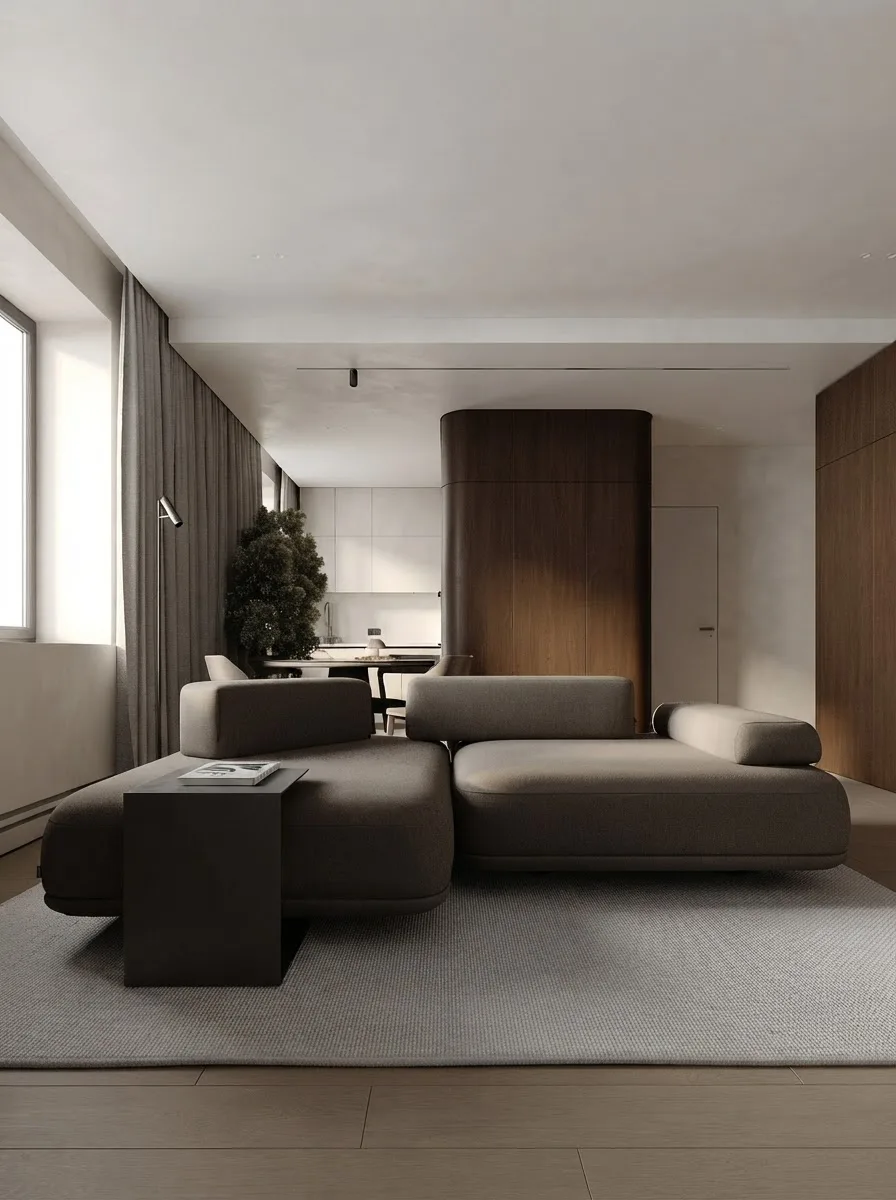
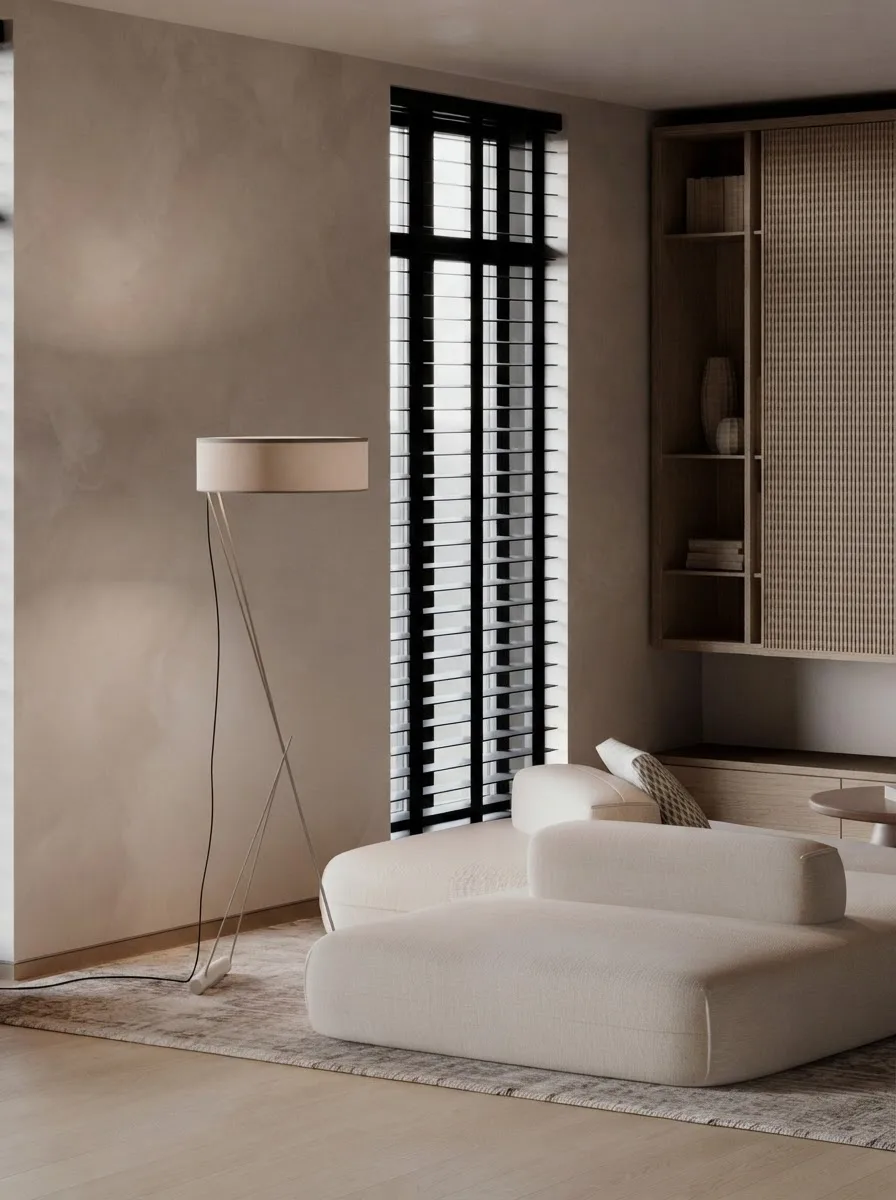
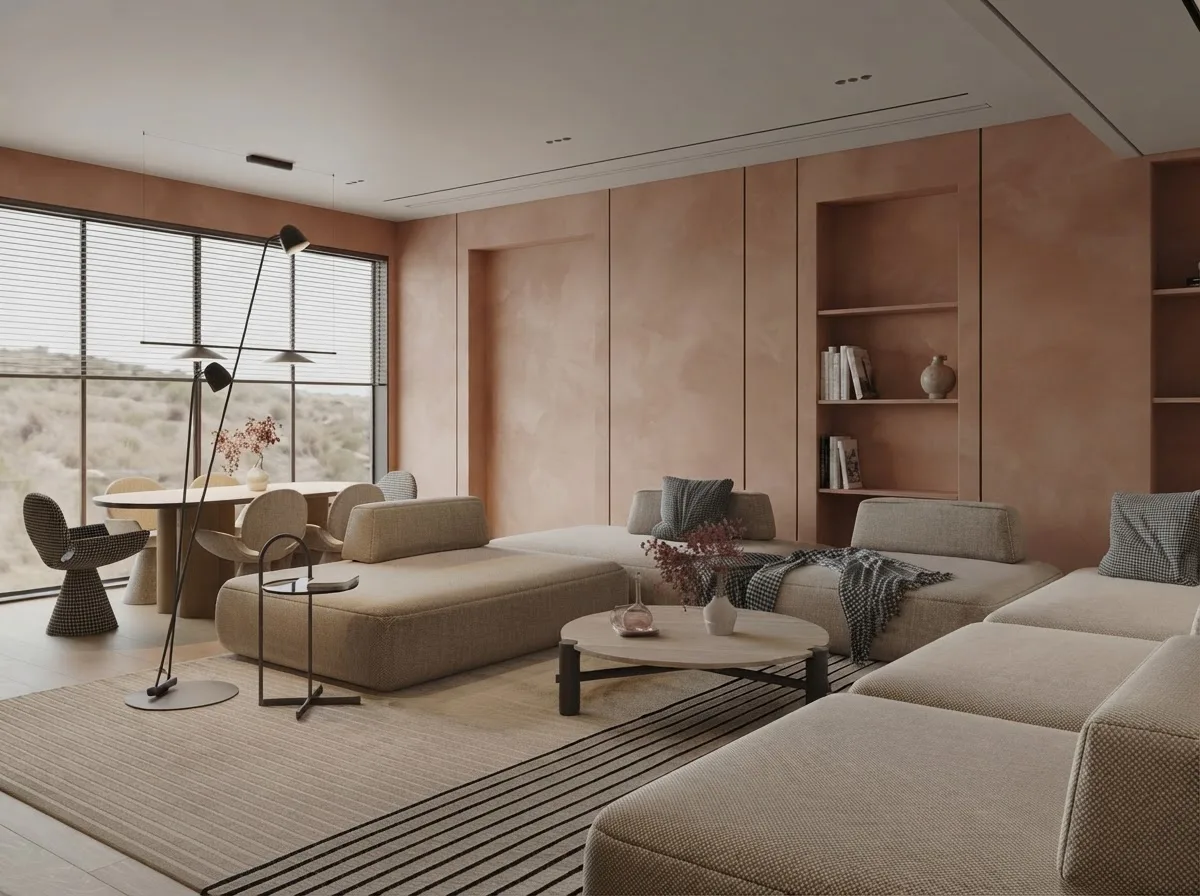
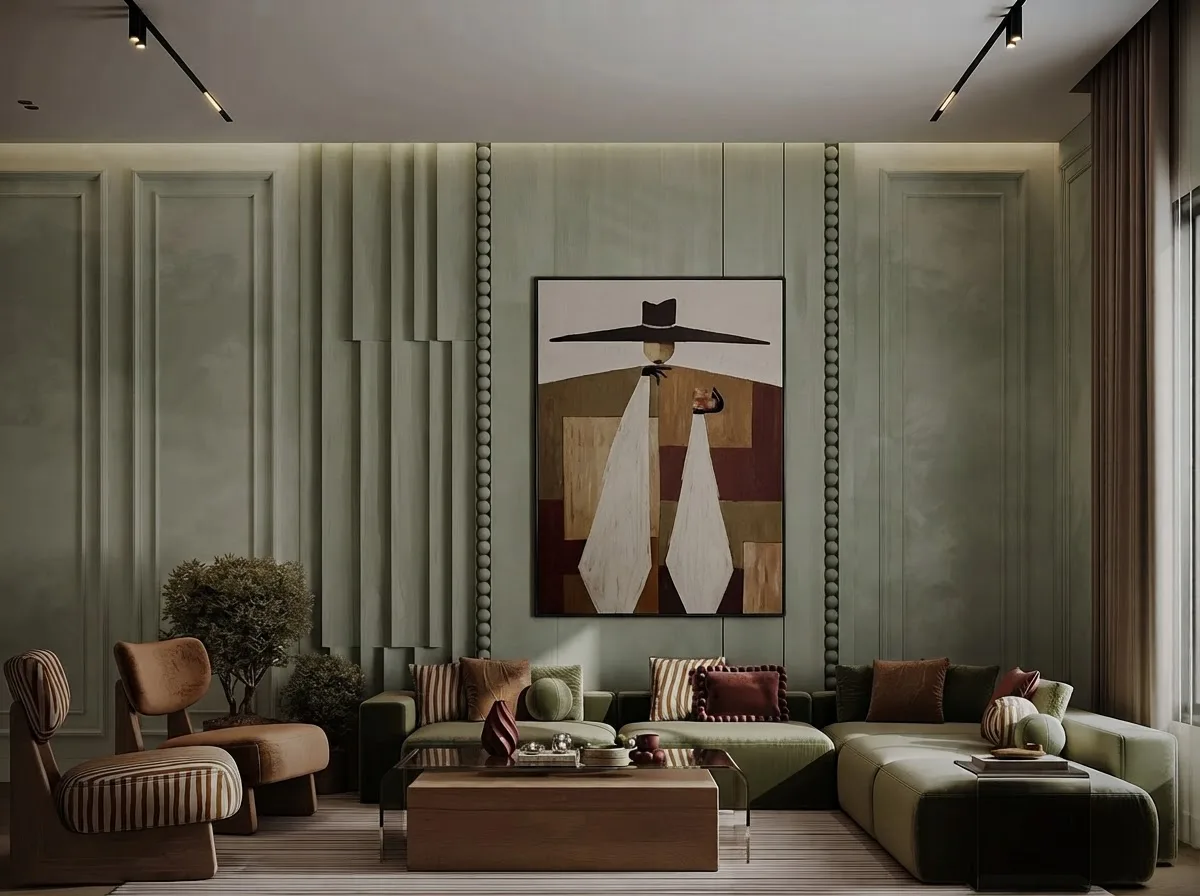
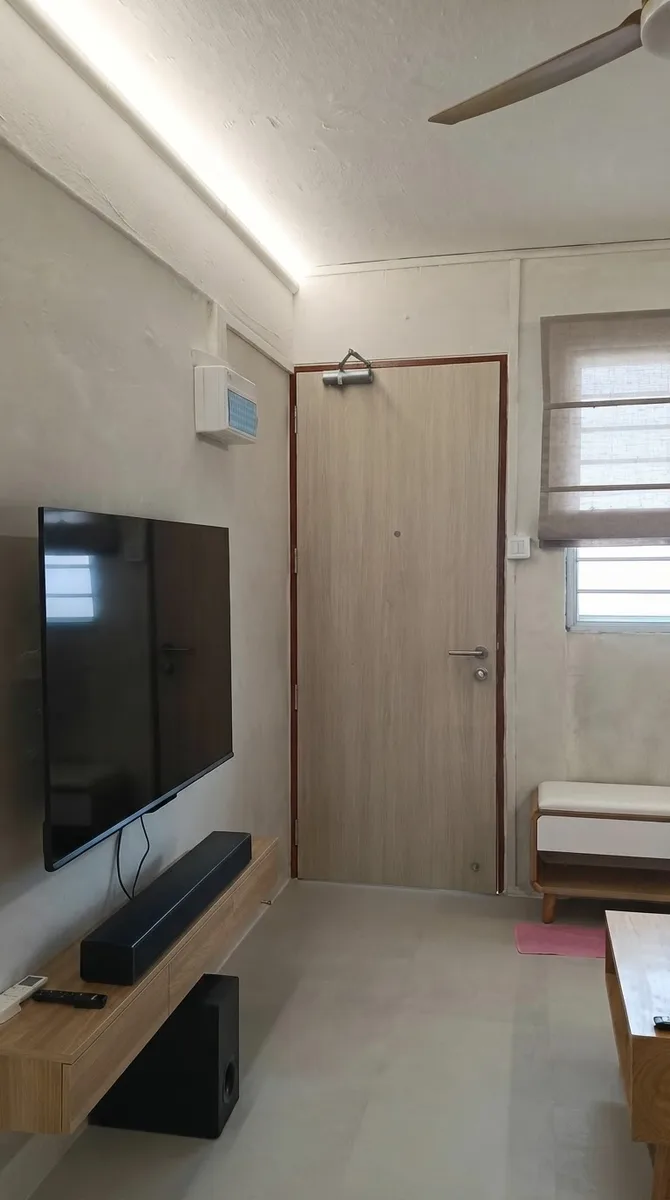
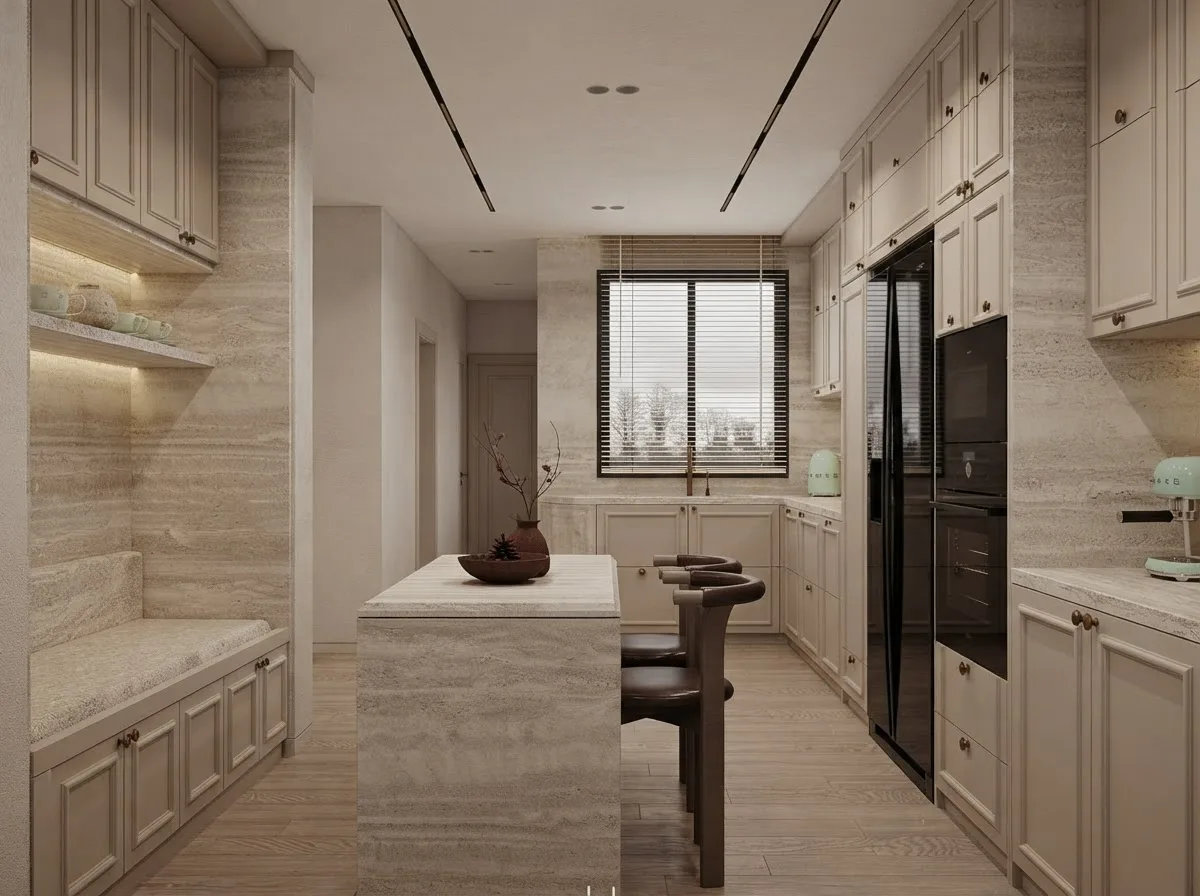
Six directions that survive the lightening: chalk white, greige, clay terracotta, sage, stone grey, warm cream. Every one reads several shades deeper on a wet brush than it will on the dry wall.
Two practical consequences. First, buy or mix a shade darker than the color you want, because the finish lightens as it cures, the exact opposite of what most people expect from the wet sample. Second, the movement means limewash does the pairing work for you: a cloudy greige wall already contains the five neighboring tones a designer would pull into cushions and curtains. If you are torn between shades, testing colors with AI on a photo of your actual room beats any 2 inch swatch card.
Limewash room by room
Limewash is a whole room finish. The 2020 pattern, one textured feature wall behind the bed, aged the way accent walls age. The current pattern wraps all four walls and lets furniture and doorways do the contrast, which is also what every room below does.
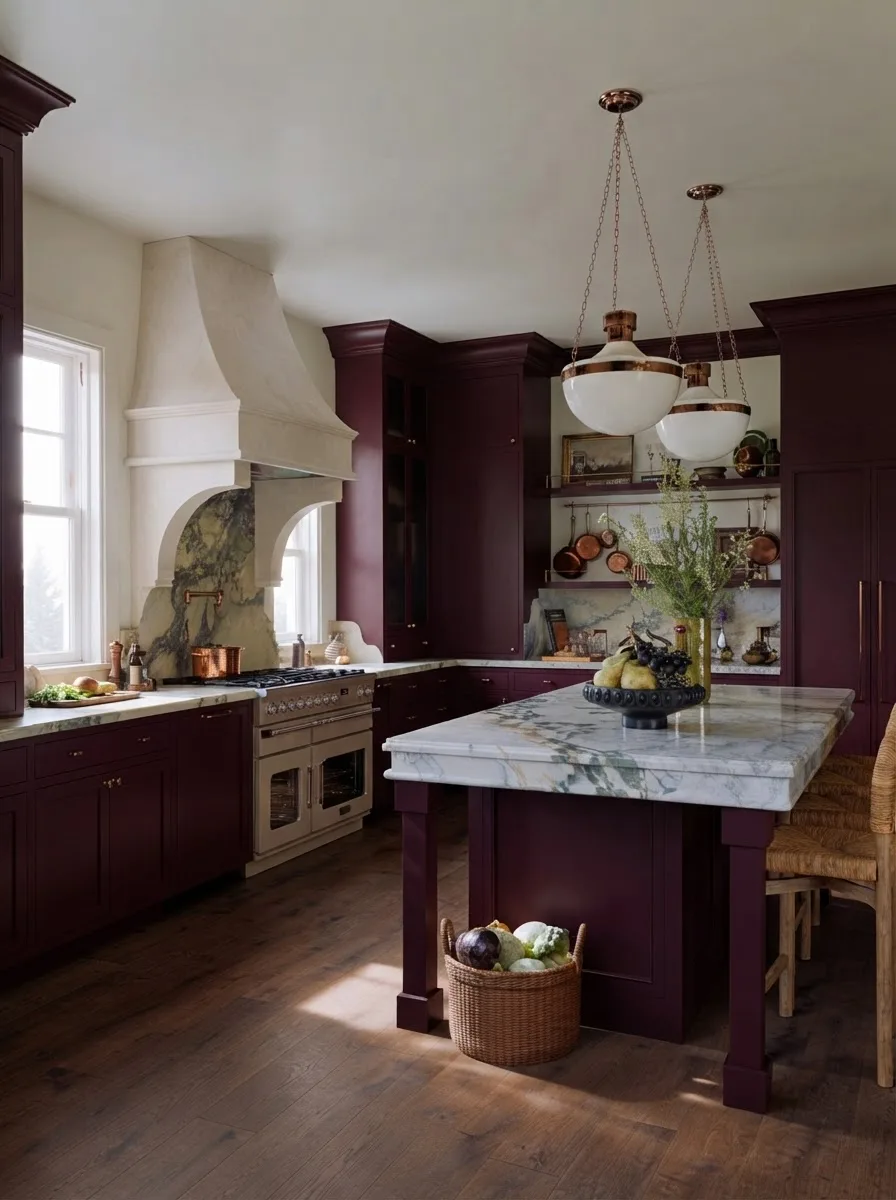
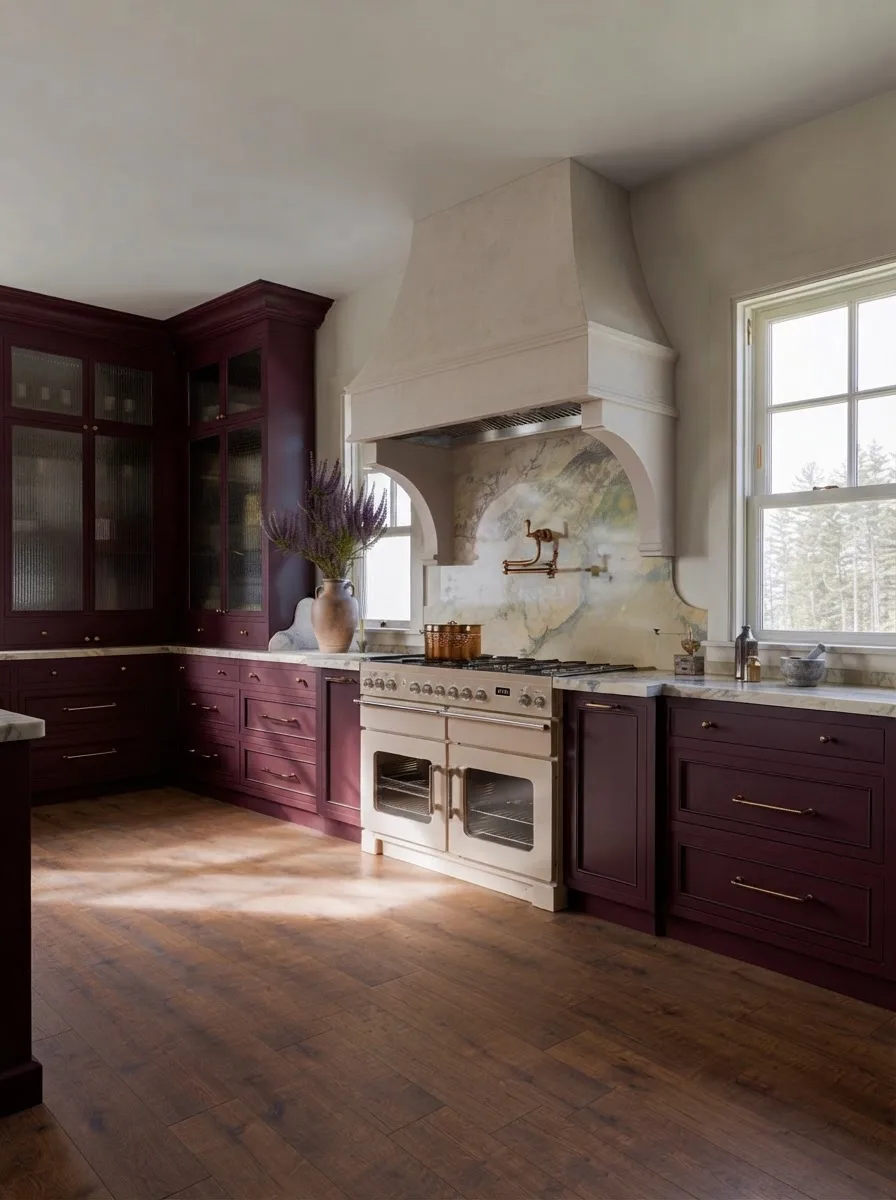
The strongest kitchen argument for limewash: it holds its own against saturated cabinetry. Flat white next to this burgundy would read like primer.
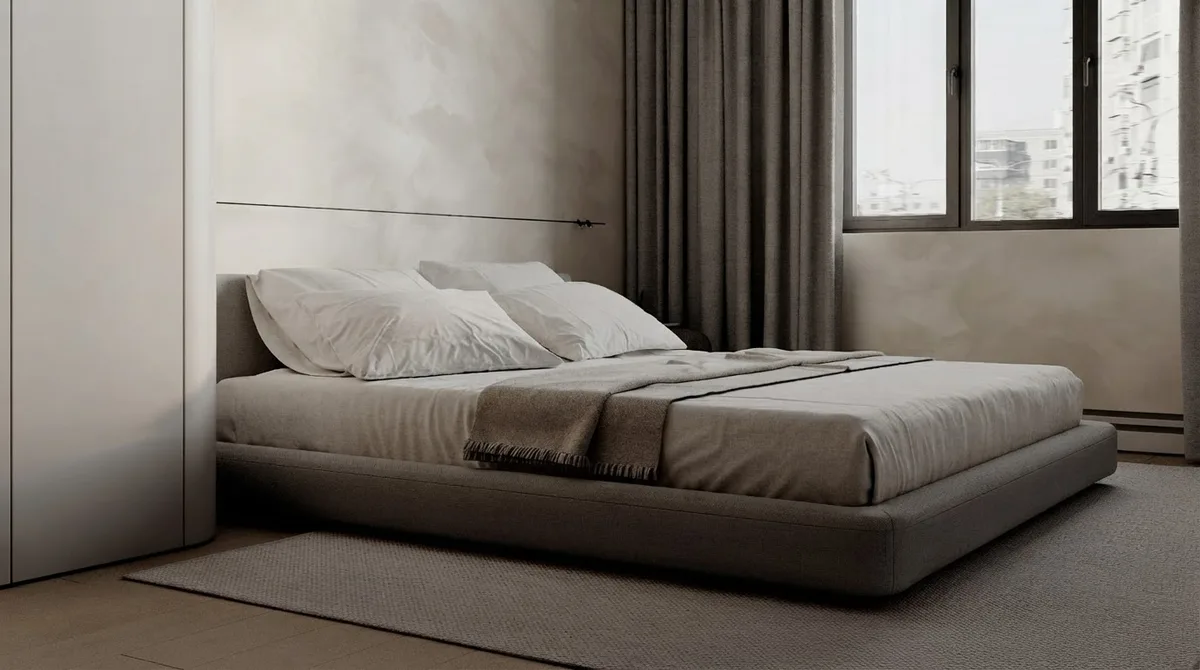
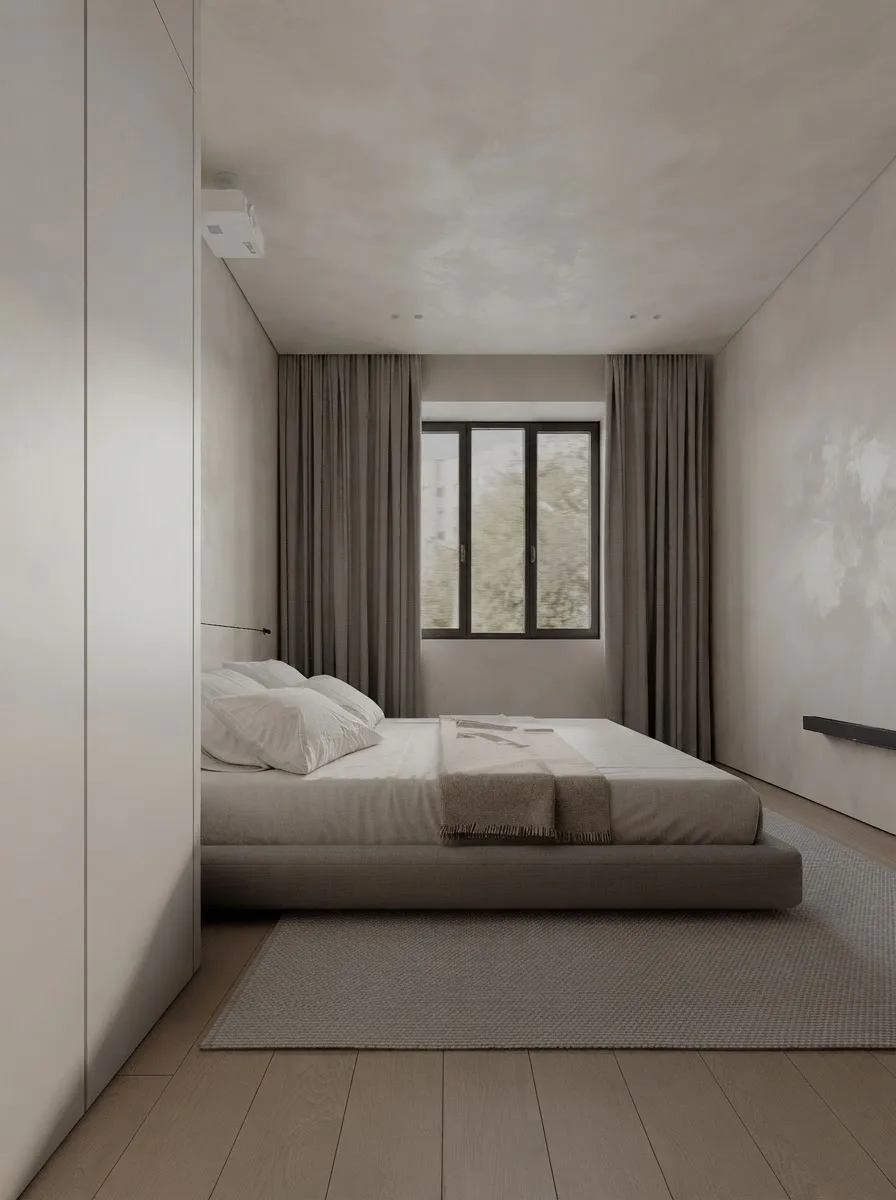


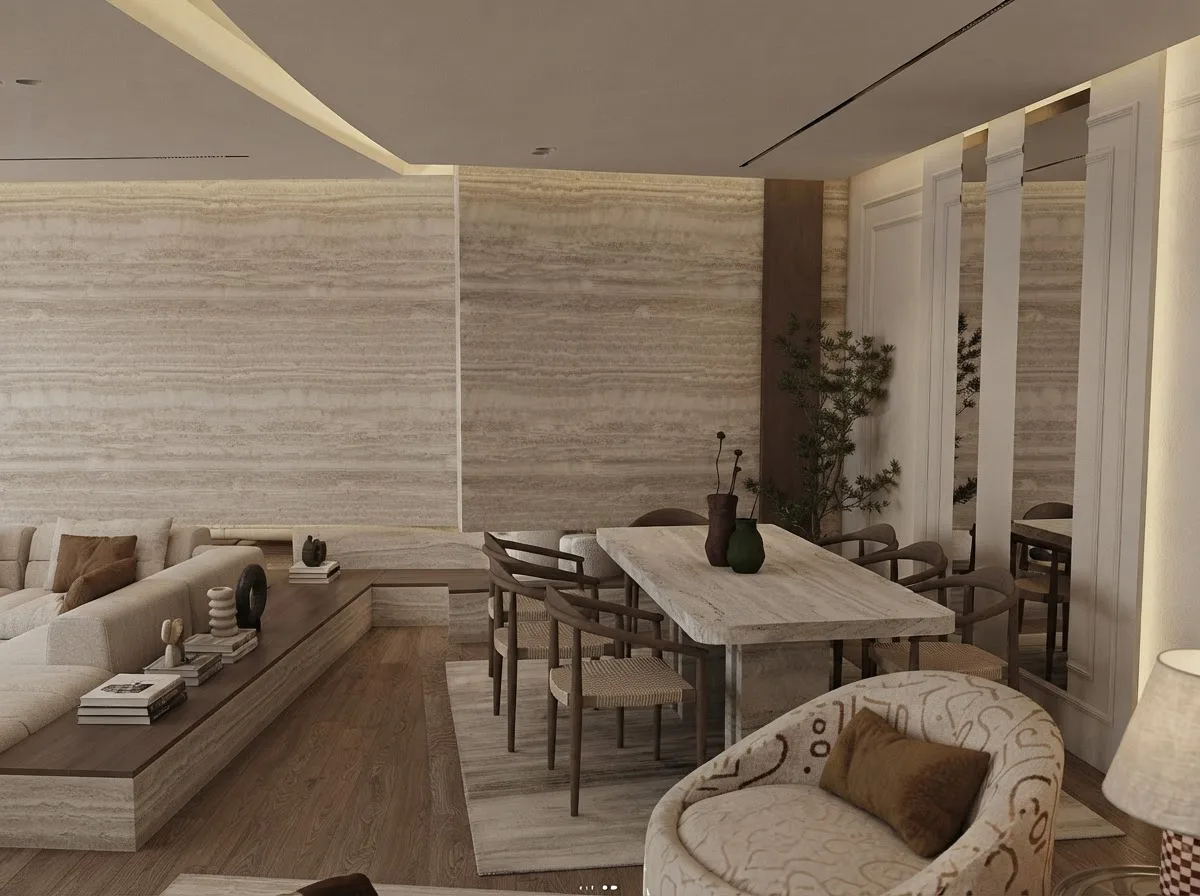
Bathrooms deserve one honest sentence: limewash survives the humidity of a normal bathroom but not the direct splash of a shower wall, so keep it outside the wet zone or seal it there. The durability questions, including how it holds up over years and whether it rubs off, are covered in depth in limewash vs Venetian plaster, which is the right read if you are choosing between mineral finishes rather than between limewash and paint.
Limewash on brick, inside and out
Brick is where limewash started and where it is still easiest to defend. Bare brick passes the absorbency test by definition, the texture gives the wash something to hang onto, and the mortar lines keep reading through the finish, so the wall still says brick instead of saying paint. It is also the one surface where the finish is genuinely reversible at first: Romabio's Classico, the standard product here, stays removable with a pressure washer for about two days before it cures in, which turns the scariest exterior decision into a trial run.
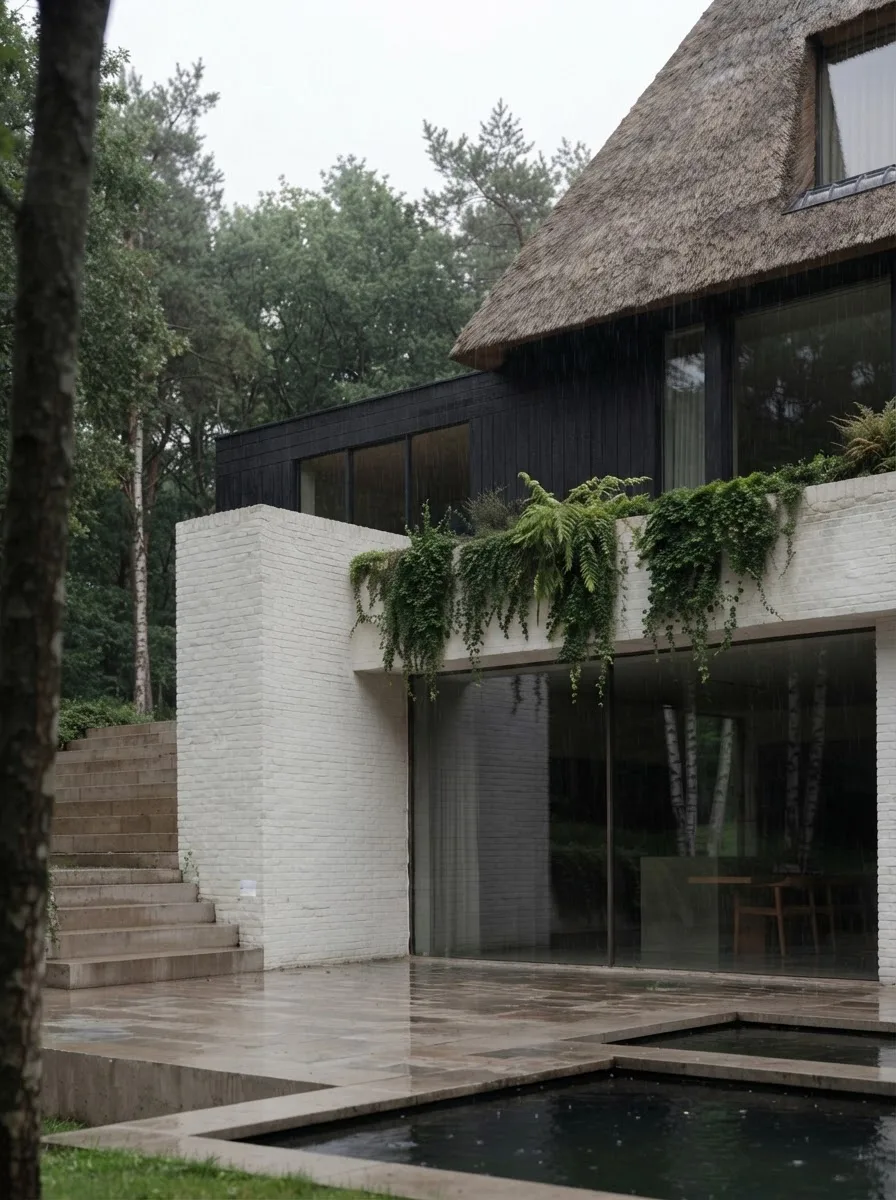
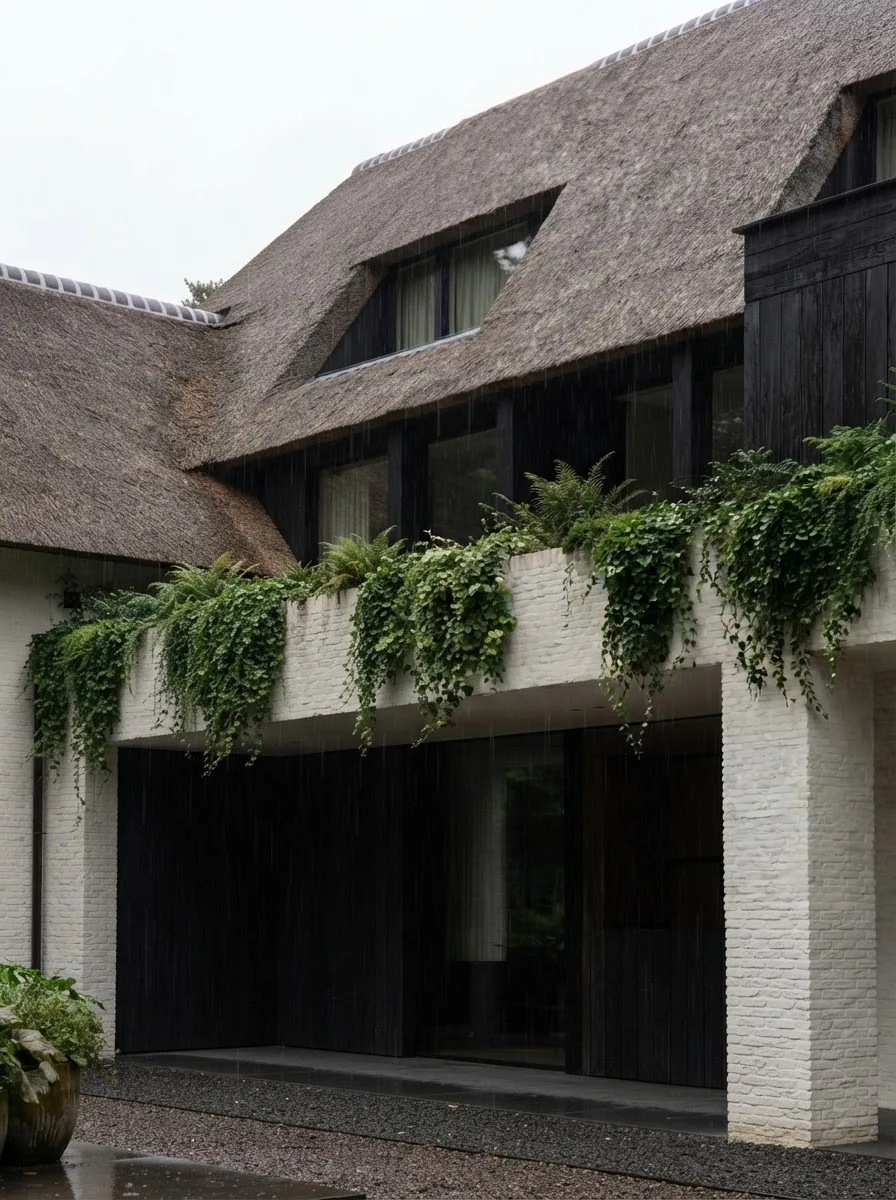
Limewashed brick keeps its texture where masonry paint would flatten it. The white stays chalky rather than plastic, and it weathers at the corners first, which reads as age instead of failure.
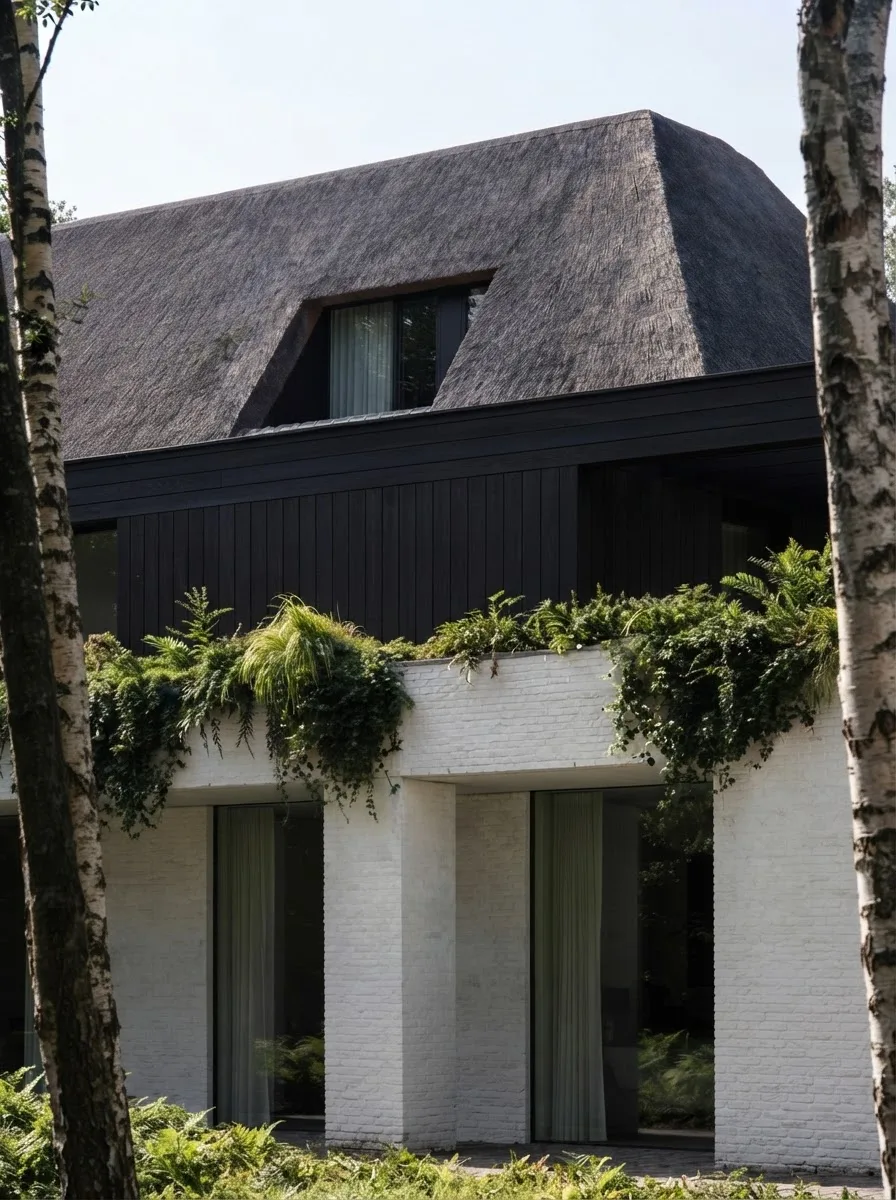
Interior brick and fireplaces follow the same logic at a smaller price: one gallon covers a fireplace twice over, dilution controls how much brick ghosts through, and a heavier first coat with a rag drag afterwards gets the aged, patchy look on purpose. For a whole facade, test a hidden section first and photograph it dry in both morning and evening light. Better still, test it on the actual house: the exterior paint visualizer workflow renders limewashed brick against solid masonry paint on a photo of your own elevation before anyone opens a bucket.
Where limewash goes wrong
Four failure modes cover nearly every bad limewash story, and all four are preventable at the shopping stage.
It wipes off on everything. The wash went over paint without a mineral undercoat, so it never bonded, it just dried there. This one is a redo, and it is the reason the surface rule is the first section of this page rather than a footnote.
It dried blotchy. Usually the wall telegraphing uneven absorbency: patched drywall drinking differently from old paint, or a skipped primer coat. The fix is another thin coat or two, which evens the surface, not a thick corrective coat, which makes it worse.
Lap lines across the wall. The wet edge was lost, usually at a coffee break. Limewash is a finish you complete one wall at a time without stopping, and small walls are exactly why the first project should be a feature wall rather than the stairwell.
The color came out pale. It always does. The wet color is not the color, and a sample board that dried overnight is the only swatch that tells the truth. Going one shade darker than the target is the standing correction.
To check what a dried sample actually landed on, photograph it in daylight and read it with the paint color finder: the hex and the closest named paint tell you how far off the target you drifted.
And one mistake that is not about technique: limewashing a wall that would have been better simply painted. If the room needs storage, molding or shape, a textured finish will not supply it, and a board and batten wall or wallpaper is the more honest tool.
Limewash vs whitewash vs the other mineral finishes
The short version: whitewash is a technique done with paint, limewash is a material, and the troweled finishes are a different trade at a different price. If the choice you are actually weighing is limewash against Roman clay, microcement or Venetian plaster, that head to head, with durability and cost per square meter, lives in limewash vs Venetian plaster. And if the question is whether textured walls belong in the house at all, what is out of style in 2026 makes the case that limewash is what replaced the finishes that left.
See it on your wall before you buy a brush
Every decision this page describes, which color, whole room or one wall, brick ghosting through or covered, is visual, and sample pots answer it two square feet at a time. The faster loop: photograph the room and let the wall texture visualizer put limewash on your actual walls, with your furniture and your daylight in the frame. Every interior render in this article came out of that same engine, including the before and after pairs, which are the identical room with only the wall finish swapped.
Run the terracotta against the greige, try the sage with your sofa in the frame, then order the sample pot for the winner only. For exteriors, the same session settles limewashed brick against painted brick on a photo of your own facade. And if the wall finish is one move in a bigger redesign, start from a photo of the whole room and test the scheme before committing a weekend to any of it.
Frequently asked questions
Can you limewash over painted drywall?
Not directly. Limewash bonds by soaking into an absorbent mineral surface, and a paint film blocks that. Portola Paints puts it flatly: always use a mineral undercoat on previously painted walls in good condition. Prime with a product like Limeproof Undercoat, then brush two coats of formulated lime wash over it.
How many coats of limewash do you need?
Two coats of formulated lime wash on a primed interior wall. Bare masonry absorbs far more: 3 to 5 thin coats is normal, and the National Lime Association documents a raw stucco wall that took 7 coats of unpigmented wash to cover. Thin coats are the method, not a shortcut: many thin layers outlast one thick one.
Why does limewash look dark and blotchy when it is wet?
Because the water has not left yet and the lime has not carbonated. Wet limewash reads several shades darker and unevenly patchy, which is the moment most first timers repaint in a panic. Wait. It dries 5 to 10 times lighter over a few hours and keeps softening for days as the lime cures into calcium carbonate.
How much does it cost to limewash a room?
Around 300 dollars in materials for a 12 by 12 foot room on painted drywall: two gallons of mineral undercoat at about 68 dollars each and two gallons of lime wash at about 84 dollars each, which is roughly 90 cents per square foot. A single feature wall runs about 115 dollars in quarts. On bare masonry, DIY limewash from a 22 dollar bag of hydrated lime costs a few cents per square foot.
What is the difference between limewash and whitewash?
Limewash is slaked lime in water that soaks into a mineral surface and cures into calcium carbonate, with a chalky, cloudy, colored finish. Whitewash in modern usage usually means watered down white paint brushed over brick, which sits on the surface as a translucent film. Limewash is a material, whitewash is a technique, and on brick the limewash version breathes while thinned paint does not.
Do you need to seal limewash?
In dry rooms, no, and sealing costs you the two best properties it has: the ultra matte surface and vapor permeability. The National Lime Association notes maintenance is generally a washdown with water. Seal only where hands and splashes live, a hallway below shoulder height or a kitchen backsplash zone, and use a matte mineral sealer, not acrylic.
Can you limewash a brick fireplace?
Yes, and it is the ideal first project: the brick is bare, absorbent and small enough to finish in an afternoon. Use a true dilutable limewash such as Romabio Classico, which is formulated for unsealed brick, stone and other masonry. One 50 to 63 dollar gallon covers a fireplace with material to spare, and it stays removable with water and pressure for about two days.
Is limewash going out of style?
The texture is not, the application is shifting. Limewash outlived the 2020 accent wall cycle precisely because it is a surface, not a shape: it reads as material rather than as a painted feature. The safer bet is limewashing the whole room instead of one wall, which is also what separates current rooms from 2020 ones.